2027 Sports Management Degree vs. Certificate: Which Should You Choose?

Co-Founder and Chief Data Scientist
Today's students and professionals face crucial choices when deciding between earning a degree or a certificate in sports management. Both educational paths offer valuable opportunities to advance careers in this competitive field, but they differ in duration, depth, and cost. For example, a degree often provides a broader foundation, while a certificate can focus on specific skills.
Sports management degrees typically take two to four years and cover extensive topics like marketing and event planning. Certificates, usually shorter, allow quicker entry or specialization in areas such as sponsorship or athlete representation. Understanding these differences will help learners align their education with career goals and lifestyle needs.
Key Points About Sports Management Degree vs. Certificate Programs
- Degree programs in sports management often provide comprehensive knowledge and stronger career advancement opportunities, with graduates earning a median salary 15% higher than certificate holders.
- Certificates offer focused skill development and faster completion times, ideal for professionals seeking specific expertise or quick entry into the sports industry.
- Degrees emphasize broad theoretical understanding and networking, while certificates prioritize practical skills, allowing learners to align choices with long-term growth or immediate application goals.
What Are the Differences Between Sports Management Degree and Certificate Programs?
Both sports management degrees and certificate programs offer valuable pathways into the sports industry, but they differ in several important aspects. Understanding these differences allows students to make an informed choice based on their career goals, time constraints, and preferred depth of study. Below are key factors that distinguish these two educational options.
Here are some main differences between sports management degrees and certificate programs:
- Career Advancement: Degrees often provide broader qualifications that can open doors to higher-level roles, appealing to those seeking long-term career growth. Certificates may suit individuals aiming to gain specific skills quickly or enhance current expertise without committing to extensive study.
- Depth of Learning: Degree programs cover a wide range of topics with comprehensive coursework, ideal for students wanting a deep understanding of the field. Certificates typically focus on targeted skills or industry knowledge, beneficial for professionals looking for practical training.
- Time Commitment: Degrees require a longer time investment, usually several years, fitting those who can dedicate extended periods to study. Certificates are shorter, making them attractive for working professionals needing flexible schedules.
- Cost Considerations: Certificates generally involve lower costs due to their condensed format, making them suitable for learners with budget constraints. Degrees may require higher financial investment but offer more extensive education and credentials.
- Flexibility and Format: Certificate programs often offer flexible delivery methods, such as online or part-time options, accommodating diverse lifestyles. Degree programs may have more structured formats and schedules, benefiting students seeking a traditional academic environment.
How Long Does It Take to Complete a Sports Management Degree vs. a Certificate Program?
Completion time is one of the most important considerations for students deciding between a sports management degree vs. certificate. Understanding the typical duration and factors that influence how long it takes to complete each option helps prospective learners plan their education effectively.
- Typical Duration: A sports management degree program length typically spans four years for a full-time bachelor's degree, with associate degrees taking about two years and graduate programs requiring an additional two to three years. In contrast, sports management certificate programs are designed for speed, usually completed within a few months to one year, and sometimes up to two years for part-time students.
- Flexibility: Certificate programs offer greater pacing flexibility, often accommodating working professionals through online formats or part-time schedules. Degrees tend to follow a more structured curriculum, though some accelerated bachelor's and master's options exist.
- Factors Affecting Timeline: Enrollment status (full-time vs. part-time), transfer credits, prior experience, and program structure all impact how long to earn a sports management certificate or degree. Students with relevant coursework or credentials may shorten degree completion by receiving credit for prior learning. Certificates usually provide the most adaptable pacing.
For those wanting a faster pathway, exploring a one year online masters degree can also accelerate entry into sports management careers without the prolonged commitment of traditional degree timelines.
Can You Complete a Sports Management Degree or Certificate Entirely Online?
The rapid growth of online education has made sports management degrees and certificates more accessible than ever. Students can now enroll in online sports management degree programs in the US offered by accredited universities like Monroe University, University of Iowa, Southern New Hampshire University, and the University of Florida.
These fully online programs deliver comprehensive curricula that include business, law, marketing, and sports operations through virtual classrooms. Alongside degrees, many schools provide fully online sports management certificate options that are shorter and more focused, allowing students to complete them without attending campus.
However, hands-on training, internships, or field experiences remain important components for both degrees and certificates. While most online programs require some form of internship or experiential learning, these are often flexible, permitting local or virtual arrangements. Prospective students should verify whether any on-campus attendance is necessary, especially for licensure or specialized certifications.
For those prioritizing flexibility, it is helpful to consider programs offering 100% online coursework and virtual practical components. Additionally, students may explore short certificate programs that pay well online when choosing which credential fits their career goals.
Admission requirements play a crucial role in deciding between a sports management degree and a certificate program, as they affect both eligibility and how quickly you can start your studies. Understanding these differences helps prospective students choose the best path aligned with their background and career objectives.
Below is a side-by-side comparison of typical admission requirements for each program type.
Admission Requirements for Sports Management Degree Programs
- Educational background: Most undergraduate programs require a high school diploma or equivalent, while graduate programs demand a completed bachelor's degree from an accredited institution.
- GPA standards: Undergraduate programs may not specify a minimum GPA, though competitive schools prefer higher grades. Graduate programs typically require a minimum undergraduate GPA between 2.75 and 3.0 on a 4.0 scale.
- Transcripts: Official transcripts from previous educational institutions are required for both undergraduate and graduate degrees.
- Personal statement/essay: Applicants must submit a personal statement outlining their career goals and interest in sports management.
- Letters of recommendation: Graduate programs often ask for two letters of recommendation from academic or professional contacts.
- Resume/CV: A summary of academic, extracurricular, and professional experience is usually required for graduate degrees.
- English proficiency: International students must provide TOEFL or IELTS scores to demonstrate English proficiency.
Admission Requirements for Sports Management Certificate Programs
- Educational background: Certificate programs generally require a high school diploma or GED, with some accepting applicants without formal postsecondary education, which makes them more accessible.
- Work experience: Many certificate programs prefer or require relevant work experience in the sports industry, especially for advanced or professional certificates.
- Application form: Most certificate programs require only an online application, often without personal essays or recommendation letters.
- Transcripts: Some programs request transcripts but have less stringent requirements, sometimes asking only for proof of the highest education level completed.
- English proficiency: Non-native speakers may need basic proof of English language skills, though standards are lower than degree programs.
Comparing sports management degree admission requirements and sports management certificate program prerequisites shows that degree programs are generally more rigorous, reflecting their academic depth and longer-term career impact.
Certificate pathways offer a streamlined process suitable for quicker entry or skill enhancement. For those interested in advanced education options beyond certificate programs, exploring affordable PhD programs online can be a valuable next step.
Knowing the number of credits required to complete a sports management program is key to managing your education timeline and making informed decisions about your academic path. When comparing programs, it's important to understand how credits differ between degree and certificate options.
Here is a clear breakdown of typical credit expectations:
- Degree: Usually between 120 and 125 credits are needed, which typically takes about four years of full-time study. These credits cover core sports management classes alongside business and general education requirements.
- Certificate: Requires far fewer credits, generally between 12 and 18, allowing completion in under a year. Certificates focus on specialized subjects like sport marketing or event management and are designed for quicker entry or advancement in the field.
Tuition costs are a critical consideration when deciding between pursuing a degree or a certificate in sports management, as they directly affect your overall investment and potential career return. Comparing the typical tuition ranges for each option can help you choose the path that best fits your budget and goals.
Below is a detailed comparison of the average costs associated with sports management degree programs versus certificate programs.
Average Tuition for Sports Management Degree Programs
- Tuition Range: Sports management bachelor's degree programs generally range from approximately $6,000 per year at public universities for in-state students to over $60,000 per year at private institutions.
- Graduate Programs: Master's degrees display wide variations, with some affordable online options costing between $5,550 and $8,550 annually, while private universities may charge total tuition from $48,000 up to $61,000 for the entire program.
- Public vs. Private: Public universities often have lower tuition for in-state students, sometimes under $10,000 per year, whereas private colleges frequently exceed $50,000 annually.
- Online vs. On-Campus: Online programs tend to be more cost-effective, with certain accredited master's degrees available for under $7,000 per year.
- Program Length: Bachelor's degrees usually take four years to complete, and master's degrees typically require one to two years, affecting the overall average cost of a sports management degree.
Average Tuition for Sports Management Certificate Programs
- Tuition Range: Sports management certificate tuition fees typically range from $1,000 to $7,000 in total, reflecting shorter program durations and less standardized pricing.
- Program Length: Most certificate programs are short-term, often completed within a few months to a year, which keeps costs significantly lower than degree programs.
- Public vs. Private: Certificates from public community colleges generally fall at the lower end of the cost spectrum, while private or specialized institutions charge more.
- Online vs. On-Campus: Online certificate programs are widely available and can be less expensive due to reduced fees and flexible pacing.
- Additional Fees: Some programs may require small extra payments for materials or courses, but these fees are minor compared to degree tuition costs.
When considering your options, also explore quick degrees that make good money to align your educational investment with your career prospects.
Certificate credits can often be transferred toward a sports management degree, but this depends on several factors. Transferability usually requires that the certificate courses align closely with the degree curriculum and come from an accredited institution. Institutional policies vary widely; some colleges design certificate programs specifically to integrate into their degree offerings. Additionally, only relevant courses that meet the degree requirements are typically eligible, with electives or unrelated coursework excluded from transfer.
Other important considerations include limits on how many credits can be transferred-some programs allow up to half of the total degree credits, especially at the graduate level. A minimum grade, commonly a C or better, is usually required for transfer approval. Since transfer rules can differ even within the same institution, it is crucial to verify transferability in writing before enrolling in a certificate program. This proactive step helps students safeguard their time and financial investment in education.
Certificate programs in sports management are generally not accredited in the same manner as degree programs. While associate, bachelor's, and master's degrees typically receive accreditation from established agencies such as the Commission on Sport Management Accreditation (COSMA), the Council for Higher Education Accreditation (CHEA), or the U.S. Department of Education, certificate programs often lack this formal accreditation.
Instead, certificates may gain recognition or endorsement from industry organizations like the Sports Management Institute or the National Interscholastic Athletic Administrators Association, which do not follow the rigorous evaluation process used for degrees. This distinction means that certificates focus on skill specialization but may not be widely accepted for academic credit transfer or formal education pathways.
Accreditation is important because it guarantees a program meets quality standards, which can influence employer perceptions, eligibility for federal financial aid, and credit transfer options. Students should check if degree programs hold accreditation from recognized bodies such as COSMA, CHEA, or the U.S. Department of Education. For certificate programs, assessing recognition by professional associations is helpful, but it does not replace the formal accreditation of degrees. Confirming accreditation status with these entities before enrollment ensures that the chosen program aligns with your educational and career goals.
Both sports management degrees and certificates offer pathways into the sports industry, but they tend to prepare graduates for different roles and levels of responsibility. While degrees often lead to broader leadership opportunities, certificates focus on practical skills tailored to specific entry-level jobs.
Below is a comparison of potential careers for each credential.
Jobs You Can Get with a Sports Management Degree
- Athletic director: Oversees athletic programs at schools or organizations, managing budgets, staff, and compliance.
- Sports marketing manager: Develops and implements marketing strategies to promote teams, events, or sports brands.
- Event coordinator: Plans and executes sports events, ensuring smooth logistics and participant satisfaction.
- Sports agent: Represents athletes in contract negotiations and endorsement deals, advocating for their interests.
- Facilities manager: Maintains and supervises sports venues, ensuring safety and operational efficiency.
Jobs You Can Get with a Sports Management Certificate
- Event coordinator (entry-level): Supports higher-level coordinators by handling logistics and day-to-day event tasks.
- Sports marketing assistant: Assists marketing teams with promotional campaigns and social media management.
- Sports analytics assistant: Collects and analyzes data to support athletic performance or business decisions.
- Facilities or operations assistant: Helps manage sports facilities by performing routine maintenance and scheduling.
- Ticket sales representative: Handles ticketing operations, customer service, and sales at sports events.
Salary potential often varies significantly between sports management certificate holders and those with a sports management degree, reflecting differences in education level and career opportunities. Understanding these differences can help prospective students make informed decisions about their education paths.
Below is a side-by-side comparison of starting salaries for graduates of each program type, highlighting typical earnings and key influencing factors.
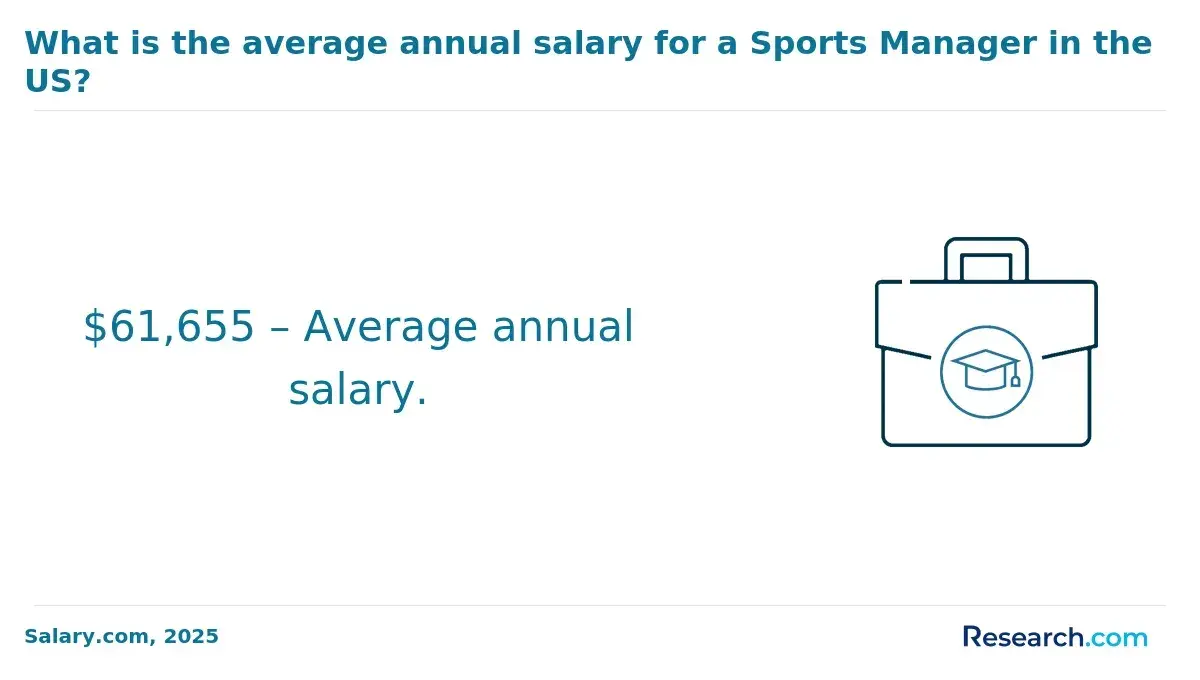
- Typical Salary Range for Certificate Graduates: Entry-level positions for sports management certificate holders generally range from $35,000 to $50,000 per year. Common roles include sports promoters, event coordinators, and assistants, with sports promoters earning an average around $39,500 annually.
- Typical Salary Range for Degree Graduates: Graduates with a bachelor's degree in sports management often start between $45,000 and $60,000 annually, with some positions like athletic trainers or sports scouts beginning near $50,000, and management or analyst roles sometimes reaching $55,000 to $70,000.
- Salary Influencing Factors: Experience such as internships or athletic involvement, the specific industry segment (professional sports, marketing, analytics), and geographic location-especially major metropolitan areas or states like California, New York, and Connecticut-strongly affect starting salaries.
- Career Outlook: The career outlook for both certificate and degree holders remains positive as the sports industry grows. However, those pursuing a sports management degree typically have access to higher-paying opportunities and more long-term growth, while certificate programs offer faster entry into the workforce with lower starting salaries.
For individuals evaluating options, comparing sports management degree starting salary entry level data alongside certificate vs degree salary sports management careers trends provides essential insight.
Those looking for flexible educational paths may consider exploring the best accredited trade schools online for certificate programs that balance affordability with quicker workforce entry.
Here's What Graduates of Sports Management Programs Say About Their Degree or Certificate
- Jireh: "Choosing the sports management certificate program was perfect for me since I wanted a fast-paced experience that offered practical skills without the hefty price tag of a degree. It was cost-effective, and I quickly applied what I learned to my job, seeing immediate benefits in my career growth. I'd say certificates are great for those who prioritize hands-on knowledge and speed."
- Henrik: "Pursuing a sports management degree provided me with a comprehensive understanding that felt more in-depth compared to a certificate. While it took longer and required a higher financial investment, the broader curriculum and formal qualification opened doors to advanced career opportunities I wouldn't have accessed otherwise. Reflecting back, the degree's depth and recognition made it worthwhile."
- Weston: "Completing both the sports management certificate and degree programs allowed me to appreciate their distinct advantages: the certificate gave me quick, targeted skills while the degree rounded out my education for long-term career development. The combined experience was invaluable despite the additional cost and time, blending practical knowledge with academic depth in a way that truly shaped my professional path. For anyone debating, I'd recommend considering both if possible. "
Other Things You Should Know About Sports Management Degrees
Yes. Many sports management certificates are credit-bearing, with 12 to 18 semester credits, and those credits may transfer into an associate’s or bachelor’s degree if the receiving college approves them. Transfer depends on accreditation, course content, and the institution’s credit policy.
Prerequisites for a sports management degree in 2027 typically include a high school diploma and specific coursework, such as math or physical education. For certificates, requirements may be less stringent, often focusing on relevant industry experience rather than formal education.
- What can you do with a sports management degree? - AISTS https://aists.org/what-can-you-do-with-a-sports-management-degree/
- Your 2025 Guide to a Career in Sports Management https://www.coursera.org/articles/sports-management
- The 10 Most Affordable Online Bachelors in Sports Management Degree Programs - Sports Management Degree Hub https://www.sportsmanagementdegreehub.com/top/most-affordable-online-bachelors-sports-management/
- Careers With a Sport Management Degree https://sm.hhp.ufl.edu/news/careers-with-a-sports-management-degree/
- Sports Management Certificate https://health-education-human-services.wright.edu/leadership-studies-in-education-and-organizations/sports-management-certificate
- Online Sports Management Degree – Self-Paced, Affordable https://exsci.cuchicago.edu/sports-management/degrees/bachelors/
- Certificate Program in Sports Management - Pitt Business https://www.cba.pitt.edu/academics/certificates/certificate-program-in-sports-management/
- Sports Management Certificate https://eller.arizona.edu/programs/undergraduate/academics/complements/sports-management
- Careers in Sports Management with a Degree or Certificate - Yellowbrick https://www.yellowbrick.co/blog/sports/careers-in-sports-management-with-a-degree-or-certificate
- Certificate vs. Diploma vs. Degree: What They Are & How They Differ https://potomac.edu/certificate-vs-diploma-vs-degree/