
2027 Substitute Teaching License & Requirements in Minnesota

Co-Founder and Chief Data Scientist
Substitute teaching in Minnesota is often the fastest way to enter a classroom, earn income on a flexible schedule, and decide whether a longer-term education career is right for you. The role matters because schools rely on qualified substitutes to keep instruction moving when teachers are absent, especially in districts dealing with staffing shortages, hard-to-fill subject areas, and last-minute coverage needs.
This guide explains how to become a substitute teacher in Minnesota, which license or permit path may fit your background, how assignments are typically offered, what pay can look like, and how substitute work can lead to full-time teaching or other education roles. It is written for career changers, recent graduates, retired educators, college students exploring teaching, and anyone comparing flexible education jobs in Minnesota.
Quick Answer: Becoming a Substitute Teacher in Minnesota
- To work as a substitute teacher in Minnesota, applicants generally need to meet education requirements, complete a background check, and apply through the Minnesota Professional Educator Licensing and Standards Board or the appropriate district process.
- Minnesota offers multiple substitute pathways, including short-call, long-term, day-to-day, emergency, and lifetime options depending on education level, licensure status, assignment length, and prior teaching experience.
- Substitute teacher pay in Minnesota commonly ranges from $120 to $160 per day, with annual salaries typically between $30,400 and $49,000 and an average around $41,374. Pay varies by district, assignment type, credentials, and location.
- What are the requirements to become a substitute teacher in Minnesota?
- What are the different types of substitute teaching permits in Minnesota?
- How do substitute teachers renew their teaching permit in Minnesota?
- How do substitute teachers receive assignments in Minnesota districts?
- Can substitute teaching lead to a full-time teaching job in Minnesota?
- How much do substitute teachers make in Minnesota?
- What is the job outlook for substitute teachers in Minnesota?
- What professional development opportunities are available for substitute teachers in Minnesota?
- What background checks and clearances are required for substitute teachers in Minnesota?
- How can substitute teaching experience boost a transition to private school teaching in Minnesota?
- How are substitute teachers evaluated in Minnesota?
- How can substitute teachers advance their careers through further education in Minnesota?
- What ethical standards do substitute teachers adhere to in Minnesota?
- What are the benefits received by substitute teachers in Minnesota?
- What are the common challenges for substitute teachers in Minnesota?
What are the requirements to become a substitute teacher in Minnesota?
The main requirements for substitute teaching in Minnesota are education eligibility, the correct substitute license or permit, a completed background check, and district approval to accept assignments. The exact route depends on whether you already hold a teaching license, have a bachelor’s degree, are enrolled in an educator preparation program, or are applying under a district-specific or emergency pathway.
Before applying, confirm the requirements with the Minnesota Professional Educator Licensing and Standards Board and with the school districts where you want to work. State licensing determines whether you are eligible, but districts may add onboarding, training, documentation, or platform registration steps before you can accept jobs.
| Requirement | What it means for applicants | Why it matters |
| Education background | Most applicants need a bachelor’s degree from an accredited institution. Some exceptions may apply for candidates in teacher preparation programs or approved alternative pathways. | Your education level affects which license or permit you can pursue and which assignments you may be allowed to accept. |
| License or permit | Minnesota uses several substitute categories, including short-call, long-term, emergency, day-to-day, and lifetime options. | The credential type can limit or expand the length and type of assignments available to you. |
| Background check | Applicants must complete required criminal background checks, which may include fingerprinting and district review. | Schools must verify that adults working with students meet safety and suitability standards. |
| Application and fee | Applicants submit documentation and pay an initial processing fee of $90.25 to the Minnesota Professional Educator Licensing and Standards Board. | Incomplete applications, missing transcripts, or unpaid fees can delay approval. |
| District onboarding | Many districts provide orientation, classroom procedures, technology access, and assignment system training. | Licensure alone may not make you active in a district’s substitute pool. |
If you have an education background but are unsure whether classroom teaching is your best long-term fit, it may help to compare career options for people with education degrees before committing to a full licensure pathway.
What are the different types of substitute teaching permits in Minnesota?
Minnesota substitute teaching options are not one-size-fits-all. The right permit or license depends on how long you plan to substitute, whether you already have a teaching credential, and whether a district needs you for daily coverage or an extended classroom placement.
- Short-Term Substitute Permit: This option allows a person to substitute for up to 20 consecutive school days in the same placement without holding a full teaching license. It is often used for candidates entering substitute teaching or working limited assignments.
- Long-Term Substitute Permit: This permit applies when a substitute fills the same role for more than 20 consecutive days. It requires a Bachelor’s degree and some teacher preparation coursework or comparable experience, making it more suitable for extended placements.
- Day-to-Day Substitute Permit: This common route is designed for daily classroom coverage across different grades or subjects. It does not require a teaching degree, but applicants must have at least 60 college credits and pass a background check.
- Emergency 1-Year Substitute Permit: This permit is available to bachelor’s degree holders who have not completed an approved teacher preparation program. It is valid for one year and can be renewed once while the candidate works toward fuller credentials.
| Option | Best fit | Key limitation or consideration |
| Short-Term Substitute Permit | Applicants who want limited or temporary classroom coverage | May restrict how long you can remain in one assignment |
| Long-Term Substitute Permit | Candidates able to handle extended classroom responsibility | Usually requires stronger preparation and may involve lesson continuity |
| Day-to-Day Substitute Permit | People seeking flexible work across multiple schools | Assignments may be unpredictable and vary widely by day |
| Emergency 1-Year Substitute Permit | Bachelor’s degree holders filling district staffing gaps | Temporary status means you should plan ahead if you want to keep teaching |
Permit choice is only part of the decision. You should also consider where substitute work is concentrated. The chart below from Zippia shows substitute teaching jobs by company type, with most substitute positions connected to the education sector.
How do substitute teachers renew their teaching permit in Minnesota?
Substitute teachers must renew on time to remain eligible for assignments. In Minnesota, substitute teaching licenses expire on June 30 of the designated year, and renewal applications can be submitted any time after January 1 of that expiration year. Waiting until the end of the school year can create processing delays, especially if professional development documentation is incomplete.
- Check the expiration date early. Do not rely only on district reminders. Track your license status through the state system and note the June 30 expiration date.
- Confirm the renewal requirements for your license type. A five-year short-call substitute license requires 125 clock hours of approved professional development.
- Complete required training topics. Required areas include behavior intervention, curriculum adaptations, and early signs of mental illness in children.
- Get local approval for clock hours. Your local continuing education committee may require proof of attendance, certificates, forms, or other documentation.
- Submit the online renewal application. The application typically includes a Conduct Review Statement, documentation of approved professional development, and a nonrefundable processing fee.
- Monitor the application status. Review your records through the Minnesota Department of Education’s online portal and resolve missing items promptly.
If you want to qualify for more specialized classroom roles over time, an online bachelor's degree in special education may be worth comparing with other teacher preparation options.
How do substitute teachers receive assignments in Minnesota districts?
Most substitute teachers in Minnesota receive assignments through a combination of district substitute pools, online absence management platforms, and direct communication from schools. After you are licensed and approved by a district, you usually choose your availability, preferred schools, grade levels, and sometimes subject areas.
- Online absence systems: Many districts use tools such as Frontline Absence Management, Absence & Substitute, or SmartFind Express. These systems send assignment notices through web portals, apps, emails, or automated phone calls.
- District HR portals: Some school systems require substitutes to apply through district websites and manage assignments through local human resources or substitute coordinator offices.
- Preferred substitute lists: Schools may contact trusted substitutes first, especially for long-term jobs, special education coverage, or classrooms where consistency is important.
- Assignment priority rules: Districts may prioritize educators with certain license types, prior district experience, or subject expertise. Pay scale changes can also apply after 30 consecutive days in some settings.
- Urban, suburban, and rural differences: Larger districts often rely more heavily on automated systems, while some rural districts may still use phone calls, emails, or personal contact because of smaller labor pools.
- Same-day and future jobs: Substitutes can receive urgent early-morning requests or schedule upcoming assignments in advance by checking the district system regularly.
- License-related assignment limits: Minnesota’s tiered substitute structure affects assignment length. Short-call substitutes may be limited to 15–20 consecutive days, while long-call substitutes can qualify for extended placements and may receive additional benefits.
The best strategy is to register with more than one district if your schedule and travel range allow it. This can improve assignment availability, but it also requires careful calendar management so you do not accept overlapping jobs or cancel frequently.
The chart below from Red Rover (2024) highlights what motivates substitutes to accept work, including flexibility, purpose, and control over scheduling. Those factors are important for districts trying to retain reliable substitute educators.
Can substitute teaching lead to a full-time teaching job in Minnesota?
Yes. Substitute teaching can support a transition into full-time teaching in Minnesota, but it does not automatically replace the requirements for a standard teaching license. It helps most when you use it strategically: build relationships, document classroom experience, identify grade levels or subjects you enjoy, and complete any additional exams, coursework, or licensure steps required for the permanent role you want.
| How substitute teaching helps | How to use it well |
| Classroom experience | Track the grades, subjects, and classroom settings where you perform best so you can speak clearly about your strengths in interviews. |
| District connections | Be reliable, arrive early, follow lesson plans, and leave useful notes. Principals and teachers remember substitutes who reduce disruption. |
| Licensure planning | Use substitute work to decide whether to pursue full teacher certification, additional coursework, or subject-area endorsements. |
| Interview preparation | Prepare examples of classroom management, differentiation, communication with staff, and how you handled unexpected situations. |
One important distinction: a substitute license is separate from full teacher licensure. To move into a permanent teaching position, candidates usually need to meet additional certification requirements, which may include content and pedagogy exams as well as program completion requirements.
Substitute teaching can also help you determine whether public school teaching, private school teaching, special education, library services, or another education role is the better fit before you invest in a degree or credential.
How much do substitute teachers make in Minnesota?
Substitute teacher pay in Minnesota varies by district, license type, assignment length, and whether the job is daily, long-term, or permanent substitute work. Daily pay commonly ranges from $120 to $160 per day. Annual salaries typically fall between $30,400 and $49,000, with an average around $41,374. Hourly pay can range from about $19 to $28, and higher earnings up to $60,723 annually are possible in some cases, especially for permanent substitute roles or candidates with stronger qualifications.
Credentials can affect pay. Some applicants hold qualifications connected to different types of education degrees, and districts may pay more for fully licensed teachers, hard-to-fill assignments, or long-term placements.
- Credential level: Permanent substitutes with full teaching licenses often earn more. Minneapolis averages around $54,443 annually for this category.
- Assignment duration: Long-term and prearranged jobs may pay more than single-day assignments and can sometimes include additional benefits.
- Location: Districts in Minneapolis and Rochester may offer higher hourly rates than some rural districts because of funding patterns, cost differences, and local demand.
- Experience and specialization: Substitutes with relevant classroom experience, additional certifications, or high-need subject skills may qualify for premium rates or incentives.
- District policy: Some districts increase pay during shortages, for hard-to-staff schools, or for substitutes willing to accept challenging assignments.
Questions to ask before accepting a substitute assignment
- Is the pay daily, hourly, or based on a long-term assignment rate?
- Does the rate change after a certain number of consecutive days?
- Are planning periods paid?
- Does the district offer bonuses, mileage reimbursement, or health plan eligibility for long-term roles?
- Will I be assigned to one classroom, or could I be reassigned after arrival?
What is the job outlook for substitute teachers in Minnesota?
The outlook for substitute teachers in Minnesota remains strong because many schools need reliable adults who can step in quickly and keep learning on track. Nearly 90% of Minnesota school districts report significant shortages of both full-time and substitute teachers, which creates ongoing demand across many communities.
- Statewide shortages: Staffing gaps affect both full-time teaching roles and substitute pools, increasing the need for qualified substitutes.
- Twin Cities metro demand: The Minneapolis-St. Paul area faces high coverage needs because of large enrollment, teacher attrition, and absence rates.
- Greater Minnesota rural districts: Rural schools may struggle to find substitutes because the local labor pool is smaller and commute distances can be longer.
- Special education and specialized roles: Demand can be stronger for substitutes who can support students with specialized needs or who hold relevant licensure.
- Pandemic-related effects: COVID-19 intensified teacher burnout and absenteeism, and schools continue to manage the long-term effects on staffing.
- Policy responses: Minnesota’s permanent short-call emergency substitute teacher pilot program is one example of a flexible approach intended to reduce staffing gaps.
If you want to build a broader education career, substitute teaching can be paired with additional study. For example, candidates interested in school library or media roles may compare the most affordable online master's degrees in library science as part of a longer-term plan.
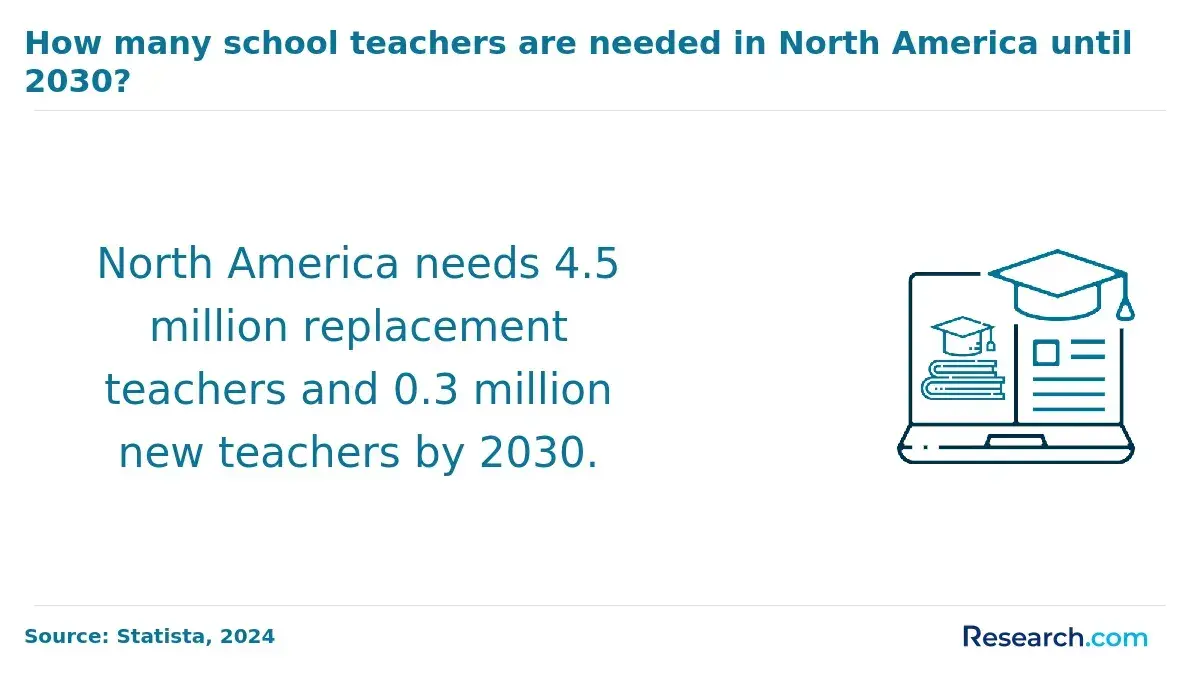
The chart below shows the high demand for replacement teachers in North America and helps place Minnesota’s substitute shortage in a wider staffing context.
What professional development opportunities are available for substitute teachers in Minnesota?
Professional development for Minnesota substitute teachers is usually offered through districts, educator organizations, online modules, and mentoring arrangements. Training may focus on classroom management, emergency procedures, student behavior, special education supports, instructional technology, and strategies for following lesson plans effectively.
Professional development matters for two reasons. First, it helps substitutes succeed in unfamiliar classrooms. Second, it may support license renewal or strengthen an application for long-term or full-time teaching roles. If your goal is to move beyond substitute work, compare the types of teaching certifications and requirements in Minnesota so your training choices align with the credential you eventually need.
What background checks and clearances are required for substitute teachers in Minnesota?
Background checks are a required part of substitute teacher approval in Minnesota. Applicants should expect criminal background review, identity verification, and fingerprinting when required by state or district rules. Districts may also conduct their own review before placing a candidate in the substitute pool.
The practical takeaway is simple: start the clearance process early. Background checks can take time, and districts generally will not allow you to accept assignments until all required screening is complete. For a broader walkthrough of the process, see this guide on how to become a substitute teacher in Minnesota.
How can substitute teaching experience boost a transition to private school teaching in Minnesota?
Substitute teaching can strengthen a private school teaching application by showing that you can manage classrooms, adapt quickly, communicate with staff, and support students in different learning environments. Private schools may value candidates who have already worked across grade levels and can demonstrate reliability in real classrooms.
The transition is strongest when you document specific examples: the subjects you covered, age groups you taught, behavior strategies you used, and how you supported school expectations. If this route interests you, review the requirements and hiring considerations in how to become a private school teacher in Minnesota.
How are substitute teachers evaluated in Minnesota?
Substitute teacher evaluation is usually handled at the district or school level. Some schools provide informal feedback after assignments, while others use substitute management systems, teacher comments, administrator observations, or coordinator notes to determine whether a substitute remains in good standing.
Common evaluation factors include punctuality, professionalism, classroom management, ability to follow lesson plans, communication with office staff, student safety, and responsiveness to feedback. Strong evaluations can lead to preferred substitute status, more assignment offers, and consideration for long-term roles. Candidates thinking about permanent teaching should also understand how long it takes to become a teacher in Minnesota so they can plan education and licensure steps realistically.
How can substitute teachers advance their careers through further education in Minnesota?
Substitute teaching can be a practical testing ground before investing in a teaching degree, certification program, or graduate credential. The experience helps you identify which students, subjects, and school settings fit your strengths. From there, you can choose education programs more intentionally.
- If you want your own classroom: Research teacher preparation and licensure requirements for your target grade level or subject.
- If you prefer specialized support roles: Consider special education, school library, instructional technology, counseling support, or education administration pathways.
- If you need flexibility: Online coursework may make it easier to keep working while completing requirements.
- If you want leadership roles later: Look at graduate options only after confirming that the credential supports your career goal.
Substitutes who need a flexible route can explore how to become a teacher online in Minnesota and compare program formats, field placement expectations, and licensure alignment before enrolling.
What ethical standards do substitute teachers adhere to in Minnesota?
Substitute teachers in Minnesota must follow the same professional expectations that protect students, preserve trust, and maintain a respectful learning environment. Even when an assignment is temporary, the responsibilities are serious.
- Fair treatment: Treat students equitably and avoid discrimination based on background, identity, ability, or personal characteristics.
- Student safety: Follow school safety procedures, supervise students appropriately, and report concerns promptly.
- Confidentiality: Protect student information and avoid discussing records, behavior, or personal matters outside approved professional channels.
- Appropriate discipline: Use school-approved behavior procedures and avoid inconsistent, excessive, or personal responses.
- Honesty: Represent your credentials accurately and communicate truthfully about incidents, attendance, and classroom events.
- Curriculum integrity: Follow the teacher’s lesson plans and avoid distorting instructional content.
- Proper delegation: Do not hand instructional responsibilities to unlicensed or unauthorized individuals.
- License compliance: Accept only assignments allowed under your valid license, permit, or provisional status.
- Professional accountability: Understand that ethical violations may lead to district action or review by the Professional Educator Licensing and Standards Board.
- Equity support: Contribute to inclusive practices that serve all E-12 students.
Ethics can become especially important when a substitute enters a classroom with limited preparation. The safest approach is to follow written plans, ask office staff when uncertain, document concerns clearly, and avoid improvising in ways that conflict with district policy.
What are the benefits received by substitute teachers in Minnesota?
The main benefits of substitute teaching in Minnesota are flexibility, classroom experience, district connections, and a lower-risk way to explore education careers. Some substitutes also receive access to professional development, legal protections, pension-related options, or higher pay when they take long-term assignments, depending on eligibility and district policy.
- Schedule control: Many substitutes can choose the days, schools, and assignments that fit their availability.
- Classroom exposure: Working across grades and subjects helps you decide whether teaching is a good long-term career match.
- Competitive daily earning potential: While Minnesota ranks 50th nationally for substitute teacher pay, the average hourly rate is about $19.89, and some long-term assignments pay more.
- Legal and liability support: Education Minnesota membership can include $1 million in liability insurance and access to employment-related legal services.
- Professional development: Substitutes affiliated with Education Minnesota may access training resources that improve classroom readiness.
- Retirement considerations: Minnesota’s Teacher Retirement Association includes improved pension options for qualifying substitutes.
- Long-term incentives: Some districts offer bonuses, higher pay, or health plan eligibility for substitutes who accept extended assignments.
- Licensing flexibility: The Short-Call Substitute Teaching License can reduce barriers for people with a bachelor’s degree or those enrolled in teacher preparation programs.
If you already know you want advanced education leadership later, compare options carefully before enrolling. Some educators review the shortest Doctor of Education online degree programs, but an EdD is usually more appropriate after clarifying your long-term leadership, administration, or research goals.
What are the common challenges for substitute teachers in Minnesota?
Substitute teaching can be rewarding, but the work is not always easy. The biggest challenges are inconsistent scheduling, limited preparation time, uneven school support, behavior management, and fewer benefits than full-time employees often receive.
| Common mistake or challenge | Why it creates problems | Better approach |
| Accepting jobs without understanding the assignment | You may arrive unprepared for special education needs, multiple class periods, or a subject outside your comfort zone. | Read assignment notes carefully and contact the school if key details are missing. |
| Choosing districts based only on pay | A higher rate may not offset long commutes, lack of support, or inconsistent assignment volume. | Compare pay, location, onboarding quality, assignment availability, and school culture together. |
| Ignoring license limits | Working outside the scope of your license or permit can create compliance problems. | Confirm assignment length and credential rules before accepting long-term placements. |
| Arriving without a classroom management plan | Students may test boundaries when they do not know you. | Use clear routines, follow posted procedures, and ask neighboring teachers or office staff for support early. |
| Failing to leave notes | The regular teacher may not know what was completed, what behavior issues occurred, or which students need follow-up. | Leave concise, factual notes about attendance, lesson progress, concerns, and positive observations. |
| Assuming substitute work guarantees a full-time job | District familiarity helps, but permanent teaching roles still require licensure and a competitive hiring process. | Use substitute experience alongside coursework, exams, references, and targeted applications. |
- Unpredictable schedules: Automated systems and last-minute absences can make weekly income difficult to forecast.
- Limited training: Some substitutes receive only basic orientation before entering classrooms with complex expectations.
- Classroom management pressure: Substitutes must quickly establish authority without the relationship history a full-time teacher has.
- Benefit gaps: Many substitutes do not receive the same health insurance, paid leave, or retirement benefits as full-time educators.
- Shortage-related strain: When districts are understaffed, substitutes may be asked to cover challenging or unfamiliar roles.
- Ethical responsibility under pressure: Substitutes must still protect confidentiality, follow lesson plans, and keep students safe even when preparation time is minimal.
- Emergency programs: Short-notice and emergency pathways can help fill classrooms, but they may also increase the need for stronger support and training.
How to Decide Whether Minnesota Substitute Teaching Is Right for You
Substitute teaching is a strong fit if you want flexible education work, can adapt quickly, and are comfortable entering unfamiliar classrooms. It may be less suitable if you need predictable full-time income, employer-paid benefits, or a consistent daily routine from the start.
| Choose substitute teaching if... | Consider another path if... |
| You want to test whether teaching is the right career before committing to a degree or license. | You need a guaranteed full-time schedule and stable monthly pay. |
| You can manage uncertainty and make quick decisions in new classroom settings. | You prefer working with the same students and curriculum every day. |
| You want to build relationships with local districts before applying for permanent roles. | You are not ready to complete background checks, licensing steps, or district onboarding. |
| You value flexible scheduling and the ability to accept or decline assignments. | You need comprehensive benefits immediately and cannot rely on variable work. |
Key Insights
- Becoming a substitute teacher in Minnesota requires more than interest in education. You need the right license or permit, a completed background check, and district approval before you can accept assignments.
- The best substitute pathway depends on your education level and career goal. Daily substitute work fits flexible schedules, while long-term assignments are better for candidates preparing for permanent teaching.
- Pay varies widely. Minnesota substitute teachers commonly earn $120 to $160 per day, but annual income depends on assignment volume, district rates, credentials, and long-term placement opportunities.
- Substitute teaching can lead to a full-time teaching job, but it does not replace full licensure. Use the experience to build references, confirm your preferred teaching area, and plan required coursework or exams.
- Do not choose a district based only on pay. Compare commute time, assignment availability, training, support, school culture, and whether the district offers preferred substitute status or long-term incentives.
- The strongest substitutes are prepared, professional, and consistent. Arrive early, follow lesson plans, document what happened, protect student confidentiality, and ask for help before small issues become large ones.
Related Articles for Nearby States
- 2027 Substitute Teaching License & Requirements in Wisconsin
- 2027 Substitute Teaching License & Requirements in Iowa
- 2027 Substitute Teaching License & Requirements in North Dakota
- 2027 Substitute Teaching License & Requirements in South Dakota
- 2027 Substitute Teaching License & Requirements in Nebraska
- 2027 Substitute Teaching License & Requirements in Illinois
- 2027 Substitute Teaching License & Requirements in Missouri
- 2027 Substitute Teaching License & Requirements in Michigan
- 2027 Substitute Teaching License & Requirements in Kansas
- 2027 Substitute Teaching License & Requirements in Indiana
References:
- Academics | CEHD UMN. Minnesota Code of Ethics for Teachers – Teaching Handbook.
- CAREI | University of Minnesota. Second U of M Minnesota Principals Survey reveals key challenges and insight among nearly 1,000 PK-12 school leaders across the state.
- CitizenPortal.ai. Minnesota education bill promotes local control and expands substitute teacher options.
- Education Minnesota. Teacher shortage expands in Minnesota.
- MinnPost. The vastly changing world of substitute teachers.
- MPR News. Minnesota school districts are struggling to find teachers, fill open positions.
- Princeton School District 477. Policy 498 - Substitute (Casual and Long Term), Homebound Teachers and Classified Staff Employment.
- SC Times. Substitute teacher shortage needs an innovator.
- Star Tribune. Minnesota schools struggle with substitute teacher shortage.
- Study.com. Code of Ethics for Minnesota Teachers.
Other Things You Need to Know About Substitute Teaching License & Requirements in Minnesota
To obtain a substitute teaching license in Minnesota in 2027, applicants must have a bachelor's degree, complete a background check, and submit their application through the Minnesota Professional Educator Licensing and Standards Board. They should also attend any relevant orientation sessions if required by the district.
The Minnesota Professional Educator Licensing and Standards Board, or PELSB, issues substitute teaching licenses. Applicants submit their materials through the state licensing system, and school districts verify that the license is valid before hiring a substitute teacher.


