2027 How to Become a Special Education Teacher in Chicago, IL: Education Requirements & Certification

Co-Founder and Chief Data Scientist
If you want to teach students with disabilities in Chicago, the main decision is not whether the work matters—it does—but which licensure route fits your education, budget, timeline, and career goals. Special education teachers support students with learning, behavioral, developmental, emotional, and physical disabilities, often through Individualized Education Programs (IEPs), inclusive classroom instruction, family communication, and collaboration with general education teachers and service providers.
Chicago can be a strong place to enter the field because large urban school systems need educators who understand inclusive education, special education law, culturally responsive teaching, and evidence-based interventions. This guide explains the coursework, certification steps, costs, training timeline, salary expectations, demand, alternative routes, renewal rules, hiring options, and career-growth paths for becoming a special education teacher in Chicago, IL.
Quick answer: How do you become a special education teacher in Chicago?
To become a special education teacher in Chicago, you generally need a bachelor’s degree, completion of an Illinois-approved educator preparation program, student teaching or residency experience, required licensure exams, and an Illinois Professional Educator License (PEL) with the appropriate special education endorsement, commonly the Learning Behavior Specialist endorsement. Career changers who already hold a bachelor’s degree may qualify through alternative or residency-based pathways, but they still must meet Illinois licensure requirements.
Key things to know before choosing this path in Chicago, IL
- Illinois special education teachers need state licensure, which typically includes a bachelor’s degree and an approved teacher preparation program.
- Demand remains steady in Chicago because schools need qualified educators who can support inclusive classrooms and students with diverse learning needs.
- The average salary for a special education teacher in Chicago is roughly $63,000/year, or about $30/hour, based on June 2025 ZipRecruiter data.
- Illinois educators must complete 120 hours of professional development every 5 years, including relevant training such as IEP/IDEA law and special education instructional strategies, to maintain licensure.
- What classes do Chicago special education teacher candidates usually take?
- What are the steps to Illinois special education licensure?
- How much should you budget for certification?
- How long does special education teacher training take?
- What do special education teachers earn in Chicago?
- Is there strong demand for special education teachers?
- Can you enter the field without a traditional teaching degree?
- What is the lowest-cost certification route?
- Which added credentials can improve career options?
- How do you renew your Illinois special education license?
- What challenges should new teachers expect?
- Where do special education teachers find jobs in Chicago?
- How can special education teachers advance their careers?
What are the coursework requirements for special education certification in Chicago, IL?
Special education certification coursework in Chicago usually begins with a bachelor’s degree in special education, education, or a closely related field, followed by an Illinois-approved teacher preparation sequence. The goal is to prepare candidates to design instruction, manage behavior, assess learning, write and implement IEPs, and teach students with a wide range of disabilities.
Common courses include Educational Psychology, Behavior Management, Assessment Techniques, Instructional Strategies for Students with Disabilities, Inclusive Education Practices, reading instruction, special education law, classroom assessment, and methods for adapting curriculum. These courses matter because special education teachers must combine legal compliance with daily instructional decision-making.
| Coursework area | What it prepares you to do | Why it matters in Chicago classrooms |
| Special education law and policy | Understand IDEA, IEP requirements, student rights, documentation, and compliance | Urban districts serve many students with complex needs, so accurate documentation and legal awareness are essential |
| Assessment and evaluation | Use data to identify needs, monitor progress, and adjust instruction | Teachers must connect classroom evidence to IEP goals and service planning |
| Behavior management | Apply structured supports, de-escalation strategies, and positive behavior interventions | Behavioral support is often central to student access, safety, and learning |
| Inclusive education practices | Co-teach, modify lessons, and support students in general education settings | Chicago schools often use inclusion models that require strong collaboration |
| Instructional methods for disabilities | Adapt reading, math, communication, and functional-skills instruction | Students may need highly individualized instruction rather than one standard approach |
Chicago-area institutions that offer special education-related preparation include DePaul University, Loyola University Chicago, and the University of Illinois at Chicago. Candidates should confirm that any program they choose is aligned with Illinois State Board of Education licensure requirements and includes the clinical or student-teaching component needed for the PEL.
Many students also consider graduate or dual-certification options. A master’s degree in special education can deepen instructional expertise, while dual certification may be useful for candidates who want flexibility across general and special education settings. Endorsements in areas such as Autism Spectrum Disorders or Emotional and Behavioral Disorders may also strengthen a teacher’s preparation for specific student populations.
Field experience is not a formality. Student teaching, internships, and residencies help candidates learn how to manage caseloads, attend IEP meetings, collect progress-monitoring data, communicate with families, and collaborate with speech-language pathologists, counselors, social workers, paraprofessionals, and general education teachers.
-
: "
One Chicago special education teacher described the training this way: “The hardest part was learning the legal side while also trying to build practical classroom skills. Writing IEP goals, understanding IDEA, and adapting lessons all came at once. Mentors and classmates made the difference because they helped me connect theory to real students.”
"
To succeed in a special education preparation program, build strong time-management habits early, meet regularly with advisors, seek feedback during field placements, and practice writing measurable IEP goals. Complex topics such as assessment, compliance, and behavior intervention become easier when candidates connect them to real classroom cases.
How do you get certified to teach special education in Chicago, IL?
Chicago special education teachers are licensed through Illinois, not through the city alone. Candidates must meet Illinois State Board of Education requirements and earn the Professional Educator License with the appropriate special education endorsement before serving as fully licensed teachers.
- Earn a bachelor’s degree from an accredited institution. The degree may be in special education, education, or another approved field depending on the pathway.
- Complete an Illinois-approved teacher preparation program. The program should include special education coursework, methods classes, and supervised clinical experience.
- Finish student teaching or a residency. Candidates must demonstrate that they can plan, teach, assess, manage behavior, and collaborate in real classrooms.
- Pass required Illinois licensure assessments. Requirements may include basic skills verification through the Test of Academic Proficiency (TAP) or qualifying ACT/SAT scores, the edTPA performance assessment, and relevant Illinois Licensure Testing System content exams.
- Apply for the Illinois Professional Educator License. The license should include the correct special education endorsement for the role you want.
- Apply for Chicago-area teaching positions. Districts and schools usually require an active or pending PEL with the appropriate endorsement.
The licensure exam sequence can include the ILTS Special Education General Curriculum test. Candidates pursuing early childhood special education may also need the ILTS Early Childhood Special Education test. Because testing rules and endorsement requirements can change, candidates should verify details directly with ISBE, their educator preparation program, and the Illinois Licensure Testing System before registering for exams.
Preparation is easier when candidates use official ILTS materials, take timed practice tests, and join study groups. Local universities such as DePaul University and the University of Illinois at Chicago may also offer structured preparation, advising, or endorsement support.
If you already hold a degree and want a faster route into teaching, compare residency and post-baccalaureate options carefully. If you want graduate-level preparation while continuing to work, a program such as a 1-year online master’s in education program may be worth reviewing, but you should confirm whether it leads to the exact Illinois endorsement you need.
How much does it cost to get certified as a special education teacher in Chicago, IL?
The cost of becoming a certified special education teacher in Chicago depends on whether you are starting college, adding an endorsement, completing a graduate program, or entering through a residency. Public university tuition and fees for in-state students can range from $10,000 to $15,000 per year. Private institutions usually cost more. Candidates who are already licensed teachers and need an endorsement such as Learning Behavior Specialist 1 may spend between $5,000 and $8,000 for the required graduate coursework.
Tuition is only one part of the budget. Candidates should also account for technology and facilities fees, transportation to field placements, background checks, classroom materials, licensure exam fees, and application costs. These expenses can add up, especially for students completing unpaid clinical placements while working part time.
| Pathway | Best for | Cost considerations | Decision point |
| Bachelor’s degree with licensure | First-time college students who want a direct route into teaching | Usually the largest total cost because it includes the full undergraduate degree | Choose this if you do not already have a bachelor’s degree |
| Post-baccalaureate licensure program | Career changers who already have a bachelor’s degree | May cost less than a second bachelor’s degree but still includes coursework and clinical requirements | Choose this if you need initial licensure without repeating an undergraduate degree |
| LBS1 endorsement coursework | Already licensed teachers adding special education qualifications | Required graduate courses can cost between $5,000 and $8,000 | Choose this if you already hold a valid teaching license |
| Residency program | Candidates who want supervised classroom experience while completing preparation | May reduce financial pressure if the program includes paid experience or financial support | Choose this if you want a structured, practice-heavy route |
Illinois offers a special education teacher tuition waiver program that can reduce costs for eligible students at public universities by waiving tuition and fees. Scholarships and financial aid may also help, although non-degree endorsement programs often do not qualify for federal aid. Before enrolling, ask the school whether the specific program is aid-eligible, whether tuition waivers apply, and whether clinical placements create extra costs.
Advanced study can be valuable for teachers who want leadership, research, administration, or specialist roles later. If that is your long-term goal, compare formats and costs for options such as online doctorate in special education programs before committing to a graduate pathway.
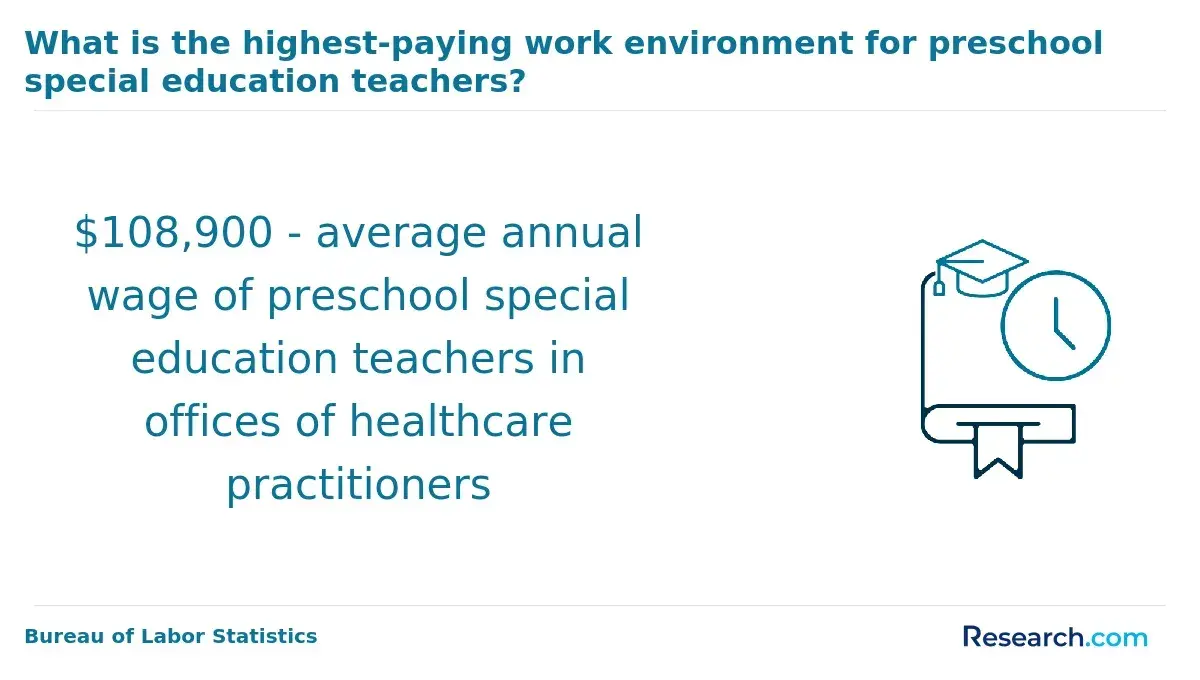
The visual below connects certification investment to long-term earning potential by showing that preschool special education teachers in healthcare settings can earn up to $108,900 annually. That figure does not guarantee earnings for Chicago teachers, but it shows why specialization and work setting can influence career planning.
How long does it take to complete special education teacher training in Chicago, IL?
For candidates who already have a bachelor’s degree, special education teacher training in Chicago often takes two to three years through a master’s, post-baccalaureate, or residency-based pathway. Programs such as the CPS Residency or Relay Graduate School of Education are commonly structured around about two years of coursework, observation, supervised teaching, and licensure preparation.
The timeline is longer for students starting earlier in the education pipeline. Someone beginning with an associate degree or changing careers without prerequisite coursework may need four to six years, depending on transfer credits, part-time enrollment, testing progress, and clinical placement availability.
| Starting point | Typical timeline | What can slow you down | What can shorten the path |
| No bachelor’s degree | Four to six years | Part-time study, transfer-credit limits, delayed admission to teacher preparation | Associate-to-bachelor transfer planning and year-round enrollment |
| Bachelor’s degree in another field | Two to three years | Prerequisite courses, clinical scheduling, licensure testing delays | Post-baccalaureate or residency programs with clear advising |
| Current licensed teacher | Varies by endorsement coursework | Limited course availability or work conflicts | Focused LBS1 endorsement sequence and summer coursework |
| Residency candidate | About two years | Program admission cycles and full-time teaching demands | Paid or structured residency with built-in mentoring |
Accelerated options may be possible through year-round coursework, summer practicums, and heavier course loads. DePaul University and other local providers may offer formats designed for motivated candidates who can handle an intensive schedule. However, speed should not be the only priority. Special education requires legal, instructional, behavioral, and collaboration skills that take practice.
To avoid delays, meet with an advisor before enrolling, map every required course and exam, ask when student teaching placements are available, and complete background checks and testing requirements early. Candidates who want flexible preparation may also compare an online teaching degree, but they should confirm that the program includes the Illinois clinical and endorsement requirements needed for Chicago employment.
What is the average salary for special education teachers in Chicago, IL?
Special education teachers in Chicago earn an average annual salary ranging from $62,940 to $68,867, with an hourly equivalent of about $30.26. Average monthly earnings are around $5,245. The broader pay range for many Chicago special education teachers runs from $52,932 to $87,940, while some entry-level roles start near $62,940 annually.
Salary is influenced by district salary schedules, years of experience, degree level, endorsements, union agreements, school type, and specialized responsibilities. Teachers with two to four years of experience may earn approximately $67,342, and those with five to eight years of experience may move into higher salary ranges, especially if they hold advanced credentials or work in settings with additional compensation structures.
| Factor | How it may affect pay | What to ask before accepting a job |
| Years of experience | Public school salary schedules often increase pay with experience | How will prior teaching or related experience be credited? |
| Advanced degree | A master’s degree can place teachers in a higher salary lane in some systems | Does the employer pay more for graduate credits or degrees? |
| Specialized endorsement | High-need endorsements can strengthen employability | Which endorsements are most needed at this school? |
| School setting | Public schools, charter schools, private schools, and specialized programs may use different pay structures | What is the full compensation package, including benefits and retirement? |
| Additional duties | Case management, extended school year, coaching, or leadership work may affect earnings | Are extra-duty stipends available? |
Compared with medical billers and coders in Illinois, who typically earn between $44,000 and $54,000 annually, Chicago special education teachers often have a higher average pay range. Still, salary alone should not drive the decision. Caseload size, administrative support, planning time, paraprofessional support, and school culture strongly affect day-to-day satisfaction.
Teachers who want stronger salary mobility may consider advanced education. Before enrolling, review whether a Master of Arts in Teaching is worth it for your goals, especially if you are weighing tuition cost against salary-lane movement, leadership opportunities, and licensure benefits.
The chart below shows how special education teacher pay can rise across national salary percentiles. For Chicago educators, it reinforces an important point: long-term earnings often depend on experience, credentials, setting, and advancement strategy rather than the starting salary alone.
Are special education teachers in demand in Chicago, IL?
Yes. Special education teachers remain in demand in Chicago because schools need licensed professionals who can support students with disabilities, comply with IEP requirements, deliver specialized instruction, and help general education classrooms become more inclusive. Large districts also face ongoing hiring needs created by retirements, turnover, enrollment patterns, and service requirements.
Demand is strongest for candidates who can do more than meet minimum licensure rules. Schools value educators who understand behavior intervention, autism support, assistive technology, reading intervention, co-teaching, culturally responsive instruction, and family communication.
Chicago candidates should expect employers to look for a valid Illinois Professional Educator License, a relevant special education endorsement, experience with IEPs, knowledge of IDEA, and the ability to work as part of a multidisciplinary team. Strong candidates can explain how they collect student data, adjust instruction, collaborate with general education teachers, and communicate progress to families.
Career planning should include both employability and financial return. If graduate study is part of your plan, review the requirements and costs for a master’s degree in education before assuming it will automatically improve pay or job placement.
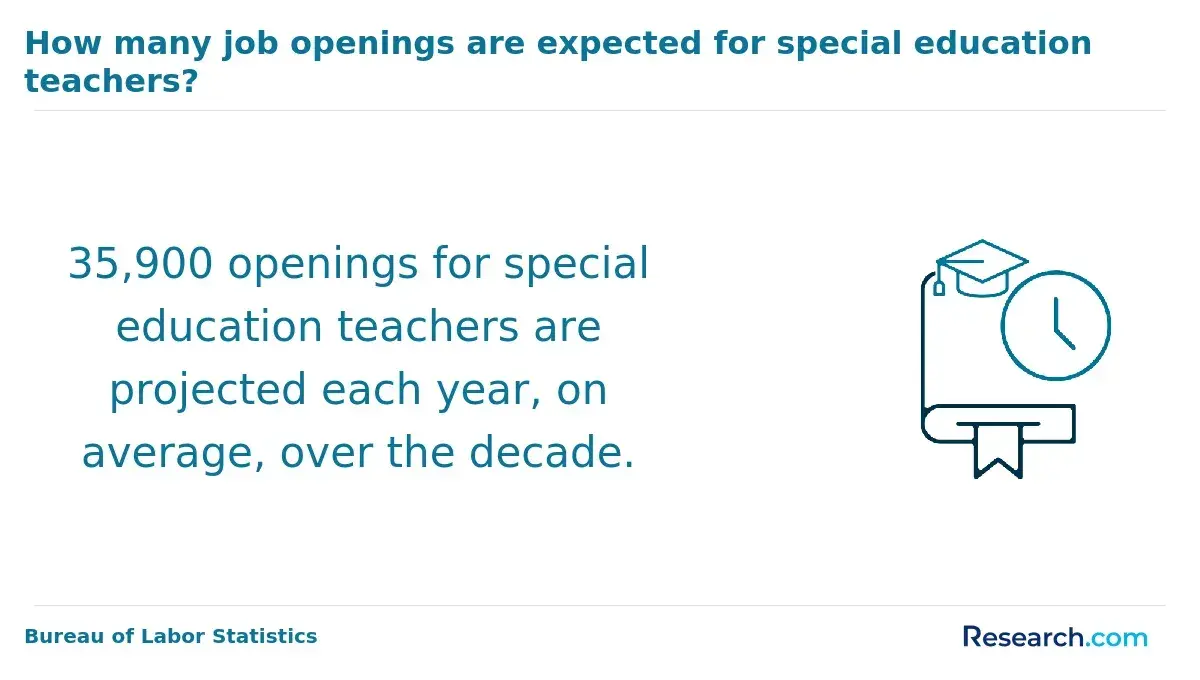
The image below shows the national scale of special education employment opportunity, with an average of 35,900 teaching positions projected annually. Chicago’s need fits within that broader context, especially because major urban districts must serve large and diverse student populations.
Can you become a special education teacher in Chicago, IL, without a teaching degree?
You cannot become a fully licensed special education teacher in Chicago without meeting Illinois educator licensure requirements. Illinois generally requires a bachelor’s degree from an accredited institution, completion of an approved educator preparation program, required exams, clinical experience, and a Professional Educator License with the appropriate special education endorsement.
However, you may not need to start over with a traditional undergraduate teaching degree if you already have a bachelor’s degree in another field. Career changers can explore alternative pathways such as residency programs, post-baccalaureate licensure programs, and transfer pathways that connect prior college credit to teacher preparation.
| Route | Who it fits | What to verify |
| Chicago Teacher Residency | Career changers who want intensive classroom-based preparation in Chicago Public Schools | Whether the program leads to the exact Illinois license and endorsement needed for special education roles |
| Post-baccalaureate licensure program | Bachelor’s degree holders who need initial teacher licensure | Admission requirements, clinical placement structure, exam support, and total program cost |
| Endorsement program | Licensed teachers who want to add special education qualifications | Whether the coursework leads to the Learning Behavior Specialist or other required endorsement |
| Associate-to-bachelor transfer pathway | Paraprofessionals, instructional aides, and students beginning at City Colleges of Chicago | How credits transfer into a licensure-track bachelor’s program |
Examples of local resources include AUSL Chicago Teacher Residency for mentored residency experience, UIC Extended Campus for endorsement coursework, and City Colleges of Chicago for transfer pathways. Candidates should also use official ILTS study materials and attend district or university licensure workshops whenever possible.
What is the most affordable pathway to special education certification in Chicago, IL?
The most affordable route depends on your starting point. If you do not yet have a bachelor’s degree, beginning at a lower-cost institution and transferring into an approved licensure program may reduce total cost. If you already have a bachelor’s degree, a post-baccalaureate or residency program may be cheaper than earning a second undergraduate degree. If you are already licensed, an endorsement-only pathway is usually more targeted than a full degree program.
Cost-conscious candidates should look for tuition waivers, public university options, scholarships, paid residencies, employer support, and programs that accept transfer credits. The Illinois special education teacher tuition waiver program may be especially important for eligible students attending public universities.
Before choosing a route, compare not only tuition but also fees, unpaid student-teaching requirements, exam costs, transportation, program length, and whether the program qualifies for financial aid. A pathway that looks inexpensive per credit may cost more if it takes longer or does not lead directly to licensure. For a broader cost-focused comparison, review the cheapest way to become a teacher in Chicago.
How can additional certifications expand your career opportunities in Chicago, IL?
Additional credentials can help special education teachers qualify for more specialized roles, support higher-need students, and stand out in hiring. Useful areas may include autism support, emotional and behavioral disorders, assistive technology, bilingual education, reading intervention, and behavior analysis.
These credentials are most valuable when they match the students and settings you want to serve. For example, teachers who frequently support students with intensive behavior needs may benefit from learning evidence-based behavioral assessment and intervention methods. If that direction interests you, review BCBA certification requirements in Chicago to understand how behavior-analysis credentials differ from teacher licensure.
| Credential area | Potential value | Best fit |
| Autism-related endorsement or training | Strengthens support for communication, sensory, social, and instructional needs | Teachers in classrooms or programs serving many autistic students |
| Behavior-focused training | Improves intervention planning and data-based behavior support | Teachers working with emotional, behavioral, or intensive support needs |
| Reading intervention | Supports students with learning disabilities and literacy gaps | Teachers responsible for academic intervention and progress monitoring |
| Bilingual or ESL-related preparation | Helps teachers serve multilingual learners with disabilities | Chicago schools with linguistically diverse student populations |
| Assistive technology training | Improves access to instruction, communication, and independence | Teachers supporting students with communication, mobility, or access needs |
How do you maintain your special education certification in Chicago, IL?
Illinois teachers must renew the Professional Educator License every five years. To keep a special education credential active, teachers complete 120 hours of approved professional development, record those hours, and submit renewal through the Illinois State Board of Education’s Educator Licensure Information System.
Professional development must come from ISBE-approved providers, regionally accredited colleges, or recognized options such as National Board Certification. National Board Certification can reduce the required professional development hours by half. Renewal requirements still apply even if a teacher is not currently employed in a school.
- Complete 120 hours of approved professional development. Prioritize training tied to IEPs, IDEA, behavior support, inclusion, assessment, and instructional strategies.
- Keep documentation. Save certificates, transcripts, agendas, and other proof of completion in case of audit.
- Enter hours in ELIS. Log professional development accurately before the renewal deadline.
- Submit the renewal application. Complete the online process and pay the required fee before the license expires.
- Watch for ISBE updates. Licensure rules and renewal procedures can change, so do not rely only on old program information.
Chicago teachers may be able to use professional development from ISBE, Northeastern Illinois University, Chicago Public Schools, regionally accredited colleges, and other approved providers. The best renewal strategy is to complete hours gradually instead of rushing near the end of the five-year cycle.
What are the most common challenges faced by special education teachers in Chicago, IL?
Special education teaching in Chicago can be rewarding, but it is also demanding. New teachers should enter the field with realistic expectations about caseloads, documentation, collaboration, behavior support, and resource constraints.
| Challenge | Why it happens | Practical response |
| Large or complex caseloads | Schools may have many students needing services and limited staffing | Use strong systems for IEP deadlines, progress monitoring, parent communication, and service minutes |
| Burnout risk | The role combines instruction, compliance, meetings, behavior support, and emotional labor | Set boundaries, use planning templates, seek mentoring, and ask administrators for support early |
| Inclusion demands | Students often receive services in general education settings | Build co-teaching routines and schedule regular planning with general education teachers |
| Limited resources | Urban schools may face shortages of materials, staff, or specialized supports | Use district resources, community partnerships, low-cost assistive tools, and evidence-based strategies |
| Compliance pressure | IEPs, evaluations, service logs, and meetings require accuracy and timeliness | Create a calendar for legal deadlines and ask case managers or mentors to review procedures |
One of the biggest mistakes new teachers make is trying to solve every problem alone. Special education is team-based work. Effective teachers build relationships with families, paraprofessionals, therapists, social workers, counselors, administrators, and general education colleagues.
The chart below shows states with the highest percentage of public school students served under IDEA. Illinois is not listed in that visual, but the national context helps explain why special education staffing and support remain major issues in large districts such as Chicago.
Which school districts in Chicago, IL, are hiring special education teachers?
Chicago-area special education jobs are available through public schools, charter networks, specialized schools, and organizations serving students with intensive learning or behavioral needs. Requirements vary by employer, but most roles expect an Illinois PEL with the correct special education endorsement.
| Employer or setting | Typical requirements | What applicants should highlight |
| Chicago Public Schools | Valid Illinois Professional Educator License with a Learning Behavior Specialist endorsement | IEP experience, IDEA knowledge, collaboration with case managers and general education teachers |
| Catalyst Schools | PEL with appropriate special education endorsement, commonly LBS1 | Curriculum adaptation, inclusive teaching, progress monitoring, and professional learning |
| Thresholds | Bachelor’s degree in education, Illinois licensure, and experience with IEPs | Individualized support, therapeutic collaboration, and work with multidisciplinary teams |
| Charter and specialized school networks | Licensure requirements vary but often include special education endorsement | Flexibility, intervention skills, family communication, and data-driven instruction |
When evaluating job postings, look beyond the job title. Ask about caseload size, co-teaching expectations, paraprofessional support, IEP platform training, planning time, mentorship for new teachers, and administrative support during meetings. These factors can matter as much as salary for long-term success.
What do special education teachers in Chicago, IL, have to say about their careers?
- After completing special education preparation at Loyola University Chicago, I realized how much the city’s diversity shapes the work. Students bring different cultures, languages, strengths, and support needs into the classroom. The job is demanding, but community resources and advocacy groups help teachers connect families with meaningful support. Melinda
- My preparation at DePaul University helped me understand both instruction and the human side of special education. Working in Chicago schools has pushed me to become more patient, more organized, and more responsive to each student’s background. Professional development has also made career growth feel possible rather than distant. Julian
- Northeastern Illinois University gave me the foundation I needed, but the classroom taught me how creative special education teachers have to be. Chicago’s students keep the work challenging and meaningful. The most rewarding moments come when a student reaches a goal that once seemed out of reach. Amanda
What career advancement opportunities further benefit special education teachers in Chicago, IL?
Special education teachers can grow into several career paths after gaining classroom experience. Some remain in teaching but move into specialized roles. Others become mentors, case managers, instructional coaches, department leads, curriculum specialists, administrators, or district-level special education coordinators.
Advancement often requires a combination of classroom success, strong compliance knowledge, graduate education, leadership ability, and specialized credentials. Teachers interested in behavior, trauma-informed practice, or student mental health may also explore adjacent support fields. For a related path outside classroom teaching, review how to become a mental health counselor in Chicago.
| Career goal | Helpful preparation | Good fit for teachers who enjoy |
| Lead special education teacher | Strong IEP knowledge, mentoring experience, and instructional leadership | Supporting colleagues and improving schoolwide practices |
| Case manager or coordinator | Compliance expertise, organization, family communication, and data management | Managing services and collaborating across teams |
| Instructional coach | Advanced instructional strategies and adult-learning skills | Helping other teachers improve practice |
| Special education administrator | Graduate study, leadership credentials, policy knowledge, and systems thinking | Program design, staffing, compliance, and school improvement |
| Behavior or mental health-related role | Additional training in behavior analysis, counseling, or student support | Intensive intervention and interdisciplinary work |
Common mistakes to avoid when becoming a special education teacher in Chicago
- Choosing a program before verifying Illinois approval. A convenient or inexpensive program is not useful if it does not lead to the license and endorsement you need.
- Looking only at tuition. Field placement costs, exam fees, transportation, books, and lost work hours can change the real cost of a pathway.
- Assuming online programs automatically meet Illinois requirements. Always confirm clinical placement, licensure, and endorsement alignment before enrolling.
- Waiting too long to prepare for exams. Licensure testing delays can postpone student teaching, graduation, or job eligibility.
- Ignoring caseload and support questions during interviews. Salary matters, but planning time, mentorship, and paraprofessional support affect daily workload.
- Assuming a master’s degree guarantees higher pay. Advanced degrees may improve salary placement in some systems, but policies vary by employer.
- Underestimating documentation. Special education teachers must be strong teachers and strong record-keepers.
Questions to ask before enrolling in a Chicago special education program
- Is the program approved for Illinois educator licensure?
- Which exact special education endorsement will I earn?
- Does the program include student teaching or residency placement in Chicago-area schools?
- What are the total costs, including fees, tests, background checks, and field placement expenses?
- Are scholarships, tuition waivers, employer partnerships, or paid residencies available?
- What percentage of students complete licensure requirements on time?
- How does the program support ILTS preparation and edTPA requirements?
- Can transfer credits reduce my time to completion?
- Will this pathway qualify me for the jobs I want in CPS, charter schools, or specialized programs?
- What advising support is available if Illinois licensure requirements change?
Key Insights
- Becoming a special education teacher in Chicago requires Illinois licensure, not just a degree. The key credential is the Professional Educator License with the correct special education endorsement.
- The best pathway depends on your starting point. First-time students, career changers, and already licensed teachers should not choose the same route automatically.
- Costs vary widely. Public university routes may cost $10,000 to $15,000 per year for in-state students, while LBS1 endorsement coursework may cost between $5,000 and $8,000.
- Most bachelor’s degree holders should expect two to three years for special education preparation, while students starting earlier may need four to six years.
- Chicago special education teachers earn an average annual salary ranging from $62,940 to $68,867, but experience, advanced degrees, endorsements, and school setting can affect pay.
- Demand is steady, but the work is intensive. Strong candidates prepare for IEP compliance, inclusive instruction, behavior support, family communication, and team collaboration.
- The safest enrollment decision is to verify accreditation, Illinois approval, endorsement outcomes, clinical placement, financial aid eligibility, and total cost before committing to a program.
Related Articles for Nearby States
- 2027 How to Become a Special Education Teacher in Indiana: Requirements & Certification
- 2027 How to Become a Special Education Teacher in Wisconsin: Requirements & Certification
- 2027 How to Become a Special Education Teacher in Iowa: Requirements & Certification
- 2027 How to Become a Special Education Teacher in Missouri: Requirements & Certification
- 2027 How to Become a Special Education Teacher in Kentucky: Requirements & Certification
- 2027 How to Become a Special Education Teacher in Michigan: Requirements & Certification
- 2027 How to Become a Special Education Teacher in Minnesota: Requirements & Certification
- 2027 How to Become a Special Education Teacher in Ohio: Requirements & Certification
- 2027 How to Become a Special Education Teacher in Tennessee: Requirements & Certification
- 2027 How to Become a Special Education Teacher in Arkansas: Requirements & Certification
References:
- Academy for Urban School Leadership (AUSL). Chicago’s Need for Special Education Teachers.
- All Education Schools. Special Education Teacher Salary in Illinois.
- College of Education | University of Illinois Chicago. Licensure, Endorsements, & Credentials.
- Elmhurst University Blog. How Do You Get a Special Education Certificate in Illinois?
- Illinois Education Association. How To Become a Teacher in Illinois.
- Illinois English Advising. Alternative Pathways to Teaching Certification.
- Saint Xavier University (SXU). Qualified Teachers in High Demand as Illinois Faces Shortage.
- Spotter Staffing. Special Education Teachers Are In High Demand.
- Teach Chicago. Career Changers.
- U.S. Bureau of Labor Statistics. Special Education Teachers: Occupational Outlook Handbook.
Other Things You Need to Know About Becoming a Special Education Teacher in Chicago, IL
To get special education teacher certification in Chicago, IL, candidates must pass the Illinois Licensure Testing System (ILTS) Special Education General Curriculum Test and the edTPA. Each test assesses different competencies required for teaching special education effectively.
The Illinois State Board of Education (ISBE) issues the Professional Educator License with a Learning Behavior Specialist I endorsement for special education teachers in Chicago. Applicants must complete an approved preparation program, pass the required exams, and submit licensure materials through the ISBE Educator Licensure Information System.