2027 Online Ed.D. in Leadership and Learning in Organizations: Evaluating a Doctorate When You Already Lead a Large Team
Audited and Verified:
Our Editorial and Data Verification Process
Research.com uses government datasets, official education statistics and primary institutional information to support its career and degree guides. Our review process checks factual accuracy, occupational definitions, source dates and the requirements associated with the credentials discussed.
How This Article Was Fact-Checked
Our editorial team verifies salary estimates, employment projections, education requirements and program information against original data providers and official organizations. Salary figures are checked against the relevant occupational definitions and reporting periods. Information about licensure, accreditation and required in-person training is reviewed separately.
Fact-checked and verified on:

Co-Founder and Chief Data Scientist
Leading a large team gives you substantial experience, but it does not necessarily give you a reliable way to diagnose learning gaps, evaluate a change initiative, or study problems across an organization. An online Ed.D. in leadership and learning may strengthen those capabilities, but it also demands time, money, and access to a feasible applied project.
This guide is for established leaders deciding whether doctoral study will improve their work or advancement prospects. It explains what to compare, what to verify with programs and employers, and when a shorter route is the better investment.
Key Things You Should Know
- An Ed.D. is most compelling when you need sustained preparation in organizational learning, change, and applied inquiry - not another credential to confirm that you can manage a team.
- Before enrolling, confirm the program's live attendance, project and data-access requirements, total cost, and whether your employer will support study without controlling the findings.
- The U.S. median annual salary for training and development managers was $133,000 in May 2025, but that occupational figure is not a forecast of an Ed.D. graduate's pay or promotion.
What Is an Online Ed.D. in Leadership and Learning in Organizations?
An online Doctor of Education, or Ed.D., in leadership and learning in organizations is a practice-oriented doctorate concerned with how people develop, how organizations change, and how leaders use evidence to improve practice.
Programs with similar names can emphasize different settings: workforce learning, organizational development, higher education, or school leadership. "Online" describes where much of the instruction occurs, not necessarily a self-paced degree with no campus visits.
For a leader with a large team, the distinction is between managing performance now and investigating why a system produces its current results.
An applied project might examine whether a leadership-development initiative transfers into supervisors' work. Its academic requirements, however, depend on the program; a course assignment, capstone, dissertation in practice, and research dissertation are not interchangeable.
Check the awarded degree and required curriculum rather than relying on a program's marketing terms. Guidance on choosing between Ed.D. academic concentrations can help you distinguish a formally awarded concentration from a few relevant electives.
Is an Online Ed.D. Worth It When You Already Lead a Large Team?
It can be worth it if the doctorate addresses a capability gap that experience alone has not closed. A leader who already manages hiring, budgets, and execution may gain more from learning how to diagnose organization-wide problems, test an intervention responsibly, and explain evidence to stakeholders.
If the immediate goal is a promotion based chiefly on operational results, another degree may add little.
The comparison below starts with the outcome you want, rather than the prestige of the credential:
| Path | Best fit for an established leader | Main limitation to weigh |
| Leadership and learning Ed.D. | Developing applied inquiry and leading complex learning or change initiatives | Substantial time, expense, and project obligations |
| PhD | Pursuing sustained scholarly research or a research-intensive academic path | Research aims and structure may not fit a workplace improvement goal |
| DBA or executive MBA | Deepening business research or executive management preparation, respectively | Learning and educational inquiry may receive less emphasis |
| Executive education or focused training | Addressing a defined skill gap quickly | Usually offers less sustained research preparation |
Make the investment decision against a specific problem. If a multilevel manager-development effort is failing, determine whether the issue involves learning design, incentives, authority, workload, or several of these.
Training alone cannot repair a governance problem, and a doctorate is unnecessary to commission an evaluation or seek experienced mentorship. If the Ed.D. still fits, compare its full price with alternatives using comparing online leadership doctorate program prices as a starting point - not a substitute for each school's current charges.
What Careers Can You Pursue With an Ed.D. in Organizational Leadership?
For someone already leading a large team, the strongest career case is often expanded scope within an existing field: responsibility for enterprise learning, leadership development, organizational change, or evaluation.
The degree may also support consulting or movement between sectors, but employers will still assess sector knowledge, results, and relationships.
A training and development manager oversees learning strategy, staff, and resources; an organizational consultant diagnoses client problems and recommends improvements.
A higher-education administrator works within institutional governance and student or academic services. These are different jobs, even when all involve leadership. Moving from operations into learning and development may require evidence of needs assessment, instructional design, and evaluation, not simply a doctoral diploma.
Before treating an Ed.D. as a career bridge, examine target job postings and speak with people who hire for the role. Identify which requirements your present leadership record satisfies and which gaps a supervised project, internal assignment, mentor, or narrower credential could address.
Online study can remove a commute while preserving a demanding schedule. Programs may require live evening classes, group meetings, fixed cohort progression, or campus convenings.
Campus-based study may offer easier in-person access to faculty and peers but require relocation or regular travel. Neither delivery format, by itself, establishes academic rigor or completion support.
For a senior leader, the practical test is whether the format survives predictable work disruptions: budget cycles, travel, urgent personnel matters, and project deadlines.
Ask for a sample term schedule, attendance policy, convening dates, group-work expectations, and the procedure for pausing or changing pace. Confirm whether faculty can supervise an applied project in your setting and what happens if your employer changes.
Even programs presented as fast-track doctoral study in education deserve this scheduling test. A shorter advertised timeline does not mean lighter weekly work or guaranteed completion on that schedule.
Relevant study may combine adult learning, leadership theory, organizational culture, change implementation, and research or program evaluation.
The value for an experienced leader lies in connecting those subjects: a poorly adopted process may reflect a learning-design flaw, conflicting incentives, limited manager support, or a measurement problem. Good coursework should help you investigate competing explanations rather than prescribe training automatically.
Methods preparation matters especially if you intend to evaluate work across a large team. Look for instruction in defining useful outcomes, selecting credible qualitative or quantitative evidence, interpreting limitations, and protecting employee information.
Then inspect actual course descriptions and project requirements. Exposure to a research method is not the same as advanced expertise, and programs differ in how much choice they offer.
Requirements vary by institution. Programs may assess a completed graduate degree, transcripts, relevant professional experience, recommendations, a statement of purpose, and an interview. Some specify grades, graduate coursework, or other conditions.
A large-team title alone does not establish eligibility or readiness; describe the decisions you own, changes you have led, evidence you used, and a problem you could investigate without claiming results you have not measured.
If you hold an Ed.S. or other prior graduate coursework, separate credits considered for admission from credits applied to doctoral requirements.
Neither transfer nor a shorter timeline is automatic. Readers considering online doctoral program choices after an Ed.S. should request a written, program-specific credit evaluation before planning around prior study.
Ask admissions staff which experience and academic records meet formal requirements. Ask the program separately what preparation will help you succeed in its methods courses and whether your proposed organizational setting is suitable for its required project.
There is no reliable universal completion time or price. Required credits, cohort sequencing, enrollment pace, research approvals, and the final project all affect duration. A leader may also need more time when organizational data access, a sponsor, or an approved project scope changes.
Build a budget from the institution's current tuition basis and required credits or terms, then add mandatory fees, books or technology, convening travel, and possible continuation charges.
Account for reduced work capacity and any leave you would need. An employer's reimbursement policy is not guaranteed funding: obtain its eligibility rules, annual limits, grade conditions, and repayment terms in writing.
Use cost-focused selection of a Doctor of Education program to identify candidates, then request an individualized estimate from each school. Compare the cost of finishing, not merely starting, and test whether the investment remains acceptable without a raise.
Institutional accreditation is a baseline check on the university, whether the doctorate is online or campus-based. Verify the school's status and the scope of its accreditation through the institution and its recognized accreditor.
Do not infer from institutional accreditation that a particular leadership doctorate has specialized recognition, meets a licensing requirement, or will be accepted for every employer's tuition benefit.
For a leader comparing programs, accreditation is a screening step, not a measure of fit. Follow it by checking the exact degree awarded, curriculum, faculty guidance, project rules, and any published outcomes. Ask how completion figures are defined if a school provides them; an outcome without a cohort definition or observation period is difficult to interpret.
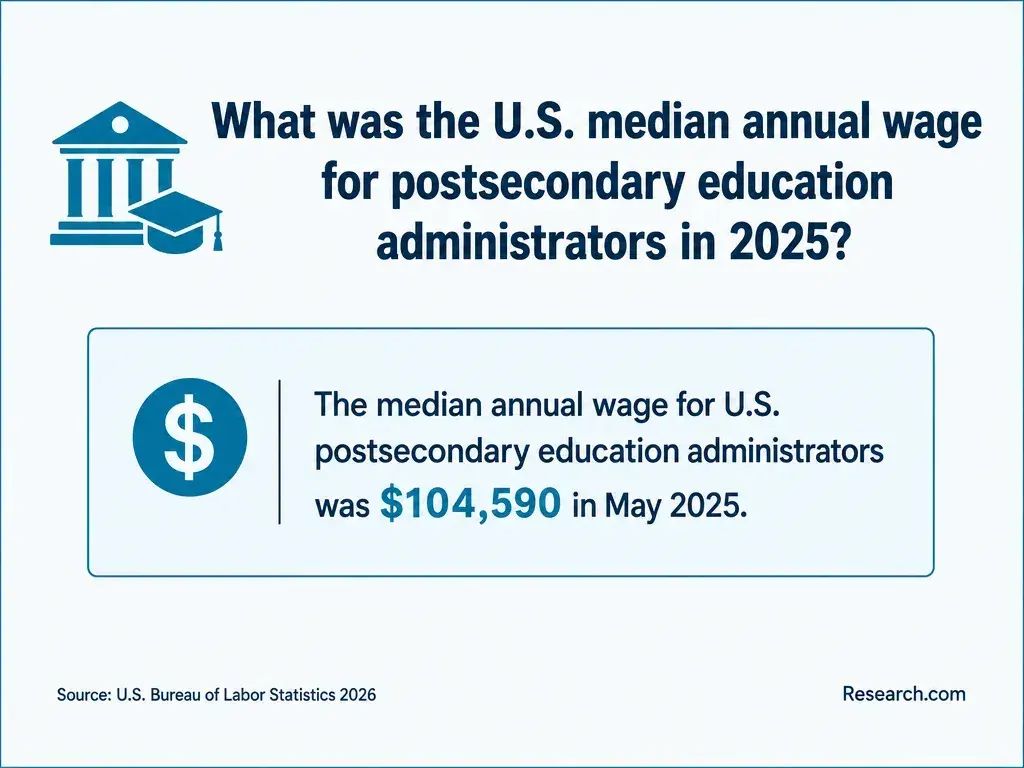
No single salary applies to Ed.D. graduates. U.S. Bureau of Labor Statistics occupational medians describe people working in a job, across educational backgrounds and experience levels, not the payoff from this degree.
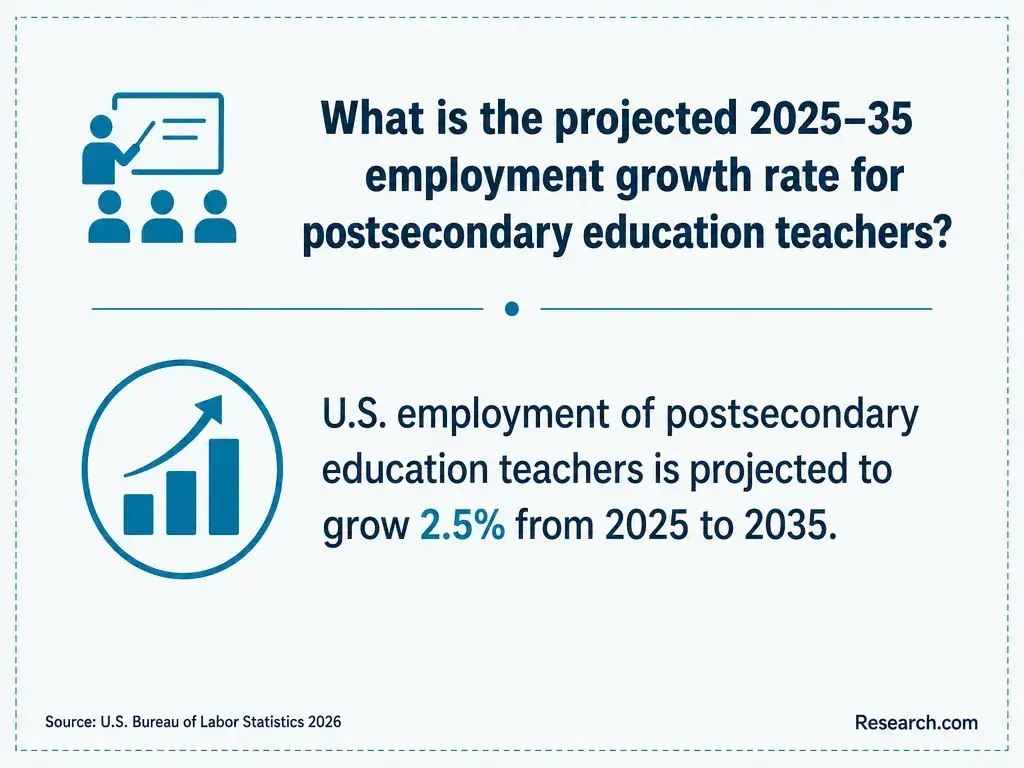
For a leader evaluating possible directions, the following May 2025 medians and 2025-2035 projections provide context:
| Occupation | Median annual salary | Projected employment growth |
| Training and development managers | $133,000 | 6.4% |
| Management analysts | $101,860 | 10.1% |
| Postsecondary education administrators | $104,590 | 1.8% |
The stronger projected growth for management analysts describes an occupation, not guaranteed demand for doctorate-holding consultants. Compare these figures with compensation and openings in your own sector and location.
If you already earn a senior-manager salary, the relevant financial question may be whether the degree changes your scope of work, not whether an occupational median exceeds your current pay.
Does an Ed.D. Require a License or Professional Certification?
Organizational leadership and workplace learning roles generally do not have a single license attached to the Ed.D. degree. Specific positions may have separate rules: a school-administrator role can require state authorization, while an employer may prefer a particular professional certification. Completing a broadly focused leadership doctorate does not automatically satisfy either requirement.
If your target role is regulated, obtain the program's licensure disclosure and check eligibility with the relevant state authority before enrolling.
If it is not regulated, evaluate optional certifications against the tasks you would actually perform; a credential in coaching or change management is not interchangeable with doctoral study or demonstrated leadership results.
Other Things You Should Know About EdD Leadership
Do not assume so. Your authority over employees can affect voluntary participation. Follow your institution's review process and your employer's rules, and discuss recruitment and confidentiality with your advisor before collecting information.
Usually you can describe a problem at an appropriate level of generality, but do not disclose restricted data, identifiable employee information, or proprietary plans without permission. Follow the program's application guidance and your employer's policies.
Contact your advisor promptly. A new site, sponsor, or data source may require revised academic and organizational approvals; a project approved at your former employer does not automatically transfer.
Not necessarily. Peers with similar authority may offer useful comparisons, while a cross-sector cohort can challenge your assumptions. Judge the program by faculty support, curriculum, project fit, and scheduling as well as cohort composition.
- Maximizing the Impact and ROI of Leadership Development | nih.gov https://pmc.ncbi.nlm.nih.gov/articles/PMC11505461/
- Types of Financial Aid: Grants, Work-Study, and Loans | studentaid.gov https://studentaid.gov/understand-aid/types
- Graduate Employment Outcomes Dashboard | Johns Hopkins https://publichealth.jhu.edu/offices-and-services/office-of-student-affairs/career-services/graduate-employment-outcomes-dashboard
- 2026 UNC Online EdD in Organizational Learning & Leadership https://online.unc.edu/online-doctoral-programs/online-edd-organizational-learning-and-leadership/
- What Topics Do EdD Students Research in the EdD Program? | Fairfield University https://www.fairfield.edu/news/insights/education-human-development/what-topics-do-edd-students-research.html
- How Do Asynchronous Classes Work? | Hopkins EP Online https://ep.jhu.edu/news/how-do-asynchronous-classes-work/
- What are Asynchronous Classes? | University of Bridgeport https://www.bridgeport.edu/news/what-are-asynchronous-classes/
- Leadership and Learning in Organizations Online Ed.D. | Peabody College of Education and Human Development https://peabody.vanderbilt.edu/academics/edd-programs/online-leadership-learning-organizations/
- Time Commitment & Course Formats - Cornell SCE https://sce.cornell.edu/pc-serv-time-commitment-format/
- Doctor of Organizational Leadership Online (Ed. D) | Marian University https://www.marian.edu/academics/programs/doctorates/online/organizational-leadership