2027 Online Ed.D. in Leadership and Learning in Organizations After a Master's in Public Relations: Admission and Credit Questions
Audited and Verified:
Our Editorial and Data Verification Process
Research.com uses government datasets, official education statistics and primary institutional information to support its career and degree guides. Our review process checks factual accuracy, occupational definitions, source dates and the requirements associated with the credentials discussed.
How This Article Was Fact-Checked
Our editorial team verifies salary estimates, employment projections, education requirements and program information against original data providers and official organizations. Salary figures are checked against the relevant occupational definitions and reporting periods. Information about licensure, accreditation and required in-person training is reviewed separately.
Fact-checked and verified on:

Co-Founder and Chief Data Scientist
A master's in public relations can provide a strong foundation for studying how organizations communicate and change. It does not, however, settle two separate doctoral questions: whether you qualify for admission and whether any of your graduate credits will count toward the Ed.D. This guide is for PR professionals considering an online doctorate in leadership and learning in organizations. It explains how to assess your academic and workplace preparation, request a meaningful credit evaluation, and compare programs before committing years of study and substantial expense.
Key Things You Should Know
- A completed public relations master's may satisfy an Ed.D. program's graduate-degree requirement; an education master's is not universally required. The program decides whether your degree and experience meet its rules.
- Credits used to establish admission eligibility are not necessarily transferable into the doctorate. Request a written, course-by-course decision showing which requirements, if any, prior work fulfills.
- Career outcomes depend on experience as well as education. The Bureau of Labor Statistics reports a $133,000 median annual salary for training and development managers in May 2025 - not an expected salary for Ed.D. graduates.
What Is an Online Ed.D. in Leadership and Learning in Organizations?
An Ed.D. in leadership and learning in organizations is a practice-oriented doctorate concerned with how people learn, how leaders support change, and how organizations use evidence to improve their work. Depending on the institution, students may study adult learning, organizational development, leadership, evaluation, and applied research. Online describes where much of the instruction occurs; it does not establish a common curriculum, attendance policy, or final project across programs.
For a PR professional, the connection is concrete. Communicating a change initiative is different from diagnosing why staff cannot adopt it, designing support for new practices, and evaluating whether those practices take hold. Your experience with stakeholders and messaging can inform that work, while the doctorate may develop capabilities beyond communications strategy.
Check the exact degree name and awarded concentration rather than assuming that a leadership course creates a formal specialty. A guide to choosing between Ed.D. academic concentrations can help frame that distinction. A general organizational Ed.D. is also not automatically a school-administrator licensure program.
Can You Enter an Online Ed.D. After a Master's in Public Relations?
Yes, potentially. Some leadership and learning Ed.D. programs admit applicants with master's degrees outside education. Eligibility depends on the particular program's accepted degree fields, institution and transcript standards, academic record, and professional-experience rules. A completed PR master's may clear a degree requirement without making an applicant automatically competitive.
Make the connection between PR and organizational learning specific. Leading a cross-functional communications rollout, training colleagues, assessing stakeholder needs, or revising a change strategy in response to evidence may demonstrate relevant practice. Merely listing campaigns or describing yourself as a leader tells an admissions committee less about your decision-making responsibility.
A useful application can pair one authentic organizational problem with your role in addressing it: what needed to change, whose learning or cooperation mattered, what evidence you had, and what you could not determine. If your work has been primarily external media relations, explain how you plan to gain experience with internal learning or organizational improvement. Consider whether a focused workplace project or targeted training would address that gap more directly than a doctorate.
Will Your Public Relations Master's Credits Transfer Into an Ed.D.?
Do not assume they will. Schools can recognize a completed master's for admission while requiring every course in the Ed.D. curriculum. Others may consider limited graduate work for transfer, substitution, or a prerequisite waiver. These decisions have different effects: a waiver may remove a course requirement without reducing the total credits needed to graduate.
The distinctions below show what to ask the program to confirm. The final decision belongs to the institution applying its doctoral policies, not to a general rule about PR degrees.
| Decision | What it establishes | Possible effect on the Ed.D. |
| Master's accepted for admission | Your completed degree meets an entry condition | No automatic reduction in doctoral coursework |
| Prior course accepted for transfer | An eligible course earns degree credit under program rules | May reduce remaining credits if applied to the degree audit |
| Course substitution | Prior learning satisfies a specified curriculum requirement | May still require replacement credits |
| Prerequisite waiver | You need not take a preparatory course | May leave the doctoral credit total unchanged |
Gather official transcripts, course descriptions or syllabi, credit units, grades, and the dates courses were taken. Ask the admissions office whether the degree qualifies you to apply; ask the registrar or designated doctoral program office for a written transfer and degree-audit evaluation. Have that office identify any grade, course-level, recency, institutional, residency, or quarter-to-semester-credit restrictions. If your graduate study was unfinished or spread across schools, ask separately whether those credits can establish eligibility and whether any can satisfy Ed.D. requirements.
Even an approved transfer does not necessarily shorten a cohort's fixed course sequence or reduce every fee. Base your time and tuition estimates on the individualized degree plan, not the number of credits on your PR transcript.
Requirements vary by school and entry term. Programs may request official transcripts, a statement of purpose, recommendations, a résumé documenting professional responsibility, an interview, or evidence of writing and research readiness. Some specify graduate grades or relevant experience; others describe preferred qualifications rather than firm minimums. Do not assume a GRE score, education master's, or particular number of management years is universally required.
For a PR applicant, the most useful distinction is between a formal requirement and evidence that strengthens an application. If a program requires leadership experience, ask whether responsibility for a campaign, staff development, or organizational change qualifies - and what documentation it expects. If it recommends methods preparation, ask whether your graduate research or evaluation coursework suffices or whether bridging work is available.
Applicants who previously entered a doctorate but did not finish should disclose that study accurately and request a separate evaluation of its standing and credits. Guidance on continuing an education doctorate after unfinished research may help identify questions to raise, but a public relations master's alone is not an all-but-dissertation credential.
An online program can let you remain in your PR role while studying, which may preserve access to a workplace problem for applied coursework. That advantage disappears if required live classes, group meetings, or campus visits conflict with your schedule. Campus-based study may make in-person faculty and peer interaction easier but can require relocation or more travel.
The comparison is about obligations, not a presumed difference in academic rigor. Verify these features for each program you are considering.
| Feature | Online program: verify | Campus-based program: verify |
| Class attendance | Live-session times, recordings, and attendance rules | Meeting days and required presence |
| Collaboration | Team meetings across schedules and time zones | On-site team and faculty availability |
| Travel | Required residencies or convenings | Commute, relocation, or occasional travel |
| Applied project | Remote supervision and partner-site rules | Supervision and approved project-site rules |
Request a sample term schedule and the attendance policy, including requirements during the final project. "Online" means you can often study from a distance; it does not necessarily mean self-paced.
Curricula differ, but relevant study may include leadership theory, adult learning, organizational change, research methods, and evaluation. For someone trained in PR, the most valuable additions may be learning-needs assessment, qualitative or quantitative inquiry, and measuring organizational outcomes - not another course centered mainly on messaging.
Inspect the required course sequence, not just elective titles. A program might teach change communication without offering substantial preparation in training design or employee development. Likewise, a methods course does not by itself establish advanced research expertise. If you hope to study whether a learning intervention works, look for faculty guidance on feasible measures, interpretation, and ethical use of workplace data.
Ask what students must produce at the end: a dissertation, dissertation in practice, capstone, or another approved deliverable. These are not interchangeable. Information on Ed.D. culminating requirements beyond the traditional dissertation can help you formulate questions, but the chosen program's catalog and faculty determine its actual requirements.
Time to completion depends on required credits, course sequencing, enrollment pace, and the final project. Prior PR coursework might be accepted yet have little effect on timing if the program follows a fixed cohort schedule. Ask for the published degree plan and the school's policy on interruptions, extensions, and continued enrollment during project work.
For cost, compare each school's written estimate against the credits and terms you would actually need after evaluation. Include tuition and mandatory fees, technology charges, travel and lodging for any convenings, and continued enrollment costs. Employer reimbursement can help, but confirm eligibility, annual limits, grade conditions, and repayment obligations before counting it as funding.
Research into lower-cost distance learning in doctoral leadership study can broaden an initial shortlist. Compare final, program-specific estimates rather than an advertised per-credit price alone. If your goal is simply to lead better communications projects, employer development or focused evaluation training may be a more economical next step.
For an experienced PR professional, the most plausible move may be toward organizational change, internal communications linked to workforce development, leadership development, or consulting. The doctorate can support that shift if you also build evidence that you can diagnose a learning problem, work across functions, and evaluate an intervention. It does not replace experience managing training, people, budgets, or implementation.
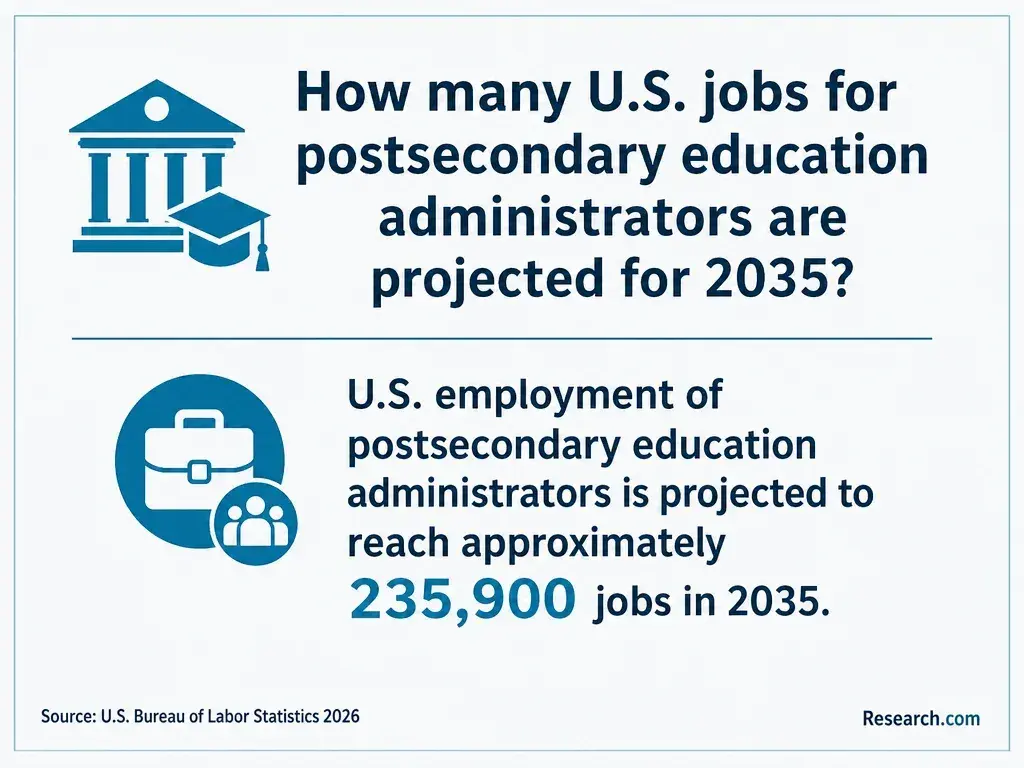
Training and development managers oversee employee learning strategy and delivery; management analysts advise organizations on improvement. Postsecondary administration is another possible direction, but institutions may expect higher-education experience in addition to a doctorate. Readers targeting that sector can explore college leadership development through organizational leadership doctoral study while checking actual job qualifications.
If you intend to remain in PR leadership, compare the Ed.D. with the narrower skills your next role requires. A supervised change project, mentoring, or targeted organizational-development training may make a stronger near-term case for advancement than a degree unrelated to your employer's hiring criteria.
There is no single reliable salary for graduates of a leadership and learning Ed.D. Pay depends on occupation, sector, location, responsibility, and prior experience - not the degree alone. The U.S. Bureau of Labor Statistics reports a $133,000 median annual salary for training and development managers in May 2025. That occupational median includes workers with varied educational backgrounds and should not be treated as a post-graduation offer.
For another relevant path, the BLS reports a $101,860 median for management analysts and projects 10.1% employment growth for that occupation from 2025 to 2035. That growth describes the occupation as a whole, not demand specifically for Ed.D. holders. Before using either figure in a financial decision, compare job postings for your intended role with your current experience and the total cost of study.
How Can You Choose an Accredited and Reputable Online Ed.D.?
Start by verifying the university's institutional accreditation through the accreditor and the U.S. Department of Education's recognized-accreditor information. Then confirm the exact Ed.D. award, program ownership, current catalog requirements, online delivery obligations, and any licensure disclosures directly with the institution. Institutional accreditation does not mean a general leadership degree prepares you for principal or superintendent licensure.
For this particular academic transition, ask each shortlisted program to answer three decision-making questions in writing: Does my PR master's meet the admission degree requirement? Which prior courses, if any, apply to the doctoral degree audit? What leadership, learning, and applied-research work must I still complete? Compare the answers alongside faculty support, final-project rules, scheduling, and your individualized cost estimate.
A reputable option is one whose documented requirements fit both your preparation and your goal. If a school cannot clarify credit treatment before you enroll, do not build your study plan around an assumed waiver or faster graduation.
Other Things You Should Know About EdD Leadership
Only with appropriate client or employer authorization and compliance with the program's research and privacy rules. Access for your job does not automatically authorize academic use or publication.
Possibly, if the program permits external partners and approves the setting, supervision, and data access. Secure those decisions before relying on a proposed partner.
Ask the program about changes of project site and enrollment continuity. A job change may require a new sponsor, revised scope, or additional approvals; permission to use a former employer's data should not be assumed.
Not as a universal requirement. Check the program's stated criteria and use authentic evidence of analytical writing, evaluation, and organizational problem-solving when publications are not required.
- Online Ed.D. in Organizational Leadership | UMass Global https://www.umassglobal.edu/academic-programs/doctor-education-organizational-leadership
- Can I transfer credits into a doctoral program? | Capella University https://www.capella.edu/blog/phd-doctorate/can-i-transfer-credits-into-a-doctoral-program/
- UNC Charlotte Academic Policy: Ed.D. Degree Requirements https://provost.charlotte.edu/policies-procedures/academic-policies-and-procedures/edd-degree-requirements/
- Understanding Transfer Credit Guidelines and Limitations | American Public University https://www.apu.apus.edu/transfer-credit/graduate/transfer-credit-guidelines/
- 2026 UNC Online EdD in Organizational Learning & Leadership https://online.unc.edu/online-doctoral-programs/online-edd-organizational-learning-and-leadership/
- Online (Ed.D.) in Leadership for Organizations | UD-EDU https://educationonline.udayton.edu/edd/
- Online Ed.D. - Teachers, Schools, and Society | Student Services https://education.ufl.edu/curriculum-teaching/prospective-students/edd/
- Master's, EdS, and Certificate Programs | unomaha.edu https://catalog.unomaha.edu/graduate/policies-governing-graduate-study/masters-eds-certificates-dual-degrees-second-masters-degree-programs/