2027 Online Ed.D. in Leadership and Learning in Organizations Admissions: Showing Leadership Across Several Short-Term Roles
Audited and Verified:
Our Editorial and Data Verification Process
Research.com uses government datasets, official education statistics and primary institutional information to support its career and degree guides. Our review process checks factual accuracy, occupational definitions, source dates and the requirements associated with the credentials discussed.
How This Article Was Fact-Checked
Our editorial team verifies salary estimates, employment projections, education requirements and program information against original data providers and official organizations. Salary figures are checked against the relevant occupational definitions and reporting periods. Information about licensure, accreditation and required in-person training is reviewed separately.
Fact-checked and verified on:

Co-Founder and Chief Data Scientist
Several short-term roles can make an Ed.D. application look fragmented, even when each one involved meaningful leadership. For applicants to online leadership and learning in organizations programs, the challenge is to show a coherent record of decisions, collaboration, and organizational improvement without overstating authority or results.
This guide explains what admissions committees may look for, how to document leadership across employers or contracts, and how to decide whether a practice-oriented doctorate fits your next step.
Key Things You Should Know
- Short tenure is not the same as limited leadership: document the decisions you owned, the people you influenced, and evidence of what happened in each role.
- Check each program's definition of qualifying professional experience; an application narrative cannot replace a formal eligibility requirement.
- Use recommendations and work samples to corroborate a consistent leadership pattern, while identifying one organizational learning problem you are prepared to study.
What Is an Online Ed.D. in Leadership and Learning in Organizations?
An online Ed.D. in leadership and learning in organizations is a practice-oriented doctorate concerned with how people learn, lead change, and improve performance in workplaces or other organizations.
Depending on the program, students may study adult learning, organizational development, leadership, and applied research. The exact degree name and required project vary by institution.
For an applicant with several brief roles, the degree's relevance depends less on uninterrupted tenure than on whether those roles reveal a sustained professional question. Someone who repeatedly helped teams adopt new processes, for example, could connect that experience to an interest in learning transfer or change implementation.
A PhD may fit better if the primary goal is producing academic research; a shorter credential or employer leadership program may be more direct if the goal is to gain initial supervisory experience. Compare Ed.D. study tracks and career fit against the work you actually want to do.
What Are the Admission Requirements for an Online Ed.D. in Leadership?
Admissions requirements are program-specific. An institution may require a completed graduate degree, a stated level of professional experience, transcripts, recommendations, a statement of purpose, and an interview.
Tests, grade thresholds, and definitions of relevant leadership experience can differ. Before drafting an explanation of short-term roles, confirm whether your degrees and experience meet the published requirements for your intended entry term.
Then separate eligibility from competitive evidence. Meeting a minimum experience requirement establishes eligibility; showing what you learned while leading projects helps an admissions committee assess readiness. Ask admissions whether contract work, interim appointments, concurrent roles, or volunteer leadership count toward any stated experience threshold.
If previous doctoral study is part of your record, an ABD-to-Ed.D. program comparison guide can help frame questions, but only the receiving institution can decide whether prior study affects admission or degree requirements.
A strong statement of purpose identifies a problem you have encountered and explains why doctoral-level inquiry would help you address it. It need not claim that every brief assignment produced lasting organizational change. Describe your authority accurately and distinguish completed work from improvements you proposed.
How Can Applicants Show Leadership Across Several Short-Term Roles?
Present short-term roles as evidence of a developing leadership practice, not as a collection of job titles. A useful narrative has a throughline: the kinds of problems you were asked to solve, the decisions you made, how you worked with others, and what each setting taught you. A contract's defined end date or an interim appointment's limited scope can also explain a brief tenure without becoming the focus of the application.
Build an evidence inventory before writing your résumé and statement. These steps help you identify claims that a recommender or permitted work sample can support:
- For each role, record its dates, purpose, reporting relationship, decision authority, and whether the assignment was temporary by design.
- Identify one leadership action you personally took, such as convening stakeholders, redesigning onboarding, or resolving an implementation obstacle.
- Separate your contribution from the team's work; include a result only if you can substantiate it and explain its limits.
- Look across roles for a recurring problem, such as inconsistent training transfer, that could support a credible doctoral interest.
- Choose recommenders who observed your judgment and collaboration directly, even if they supervised you for a short period.
For example, an applicant might connect an interim training assignment, a fixed-term operations role, and a consulting project through a shared focus on helping teams adopt new procedures.
The application should explain the different responsibilities in each setting rather than present all three as equivalent management positions. If outcomes are confidential or were never measured, describe the process, available evidence, and what remains unknown. Do not disclose employer data without permission.
Brief roles can also expose a readiness gap. If you have contributed to projects but have not yet made consequential decisions or led implementation, seek a cross-functional assignment or mentorship first. That experience may strengthen both your application and your judgment about whether a doctorate is necessary.
Verify the institution's accreditation through the accreditor and a recognized US accreditation directory, then check the university's own description of the exact Ed.D. you would enter. Institutional accreditation does not establish that a program prepares students for a particular license or certification.
For this admissions scenario, compare programs on how they assess professional experience and support applied work. Ask whether applicants may use experience from multiple organizations, how faculty help students scope a project after an employer change, and whether a current workplace partner is required.
Also confirm live attendance, campus convenings, the final doctoral deliverable, and published completion requirements. A program that values cross-sector experience may be a better fit than one whose required project depends on access you cannot reliably maintain.
Relevant study may include adult learning, organizational culture, change implementation, needs assessment, and research or evaluation methods. The value for someone with short-term roles is the opportunity to examine a recurring challenge systematically instead of treating each assignment as an isolated success or setback.
Review required courses and the final project to see whether you would develop the skills you need. If your experience is chiefly in facilitation, you may need stronger preparation in measurement and organizational diagnosis.
If you already evaluate programs but have limited authority to implement change, coursework cannot substitute for opportunities to lead. Course exposure alone is not proof of advanced research or managerial competence.
Online delivery can make continued employment possible, but it does not necessarily mean self-paced study. The comparison below highlights practical differences to verify with each program rather than features guaranteed by either format.
| Consideration | Online Ed.D. | Campus-based Ed.D. |
| Class participation | May combine live sessions, independent work, and group meetings | May require regular on-campus attendance |
| Travel | May still include required campus convenings | Usually requires commuting or relocation |
| Applied project access | May allow inquiry at a local organization, subject to approval | May offer nearby partnerships, subject to program rules |
If you expect another job transition, ask how a change of employer would affect project-site approval and progression. Also request the actual live-session schedule and attendance policy. If scheduling or time to completion is decisive, review shorter pathways through Ed.D. coursework, then verify whether any advertised pace is feasible alongside your work and project obligations.
Completion time and total cost depend on the required credits, course sequence, enrollment pace, final project, and whether a program charges by credit or term. Do not assume that earlier graduate coursework will shorten the degree; admission eligibility and transfer credit are separate decisions.
Request a written estimate covering tuition, mandatory fees, required travel and lodging, and likely continuation charges if the final project takes longer than planned.
Compare it with available employer assistance and any repayment conditions if you leave your job, particularly relevant when your career has included short appointments. Organizational leadership doctorate tuition comparisons can help generate a shortlist, but the institution's charges for your entry term should control your budget.
Potential paths include learning and development, organizational development, workforce training, consulting, and education administration. The best fit depends on what you have already led. Designing training for several employers may support a move toward broader learning strategy; it does not, by itself, establish readiness to manage a department or oversee an organization-wide change effort.
Test a target role against job descriptions and conversations with people doing the work. Identify whether employers seek supervisory experience, sector knowledge, evaluation skills, or a doctorate.
For higher education employees, higher education leadership doctorate tuition assistance may be worth exploring alongside internal advancement options. If your immediate gap is leading a team, a stretch assignment or employer development program may offer a more direct route than an Ed.D.
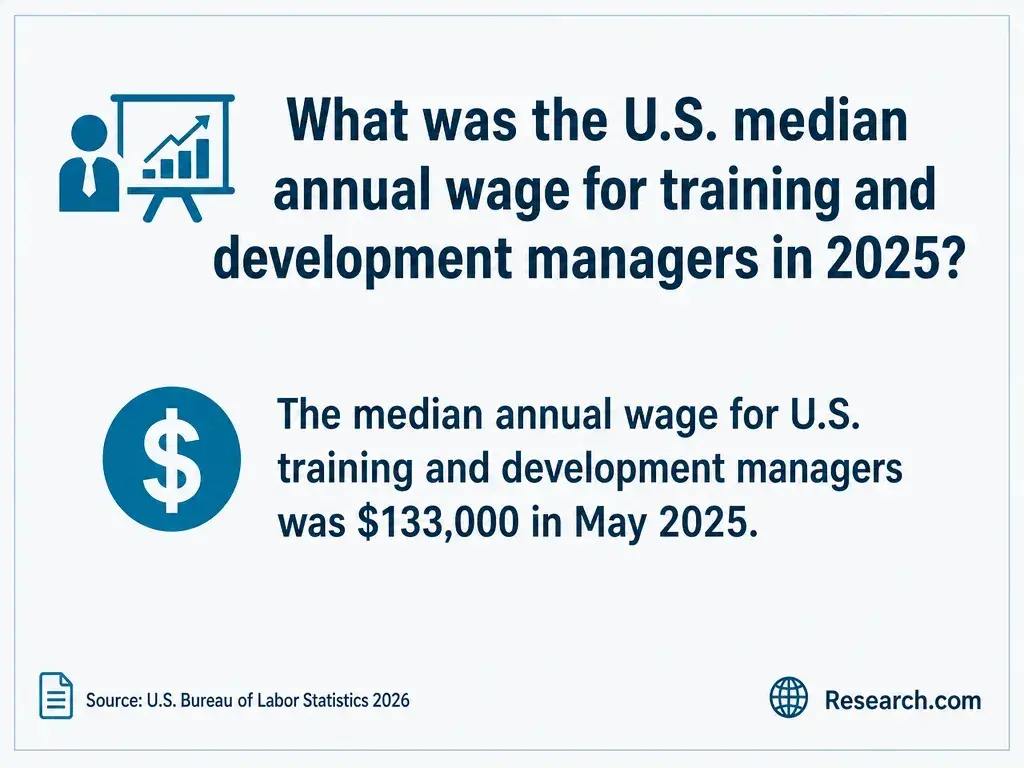
US Bureau of Labor Statistics figures describe occupations, not the expected pay of Ed.D. graduates. The median annual salary for training and development managers was $133,000 in May 2025.
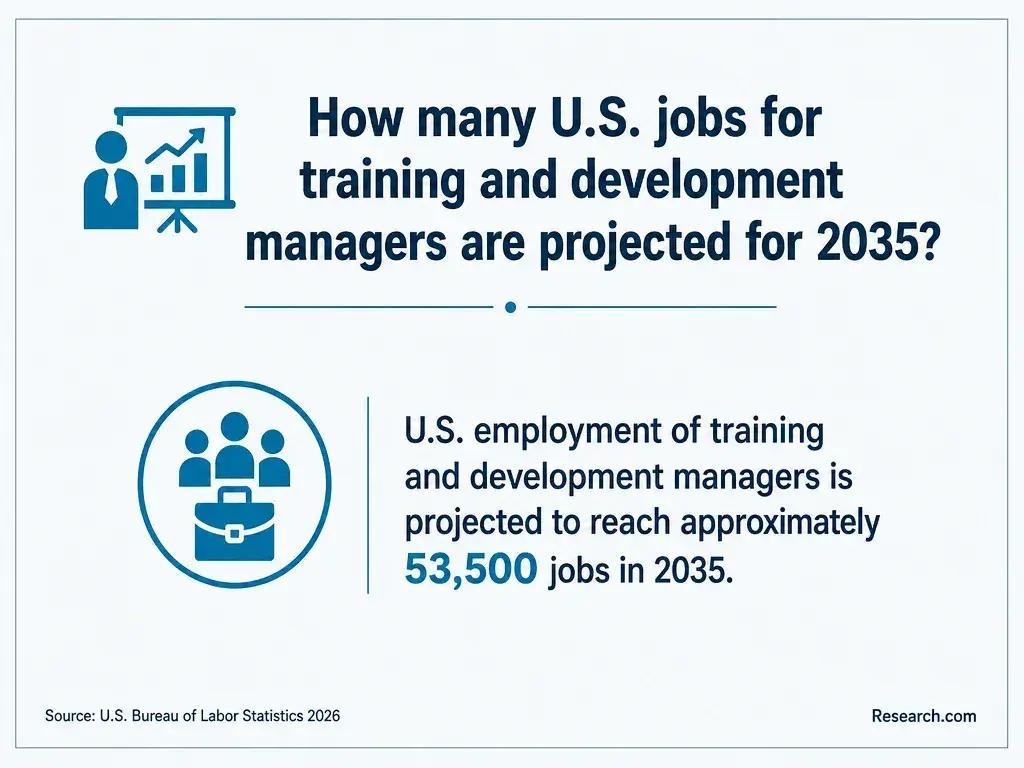
Reaching such a role typically depends on relevant management experience as well as education. BLS projects employment of training and development specialists to grow 10.8% from 2025 to 2035, but that projection does not measure demand for this doctorate.
Use occupational figures to assess your target job market, then compare actual postings with your experience. A sequence of short roles may demonstrate adaptability, but employers can still require sustained responsibility for staff, budgets, or implementation.
Do Ed.D. Graduates Need Licensure or Professional Certification?
A general leadership and learning Ed.D. does not automatically confer teacher, principal, superintendent, or other regulated licensure. Certification for a particular professional role is also separate from earning the doctorate.
If you seek a regulated position, ask the program whether the exact degree prepares graduates for it and confirm eligibility with the relevant state authority. For organizational learning or consulting roles, review employer requirements rather than assuming that either licensure or a voluntary certification is universally necessary.
Other Things You Should Know About EdD Leadership Programs
Do not add overlapping months together as though they were consecutive employment. Show both roles and their dates clearly, and ask admissions how it calculates any required experience.
Briefly clarify a gap or departure if it would otherwise make your timeline confusing. Keep the explanation factual and return the focus to your responsibilities and preparation.
Possibly. Ask the client what they can discuss and check the program's recommender rules. They may be able to assess your leadership without sharing protected project details.
Not necessarily. Follow the program's stated requirements; where alternatives are allowed, choose someone who can give specific examples of your work rather than someone with a senior title who knows you only briefly.
- The role of leadership in collective creativity and innovation | nih.gov https://pmc.ncbi.nlm.nih.gov/articles/PMC9815531/
- Merit Hiring Plan Frequently Asked Questions | U.S. Office of Personnel Management https://www.opm.gov/policy-data-oversight/hiring-information/merit-hiring-plan-resources/merit-hiring-plan-frequently-asked-questions/
- Preparation for doctoral research: a narrative review | springer.com https://link.springer.com/article/10.1007/s13384-023-00630-y
- Online Ed.D. in Leadership and Learning in Organizations | VU-EDU https://peabodyonline.vanderbilt.edu/edd-in-organizational-learning/
- Online EdD Admission | UD-EDU https://educationonline.udayton.edu/edd/admission/
- 2026 UNC Online EdD in Organizational Learning & Leadership https://online.unc.edu/online-doctoral-programs/online-edd-organizational-learning-and-leadership/