2027 Online Ed.D. in Leadership and Learning in Organizations: Degree Fit for Leaders Tackling Overloaded Managers with Little Capacity for Coaching
Audited and Verified:
Our Editorial and Data Verification Process
Research.com uses government datasets, official education statistics and primary institutional information to support its career and degree guides. Our review process checks factual accuracy, occupational definitions, source dates and the requirements associated with the credentials discussed.
How This Article Was Fact-Checked
Our editorial team verifies salary estimates, employment projections, education requirements and program information against original data providers and official organizations. Salary figures are checked against the relevant occupational definitions and reporting periods. Information about licensure, accreditation and required in-person training is reviewed separately.
Fact-checked and verified on:

Co-Founder and Chief Data Scientist
Managers may be expected to develop employees while carrying workloads that leave little room for meaningful coaching. If you lead learning, talent development, or organizational change, an online Ed.D. in Leadership and Learning in Organizations could strengthen your ability to investigate and address that problem - but a degree will not create time in managers' schedules. This guide helps you distinguish a coaching-skills gap from a capacity problem, assess what doctoral study would add, and decide whether an Ed.D. or a more direct intervention deserves your investment.
Key Things You Should Know
- An Ed.D. is most useful when you have authority to investigate and improve the systems shaping managers' work, not just deliver coaching training.
- Check workload, competing priorities, and existing coaching practices before choosing an intervention; limited coaching time does not establish that managers lack coaching skills.
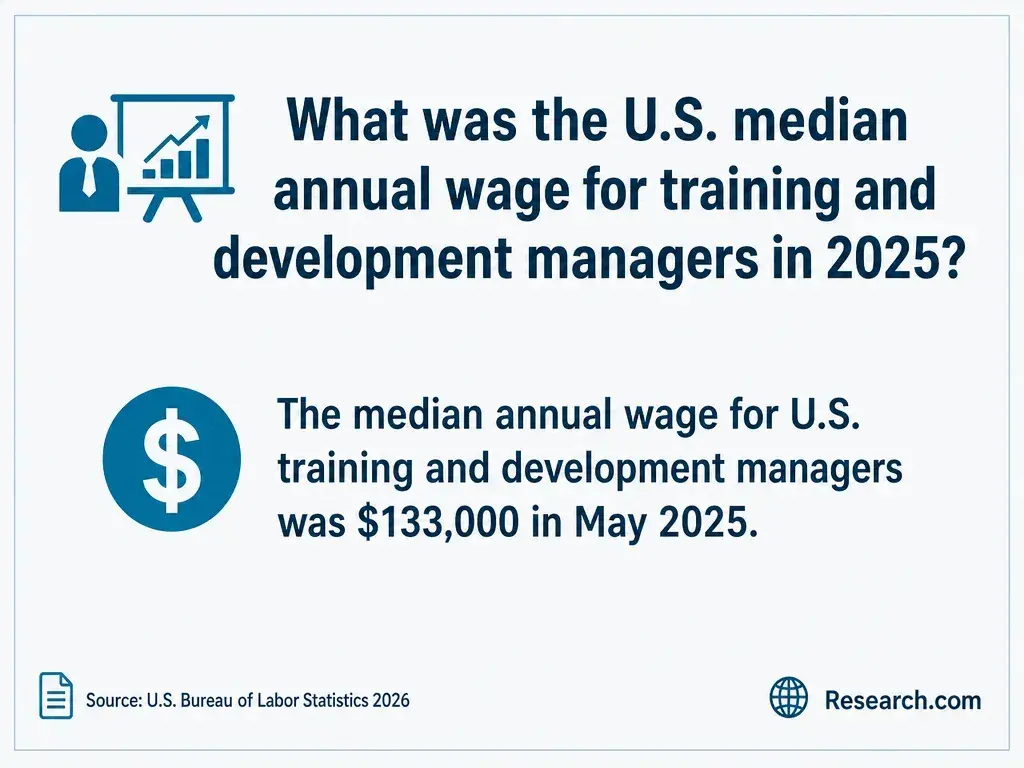
- For salary context, the US Bureau of Labor Statistics reports a May 2025 median of $133,000 for training and development managers - not an expected salary for Ed.D. graduates.
What is an online Ed.D. in Leadership and Learning in Organizations?
An online Doctor of Education (Ed.D.) in leadership and organizational learning is a practice-oriented doctorate focused on how people learn, lead, and change within organizations. The exact degree name and requirements vary by institution. Coursework may connect adult learning and leadership development with organizational diagnosis, research methods, and an applied doctoral project. "Online" describes where much of the instruction occurs; it does not necessarily mean self-paced study or no campus visits.
For the manager-capacity problem, the relevant question is broader than how to teach better coaching conversations. It is how workload, incentives, meeting demands, spans of responsibility, and organizational expectations affect whether coaching happens at all. Compare different education doctorate specialization pathways if you need to distinguish organizational learning from a doctorate primarily designed for school administration.
Is an online Ed.D. in Leadership and Learning in Organizations worth it?
It may be worth it if your long-term role involves diagnosing organizational problems, leading cross-functional change, and evaluating whether development efforts work. It is less compelling if your immediate goal is simply to help a few managers hold better coaching meetings. First establish whether the main constraint is skill, capacity, authority, or some combination; the description "overloaded managers" alone cannot identify the cause.
The options below address different parts of the problem. Their value depends on what you can change in the organization and how long you expect to work on similar challenges.
| Pathway | Primary contribution | Important limit |
| Coaching practice or targeted training | Builds managers' conversation and feedback skills | Cannot free time or resolve conflicting performance expectations |
| Operational redesign or employer-led leadership development | Addresses priorities, workload, manager support, and available coaching time | Requires decision-making authority and sustained implementation |
| Leadership and learning Ed.D. | Develops deeper capability in diagnosis, applied inquiry, and organizational change | Requires substantial time and expense; completing a degree does not itself change the workplace |
A sensible first test is to examine manager schedules and responsibilities alongside existing coaching expectations, then seek employee and manager input through an appropriate, confidential process. If managers already know how to coach but cannot protect time for it, a training course is unlikely to solve the central problem. If you can sponsor a sustained investigation and influence the resulting decisions, doctoral study may become more valuable. Without that authority or a broader career goal, an employer-supported improvement project or focused development program may be the better investment.
What are the admission requirements for an online Ed.D. in organizational leadership?
Requirements are program-specific. Schools may assess prior graduate education, professional experience, academic records, recommendations, a statement of purpose, and readiness for applied research. Some require a completed master's degree; others define acceptable preparation differently. A managerial title alone does not demonstrate that you have led change or can investigate an organizational problem.
If you have led a coaching initiative, describe your actual responsibilities: the decisions you made, the stakeholders involved, what evidence was available, and what remains unknown. Do not present a proposed solution or unmeasured improvement as a proven result. Ask admissions staff whether your background meets the formal requirements and whether the program expects access to an organization for applied work. Applicants with an education specialist degree should separately verify Ed.S. credit considerations for Ed.D. study; credits considered during admission do not necessarily transfer into the doctorate.
Online study may let a working leader remain in their job and investigate a workplace problem, but location flexibility is not the same as schedule flexibility. Live classes, team meetings, faculty consultations, and required convenings can compete with the same managerial demands you hope to study. A campus-based program may offer more in-person interaction but require relocation or regular travel. Neither format is inherently stronger for this problem; faculty guidance, research access, and a feasible schedule matter more.
Request the actual class calendar, attendance rules, group-work expectations, and campus-visit requirements for your intended entry term. Ask how project supervision works when your employer changes or withdraws access. If your work schedule cannot accommodate the program's fixed commitments, an online label should not outweigh that conflict.
Course titles vary, but useful preparation for this challenge may include adult learning, leadership development, organizational culture and change, program evaluation, and qualitative or quantitative inquiry. Look beyond course names: a coaching course may build conversational skill, while an organizational diagnosis course may help you examine why coaching is crowded out. Research and evaluation coursework should help you distinguish changes in managers' reported confidence from changes in coaching practice or employee experience.
Applied doctoral requirements also differ. A dissertation in practice, team capstone, or other project may have distinct rules for organizational partners, data access, faculty approval, and final deliverables. Review online Ed.D. capstone alternatives to compare, then confirm the requirement with each program rather than assuming that "no dissertation" means no substantial research or project work.
Completion time depends on the required coursework, enrollment pace, project design, and approval process. A workplace project can extend beyond coursework if you cannot obtain access, recruit an organizational partner, or collect appropriate evidence on schedule. Ask for the program's published time-to-completion rules and how leaves or changes in employment affect progression.
For a realistic cost comparison, obtain the required credits and tuition schedule, mandatory fees, any convening travel and lodging costs, and the conditions of employer assistance. Include the value of time you may need to take away from paid work or other responsibilities. Reimbursement is not guaranteed funding: an employer may impose grade, tenure, or repayment conditions. Use online Ed.D. affordability and degree planning to frame comparisons, then request a current written estimate from each school. Without a verified program price and your funding terms, a promised return on investment would be speculative.
The degree may support experienced professionals moving toward broader learning and development, talent development, organizational development, consulting, or institutional leadership responsibilities. These roles differ: a training and development manager may oversee programs and budgets, while an organizational consultant may diagnose processes and advise on change. Employers will still look for evidence that you have led initiatives, worked across functions, and evaluated results - not just completed doctoral coursework.
A project on managers' coaching capacity could demonstrate useful judgment if you can show how you defined the problem, engaged stakeholders, handled data responsibly, and communicated limitations. Share only material your organization permits you to disclose. If your goal is specifically within colleges or universities, compare doctoral leadership study for higher education organizations with your target jobs' actual experience requirements.
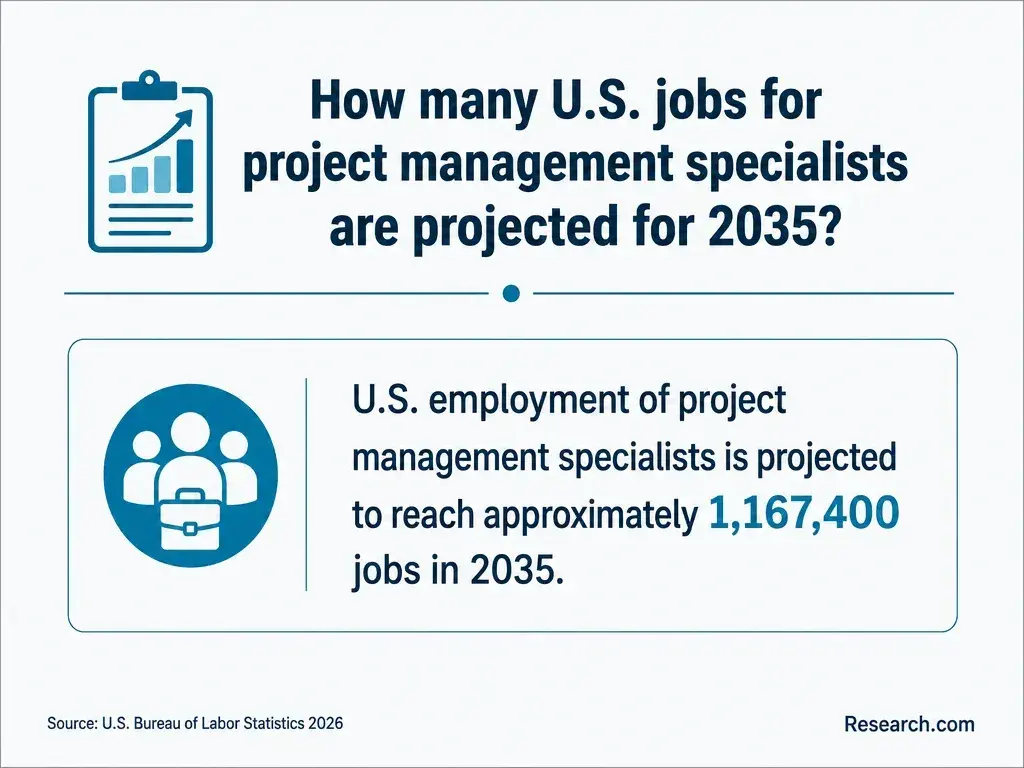
There is no reliable single "Ed.D. salary." Pay depends on the occupation, sector, location, scope of responsibility, and prior experience. The US Bureau of Labor Statistics reports a May 2025 median annual salary of $133,000 for training and development managers, with projected employment growth of 6.4% from 2025 to 2035. That occupational median describes people in the role across educational backgrounds; it is neither a graduate outcome nor evidence that a doctorate causes a pay increase.
For a personal estimate, examine compensation for the specific positions you could credibly pursue and compare it with your current prospects without the degree. If advancement depends chiefly on gaining budget authority or managing a larger team, seek that experience before attributing potential salary gains to doctoral study.
Verify that the university holds recognized institutional accreditation and that the credential awarded is the Ed.D. you intend to earn. Ask the school to identify any applicable programmatic accreditation rather than assuming it applies because the university is accredited. Accreditation supports an evaluation of the institution; it does not establish that a particular program teaches the coaching or organizational-change skills you need.
A broadly focused organizational leadership Ed.D. does not automatically qualify a graduate for teacher, principal, or superintendent licensure. If your target job is regulated, check the program's licensure disclosures and the relevant state authority's requirements before enrolling. For most corporate learning and development roles, the immediate question is instead whether employers value this degree alongside your demonstrated experience.
How can you choose a reputable online Ed.D. program?
Start with your intended contribution: do you want to redesign managers' work, build a leadership-development system, or evaluate an existing coaching initiative? Then compare programs against that task rather than choosing by degree title alone. These questions help test whether a program can support the work you actually hope to do:
- Which required courses address organizational diagnosis, adult learning, change implementation, and evaluation - and at what depth?
- What are the live-session, group-work, campus-visit, and attendance obligations for the intended entry term?
- What doctoral deliverable is required, who supervises it, and what happens if workplace access changes?
- What written tuition estimate, funding conditions, completion rules, and graduate outcomes can the school provide?
For a proposed study involving managers or employees, distinguish an employer's willingness to discuss the idea from authorization to use schedules, personnel records, or interview responses. Ask the program how it determines research-review requirements and ask the employer about permission, confidentiality, and data use. A reputable fit is a program whose academic expectations you can meet ethically while continuing to serve the organization - not merely one whose marketing describes convenient online study.
Other Things You Should Know About EdD Leadership
Not necessarily. Feedback can identify a specific performance issue; coaching usually involves an ongoing conversation that helps an employee reflect, practice, and make progress. Decide what managers are expected to do before measuring whether they do it.
A learning team can provide tools, facilitation, or specialist support, but it may not replace a manager's role in setting expectations and responding to day-to-day work. Clarify responsibilities so employees know where to seek support.
Track only information needed for a legitimate decision. A count of meetings says little about their quality, while detailed employee notes can create privacy and trust concerns. Agree on purpose, access, retention, and reporting rules before collecting data.
They may help prepare prompts or organize approved resources, but they cannot resolve excessive workload or assume a manager's accountability. Check organizational policy before entering employee information into a tool, and evaluate usefulness without treating usage as proof of better coaching.
- Online Ed.D. in Organizational Leadership | UMass Global https://www.umassglobal.edu/academic-programs/doctor-education-organizational-leadership
- Full Guide to the Doctorate in Organizational Leadership (2025) | Pepperdine University https://gsep.pepperdine.edu/blog/posts/online-edd-in-organizational-leadership-overview.htm
- Online Ed.D. in Leadership and Learning in Organizations | VU-EDU https://peabodyonline.vanderbilt.edu/edd-in-organizational-learning/
- PhD vs. EdD in Education: Nine expert tips to help you choose [with infographic] | USC Rossier https://rossier.usc.edu/news/phd-vs-edd-in-education-nine-expert-tips-to-help-you-choose-with-infographic/
- Academics: Section 4: Academic Calendar, Admission, and Enrollment: Admission Requirements https://academics.waldenu.edu/handbook/registration-admission-enrollment/admission-requirements
- Online Ed.D. in Higher Education | Rockhurst University https://onlinedegrees.rockhurst.edu/programs/online-edd-education-leadership/higher-ed
- UNC EdD Online: Organizational Learning and Leadership https://online.unc.edu/online-doctoral-programs/online-edd-organizational-learning-and-leadership/