2027 Online Ed.D. in Leadership and Learning in Organizations: Comparing Coursework in Digital Learning Strategy
Audited and Verified:
Our Editorial and Data Verification Process
Research.com uses government datasets, official education statistics and primary institutional information to support its career and degree guides. Our review process checks factual accuracy, occupational definitions, source dates and the requirements associated with the credentials discussed.
How This Article Was Fact-Checked
Our editorial team verifies salary estimates, employment projections, education requirements and program information against original data providers and official organizations. Salary figures are checked against the relevant occupational definitions and reporting periods. Information about licensure, accreditation and required in-person training is reviewed separately.
Fact-checked and verified on:

Co-Founder and Chief Data Scientist
Two online Ed.D. programs may both promise leadership and learning expertise while preparing students for very different digital learning work. One may emphasize designing online instruction; another may focus on deciding which learning investments to make, leading implementation, and evaluating results. That distinction matters for learning and development professionals and organizational leaders choosing a doctorate alongside full-time work. This guide shows how to compare required courses, applied projects, and research preparation - then places admissions, cost, and career claims in context so you can choose a program that fits the decisions you want to lead.
Key Things You Should Know
- Compare required work, not course titles: A digital learning strategy curriculum should connect adult learning, technology decisions, implementation, and evaluation; a single instructional technology elective does not establish that depth.
- Check the applied project: The strongest fit is a program whose approved doctoral work lets you investigate a relevant learning problem with appropriate organizational access, faculty guidance, and data protections.
- Match the degree to the role: The U.S. Bureau of Labor Statistics reports a $133,000 median annual salary for training and development managers in 2025, but that occupation typically requires substantial experience; an Ed.D. does not confer the job or its pay.
What Is an Online Ed.D. in Leadership and Learning in Organizations?
It is a practice-oriented Doctor of Education focused on how people learn and how leaders improve organizations. Depending on the university, students may study adult learning, organizational change, leadership, research methods, and applied evaluation. Online describes where much of the instruction occurs; it does not establish that classes are self-paced or that the degree has a digital learning concentration.
Digital learning strategy means making and assessing organizational decisions about technology-supported learning: which performance problem to address, whom a solution must serve, how it will be implemented, and what evidence will show whether it helped. That is broader than building an online course or operating a learning management system. Compare the officially awarded degree and any formally designated concentration with other Doctor of Education study areas to compare; an elective alone is not a credentialed specialization.
How Does Digital Learning Strategy Coursework Compare Across Online Ed.D. Programs?
Start with the work you hope to lead. A learning and development manager choosing an organization-wide platform needs different preparation from an instructional designer creating modules or an analyst evaluating whether training changes workplace practice. The following are curriculum patterns for comparison, not verified descriptions of particular universities.
This table distinguishes the academic emphasis and likely limitation of each pattern. Actual requirements, elective availability, and project rules must come from the program's catalog and current course schedule.
| Curriculum pattern | Likely emphasis | Potential gap for digital learning strategy |
| Instructional design-centered | Learning theory, online course design, accessibility, and learner experience | May offer limited preparation in budgets, governance, or organization-wide implementation |
| Leadership and change-centered | Stakeholder alignment, organizational culture, adoption, and strategic decisions | May offer little practice designing or assessing digital instruction |
| Evaluation and analytics-centered | Research methods, measurement, program evaluation, and interpretation | May devote less attention to platform selection or change leadership |
| Integrated learning strategy | Design, implementation, leadership, and evaluation across an applied problem | Breadth may limit technical depth in any one tool |
The most useful sequence moves from diagnosing a learning or performance need, to designing a feasible response, to implementing it with stakeholders, to evaluating outcomes. Look for assignments that require choices and trade-offs - not just descriptions of a technology. For example, a sound platform proposal would consider accessibility, procurement, staff support, privacy, and evidence of learning transfer. Responsible use of AI in learning is relevant where coursework addresses accuracy, bias, data handling, and human oversight rather than merely introducing an AI tool.
Compare the evidence of learning: Request syllabi for required courses, recent elective schedules, and the rules for the capstone or dissertation in practice. Ask whether students can analyze a digital learning initiative, what methods they learn, and who approves workplace data use. A promising project topic is not proof that your employer will provide access or that the program will approve it. If your immediate goal is to build courses or learn one platform, targeted instructional design training may be a more direct investment than a doctorate.
What Accreditation Should Online Ed.D. Programs in Leadership and Learning Hold?
Confirm that the university holds recognized institutional accreditation and that the Ed.D. is an officially awarded doctoral degree within that institution. Check the accreditor's directory and the university's own degree listing rather than relying on promotional language. Institutional accreditation supports evaluation of the university as a whole; it does not certify that digital learning coursework is strong or that the degree meets a state's educator-licensure rules.
If a school advertises programmatic recognition or professional alignment, identify exactly what it covers. Then evaluate digital learning preparation separately through required courses, faculty expertise, project expectations, and access to research support.
For an established learning professional, the degree may support work leading learning strategy, talent development, organizational development, or evaluation. The job still requires evidence of managing stakeholders, resources, and implementation. Someone moving from instructional design into a director role, for example, may need budget and people-management experience more urgently than another course in courseware production.
Other possible settings include consulting, nonprofits, government, and higher education. In colleges, digital learning leadership may involve faculty development, student support, governance, and institutional technology decisions rather than corporate training. Readers pursuing that setting can compare online organizational leadership Ed.D. choices for college leaders against the institution-specific experience those jobs require.
An Ed.D. is less direct for someone seeking a research-intensive academic career than a suitable PhD may be. Neither degree substitutes for a portfolio of implemented work or for an employer's required sector experience.
Requirements vary. Programs commonly review prior graduate study, transcripts, professional experience, recommendations, and a statement connecting the applicant's goals to doctoral work. Some specify a master's degree or interview; others set different conditions. An education major is not universally required. Applicants from technology, business, healthcare, or public service can make a strong case by showing responsibility for a real learning or organizational challenge.
Describe the decisions you have made, the people affected, and the evidence you used - without claiming results you cannot document. If you have an Ed.S., distinguish credits that satisfy admission requirements from credits the university will actually apply to the doctorate; online education doctorate routes for Ed.S. graduates offer a starting point for questions, not a promise of transfer. Obtain a written, program-specific credit evaluation before assuming a shorter pathway.
Completion depends on the program's required credits, course sequence, enrollment pace, and final doctoral project. A cohort schedule can make course progression predictable while leaving little room to pause or substitute a digital learning elective. Applied work may take longer if organizational permission, data access, or project approval changes.
Ask for the published course sequence and completion rules for your entry term. Compare when the relevant courses actually run, whether live meetings and group work fit your schedule, and what happens if you change employers before completing the project. Online access removes a commute; it does not necessarily remove fixed meeting times or campus convenings.
There is no reliable single price for this degree category. A meaningful comparison uses the institution's published charge structure and required credits, then adds mandatory fees, materials, any campus travel, and costs that continue if the project extends beyond planned enrollment. Compare verified online Ed.D. fees and cost comparisons with each university's current billing schedule.
Ask an employer whether assistance is paid upfront or reimbursed, which courses qualify, and whether continued employment is required. Price alone can mislead: a cheaper program without relevant required coursework or feasible project supervision may cost more in time and supplementary training. Conversely, if you need only platform or evaluation skills, a focused course may deliver better value than a full doctorate.
Neither format is inherently better for digital learning strategy. Online study can let working professionals apply coursework locally and compare practices with peers across organizations. Campus study may offer easier in-person collaboration and access to certain research activities. In either format, faculty feedback, relevant assignments, usable technology, and supervision matter more than location alone.
Compare actual attendance and project obligations alongside price. A review of affordable doctoral education in organizational leadership can help identify online options, but confirm live-session times, residencies, and whether the curriculum addresses digital learning before treating a lower advertised price as the better choice.
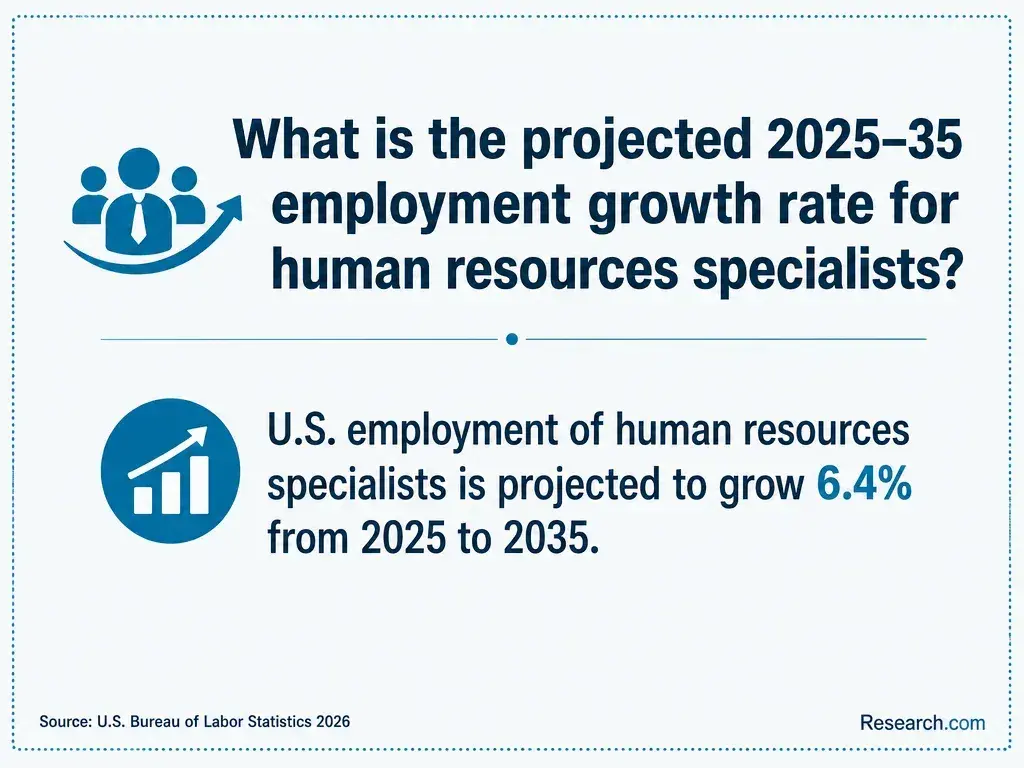
Salary and growth figures describe occupations, not Ed.D. outcomes. The U.S. Bureau of Labor Statistics reports a 2025 median annual salary of $133,000 for training and development managers and projects 6.4% employment growth for that occupation from 2025 to 2035. Those figures are useful if management is your target, but they include workers with varied degrees and experience; they cannot predict an individual graduate's pay or promotion.
Use the occupation that matches your intended responsibilities, then check local postings for required management experience, technical skills, and pay. If you are currently a learning specialist, a credible path to management may involve leading a cross-functional initiative and demonstrating its evaluation before - or instead of - enrolling in an Ed.D.
Do Ed.D. Graduates Need Licensure or Professional Certification?
Organizational learning and most corporate training leadership roles generally do not require an educator license simply because the employee holds an Ed.D. A broadly focused leadership and learning doctorate also does not automatically qualify someone for teacher, principal, or superintendent licensure. For a regulated school role, check the applicable state authority and the university's written licensure disclosure before enrolling.
Optional certifications in instructional design, learning technology, or change management may demonstrate narrower skills, but they are distinct from the doctorate. Select one only when target employers value it and its assessed competencies address a genuine gap.
Other Things You Should Know About EdD Leadership
Usually the central skill is evaluating learning needs and technology choices, not writing software. Check individual syllabi for technical prerequisites or tool-based assignments.
Often you can describe your decisions and methods, but obtain permission before sharing employer materials, identifiable data, or unpublished findings. Use an approved, redacted version where necessary.
Not by itself. Platform skills can become dated; assess whether the curriculum also teaches transferable design, implementation, accessibility, and evaluation principles.
Review relevant syllabi and assignments for accessibility objectives, then ask how students test learning materials and obtain support for using required course technologies.
- The Impact of Digital Learning Competence on the Academic Achievement of Undergraduate Students - PMC https://pmc.ncbi.nlm.nih.gov/articles/PMC12292602/
- Direct Assessment (Competency-Based) Programs | ed.gov http://www.ed.gov/laws-and-policy/higher-education-laws-and-policy/higher-education-policy/direct-assessment-competency-based-programs
- What's the Difference Between Asynchronous and Synchronous Learning? | Ohio State Online https://online.osu.edu/content-hub/blogs/whats-the-difference-between-asynchronous-and-synchronous-learning/
- Online Doctorate in Education and Leadership (Ed.D.) | Rockhurst University https://onlinedegrees.rockhurst.edu/online-edd-programs
- Doctoral dissertation or capstone: how to choose the right program | PhD/Doctorate | Capella University Blog https://www.capella.edu/blog/phd-doctorate/the-difference-between-a-dissertation-and-doctoral-capstone/
- EdD in Organizational Change and Leadership | USC Online https://online.usc.edu/programs/organizational-change-leadership/
- Measuring student learning | Center for Teaching Innovation https://teaching.cornell.edu/teaching-resources/assessment-evaluation/measuring-student-learning
- UNC EdD Online: Organizational Learning and Leadership https://online.unc.edu/online-doctoral-programs/online-edd-organizational-learning-and-leadership/
- What Is a Capstone Project? | Florida National University (FNU) https://www.fnu.edu/what-is-a-capstone-project/
- Access vs. Accessibility: Building Inclusive Online Learning Experiences | Online Teaching https://onlineteaching.umich.edu/articles/access-vs-accessibility-building-inclusive-online-learning-experiences/