2027 Online Ed.D. in Leadership and Learning in Organizations Admissions: Presenting a Low Undergraduate GPA and Strong Graduate Grades
Audited and Verified:
Our Editorial and Data Verification Process
Research.com uses government datasets, official education statistics and primary institutional information to support its career and degree guides. Our review process checks factual accuracy, occupational definitions, source dates and the requirements associated with the credentials discussed.
How This Article Was Fact-Checked
Our editorial team verifies salary estimates, employment projections, education requirements and program information against original data providers and official organizations. Salary figures are checked against the relevant occupational definitions and reporting periods. Information about licensure, accreditation and required in-person training is reviewed separately.
Fact-checked and verified on:

Co-Founder and Chief Data Scientist
A low undergraduate GPA can make an online Ed.D. application feel uncertain, even after you have earned strong graduate grades and taken on substantial leadership work. The key is to separate a program's formal GPA rules from the evidence it uses to judge doctoral readiness. This guide is for applicants to leadership and learning in organizations programs who need to decide where to apply and how to present an uneven academic record. You will learn what to verify with admissions, which graduate work matters most, and how to explain earlier grades without letting them define your application.
Key Things You Should Know
- Strong graduate grades can demonstrate recent academic readiness, but they do not automatically override a published undergraduate GPA minimum; ask how each program evaluates both records.
- Show more than an improved average: identify demanding graduate courses, research or evaluation work, and leadership responsibilities that connect to doctoral study.
- Before paying an application fee, obtain a program-specific answer about GPA calculations, exceptions, and eligibility; graduate credits considered for admission are not necessarily transferable into the Ed.D.
What Is an Online Ed.D. in Leadership and Learning in Organizations?
An Ed.D. in leadership and learning in organizations is a practice-oriented doctorate focused on how people learn, lead, and implement change within organizations. Depending on the program, students may study adult learning, organizational development, leadership, and applied research while examining problems in workplaces or community institutions. "Online" describes where much of the instruction occurs; it does not establish whether attendance is self-paced or whether campus visits are required.
For an applicant with mixed grades, the program's applied focus matters. Admissions reviewers may consider whether your recent academic performance and professional responsibilities prepare you to analyze an organizational problem - not simply whether you have held a senior title. An Ed.D. is generally a better fit for improving practice than a research-focused PhD; neither degree substitutes for experience or occupation-specific licensure.
Can You Get Into an Online Ed.D. With a Low Undergraduate GPA?
Yes, potentially - but admission depends on the individual program's rules. Some programs impose a firm minimum undergraduate GPA. Others evaluate graduate grades separately, review the full academic record, or allow an exception process. A strong master's transcript can make you competitive under a holistic policy without making you eligible under a nonwaivable cutoff.
The distinctions below help you decide whether to apply, request clarification, or look elsewhere. They are policy patterns to check, not rules shared by all Ed.D. programs.
| Policy to verify | Why it matters with a low undergraduate GPA |
| Undergraduate GPA minimum | A binding cutoff may prevent review regardless of later grades. |
| Graduate GPA requirement or preference | Recent performance may satisfy a separate threshold or strengthen a holistic review. |
| GPA calculation method | A school may consider all undergraduate work, a completed degree, or another defined set of courses. |
| Exception or conditional-admission policy | An available pathway may have documentation or academic-standing conditions. |
Ask the admissions office which policy applies to your entry term and whether it can assess your transcripts before you submit a full application. Do not assume a conversation with a faculty member overrides an institutional eligibility rule; request the decision or applicable policy in writing.
How Can Strong Graduate Grades Strengthen Your Ed.D. Application?
Graduate grades are most persuasive when they show recent, relevant performance. Point reviewers to rigorous courses in research methods, statistics, adult learning, organizational change, or program evaluation if you completed them. A strong record across multiple courses says more about sustained readiness than one high grade. If your graduate degree is in another field, explain how its analytical or leadership work prepares you for doctoral study rather than claiming the fields are identical.
Connect those grades to evidence of practice: a substantial research paper, an appropriately shareable evaluation report, or documented responsibility for a learning or change initiative. Describe your contribution and the decisions you made; do not claim outcomes you cannot verify. If you hold an education specialist degree, comparing Ed.S.-to-Ed.D. program options may help you identify programs that explicitly address your prior preparation. Even then, using graduate work to support admission is different from receiving doctoral transfer credit.
Requirements vary. A program may require a completed master's degree, transcripts from every institution attended, relevant professional experience, recommendations, a statement of purpose, an interview, or evidence of writing and research preparation. Entrance-test policies, minimum grades, and deadlines also differ. Treat published requirements as the starting point, then confirm how they apply to your academic history.
For this admissions scenario, the most useful questions are whether graduate study can establish eligibility, how an exception is requested, and what professional experience qualifies. If you attended multiple graduate institutions or left a program unfinished, ask whether those courses count toward an admissions requirement; do not assume they satisfy a completed-master's requirement. Document actual leadership decisions, not just years employed or job titles.
Use an optional academic addendum if the application offers one; otherwise, address the issue briefly in the appropriate statement rather than allowing it to dominate your purpose for doctoral study. State the period affected, give relevant context without unnecessary personal detail, and show what changed. Your evidence should do the work: name the later graduate performance and preparation that support your claim of readiness.
An adaptable structure is: "My undergraduate record from [period] does not reflect my current academic preparation. After [brief, accurate context or change], I completed [relevant graduate work] with [documented result]. That work prepared me to [specific doctoral task]." Replace every bracket with facts your transcripts and work can support. Avoid blaming instructors, claiming that graduate grades erase a formal cutoff, or promising that a proposed workplace project will succeed.
Your statement of purpose should then look forward. Identify a specific leadership or organizational learning problem you want to investigate, why it matters in your setting, and what access or approvals you would need to study it responsibly.
For an applicant balancing work with doctoral study, online delivery can remove a regular commute, but it may still involve scheduled live classes, group meetings, and campus convenings. Campus-based study may offer more in-person contact while requiring travel or proximity. Neither format changes the need to meet academic standards or obtain approval for applied research.
Compare actual calendars rather than format labels: required attendance times, travel days, course sequence, and the support available during a capstone or dissertation. If completion speed affects your choice, use education doctorate duration comparisons as a starting point, then confirm each program's published sequence and the time available for its final project. A faster advertised schedule may leave less room to rebuild research skills while working.
Programs commonly combine leadership and organizational learning study with research or evaluation methods, but required courses and their depth vary. For applicants relying on strong graduate grades, the important comparison is between what you have already demonstrated and what the doctorate expects next. Good grades in management courses, for example, may not establish preparation in qualitative inquiry or interpreting organizational data.
Review the course sequence and final-project requirements together. A program centered on workplace improvement may be useful if you can define a feasible problem, obtain appropriate organizational permissions, and work with faculty guidance. If the final deliverable matters to your goals, investigate choosing an Ed.D. with an applied capstone option, while verifying whether the specific program awards an individual capstone, team project, dissertation in practice, or another required deliverable.
There is no reliable single price or completion time for online Ed.D. programs. Calculate cost from the program's required credits or terms and published tuition schedule, then account for fees, books, technology, any required travel, and additional enrollment if a final project takes longer. Compare that estimate with the course sequence and your available study time - not just an advertised minimum duration.
Before committing, check whether employer assistance covers doctoral tuition, whether reimbursement depends on grades or continued employment, and whether you can sustain costs if your schedule changes. Low-cost education doctoral degree options can help build a shortlist, but the relevant figure is the total cost under your own enrollment and travel circumstances. Strong graduate grades may help demonstrate readiness; they do not by themselves reduce tuition or shorten the doctorate.
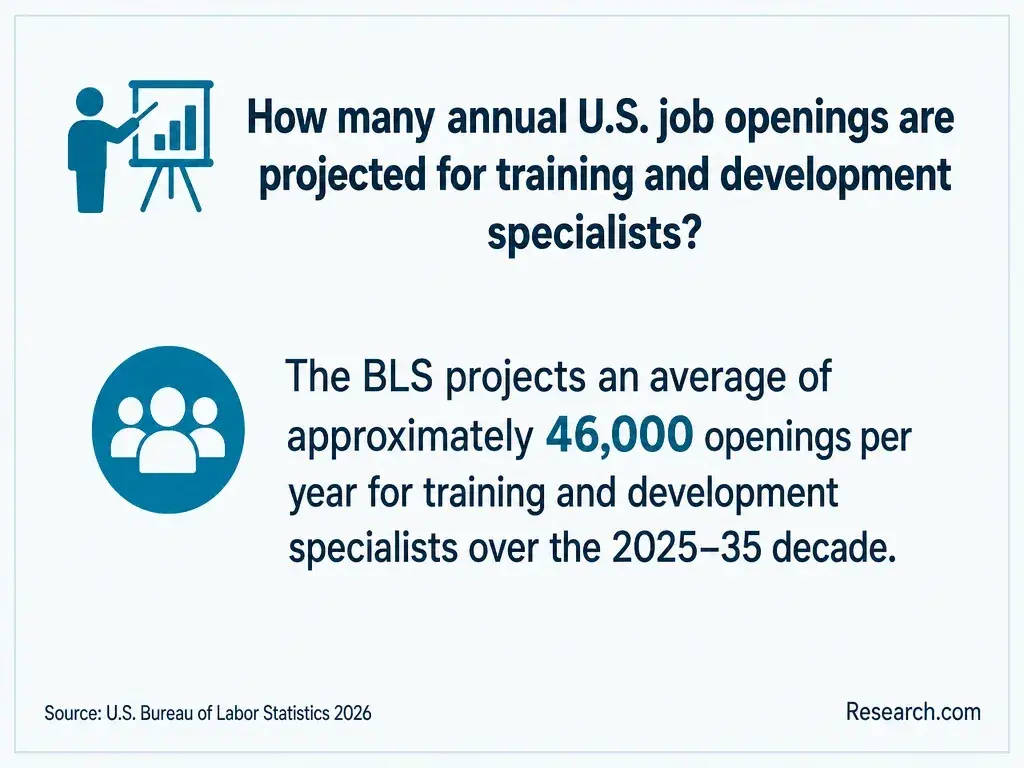
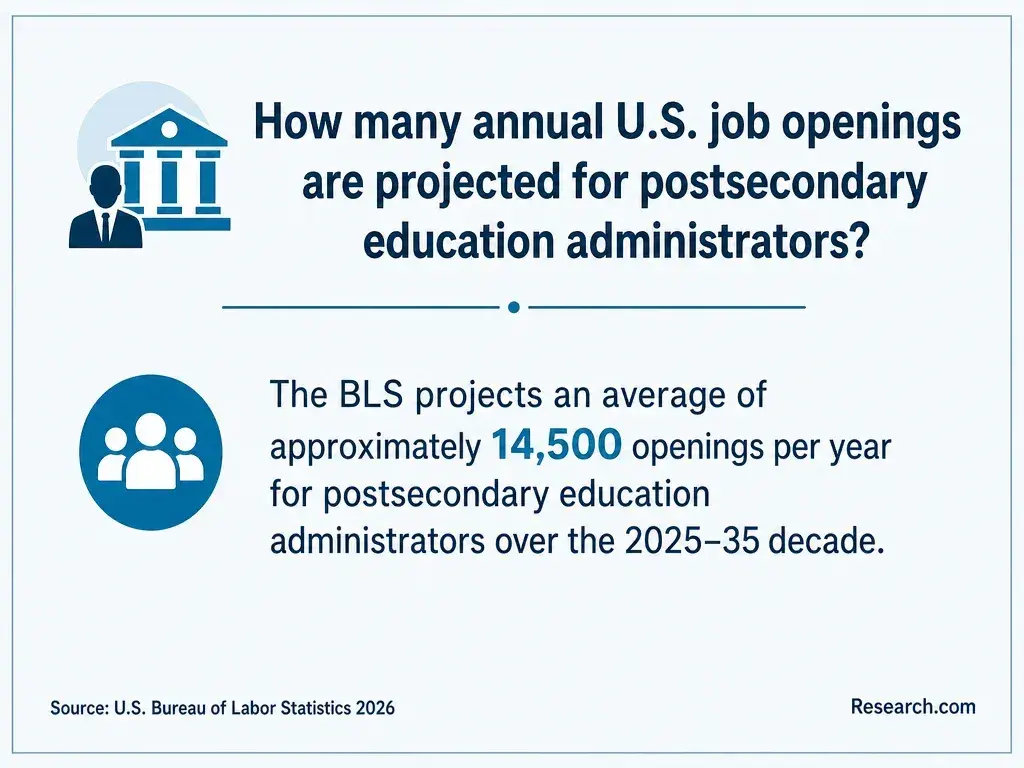
The degree can support professionals who already work in learning and development, organizational development, consulting, education, or related leadership roles. Its value depends on the work you can demonstrate: diagnosing learning needs, evaluating initiatives, leading change, and communicating evidence to decision-makers. A doctorate alone does not qualify someone for an executive role or a school-administrator license.
For context, the U.S. Bureau of Labor Statistics reports a 2025 median annual salary of $133,000 for training and development managers. That is an occupational median, not an expected salary for Ed.D. graduates; these jobs also depend on substantial relevant experience and employer requirements. If your immediate goal is to enter a new function rather than deepen established leadership practice, supervised projects, mentoring, or targeted training may be a more direct first step.
How Can You Choose an Accredited Online Ed.D. Program?
Confirm the institution's accreditation with its recognized accreditor, then verify the exact Ed.D. award, admission policy, delivery schedule, and graduation requirements with the program. Institution-level accreditation does not establish that a general organizational leadership degree prepares you for a regulated education position. Ask the institution and relevant state authority about licensure if that is your goal.
For a low-GPA applicant, shortlist programs only after obtaining clear answers about undergraduate cutoffs, treatment of graduate grades, and exceptions. Then compare research support, faculty guidance, project expectations, and total cost. If you previously completed doctoral coursework without finishing a degree, online all-but-dissertation Ed.D. pathways may warrant a separate inquiry; never assume earlier doctoral credits or candidacy will transfer. The best program is one where you are eligible, prepared for the required work, and able to complete it under realistic financial and scheduling conditions.
Other Things You Should Know About EdD Leadership
Follow the application's transcript instructions exactly. Many institutions request records from every college attended, even when courses did not count toward a degree. Omitting a required transcript can delay review.
Choose people permitted by the program who can discuss your recent academic work or leadership responsibilities in detail. A graduate instructor and a supervisor may provide more useful evidence than an undergraduate professor who cannot assess your current abilities.
Not automatically. First ask whether retakes would change the program's GPA calculation or eligibility decision. If they would not, a relevant graduate methods course or stronger application evidence may be more useful.
Ask whether it provides feedback or permits reapplication. If it does, identify whether the obstacle was a nonwaivable threshold or a competitive weakness before spending money on another application or additional coursework.
- School-Determined Requirements | 2024-2025 Federal Student Aid Handbook https://fsapartners.ed.gov/knowledge-center/fsa-handbook/2024-2025/vol1/ch1-school-determined-requirements
- Educational Leadership EdD | UNC Extended Campus https://extended.unco.edu/programs/educational-leadership-doctoral/
- Balancing Work, Life, and an EdD: What to Expect in an Educational Leadership Doctorate | Fairfield University https://www.fairfield.edu/news/insights/education-human-development/what-to-expect-in-an-educational-leadership-doctorate.html
- The Application Process - LaFetra College of Education https://education.laverne.edu/edd/requirements/
- Online Ed.D. in Organizational Leadership | UMass Global https://www.umassglobal.edu/academic-programs/doctor-education-organizational-leadership
- EdD Program Admission Requirements - Chicago https://www.depaul.edu/academics/programs/educational-leadership-edd/admission-requirements
- EDD Admission Requirements | frostburg.edu https://www.frostburg.edu/academics/majorminors/doctoral/additional-resources/edd-admission-requirements.php
- Online EdD Admission | UD-EDU https://educationonline.udayton.edu/edd/admission/
- Educational Leadership Doctorate Admissions Requirements | Bay Path University https://www.baypath.edu/admissions-aid/graduate-admissions/educational-leadership-edd-admissions-requirements/
- Recommendations - Stanford Graduate Admissions https://gradadmissions.stanford.edu/apply/recommendations