2027 Online Ed.D. in Leadership and Learning in Organizations vs. a DBA in Organizational Leadership: Which Fits Your Goals?
Audited and Verified:
Our Editorial and Data Verification Process
Research.com uses government datasets, official education statistics and primary institutional information to support its career and degree guides. Our review process checks factual accuracy, occupational definitions, source dates and the requirements associated with the credentials discussed.
How This Article Was Fact-Checked
Our editorial team verifies salary estimates, employment projections, education requirements and program information against original data providers and official organizations. Salary figures are checked against the relevant occupational definitions and reporting periods. Information about licensure, accreditation and required in-person training is reviewed separately.
Fact-checked and verified on:

Co-Founder and Chief Data Scientist
An Ed.D. in Leadership and Learning and a DBA in Organizational Leadership can both strengthen applied leadership practice, but they prepare you to investigate different kinds of problems. That distinction matters when employers expect leaders to improve workforce learning, guide organizational change, or make business decisions backed by evidence.
This comparison is for working professionals weighing a doctoral investment. It shows how the degrees differ in coursework, research, career relevance, cost, and online delivery - so you can choose the program that fits your work rather than relying on its title.
Key Things You Should Know
- Choose an Ed.D. when your central work is developing people, improving learning, or evaluating change across an organization; favor a DBA when the problem is primarily business strategy, operations, or management.
- Compare actual courses and final projects, not degree initials: an organizational leadership DBA may emphasize learning, while an Ed.D. may include substantial management study.
- The U.S. median pay for training and development managers was $133,000 in May 2025, but that occupational figure is not a predicted salary - or a reason by itself to pursue either doctorate.
What is the difference between an online Ed.D. in Leadership and Learning and a DBA?
An Ed.D. (Doctor of Education) in Leadership and Learning typically applies research to how people learn, develop, and lead within organizations. A DBA (Doctor of Business Administration) in Organizational Leadership typically applies research to leadership and organizational performance through a business-management lens. Neither name guarantees a particular curriculum, research method, or final project.
The comparison below identifies the emphasis to look for in program materials - not a rule that every school follows.
| Decision point | Ed.D. in Leadership and Learning | DBA in Organizational Leadership |
| Central question | How can leaders improve learning, development, and organizational practice? | How can leaders improve business decisions, execution, and organizational performance? |
| Likely academic emphasis | Adult learning, leadership development, change, and evaluation | Strategy, management, operations, leadership, and applied business research |
| Possible final work | Dissertation in practice, capstone, or dissertation, depending on the program | Applied business dissertation or another approved doctoral project, depending on the program |
| Best evidence of fit | Required courses and a feasible learning or change problem | Required courses and a feasible business or management problem |
Online describes where much of the instruction occurs, not the degree's academic purpose or whether attendance is flexible. Check the award name, curriculum, and project requirements separately from the delivery format.
Which degree better fits your career goals: an Ed.D. or a DBA in organizational leadership?
Start with the decisions you want to be responsible for. If you lead employee development, design leadership programs, or need to determine whether a learning initiative changes practice, the Ed.D. is often the closer match. If you lead a business unit and want to investigate strategy execution, management systems, or operational performance, the DBA may offer more relevant preparation.
The boundary is not simply education versus business. A healthcare or corporate learning leader might benefit from an Ed.D.; a university operations leader might find a DBA more useful. For a university professional focused on staff development or institutional learning, comparisons of organizational leadership Ed.D. programs for university professionals can help narrow the search, but each curriculum still needs review.
Test your choice against a problem you could realistically investigate. "Why does leadership training fail to transfer into managers' daily work?" points toward learning and evaluation. "Which management process limits execution across business units?" points toward business and operations. If your immediate goal is a promotion that depends mainly on supervisory experience, an employer leadership program, mentorship, or a focused graduate certificate may be more direct than either doctorate.
What careers can you pursue with an Ed.D. or DBA in organizational leadership?
Either doctorate can support advancement by experienced professionals, but neither substitutes for hiring requirements or a record of leading people and projects. The roles below illustrate where each degree's subject matter may be useful; they are not jobs reserved for doctoral graduates.
| Career direction | Responsibilities that matter | Potentially closer academic fit |
| Learning and development leadership | Diagnosing skill needs, developing programs, evaluating learning transfer | Ed.D., particularly with adult learning and evaluation coursework |
| Organizational development consulting | Diagnosing systems, engaging stakeholders, implementing change | Either; compare methods and sector focus |
| Business operations or strategy leadership | Making management decisions and improving execution | DBA, particularly with relevant business coursework |
| Higher education or public-sector leadership | Managing staff, budgets, governance, and institutional change | Either; employer and role requirements control |
For learning and development professionals, the strongest transition evidence is usually work they have led: a needs assessment, a cross-functional change effort, or a carefully evaluated program. A doctorate can deepen those capabilities, but a specialist does not become an executive solely by earning one. Public-sector and university hiring rules may also value particular administrative experience more than the degree title.
Both programs may teach leadership theory, organizational change, and research methods. The useful distinction is what each asks you to explain and improve. An Ed.D. might examine adult learning, motivation, professional development, implementation, and program evaluation. A DBA might examine strategy, organizational behavior, decision-making, and management performance. Course titles alone do not establish depth.
Read required course descriptions and recent final-project guidance. An aspiring learning leader should look for opportunities to assess needs, design an intervention, measure whether learning transfers to work, and interpret limitations. An aspiring business leader should look for methods suited to the decisions they expect to make, alongside substantive management coursework. Ask whether relevant electives run regularly and whether the final project can address your proposed problem. Access to organizational data, employer permission, faculty approval, and any required ethical review can determine whether that project is feasible.
Online delivery does not by itself make a doctorate less credible. What matters is whether the institution holds recognized accreditation, the doctoral curriculum and assessment are rigorous, faculty provide appropriate supervision, and the program fits the role you want. Accreditation of the institution does not automatically mean a particular degree has specialized business accreditation or qualifies you for a regulated profession.
Compare the learning experience as carefully as the credential. An online program may require live classes, group projects, campus convenings, and sustained faculty meetings. Ask to see attendance rules, research-support arrangements, and final-project expectations. An online format that conflicts with your work schedule may be a poorer choice than a more manageable campus or hybrid option, regardless of reputation.
Requirements vary by institution. Programs may assess prior graduate education, academic performance, professional responsibility, recommendations, a statement of purpose, and an interview. Some specify a master's degree or relevant experience; others define eligibility differently. Neither an education master's for every Ed.D. nor a business undergraduate major for every DBA should be assumed.
Applicants with existing graduate study should separate credits considered for admission from credits accepted toward doctoral completion. A prior education specialist degree, for example, may establish preparation without reducing the new program's required coursework. Guidance on evaluating education specialist to doctorate pathways can frame the questions, but only the admitting institution can evaluate a transcript or approve applicable credit.
Before applying, ask the program to confirm its entry-term requirements and what evidence best demonstrates your leadership responsibilities. Describe a real organizational problem you have authority or a credible opportunity to investigate; do not promise access to workplace data that has not been approved.
There is no reliable degree-wide price or completion time: required credits, enrollment pace, research progress, and school charges differ. Compare each program's published tuition basis - per credit, term, or program - with its required credits and fees. Then account for campus travel, technology, continued enrollment during the final project, and time away from paid work. Employer reimbursement can reduce your cost only under the terms of an actual agreement.
When reviewing Ed.D. program costs for prospective doctoral students, compare the full expected path rather than an advertised tuition rate. Request a written estimate tied to your likely pace, including charges if the dissertation or capstone extends beyond coursework. Make the same request of DBA programs. A less expensive degree that does not teach the capabilities your target role requires may be the weaker investment.
Organizational leadership and learning roles generally do not come with a single license obtained through either doctorate. Specific jobs can have separate rules. A general leadership Ed.D. does not automatically qualify someone for teacher, principal, or superintendent licensure; a DBA does not confer a business or consulting license.
Employers may value role-specific certifications in areas such as coaching, change management, or talent development, but these are separate credentials with their own requirements. If you seek a regulated education position, obtain the program's licensure disclosure and confirm eligibility with the relevant state authority before enrolling. For an unregulated leadership role, examine job postings first: experience, sector knowledge, or a targeted certification may matter more than another credential.
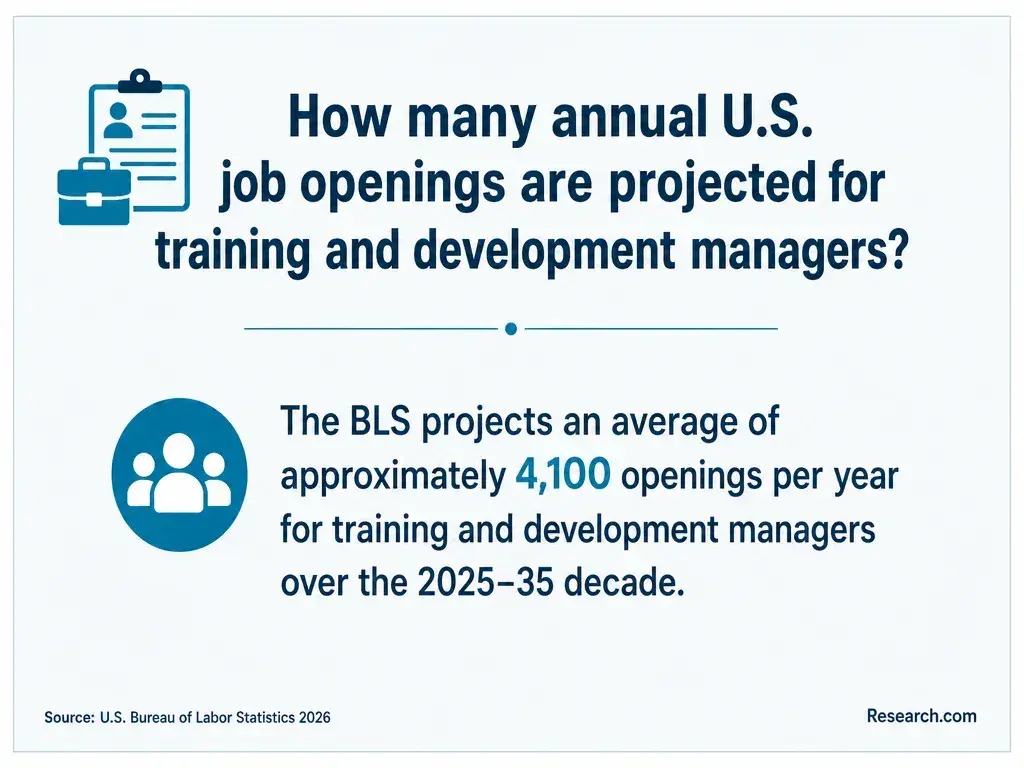
U.S. Bureau of Labor Statistics occupational data describes jobs, not the earnings of Ed.D. or DBA graduates. Training and development managers had a median annual salary of $133,000 in May 2025, with employment projected to grow 6.4% from 2025 to 2035. That role may be relevant to an Ed.D. applicant, but reaching it generally depends on substantial related experience; the figures are not a doctoral salary forecast.
For a consulting-oriented comparison, management analysts had a median annual salary of $101,860 and projected employment growth of 10.1% over the same periods. People with either degree might pursue such work, but occupation-wide figures include workers with many educational backgrounds. Use the occupation matching your target responsibilities - and local employer requirements - when judging potential returns, rather than assuming one doctorate commands a pay premium. Note that budget-conscious organizational leadership doctoral programs can help generate candidates, but published prices and program features still need confirmation with each school.
How can you choose an accredited online Ed.D. or DBA program?
Build a shortlist around your intended role and organizational problem, then compare verified program details on the same terms, such as resources on comparing affordable education doctorate pathways.
Use this sequence to turn a shortlist into a decision:
- Confirm the institution's accreditation with the recognized accreditor and verify the exact awarded degree and any claimed programmatic accreditation.
- Map required courses and the final project to the decisions and research methods your target role calls for.
- Get written answers about live attendance, campus visits, faculty supervision, project-site rules, and the consequences of changing employers.
- Compare documented total charges, realistic scheduling, employer support, and the experience you would still need after graduation.
If neither curriculum clearly improves your ability to do the work you want, postpone the doctorate. A smaller learning-and-development project, management assignment, or focused course can test your direction at lower cost.
Other Things You Should Know About EdD Leadership
Graduates who earn an Ed.D. or DBA hold a doctoral degree and may use the academic title. In professional settings, avoid implying a clinical license or another qualification the degree does not provide.
You can apply, but transfer of completed coursework is not automatic. Ask the receiving program for a written evaluation of eligible credits and remaining requirements before leaving your current program.
That depends on the program and project. Some allow external partner sites or other approved research settings. Confirm site rules and permissions before assuming your employer - or another organization - can provide access.
Compare relevant PhD programs as well. Some faculty positions accept professional doctorates, but hiring expectations differ by institution and discipline; a research-focused PhD may better fit a goal centered on producing academic scholarship.
- Accreditation in the U.S. | ed.gov http://www.ed.gov/laws-and-policy/higher-education-laws-and-policy/college-accreditation/accreditation-in-the-us
- Department Expectations: Curriculum | New York State Education Department https://www.nysed.gov/college-university-evaluation/department-expectations-curriculum
- Cost of Attendance (Budget) | 2025-2026 Federal Student Aid Handbook https://fsapartners.ed.gov/knowledge-center/fsa-handbook/2025-2026/vol3/ch2-cost-attendance-budget
- What Is an Applied Doctoral Project? ADP vs Dissertation | UAGC https://www.uagc.edu/blog/what-applied-doctoral-project-adp-vs-dissertation
- Regional vs. National Accreditation: Which is Better? | Drexel University Online https://www.online.drexel.edu/news/national-vs-regional-accreditation.aspx
- Online Ed.D. in Leadership and Learning in Organizations | VU-EDU https://peabodyonline.vanderbilt.edu/edd-in-organizational-learning/
- Online Ed.D. in Organizational Learning & Leadership | UNC https://ed.unc.edu/academics/programs/organizational-learning-and-leadership/about-the-program/
- Cost of Attendance | nyu.edu https://www.nyu.edu/admissions/financial-aid-and-scholarships/cost-of-attendance.html