2027 Most Affordable Online Doctorates in Education

Co-Founder and Chief Data Scientist
Choosing an online doctorate in education is usually a career-and-cost decision, not just an academic one. Educators, administrators, instructional specialists, and higher education professionals often consider an Ed.D. or related doctorate when they want to move into senior leadership, policy, curriculum, research, or postsecondary roles without leaving full-time work. The challenge is finding a program that is affordable, accredited, flexible, and respected enough to support long-term career mobility.
This guide explains how affordable online doctorates in education work, what they cost, how long they take, what admissions committees expect, and how to compare programs beyond tuition. It also reviews career paths, salary considerations, accreditation, specializations, financial aid, online versus campus trade-offs, and common mistakes to avoid before enrolling.
Quick answer: Are affordable online doctorates in education worth considering?
Affordable online doctorates in education can be a strong option for experienced educators who want advanced leadership, research, or administrative roles while keeping tuition and relocation costs lower. According to the BLS, doctoral degree holders earn a median weekly wage of $2,083, and higher educational attainment is associated with higher earnings and lower unemployment. However, the value of an online doctorate depends heavily on accreditation, program reputation, specialization fit, total cost, employer recognition, and whether the degree aligns with your target role.
What are the main benefits of earning an online doctorate in education?
- Access to advanced roles: A doctorate in education can support career movement into educational leadership, curriculum strategy, higher education administration, policy work, research, and executive-level education roles.
- Potential earnings advantage: BLS data shows that doctoral degree holders earn a median weekly wage of $2,083, reflecting the labor-market value often attached to advanced credentials.
- Work-compatible format: Online study can help working educators continue earning income while completing coursework, research requirements, and a dissertation or capstone.
- Lower indirect costs: Many online students avoid relocation, commuting, campus housing, and other location-based expenses that can increase the real cost of a doctorate.
What can I expect from affordable online doctorates in education?
An affordable online doctorate in education usually combines leadership theory, applied research, education policy, organizational change, and a major research project. Most programs are designed for professionals who already have classroom, administrative, training, or education-related experience and want to solve larger institutional problems rather than focus only on day-to-day teaching practice.
Students should expect demanding reading, writing, research design, data analysis, collaborative projects, and faculty feedback. Many programs culminate in a dissertation, dissertation-in-practice, oral defense, or applied research project. The strongest programs connect coursework to real education settings, allowing students to investigate challenges in schools, districts, colleges, nonprofits, government agencies, or learning organizations.
Where can I work with an affordable online doctorate in education?
Graduates can work across many education-focused environments. Zippia data indicates that 60% of these professionals work in the education sector, while public organizations account for 8%, government entities for 11%, and the private sector for 21%. That mix shows why the degree can apply to more than traditional classroom roles.
- K-12 schools, districts, and charter networks
- Colleges, universities, and community colleges
- State, local, and federal education agencies
- Private schools and education companies
- Nonprofit education and advocacy organizations
- Healthcare education and staff development departments
- Corporate learning, professional services, and training teams
Location also matters. Zippia highlights strong demand for educators in large urban markets such as New York, where the education ecosystem includes school systems, higher education institutions, agencies, nonprofits, and private providers.
How much can I make with an affordable online doctorate in education?
Earnings vary by role, employer, geography, seniority, and whether the doctorate is required, preferred, or simply valued. BLS data reports a median weekly income of $2,083 for individuals with a doctoral degree. For education graduates specifically, the article’s ranking data references a median annual income of $52,180, while Zippia reports New York as a top-paying state for educators, with an average salary of $60,720 in the education sector.
Doctoral graduates may earn more in executive administration, higher education leadership, policy consulting, curriculum leadership, or specialized instructional technology roles than in positions tied to fixed public salary schedules. Before enrolling, compare the total cost of the degree with realistic salary movement in your state, district, institution, or target industry.
- 2027 affordable online doctorate in education programs
- How long does an affordable online doctorate in education take?
- Online versus on-campus doctorate in education programs
- Average cost of affordable online doctorates in education
- Financial aid for online education doctorate students
- Common admissions requirements for online doctorates in education
- Typical courses in online doctorate in education programs
- Common Ed.D. and education doctorate specializations
- How to choose the best affordable online doctorate in education
- Accreditation and quality assurance for online education doctorates
- Trends shaping affordable online doctorates in education
- Is an affordable online doctorate in education a good long-term investment?
- Career paths for graduates of online doctorates in education
- How to measure ROI for an online doctorate in education
- Online Ed.D. admissions versus online master’s in education admissions
- Why faculty expertise and resources matter
- Balancing work, life, and an online Ed.D.
- Online Ed.D. programs versus alternative teacher certification
- Job market for graduates with affordable online doctorates in education
- Challenges of pursuing an online doctorate in education
- How to select the right online Ed.D. specialization
- Post-graduation support and networking in online Ed.D. programs
- How an online Ed.D. can advance a teaching career
2027 Best Affordable Online Doctorates in Education
Affordable online doctorates in education are best used by experienced professionals who need advanced preparation but cannot justify excessive debt or a full-time campus commitment. The programs below were selected for their combination of cost, online access, academic structure, and relevance to leadership or advanced education careers. Educators with doctoral preparation may qualify for roles in administration, academia, research, policy, and instructional leadership, and the article’s salary data notes a median annual income of $52,180 for educators with a doctoral degree.
How do we rank schools?
Research.com evaluated programs using institutional and program-level information related to affordability, accessibility, quality, and student value. Details about the evaluation process are available in Research.com’s methodology. Ranking data were drawn from the following sources:
- IPEDS database
- Peterson’s database
- Distance Learning Licensed Data Set and College Scorecard database
- National Center for Education Statistics
Students comparing these programs should also review related leadership-focused options such as an online doctorate in educational leadership, especially if their goal is district, school, or institutional leadership.
1. Columbus State University
Columbus State University offers an online Doctor of Education in Curriculum and Leadership with a Higher Education Administration focus. Delivered through CougarVIEW and housed in the College of Education and Health Professions, the 63-credit hour program emphasizes school improvement, educational research, college management, educational evaluation, and finance. Students complete a dissertation and defense, preparing them for advanced research, administration, and leadership responsibilities.
- Program length: approximately three years
- Tracks/concentrations: Curriculum and Instruction, Educational Leadership, and Higher Education Administration
- Tuition: $301.00 per credit hour
- Required credits to graduate: 63
- Accreditation: Southern Association of Colleges and School Commission on Colleges (SACSCOC)
2. University of North Georgia
The University of North Georgia provides a 60-credit online Doctor of Education in Higher Education Leadership and Practice (HELP). Full-time students can complete the program in three years, with cohorts beginning each fall. The curriculum uses Brightspace and asynchronous delivery while emphasizing educational equity, leadership theory, policy connections, social justice, ethics in higher education administration, scholarly community, and dissertation research with an oral defense. The program is accredited by SACSCOC and approved by the Board of Regents.
- Program length: Approximately three years
- Tracks/concentrations: N/A
- Tuition: $303.00 per credit hour
- Required credits to graduate: 60
- Accreditation: Southern Association of Colleges and Schools Commission on Colleges (SACSCOC)
3. California Coast University
California Coast University offers an online Doctor of Education in Educational Administration for professionals who already hold a master’s degree and have 3-5 years of education experience. The program is delivered through CCU’s student portal and includes 66 credit hours across 13 courses, a comprehensive exam, a dissertation, and an oral defense. Coursework includes History of Education and Learning Theory, with related options in Educational Psychology and Organizational Leadership.
- Program length: Approximately three years
- Tracks/concentrations: N/A
- Tuition: $320 per unit
- Required credits to graduate: 66
- Accreditation: Distance Education Accrediting Commission
4. Kennesaw State University
Kennesaw State University offers an online Doctor of Education in Instructional Technology for educators and professionals pursuing technology leadership roles. The 66-credit hour curriculum is expected to take approximately three years and is delivered through Brightspace. Students study subjects such as Digital Tools for Learning and Technology Leadership and complete a dissertation connected to their chosen track. KSU also offers an online Doctorate in Secondary and Middle Grades Education.
- Program length: approximately three years
- Tracks/concentrations: N/A
- Tuition: $383.00 per credit hour
- Required credits to graduate: 66
- Accreditation: SACSCOC
5. Youngstown State University
Youngstown State University offers an online Doctor of Education in Educational Leadership aligned with National Educational Leadership Preparation (NELP) standards and Ohio state standards. The 60-credit program can be completed in just 32 months by full-time students and is delivered through Blackboard. Students take courses in educational politics, learning processes, and community partnerships, and they complete a clinical experience, dissertation, and defense. A Superintendent Licensure track is also available.
- Program length: approximately three years
- Tracks/concentrations: N/A
- Tuition: $415 per credit hour
- Required credits to graduate: 60
- Accreditation: Council for the Accreditation of Educator Preparation (CAEP)
Program cost and structure comparison
| School | Program focus | Credits | Tuition | Approximate length | Best fit |
| Columbus State University | Curriculum and Leadership; Higher Education Administration | 63 | $301.00 per credit hour | approximately three years | Educators seeking curriculum, leadership, or higher education administration preparation |
| University of North Georgia | Higher Education Leadership and Practice | 60 | $303.00 per credit hour | Approximately three years | Professionals focused on equity, policy, and postsecondary leadership |
| California Coast University | Educational Administration | 66 | $320 per unit | Approximately three years | Experienced education professionals seeking flexible administrative preparation |
| Kennesaw State University | Instructional Technology | 66 | $383.00 per credit hour | approximately three years | Educators pursuing digital learning, technology integration, or instructional leadership |
| Youngstown State University | Educational Leadership | 60 | $415 per credit hour | approximately three years | Educators interested in leadership roles and possible Superintendent Licensure |
What graduates often value about affordable online doctorates in education
- Online doctoral study made it possible to keep working while moving toward senior education leadership. The format also exposed me to classmates from different school systems and regions, which strengthened the way I think about policy and practice. — James
- The program changed how I approach leadership problems. I could apply research methods and organizational strategies immediately in my job, and the online community helped me stay connected throughout the process. — Sarah
- Earning the doctorate online let me pursue advanced study without pausing my personal or professional life. The flexibility, faculty support, and academic rigor helped me complete a goal I had delayed for years. — Marcus
Key Findings
- Higher educational attainment is associated with stronger earnings potential, and doctoral degree holders earn a median weekly wage of $2,083 according to BLS data.
- Education professionals with advanced credentials work across multiple sectors: education employs 60%, private organizations employ 21%, government employs 11%, and public-sector roles account for 8%.
- Demand is especially visible in major metropolitan areas such as New York, NY, where 101 current job openings are noted.
- Educational guidance and career counselors and advisors are projected to grow 5%, while postsecondary teachers and substitute teachers (short-term) are each projected to grow 4%.
- Doctoral graduates may pursue roles in schools, higher education, nonprofits, healthcare education, professional services, government, and technology-related learning environments.
- Many advanced-degree educators remain in educational institutions because they want to influence instruction, administration, student outcomes, or policy from within the field.
How long does it take to complete an affordable online doctorate in education?
Most affordable online doctorates in education in this guide take about three years for full-time students. Columbus State University and the University of North Georgia both list approximately three-year timelines, while California Coast University, Kennesaw State University, and Youngstown State University also structure their programs for similar completion periods. Youngstown State University notes that full-time students can finish in just 32 months.
Program length depends on credits required, course load, transfer policies, dissertation progress, research approvals, and whether students enroll full time or part time. The programs listed here require 60 to 66 credits, with tuition ranging from $301 to $415 per credit hour. Students who are still comparing graduate-level education options may also review an online master’s degree in education before committing to a doctoral path.
How does an affordable online doctorate in education compare to an on-campus program?
An online doctorate in education is usually better for working adults who need geographic flexibility, asynchronous coursework, and the ability to apply assignments to their current jobs. A campus program may be better for students who want frequent in-person collaboration, easier access to physical campus resources, or a stronger local professional network.
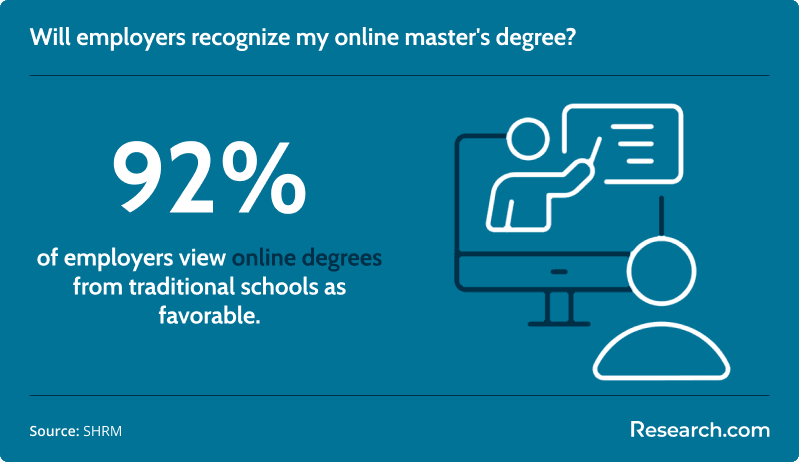
Employer perception depends on the institution. Drexel University reports that 92% of employees view online degrees favorably, but degrees from colleges with traditional campuses receive favorability ratings of 89%, compared to 70% for online-only institutions. HR directors and CEOs often weigh institutional reputation, which means an online doctorate from an established, accredited university may carry stronger recognition than a degree from a lesser-known online-only school.
| Factor | Online doctorate in education | On-campus doctorate in education |
| Schedule | Often designed for working professionals with asynchronous or hybrid coursework | May require fixed class times, campus visits, or relocation |
| Cost profile | Can reduce commuting, housing, and relocation expenses | May involve higher indirect costs depending on location |
| Networking | Usually relies on virtual cohorts, faculty meetings, and online communities | Provides more face-to-face interaction with faculty, peers, and campus offices |
| Employer perception | Strongest when the school is accredited and well known | Often benefits from traditional institutional recognition |
| Best for | Educators who need flexibility and want to continue working | Students who value in-person academic culture and local networking |
The image below illustrates how employers evaluate online education.
What is the average cost of an affordable online doctorate in education?
Affordable online doctorate in education tuition can be around $300 per credit hour among the lower-cost programs in this guide. Columbus State University charges $301.00 per credit hour for a 63-credit program, the University of North Georgia charges $303.00 per credit hour for a 60-credit program, and California Coast University charges $320 per unit for a 66-credit program.
Tuition is only part of total cost. Students should also budget for technology fees, books, dissertation or research fees, graduation fees, travel for any required residencies, licensing-related expenses if applicable, and the opportunity cost of reduced work hours. If you are still early in your education planning, comparing lower-level pathways such as an online bachelor’s degree in elementary education can clarify how costs increase as credentials advance.
What are the financial aid options for students enrolling in affordable online doctorates in education?
Students in accredited online education doctoral programs may be able to use many of the same aid sources available to campus-based graduate students. Applicants should confirm institutional eligibility, program participation, and enrollment requirements before assuming aid will apply. Students comparing online options can also review broader online education degree programs to understand how funding differs by degree level.
- Federal student loans: Government-backed loans may be available to eligible graduate students and typically include structured repayment options.
- Scholarships and grants: Some universities, foundations, professional associations, and private organizations offer awards for doctoral students in education.
- Work-study programs: Eligible students may qualify for part-time work opportunities that help offset education expenses.
- Employer tuition reimbursement: School districts, colleges, nonprofits, and employers may reimburse part of the cost when the degree supports job-related advancement.
- Professional development funds: Educators may be able to apply district or institutional development funds toward approved graduate coursework.
What are the prerequisites for enrolling in affordable online doctorates in education?
Most online doctorates in education are intended for applicants who already have graduate training and professional experience. Admissions committees want evidence that the applicant can complete advanced research, write at a doctoral level, contribute to cohort discussions, and connect study to a serious education problem.
- Master’s degree: Many programs require a completed master’s degree in education or a closely related field from an accredited institution.
- Professional experience: Applicants are often expected to have several years of work in teaching, administration, higher education, training, or related leadership settings.
- Academic writing sample: Programs may ask for a thesis, scholarly paper, or other writing sample that demonstrates research readiness.
- Letters of recommendation: References should speak to leadership ability, academic preparation, professional maturity, and readiness for doctoral work.
- Statement of purpose: Applicants typically explain their goals, research interests, career direction, and reasons for choosing the program.
What courses are typically in affordable online doctorates in education?
Coursework in an online doctorate in education usually moves beyond classroom technique into leadership, organizational improvement, research, policy, and evaluation. Programs may vary by specialization, but many include a common doctoral core plus concentration courses and dissertation preparation.
- Leadership and Change in Education: Studies how education leaders guide institutional improvement, manage resistance, and implement change.
- Curriculum Development and Evaluation: Covers curriculum design, assessment, implementation, and improvement strategies.
- Research Methods in Education: Introduces quantitative and qualitative methods used to investigate education problems.
- Educational Policy and Governance: Examines policy formation, institutional governance, regulation, and the effects of decision-making structures.
- Dissertation Seminar: Supports topic selection, proposal development, research planning, writing, and defense preparation.
What types of specializations are available in affordable online doctorates in education?
Specialization choice should be tied directly to the job you want after graduation. A curriculum-focused Ed.D. may not serve the same goals as one in higher education administration, instructional technology, or special education leadership. Students interested in earlier stages of learning may also compare options such as an online early childhood education degree before selecting a long-term leadership track.
- Curriculum and Instruction: Best for professionals who want to lead curriculum design, instructional improvement, academic standards, and assessment work.
- Educational Leadership and Administration: Suits educators pursuing principal, district, executive, or system-level leadership roles.
- Higher Education Administration: Fits professionals aiming for college administration, student affairs, academic affairs, enrollment, or institutional leadership.
- Instructional Technology: Focuses on digital learning systems, technology integration, instructional design, and learning innovation.
- Special Education: Prepares graduates to lead inclusive programming, services, policy, and support systems for students with disabilities or diverse learning needs.
How to Choose the Best Affordable Online Doctorates in Education
The cheapest program is not always the best value. A strong choice balances tuition, accreditation, program fit, faculty support, dissertation structure, employer recognition, and career outcomes. Students interested in building leadership credentials over time may also compare related options such as the cheapest online master’s degrees in early childhood education.
| Decision factor | What to check | Why it matters |
| Accreditation | Institutional accreditation and any relevant programmatic accreditation | Affects credibility, aid eligibility, transfer options, and sometimes licensure pathways |
| Total cost | Tuition, fees, books, travel, technology, and dissertation expenses | Prevents underestimating the real price of the degree |
| Specialization | Alignment with your target role and professional setting | Determines whether coursework builds the right expertise |
| Dissertation support | Faculty advising, research resources, proposal support, and defense expectations | Dissertation delays can extend time and cost |
| Flexibility | Asynchronous courses, part-time options, residency rules, and cohort pace | Critical for students balancing work and family obligations |
| Faculty and resources | Faculty research areas, digital library access, advising, and career support | Improves academic quality and student persistence |
- Confirm accreditation before applying.
- Ask whether the program meets requirements for your intended license, endorsement, or leadership credential, if applicable.
- Compare total program cost, not just per-credit tuition.
- Review faculty backgrounds and dissertation completion support.
- Choose a specialization based on career outcomes, not only course titles.
- Ask current students or alumni how manageable the workload is while working full time.
Accreditation and Quality Assurance in Online Doctorate Programs in Education
Accreditation is one of the most important safeguards when evaluating an online doctorate in education. It signals that an institution or program has been reviewed against recognized quality standards. It can also affect federal financial aid access, employer recognition, credit transfer, and eligibility for certain education credentials.
Recognizing recognized accrediting bodies
Students should verify accreditation directly through the institution, the accreditor, and official databases when available. Commonly referenced accrediting bodies in education and higher education include HLC, CAEP, and ACCJC. Program websites often list accreditation information, but applicants should confirm details with admissions offices and official accreditor records.
What happens if your program is not accredited?
Choosing an unaccredited doctorate can create serious problems after enrollment and graduation.
- Credits may be difficult or impossible to transfer.
- Federal financial aid eligibility may be limited.
- Employers may not recognize the credential.
- Licensure, certification, or administrator credential pathways may be affected.
In education, accreditation can be more than a quality signal. Teachers, administrators, and policy professionals may need an accredited credential to meet state, district, or institutional requirements.
What emerging trends are shaping affordable online doctorates in education?
Online doctoral education is being influenced by stronger technology integration, increased use of learning analytics, interdisciplinary program design, and more applied research models. Programs are also paying closer attention to data-informed leadership, digital instruction, equity-focused policy, and organizational improvement. Related doctoral fields, including a doctorate in behavioral health, show how leadership training and specialized research can intersect in modern graduate education.
AI and automation are also changing what education leaders need to understand. Doctoral students may increasingly encounter questions about responsible AI use, academic integrity, personalized learning systems, data privacy, staff training, and technology procurement. Programs that address these issues can better prepare graduates for current leadership challenges.
Is an affordable online doctorate in education a worthwhile investment for long-term career success?
An affordable online doctorate in education can be worth it when the degree supports a clear career goal, the program is accredited, and the total cost is realistic compared with expected professional benefits. The strongest return usually comes when the credential helps graduates qualify for leadership, administrative, policy, curriculum, higher education, or specialized consulting roles that were previously out of reach.
It may not be the right investment for someone who wants only a modest salary increase in a role where doctoral preparation is not rewarded. In that case, a lower-cost master’s option, such as the cheapest online masters in special education, may provide a better cost-to-benefit ratio. Prospective students should compare the doctorate with alternative credentials before committing to several years of doctoral study.
What career paths are available for graduates of affordable online doctorates in education?
Doctoral graduates can pursue leadership, teaching, research, policy, and consulting roles across education and learning-focused organizations. Reported salary figures vary by role and source, but the following examples illustrate potential pathways:
- Educational Administrators: These professionals can earn an average of $99,820 annually and often work in school, district, or institutional leadership.
- Instructional Coordinators: Curriculum and instruction specialists have a median wage of $63,740, with top earners making over $101,090.
- School Superintendents: District leaders oversee educational planning and operations, with salaries around $98,980.
- College Presidents: Senior institutional leaders shape strategy, policy, and operations, with earnings potentially exceeding $188,282.
- Chief Academic Officers: Academic executives guide instructional quality and academic operations, with salaries averaging $145,437.
The chart below provides a salary comparison for selected career options.
How do you measure the return on investment of an online doctorate in education?
To estimate ROI, compare the full cost of the doctorate with realistic career gains. Include tuition, fees, books, technology, travel, lost income if you reduce work hours, and loan interest. Then compare those costs with likely salary increases, promotion opportunities, employer reimbursement, job stability, and nonfinancial benefits such as leadership influence or research impact.
Students should ask programs for alumni outcomes, dissertation completion patterns, average time to completion, and career support details. It can also help to benchmark graduate education costs against adjacent fields, such as the master's in library science cost, to understand whether the doctorate is proportionate to your career objective.
Are admission requirements for an online Ed.D. program distinct from those for an online master's in education?
Yes. Online Ed.D. programs generally expect stronger evidence of professional leadership, research readiness, and doctoral-level writing than online master’s programs. An Ed.D. applicant may need substantial work experience, a focused statement of purpose, a scholarly writing sample, and recommendations that address leadership potential. Master’s programs often focus more on foundational graduate readiness and may have broader entry points.
If you are deciding between the two, compare doctoral requirements with an affordable online master's in education to see whether you need advanced doctoral preparation now or a master’s credential first.
How Do Faculty Expertise and Institutional Resources Impact Your Online Ed.D. Success?
Faculty quality and institutional resources can strongly affect the doctoral experience. Students need advisors who understand their research interests, can guide methodology decisions, and can provide timely dissertation feedback. Access to digital libraries, research databases, writing support, statistics help, virtual advising, and active learning platforms also matters, especially for students who are not near campus.
When evaluating a program, review faculty publications, dissertation chair availability, student support systems, and whether online students receive the same academic resources as campus students. For comparison, examine how programs such as masters in special education USA combine specialized instruction with student support.
How can you balance work, life, and your online Ed.D. program?
Balancing an online Ed.D. with work and personal responsibilities requires planning before classes begin. Students should block weekly study time, communicate with family and supervisors, use academic calendars, and avoid overloading during dissertation or research-heavy terms. Asynchronous courses can help, but they do not reduce the total workload.
- Create a weekly schedule that separates reading, writing, discussion posts, research, and meetings.
- Ask programs how many hours students typically spend per course each week.
- Use breaks between terms to prepare literature reviews, organize sources, or refine research questions.
- Protect dissertation writing time early instead of waiting until coursework ends.
- Consider flexible programs such as the most affordable doctorate in educational leadership online if your work schedule is demanding.
What distinguishes an online Ed.D. from alternative certification routes?
An online Ed.D. and alternative teacher certification serve different purposes. The Ed.D. is an advanced doctoral degree for experienced professionals who want leadership, research, policy, curriculum, or administrative expertise. Alternative certification is typically a faster route into classroom teaching for people who need an initial teaching pathway.
Students seeking immediate classroom eligibility may be better served by affordable teachers alternative certification. Those aiming to lead schools, districts, higher education units, instructional systems, or education organizations may find the Ed.D. more aligned with long-term goals.
What is the job market for graduates with affordable online doctorates in education certificates?
The job market for doctorate-prepared education professionals is shaped by leadership needs, teacher retention concerns, policy changes, and demand for specialized expertise. McKinsey has reported that nearly a third of K–12 educators may consider leaving their positions, which underscores the need for leaders who can improve working conditions, compensation models, culture, and support systems.
The educator unemployment rate is 57.7% lower than the average for all bachelor’s degree holders, suggesting that education credentials can provide labor-market stability. Graduates with advanced preparation may pursue education policy, school or district administration, academic leadership, curriculum systems, consulting, or specialized program management. Students exploring related undergraduate pathways can review affordable online doctorates in education in context with broader education career planning.
What are the potential challenges of pursuing an online doctorate in education?
Online doctoral programs are flexible, but they are not easy. Students should plan for academic, technical, financial, and personal challenges before enrolling.
| Challenge | Why it matters | Better approach |
| Time management | Doctoral coursework and dissertation research require sustained weekly effort | Build a realistic study schedule before the first term |
| Limited face-to-face contact | Some students miss in-person mentoring and peer interaction | Choose programs with active cohorts, virtual office hours, and faculty access |
| Technology demands | Online platforms, research tools, and video meetings require reliable access | Confirm hardware, software, and internet requirements in advance |
| Research resource access | Dissertation work depends on strong library and database support | Ask about digital library access, interlibrary loan, and research assistance |
| Work-life pressure | Working professionals may struggle during research and writing phases | Discuss workload with family, employers, and advisors before enrollment |
How to choose the right specialization in an online Ed.D. program?
The right specialization should connect your current experience with the role you want next. Do not choose a concentration only because it sounds broad or popular. Review course descriptions, faculty expertise, dissertation topics, and alumni roles to confirm that the specialization fits your plans. Students prioritizing cost can also compare the cheapest online EdD programs.
- Educational Leadership and Administration: Appropriate for aspiring principals, district leaders, deans, and education executives.
- Higher Education Administration: Strong fit for college administrators, student affairs leaders, academic deans, and institutional policy professionals.
- Curriculum and Instruction: Best for instructional coordinators, curriculum directors, assessment leaders, and program designers.
- Instructional Technology: Designed for digital learning specialists, technology coordinators, instructional designers, and innovation leaders.
- Special Education: Useful for professionals who want to lead inclusive education programs, policy, advocacy, or specialized support systems.
What post-graduation support and networking opportunities do affordable online Ed.D. programs offer?
Strong online Ed.D. programs support students beyond coursework. Look for career advising, leadership coaching, alumni networks, professional association connections, dissertation dissemination support, and opportunities to present or publish applied research. Some programs also maintain partnerships with schools, districts, higher education organizations, or education agencies.
Students who want a shorter pathway should compare accelerated options such as a doctorate degree in educational leadership that emphasizes structured completion and career support.
How can an online Ed.D. degree advance your teaching career?
An online Ed.D. can help experienced teachers move into broader influence roles. Depending on specialization and local requirements, graduates may pursue curriculum leadership, instructional coaching, school administration, district leadership, higher education teaching, academic administration, research, or policy work. The degree is especially useful for educators who want to shape systems, not only individual classrooms.
Teachers should verify whether an Ed.D. alone meets any required credential, endorsement, or administrator licensure rules in their state or district. For those still comparing foundational options, teaching degrees online can help clarify the broader education degree landscape.
Common mistakes to avoid when choosing an affordable online doctorate in education
- Choosing by tuition alone: A low per-credit rate can still lead to high total cost if the program has many fees or poor dissertation support.
- Ignoring accreditation: Unaccredited programs may limit aid, licensure, transfer, and employer recognition.
- Assuming online means easier: Doctoral work requires advanced writing, research, and long-term persistence regardless of format.
- Overlooking specialization fit: A mismatch between concentration and career goal can reduce the practical value of the degree.
- Not checking dissertation expectations: Research requirements, timelines, and faculty availability can affect both completion and cost.
- Assuming salary gains are guaranteed: Pay depends on role, state, employer policies, union or district salary schedules, and leadership opportunities.
Questions to ask before enrolling
- Is the institution accredited, and is any programmatic accreditation relevant to my goals?
- What is the total estimated cost, including fees and dissertation expenses?
- Can I complete the program while working full time?
- Are there required residencies, synchronous sessions, or campus visits?
- What percentage of students complete the dissertation, and how long does it usually take?
- Who will advise my research, and do faculty members match my area of interest?
- Does the program meet requirements for any license, endorsement, or administrator credential I need?
- What career services, alumni networks, and professional partnerships are available to online students?
Key Insights
- Affordable online doctorates in education are best suited for experienced educators and education professionals pursuing leadership, research, policy, curriculum, instructional technology, or higher education roles.
- The programs in this guide generally take about three years and require 60 to 66 credits, with listed tuition ranging from $301 to $415 per credit hour.
- Accreditation should be nonnegotiable because it affects credibility, financial aid access, employer recognition, transfer options, and some licensure-related pathways.
- Online study can reduce relocation and commuting costs, but students should still calculate fees, books, technology, travel, and dissertation-related expenses.
- Employer perception of online degrees is strongest when the credential comes from an accredited, recognizable institution with a solid academic reputation.
- ROI depends on career alignment. A doctorate can be valuable for leadership advancement, but it may not be necessary if a master’s degree or certification better matches your goals.
References:
- Bryant, J., Ram, S., Scott, D., & Williams, C. (2023, March 2). K–12 teachers are quitting. What would make them stay? McKinsey & Company; McKinsey & Company.
- Education pays, 2022 : Career Outlook: U.S. Bureau of Labor Statistics. (2023, May 5). Bls.gov.
- Educator Demographics and Statistics [2024]: Number Of Educators In The US. (2021, January 29). Zippia.com.
- Field of degree: Education : Occupational Outlook Handbook: : U.S. Bureau of Labor Statistics. (2023, September 6). Bls.gov.
- Hanson, M. (2021, December 9). Is College Worth it? | Return on Investment Analysis of College Degree. Education Data Initiative.
- McNair, K. (2023, March 16). New bill in Congress would give U.S. teachers a $60,000 minimum wage—these 5 states currently pay teachers best. CNBC; CNBC.
Other Things You Should Know About Affordable Online Doctorates in Education
When considering affordable online Doctorates in Education for 2027, focus on admissions requirements such as a relevant master's degree, professional experience in education, and a statement of purpose. Some programs may also require GRE scores and recommendations. This ensures candidates are well-prepared for the rigors of doctoral studies.
An affordable online Doctorate in Education usually requires 54 to 66 semester credits. Many programs also include a dissertation, capstone, or doctoral project, which can add a final research or implementation phase before graduation. Some schools allow limited transfer credit, but most require most doctoral coursework to be completed in residence online.