
2027 Fastest Online Physical Education Degree Programs

Co-Founder and Chief Data Scientist
The U.S. Bureau of Labor Statistics (2023) projects a modest 1% decline in overall teaching jobs. However, the U.S. Department of Education (2025) identifies 11 states—including California, Maryland, Idaho, and Iowa—as having teacher shortages in Pre-K–12 physical education.
For those passionate about fitness, health, and youth development, this presents a timely opportunity. Accelerated online physical education degree programs are ideal for aspiring educators, career changers, and professionals seeking flexible, fast-track paths to licensure.
To help you explore your options, I created this guide on the fastest PE degrees for 2027, including program requirements, certification options, and career paths.
What are the benefits of opting for fast degrees in Online Physical Education?
- A degree in physical education prepares students for roles such as PE teacher or recreation and fitness studies teacher. This field is projected to grow by 3% from 2023 to 2033 (BLS, 2023).
- Graduates can expect a median annual salary of $54,288 as PE teachers, with higher earnings possible depending on location and experience (ZipRecruiter, 2025).
- Online PE programs offer the convenience of studying from home with accelerated formats, allowing students to finish in as little as 2–3 years while balancing work or family commitments.
What can I expect from an accelerated online Physical Education Degree?
An accelerated online physical education degree is designed to help you earn your qualification faster than a traditional program. Many students finish in as little as 12 to 24 months.
You can expect a flexible, yet intensive learning experience that blends theoretical knowledge with practical application. The coursework typically covers exercise science, kinesiology, health education, curriculum development, and instructional strategies for diverse learners.
Programs often include online lectures, interactive assignments, and, in some cases, in-person teaching practicums. You’ll need strong time management skills, as the fast pace requires consistent focus.
This degree can prepare you for licensure or continued graduate study, depending on your state and career goals.
Where can I work with an accelerated online Physical Education Degree?
With an accelerated online Physical Education degree, you can work in a variety of educational and fitness settings. Most commonly, graduates become physical education teachers in elementary, middle, or high schools. If the program includes teacher certification, you’ll be eligible for licensure in your state.
Beyond schools, you may work in community centers, sports organizations, wellness programs, or recreational departments. Some graduates pursue careers as athletic coaches, health educators, or fitness trainers.
Additionally, opportunities exist in corporate wellness programs or as youth sports coordinators. With further education, roles in athletic administration or physical therapy may also become accessible.
How much can I make with an accelerated online Physical Education Degree?
Earnings with an accelerated online Physical Education degree can vary based on several factors, including location, education level, years of experience, and type of employer (e.g., public vs. private school). Additional certifications or advanced degrees may also lead to higher salaries and expanded career opportunities. According to ZipRecruiter (2025), the following are the annual median salaries of PE teachers:
- Elementary PE Teacher: $54,387
- Middle School PE Teacher: $56,746
- High School PE Teacher: $54,979
- Adaptive Physical Education Teacher: $62,209
- List of the Fastest Online Physical Education Degree Programs List of Programs
- What is the fastest way to become a certified Physical Education teacher? What is the fastest way to become a certified Physical Education teacher?
- How fast can I complete an online Physical Education Degree program? Program Duration
- What is the average cost of accelerated online Physical Education Degree programs? Average Program Cost
- Can I enroll in an online Physical Education Degree program with a bachelor’s degree in a different field? Can I enroll in an online Physical Education Degree program with a bachelor’s degree in a different field?
- What courses will you take in an online Physical Education Degree Program? What courses will you take in an online Physical Education Degree Program?
- Are internships or student teaching required in online Physical Education Degree programs? Physical Education Internships
- Can I teach K–12 with an online Physical Education Degree? Can I teach K–12 with an online Physical Education Degree?
- What Should I Look for in a Fast Online PE Degree Program? Program Criteria
- What is the job outlook and average salary for Physical Education Teachers for 2027? Salary and Outlook
- What can I do with a Degree in Physical Education besides teaching? What can I do with a Degree in Physical Education besides teaching?
- How do online Physical Education degree programs compare to traditional classroom programs? How do online Physical Education degree programs compare to traditional classroom programs?
- What Are Accreditation and Certification Standards for Online Physical Education Degree Programs? What Are Accreditation and Certification Standards for Online Physical Education Degree Programs?
- What Are the Common Challenges of Accelerated Online Physical Education Programs? online
- What student support and career resources do online PE programs offer? What student support and career resources do online PE programs offer?
Fastest Online Physical Education Degree Programs: What to Check Before Applying
A fast online physical education degree can save time, but speed should not be the only factor guiding your choice. If you want to teach K–12 physical education, your program must fit your state’s licensing requirements, include supervised teaching or fieldwork, and be offered by an accredited school. If your goal is coaching, fitness, wellness, athletic training, adapted physical education, or graduate study, a related major such as exercise science, kinesiology, or athletic training may be a better match than a traditional PE teaching degree.
This guide is for future PE teachers, licensed educators, career changers, transfer students, and working adults who want a faster route without choosing the wrong credential. You will find accelerated program options, completion timelines, costs, licensure considerations, common course requirements, field experience expectations, and practical questions to ask before enrolling.
Quick answer: What is the fastest online physical education degree?
The quickest online physical education options are typically master’s programs for licensed teachers or bachelor’s completion programs for students with many accepted transfer credits. Several graduate programs in this guide list completion times of 1 year or 14 months, while some bachelor’s pathways can be completed in as few as 2 years if general education coursework is already finished. First-time college students usually need more time because teacher certification often requires a full degree plan, exams, and in-person student teaching.
How Research.com evaluated these programs
Students comparing accelerated PE programs need to weigh time, cost, accreditation, and career fit together. Research.com’s education team applies a data-informed ranking methodology and reviews information from trusted education data sources, including the Integrated Postsecondary Education Data System (IPEDS), Peterson’s database, the College Scorecard, and the National Center for Education Statistics (NCES).
The review considered published completion time, per-credit tuition, required credits, graduation-related measures, student-to-faculty ratios, institutional accreditation, and whether the program design supports students seeking an accelerated schedule.
| Rank | School and program | Fastest stated completion time | Best fit | Cost per credit |
| 1 | University of West Alabama — MEd in Physical Education P–12 | 1 year | Certified teachers who want graduate-level PE preparation | $429 |
| 2 | Auburn University at Montgomery — MEd in Kinesiology: Physical Education | 1.5 years | K–12 teachers adding or strengthening PE expertise | $370 in-state; $800 out-of-state |
| 3 | Eastern Washington University — MEd in Health and Physical Education | 14 months | Licensed teachers focused on health and PE curriculum | $280 |
| 4 | Purdue University — Master of Science in Athletic Training | 2 years | Students preparing for athletic training and sports medicine roles | $347 in-state; $999 out-of-state |
| 5 | Ohio State University — Master of Science in Kinesiology | 1.5–2 years | Students interested in research, coaching, PE, or exercise science | $726 in-state; $2,166 out-of-state |
| 6 | Oregon State University — Master of Adapted Physical Education | 14 months | Teachers who want to serve students with disabilities in PE settings | $590 |
| 7 | Edmonds College — Associate Degree in Physical Education | 2 years | Students planning to transfer into a bachelor’s degree | $137 WA residents; $310 non-residents |
| 8 | University of Saint Mary — B.S. in Exercise Science | 2 years with completed general education coursework | Transfer students interested in fitness, wellness, or allied health preparation | $450 |
| 9 | Franklin University — B.S. in Exercise Science | Varies; accelerated 6- and 12-week courses | Working adults bringing previous college credit | $398 |
| 10 | Concordia University–Saint Paul — B.A. in Exercise Science | As few as 2 years | Students preparing for exercise science careers or graduate study | $420 |
1. University of West Alabama — MEd in Physical Education P–12
The University of West Alabama provides an online Master of Education in Physical Education P–12 for certified educators who want an accelerated graduate credential centered on PE instruction, curriculum, and school-based practice.
Students can complete the program in 1 year, and the curriculum is designed for direct use in educational settings. Because the coursework aligns with Alabama State Department of Education expectations, it is especially relevant for teachers seeking a program connected to state standards.
- Program length: 1 year
- Track or concentration: Physical Education P–12
- Cost per credit: $429
- Credits required: 33
- Accreditation: National Council for Accreditation of Teacher Education (NCATE), Southern Association of Colleges and Schools Commission on Colleges (SACSCOC)
2. Auburn University at Montgomery — MEd in Kinesiology: Physical Education
Auburn University at Montgomery offers an M.Ed. in Kinesiology with a Physical Education concentration for educators who want stronger preparation in K–12 movement instruction, assessment, curriculum planning, and teaching methods.
The degree may be finished in as little as 1.5 years and is most appropriate for certified teachers pursuing graduate study connected to physical education teaching certification.
- Program length: 1.5 years
- Track or concentration: Physical Education (Teaching Certification)
- Cost per credit: $370 in-state; $800 out-of-state
- Credits required: 30–33
- Accreditation: Council for the Accreditation of Educator Preparation (CAEP), SACSCOC
3. Eastern Washington University — MEd in Health and Physical Education
Eastern Washington University has a 14-month M.Ed. in Health and Physical Education for licensed teachers who want advanced training in health instruction, PE curriculum, and instructional leadership.
The accelerated online structure covers curriculum development, instructional planning, and applied research. It is a better fit for teachers seeking a focused education degree than for students looking for a broad exercise science program.
- Program length: 14 months
- Track or concentration: Health and Physical Education
- Cost per credit: $280
- Credits required: 45
- Accreditation: Northwest Commission on Colleges and Universities (NWCCU)
4. Purdue University — Master of Science in Athletic Training
Purdue University offers a two-year Master of Science in Athletic Training for students aiming for athletic healthcare, sports medicine, and clinical certification-related preparation.
This program is different from a K–12 physical education teaching degree. It combines academic work with clinical experience, so applicants should verify which parts of the program require on-site participation.
- Program length: 2 years
- Track or concentration: Athletic Training
- Cost per credit: $347 in-state; $999 out-of-state
- Credits required: 60+
- Accreditation: Commission on Accreditation of Athletic Training Education (CAATE)
5. Ohio State University — Master of Science in Kinesiology
Ohio State University offers an MS in Kinesiology with options connected to exercise science, physical education, and sport coaching. The program is designed for students who want advanced study in human movement and applied performance fields.
The stated completion range is 1.5 to 2 years. Because the program is mainly campus-based with some courses that may be hybrid or online, students looking for a fully online PE degree should confirm delivery format before applying.
- Program length: 1.5–2 years
- Tracks or concentrations:
- Physical Education
- Exercise Science
- Sport Coaching
- Cost per credit: $726 in-state; $2,166 out-of-state
- Credits required: 30–36
- Accreditation: Higher Learning Commission (HLC)
6. Oregon State University — Master of Adapted Physical Education
Oregon State University offers a 14-month Master of Adapted Physical Education for educators who want specialized skills in inclusive PE instruction for learners with disabilities.
The program focuses on assessment, activity modification, intervention design, and inclusive teaching practices. Although coursework is online, students should plan for fieldwork and summer coursework requirements.
- Program length: 14 months
- Track or concentration: Adapted Physical Education
- Cost per credit: $590
- Credits required: 45
- Accreditation: NCATE, NWCCU
7. Edmonds College — Associate Degree in Physical Education
Edmonds College offers a 2-year Associate of Arts — Direct Transfer Degree with a physical education focus. This is best used as a transfer pathway, not as a complete credential for K–12 teaching.
The curriculum includes general education and foundational study in fitness, health, and movement-related topics. Its main value is preparing students to continue into a bachelor’s program in PE, kinesiology, exercise science, or teacher education.
- Program length: 2 years
- Track or concentration: General PE
- Cost per credit: $137 WA residents; $310 non-residents
- Credits required: 90
- Accreditation: NWCCU
8. University of Saint Mary — B.S. in Exercise Science
The University of Saint Mary offers a B.S. in Exercise Science for students pursuing fitness, wellness, human performance, allied health preparation, or future graduate study. Students who have already completed general education requirements may finish in as little as two years.
Coursework covers anatomy, physiology, kinesiology, and applied exercise topics. Students whose main goal is K–12 PE licensure should ask whether teacher preparation is built into the degree or whether a separate certification route is required.
- Program length: 2 years with completed general education coursework
- Track or concentration: General Exercise Science
- Cost per credit: $450
- Credits required: 120
- Accreditation: HLC
9. Franklin University — B.S. in Exercise Science
Franklin University offers an online B.S. in Exercise Science for adult learners who need flexible scheduling. The degree uses accelerated 6- and 12-week courses and includes study in evidence-based training, exercise physiology, health promotion, and strength concepts.
The program may be practical for students who can apply transfer credits toward the degree. Future PE teachers should confirm whether this degree meets any teacher licensure route or whether additional teacher preparation is necessary.
- Program length: Varies; accelerated 6- and 12-week courses
- Track or concentration: None specified
- Cost per credit: $398
- Credits required: 120
- Accreditation: HLC
10. Concordia University–Saint Paul — Bachelor of Arts in Exercise Science
Concordia University–Saint Paul offers an online B.A. in Exercise Science that blends theory with applied movement science for students interested in wellness, coaching, fitness, health, and rehabilitation-related environments.
With transfer credit, students may complete the program in as few as two years. The curriculum can support roles in coaching or fitness and may prepare students for graduate study, but public school teaching candidates should verify state licensure compatibility first.
- Program length: As few as 2 years
- Track or concentration: None specified
- Cost per credit: $420
- Credits required: 120
- Accreditation: HLC
What Is the Fastest Route to Physical Education Teacher Certification?
The quickest path to PE certification depends on your starting point: little or no college credit, an associate degree, a bachelor’s degree in another discipline, or an active teaching license. Students comparing nearby education pathways, including accelerated online health education degrees, should remember that a short program only helps if it leads to the credential required where they plan to work.
| Your current background | Likely fastest route | Typical time described in this guide | Important caution |
| No degree or limited college credit | Accelerated bachelor’s degree with teacher preparation | As little as 2 to 3 years with transfer credits or prior coursework | Student teaching and licensure exams are still required. |
| Associate degree or substantial credits | Bachelor’s completion program followed by licensure or alternative certification | 2–3 years from associate degree to certification | Each school sets its own transfer credit rules. |
| Bachelor’s degree in another field | MAT, PE master’s with licensure, or post-baccalaureate certification | 12 to 18 months full-time for some graduate routes | Missing prerequisites can extend the timeline. |
| Already certified as a teacher | Graduate PE, health and PE, or adapted PE program | 1 year, 14 months, or 1.5 years in several listed programs | State endorsement requirements are not identical. |
Accelerated bachelor’s degree: strongest option for students who need a first degree
Students without a bachelor’s degree often need an accelerated undergraduate program in physical education, exercise science, kinesiology, or a closely related field. With previous college coursework or transfer credit, some students may complete the degree in as little as 2 to 3 years.
For teaching licensure, the program should include teacher education courses, pedagogy, motor development, assessment, instructional planning, and student teaching. Graduates usually also need to pass required exams, including the Praxis II where applicable, and submit a state certification application.
Associate degree plus alternative certification: helpful for some students, but not always fastest
An associate degree in PE or a related area usually does not qualify someone for teacher certification by itself. Most students must first complete a bachelor’s degree, then enter a traditional or alternative teacher preparation pathway.
This route can make sense for paraprofessionals, assistant coaches, youth program staff, or career changers who already have relevant experience. From the associate degree point, the route to certification often takes 2 to 3 years.
Master’s or post-baccalaureate licensure: often fastest for bachelor’s degree holders
Career changers who already hold a bachelor’s degree may avoid a second undergraduate degree by choosing a Master of Arts in Teaching, a physical education master’s with licensure, or a post-baccalaureate certification program.
Some full-time options take 12 to 18 months and combine graduate coursework with teacher preparation. Students commonly study assessment, educational psychology, curriculum design, classroom management, teaching methods, and supervised instruction.
The certification process still requires planning. In many programs, exam preparation and teaching requirements are built into the curriculum and may take 1 to 2 semesters, or 4–12 months. Some alternative routes allow candidates to teach under a provisional license while finishing remaining requirements.
How Fast Can Students Finish an Online Physical Education Degree?
Completion speed depends on accepted transfer credits, term length, full-time or part-time enrollment, field placement requirements, and whether the degree leads to licensure. A student with 90 approved transfer credits may finish far sooner than a first-time student completing a full 120-credit bachelor’s plan.
- Look for a truly accelerated calendar. Programs with 6-, 8-, or 12-week courses may allow students to complete more classes each year than programs using traditional 16-week semesters. Rolling admissions, summer sessions, winter terms, and year-round course availability can also reduce gaps between classes. Similar pacing advantages appear in other accelerated education pathways, such as fast-track multilingual learner education master’s programs.
- Use transfer credit strategically. General education courses in writing, math, science, social science, and electives may count toward a PE or exercise science degree. Some schools may accept up to 90 credits, allowing prepared transfer students to create a 12- to 24-month completion plan.
- Choose full-time enrollment only if you can sustain it. Accelerated students may need to take the maximum permitted load, often 12 to 18 credits per term, while also enrolling in summer or winter courses. That pace can support completion of 30 to 36 credits per year, but it can be difficult for full-time workers and caregivers.
- Ask whether experience can count for credit. Some colleges award credit for approved learning from coaching, military service, CPR training, personal training certifications, professional credentials, or portfolio review. Prior learning assessment can reduce cost and time, but policies differ significantly by institution.
| Acceleration strategy | How it can shorten the degree | Question to ask the school |
| Transfer credits | Fewer remaining courses can mean a shorter timeline. | What is the maximum number of credits this program will accept? |
| Short course terms | More frequent starts can make it possible to complete more classes annually. | Are classes offered in 6-, 8-, 12-, or 16-week formats? |
| Year-round enrollment | Summer and winter study can prevent long pauses. | Can students enroll during summer and winter terms? |
| Prior learning assessment | Approved experience or credentials may reduce required coursework. | Which certifications or experiences are eligible for review? |
| Full-time scheduling | A heavier course load increases yearly credit completion. | What is the highest credit load allowed each term? |
What Is the Average Cost of Accelerated Online Physical Education Degree Programs?
Many accelerated online physical education programs charge $350 to $550 per credit hour, depending on the school, credential level, and format. Since many bachelor’s degrees require around 120 credit hours, tuition may generally range from $42,000 to $66,000 before transfer credits, fees, books, supplies, and placement-related costs are included.
Students evaluating similar online education options, such as the fastest online early childhood development degrees, should use the same approach: do not stop at the advertised per-credit rate. Calculate the credits you actually need after a transfer review. Students entering with an associate degree or a large number of prior credits may lower remaining tuition substantially, sometimes by as much as 50%.
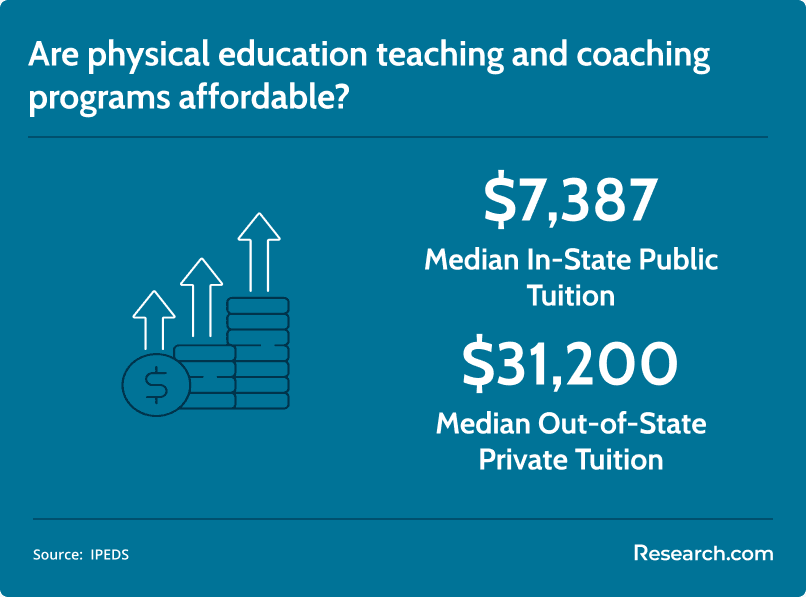
IPEDS 2023 data show that the median in-state tuition for Physical Education Teaching and Coaching programs at public institutions is $7,387, while the median tuition at out-of-state private institutions is $31,200. That gap shows why residency and school type can strongly affect total affordability.
| Cost factor | Why it matters | How to evaluate it |
| Tuition per credit | This is the base figure for estimating tuition. | Multiply the rate by the credits remaining after transfer evaluation. |
| Transfer credit policy | Accepted credits may reduce both completion time and tuition. | Ask for a written transfer evaluation before enrolling. |
| Flat-rate or full-time pricing | Some institutions price full-time study differently from part-time study. | Compare the total term charge instead of only the per-credit amount. |
| Technology, books, and placement fees | Advertised tuition may exclude required expenses. | Request a complete cost of attendance estimate. |
| Financial aid and employer support | Grants, federal loans, scholarships, and tuition reimbursement can lower out-of-pocket cost. | Check eligibility with the financial aid office and your employer. |
| Prior learning credit | Approved credentials or experience may reduce required credits. | Ask whether coaching, military, CPR, or fitness credentials qualify for PLA. |
Can Students with a Bachelor’s in Another Field Enter an Online Physical Education Program?
Yes. Applicants who already have a bachelor’s degree in a different subject may qualify for graduate, post-baccalaureate, or alternative certification pathways instead of starting a second bachelor’s degree. This route is common among career changers preparing for PE teaching, coaching, adapted physical activity, or wellness-related roles.
A bachelor’s degree is one of the usual physical education teacher certification requirements, but your original major can affect how many prerequisites you need. Related degrees may reduce added coursework, while unrelated fields may require more study in anatomy, physiology, health education, movement science, or teaching methods.
| Previous major | How it connects to PE | Possible gap to check |
| Kinesiology | An online kinesiology bachelor’s degree builds knowledge of biomechanics, motor function, and human movement. | Student teaching, assessment, and pedagogy may still be required. |
| Exercise Science | Exercise science supports fitness testing, exercise programming, and understanding physiological responses to activity. | Teacher licensure coursework may not be included. |
| Health Sciences | Health sciences connects to wellness promotion, anatomy, prevention, and health education. | Additional PE methods or movement science courses may be needed. |
| Athletic Training | Athletic training can support injury prevention, activity planning, and athlete care concepts. | Classroom management and teaching credentials may be missing. |
| Recreation and Leisure Studies | This background aligns with inclusive recreation, group leadership, activity planning, and community wellness. | State-approved teacher preparation may still be necessary. |
| Sports Management | Sports management often provides experience in coaching, event planning, athletic administration, and leadership. | Science prerequisites and licensure courses may be required. |
Available data indicate that PE teachers enter the field from several academic backgrounds. The chart below lists Health Education as the most common major at 45%, followed by Kinesiology at 15%, Education at 11%, Elementary Education at 5%, and other majors at 24%.
What Courses Do Online Physical Education Degree Programs Usually Include?
Online physical education programs generally combine human movement science, health education, instructional methods, and assessment. Students comparing PE with other teaching tracks, such as accelerated accredited online ESL programs, should check whether each curriculum is built for licensure, non-licensure fitness careers, or preparation for graduate study.
| Course area | What students learn | Why it matters |
| Anatomy and Physiology | Major body systems and how body structures support movement. | Future instructors need this foundation to teach physical activity safely. |
| Kinesiology | Movement mechanics, performance principles, and analysis of motion. | Teachers use these concepts to evaluate and teach movement skills. |
| Exercise Physiology | How muscular, cardiovascular, respiratory, and other systems respond to exercise. | This knowledge supports safe conditioning and fitness programming. |
| Health and Wellness Education | Nutrition, personal wellness, community health, and health behavior concepts. | PE teachers often connect movement instruction to overall well-being. |
| Motor Development | How movement skills progress through childhood, adolescence, and adulthood. | Lessons must match students’ developmental stages. |
| Curriculum and Instruction in Physical Education | Standards-based lesson planning, instructional strategies, and PE teaching methods. | This prepares students for structured K–12 instruction. |
| Assessment and Evaluation in Physical Education | Ways to measure fitness, skill growth, participation, and instructional outcomes. | Assessment helps teachers grade fairly and adjust instruction. |
| Adapted Physical Education | Methods for modifying activities for students with physical, intellectual, or developmental disabilities. | Inclusive PE requires flexible instruction and appropriate accommodations. |
| Classroom Management for Physical Educators | Safety, routines, behavior support, transitions, and organization in gyms or activity spaces. | PE teachers must manage movement-heavy environments with clear procedures. |
| Educational Psychology | Student motivation, learning differences, development, and engagement strategies. | Adapting instruction to student needs is a core part of the physical education teacher job description. |
| Instructional Technology in Education | Digital learning platforms, video analysis tools, fitness apps, and online assessment resources. | Technology can improve feedback, tracking, and student engagement. |
Do Online Physical Education Programs Require Internships or Student Teaching?
Yes. Most online PE programs that prepare students for teacher licensure require in-person practicums, internships, student teaching, or field experiences. Online classes can make the academic schedule more flexible, but certification generally depends on supervised practice in real school settings with a licensed educator.
Fieldwork is important because PE instruction changes across grade levels. Elementary PE often emphasizes basic motor skills, body awareness, cooperation, and positive movement experiences. Students researching middle school teacher responsibilities will see that middle grades PE often focuses on sport skills, teamwork, self-confidence, and personal fitness habits. High school PE usually places more emphasis on lifelong fitness, health education, individual and team sports, and student ownership of long-term wellness.
Student teaching allows candidates to practice these differences under supervision. It also develops classroom management, safety planning, assessment, lesson pacing, accommodations, and communication with students, families, and school staff.
Physical activity is also being used beyond formal PE classes. According to 71% of public school teachers in The School Pulse Panel (2025), physical activity is incorporated into non-PE classes, with the highest rate in elementary schools at 89% and the lowest rate in high schools at 42%. This does not reduce the need for trained PE teachers; it highlights the value of specialists who understand safe, structured, age-appropriate movement across K–12 settings.
Can an Online Physical Education Degree Qualify You to Teach K–12?
Yes, if the degree meets the teacher certification rules in the state where you plan to teach. Online delivery is not the main issue. What matters is state approval, accreditation, required coursework, exams, and supervised student teaching.
Before you apply, confirm the grade band the program supports, such as elementary, middle school, high school, or P–12. Also ask whether the curriculum prepares students for required exams, including the Praxis II: Physical Education where applicable, and whether the school helps arrange field placements in your state.
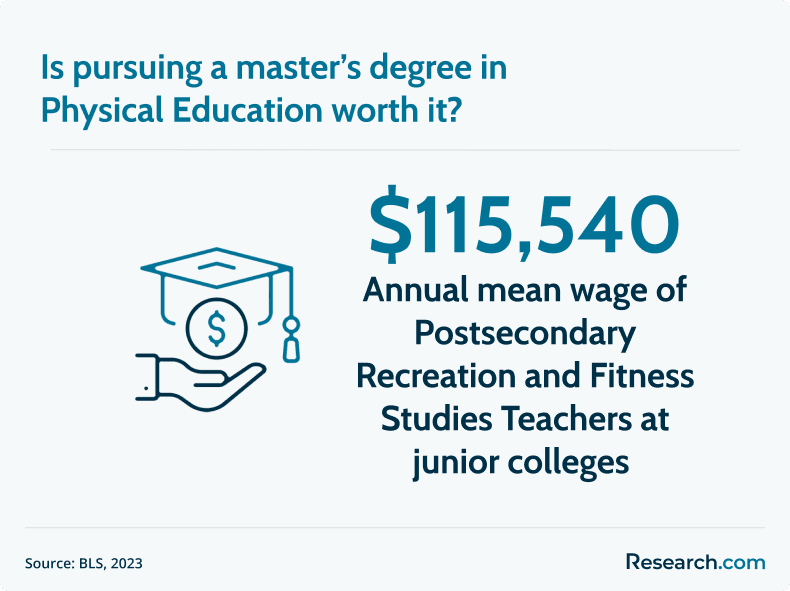
Some graduates later pursue advanced study in physical education, adapted physical education, kinesiology, health education, or educational leadership. Graduate credentials may support curriculum leadership, administration, postsecondary teaching, or specialized instructional roles. For example, postsecondary Recreation and Fitness Studies Teachers at junior colleges earn an annual mean wage of $115,540 according to BLS 2023 data.
How to Choose a Fast Online Physical Education Degree Program
The right accelerated PE program should shorten your path without limiting your options later. Your best choice depends on whether you want K–12 licensure, coaching work, exercise science roles, adapted PE specialization, athletic training, or graduate school preparation.
| Feature to check | Why it matters | Red flag |
| State licensure alignment | Students who want to teach public school K–12 PE need a program that fits state certification rules. | The program uses education language but does not clearly state whether it leads to certification. |
| Regional or recognized accreditation | Accreditation can affect transfer credit, financial aid, employer acceptance, and licensure review. | The institution cannot clearly identify its accrediting body. |
| Accelerated course format | Short terms such as 6-, 8-, or 12-week classes can speed progress. | Courses are short but not available often enough to stay on track. |
| Transfer policy | Transfer credit can significantly reduce bachelor’s completion time. | The school refuses to evaluate credits until after you enroll. |
| Field placement support | Online licensure programs still commonly require in-person student teaching. | Students are left to secure all placements with minimal help. |
| Prior learning credit | Approved coaching, military, CPR, fitness, or work experience may reduce required credits at some schools. | PLA is promoted but not explained in writing. |
| Student support | Accelerated learners need advising, tutoring, technical support, and career guidance. | Support hours do not work for employed students. |
| Total program cost | Fees, books, equipment, and placement costs can change the real price. | The school highlights tuition but does not provide a complete estimate. |
Questions to ask admissions or an advisor
- Will this program qualify me for teacher certification in my state?
- Is the degree built for first-time students, transfer students, licensed teachers, or career changers?
- How many of my credits will be accepted, and can I receive that decision in writing?
- Can student teaching, internships, or fieldwork be completed near my home?
- Which licensure exams do graduates usually need to take?
- What is the total estimated cost after tuition, fees, books, technology, exams, and placement expenses?
- Can I switch to part-time enrollment if my work or family schedule changes?
- How would moving to another state affect licensure and field placement?
What Is the Job Outlook and Average Salary for Physical Education Teachers for 2027?
As of 2025, BLS projects the overall employment outlook for teachers between 2023 and 2033 to decline by 1%. At the same time, NCES 2024 data show that 50% of schools reported feeling understaffed in 2024, compared with 45% in 2023. Physical Education or Health was identified as a shortage area by 7% of schools as of October 2024, and 5% of public school PE or Health teaching positions were vacant at that time.
The labor market is therefore mixed. National teacher employment may be modest, but individual districts, regions, and subject areas can still face staffing needs. Before choosing a program, review state teacher shortage lists, district job postings, and licensure reciprocity policies.
The average annual physical education teacher salary in the United States is $54,288. ZipRecruiter 2025 data cited here show higher reported salaries in several cities, including Wasco, CA at $69,690; Barrow, AK at $67,631; California City, CA at $66,582; Berkeley, CA at $66,473; and Redwood City, CA at $66,468. Pay can differ by district, state funding, collective bargaining agreements, education level, experience, and additional duties such as coaching.
What Can You Do with a Physical Education Degree Other Than Teach?
A physical education degree can lead to work beyond K–12 classrooms, especially when the curriculum includes exercise science, coaching, human movement, health promotion, leadership, and program planning. Some careers may require separate certifications, graduate education, licensure, or specialized experience.
| Career option | What the role involves | Additional preparation to consider |
| Athletic Coach | Planning practices, teaching sport skills, developing athletes, and supporting teams in youth, school, or college settings. | CPR, first aid, coaching certification, and sport-specific experience. |
| Personal Trainer or Fitness Instructor | Creating exercise plans, teaching proper technique, and helping clients improve strength, mobility, endurance, or health habits. | Industry certification and awareness of liability issues. |
| Recreation Director | Designing and managing activity programs for parks, community centers, camps, resorts, or recreation departments. | Experience with budgeting, staff supervision, and program management. |
| Health and Wellness Coach | Supporting people as they build healthier routines around activity, lifestyle, and wellness goals. | Wellness coaching credentials may strengthen qualifications. |
| Corporate or Workplace Wellness Coordinator | Developing employee wellness initiatives that promote movement, stress reduction, and preventive health behaviors. | Health promotion, communication, and program evaluation experience. |
| Sports Management or Administration | Overseeing programs, facilities, events, teams, staff, or operations in athletic and recreation organizations. | Students comparing sport administration and sport management degrees should decide whether they prefer business operations, athletic leadership, or instructional work. |
| Adapted Physical Activity Specialist | Creating inclusive movement and recreation opportunities for people with disabilities. | Adapted PE coursework, disability services experience, or related certification. |
Online vs. Traditional Physical Education Degree Programs
Online and campus PE programs can both provide serious academic preparation, but they suit different learners. Online programs often work well for employed adults, transfer students, licensed teachers, and students who need geographic flexibility. Campus programs may better serve students who want regular in-person coaching, athletic facilities, labs, and face-to-face mentoring.
| Factor | Online PE degree | Traditional campus PE degree |
| Schedule flexibility | Often stronger, particularly when courses are asynchronous. | Usually follows set class meeting times. |
| Speed | May include accelerated terms and year-round starts. | Often follows a standard academic calendar. |
| Hands-on requirements | Student teaching, practicums, fieldwork, or clinical experiences still take place in person. | Campus-based hands-on experiences may be easier to coordinate. |
| Peer and faculty interaction | Students must actively use discussions, advising, virtual meetings, and group work. | In-person interaction is built into the daily environment. |
| Cost considerations | May reduce commuting or relocation expenses, though fees vary. | May include housing, transportation, campus fees, or relocation costs. |
| Best fit | Working adults, transfer students, licensed teachers seeking graduate credentials, and students needing location flexibility. | Students who want in-person labs, campus facilities, and a structured routine. |
Students who eventually want school leadership roles may later compare graduate pathways such as affordable online doctoral programs in educational leadership, but that decision should come after confirming the first degree supports the intended career path.
Accreditation and Certification Standards for Online Physical Education Programs
Accreditation and certification alignment are the most important safeguards when evaluating online PE degrees. Accreditation shows that a school or program meets recognized academic standards. Certification alignment determines whether the degree can help you qualify for a teaching license in your state.
For teaching careers, verify that the program is state-approved for teacher preparation and includes required clinical components. For athletic training, specialized accreditation such as CAATE may matter. For graduate teacher education, you may see CAEP, NCATE, regional accreditation, or state approval depending on the institution and program history.
Some educators later pursue advanced credentials, such as the fastest online EdD programs, but advanced study should rest on an accredited and licensure-aligned foundation. Never assume that an online degree automatically qualifies you for classroom teaching; confirm requirements with both the program and the state licensing agency before enrolling.
What Student Support Should Accelerated Online PE Programs Offer?
Fast online students need more than access to course modules. Strong support can prevent delays caused by advising mistakes, transfer-credit confusion, technology issues, or late field placement planning.
- Academic advising: Advisors should help students build a realistic schedule that accounts for prerequisites, fieldwork, and licensure checkpoints.
- Transfer credit support: Students should receive clear information about accepted credits and remaining requirements.
- Field placement coordination: Licensure programs should explain how student teaching, internships, and practicums are arranged.
- Technology help: Online learners need reliable support for learning platforms, video tools, digital assignments, and online exams.
- Tutoring and writing support: Accelerated classes move quickly, so academic assistance should be easy to reach.
- Career services: Resume help, mock interviews, district networking, and certification guidance can support the transition from graduation to employment.
- Mentorship and peer connection: Cohorts, faculty mentoring, and student groups can help online students stay engaged.
Some students also value interdisciplinary study in reasoning, ethics, and pedagogy; those comparing broader liberal arts routes may review accelerated online philosophy degrees as a point of contrast.
Common Mistakes in Accelerated Online Physical Education Programs
Fast online PE programs can be efficient, but they are not shortcuts around academic work or licensure requirements. Condensed terms can make assignments, exams, practicum planning, and work-life balance more demanding.
| Common mistake or challenge | Why it creates problems | Better approach |
| Choosing only by speed | The shortest program may not support licensure or the career you want. | Define your career goal first, then compare timelines. |
| Ignoring accreditation | Unrecognized programs can cause problems with aid, employment, transfer credit, or licensure. | Check institutional accreditation and programmatic accreditation when relevant. |
| Assuming online means entirely remote | PE programs often include student teaching, internships, labs, or clinical experiences in person. | Ask which requirements must be completed on site. |
| Underestimating workload | Accelerated classes compress readings, assignments, projects, and exams. | Create a weekly study plan before classes begin. |
| Taking too many credits while working full time | An unrealistic load can lead to low grades, stress, or withdrawal. | Request sample schedules for working adults. |
| Comparing only tuition | Books, fees, equipment, exams, travel, and placement expenses may increase total cost. | Compare full estimated net cost after aid. |
| Skipping state licensure research | Teacher certification rules vary by state. | Confirm requirements with the school and state licensing agency. |
| Delaying fieldwork planning | Student teaching placements can take time to secure. | Ask about placement deadlines before enrolling. |
Students comparing pacing and affordability across online fields can borrow cost-evaluation strategies from resources such as the most affordable online master’s degrees in library science, but PE students must also account for licensing rules and required in-person practice.
Graduate Perspectives on Fast-Track Online Physical Education Degrees
- Carlos: "I wanted to change careers, but leaving my job and family responsibilities was not realistic. The online B.S. in Physical Education gave me the flexibility I needed, and the accelerated schedule helped me finish in under two years. The workload was serious, but the structure kept me on pace. I now teach high school PE and feel ready for the demands of the classroom."
- Danielle: "My health and physical education program connected teaching theory with hands-on preparation. Student teaching was the most important part because it showed me what instruction looks like with real students. Faculty support also helped me manage coursework and fieldwork at the same time."
-
Marcus: "The M.Ed. in Physical Education helped me understand the licensure process and move through it with confidence. I passed the Praxis II on my first attempt, and the internship made the coursework feel practical. The program was intense, but it prepared me for the next stage of my career.
"
Key Insights
- The shortest PE degrees usually require prior preparation. One-year and 14-month options are commonly graduate programs for licensed teachers or students who already meet admissions requirements.
- Licensure must come first if your goal is K–12 teaching. A fast online program is useful for public school teaching only if it matches state certification rules and includes required student teaching.
- Transfer credit can be the biggest time-saver. Students with an associate degree or up to 90 accepted credits may finish a bachelor’s completion program much faster than first-time students.
- Online PE programs may still require in-person work. Student teaching, clinical experiences, practicums, adapted PE fieldwork, and athletic training requirements often happen on site.
- Total cost is more than tuition. Fees, books, technology, travel, equipment, certification exams, and placement expenses can change the real price of a degree.
- Exercise science and physical education are not interchangeable. Exercise science can support fitness, wellness, coaching, or graduate study, but it may not lead directly to K–12 teacher licensure.
- Accreditation and state approval are essential. Confirm institutional accreditation, program-specific approval when relevant, and state licensure compatibility before you enroll.
- Job opportunities depend heavily on location. National projections are modest, but local shortages, vacancies, and district needs can create openings in specific regions.
References
- Bureau of Labor Statistics. (2023). Kindergarten and elementary school teachers. https://www.bls.gov/ooh/education-training-and-library/kindergarten-and-elementary-school-teachers.htm
- Bureau of Labor Statistics. (2023). Postsecondary recreation and fitness studies teachers. https://www.bls.gov/oes/2023/may/oes251193.htm
- Data USA. (n.d.). Physical education teaching & coaching. https://datausa.io/profile/cip/physical-education-teaching-coaching
- O*NET Online. (n.d.). Local employment trends: 25-1193.00 recreation and fitness studies teachers, postsecondary. https://www.onetonline.org/link/localtrends/25-1193.00?st=
- U.S. Department of Education. (2025). Teacher shortage areas. https://tsa.ed.gov
- ZipRecruiter. (2025). Adaptive physical education teacher salary. https://www.ziprecruiter.com/Salaries/Adaptive-Physical-Education-Teacher-Salary
- ZipRecruiter. (2025). Elementary physical education teacher salary. https://www.ziprecruiter.com/Salaries/Elementary-Physical-Education-Teacher-Salary
- ZipRecruiter. (2025). Middle school physical education teacher salary. https://www.ziprecruiter.com/Salaries/Middle-School-Physical-Education-Teacher-Salary
- ZipRecruiter. (2025). Physical education teacher salary. https://www.ziprecruiter.com/Salaries/Physical-Education-Teacher-Salary
- Zippia. (n.d.). Physical education teacher education. https://www.zippia.com/physical-education-teacher-jobs/education/
Other Things You Should Know About Online Physical Education Degrees
Accelerated online physical education programs often accept 60 to 90 transfer credits, with many requiring at least 30 credits earned in residence. Schools usually cap transfers at 75% of the degree and review transcripts course by course for PE, science, and general education requirements.
Admission requirements for the fastest online Physical Education degree programs in 2027 vary by institution but generally include a high school diploma or GED, relevant transcripts, and sometimes a minimum GPA. Some programs may also require letters of recommendation or a personal statement.


