2027 Is an Online Ed.D. in Leadership and Learning in Organizations a Good Fit for Retail District Managers?
Audited and Verified:
Our Editorial and Data Verification Process
Research.com uses government datasets, official education statistics and primary institutional information to support its career and degree guides. Our review process checks factual accuracy, occupational definitions, source dates and the requirements associated with the credentials discussed.
How This Article Was Fact-Checked
Our editorial team verifies salary estimates, employment projections, education requirements and program information against original data providers and official organizations. Salary figures are checked against the relevant occupational definitions and reporting periods. Information about licensure, accreditation and required in-person training is reviewed separately.
Fact-checked and verified on:

Co-Founder and Chief Data Scientist
Retail district managers already lead across stores, coach managers, and turn company strategy into daily practice. An online Ed.D. in Leadership and Learning in Organizations could deepen that work—but it requires a substantial commitment, and it is not the most direct route to every retail promotion.
This guide explains what the degree teaches, where it may help a retail leader advance, and when an MBA or targeted development would be more useful. It also identifies the program details and costs to verify before enrolling.
Key Things You Should Know
- Best fit: An Ed.D. is most useful when you want to lead manager development, organizational change, or evidence-based improvement across stores—not simply qualify for the next operations title.
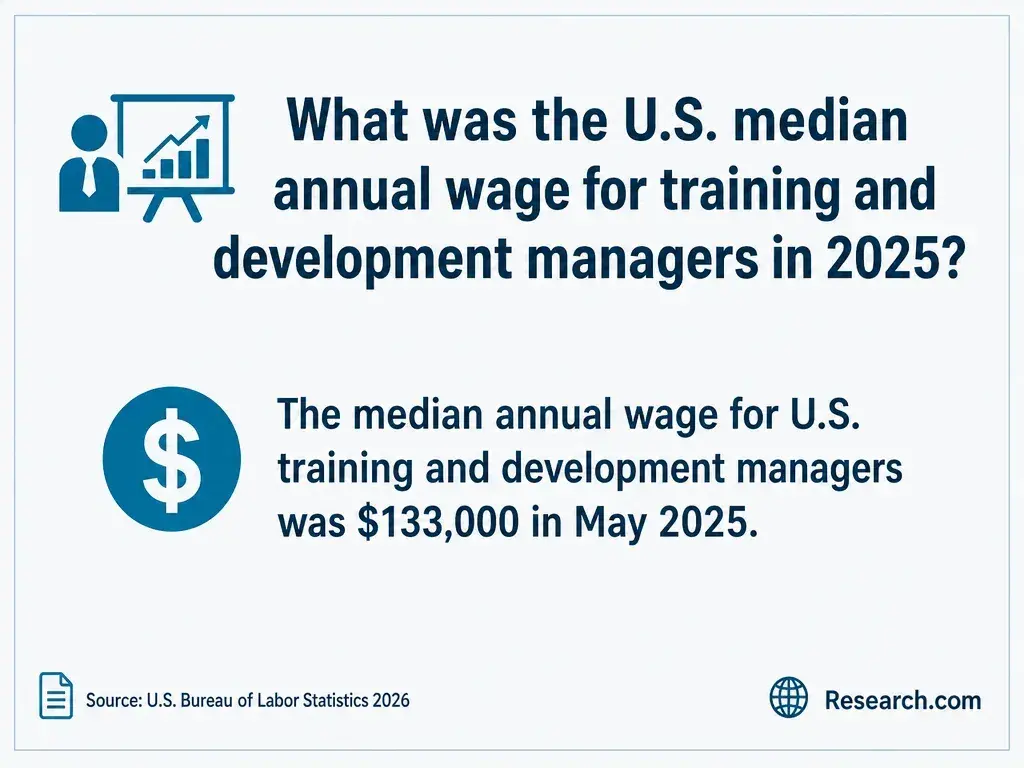
- Career reality: The US median annual pay for training and development managers was $133,000 in May 2025, but that occupational figure is not a predicted salary for Ed.D. graduates.
- Before enrolling: Confirm live-class and travel requirements, the applied-project rules, employer data access, and the full cost; "online" does not necessarily mean self-paced.
Is an online Ed.D. in Leadership and Learning in Organizations right for retail district managers?
It can be a good fit if your next goal is to improve how a retail organization develops people and implements change at scale. A district manager's experience with store-manager coaching, turnover, onboarding, and inconsistent execution gives them practical questions to investigate. Doctoral study is most valuable when they also have the authority—or a credible path to it—to test improvements and use the findings.
The right credential depends on the responsibility you want next. This comparison separates a learning-and-change goal from a conventional retail operations goal.
| Primary goal | Likely better starting point | Why |
| Lead organizational learning, leadership development, or applied improvement | Practice-oriented Ed.D. | Develops learning, change, and evaluation skills through doctoral study |
| Advance through merchandising, finance, or general retail operations | MBA or employer leadership pathway | May align more directly with commercial and operational responsibilities |
| Fix a defined coaching or training gap in the current role | Focused training and a supervised workplace project | Can be faster and less costly than a doctorate |
An Ed.D. is a practice-oriented doctorate, not an automatic promotion credential. If the intended role is primarily sales, inventory, or profit-and-loss leadership, ask employers whether doctoral learning would matter more than stronger operating results. If you are considering a different function, compare the Ed.D. study tracks and career fit against the actual duties in your target job descriptions.
What does an online Ed.D. in Leadership and Learning in Organizations teach?
Programs in this area typically examine how adults learn at work, how leaders influence organizational systems, and how to evaluate proposed improvements. For a district manager, that could mean distinguishing a store manager's coaching-skill gap from a scheduling, staffing, or incentive problem. Training may help with the former; it will not necessarily solve the latter.
Applied research is another important distinction. A student might propose evaluating a revised manager-onboarding process using completion records, appropriately authorized performance measures, and interviews. Those sources could inform a decision, but a simple before-and-after comparison would not by itself prove that onboarding caused a change in store performance. Course depth and the required final project vary by institution.
How can an Ed.D. advance a retail district manager's career?
The strongest case is often expanded responsibility, not the letters after a name. A district manager who can diagnose inconsistent execution, develop store leaders, secure stakeholder support, and evaluate a rollout may be better positioned to seek regional development, field training, or organizational-improvement work.
Build evidence alongside the degree. Document the decisions you owned, the managers or stores affected, the measures you used, and what you changed after reviewing results. An authorized, carefully described workplace project can demonstrate skills more convincingly than a degree alone. Avoid presenting confidential company information or attributing a sales change to training without sufficient evidence.
For a near-term regional operations promotion, discuss the required experience with your employer first. A stretch assignment, mentorship, or finance-focused development may produce a clearer return than doctoral study.
Online delivery can let a district manager remain employed across a dispersed territory, but it changes where study happens more reliably than when it happens. Campus-based study may offer easier in-person contact; either format can include demanding collaborative work.
These differences are worth checking against your travel calendar before choosing a format:
| Consideration | Online program | Campus-based program |
| Attendance | May require scheduled live sessions and group meetings | Requires scheduled classes and a workable commute or relocation |
| Travel | May still require campus convenings | Regular campus attendance is generally central to delivery |
| Workplace project | May allow inquiry at an approved employer or partner site | May also allow workplace inquiry; location alone does not determine project rules |
Ask about attendance, time zones, required trips, team meetings, and what happens if your employer transfers you or peak retail periods conflict with class. A program advertised among shorter online Ed.D. degree pathways still needs a feasible course and project schedule; faster completion is not assured for an individual student.
Exact course names differ, but relevant curricula may cover leadership theory, organizational change, adult learning, research methods, and program evaluation. A district manager should look beyond the course titles: Does adult-learning coursework address coaching and learning transfer? Does evaluation coursework teach students to choose valid measures and explain limitations? Does change coursework address implementation across locations with different staffing and constraints?
Check whether these topics are required or merely available as electives and whether the final dissertation, dissertation in practice, or capstone can address a retail problem. Exposure to a subject in one course is not the same as demonstrated expertise in learning analytics or organizational research.
Requirements vary by school. An applicant may need a qualifying prior degree, transcripts, recommendations, a statement of purpose, and evidence of relevant professional experience; some programs also specify graduate study or other conditions. A retail background is not inherently disqualifying, and a master's in education is not universally required.
Show what your district role actually entails rather than relying on the title. Describe your decision-making authority, manager-development work, cross-store initiatives, and a genuine problem you want to study. Ask admissions whether your academic record meets its rules and ask the program separately whether your proposed workplace setting could support its applied-project requirements. Admission eligibility is not approval of a future project, and prior graduate credits do not automatically transfer into the doctorate.
There is no reliable universal duration or price for an online Ed.D. Both depend on the required credits, enrollment pace, tuition structure, fees, and time needed to complete the final project. Retail travel and seasonal demands can also affect whether an advertised pace is realistic.
Request a term-by-term estimate that includes tuition, mandatory fees, technology charges, required campus travel and lodging, and the cost of continued enrollment if the project takes longer than planned. Compare that estimate with your employer's written tuition-assistance policy, including reimbursement limits, grade conditions, and any obligation to remain employed. For a framework, browse features about online Doctor of Education tuition planning on education portals. Do not count a potential promotion or reimbursement as certain when assessing affordability.
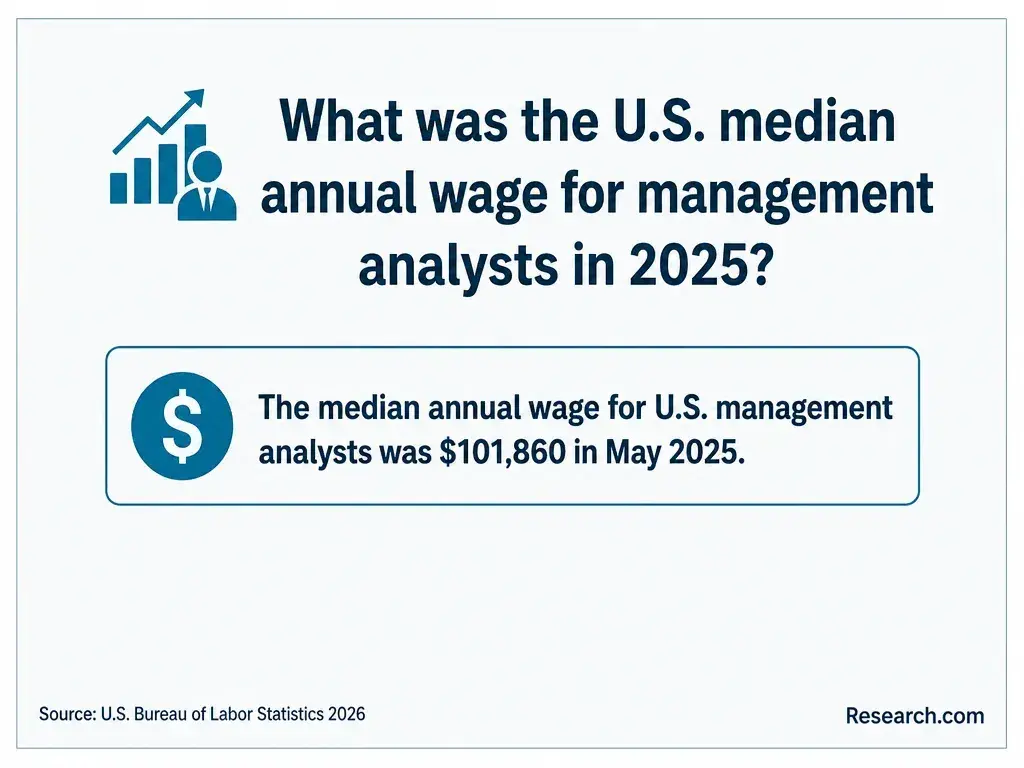
Potential directions include regional retail leadership, field learning and development, training management, organizational development, and consulting on multi-site operations or workforce improvement. These are different jobs: a training manager owns learning programs and teams, while a management analyst typically diagnoses client or employer problems and recommends changes. A higher-education administration move is possible for some candidates, but retail leadership alone may not meet an institution's sector-specific hiring expectations.
Use target job postings to identify the gap between district management and the next role. For learning roles, seek hands-on experience in needs assessment, program design, facilitation, and evaluation. For consulting, demonstrate how you defined a problem and communicated recommendations under real organizational constraints. An Ed.D. can strengthen that evidence; it does not substitute for it.
There is no single defensible salary figure for Ed.D. graduates or retail district managers: degree holders work in different occupations, and a district title does not identify one uniform pay category. Pay also depends on the employer, region, scope of responsibility, and experience.
For a relevant comparison, the US Bureau of Labor Statistics reports a May 2025 median annual salary of $133,000 for training and development managers and projects 6.4% employment growth from 2025 to 2035. Those figures describe an occupation, not the expected outcome of earning an Ed.D. If you are considering higher education administration instead, compare its role requirements and likely compensation with the full cost of study; tuition support routes for higher education leadership doctorates may affect that calculation, but assistance must be confirmed with each program or employer.
How can retail professionals choose an accredited online Ed.D. program?
Start by confirming the institution's accreditation through the accreditor and the US Department of Education or CHEA recognition information. Then examine the specific degree: institutional accreditation does not establish that its curriculum matches retail leadership, that it offers a particular concentration, or that it qualifies graduates for educator licensure.
A useful final comparison requires written answers to several program-specific questions:
- Which courses are required, and who supervises the final project?
- Can a retail employer or outside partner serve as a project site, and what approvals and data permissions are required?
- When are live sessions and campus visits, and what happens if employment changes?
- What is the full estimated cost at a realistic enrollment pace, and what student-support services are available?
Compare the answers rather than selecting on advertised convenience or tuition alone. Choosing a budget-friendly organizational leadership doctorate can help narrow options, but the lowest advertised tuition is not necessarily the lowest total cost—or the best match for a district manager's goals.
Other Things You Should Know About EdD Leadership
Only with the permissions required by your employer and program. Check privacy, confidentiality, data-use, and research-review rules before collecting or sharing records; access for your job is not automatically permission for academic use.
Ask the program whether your project can change sites or use an approved external partner. Also check whether leaving your employer triggers repayment of tuition assistance.
Not by itself. Principal licensure has state-specific requirements, and a general organizational leadership doctorate may not be an approved preparation program.
Usually, no universal doctorate requirement applies. Relevant learning-and-development experience, management ability, and evidence that you can design and evaluate training may matter more for a particular opening.
- Cost of Attendance (Budget) | 2025-2026 Federal Student Aid Handbook https://fsapartners.ed.gov/knowledge-center/fsa-handbook/2025-2026/vol3/ch2-cost-attendance-budget
- Types of Financial Aid: Grants, Work-Study, and Loans | studentaid.gov https://studentaid.gov/understand-aid/types
- Learning and development roles and competency domains in higher education: a content analysis of job announcements - PMC https://pmc.ncbi.nlm.nih.gov/articles/PMC8294246/
- General Schedule Qualification Policies | U.S. Office of Personnel Management https://www.opm.gov/policy-data-oversight/classification-qualifications/general-schedule-qualification-policies/
- Qualified Ed expenses | Internal Revenue Service https://www.irs.gov/credits-deductions/individuals/qualified-ed-expenses
- Doctoral dissertation or capstone: how to choose the right program | PhD/Doctorate | Capella University Blog https://www.capella.edu/blog/phd-doctorate/the-difference-between-a-dissertation-and-doctoral-capstone/
- Organizational Leadership vs. Business Administration | UMass Global https://www.umassglobal.edu/blog-news/mba-vs-organizational-leadership-determining-degree-meet-your-career-goals-infographic
- What Do Learning and Development Managers Do | Franklin University https://www.franklin.edu/career-guide/training-and-development-managers/what-do-learning-and-development-managers-do
- Walden University's Guide to Doctoral Capstone Projects https://www.waldenu.edu/online-doctoral-programs/resource/guide-to-doctoral-capstone-projects
- Master's in Organizational Leadership vs. MBA | Warner Pacific University https://www.warnerpacific.edu/blog/masters-in-organizational-leadership-vs-mba/