2027 Is an Online Ed.D. in Leadership and Learning in Organizations a Good Fit for College Accessibility Services Leaders?
Audited and Verified:
Our Editorial and Data Verification Process
Research.com uses government datasets, official education statistics and primary institutional information to support its career and degree guides. Our review process checks factual accuracy, occupational definitions, source dates and the requirements associated with the credentials discussed.
How This Article Was Fact-Checked
Our editorial team verifies salary estimates, employment projections, education requirements and program information against original data providers and official organizations. Salary figures are checked against the relevant occupational definitions and reporting periods. Information about licensure, accreditation and required in-person training is reviewed separately.
Fact-checked and verified on:

Co-Founder and Chief Data Scientist
College accessibility services leaders often have to improve more than an accommodation process. They may need to coordinate faculty development, digital access, staffing, and institution-wide change while maintaining individualized student support.
An online Ed.D. in Leadership and Learning in Organizations could strengthen that work, but it is a substantial investment and not a substitute for disability-law expertise or authority to make policy. This guide helps current and aspiring accessibility leaders judge the degree against their responsibilities, career goals, schedule, and less costly options.
Key Things You Should Know
- Best fit: An Ed.D. is most useful when you already lead accessibility work and want to direct cross-campus learning, evaluation, and change - not simply qualify for an accessibility services position.
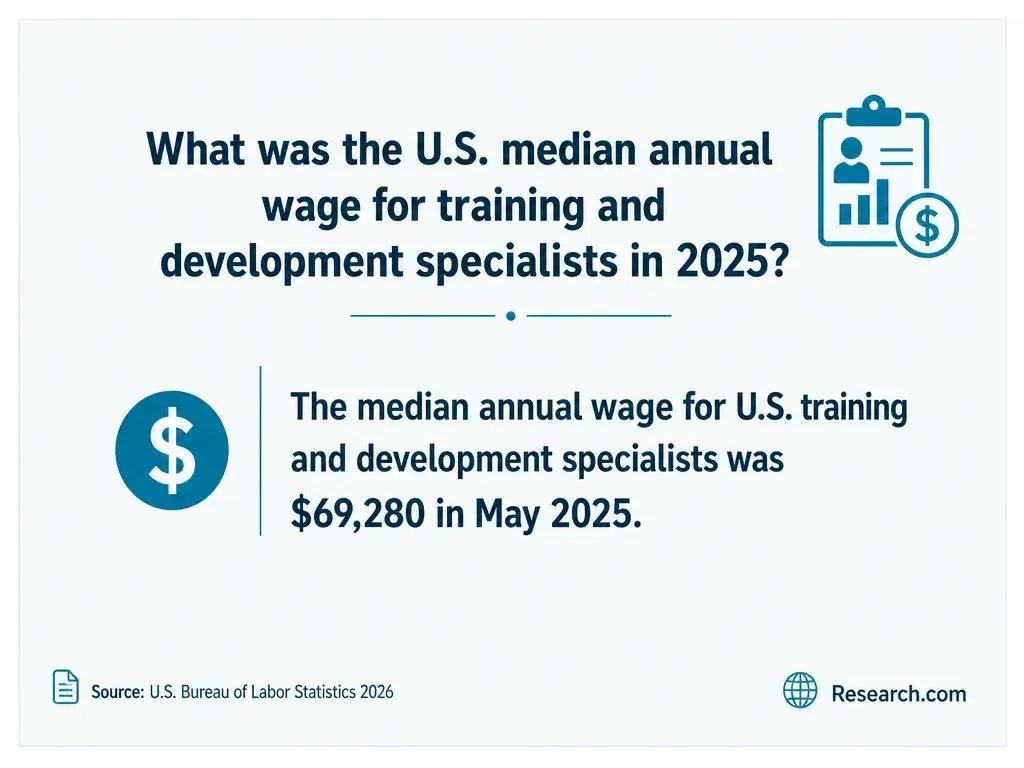
- Career reality: The U.S. median annual salary for postsecondary education administrators was $104,590 in May 2025; that occupational median is not an expected salary for an Ed.D. graduate.
- Before enrolling: Confirm the program's applied-project rules, live attendance, total cost, and opportunities to study accessibility-related problems. An online label alone answers none of those questions.
Is an online Ed.D. in Leadership and Learning in Organizations a good fit for accessibility services leaders?
Yes, conditionally. A practice-oriented Ed.D. fits an experienced accessibility services leader whose next challenge is organizational: helping faculty implement accessible instruction, improving coordination with information technology and procurement, or evaluating whether institutional processes serve students effectively.
"Leadership and learning" refers to how organizations develop people, use evidence, and change practice; it does not necessarily mean a doctorate specializing in disability services.
The distinction is between needing stronger institution-wide leadership capacity and needing a specific technical skill or credential. These pathways answer different problems.
| Primary goal | Likely better starting point | Reason |
| Lead sustained, cross-campus accessibility change | Practice-oriented Ed.D., if the curriculum and project fit | Develops organizational diagnosis, leadership, and applied evaluation over time |
| Improve immediate knowledge of accommodations or digital accessibility | Targeted training, mentorship, or a relevant certificate | Addresses a narrower gap with less time and expense |
| Pursue a research-intensive academic career | Research-oriented PhD | Usually places greater emphasis on producing disciplinary research |
| Move into broad campus administration | Compare an Ed.D. with higher-education administration or public-administration study | Governance, budgeting, and student-affairs preparation may matter more than organizational learning alone |
A doctorate is harder to justify if your immediate objective is a first accessibility services job, your institution cannot support an applied project, or the program offers little faculty guidance relevant to higher education. Leadership experience, compliance knowledge, and demonstrated results remain important regardless of degree.
What does an online Ed.D. in Leadership and Learning in Organizations prepare graduates to do?
At its best, the degree helps a practitioner diagnose a persistent organizational problem, bring stakeholders into a workable response, and assess whether implementation is improving. For an accessibility leader, that might mean examining why accessible course-material workflows break down across departments. A faculty workshop could be part of the response, but training alone would not fix unclear ownership, procurement practices, or inadequate staffing.
Applied doctoral work may take the form of a capstone, dissertation in practice, or another required project; these are not interchangeable, and the university sets the requirements.
A proposed study involving student accommodation records would also require appropriate institutional permission, privacy safeguards, and any applicable academic review. Readers comparing capstone-based education doctorate pathways should verify the actual deliverable and whether their institution can serve as a project site.
Graduation demonstrates completion of an academic program. It does not confer authority to change campus policy, guarantee access to confidential records, or establish that an intervention worked at another institution.
How can an Ed.D. advance a career in college accessibility services?
An Ed.D. may strengthen a case for broader responsibilities when paired with a record of leading people and projects. An accessibility services director might use doctoral study to improve how faculty, student affairs, facilities, and technology teams share responsibility for access. A move into an associate dean or institution-wide accessibility role would still depend on the position's requirements, budget experience, governance relationships, and openings.
The strongest career evidence is specific: a documented process improvement, a responsibly evaluated initiative, or experience managing cross-functional decisions. Before enrolling, compare target job descriptions with your current responsibilities.
If the principal gap is supervising staff or managing a budget, seek that experience alongside - or before - doctoral study. If your employer values advanced study, ask about release time and employer tuition support for higher education leadership study; obtain reimbursement conditions in writing before relying on them.
Relevant coursework may cover adult learning, organizational change, leadership, qualitative and quantitative inquiry, and program evaluation. An accessibility leader could apply those subjects to faculty development, accessible technology adoption, or the handoff between an accommodation decision and its implementation.
The useful question is not whether a catalog mentions "inclusion," but whether required courses and faculty supervision help you investigate a real accessibility systems problem.
For example, evaluating a new faculty support process requires more than counting workshop attendees. A leader would need to define the intended practice change, choose credible measures, consider who did not participate, and avoid treating student feedback as unrestricted research data. Check syllabi and project guidance for this level of methodological preparation. A general Ed.D. should complement, not replace, current expertise in disability-related obligations and accessible practice.
Requirements vary by university. Programs may ask for a qualifying prior degree, graduate transcripts, a statement of purpose, recommendations, and evidence of relevant professional or leadership experience; some also use interviews or writing samples. An education master's degree, a particular job title, and published research should not be assumed universal requirements.
Accessibility leaders can make a stronger application by describing decisions they actually influenced: coordinating an implementation change, supervising a team, or identifying a problem they are prepared to investigate. Explain the limits of your authority and data access rather than presenting a hoped-for campus project as already approved.
If you have previous doctoral coursework, distinguish credits that support admission from credits the university will apply to this degree. Review prior doctoral credit considerations in Ed.D. completion programs, then request a written evaluation from the prospective university.
There is no reliable single timeline or price for an online Ed.D. Completion depends on required credits, enrollment pace, course sequencing, and the time needed for the final project. Compare each school's published plan with the time you can protect during a regular term and during project-intensive periods.
For a meaningful cost comparison, request a written estimate of tuition, mandatory fees, required travel and lodging, and likely continuation charges if the project takes longer than planned. Add the costs of reduced work hours and any unreimbursed expenses relevant to you.
Compare those totals with education doctorate tuition and affordability information, but use the university's charges for your entry term as the basis for a decision. Employer reimbursement may depend on continued employment, grades, or annual limits; an anticipated promotion is not a dependable funding source.
Online study can let an accessibility leader remain employed and examine a problem at their own institution. It does not necessarily mean self-paced study: live meetings, group work, campus convenings, and project deadlines may still be mandatory. A campus-based program may make in-person faculty interaction easier, but commuting or relocation can be a greater obstacle for a working administrator.
Compare the actual schedule and support, not the delivery label. Ask whether live sessions conflict with peak accommodation periods, whether convening sites and course platforms meet your access needs, and what happens to a workplace-based project if you change employers. If you need accommodations as a doctoral student, contact the university's student accessibility office; do not assume the arrangements at your workplace carry over.
Possible directions include continued leadership of an accessibility services office, broader student-affairs administration, campus-wide accessibility coordination, professional learning, or organizational consulting. These roles differ substantially: a director may manage individualized service processes and staff, while a broader administrator may oversee budgets and policy across multiple units. Consulting also requires a credible record of solving client problems, not just a doctorate.
The U.S. Bureau of Labor Statistics reports a May 2025 median annual salary of $104,590 for postsecondary education administrators, with projected employment growth of 1.8% from 2025 to 2035.
This broad occupation includes many jobs unrelated to accessibility services. Use it as labor-market context, not a forecast for a particular position, institution, or graduate. Public-college pay structures, location, seniority, and the scope of a role may matter more to an individual offer than the degree itself.
A general leadership and learning Ed.D. does not itself grant a license or professional certification for college accessibility services.
Hiring qualifications depend on the position and institution. Leaders need working knowledge of the legal and institutional framework affecting their campus, including applicable disability protections, student-record privacy, and procedures for individualized accommodation decisions. They must also know when to involve counsel, technology specialists, or licensed clinicians rather than acting outside their expertise.
Some adjacent jobs have separate requirements. Providing a regulated clinical service, for example, can require an occupation-specific license; school-administrator licensure is a different pathway from college accessibility leadership. Check the actual job posting and, for any regulated activity, the relevant state authority. Neither institutional accreditation nor a leadership course establishes licensure eligibility.
How can you choose an accredited online Ed.D. program for accessibility leadership?
Start by checking the university's institutional accreditation through the accreditor and the university's own disclosures. Then examine the exact degree award, required curriculum, delivery schedule, faculty expertise, and final-project rules. Accreditation is an essential institutional check, but it does not establish that a program specializes in accessibility or prepares graduates for a particular job.
Before applying, ask the program director whether a college accessibility systems problem is suitable for its required project, what approvals and data access would be needed, and what alternative site is permitted if your employment changes. Ask current students or graduates how faculty supported projects in higher education, without treating individual accounts as guaranteed outcomes.
Compare those answers across online organizational leadership Ed.D. choices for college leaders. Choose the program whose obligations and supervision fit the work you intend to do - not simply the one with the most appealing title.
Other Things You Should Know About EdD Leadership
No. Lived experience can offer valuable insight, but effective leadership also requires professional judgment, relevant expertise, and meaningful participation by disabled students and colleagues.
Yes. Contact the doctoral university's student accessibility office about its process and the specific barriers you anticipate. Workplace arrangements do not automatically transfer to a new institution.
Yes. Plan accessible, voluntary ways for students to identify barriers and respond to proposed changes. Do not assume a small group speaks for every disabled student or disclose individual accommodation information to gather feedback.
Only within the permissions and confidentiality rules that apply to the project. Agree on data access, review, and publication expectations with the university and employer before collecting information; a public portfolio may need a carefully redacted account.
- Auxiliary Aids and Services for Postsecondary Students with Disabilities | U.S. Department of Education http://www.ed.gov/laws-and-policy/individuals-disabilities/auxiliary-aids-and-services-for-postsecondary-students-with-disabilities
- Guidance on Web Accessibility and the ADA https://www.ada.gov/resources/web-guidance/
- Types of Financial Aid: Grants, Work-Study, and Loans | studentaid.gov https://studentaid.gov/understand-aid/types
- Cost of Attendance (Budget) | 2025-2026 Federal Student Aid Handbook https://fsapartners.ed.gov/knowledge-center/fsa-handbook/2025-2026/vol3/ch2-cost-attendance-budget
- Meet the Inclusive Leadership & Learning Team | American University https://www.american.edu/inclusive-excellence/inclusive-leadership-learning/ada-504-coordinator.cfm
- Careers in Higher Education Leadership - NMSU Global Campus https://global.nmsu.edu/blog/education/careers-in-higher-education-leadership/
- 2026 UNC Online EdD in Organizational Learning & Leadership https://online.unc.edu/online-doctoral-programs/online-edd-organizational-learning-and-leadership/
- EdD vs. PhD in Education: Choosing the Right Program | Goodwin College of Professional Studies https://drexel.edu/soe/resources/career-path/edd-vs-phd/
- Admissions Process - Student Disability Services https://sds.utk.edu/prospective-students/admissions-process/