2027 Is an Online Ed.D. in Leadership and Learning in Organizations a Good Fit for Library System Administrators?
Audited and Verified:
Our Editorial and Data Verification Process
Research.com uses government datasets, official education statistics and primary institutional information to support its career and degree guides. Our review process checks factual accuracy, occupational definitions, source dates and the requirements associated with the credentials discussed.
How This Article Was Fact-Checked
Our editorial team verifies salary estimates, employment projections, education requirements and program information against original data providers and official organizations. Salary figures are checked against the relevant occupational definitions and reporting periods. Information about licensure, accreditation and required in-person training is reviewed separately.
Fact-checked and verified on:

Co-Founder and Chief Data Scientist
Library system administrators often lead staff development, coordinate branches, manage change, and answer to boards or public funders. An online Ed.D. in leadership and learning could strengthen that work, but it is a substantial commitment - not a standard requirement for library leadership.
This article helps public and academic library administrators assess where doctoral study adds value, where an MLIS or targeted training matters more, and what to verify about programs, costs, projects, and career outcomes before applying.
Key Things You Should Know
- An online Ed.D. is most useful when your role involves systemwide staff learning, organizational change, and evidence-based improvement - not simply because you seek a higher library leadership title.
- It does not replace an employer-required MLIS or guarantee promotion; compare the doctorate with an MPA, employer leadership development, or targeted evaluation training.
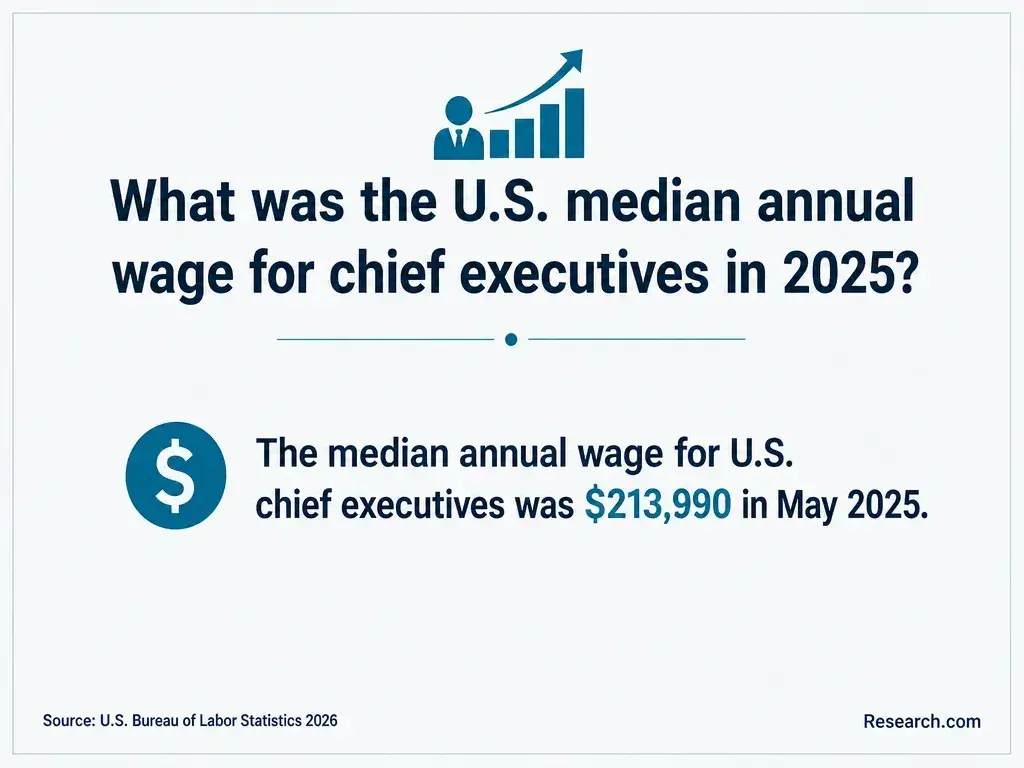
- The Bureau of Labor Statistics reports a $133,000 median annual salary for training and development managers in May 2025, but that cross-sector figure is not a salary estimate for library administrators or Ed.D. graduates.
Is an Online Ed.D. in Leadership and Learning a Good Fit for Library System Administrators?
Yes, potentially - if you already have library leadership experience and need deeper preparation to develop people, lead change across branches, or evaluate whether a systemwide initiative works. The fit is weaker if your immediate goal is to meet an MLIS requirement, learn core library operations, or qualify for a position whose hiring rules do not value a doctorate.
For example, an administrator responsible for inconsistent onboarding across branches could use organizational learning and evaluation methods to examine how training transfers into practice. A persistent staffing shortage or an inadequate technology budget, however, may require funding or governance decisions rather than another training program.
The right credential depends on the work you want to do. This comparison separates doctoral learning from qualifications that serve different library leadership needs.
| Path | Best fit for a library administrator | Key limitation |
| Leadership and learning Ed.D. | Leading organizational learning, change, and applied evaluation across a system | Does not replace library-specific credentials or executive experience |
| MLIS | Meeting library-profession qualifications and building library-specific expertise | May offer less depth in systemwide organizational research |
| MPA or targeted professional development | Strengthening public budgeting, administration, or a specific management skill | May not provide the sustained applied inquiry of a doctorate |
Check actual job postings and your employer's promotion rules before choosing. Public library boards, civil-service systems, and universities can weigh degrees and experience differently.
What Does an Ed.D. in Leadership and Learning in Organizations Cover?
A practice-oriented Ed.D. typically studies how adults learn at work, how leaders influence organizational change, and how practitioners use evidence to improve decisions. For a library administrator, useful applications might include branch-manager development, staff onboarding, knowledge sharing, or evaluation of a new service model.
Look for a curriculum that connects learning theory to implementation and measurement. A staff workshop, for instance, may improve knowledge without changing service quality; examining supervision, workflow, and incentives can reveal why. Research coursework should also help you distinguish a useful local evaluation from a claim that an intervention caused an outcome. Course depth and required projects vary by program.
Can an Online Ed.D. Advance a Library System Administrator's Career?
It can strengthen a case for broader responsibility when paired with documented results: leading a cross-branch initiative, improving a development process, or producing a credible evaluation that informs a decision. Advancement still depends on vacancies, budgets, hiring rules, and demonstrated management ability. A doctorate alone does not establish readiness to direct a large system.
Before applying, identify the role you want and ask its hiring authority which qualifications are required and which are preferred. Administrators who already hold an education specialist credential may find resources for education specialist graduates considering a doctorate useful, but should confirm whether their prior study counts toward admission or degree requirements at a particular school.
Requirements vary. Programs may ask for a completed master's degree, graduate transcripts, professional experience, recommendations, a statement of purpose, and evidence that the applicant can undertake doctoral study. An education master's is not universally required, and an MLIS may provide relevant preparation. Prior graduate credits used to establish admission eligibility do not necessarily transfer into the doctorate.
A strong library application describes decisions you have actually made: supervising teams, coordinating branches, managing a service change, or evaluating staff learning. Explain a problem you could investigate without claiming access to patron or employee records that your institution has not authorized. Ask admissions staff how they assess library leadership experience and whether an applied project must have an organizational sponsor.
Course titles vary, but relevant subjects may include organizational leadership, adult learning, change management, qualitative and quantitative methods, and program evaluation. Review required courses rather than assuming an advertised theme is a formal concentration. For a library administrator, the crucial test is whether coursework helps turn a real operational question into a feasible, ethical inquiry.
Programs also differ in their final work: some require a dissertation in practice, while others use a different approved project structure. Administrators interested in applied-project routes through an education doctorate should verify the actual deliverable and faculty oversight. Any project involving staff or patrons may require employer permission, privacy safeguards, and institutional review; access to library records cannot be assumed.
Completion time depends on required credits, course scheduling, enrollment pace, and the final project. Compare each program's published plan with its maximum completion period, leave policy, and expectations for continued access to a project site. Working full time can make a seemingly manageable course schedule difficult during research and writing stages.
Calculate the full cost from required credits and published tuition, then add fees, books, technology, any campus travel, and the cost of time away from work. Compare lower-tuition online leadership doctorate options only after checking that their curriculum and project requirements fit library-system work. Ask your employer whether tuition assistance covers doctoral study, when reimbursement occurs, and whether leaving the job triggers repayment.
Online delivery can reduce routine travel, but it does not necessarily mean self-paced study. Live classes, cohort meetings, group assignments, and required campus convenings can still conflict with evening board meetings or weekend library operations. Campus-based study may offer easier in-person access to faculty and peers, but commuting can be a substantial constraint for an administrator overseeing multiple locations.
Request the actual class schedule, attendance policy, convening calendar, and group-work expectations for your entry term. If you previously left a doctorate unfinished, comparing education doctorate ABD completion routes is a separate decision: ask each institution for a written evaluation of prior credits and remaining requirements rather than assuming an online format shortens completion.
Confirm that the degree-awarding institution holds accreditation recognized by the U.S. Department of Education or the Council for Higher Education Accreditation, and check the institution's current accreditation status directly with its accreditor. Then verify the exact Ed.D. degree, curriculum, and delivery requirements with the university. Institutional accreditation does not mean every advertised leadership focus has separate programmatic accreditation.
If a target job specifies an ALA-accredited MLIS, check that qualification independently; accreditation of an Ed.D. does not convert it into an MLIS. Likewise, a general organizational leadership doctorate should not be treated as preparation for educator or school-administrator licensure.
The most direct path is often within library leadership: system director, deputy director, branch-operations leader, staff-development director, or strategic initiatives leader, subject to each employer's qualifications. An administrator who has led measurable cross-branch work may also be competitive for roles involving workforce learning, program evaluation, or organizational improvement in public agencies, universities, or nonprofits.
These are different transitions. A library director needs budget, governance, community-relations, and operational credibility. A learning and development leader needs evidence of designing, delivering, and evaluating staff development. An organizational consultant needs a record of diagnosing problems and working with clients. Choose doctoral projects and responsibilities that produce evidence for the specific role you intend to pursue.
Does an Ed.D. Increase Salary and Job Prospects for Library Leaders?
There is no reliable basis for assuming an Ed.D. automatically raises a library administrator's pay. Public-sector salary schedules, negotiated terms, position classifications, and available leadership openings may matter more than an additional degree. The Bureau of Labor Statistics reports a May 2025 median annual salary of $133,000 for training and development managers, but that occupation spans industries and is not a forecast for library leaders or Ed.D. graduates.
Evaluate the investment against positions you could realistically pursue: compare their posted pay ranges and required qualifications with your total study cost and likely employer support. University library employees exploring employer tuition support for higher education leadership study should verify their own institution's doctoral eligibility, reimbursement limits, and employment conditions. If your target roles do not reward the degree, a funded leadership assignment or focused training may be the better return on your time.
Other Things You Should Know About EdD Leadership
Possibly. Board support can help establish a legitimate organizational need, but academic approval, project scope, and permission to use information remain separate requirements.
Ask the program how a sponsor change affects project approval and whether you can revise the scope or use another site. Do this before relying on one person's informal agreement.
Not automatically. Check employer policies, data-use permissions, confidentiality obligations, and your university's review process before sharing records or identifiable findings.
Yes. Changes to duties, evaluation, scheduling, or training requirements may be governed by an applicable agreement. Consult the appropriate labor-relations and staff representatives before designing an intervention.
- Cost of Attendance (Budget) | 2025-2026 Federal Student Aid Handbook https://fsapartners.ed.gov/knowledge-center/fsa-handbook/2025-2026/vol3/ch2-cost-attendance-budget
- Public Library System Director Appointment Procedures | NYSL https://nysl.nysed.gov/libdev/libs/plsdrapt
- Evaluating Professional Learning | ed.gov https://ies.ed.gov/rel-northeast-islands/2025/01/tool-10
- Full article: "Viewed as Equals": The Impacts of Library Organizational Cultures and Management on Library Staff Morale https://www.tandfonline.com/doi/full/10.1080/01930826.2022.2026119
- 2026 UNC Online EdD in Organizational Learning & Leadership https://online.unc.edu/online-doctoral-programs/online-edd-organizational-learning-and-leadership/
- Application Requirements by Program | umn.edu https://www.hhh.umn.edu/application-requirements
- How many hours per week should I expect to spend on coursework? - UW-Madison Online https://online.wisc.edu/knowledgebase/how-many-hours-per-week-should-i-expect-to-spend-on-coursework/
- AUL-Learning and Engagement | oregonstate.edu https://jobs.oregonstate.edu/position_descriptions/19096
- Advanced Certificate in Public Library Administration | Long Island University https://www.liu.edu/post/academics/palmer-school-of-library-information-science/academic-programs/Advanced-Certificate-Public-Library-Administration
- Ed.D., Leadership | Saint Mary's University of Minnesota https://www.smumn.edu/degree/doctorate/education-programs/leadership/