2027 Online Ed.D. in Leadership and Learning in Organizations: Degree Fit for Leaders Tackling Employee Surveys with Low Participation
Audited and Verified:
Our Editorial and Data Verification Process
Research.com uses government datasets, official education statistics and primary institutional information to support its career and degree guides. Our review process checks factual accuracy, occupational definitions, source dates and the requirements associated with the credentials discussed.
How This Article Was Fact-Checked
Our editorial team verifies salary estimates, employment projections, education requirements and program information against original data providers and official organizations. Salary figures are checked against the relevant occupational definitions and reporting periods. Information about licensure, accreditation and required in-person training is reviewed separately.
Fact-checked and verified on:

Co-Founder and Chief Data Scientist
Low employee survey participation leaves leaders with incomplete evidence - and may signal a problem the survey itself cannot explain. If you lead employee learning, organizational development, or change initiatives, an online Ed.D. in leadership and learning could strengthen your ability to investigate and address that problem. But improving a survey does not necessarily require a doctorate. This guide explains what doctoral study could add, what you can do sooner, and how to judge whether a program fits your responsibilities, resources, and career goals.
Key Things You Should Know
- Low participation is not a diagnosis: check who was invited, whether employees trust confidentiality claims, how accessible the survey is, and what happened after earlier feedback.
- An Ed.D. fits best when you have authority to study and lead sustained organizational change - not merely a mandate to raise a response rate.
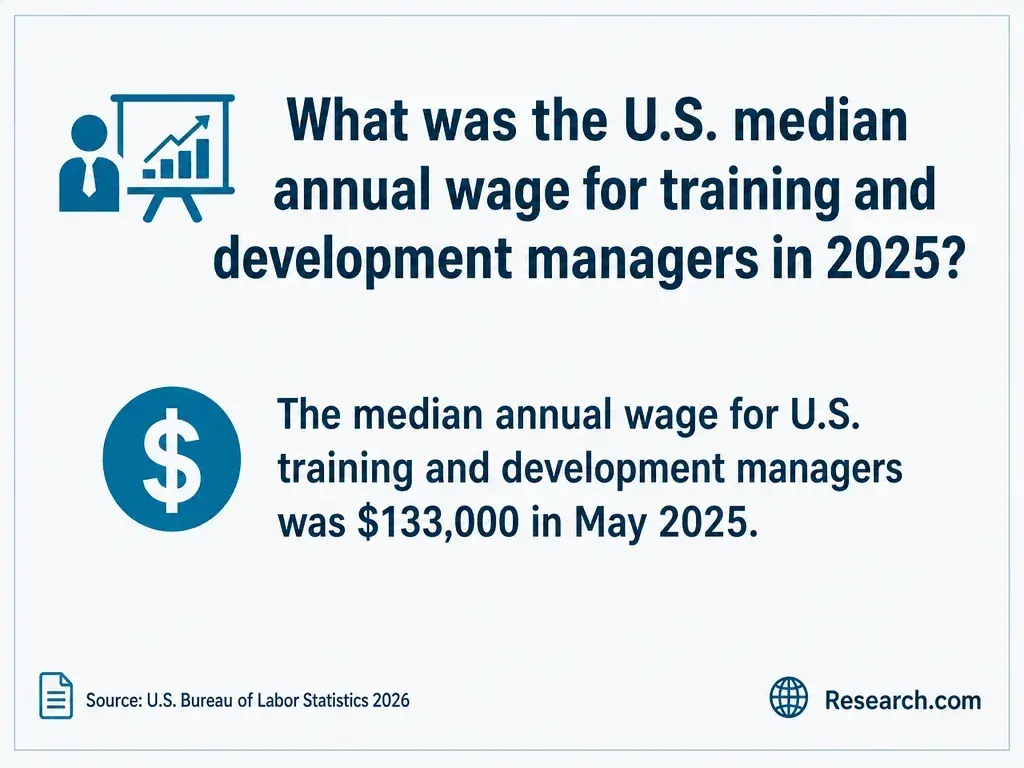
- The U.S. Bureau of Labor Statistics reports a $133,000 median annual salary for training and development managers in May 2025; that occupational figure is not an expected salary for Ed.D. graduates.
What Is an Online Ed.D. in Leadership and Learning in Organizations?
An Ed.D. in leadership and learning in organizations is a practice-oriented doctorate concerned with how people learn, how organizations change, and how leaders use evidence to improve practice. Program names and requirements vary. Online delivery describes where much of the coursework happens; it does not necessarily mean self-paced study or eliminate live meetings and campus visits.
For a leader facing low survey participation, the degree's potential value is broader than survey design. It can provide structured preparation for examining organizational trust, communication, decision-making, and learning from feedback. A research-oriented PhD may fit better if the primary goal is an academic research career. If the immediate goal is to repair one survey process, focused survey-methods training or experienced internal support is usually a more direct route.
How Can This Ed.D. Help Leaders Improve Low Employee Survey Participation?
An Ed.D. can help a leader turn "employees do not respond" into a careful organizational inquiry. A low overall response rate does not establish why people declined, and responses from volunteers may not represent the views of nonrespondents. Even a higher response rate will not, by itself, show that employees trust leadership or that conditions improved.
The useful first step is a bounded diagnosis, not a campaign to persuade employees to click a link. A leader with appropriate authority could work through the following sequence:
- Define the decision the survey should inform, the eligible employee population, and the response-rate denominator; examine participation patterns only where group sizes protect confidentiality.
- Check practical barriers such as timing, language, device access, shift schedules, survey length, and whether employees understand how their answers will be used.
- Seek voluntary feedback about the process through appropriately approved conversations or other channels, without assuming that employees who declined the survey will join an interview.
- Address supported causes, then assess both participation and whether leadership communicated findings and acted on them; document changes in survey design that limit comparisons over time.
Doctoral coursework in organizational diagnosis, applied research, and change implementation could make this work more rigorous. It will not give a student automatic access to employee records or permission to conduct workplace research. Employer authorization, privacy rules, consent, and any required institutional review must be resolved before collecting or using data for a doctoral project. If the obstacle is a poorly timed survey or a missing follow-up message, fixing that process now makes more sense than waiting for doctoral study.
What Careers Can You Pursue With an Ed.D. in Leadership and Learning?
For an established learning and development or organizational leader, the degree may support advancement toward responsibilities in talent development, organizational development, workforce learning, evaluation, or consulting. Survey work is relevant when those roles require more than reporting results: leaders must interpret uncertain evidence, engage stakeholders, and oversee credible changes.
Role readiness still depends on experience. A training and development manager oversees programs and staff; a management analyst may diagnose processes for clients; a training specialist may design or deliver learning. An Ed.D. alone does not substitute for managing budgets, leading teams, building consulting relationships, or working within a sector's hiring rules. Someone seeking a first survey-analytics role may gain more immediate traction through supervised projects and a portfolio than through a doctorate.
The most relevant preparation combines organizational diagnosis, adult learning, leadership, change implementation, and research methods. For this problem, look especially for instruction in survey measurement, sampling and nonresponse, qualitative inquiry, program evaluation, and ethical handling of employee data. A course title alone does not show how deeply a program teaches any of these skills.
An applied project might examine a feedback process, but its scope depends on the program's actual requirements and organizational approvals. Some programs require a dissertation or dissertation in practice; others use different culminating work. When reviewing dissertation-free Ed.D. study options to evaluate, confirm what replaces the dissertation and whether that deliverable would let you investigate your leadership problem responsibly.
Online study can reduce routine travel while allowing a working leader to remain in their organization, where an applied problem may be accessible. Campus-based study may provide more in-person interaction. Neither format determines research quality, faculty access, or scheduling flexibility on its own.
The comparison that matters is the actual timetable: required live classes, group meetings, campus convenings, advisor availability, and project deadlines. Ask how attendance works during survey administration or reporting periods at your job. Also confirm whether a project can continue if you change employers. A convenient course schedule offers limited protection if completing the doctorate depends on workplace access you may lose.
Requirements vary by institution. Programs may assess prior graduate study, academic records, professional experience, recommendations, a statement of purpose, and readiness for applied inquiry. A master's in education or a particular managerial title is not a universal requirement.
For this topic, a strong application would describe responsibilities you actually hold: which decisions you can influence, how employee feedback is currently handled, and what you need to learn. Do not present an untested explanation for low participation as a finding or promise access to employer data you have not secured. Applicants returning after unfinished doctoral work should ask separately how earlier study affects admission and whether any credits apply; an education doctorate completion after a doctoral study break requires a program-specific review, not an assumed shortcut.
There is no reliable universal duration or price for this degree. Required credits, enrollment pace, tuition structure, fees, convening travel, and the time needed for a culminating project all affect the total commitment. A workplace survey project can also stall if approvals, access, or staffing change.
Request a written estimate for the complete program at your intended pace, including fees and required travel. Then compare it with employer assistance, any repayment conditions, and the hours you would give up for work or family. If cost is a constraint, compare leadership doctorate programs with lower tuition using total expected expense and project fit - not the advertised tuition rate alone. Do not count on a promotion or salary increase to make the calculation work.
A general organizational leadership and learning Ed.D. typically is not itself a professional license. Leaders working on employee feedback generally do not need educator licensure to pursue this area of study. Employers may, however, specify experience or credentials for particular human resources, analytics, or consulting positions.
If your goal is a regulated school leadership role, verify the program's licensure disclosure and the relevant state authority's requirements before enrolling. Institutional accreditation and a leadership-focused degree title do not establish principal, superintendent, or other license eligibility.
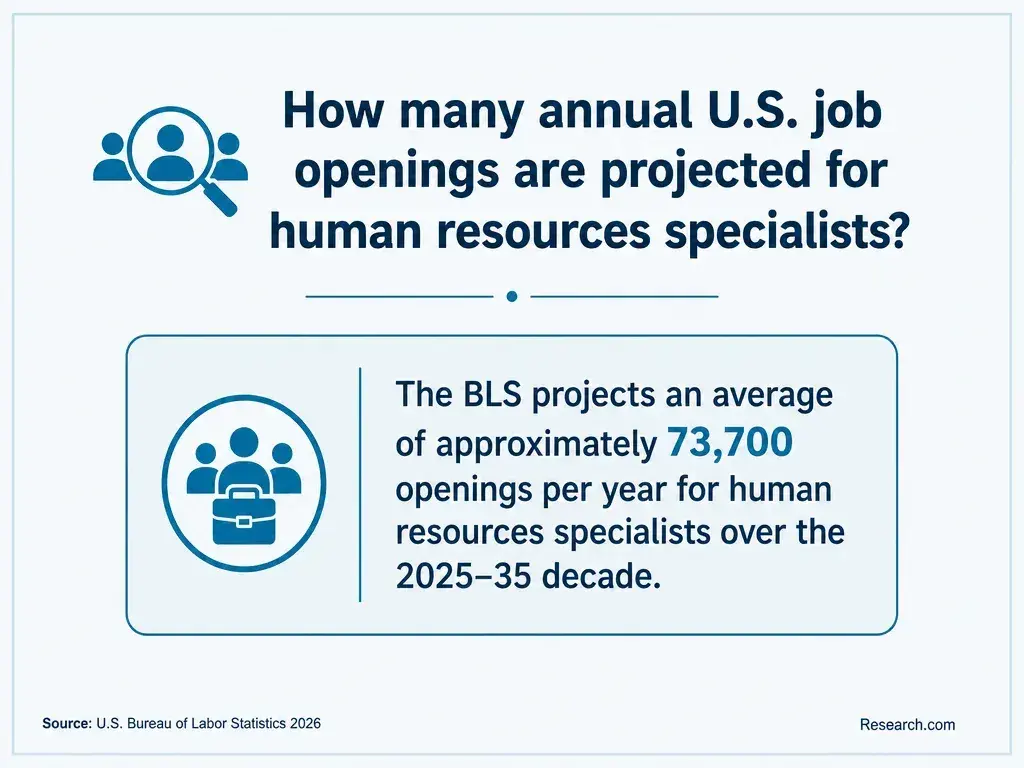
There is no single Ed.D. graduate salary. U.S. Bureau of Labor Statistics figures describe occupations, not the payoff from this degree. The median annual salary for training and development managers was $133,000 in May 2025, with employment projected to grow 6.4% from 2025 to 2035. Those figures may help an experienced leader assess a target occupation, but they do not show that doctoral study causes advancement into it.
Compare the roles you could realistically qualify for now with those requiring responsibilities you have yet to gain. If you work in a university or other public institution, also examine its pay structure and education-benefit rules rather than importing private-sector expectations. A higher education leadership doctoral education funding guide can inform that cost comparison, but funding availability and conditions must be confirmed with each institution and employer.
How Can You Choose an Accredited Online Ed.D. Program?
First verify the institution's recognized accreditation and the exact degree it awards. Then compare programs against the work you want to do, rather than treating accreditation or an organizational-leadership label as proof of strong survey-methods preparation.
Ask the program which required courses teach organizational diagnosis, survey or evaluation methods, and research ethics; who guides applied projects; what culminating deliverable is required; and what happens if an employer denies data access. Request the full schedule, total-cost estimate, and any published completion information. When comparing low-cost education doctoral degree options, check that each degree's curriculum actually serves organizational learning rather than a different education-administration goal.
Decision rule: Consider an Ed.D. when improving employee feedback is part of a sustained leadership role and you want doctoral-level preparation to diagnose, evaluate, and implement organizational change. If your authority and goal extend only to the next survey cycle, begin with a focused process review and targeted methods support.
Other Things You Should Know About EdD Leadership
Not automatically. Tracking participation and separating identities from answers are different technical and governance questions. Ask the survey administrator exactly what is recorded, who can access it, and what confidentiality claim can be supported.
Only under the organization's privacy rules. Small-group reports can make individuals identifiable even without names; consider whether results must be combined or suppressed.
It can answer a narrower, timely question, but shortening a survey does not resolve distrust or replace a broader assessment. Match the format to the decision leadership will make.
Offer appropriate alternatives, such as facilitated discussions or established reporting channels, while being clear about confidentiality. Do not treat comments from a small self-selected group as representative of the entire workforce.
- Nonresponse Rates are a Problematic Indicator of... - PMC https://pmc.ncbi.nlm.nih.gov/articles/PMC3681235/
- Principles and Best Practices for Protecting Participant Privacy | Grants & Funding https://grants.nih.gov/policy-and-compliance/policy-topics/sharing-policies/dms/privacy/best-practices
- Boosting Employee Survey Response Rates | unc.edu https://lgwi.web.unc.edu/2016/03/boosting-employee-survey-response-rates/
- Doctor of Education in Organizational Leadership, Culture and Change | Thomas Edison State University https://www.tesu.edu/degrees-programs/doctoral/edd.php
- Leadership and Learning in Organizations Online Ed.D. | Peabody College of Education and Human Development https://peabody.vanderbilt.edu/academics/edd-programs/online-leadership-learning-organizations/
- Online EdD in Organizational Leadership | Pepperdine University https://gsep.pepperdine.edu/doctorate-organizational-leadership/
- Employee Surveys: Types, Tools and Best Practices | Gallup.com https://www.gallup.com/workplace/692474/workplace-employee-surveys.aspx
- Educational Leadership and Organizational Innovation (Ed.D.) | smartcatalogiq.com https://marymount.smartcatalogiq.com/en/2023-2024/catalog/marymount-university-catalog-2023-24/college-of-health-and-education/school-of-education/graduate-programs/educational-leadership-and-organizational-innovation-e-d-d