2027 Is an Online Ed.D. in Leadership and Learning in Organizations a Good Fit for University Professional Development Leaders?
Audited and Verified:
Our Editorial and Data Verification Process
Research.com uses government datasets, official education statistics and primary institutional information to support its career and degree guides. Our review process checks factual accuracy, occupational definitions, source dates and the requirements associated with the credentials discussed.
How This Article Was Fact-Checked
Our editorial team verifies salary estimates, employment projections, education requirements and program information against original data providers and official organizations. Salary figures are checked against the relevant occupational definitions and reporting periods. Information about licensure, accreditation and required in-person training is reviewed separately.
Fact-checked and verified on:

Co-Founder and Chief Data Scientist
Leading professional development at a university means working across faculty, staff, departments, and administrative priorities - often without authority over all of them. An online Ed.D. in leadership and learning in organizations could strengthen your ability to design, lead, and evaluate that work, but its value depends on your responsibilities and next career move.
This guide examines where the degree fits, where a shorter route may work better, and what to verify about programs before committing time and money.
Key Things You Should Know
- Best fit: The Ed.D. is most useful if you already lead substantial university learning or change initiatives and need deeper skills in organizational leadership and applied inquiry - not simply a credential for promotion.
- Career context: The U.S. Bureau of Labor Statistics reports a $104,590 median annual salary for postsecondary education administrators in May 2025. That occupation-wide figure is not an expected salary for Ed.D. graduates.
- Before enrolling: Confirm that the curriculum addresses your work, that you can complete its project requirements with authorized data access, and that the full cost and schedule fit your circumstances.
What Is an Online Ed.D. in Leadership and Learning in Organizations?
An Ed.D. is a Doctor of Education. In a leadership and learning in organizations program, doctoral study typically connects leadership, adult learning, organizational change, and research used to improve practice. "Online" describes how much instruction is delivered remotely; it does not necessarily mean self-paced study or no campus visits.
For a university professional development leader, the relevant organization may be an entire institution or a unit such as a teaching center, human resources office, or staff development team. A suitable program should help you examine why a development initiative succeeds, stalls, or fails to reach its intended participants - not just how to deliver more workshops.
Program titles and emphases vary. Some focus on higher education administration; others span sectors. Review education doctorate specialization comparisons against your actual responsibilities rather than assuming similarly named degrees cover the same material.
Is This Online Ed.D. a Good Fit for University Professional Development Leaders?
Usually, yes - if you have the authority or partnerships to improve professional learning across an organization and want to evaluate those improvements rigorously. The fit is weaker if your immediate need is a specific facilitation skill, instructional design technique, or promotion for which your employer chiefly values management experience.
The distinction matters because professional development problems often extend beyond training. Low participation might reflect scheduling, incentives, supervisor support, workload, or mistrust; a new course alone may not address any of those causes. The table separates situations in which doctoral study could add value from those better served by a more direct route.
| Your situation | Likely better fit | Why |
| You lead cross-campus development and can influence implementation and evaluation. | Practice-oriented Ed.D. | Organizational inquiry and change leadership can build on work you already direct. |
| You mainly need stronger course design, facilitation, or learning-technology skills. | Targeted coursework or a relevant certificate | It addresses the skill gap more directly, usually with less commitment. |
| You aim to produce original scholarship as a primary career activity. | Research-oriented PhD | Its research training and scholarly expectations may align more closely with that goal. |
Ask your supervisor which responsibilities you could realistically gain after graduation. A doctorate may strengthen a case for leading institution-wide initiatives, but it cannot create a vacant position, change a university's hiring rules, or substitute for experience managing people and budgets.
What Careers Can This Ed.D. Prepare University Professional Development Leaders For?
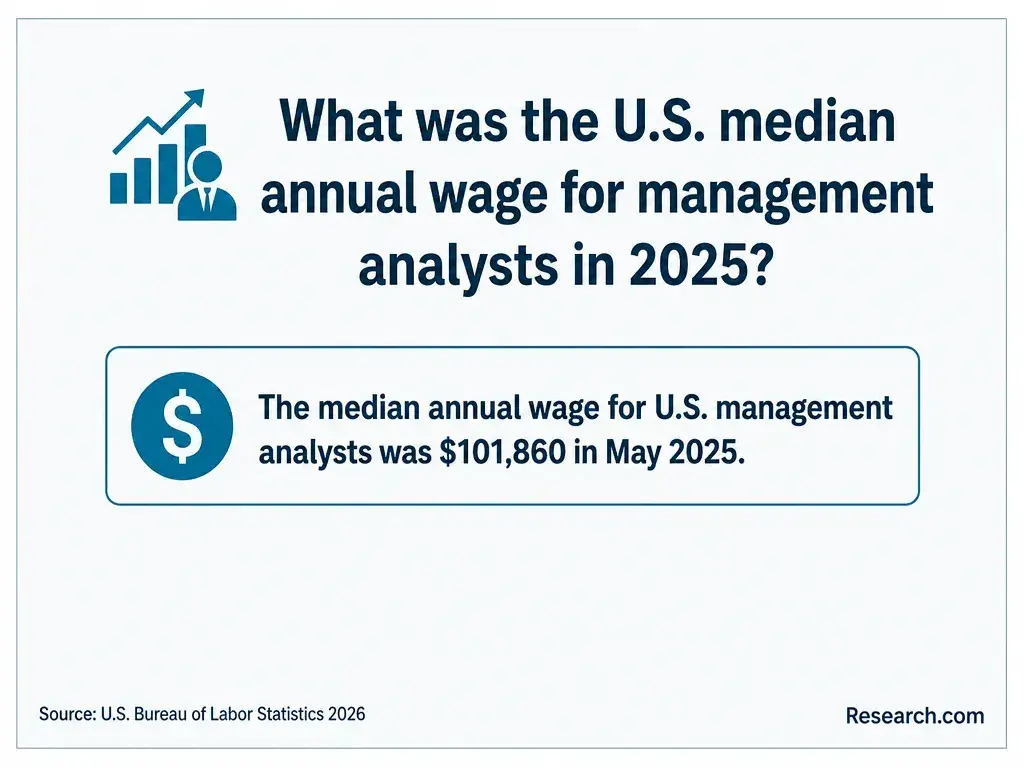
The most plausible next step is often broader responsibility within higher education: directing faculty or staff development, leading a teaching and learning center, managing organizational development, or overseeing leadership development across units. These roles differ. A center director may need faculty trust and academic-governance experience; a staff development director may need workforce planning, HR partnerships, and budget authority.
The degree can also support a move into organizational consulting or learning and development outside a university, particularly when paired with documented projects and relationships in the target sector. It is not, by itself, preparation for every executive or tenure-track faculty role. Employers may prioritize sector experience, supervisory scope, publications, or teaching records instead.
BLS projects 1.8% employment growth from 2025 to 2035 for postsecondary education administrators. That modest occupation-wide projection argues against treating the degree as a reliable promotion strategy; assess opportunities at your institution and in the specific roles you would pursue.
The most relevant learning combines adult learning and learning transfer with organizational diagnosis, change implementation, and program evaluation. A university leader should be able to move from "participants liked the session" to better questions: Who could participate? What changed in practice? What institutional conditions helped or hindered that change?
Research preparation may include qualitative interviews, quantitative analysis, or mixed methods, but depth varies by program. An applied project might examine a professional development initiative using authorized participation records and interviews. Faculty guidance, university permission, privacy protections, and any required ethical review would shape what the student could actually study and report.
Check the required culminating work rather than assuming every Ed.D. uses the same dissertation model. A review of Ed.D. programs emphasizing applied culminating work can help frame questions about projects, but each institution's published requirements control.
Completion time depends on required credits, enrollment pace, course sequencing, and the time needed to finish the culminating project. Published timelines may assume continuous enrollment and timely approval of a feasible project; they may not reflect delays in securing campus partners or access to data.
For a working university leader, location flexibility is not the same as schedule flexibility. Confirm live class times, group-work expectations, required convenings, attendance rules, and what happens if peak work periods conflict with coursework. When comparing the fastest online Ed.D. formats, judge whether the pace leaves enough room for your job and an ethically sound applied project.
There is no reliable single price for this degree. Compare each program's published tuition basis - per credit, term, or program - alongside required credits, fees, books, technology, and any travel for campus meetings. If reduced hours or leave would affect your income, include that opportunity cost as well.
University employee tuition benefits can materially change the decision, but policies may exclude doctoral programs, limit annual support, require advance approval, or require repayment after departure. Ask benefits staff for the written policy and obtain a program-specific cost estimate before assuming your employer will pay. A guide to evaluating the cost of an online education doctorate can help you identify charges to compare; use each school's current terms for the actual decision.
Test the investment against a credible outcome, such as a defined leadership opportunity or a capability your current role genuinely needs. Do not base the calculation on an assumed raise.
Requirements vary by institution. Programs may request prior graduate study, transcripts, recommendations, a statement of purpose, and evidence of relevant professional experience. Some may specify a completed master's degree or other academic thresholds; an education master's is not a universal requirement.
A university professional development leader can make a stronger application by explaining actual responsibilities: the audiences served, decisions made, stakeholders engaged, and a learning or organizational problem worth investigating. Describe available evidence and your role accurately rather than claiming that a proposed project already has institutional approval.
Ask admissions staff to distinguish credits considered for eligibility from any credits that could actually count toward the doctorate.
An online Ed.D. can carry the same academic standing as a campus-delivered degree from the same accredited institution, but value is not determined by delivery mode alone. For this reader, the stronger test is whether the format provides meaningful faculty feedback, peer collaboration, research support, and access to perspectives beyond the home institution.
Online study may let you remain employed and apply coursework at your university. Campus study may offer easier in-person interaction. Neither format automatically solves the central constraint: obtaining permission, time, and cooperation to investigate a real institutional problem. Compare the actual program experiences and requirements, not the label "online" or "campus."
University professional development leadership generally does not require an educator license simply because the work takes place in higher education. An organizational leadership Ed.D. also does not automatically confer teacher, principal, superintendent, counseling, or other regulated licensure.
Some positions may specify their own qualifications or prefer a professional certification. Check the job descriptions you intend to pursue and, for any regulated role, confirm eligibility with the relevant licensing authority and the program. A degree title alone is not evidence of licensure preparation.
How Can You Choose an Accredited Online Ed.D. Program?
Start by verifying the institution's accreditation with its recognized accreditor and confirming the exact degree awarded. Then examine whether the program's required courses, faculty expertise, and culminating work match university professional development rather than a different leadership pathway.
Before applying, get clear answers to the issues most likely to change your decision:
- Which courses address adult learning, organizational change, and evaluation, and which are merely optional?
- What live meetings, group projects, and campus visits are required for your intended entry term?
- What culminating project is required, and can it be completed at your university if permissions and academic approvals are obtained?
- What is the full estimated cost, and what support is available if a workplace project or employment arrangement changes?
If affordability narrows your options, use Doctor of Education programs by affordability as a starting point, then verify current charges and program fit directly. The least expensive eligible program is not necessarily the best value if its schedule or project model prevents you from finishing.
Other Things You Should Know About EdD Leadership
Potentially, but each participating institution's cooperation and data permissions must be addressed. The Ed.D. program must also approve the proposed scope and any required oversight.
FERPA generally protects student education records, not all faculty or staff development records. University privacy, employment, and contractual rules may still restrict those records; check before using them.
Only within your program's and university partner's publication and confidentiality rules. A public summary may need to omit identifiable participants, restricted data, or internal findings.
Ask the program how a change of employer affects project-site approval, enrollment, and access to data. Also check whether leaving triggers repayment under any employer tuition-benefit agreement.
- Maximizing the Impact and ROI of Leadership Development | nih.gov https://pmc.ncbi.nlm.nih.gov/articles/PMC11505461/
- Cost of Attendance (Budget) | 2025-2026 Federal Student Aid Handbook https://fsapartners.ed.gov/knowledge-center/fsa-handbook/2025-2026/vol3/ch2-cost-attendance-budget
- SEVP Governing Regulations for Students and Schools | ice.gov https://www.ice.gov/sevis/schools/reg
- What Is an EdD in Educational Leadership and Who Is It For? | Neumann https://learn.neumann.edu/neuperspectives/what-is-an-educational-leadership-degree
- Adult Education (ADED) | Texas State University https://mycatalog.txstate.edu/courses/aded/
- Careers Leaders Can Pursue with an Ed.D. | Peabody Online | VU-EDU https://peabodyonline.vanderbilt.edu/edd-in-organizational-learning/edd-careers/
- Distance Learning Policy - Washington College of Law Catalog https://catalog.wcl.american.edu/content.php
- Advancing Leadership Education and Development | sagepub.com https://journals.sagepub.com/doi/10.1177/10525629211008645
- Cost of Attendance - Financial Aid and Scholarships | The University of Utah https://financialaid.utah.edu/tuition-and-fees/cost-of-attendance.php
- Adult Education & Higher Education Leadership (AHE) | oregonstate.edu https://catalog.oregonstate.edu/courses/ahe/