2027 Is an Online Ed.D. in Leadership and Learning in Organizations a Good Fit for Manufacturing Plant Leaders?
Audited and Verified:
Our Editorial and Data Verification Process
Research.com uses government datasets, official education statistics and primary institutional information to support its career and degree guides. Our review process checks factual accuracy, occupational definitions, source dates and the requirements associated with the credentials discussed.
How This Article Was Fact-Checked
Our editorial team verifies salary estimates, employment projections, education requirements and program information against original data providers and official organizations. Salary figures are checked against the relevant occupational definitions and reporting periods. Information about licensure, accreditation and required in-person training is reviewed separately.
Fact-checked and verified on:

Co-Founder and Chief Data Scientist
A manufacturing plant leader may know how to improve a production process but still struggle to make new practices stick across shifts, supervisors, and sites. An online Ed.D. in leadership and learning could help with that organizational challenge - but it is a substantial commitment, not a standard requirement for plant management.
This guide examines what the degree teaches, where it could strengthen a manufacturing career, and when a more focused qualification would be the better investment. It also identifies the program details to check before enrolling while managing plant operations.
Key Things You Should Know
- Best fit: An Ed.D. can suit experienced plant leaders responsible for workforce development, leadership succession, or change across teams or sites - not someone seeking a credential solely to run daily operations.
- Career reality: The U.S. Bureau of Labor Statistics reports a $133,000 median annual salary for training and development managers in 2025; that occupational figure is not an expected salary for Ed.D. graduates.
- Before applying: Confirm live-class and travel requirements, the applied-project rules, access to workplace data, total cost, and whether an employer would value the doctorate over targeted leadership or operations training.
Is an Online Ed.D. in Leadership and Learning a Good Fit for Manufacturing Plant Leaders?
It can be a good fit when your main challenge is helping people and systems learn - not simply improving a technical process. A practice-oriented Doctor of Education, or Ed.D., studies leadership, adult learning, organizational change, and the use of evidence to improve practice. For a plant leader, its value is most plausible when responsibilities extend beyond one line or shift to supervisor development, skill transfer, cross-site consistency, or workforce transitions.
Consider a plant that repeatedly retrains operators after process changes. An Ed.D. could help a leader investigate whether the issue is instruction, supervisor reinforcement, job aids, incentives, staffing, or the process itself. It cannot replace engineering judgment, equipment investment, or authority to change working conditions. Training is not a cure for every performance gap.
The decision also depends on the outcome you want. An MBA may be more direct for finance and general management; a DBA may better fit a business-research agenda; a PhD may better serve a research career. Lean or Six Sigma development, an employer leadership program, or a focused workforce-learning certificate may address a narrower need faster. If doctoral study does fit your goals, compare curricular relevance before browsing lower-tuition online leadership doctorate options; a lower price does not make an unrelated program useful.
What Does an Online Ed.D. in Leadership and Learning Prepare You For?
The degree can prepare a leader to diagnose organizational learning problems, design development initiatives, lead change, and evaluate whether an intervention is working. In manufacturing, that might mean improving how supervisors coach new operators, examining why standardized work is adopted unevenly, or assessing a leadership-development program across facilities.
Its academic strength is connecting decisions about people to credible evidence. A plant leader might compare training participation, observed task performance, and supervisor feedback before revising an onboarding process. Those measures answer different questions; attendance alone does not establish competence, and a subsequent performance improvement does not by itself prove training caused it.
Preparation varies by program. Some require a dissertation in practice, while others use a different dissertation or capstone structure. Ask whether faculty support applied work in industrial settings and whether the required project can address an authorized manufacturing problem. The degree does not, on its own, establish technical expertise in production engineering, occupational safety, or quality systems.
How Can an Ed.D. Advance Manufacturing Plant Leadership Careers?
An Ed.D. is most likely to add value when a leader already has operational credibility and is moving toward broader responsibility for people, learning, or organizational change. A plant manager might use doctoral study to strengthen a case for leading a multi-site supervisor-development effort. A training leader might use it to improve evaluation and advise operations executives. In either case, advancement still depends on results, relationships, openings, and the employer's hiring criteria.
A useful professional portfolio would show the problem you were authorized to address, your role in the decision, the evidence considered, and what changed in the approach. It should distinguish a proposed improvement from an implemented one and omit confidential employee or production information. Where appropriate, a supervised applied project can provide stronger evidence of judgment than the degree title alone.
Moving from a plant into university administration is a separate career transition, not an automatic extension of manufacturing leadership. Readers considering that path should compare role requirements with doctoral leadership study for higher education organizations rather than assuming any organizational Ed.D. serves both settings equally.
Relevant coursework may cover adult learning, organizational culture, leadership, change implementation, program evaluation, and qualitative or quantitative inquiry. For plant leaders, the key question is whether those subjects are connected to real workforce decisions: how operators learn a revised task, how supervisors reinforce it, and how leaders distinguish a learning gap from a process or staffing constraint.
Review the actual course sequence rather than relying on the program name. Does it teach needs assessment and learning transfer? Will you practice interpreting imperfect workplace data? Is there faculty expertise in organizations outside schools? Confirm whether appealing courses are required, regularly available electives, or merely examples. Exposure to research methods is valuable, but a single course does not make someone an expert in causal evaluation or industrial analytics.
Online delivery can remove a routine commute, but it does not necessarily accommodate rotating shifts, shutdowns, or emergency call-ins. This comparison highlights the scheduling differences a working plant leader should verify with each program.
| Consideration | Online program | Campus program |
| Class attendance | May include required live sessions at fixed times | Usually requires travel to scheduled meetings |
| Collaboration | Remote group meetings may extend beyond class hours | In-person meetings may be easier to coordinate during campus visits |
| Travel | May still require residencies or convenings | Typically requires regular commuting or relocation |
| Plant-based project | Feasibility depends on program rules and faculty oversight | Feasibility likewise depends on program rules and faculty oversight |
Ask for a sample term schedule, attendance policy, residency dates, and typical group-work expectations. Then test them against shift coverage, planned shutdowns, and the possibility of changing employers. Neither format automatically permits a workplace project or a missed required session.
Requirements differ by institution. Programs may request a completed graduate degree, transcripts, recommendations, a statement of purpose, and evidence of professional responsibility; some also specify grades, experience, interviews, or research preparation. A manufacturing or engineering background is not automatically disqualifying, and an education master's is not universally required.
Describe your actual decision-making scope: teams supervised, changes led, training responsibilities, and organizational problems you want to investigate. If you propose a plant-based project, explain what access might be feasible without claiming employer approval you do not have. Ask admissions staff to separate eligibility from competitiveness and to confirm any prerequisites in writing.
Prior graduate study may help establish eligibility without transferring into the doctorate. A plant leader who previously earned an education specialist degree can investigate online education doctorate routes for Ed.S. graduates, but only the admitting institution can determine whether particular credits apply to its Ed.D. requirements.
Both depend on the institution's required credits, course schedule, enrollment pace, and final project. A published minimum completion time is less useful to a plant leader than a plan that accounts for peak production periods and access to a viable project site. Request the required-credit total, a sample course sequence, continuation rules, and the time allowed to finish the dissertation or capstone.
Build a budget from the school's current tuition and fee schedule, then add books, required technology, any residency travel and lodging, and time away from paid work. Employer reimbursement is valuable only if its eligibility, payment timing, grade conditions, annual limits, and repayment obligations work for you. Compare full program estimates - not advertised per-credit rates alone - when reviewing Doctor of Education programs by affordability.
Before committing, ask what happens financially if the project takes longer than expected or you leave your employer. A doctorate is difficult to justify solely by an assumed promotion or salary increase that has not been discussed with the people making those decisions.
Confirm that the university holds recognized institutional accreditation and that the accreditation covers the institution awarding the degree. Check its status directly with the accreditor or the U.S. Department of Education's accreditation records, and verify the exact Ed.D. program and delivery format with the university.
Institutional accreditation is a baseline check, not proof that the curriculum fits manufacturing or that the degree qualifies a graduate for a regulated position. Ask for the current catalog, project requirements, faculty information, and any applicable licensure disclosures. If a school advertises specialized recognition, verify its scope rather than assuming it applies to every leadership degree it offers.
Potential directions include plant or multi-site leadership, manufacturing workforce development, leadership development, organizational improvement, and consulting. These are different jobs: a plant leader owns operational decisions, a training manager directs development programs, and a consultant may diagnose and advise without authority to implement changes. An Ed.D. can complement relevant experience but does not qualify someone for each role by itself.
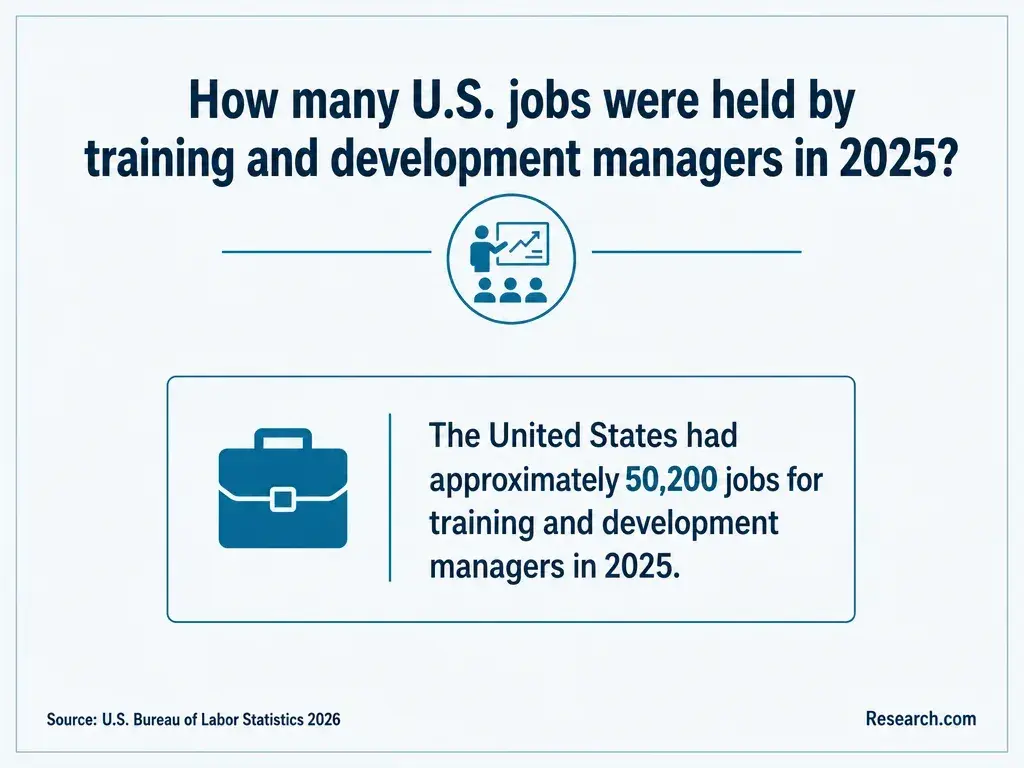
For a related U.S. occupation, the Bureau of Labor Statistics reports a 2025 median annual salary of $133,000 for training and development managers and projects 6.4% employment growth from 2025 to 2035. That median covers workers across industries and education levels; it is neither a manufacturing-specific salary nor an estimate of an Ed.D. graduate's earnings. Compare actual job postings and internal promotion criteria with your experience before assigning financial value to the degree.
A transition into higher education may involve different hiring networks, responsibilities, and compensation expectations. If that is the intended destination, investigate the relevant program and funding picture separately, including higher education leadership doctoral grants and aid, rather than projecting a manufacturing career plan onto another sector.
Do Manufacturing Plant Leaders Need Licensure or Certifications After an Ed.D.?
A general leadership and learning Ed.D. does not ordinarily create a plant-management license or award an operations certification. Whether another credential matters depends on the job and employer. A quality, safety, project-management, or continuous-improvement credential may be more relevant to a particular assignment than doctoral study, but each has its own eligibility rules and scope.
Do not confuse organizational leadership study with a state-approved educator preparation program. If you intend to move into a licensed school role, confirm eligibility with the state authority and the specific university. For a manufacturing role, start with the position description and ask which capabilities are required, preferred, or simply useful.
Other Things You Should Know About EdD Leadership
Possibly, but the project must respect labor agreements, employee privacy, and the organization's approval process. Discuss the proposal with the appropriate employer and workforce representatives before collecting information.
Ask the program what data access, analysis, and reporting its project requires. Employer permission to use data and university approval of a project are separate decisions; neither should be assumed.
Define the target behavior and a credible measure before training begins. Consider other changes occurring at the same time, and avoid claiming a training effect from attendance figures or a simple before-and-after comparison alone.
Yes, if the project relies on access to the original plant. Ask the program about alternative sites and project-change procedures before enrolling, and avoid building a plan around access you cannot retain.
- Fast Facts: Tuition costs of colleges and universities (76) | ed.gov https://nces.ed.gov/fastfacts/display.asp
- TEN_17-15.pdf | dol.gov https://www.dol.gov/node/159924
- Accreditation in the U.S. | ed.gov https://www.ed.gov/laws-and-policy/higher-education-laws-and-policy/college-accreditation/accreditation-in-the-us
- Understanding College Costs | studentaid.gov https://studentaid.gov/resources/prepare-for-college/students/choosing-schools/consider-costs
- Optimal Shift Duration and Sequence - PMC - NIH https://pmc.ncbi.nlm.nih.gov/articles/PMC1854972/
- Walden University's Guide to Doctoral Capstone Projects https://www.waldenu.edu/online-doctoral-programs/resource/guide-to-doctoral-capstone-projects
- AI and the Future of Workforce Training | CSET https://cset.georgetown.edu/publication/ai-and-the-future-of-workforce-training/
- What is Learning and Development? | ATD https://www.td.org/talent-development-glossary-terms/what-is-learning-and-development