2027 Online Ed.D. in Leadership and Learning in Organizations: Comparing Coursework in Workplace Reflection
Audited and Verified:
Our Editorial and Data Verification Process
Research.com uses government datasets, official education statistics and primary institutional information to support its career and degree guides. Our review process checks factual accuracy, occupational definitions, source dates and the requirements associated with the credentials discussed.
How This Article Was Fact-Checked
Our editorial team verifies salary estimates, employment projections, education requirements and program information against original data providers and official organizations. Salary figures are checked against the relevant occupational definitions and reporting periods. Information about licensure, accreditation and required in-person training is reviewed separately.
Fact-checked and verified on:

Co-Founder and Chief Data Scientist
If you already lead training, teams, or organizational change, an online Ed.D. may promise a way to learn from that work. But "workplace reflection" can mean anything from discussing a leadership decision to systematically examining evidence about an organizational problem.
That difference affects what you will study, how much access you need at work, and whether the degree fits your goals. This guide compares the forms reflection takes across coursework and shows working learning professionals and emerging leaders what to check before choosing a program.
Key Things You Should Know
- Strong coursework moves beyond recounting workplace experiences: it tests assumptions against leadership theory, stakeholder perspectives, and appropriate evidence.
- Compare reflection assignments, organizational projects, and doctoral research separately; a reflective journal is not automatically a capstone or a validated evaluation.
- Check whether you can use your workplace responsibly. Employer permission, data access, confidentiality rules, and live class schedules may determine whether a program's approach is feasible.
What is an online Ed.D. in Leadership and Learning in Organizations?
An online Ed.D. in leadership and learning in organizations is a practice-oriented doctorate focused on how people learn, lead, and implement change at work. Programs may draw on adult learning, organizational development, leadership theory, and applied inquiry. The exact degree title, required courses, and final project vary by institution; similar-sounding programs are not interchangeable.
For a learning and development professional, the degree may provide a structured way to examine why a training initiative transfers - or fails to transfer - to daily practice. For a team leader, it may support more rigorous analysis of decisions, culture, and change. It is not inherently a school-administrator licensure program. University staff considering a sector-specific path can also compare organizational leadership Ed.D. programs for university professionals rather than assuming a cross-sector curriculum addresses higher education governance.
How does workplace reflection shape Leadership and Learning in Organizations coursework?
Workplace reflection is the disciplined examination of a professional experience: what happened, what you assumed, whose perspectives were missing, and how theory or evidence might change your next decision. Its value depends on the assignment. A personal account can build self-awareness; an evidence-informed analysis can also challenge an organizational diagnosis.
The comparison below separates common coursework uses of reflection. These are approaches to look for in syllabi, not requirements shared by every Ed.D.
| Coursework approach | What the student examines | Decision value and limitation |
| Reflective writing | A leadership choice, assumption, or response to feedback | Builds self-awareness, but one person's account cannot establish what caused an organizational outcome. |
| Case discussion with peers | Alternative interpretations of a workplace dilemma | Exposes blind spots, but confidential details must be removed before sharing. |
| Theory-to-practice assignment | How an adult learning or change framework explains a specific problem | Tests the usefulness of theory; the framework should not be forced onto evidence that contradicts it. |
| Applied inquiry or evaluation | An organizational question using appropriately authorized data | Can inform a decision, but requires sound measures, permissions, and clear limits on conclusions. |
For example, a training manager might initially attribute poor learning transfer to course design. Reflection informed by interviews or workflow evidence could reveal a different possibility, such as limited opportunities to practice. That is a hypothetical line of inquiry, not a diagnosis. Strong coursework teaches students to distinguish what they observed from what they inferred - and to consider whether they have authority to act on either.
What courses are included in an online Ed.D. in Leadership and Learning?
Course titles differ, but the most useful curriculum comparison is whether courses form a sequence from understanding workplace learning to investigating and improving it. Look for adult learning and learning transfer, leadership and organizational culture, change implementation, and research or program evaluation. A course title alone does not show how deeply students practice a skill.
Ask for recent syllabi and compare the assignments. Does an adult learning course require a critique of an existing development program or only a theory paper? Does a methods course teach students to assess measurement quality and alternative explanations, or mainly introduce terminology? Does a change course require a feasible implementation plan that accounts for stakeholders and resources? These distinctions matter more than a long elective list if the courses you want are not offered during your enrollment.
Also identify which work is individual, collaborative, and tied to an approved organizational site. A course-based reflection, a consulting-style team assignment, and a dissertation in practice have different expectations and oversight. If your goal is advanced research design rather than improving professional practice, compare the actual methods sequence with that of a research-oriented PhD instead of relying on the degree label.
Accreditation is determined for a specific institution, not for every program using the Ed.D. label. Verify the school's recognized institutional accreditation through the institution and its accreditor, then confirm that the doctorate is an officially awarded degree within that institution. Online delivery does not create a separate guarantee of quality, and institutional accreditation does not establish that a leadership program qualifies graduates for educator licensure.
For this topic, accreditation is a starting check rather than a substitute for curriculum review. Ask who teaches and assesses reflective work, what feedback students receive, and how the program supervises applied inquiry. If you need a regulated credential, obtain the program's licensure disclosures and check the relevant state authority before enrolling.
Programs set their own requirements. They may request prior graduate study, transcripts, recommendations, a statement of purpose, and evidence of professional leadership or organizational learning experience. Some evaluate applicants' readiness to frame a practical problem; others have different testing, interview, or prerequisite rules. Do not assume that a master's in education, a particular job title, or prior publication is universally required.
For an application centered on workplace reflection, describe a decision you helped make, the evidence available at the time, what you would investigate now, and the limits of your authority. That demonstrates reflective readiness without claiming an outcome you cannot substantiate.
Ask admissions whether prior graduate credits satisfy eligibility requirements and, separately, whether any credits would apply to the doctorate; those are different decisions. If employer assistance affects your ability to enroll, investigate financial support for online higher education leadership doctorates and confirm the terms with your own employer and prospective school.
Completion time depends on required credits, course sequencing, enrollment pace, and the final project. An online program may still require scheduled live discussions, group meetings, campus convenings, or specific research milestones. Ask for the published plan of study and the rules governing project continuation or a leave of absence - not just an advertised completion timeline.
Workplace reflection can be easier to sustain when it draws on responsibilities you already hold, but later applied work may require additional approvals and data collection. If you change employers, ask whether the project can change sites and what academic review would follow. Applicants returning with unfinished doctoral work have a distinct question: reviewing Ed.D. completion programs for ABD applicants is useful, but only a school's written evaluation can establish which prior work counts.
There is no reliable single price for this degree category. Compare each school's published tuition basis - per credit, term, or program - with required credits and fees. Then account for possible convening travel, materials, additional enrollment while finishing a project, and time away from paid work. An employer reimbursement policy is not a tuition discount unless you meet its eligibility and repayment conditions.
When comparing online leadership doctorate program prices, use the same assumed enrollment pace and completion requirements for every option. A lower advertised tuition figure may not be the lower total commitment if it excludes required travel or if your schedule makes continuous enrollment difficult. Request an itemized estimate for your entry term before making a financial decision.
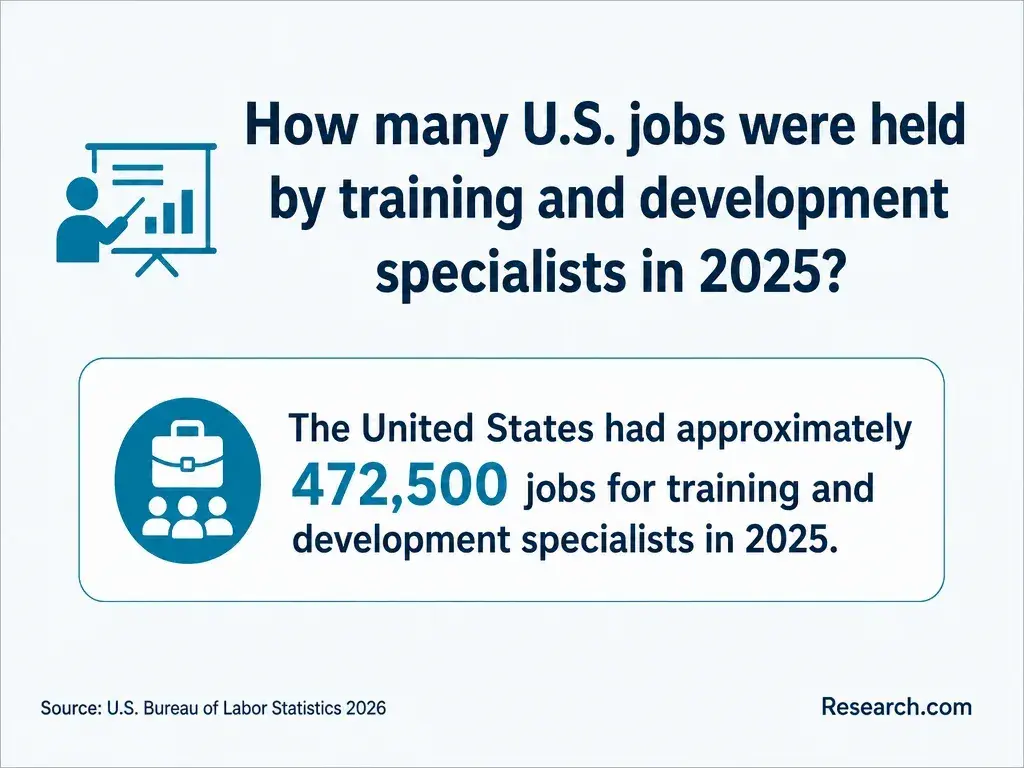
The degree may complement experience in learning and development, talent development, organizational development, workforce training, consulting, or education administration. The connection is strongest when coursework lets you investigate problems similar to those you will be expected to solve: assessing learning needs, guiding change, evaluating programs, or advising leaders.
It does not replace role-specific experience. A training specialist seeking management responsibility still needs evidence of budgeting, stakeholder leadership, and implementation - not only doctoral coursework. A consultant needs credible client-facing work and sound methods. If your next goal is narrower, such as improving instructional design or learning measurement, a targeted course, supervised project, or employer development program may be faster and less costly than an Ed.D.
There is no single salary or employment forecast for graduates of these programs. Occupation data describe jobs held by people with varied education and experience, not a degree's payoff. The US Bureau of Labor Statistics reports a May 2025 median annual salary of $133,000 for training and development managers. That figure is useful if you are comparing a realistic management target, but it is not a projected salary for a new Ed.D. graduate.
Career prospects depend on your existing responsibilities, sector, location, and the positions you can credibly pursue. Before treating the degree as an investment, examine actual job postings for your target role: note whether a doctorate is required, preferred, or absent, and whether the larger gap is experience leading people and projects. Public-sector pay scales and hiring rules may also limit how directly a new credential changes compensation.
How should you choose a reputable online Ed.D. program?
Begin with the work you want to do better, then compare programs on how they teach and assess that work. A reputable program should make its degree requirements, delivery obligations, faculty support, applied-project expectations, and total charges clear enough for you to evaluate before enrolling.
Use these questions when speaking with a program director or reviewing syllabi; the answers reveal whether "workplace reflection" is a substantive learning method or simply a marketing phrase.
- Which required assignments ask students to revise an initial interpretation using theory, stakeholder perspectives, or evidence?
- What feedback do faculty provide on reflective writing, research design, and claims about organizational impact?
- Can students use a workplace problem without sharing restricted employee or learner information, and what approvals govern applied projects?
- Which live meetings, team commitments, campus visits, and final-project checkpoints are mandatory?
- What are the itemized costs and written policies if a project site, employer, or enrollment pace changes?
Compare the written answers, not just program descriptions. For a broader budget check, cost-conscious education doctoral degree planning can help frame the expense, but the deciding factor should be whether the curriculum develops the reflective and inquiry skills your work actually requires.
Other Things You Should Know About EdD Leadership
Often, yes. Relevant experiences may come from leading projects, facilitating learning, or influencing change without direct reports. Confirm whether a specific program requires managerial experience or an organizational site for applied work.
Possibly, but remove identifying details and follow employer and university confidentiality rules. Ask faculty how to analyze the decision and your own role without exposing private information or presenting one account as settled fact.
Not by itself. Reflection can help develop a researchable question, but doctoral inquiry requires the methods, evidence, analysis, and oversight specified by the program.
Ask the program whether an appropriately scoped external partnership, public information, or another approved project setting is acceptable. Do not assume that informal permission to discuss your work authorizes data collection or disclosure.
- Online group projects in higher education - PMC https://pmc.ncbi.nlm.nih.gov/articles/PMC10038701/
- Asynchronous Engagement - CNDLS @ Georgetown https://cndls.georgetown.edu/resources/asynchronous-engagement/
- Reflective Journals and Learning Logs | Northern Illinois University https://www.niu.edu/citl/resources/guides/instructional-guide/reflective-journals-and-learning-logs.shtml
- Group Work | The Derek Bok Center for Teaching and Learning https://bokcenter.harvard.edu/group-work
- Benefits of reflection-based monitoring in action research projects - Jennifer Dahmen-Adkins, Helen Peterson, 2025 https://journals.sagepub.com/doi/10.1177/14767503241260963
- The role of reflection for learning in and between projects | sciencedirect.com https://www.sciencedirect.com/science/article/pii/S0263786323000583
- Types of reflective assignments - Reflective writing | Library at University of Hull https://libguides.hull.ac.uk/reflectivewriting/reflection4a2
- Feedback for Learning | columbia.edu https://ctl.columbia.edu/resources-and-technology/resources/feedback-for-learning/
- Engaging students in structured discussions in synchronous online classes | University at Albany https://www.albany.edu/teaching-and-learning/engaging-students-structured-discussions-synchronous-online-classesengaging-students-structured-discussions-synchronous-online-classes