2027 Paying for an Online Ed.D. in Leadership and Learning in Organizations: A Consultant Comparing Tuition with Billable Time
Audited and Verified:
Our Editorial and Data Verification Process
Research.com uses government datasets, official education statistics and primary institutional information to support its career and degree guides. Our review process checks factual accuracy, occupational definitions, source dates and the requirements associated with the credentials discussed.
How This Article Was Fact-Checked
Our editorial team verifies salary estimates, employment projections, education requirements and program information against original data providers and official organizations. Salary figures are checked against the relevant occupational definitions and reporting periods. Information about licensure, accreditation and required in-person training is reviewed separately.
Fact-checked and verified on:

Co-Founder and Chief Data Scientist
For a consultant, an online Ed.D. competes with two scarce resources: cash and hours that could serve clients. A tuition quote alone cannot show whether the degree is affordable, especially if live classes or applied research displace paid work. This guide explains how to estimate the full cost of a leadership and learning doctorate, translate it into billable-time terms, and test whether the resulting skills and credential support your consulting goals. You can use the framework even before a school provides a final financial-aid offer.
Key Things You Should Know
- Compare the full doctoral cost with collected, after-expense billable income, not your advertised hourly rate; add the value of work you would actually forgo.
- Tuition alone is not a reliable budget: confirm required credits, fees, travel, enrollment pace, and whether client commitments can coexist with live classes and project work.
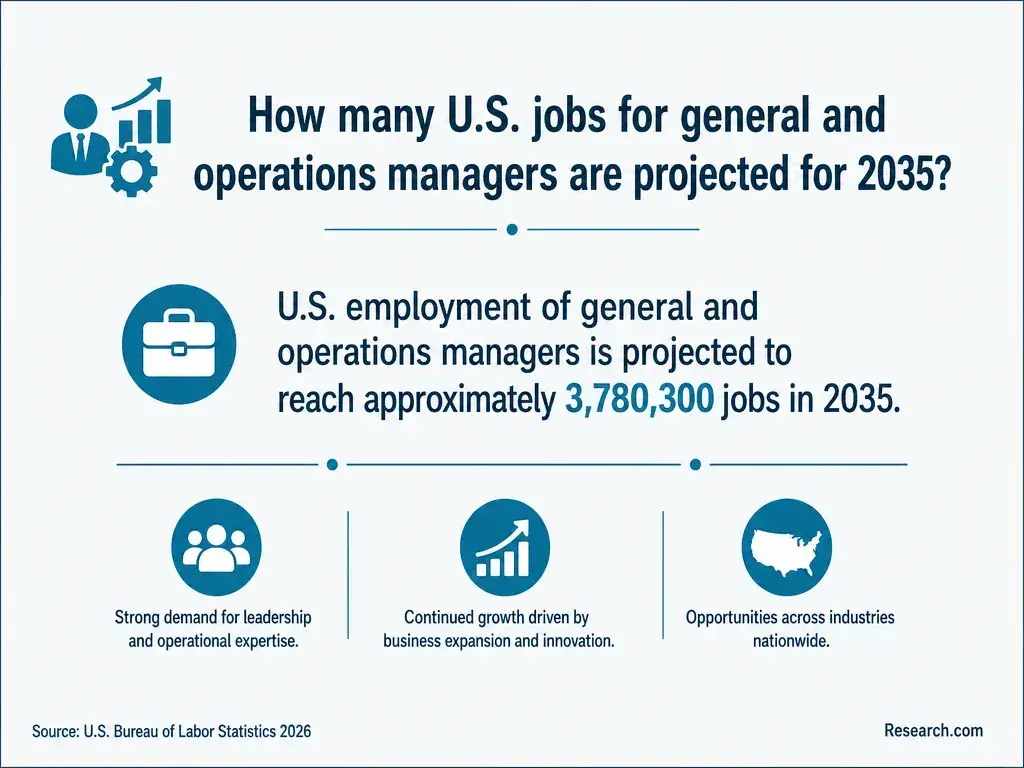
- The U.S. Bureau of Labor Statistics reports a May 2025 median annual salary of $101,860 for management analysts, an occupation that includes organizational consultants; it is not an Ed.D. graduate earnings forecast.
What Is an Online Ed.D. in Leadership and Learning in Organizations?
An Ed.D. is a professional doctorate. Programs focused on leadership and learning in organizations examine how adults learn at work, how leaders implement change, and how organizations assess whether an initiative improves practice. "Online" describes where much of the instruction occurs; it does not establish that classes are self-paced or that campus visits are unnecessary.
For a consultant, the potential value is not simply adding letters to a proposal. Doctoral study may strengthen the ability to diagnose a client's learning problem, evaluate a leadership-development initiative, and communicate the limits of the evidence. Program titles and required projects vary, so confirm the exact degree, curriculum, and final deliverable rather than assuming every leadership Ed.D. teaches the same methods.
How Much Does an Online Ed.D. in Leadership and Learning Cost?
There is no defensible single tuition figure for online Ed.D. programs. Schools may charge by credit, term, or program, and a published rate may exclude mandatory fees or future increases. Request a written cost estimate for your entry term and expected enrollment pace before comparing tuition-focused choices for a leadership doctorate.
The following components belong in a consultant's budget because they can affect either cash flow or available client capacity. Separate charges owed to the school from costs that depend on your circumstances.
| Component | What to verify | Why it matters |
| Tuition and school fees | Billing basis, required credits or terms, mandatory fees, and rate-change policy | A low per-credit rate may not produce a low completion cost. |
| Attendance and project expenses | Required convenings, travel, lodging, software, and project-related costs | Online coursework may still require spending away from home. |
| Financing and reimbursement | Loan eligibility and terms; any written employer or firm reimbursement conditions | Reimbursement paid after a term does not remove the need to fund it upfront. |
| Lost consulting income | Client work that study would actually displace | This opportunity cost may differ greatly between a fully booked consultant and one with spare capacity. |
Ask how additional terms are billed if the applied project takes longer than planned. Scholarships and doctoral aid should be counted only after the school confirms an award and its renewal conditions. An independently operated consulting firm cannot assume it qualifies for benefits designed for employees.
How Can Consultants Compare Ed.D. Tuition With Billable Time?
First distinguish a quoted rate from a realized contribution per billable hour: the amount you collect after project-specific expenses and applicable incremental taxes. An advertised rate overstates the cash available for tuition if invoices go unpaid, subcontractors take a share, or extra work creates other costs. Have a tax professional help assess your circumstances rather than treating this calculation as a tax return.
Use these steps to compare a degree with the work that would pay for it. Keep both the time period and the definition of income consistent throughout.
- Add expected tuition, mandatory fees, travel, financing costs, and other incremental expenses; subtract only confirmed funding.
- Estimate billable hours you would actually lose to classes, travel, or research. Do not label all study hours lost income if they would otherwise be nonbillable.
- Multiply displaced billable hours by realized contribution per hour to estimate forgone income.
- Divide the total of net cash cost and forgone income by realized contribution per hour. The result is the additional billable hours needed to cover the economic cost, assuming you can sell and complete that work.
In symbols, additional billable hours needed = (net cash cost + forgone billable income) ÷ realized contribution per hour. If your calendar is already full, the result is a hurdle for future capacity or higher-value work - not hours you can necessarily add this year. Do not add lost income again if it is already included in your cash-cost estimate.
Next, compare that hurdle with a conservative business case: specific services you expect to deliver better, existing clients who might buy them, and time needed to build demand. A doctorate does not establish that you can raise rates. If you are an employed consultant, a written education-benefit agreement may change the calculation; examine eligibility and repayment terms when investigating employer tuition support for higher education leadership study. The linked funding context is not a promise that your employer or an organizational-learning program offers the same benefit.
An online Ed.D. can be awarded by an institution with recognized institutional accreditation. Verify the institution's status, the exact doctoral degree it awards, and whether its online program has the academic and attendance requirements you expect. Do not infer that a leadership program has a separate specialized accreditation merely because the university is accredited.
The delivery format need not change the degree level, but "equivalent" should not mean identical experience. Compare access to faculty, research support, peers, required live meetings, and campus convenings. For a consultant serving clients across time zones, a fixed evening class or mandatory group meeting can have a different financial effect from asynchronous coursework, even when both programs are described as online.
Relevant study may combine adult learning, organizational change, leadership, needs assessment, and applied research or evaluation. The consulting payoff depends on depth: learning to question whether a training request reflects a skills gap is different from merely learning to design a workshop. Check required courses and assessment methods rather than relying on broad curriculum themes.
Some professional education doctorates culminate in applied projects, while others require a dissertation or a different doctoral deliverable. Compare the school's actual requirements when considering professional education doctorates with applied projects. A client engagement is not automatically an approved academic project: faculty approval, client permission, data access, confidentiality, and possible research review can determine whether it is usable. A project that cannot be shared publicly may still teach useful methods, but it offers less portfolio value than its topic initially suggests.
Requirements vary by school and entry term. Programs may evaluate prior graduate education, professional leadership or organizational experience, academic records, recommendations, and a statement explaining the applicant's practice problem. A consultant should document decisions made and changes led - not rely solely on a client list or a senior-sounding title. Ask whether the program expects access to an organization for applied work.
Prior doctoral study calls for a separate credit evaluation. Credits that help establish admission eligibility do not necessarily replace Ed.D. requirements or reduce tuition. If you have unfinished doctoral work, investigate comparing education doctorate ABD completion routes, then obtain a written assessment from each prospective school. An ABD route should not be assumed available for an unrelated prior program.
Completion time depends on required coursework, enrollment pace, course availability, and the final project. For a consultant, the fastest published timeline may also be the most disruptive: heavier course loads can reduce the hours available for clients, while a lighter load may add terms and associated charges. Compare a school's stated schedule with your actual contract calendar and ask what happens if a client deadline conflicts with a required meeting.
When exploring shorter pathways through Ed.D. coursework, check whether the advertised timeline assumes continuous enrollment, prior eligible credits, or prompt project approval. A shorter calendar is financially attractive only if its tuition and displaced-work costs also fit your plan.
For an established consultant, the most direct application is often deeper work in organizational learning, leadership development, change implementation, or program evaluation - not an automatic career change. Management analysts may assess organizational problems and recommend improvements, while training and development managers oversee learning strategies and staff. Those roles draw on overlapping skills but have different hiring expectations.
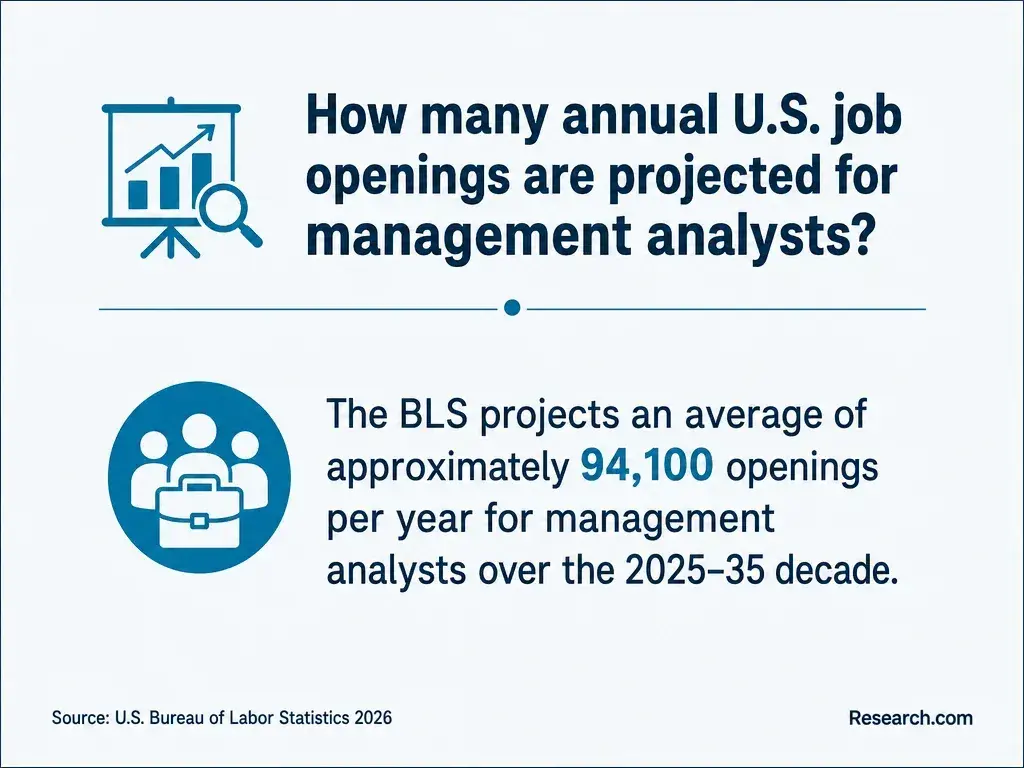
The Bureau of Labor Statistics projects 10.1% employment growth for management analysts from 2025 to 2035. That occupational outlook suggests a market worth investigating, not demand for Ed.D. holders specifically. If your goal is to improve one consulting service rather than lead complex organizational inquiry, a focused methods course, supervised project, or professional development program may cost less and produce usable skills sooner.
There is no reliable salary figure that applies to everyone who completes this degree. The Bureau of Labor Statistics reports a May 2025 median annual salary of $133,000 for U.S. training and development managers. That is an occupational median, not an Ed.D. outcome or a forecast for an independent consultant.
Consulting revenue also differs from salary: it must cover nonbillable sales time, business expenses, and periods without client work. Judge the degree against your own collected income and plausible contracts, not a managerial median from a different employment arrangement. Ask prospective programs for clearly defined graduate outcomes if they publish them, including which graduates were surveyed and what work they held before enrolling.
Does an Online Ed.D. Require a Professional License or Certification?
Organizational consulting generally does not require a license simply because the practitioner holds - or lacks - an Ed.D. The degree also does not automatically confer a consulting certification, teacher credential, or school-administrator license. A client may value a particular certification or demonstrated sector experience independently of doctoral education.
If you intend to move into a regulated education role, ask the school whether the exact program is approved for that credential and confirm eligibility with the relevant state authority. Do not pay for a broadly focused organizational leadership doctorate on the assumption that its leadership courses satisfy a principal or superintendent pathway.
Other Things You Should Know About EdD Leadership
Do not assume so. Tax treatment depends on your circumstances and applicable rules, including the relationship between the education and your existing work. Consult a qualified tax professional before including a deduction in your affordability calculation.
Only if it accurately reflects the program's formal status rules. "Ed.D. student" is clearer until the institution confirms candidacy; never imply that an unfinished degree has been awarded.
Ask the program in advance about alternate sites, changes of scope, and approval deadlines. Keep academic project obligations distinct from your consulting contract, and do not assume client data remains available after an engagement ends.
Only within the permissions granted by the client and the university. Obtain approval before sharing methods, findings, names, or data; a redacted description may be possible even when the full project must remain confidential.
- Types of student financial aid | usa.gov https://www.usa.gov/student-aid
- Qualified Ed expenses | Internal Revenue Service https://www.irs.gov/credits-deductions/individuals/qualified-ed-expenses
- Academic Years, Academic Calendars, Payment Periods, and Disbursements | 2025-2026 Federal Student Aid Handbook https://fsapartners.ed.gov/knowledge-center/fsa-handbook/2025-2026/vol3/ch1-academic-years-academic-calendars-payment-periods-and-disbursements
- Fast Facts: Tuition costs of colleges and universities (76) | ed.gov https://nces.ed.gov/fastfacts/display.asp
- Types of Financial Aid: Grants, Work-Study, and Loans | studentaid.gov https://studentaid.gov/understand-aid/types
- Tuition, Fees, Cost of Attendance | Cal State LA https://www.calstatela.edu/academic/tvftmfaprogram/tuition-fees-cost-attendance
- Explanation of Fees | University of North Texas https://studentaccounting.unt.edu/explanation-fees.html
- synchronous Archives | Ohio State Online https://online.osu.edu/tag/synchronous/
- Budget & Cost Information | Financial Aid - Utah Tech University https://financialaid.utahtech.edu/student-financial-aid-handbook/budget-cost-information/
- How much does college cost? A complete guide to tuition, fees and financial aid | ASU https://admission.asu.edu/college-planning-advice/how-much-does-college-cost-complete-guide-tuition-fees-and-financial-aid