2027 Is an Online Ed.D. in Leadership and Learning in Organizations a Good Fit for Process Improvement Managers?
Audited and Verified:
Our Editorial and Data Verification Process
Research.com uses government datasets, official education statistics and primary institutional information to support its career and degree guides. Our review process checks factual accuracy, occupational definitions, source dates and the requirements associated with the credentials discussed.
How This Article Was Fact-Checked
Our editorial team verifies salary estimates, employment projections, education requirements and program information against original data providers and official organizations. Salary figures are checked against the relevant occupational definitions and reporting periods. Information about licensure, accreditation and required in-person training is reviewed separately.
Fact-checked and verified on:

Co-Founder and Chief Data Scientist
Process improvement managers often know how to redesign a workflow but have less authority over the learning, incentives, and organizational habits that determine whether a change lasts. An online Ed.D. in Leadership and Learning in Organizations may help close that gap - but it is a substantial commitment, not a necessary next step for every manager.
This guide examines where the degree adds value, how it compares with an MBA or certification, and what to verify about programs, costs, and career opportunities before applying.
Key Things You Should Know
- An Ed.D. is most useful when your next role requires leading organization-wide change, developing people, and evaluating whether improvements endure - not simply becoming more proficient with process tools.
- A certification or targeted management experience may be the better first investment if your main goal is to run stronger Lean or Six Sigma projects.
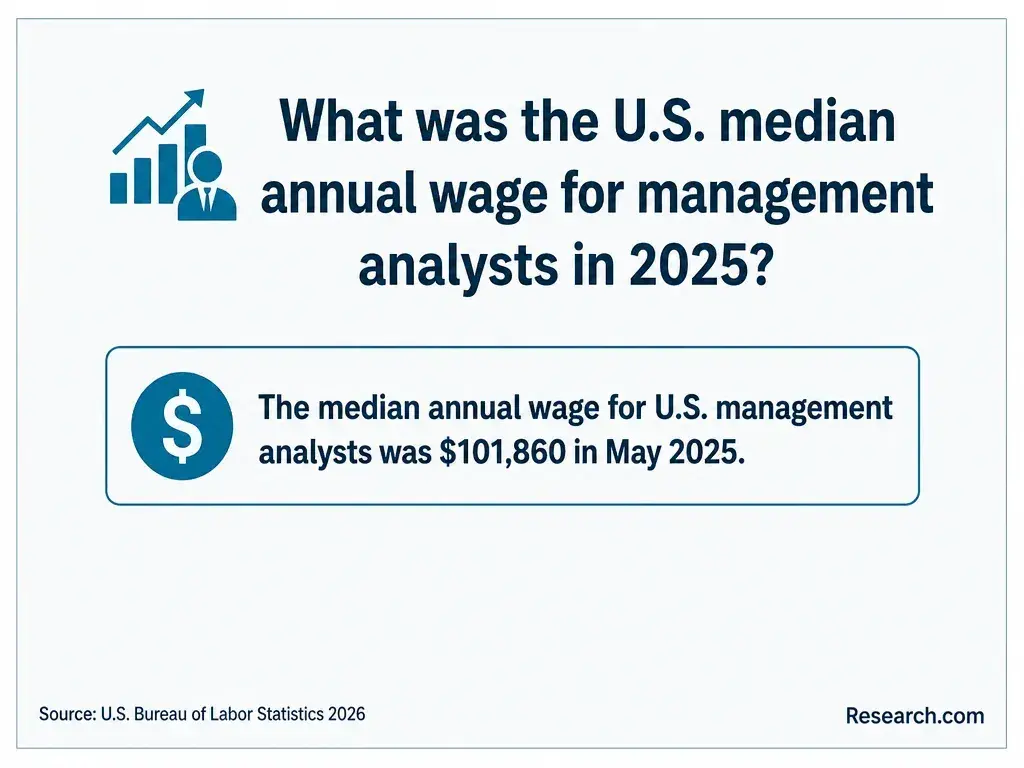
- The U.S. Bureau of Labor Statistics reports a $101,860 median annual salary for management analysts in 2025, but that occupational figure is not an expected salary for Ed.D. graduates.
Is an online Ed.D. in Leadership and Learning in Organizations a good fit for process improvement managers?
Yes, if your work is moving from improving individual processes to helping an organization adopt, sustain, and learn from change. A practice-oriented Ed.D. can develop leadership, adult learning, organizational diagnosis, and applied research skills that complement a manager's operational expertise. It is a weaker fit if you primarily need deeper statistical process control, automation skills, or a credential for a specific improvement methodology.
Consider a manager who reduces handoff delays but sees the old workflow return. The next challenge may involve unclear decision rights, inadequate coaching, conflicting incentives, or an intervention that was never evaluated well. Doctoral study could help that manager investigate those possibilities and lead a broader response. It cannot establish the cause without evidence or grant the authority to change policies.
Before choosing a program, identify a target responsibility and an organizational problem you can realistically study. Then compare that opportunity with the full cost of study; choosing an education doctorate with a manageable tuition budget matters particularly when a promotion or employer contribution is uncertain.
What career benefits can process improvement managers gain from an online Ed.D.?
The potential benefit is a broader leadership toolkit, not an automatic promotion. Process improvement managers already bring workflow analysis, implementation experience, and performance measurement. An Ed.D. may help them connect those strengths to employee learning, stakeholder engagement, organizational culture, and evidence-based decisions.
That combination can be useful when seeking responsibility for an improvement portfolio, organizational development, workforce learning, or enterprise change. The strongest career evidence will be work you can describe: the decisions you led, the people you engaged, the measures you selected, and the limitations you acknowledged. A degree does not replace experience managing budgets, supervising teams, or influencing senior leaders.
How does an Ed.D. compare with an MBA or process improvement certification?
Choose among these routes by the work you want to do next, rather than by credential level. The comparison below distinguishes their central purposes; curricula and requirements vary by provider.
| Pathway | Best fit for a process improvement manager | Main limitation |
| Leadership and learning Ed.D. | Leading organizational change and studying how people learn, implement, and sustain improvements | Substantial time and cost; not a substitute for technical certification or executive experience |
| MBA | Expanding finance, strategy, operations, and general management responsibilities | May offer less depth in adult learning and applied organizational inquiry |
| Lean or Six Sigma certification | Strengthening a defined improvement method and demonstrating project-based competence | Does not necessarily develop organization-wide leadership or doctoral research skills |
A manager seeking a broader business role may get more direct value from an MBA or stretch assignment. Someone who needs to improve project execution should examine the certification's training and project requirements first. Prior doctoral learners considering an Ed.D. as a route to finish an earlier degree should separately investigate Ed.D. pathways for students with prior doctoral study; previous credits or an unfinished dissertation do not automatically transfer.
Depending on the program, students may study leadership and change, adult learning, organizational culture, research methods, and evaluation. For a process improvement manager, the useful connection is between process performance and human adoption: whether staff can use a new procedure, whether supervisors reinforce it, and whether the chosen measures show meaningful improvement.
Applied coursework might involve framing an organizational problem, collecting appropriate evidence, interpreting qualitative and quantitative findings, and communicating recommendations. A capstone or dissertation in practice may offer an opportunity to investigate a workplace challenge, but its format, project-site rules, and required approvals are program-specific. Course exposure alone does not establish expertise in advanced analytics or qualify a student to use restricted employee data.
Compare required courses - not just program descriptions - to your skill gaps. If substantial coursework would repeat what you already know, explore shorter pathways through Ed.D. coursework, while confirming that a faster schedule still provides the research preparation and project support you need.
Requirements differ by institution. Programs may ask for a completed graduate degree, transcripts, a statement of purpose, recommendations, a résumé, and evidence of relevant professional experience. Some require an interview or specified academic preparation; applicants should check the requirements for their intended entry term rather than assume a master's in education, test score, or fixed number of management years is universal.
Process improvement managers can make a credible application by documenting decisions they owned, cross-functional changes they led, and a learning or implementation problem they want to investigate. Describe results accurately without presenting a proposed study as completed research. If you hold an Education Specialist degree, review Ed.S. credit considerations for Ed.D. study and request a written evaluation: credits accepted for admission are not necessarily credits applied to the doctorate.
An online Ed.D. is generally a multiyear commitment, but the actual timeline depends on required credits, course sequencing, enrollment pace, and completion of the final project or dissertation. Published tuition alone is not a reliable total-cost estimate. Fees, required travel, books, continued enrollment during project work, and time away from paid work may change the calculation.
Request a term-by-term degree plan and a written estimate covering tuition and required fees through completion. Ask what happens financially if your project takes longer, whether your employer reimburses doctoral study, and whether that benefit has grade, employment, or repayment conditions. Comparing Doctor of Education programs by affordability is a starting point; the least expensive advertised tuition is not necessarily the lowest total cost for a working manager.
Online delivery removes some commuting but does not necessarily make doctoral study self-paced. Programs may require live classes, scheduled group meetings, or campus convenings. Campus-based study can make in-person interaction easier, while an online program may let a manager remain employed without relocating; neither format eliminates project deadlines or collaboration.
Before enrolling, ask for the actual class schedule, attendance policy, convening dates, group-work expectations, and typical timing of project milestones. Compare those obligations with budget cycles, shift coverage, and periods when improvement initiatives require intensive on-site leadership. Also ask how advising and project work continue if you change employers.
Verify that the institution is accredited by an accrediting agency recognized by the U.S. Department of Education or the Council for Higher Education Accreditation, and confirm that the advertised Ed.D. is the degree actually awarded. Check the institution's current accreditation status and any program-specific claims directly with the university and accreditor.
Institutional accreditation does not mean a leadership and learning Ed.D. grants Lean or Six Sigma certification, school-administrator licensure, or another regulated credential. If a prospective role requires a specific license, verify the program's disclosures and the relevant state authority's rules before enrolling.
Experience and sector knowledge will shape the options more than the degree title. A manager with a record of leading cross-functional initiatives may pursue broader operational improvement leadership, organizational development, change management, or internal consulting. Someone who has also designed and evaluated employee development may be competitive for workforce learning or training leadership roles.
These jobs are not interchangeable. A training and development manager typically oversees learning programs and staff; a management analyst diagnoses organizational problems and recommends changes. Senior posts may additionally require budget ownership, people management, or specialized industry knowledge. Compare job descriptions with your existing responsibilities, then seek a stretch assignment or supervised project that fills a specific gap.
What salary and job outlook can Ed.D. graduates expect in process improvement leadership?
There is no single salary or job-growth figure for "Ed.D. graduates in process improvement leadership." The U.S. Bureau of Labor Statistics reports a 2025 median annual salary of $133,000 for training and development managers and projects 6.4% employment growth for that occupation from 2025 to 2035. That is relevant if your target is learning leadership, but it describes everyone in the occupation - not Ed.D. graduates specifically.
For consulting-oriented work, BLS reports a 2025 median of $101,860 for management analysts and projected growth of 10.1% from 2025 to 2035. Neither figure predicts your offer or establishes a return on tuition. Use the occupation that matches your intended duties, then assess local openings, employer degree preferences, your experience, and the cost of reaching that role.
Other Things You Should Know About EdD Leadership
Possibly, with organizational permission and any required academic review. Confirm data access, confidentiality, and whether employee, customer, or patient records need additional protections before designing the project.
Ask the program whether an external partner or another approved project setting is permitted. Do not assume an independent consulting assignment will meet degree requirements.
Only if the organization and program permit it. Agree on what can be shared, remove protected information, and distinguish your own contributions from team or employer work.
Not necessarily. First check the program's experience requirements, then assess whether your current responsibilities give you enough decision-making experience and access to a feasible organizational problem.
- Cost of Attendance (Budget) | 2025-2026 Federal Student Aid Handbook https://fsapartners.ed.gov/knowledge-center/fsa-handbook/2025-2026/vol3/ch2-cost-attendance-budget
- Understanding College Costs | studentaid.gov https://studentaid.gov/resources/prepare-for-college/students/choosing-schools/consider-costs
- Core Intervention Components: Identifying and... - HHS ASPE https://aspe.hhs.gov/reports/core-intervention-components-identifying-operationalizing-what-makes-programs-work-0
- Ways to Approach the Quality Improvement Process | Agency for Healthcare Research and Quality https://www.ahrq.gov/cahps/quality-improvement/improvement-guide/4-approach-qi-process/index.html
- 10 Common Process Improvement Mistakes and How to Avoid Them | educause.edu https://er.educause.edu/articles/2016/5/10-common-process-improvement-mistakes-and-how-to-avoid-them
- EdD Organizational Leadership Online | Saint Leo University https://onlinedegrees.saintleo.edu/programs/edd-organizational-leadership-online
- Assessing Program Operations and Implementation | University of Kansas https://opentext.ku.edu/assessmentevaluationhighered/chapter/chapter-6-assessing-program-operations-and-implementation/
- Leadership and Learning in Organizations Online Ed.D. | Peabody College of Education and Human Development https://peabody.vanderbilt.edu/academics/edd-programs/online-leadership-learning-organizations/
- What Will You Learn in a Doctor of Leadership Program? | spalding.edu https://online.spalding.edu/blog/what-will-you-learn-doctor-leadership-program
- What Do Process Improvement Managers Do | Franklin University https://www.franklin.edu/career-guide/operations-research-analysts/what-do-process-improvement-managers-do