2027 Online Ed.D. in Leadership and Learning in Organizations: Degree Fit for Leaders Tackling Silos Between Academic and Student Services Teams
Audited and Verified:
Our Editorial and Data Verification Process
Research.com uses government datasets, official education statistics and primary institutional information to support its career and degree guides. Our review process checks factual accuracy, occupational definitions, source dates and the requirements associated with the credentials discussed.
How This Article Was Fact-Checked
Our editorial team verifies salary estimates, employment projections, education requirements and program information against original data providers and official organizations. Salary figures are checked against the relevant occupational definitions and reporting periods. Information about licensure, accreditation and required in-person training is reviewed separately.
Fact-checked and verified on:

Co-Founder and Chief Data Scientist
When an academic department and student services team each see only part of a student's experience, referrals can stall and support can arrive too late. For higher education leaders responsible for improving that coordination, an online Ed.D. in Leadership and Learning in Organizations may offer useful training in organizational change and applied inquiry - but the degree is not itself a fix.
This guide shows how to assess the problem, what to look for in a program, and when a smaller investment could produce a better result.
Key Things You Should Know
- An Ed.D. fits best when you can lead sustained, cross-unit change and investigate why coordination breaks down - not when you simply need a new referral form or clearer procedures.
- Before enrolling, confirm that the program supports an approved project involving academic and student services teams; online delivery does not guarantee access to either team or its data.
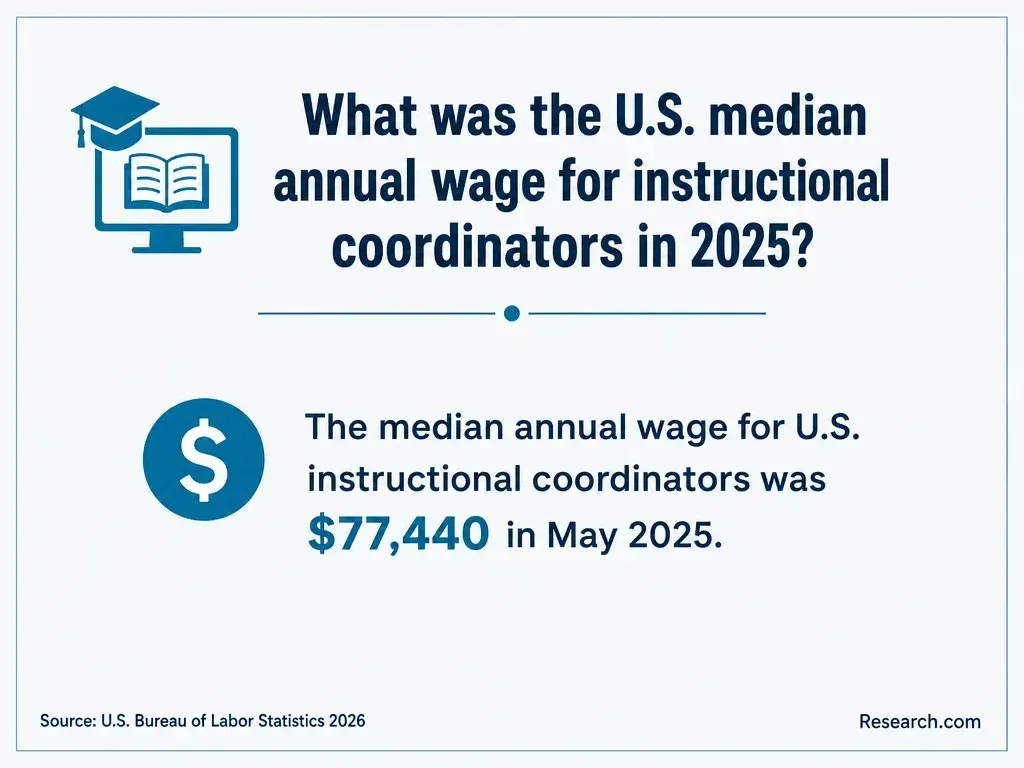
- The U.S. Bureau of Labor Statistics reports a $104,590 median annual salary for postsecondary education administrators in May 2025, but that occupation-wide figure is not a predicted Ed.D. graduate salary or promotion.
What is an online Ed.D. in Leadership and Learning in Organizations?
An Ed.D. in Leadership and Learning in Organizations is a practice-oriented doctorate concerned with how people learn, how organizations change, and how leaders use evidence to improve practice. In higher education, that perspective can connect questions about teaching and advising with questions about enrollment, financial aid, accessibility, and student support.
"Online" describes where much of the instruction occurs; it does not establish that classes are self-paced or that all project work happens remotely.
Program titles vary. A broadly focused organizational leadership Ed.D. may offer useful change-management training without covering higher education governance or student affairs in depth. When comparing academic focuses within Ed.D. programs, inspect required courses, faculty expertise, and approved project settings rather than relying on a concentration's name.
The degree is most compelling for someone who already influences - or has a credible route to influence - decisions across units. A leader seeking to study generalizable theory as a primary career goal may prefer a research-oriented PhD. Someone needing immediate operational coordination may not need another degree at all.
How can this Ed.D. help leaders break down academic and student services silos?
A silo is more than a lack of communication. Teams may have different reporting lines, definitions of student success, software access, incentives, and authority to act. For example, faculty may notice missed coursework while an advising office sees an enrollment hold; neither observation alone establishes why the student is struggling.
An Ed.D. can help a leader diagnose those boundaries, facilitate joint learning, and evaluate a change. It cannot supply missing authority, trust, or permission to share records.
A feasible improvement effort moves from a specific handoff problem to a decision that both teams can influence. The following sequence also helps test whether the challenge is substantial enough for doctoral study:
- Define one handoff, such as how academic concerns reach an adviser, and identify who makes the referral and who accepts responsibility for follow-up.
- Examine available baseline evidence, such as documented referral timing or unresolved cases, alongside staff and student perspectives; treat proposed causes as hypotheses, not findings.
- Agree on a bounded change, its owners, and measures of implementation and student experience before claiming that it works.
- Review results with both units, including unintended effects such as duplicate outreach, and revise the process.
A program's culminating project could provide faculty-guided structure for such work, but a workplace initiative does not automatically qualify as a capstone or dissertation in practice. Ask whether the program permits your proposed setting and project design. Obtain organizational permission for data access and check applicable FERPA obligations, confidentiality rules, and institutional research or ethics review before collecting or sharing information.
Ed.D. programs emphasizing applied culminating work may use different deliverables, so verify the actual requirements.
Degree-fit test: If the main barrier is an outdated workflow that authorized managers can fix this term, start with that change. If repeated attempts fail because units disagree about responsibilities, evidence, or priorities - and you have the authority and time to investigate and lead implementation - doctoral study may add value.
What careers can an Ed.D. in Leadership and Learning in Organizations lead to?
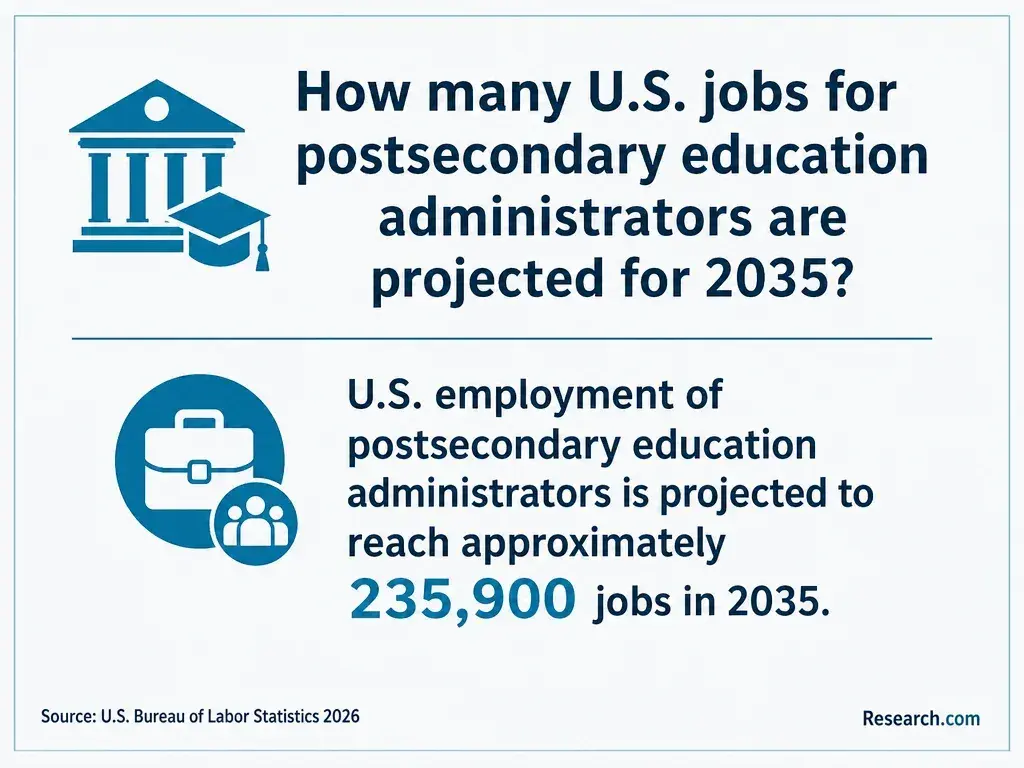
For an established higher education professional, the most direct path is often expanded responsibility within a current institution: coordinating advising and academic initiatives, directing student success work, leading professional development, or managing organizational improvement. The work involves budgets, governance, staff supervision, and relationships across units as well as learning design. Employers assess that experience separately from the doctorate.
The table distinguishes adjacent roles that can sound similar but call for different evidence of readiness. It describes possible paths, not positions reserved for Ed.D. graduates.
| Potential role | Relevant work | Experience to demonstrate |
| Student success or academic support leader | Coordinates services, academic partners, and student-facing processes | Cross-unit decisions, implementation, and responsible use of student information |
| Postsecondary education administrator | Oversees an institutional function, staff, and resources | Supervision, budgeting, governance, and results in comparable settings |
| Organizational development or learning leader | Develops staff capability and supports change across teams | Needs assessment, facilitation, evaluation, and change implementation |
| Organizational consultant | Diagnoses client problems and recommends improvements | Client work, credible analysis, and experience executing recommendations |
Before paying for a doctorate to pursue promotion, compare job descriptions and discuss advancement criteria with the hiring authority. If the target role primarily requires supervisory or budget experience you lack, a cross-functional assignment and mentorship may be more direct. If the degree is still important to your goals, review affordable online doctorates in education against their actual project requirements and employer relevance - not price alone.
Relevant study commonly combines leadership and organizational-change concepts with adult learning, research methods, and evaluation. For the academic-student services problem, the strongest curriculum would help you distinguish a training gap from a structural problem: staff can know how to make a referral yet still face incompatible systems or unclear accountability.
Look for opportunities to practice interviewing stakeholders, interpreting administrative measures, facilitating groups with competing priorities, and designing an evaluation that does not confuse increased referrals with improved student outcomes. A course in learning analytics, for example, is not proof that graduates can independently build reliable predictive models or access restricted student records.
Compare syllabi and project descriptions for the skills you actually need. If you already lead change effectively but need help with student-data governance or process mapping, targeted professional development may address the gap faster. If you need sustained practice integrating diagnosis, implementation, and evaluation, doctoral coursework and faculty feedback may justify the larger commitment.
An online program can let a working administrator remain at their institution while studying its coordination challenges. That can be an advantage for applied inquiry, provided the employer permits the work. Campus-based study may offer more regular in-person contact, but neither format guarantees better access to faculty, project partners, or data.
Compare the actual timetable: required live sessions, group meetings, campus convenings, attendance rules, and periods of intensive project work. Ask how faculty advise students working across two departments and whether a change in employment would require a new project site.
A shorter calendar is not necessarily a better fit if it leaves little time to secure approvals or implement a change responsibly. When comparing the fastest online Ed.D. formats, weigh project feasibility and scheduling against advertised speed.
Requirements differ by institution. Programs may request prior graduate study, transcripts, recommendations, a statement of purpose, and evidence of professional experience; any degree, grade, testing, or experience threshold must be checked with the specific program. An applicant from academic affairs or student services should document decisions they influenced, people they coordinated, and an organizational problem they can describe without claiming an untested solution.
Ask admissions staff whether the proposed cross-unit setting is suitable for applied work and what access is expected after enrollment. A supervisor's support can strengthen feasibility, but it does not replace academic approval or permission from each unit controlling relevant records. If you have prior graduate coursework, ask separately whether it satisfies admission conditions and whether any credits could apply to the doctorate; those are different decisions.
Completion time depends on required coursework, enrollment pace, the culminating project, and whether approvals or data access delay it. Tuition varies by institution and charging model, so an unsourced program-wide price or standard completion timeline would be misleading. Request a written estimate for your entry term that covers required credits, mandatory fees, any convening travel, and the cost of additional terms if the project takes longer.
For an employed leader, also account for work release, any lost earnings, and employer reimbursement conditions. Determine whether reimbursement depends on grades, continued employment, or a maximum annual benefit before treating it as available funding. Cost-conscious online Ed.D. study options are worth comparing, but the least expensive advertised tuition may not be the least expensive feasible route if travel or delayed completion adds costs.
Check that the university has recognized institutional accreditation and that the accreditation applies to the institution awarding the Ed.D. Confirm its status through the accreditor and the U.S. Department of Education's recognized-accreditor information. Accreditation supports confidence in institutional oversight; it does not establish that a particular curriculum fits student success leadership or that a proposed project will be approved.
Ask the program for the exact degree designation, required courses, and any relevant professional recognition it claims. Do not infer a higher education specialization or school-administrator licensure preparation from institution-level accreditation alone.
Most organizational leadership and higher education administrative positions do not have a universal license tied to the Ed.D. Employers may instead specify experience, a degree level, or expertise in a particular function. A doctorate does not automatically grant authority to provide counseling or qualify someone for a regulated K-12 principal or superintendent position.
If your intended job is regulated, check the relevant state authority's requirements and obtain the program's written licensure disclosure before enrolling. If your goal is to coordinate academic and student services, prioritize evidence of successful collaboration and institutional knowledge over an unrelated certification.
What salary and job outlook can Ed.D. graduates expect?
The U.S. Bureau of Labor Statistics reports a May 2025 median annual salary of $104,590 for postsecondary education administrators and projects 1.8% employment growth for that occupation from 2025 to 2035. Modest projected growth makes an institution-specific advancement plan more useful than assuming that doctoral completion will create a new opening.
Those figures cover an occupation, not graduates of a particular program or leaders doing a particular type of student success work. Pay and opportunities vary with employer, location, role, and prior responsibility. To judge the degree's financial value, compare positions you could realistically pursue with and without it, then set those prospects against your full study costs and employer support.
Other Things You Should Know About EdD Leadership
Set an explicit handoff rule identifying the person or team responsible for follow-up. Shared interest in a student's success is not a substitute for clear ownership, and the rule should reflect institutional policy.
Yes, when participation is appropriate and voluntary. Student perspectives can reveal confusing handoffs that staff records miss; establish how feedback will be used and protect participants' privacy.
Discuss what the measure captures, what it misses, and whether teams record it consistently. Use it to support learning and review alongside qualitative evidence, rather than treating a single metric as proof of staff performance.
Document the agreed process, assign ongoing ownership to the relevant units, and schedule a review after the initial project ends. A change that depends entirely on one doctoral student is unlikely to be durable.
- Student support in higher education: campus service... - PMC https://pmc.ncbi.nlm.nih.gov/articles/PMC9834745/
- Cost of Attendance Breakdown | Financial Aid https://finaid.umich.edu/cost-attendance-breakdown
- 4 Flexible Ways to Earn a College Degree on Your Schedule | St. John's University https://www.stjohns.edu/news-media/johnnies-blog/4-flexible-ways-earn-college-degree-your-schedule-0
- The Application Process - LaFetra College of Education https://education.laverne.edu/edd/requirements/
- EdD in Organizational Change and Leadership | USC Online https://online.usc.edu/programs/organizational-change-leadership/
- Course and Program Format Definitions | UMaine Online https://online.umaine.edu/courses-and-program-format-definitions/
- UNC EdD Online: Organizational Learning and Leadership https://online.unc.edu/online-doctoral-programs/online-edd-organizational-learning-and-leadership/
- Delivery & Modality Definitions | South University https://catalog.southuniversity.edu/delivery-modality-definitions
- Online EdD in Organizational Leadership | Pepperdine University https://gsep.pepperdine.edu/doctorate-organizational-leadership/
- Key Financial Aid Terms | passhe.edu https://www.passhe.edu/students/financial-aid-terms.html