2027 Online Ed.D. in Leadership and Learning in Organizations: Evaluating Research Preparation for Building a Logic Model for a Learning Initiative
Audited and Verified:
Our Editorial and Data Verification Process
Research.com uses government datasets, official education statistics and primary institutional information to support its career and degree guides. Our review process checks factual accuracy, occupational definitions, source dates and the requirements associated with the credentials discussed.
How This Article Was Fact-Checked
Our editorial team verifies salary estimates, employment projections, education requirements and program information against original data providers and official organizations. Salary figures are checked against the relevant occupational definitions and reporting periods. Information about licensure, accreditation and required in-person training is reviewed separately.
Fact-checked and verified on:

Co-Founder and Chief Data Scientist
A logic model can make a workplace learning initiative easier to plan and evaluate - but only if its assumptions and measures withstand scrutiny. For learning and development professionals and organizational leaders considering an online Ed.D., the decision is whether doctoral study offers the research preparation their project needs.
This article explains what a defensible logic model contains, which methods and faculty support to look for, and when a shorter evaluation course may be the better investment. You can use the criteria to assess programs against a real initiative before enrolling.
Key Things You Should Know
- A useful logic model connects resources and activities to outputs and intended outcomes, while making assumptions and external influences explicit; a diagram alone does not establish that learning caused an improvement.
- Look for supervised practice in needs assessment, measurement, program evaluation, and ethical use of organizational data - not just a course labeled "research methods."
- An Ed.D. may be worthwhile if you need sustained preparation to lead and evaluate organizational change. For one learning initiative, a focused evaluation course and experienced mentor may be more proportionate.
What Is an Online Ed.D. in Leadership and Learning in Organizations?
An Ed.D. in leadership and learning in organizations is a practice-oriented doctorate concerned with how people learn, how organizations change, and how leaders use evidence to improve practice. Programs with similar names can differ substantially: one may emphasize adult learning and workplace development, another educational administration, and another organizational change. The exact degree title and curriculum matter more than the label "online."
For a professional designing a learning initiative, the degree is potentially valuable when the work involves more than creating training: diagnosing a performance problem, coordinating stakeholders, evaluating implementation, and revising a strategy over time. It is not necessary simply to draw a logic model. A research-focused PhD may fit someone seeking to develop generalizable theory; targeted evaluation training may fit someone who needs a usable model for one project.
How Does an Online Ed.D. Prepare Students to Build a Logic Model?
A logic model is a concise account of how an initiative is expected to work. It links inputs, activities, immediate outputs, and intended short- and longer-term outcomes. Its value lies in exposing the reasoning between those elements: why should an activity produce an outcome, for whom, under what conditions, and what evidence would challenge that expectation?
Ed.D. preparation is strongest when coursework and supervised projects let students build and revise that reasoning using organizational evidence. The following sequence is an adaptable template, not a completed or validated workplace assessment:
- Define the decision and population. Specify whose learning or performance the initiative addresses and what a sponsor must decide, such as whether to revise or expand it.
- Check the need. Compare available performance evidence with stakeholder perspectives; do not assume a training request proves a knowledge gap.
- Map the pathway. Record resources, activities, participation and other outputs, intended outcomes, and assumptions linking each stage.
- Choose feasible indicators. Identify what can be observed before and after implementation, when it can be collected, and who may access it.
- Test and revise. Ask stakeholders and a faculty advisor where the causal story is weakest, document changes, and distinguish observed progress from claims the design cannot support.
For example, in a hypothetical supervisor-coaching initiative, completed coaching sessions are an output; employees' subsequent use of a feedback practice is a possible near-term outcome. Improved retention might be a longer-term goal, but staffing conditions, compensation, and other changes could also affect it. Counting sessions would not establish an effect on retention.
Ask how a program teaches students to assess measure quality, missing data, selection effects, interviews, and alternative explanations. A simple pre/post comparison may show change without showing that the initiative caused it. Also confirm whether the required final project permits the type of workplace evaluation you hope to undertake; online Ed.D. final project format comparisons can help frame questions, but the program must confirm its own rules. Employer permission to use data, academic project approval, and any required ethics review are separate decisions.
Is an Online Ed.D. in Leadership and Learning Accredited?
Accreditation belongs first to the institution, not automatically to every degree title or advertised specialization. Before applying, confirm the university's current institutional accreditation with the accreditor and check that the online Ed.D. is an authorized degree offering. Ask the program whether any additional accreditation applies to this specific degree rather than assuming it does.
Accreditation does not establish that a curriculum teaches logic-model development in depth. Nor does a general leadership doctorate automatically qualify graduates for teacher, principal, or superintendent licensure. If a regulated role is your goal, verify the program's licensure disclosures and the relevant state authority's requirements separately.
For logic-model work, the most relevant curriculum combines adult learning and learning transfer with organizational diagnosis, research methods, and program evaluation. Adult learning helps explain why participants might adopt a new practice; organizational diagnosis tests whether learning is the right response at all. Evaluation methods help turn intended outcomes into defensible indicators.
Read course descriptions and assessments, not just course names. A strong match offers opportunities to critique an existing initiative, develop a theory of change, collect or analyze appropriate evidence, and explain limitations to decision-makers. Determine whether these experiences are required, elective, or contingent on a particular advisor or project site. Exposure to statistics or qualitative methods alone is not proof that graduates can evaluate causal impact independently.
Prior preparation changes what you need. An experienced evaluator may benefit most from change leadership and implementation work; an experienced training designer may need more support with measurement and competing explanations. If your immediate gap is narrow, a graduate evaluation course or supervised workplace project may address it without a doctorate.
Requirements vary by institution and entry term. Programs may request prior graduate study, transcripts, recommendations, a statement of purpose, a résumé documenting professional experience, or an interview. Check the published rules for the exact degree: a master's in education, a research publication, and a particular statistics course are not universal requirements.
For this goal, an effective application can describe a real learning or performance problem, the decisions you have been responsible for, and what evidence you still need. Be candid about whether you can obtain organizational cooperation and appropriate data access; neither an employer's informal support nor admission guarantees approval for a doctoral project. If you have previous graduate credits, ask separately whether they establish admission eligibility and whether any may apply to degree requirements.

Time and total cost depend on required credits, enrollment pace, tuition rules, fees, and the project or dissertation process. A published coursework schedule may not capture time needed to obtain partner approval, collect usable evidence, or revise an applied project. Before comparing offers, request a degree plan and a written estimate that includes required fees and any campus travel.
Also account for work time, employer reimbursement conditions, and the cost of continued enrollment if the project takes longer than planned. Compare the full commitment with the value of the skills you need; Ed.D. program costs for prospective doctoral students are a starting point, not a substitute for an institution-specific estimate. If your only intended deliverable is a logic model, the doctoral commitment may be difficult to justify.
Online study removes some location constraints, but it does not necessarily make research preparation self-paced. Live seminars, team meetings, campus convenings, and deadlines may still shape when you can work. Campus-based study can offer more routine in-person contact; neither format automatically provides better project supervision.
The comparison below focuses on conditions that affect building and testing a workplace logic model, rather than assuming one delivery mode is superior.
| Condition | Online program | Campus-based program |
| Faculty feedback | May occur through live meetings and digital review of project drafts | May include scheduled in-person meetings alongside digital review |
| Stakeholder collaboration | Can support a project at the student's workplace, subject to program rules | May support local partnerships, subject to program rules |
| Scheduling constraint | Live sessions, group work, and possible travel still require protected time | Regular travel and campus attendance may require protected time |
Ask for the actual meeting schedule and feedback process during the project stage. Compare online Ed.D. degree options by study length cautiously: an accelerated course calendar does not ensure faster access to organizational data or quicker project approval.
Depending on prior experience, graduates may pursue or advance in learning and development, organizational development, talent management, consulting, workforce development, or education administration. A training manager may use a logic model to align learning investments with performance goals; an organizational consultant may use one to make a proposed change strategy testable.
Employers still evaluate functional expertise, leadership responsibility, sector knowledge, and results - not the degree alone. A learning specialist seeking a director role should seek opportunities to lead budgets, stakeholders, and evaluation work alongside doctoral study. University professionals can compare organizational leadership Ed.D. programs for university professionals while checking whether each program's research training fits their actual institutional problem.
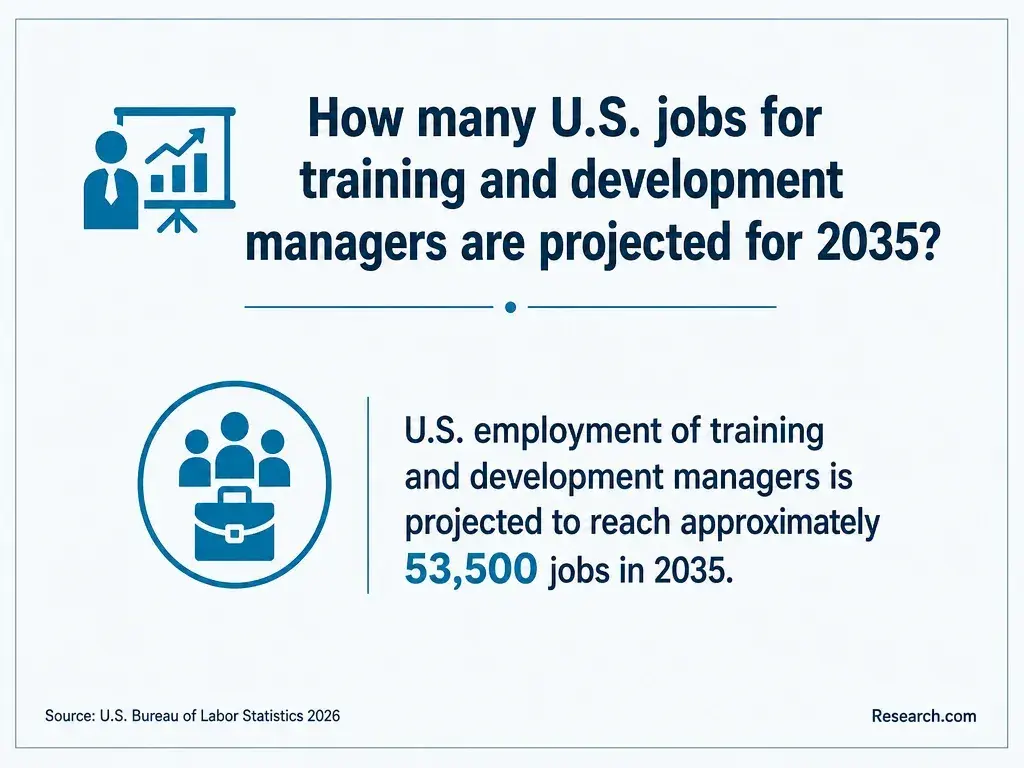
The US Bureau of Labor Statistics reports a median annual salary of $133,000 for training and development managers in May 2025. That is an occupational median, not an expected salary for Ed.D. graduates: reaching a management role generally depends on relevant experience and an employer's requirements.
BLS projects employment of training and development specialists to grow 10.8% from 2025 to 2035. That outlook describes an occupation, not demand for this particular doctorate. Use the duties and qualifications in your target job postings - and your current opportunities for advancement - when weighing the degree's cost.
How Can You Choose a Reputable Online Ed.D. Program?
Choose against the deliverable you want to produce, not the breadth of the program's leadership language. Request a current curriculum, assessment descriptions, final-project handbook, and an explanation of how students receive methods feedback. The most useful conversations are with faculty who supervise applied research, not only admissions staff.
Before committing, seek clear answers to these project-specific questions:
- Where will I learn to distinguish a learning need from a process, incentive, or staffing problem?
- Will I build a logic model, justify its assumptions, select indicators, and revise it after critique?
- What organizational permissions, data protections, and academic or ethics reviews could my proposed project require?
- What happens if my employer changes, access is denied, or the original initiative ends?
Finally, compare the written total-cost estimate with available employer support and lower-cost methods training. For applicants working in universities, guidance on reducing higher education leadership doctoral study costs can help identify funding questions to put to a prospective program. Enroll when the verified curriculum, supervision, schedule, and project rules support your larger leadership goals - not solely because the degree could help you make one diagram.
Other Things You Should Know About EdD Leadership
They overlap, but a logic model usually presents a compact pathway from resources and activities to outcomes. A theory of change generally explains the assumptions and mechanisms behind that pathway in greater detail. A program may use the terms differently, so follow its project guidance.
Revisit it when implementation differs from the plan, stakeholders identify a faulty assumption, or early evidence suggests the proposed pathway is incomplete. Record what changed and why rather than quietly replacing the original version.
Yes. A team can begin with authorized, aggregated information and stakeholder knowledge, clearly marking untested assumptions. Collecting or using more sensitive data later requires the appropriate organizational permissions and review.
Only if you have permission to share it. Remove confidential details and avoid implying that a proposed model was implemented or validated. When permission is uncertain, create a separate illustrative version rather than disclosing the organization's document.
- Learning needs assessment for multi-stakeholder... - PMC - NIH https://pmc.ncbi.nlm.nih.gov/articles/PMC8642989/
- Read the Belmont Report | hhs.gov https://www.hhs.gov/ohrp/regulations-and-policy/belmont-report/read-the-belmont-report/index.html
- Assess Training Needs: Conducting Needs Analysis | cdc.gov https://www.cdc.gov/training-development/php/about/assess-training-needs-conducting-needs-analysis.html
- Ethical Guidelines for Research Using Pervasive Data | Federal Register https://www.federalregister.gov/documents/2024/12/11/2024-29064/ethical-guidelines-for-research-using-pervasive-data
- Educational Leadership, Evaluation & Organizational Development | UofL | Information Technology Services https://education.louisville.edu/academic-programs/academic-departments/department-leadership-evaluation-and-development
- Section 1. Developing a Logic Model or Theory of Change | ku.edu https://ctb.ku.edu/en/table-of-contents/overview/models-for-community-health-and-development/logic-model-development/main
- Online Doctor of Education (EdD) Program | University of Miami https://uonline.miami.edu/programs/doctor-of-education-applied-learning-sciences/
- What Is a Problem of Practice? Definition, Examples, and Writing Tips - JHU School of Education https://education.jhu.edu/news/what-is-a-problem-of-practice-definition-examples-and-writing-tips/
- 4 Collaborating with the Institutional Review Board (IRB) | mit.edu https://admindatahandbook.mit.edu/book/v1.0-rc6/irb.html
- Research Ethics and Informed Consent | Educational Research Basics by Del Siegle https://researchbasics.education.uconn.edu/ethics-and-informed-consent/