2027 BCBA Career Switch From Speech Therapy: What to Expect

Co-Founder and Chief Data Scientist
Speech-language pathologists who work with children, autism services, school teams, or behavioral feeding and communication cases often consider BCBA certification because it can broaden their clinical toolkit and open roles in applied behavior analysis. The decision is not simply a job change. It requires graduate-level behavior analysis coursework, supervised ABA fieldwork, exam preparation, and attention to state rules after certification.
This guide explains what changes when an SLP pursues the Board Certified Behavior Analyst path, what requirements usually apply, how long the transition can take while working, what costs to expect, and how online and in-person programs compare. It also clarifies salary and job-market considerations so speech therapists can decide whether the additional credential fits their career goals, schedule, and preferred scope of practice.
Key Things You Should Know
- Speech therapists switching to BCBA careers in 2026 must complete a Verified Course Sequence and 1,500 hours of supervised experience, typically requiring 1-2 years of additional training.
- Annual median BCBA salaries reached $65,000 in 2025, reflecting strong demand fueled by increasing autism spectrum disorder diagnoses and ABA service funding.
- BCBA certification demands passing a rigorous exam with a 65% national pass rate in 2024, emphasizing the need for thorough preparation despite professional overlap with speech therapy.
What is a BCBA certification and how does it differ from a speech-language pathology license?
A BCBA certification is a professional credential for practitioners trained to assess behavior, design behavior intervention plans, supervise ABA services, and use data to evaluate whether interventions are working. To qualify, candidates complete graduate-level behavior analysis education, supervised clinical experience, and the Board Certified Behavior Analyst exam. BCBAs often work with clients who have autism spectrum disorder, developmental disabilities, and significant behavioral needs, but the credential is not limited to one diagnosis or setting.
A speech-language pathology license serves a different legal and clinical purpose. SLP licensure authorizes professionals to evaluate and treat communication, speech sound, language, fluency, voice, cognitive-communication, and swallowing disorders. SLP training emphasizes communication development, anatomy and physiology, linguistics, cognition, assessment, and evidence-based treatment for speech and language needs.
The overlap is real, but the credentials are not interchangeable. An SLP may address functional communication, social communication, feeding, and behavior-related barriers to communication. A BCBA focuses on behavior-analytic assessment, reinforcement systems, skill acquisition, behavior reduction, data-based decision-making, and supervision of ABA programming.
| Area | BCBA certification | Speech-language pathology license |
| Main focus | Behavior assessment, skill acquisition, intervention design, and ABA supervision | Communication, speech, language, cognition, voice, fluency, and swallowing |
| Typical preparation | Graduate behavior analysis coursework, supervised ABA fieldwork, and BCBA exam | Graduate SLP education, clinical practicum, national exam, and state licensure |
| Common work settings | ABA clinics, schools, homes, healthcare programs, early intervention, and private practice | Schools, hospitals, clinics, rehabilitation centers, early intervention, and private practice |
| Core decision for SLPs | Whether to add a behavior-analytic scope and supervision responsibilities | Whether to remain primarily within communication and swallowing practice |
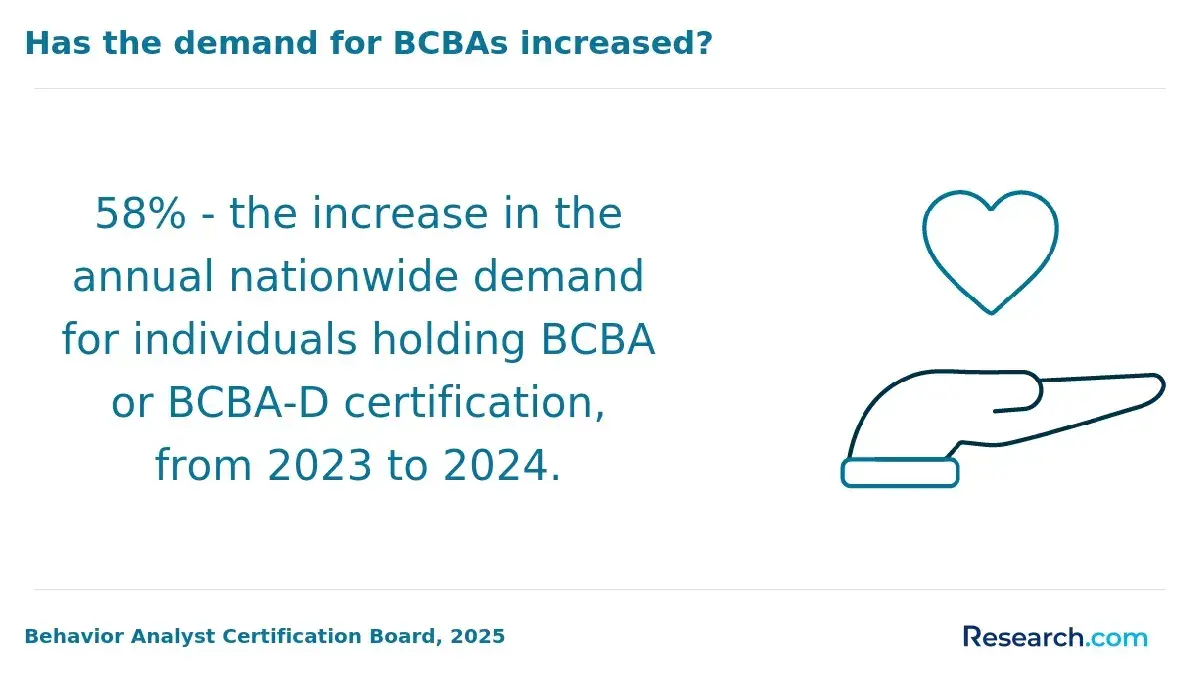
Demand for BCBAs has been rising, with a 58% increase in job postings recently noted by Burning Glass Labor Insights and the University of Cincinnati Online. For SLPs comparing credential pathways, it is important to evaluate both the additional training burden and the type of work they want to do daily. Those researching lower-cost options can review ABA master's programs online to compare affordable routes that may fit a working clinician’s schedule.
What are the educational requirements to become a Board Certified Behavior Analyst from a speech therapy background?
Speech therapists who already hold a master’s degree may have a strong clinical foundation, but they still need behavior analysis training that meets certification requirements. The typical pathway includes graduate coursework aligned with Behavior Analyst Certification Board standards, supervised ABA fieldwork, and a passing score on the BCBA exam. Prior SLP training can help with client interaction, treatment planning, documentation, and interdisciplinary collaboration, but it does not automatically replace ABA-specific coursework or fieldwork.
Candidates must have at least a master’s degree in a related field such as speech-language pathology, then complete 225 hours of graduate coursework consistent with Behavior Analyst Certification Board (BACB) standards. Coursework typically covers behavior assessment, intervention design, ethics, measurement, data analysis, and behavior-change procedures. SLPs should confirm in writing that any program they choose meets current eligibility rules for the certification pathway they plan to use.
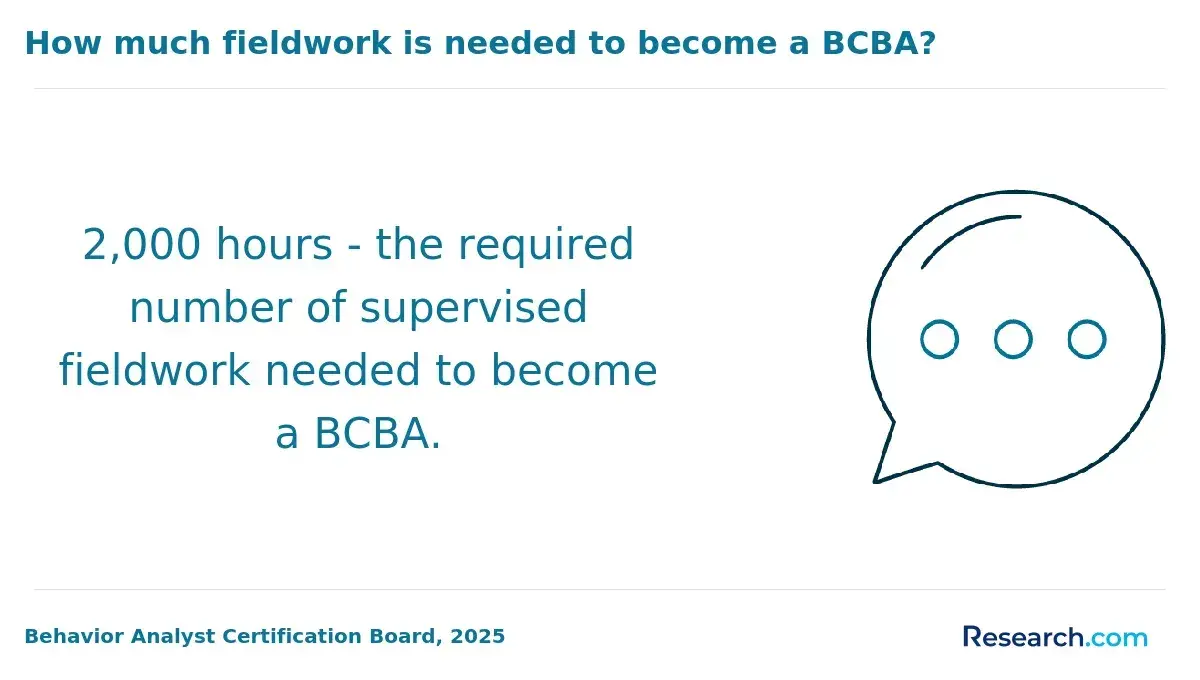
The certification process also involves accruing 1,500 hours of supervised experience in applied behavior analysis under a qualified BCBA supervisor. For working SLPs, the most efficient route is often to seek supervised opportunities in settings where ABA is already delivered, such as autism programs, school-based behavioral teams, clinics, or interdisciplinary pediatric practices. Speech therapists comparing program options can review BCBA master's programs to identify programs designed around certification preparation.
What SLPs should verify before enrolling
- Coursework alignment: Confirm that the required behavior analysis courses satisfy BACB-related coursework expectations.
- Fieldwork access: Ask whether the program helps students find supervisors or whether students must arrange supervision independently.
- Schedule fit: Make sure the course sequence, supervision meetings, and fieldwork requirements are realistic alongside your SLP caseload.
- Exam preparation: Look for structured review, practice exams, and faculty support if you are new to behavior-analytic terminology.
- State rules: Check whether your state has additional behavior analyst licensure requirements beyond national certification.
Finally, candidates must pass the BCBA exam, which tests behavior-analytic concepts, assessment, intervention, supervision, and ethics. Salary prospects are one reason some SLPs consider the transition: BCBAs earn a median annual salary between $85,571 and $130,177, with top earners reaching $151,000. This contrasts with the median $95,410 for speech-language pathologists. Those figures should be weighed against tuition, supervision costs, exam fees, time away from work, and the fact that compensation varies by employer, location, role, and experience.
How long does it take to complete a BCBA certification program while working as a speech therapist?
For a working speech therapist, completing a BCBA certification program generally takes 1.5 to 3 years. The fastest timelines usually require steady coursework, a reliable fieldwork site, consistent supervision, and enough weekly hours to accumulate supervised experience without interruptions. A part-time path is more realistic for many full-time SLPs, especially those managing school-year calendars, productivity requirements, or family obligations.
Key requirements include completing 30 to 45 graduate-level credit hours and accumulating 1,500 hours of supervised independent fieldwork. Clinical experience as an SLP can make some concepts easier to understand, especially treatment planning, documentation, and caregiver communication, but it does not remove the need to complete required ABA coursework and supervision. Speech therapists who need flexibility can compare accredited BCBA master's programs online to find programs with schedules that align with employment demands.
| Timeline factor | How it affects completion | What working SLPs should plan for |
| Course load | Full-time enrollment can shorten the academic portion; part-time enrollment often extends it. | Choose a pace that will not compromise clinical work, grades, or exam preparation. |
| Fieldwork hours | The 1,500 hours can be the limiting factor if supervision or eligible cases are inconsistent. | Secure a qualified supervisor and approved fieldwork setting early. |
| Employment schedule | Full-time SLP work can restrict daytime ABA hours, supervision meetings, and observation opportunities. | Consider evening, weekend, summer, or employer-supported fieldwork options. |
| Program format | Online and evening formats can reduce commuting and scheduling barriers. | Confirm how practicum support, faculty access, and supervision coordination are handled. |
Managing fieldwork alongside a full-time SLP role is often the most difficult part of the transition. Some candidates reduce work hours, negotiate a schedule change, seek a role in an ABA-adjacent setting, or use employer support to make supervision feasible. The effort can be worthwhile for candidates committed to the field; a 94% job placement rate for newly certified BCBAs within three months points to strong demand for those who complete the process and plan their transition carefully.
Career changers from speech therapy should budget for more than tuition. The typical cost of BCBA graduate programs varies widely, generally ranging from $15,000 to $35,000 in tuition depending on institution, format, and credit requirements. Some universities charge per credit hour, usually between $800 and $1,200, so the final cost depends heavily on how many credits the program requires and whether prior graduate work applies.
Additional expenses can include textbooks, course materials, technology fees, background checks, supervision fees, and exam preparation. These may add $1,000 to $3,000 more. Fully online programs may reduce commuting and relocation costs, but online tuition is not automatically cheaper than campus tuition. Prospective students can compare masters in ABA online programs to evaluate accredited options built for working professionals.
| Cost category | Typical amount stated | Planning advice |
| Graduate program tuition | $15,000 to $35,000 | Ask for a full program cost estimate, not only the per-credit price. |
| Per-credit tuition | $800 and $1,200 | Multiply by required credits and check whether fees are separate. |
| Books, materials, and supervision-related costs | $1,000 to $3,000 more | Clarify which costs are included in tuition and which are billed separately. |
| BCBA exam fee | $245 | Budget for the initial attempt and understand retake policies. |
| Application fees | $125 to $145 | Include certification application costs in your total transition budget. |
BCBA certification exam fees and expenses for career switchers include an initial exam cost of $245, with application fees ranging from $125 to $145. Retakes require full payment again, and many candidates also purchase study guides, practice exams, or review courses that may add several hundred dollars. Before enrolling, ask whether your employer offers tuition reimbursement, supervision support, schedule flexibility, or professional development funding.
Many SLPs reduce financial risk by choosing programs with transparent tuition, payment plans, and clear certification alignment. The field has also seen a 156% rise in telehealth BCBA positions since 2020, which may make flexible training formats especially relevant for professionals who want broader employment options after certification.
Yes. BCBA programs are widely available online, and many are designed for working professionals who cannot attend weekday campus classes. Online formats may include recorded lectures, live virtual sessions, discussion boards, exams, group projects, and remote faculty meetings. Some programs are fully online for coursework, while others use hybrid models that combine online classes with in-person practicum or campus requirements.
The main advantage of an online BCBA program is flexibility. A speech therapist can often continue working while completing coursework in the evenings or on a structured weekly schedule. Online study can also reduce commuting time and expand access for students who do not live near a university with a behavior analysis program.
The trade-off is that online students must be more proactive. Fieldwork usually still requires local arrangements, qualified supervision, appropriate client contact, and documentation that meets certification standards. An online program may teach the coursework well, but the student still needs a viable supervision plan.
| Format | Best fit | Potential drawback |
| Fully online coursework | Working SLPs who need schedule flexibility or live far from campus | Students may need to arrange local fieldwork and supervision independently. |
| Hybrid program | Students who want some face-to-face contact while keeping online flexibility | Campus visits or in-person requirements may be difficult for full-time clinicians. |
| In-person program | Students who value direct faculty access, local networking, and structured practicum connections | Commuting and fixed class times can be difficult alongside SLP employment. |
When comparing online and in-person options, focus less on convenience alone and more on outcomes: certification alignment, faculty experience, supervision support, exam preparation, fieldwork documentation systems, and access to ABA settings. A strong online program can be a good fit if it provides structure and clear guidance. A weak in-person program is not better simply because it meets on campus.
BCBA graduate programs require specialized behavior analysis coursework and supervised fieldwork. For speech therapists, this is the point where the transition becomes most distinct from SLP practice. The coursework shifts from communication and swallowing disorders to behavior principles, assessment, intervention, data collection, supervision, and ethics in applied behavior analysis.
Typically, coursework includes around 225 hours covering ethical and professional conduct, measurement, data analysis, experimental design, and behavior assessment and intervention. Students study concepts such as reinforcement, stimulus control, behavior reduction, skill acquisition, functional assessment, treatment integrity, and data-based decision-making. These subjects are essential because BCBAs are expected to justify interventions with observable data and revise plans when outcomes do not improve.
Practicum involves a minimum of 1,500 supervised applied hours under a qualified BCBA. This experience may include conducting assessments, writing goals, developing intervention procedures, training caregivers or staff, collecting and graphing data, reviewing progress, and adjusting plans. Fieldwork may occur in clinics, schools, homes, community programs, or other approved service settings.
How SLP experience helps and where new training is needed
- Helpful carryover: rapport building, family counseling, documentation, treatment planning, interdisciplinary teamwork, and functional communication knowledge.
- New competencies: behavior-analytic terminology, experimental design, reinforcement schedules, functional behavior assessment, ABA supervision, and behavior intervention evaluation.
- Common mistake: assuming speech therapy experience automatically satisfies ABA fieldwork. Certification requirements must still be documented according to the applicable standards.
- Best practice: choose a program that clearly explains how coursework, supervision, and fieldwork records are coordinated.
Completing this specialized training can have meaningful career value. According to kidsclubaba.com, BCBAs see a 35-40% salary increase from entry-level to over five years of experience. That potential should be balanced against the time and cost of coursework, the intensity of fieldwork, and the responsibility that comes with designing and supervising ABA services.
The employment outlook for BCBAs in the United States is strong because applied behavior analysis is used across autism services, developmental disability supports, schools, early intervention, behavioral health programs, and private practice. Demand is also shaped by insurance coverage, school service needs, state regulations, and the availability of qualified supervisors.
The Bureau of Labor Statistics projects a 20% growth rate in BCBA employment from 2022 to 2032, significantly faster than average across occupations. Opportunities are not limited to one setting. BCBAs may work in clinics, school districts, home-based service agencies, hospitals, community programs, telehealth roles, or consulting positions. Urban areas may offer more openings, while rural areas may have fewer employers but less candidate competition.
For speech therapists, the job-market advantage is strongest when the BCBA credential complements existing clinical strengths. An SLP with behavior analysis training may be especially valuable in interdisciplinary autism teams, school consultation, early intervention, parent training, functional communication intervention, and feeding-related cases where behavior and communication interact.
Certification is still a significant hurdle. The average BCBA exam pass rate hovers around 60%, with program outcomes varying widely from 13% to 100%. Those figures make program selection important. Candidates should look for transparent exam support, strong supervision guidance, and a curriculum that teaches concepts deeply rather than only preparing students to memorize terms.
Key steps for improving employment readiness include planning the credentialing timeline early, securing high-quality supervision, maintaining organized fieldwork documentation, preparing seriously for the exam, and understanding state requirements before applying for jobs. Salaries vary by region, employer, setting, experience, and whether the role involves direct service, supervision, program management, or leadership.
BCBA and SLP salaries can overlap substantially, so the better financial choice depends on location, employer, specialization, and the type of role. Board Certified Behavior Analysts often earn salaries similar to or slightly higher than speech-language pathologists, particularly when they move into supervisory, clinical leadership, specialized treatment, or private-practice roles.
Industry data shows BCBA salaries typically range from $60,000 to $85,000 annually, with some professionals making over $90,000 depending on experience and location. In contrast, speech-language pathologists report median salaries of about $75,000 to $80,000 per year. Other reported BCBA figures show a median annual salary between $85,571 and $130,177, with top earners reaching $151,000, while speech-language pathologists have a median $95,410. These figures should be interpreted as ranges from different labor-market sources rather than a guaranteed raise for every career changer.
Salary variations for BCBAs are influenced by geographic location, employer type, caseload complexity, supervision duties, and specialization. Experts in areas like feeding therapy or severe behavior management often command a 15-25% salary premium, as noted by kidsclubaba.com. A BCBA working in a metropolitan area or holding specialty expertise may earn around $100,000 or more, which can exceed many SLP roles in the same market.
| Comparison point | BCBA | Speech-language pathologist |
| Common salary range cited | $60,000 to $85,000 annually, with some over $90,000 | About $75,000 to $80,000 per year |
| Additional reported median range | $85,571 and $130,177, with top earners reaching $151,000 | Median $95,410 |
| Higher-earning roles | Clinical leadership, supervision, specialty behavior services, private practice | Medical settings, specialized therapy, school leadership, private practice |
| Key financial question | Will the added credential lead to a higher-paying role in your market? | Could advancement within SLP offer similar earnings without retraining? |
Before choosing the BCBA path for salary alone, compare local job postings, supervision expectations, billable-hour requirements, benefits, workload, and advancement opportunities. The credential can improve earning potential for some SLPs, but the return on investment depends on whether the new role aligns with both compensation goals and day-to-day professional interests.
When evaluating BCBA programs, distinguish between institutional accreditation, coursework verification, and certification eligibility. The practical question is whether the degree, coursework, and supervised fieldwork will be accepted for the BCBA certification route you intend to use. Do not rely only on a school’s marketing language.
The Behavior Analyst Certification Board (BACB) is the central organization connected to BCBA certification standards and exam eligibility. Prospective students should use the BACB's official list of verified course sequences to confirm whether a program’s coursework aligns with certification expectations. If a program claims to prepare students for BCBA certification, ask admissions staff to identify the exact course sequence and how it satisfies current requirements.
Many programs also carry regional accreditation from agencies like the Higher Learning Commission or the Southern Association of Colleges and Schools, which indicates that the institution meets broader academic quality standards. Regional accreditation is important for credit transfer, financial aid, and graduate-degree credibility, but it does not by itself confirm that the program’s behavior analysis coursework meets BCBA eligibility requirements.
How to verify a program before enrolling
- Check the program’s institutional accreditation through the university or college.
- Confirm the behavior analysis course sequence through the BACB's official list of verified course sequences.
- Ask whether the program provides written guidance on fieldwork documentation and supervisor qualifications.
- Request recent exam preparation information, student support details, and faculty credentials.
- Verify state licensure implications if you plan to practice in a state with separate behavior analyst regulation.
Choosing a program that does not meet certification requirements can delay exam eligibility, increase costs, and limit employment options. Proper verification is especially important for SLPs who already hold a graduate degree and may be trying to complete only the missing behavior analysis requirements. Many leadership roles in the field, such as clinical directors earning $85,000-$100,000 annually, may require documented completion of appropriate BCBA-related coursework and certification eligibility.
What licensing, state regulations, and continuing education requirements apply to BCBAs after certification?
After earning BCBA certification, professionals must maintain the credential and comply with any state rules that apply where they practice. National certification does not automatically settle every legal requirement. Some states regulate behavior analysts through licensure, registration, title protection, scope-of-practice rules, or supervision standards, while others rely more heavily on national certification and employer policies.
State regulations may address who can call themselves a behavior analyst, what services can be provided, supervision expectations, documentation, mandatory reporting, telehealth practice, and disciplinary procedures. Because rules can change, BCBAs should consult the appropriate state behavior analyst regulatory board or licensing authority before accepting a position, opening a practice, supervising others, or providing services across state lines.
Continuing education is required to keep BCBA certification active. The Behavior Analyst Certification Board (BACB) mandates 32 hours of CE, including ethics training, provided by BACB-approved organizations, for renewal every two years. Some states impose stricter CE requirements, with up to 40 hours biennially and specific content mandates. A responsible renewal plan should track both BACB requirements and any separate state requirements.
Compliance checklist after certification
- Confirm state requirements: Check whether your state requires a separate license, registration, or application before practice.
- Track renewal dates: Maintain a calendar for BACB renewal, state renewal, and employer credentialing deadlines.
- Document CE carefully: Keep certificates, provider information, ethics content records, and completion dates.
- Monitor scope of practice: Practice only within your competence, training, and legal authority.
- Stay current on supervision rules: Requirements for supervising trainees, technicians, or other staff may differ by credential and state.
Remaining current with licensing and CE requirements protects clients, employers, and the practitioner’s legal standing. With a projected 22% growth rate for behavioral health professionals through 2031-nearly three times the average occupation growth, maintaining certification rigor is important for long-term career stability and advancement.
Other Things You Should Know About Applied Behavior Analysis
Applicants must complete 2,000 supervised fieldwork hours or 1,500 concentrated supervised fieldwork hours before taking the BCBA exam. The hours must meet Behavior Analyst Certification Board rules, including qualified supervision, documented activities, and approved experience categories.
Yes, speech therapists must meet specific licensing requirements to transition to a BCBA role. This includes obtaining a master's degree in behavior analysis or a related field, completing supervised fieldwork, and passing the BCBA examination administered by the Behavior Analyst Certification Board.
The Behavior Analyst Certification Board (BACB) oversees the certification process, setting standards and requirements such as coursework and supervised fieldwork. Aspiring BCBAs from speech therapy backgrounds must meet these requirements to earn certification by 2027.
- BCBA Certification Without a Master’s Degree | Little Champs https://littlechampsaba.com/blog/bcba-without-masters-degree/
- How to Become a Behavior Analyst https://onlinecounselingprograms.com/mental-health-careers/how-to-become-behavior-analyst-bcba/
- BCBA vs BCaBA: what’s the difference? | myKelly https://www.mykelly.com/career-advice/career-development/bcba-vs-bcaba-whats-the-difference
- Step-by-Step Guide on How to Become a BCBA | Little Rays ABA https://www.littleraysaba.com/blog/what-is-a-bcba
- Career Choices: SLP vs. BCBA https://www.abcbehaviortx.com/single-post/2016/07/17/career-choices-slp-vs-bcba
- The Rate Of Growth For BCBAS https://www.magnetaba.com/blog/the-rate-of-job-growth-for-bcbas
- “I’m in an ABA Graduate Program … Now What?” https://www.hopebridge.com/blog/fieldwork-hours-for-aba-graduate-students/
- Speech-Language Pathologist: Career, Salary & ABA Overlap https://www.appliedbehavioranalysisedu.org/jobs-related-to-applied-behavior-analysis/what-is-speech-language-pathology-and-how-does-it-intersect-with-applied-behavior-analysis/
- 25+ Affordable ABA/BCBA Online Programs (Masters & Certs) https://abamastersprograms.org/affordable-online-aba-masters-programs/
- 12 Alternative Careers for Speech Pathologists (SLPs) https://thenonclinicalpt.com/alternative-careers-speech-pathologists-slps/