2027 Why Online BCBA Programs Attract Working Professionals

Co-Founder and Chief Data Scientist
Choosing an online BCBA program is not just a question of convenience. For many working adults, it is a career decision that must fit around full-time employment, family responsibilities, supervised fieldwork, certification rules, and state requirements. The right program can help you move into applied behavior analysis without relocating or leaving your current role; the wrong one can create delays, extra supervision costs, or eligibility problems.
Online Board Certified Behavior Analyst pathways are especially relevant for teachers, therapists, psychology graduates, social service professionals, and career changers who want formal training in applied behavior analysis but need a flexible route. These programs can make graduate coursework more accessible, but students still need to verify accreditation, BACB alignment, fieldwork support, and exam preparation before enrolling.
This guide explains what online BCBA programs include, why working professionals choose them, how certification requirements work, how online and campus formats compare, what the curriculum covers, what admissions teams look for, how long programs take, what they cost, and what career and salary outcomes may follow.
Key Things You Should Know
- Online BCBA programs offer flexible schedules, enabling working professionals to balance employment and education efficiently, with 68% reporting improved time management in 2025 surveys.
- These programs increasingly include live, interactive components and up-to-date curricula aligned with BACB requirements, enhancing accessibility without compromising quality.
- Job growth for BCBAs is projected to rise 22% from 2024 to 2034, motivating professionals to pursue certification through convenient online pathways.
What Are Online BCBA Programs?
Online BCBA programs are graduate-level education pathways designed to help students meet the academic requirements for Board Certified Behavior Analyst certification while completing coursework remotely. They are commonly chosen by working adults who need flexible online BCBA courses for working adults rather than fixed daytime classes or campus-based attendance.
Most programs use a combination of asynchronous lectures, live online sessions, digital assignments, discussion boards, recorded demonstrations, and remote faculty support. The academic portion is delivered online, while supervised fieldwork is typically completed through an approved local setting, an employer-based placement, or another arrangement that meets Behavior Analyst Certification Board expectations.
The coursework focuses on the core skills used in applied behavior analysis, including behavioral assessment, intervention planning, data collection, experimental design, ethics, and professional decision-making. Strong programs connect these concepts to real cases rather than treating certification as only a checklist.
Enrollment in online ABA master's programs grew by 28% year-over-year, according to the BACB Annual Report 2025. That growth reflects broader acceptance of online applied behavior analysis certification programs for professionals, particularly among students who cannot relocate, pause employment, or commute to a campus several times per week.
What to confirm before applying
- BACB alignment: Confirm that the program’s coursework satisfies current certification expectations.
- Accreditation status: Review institutional and program-specific accreditation carefully.
- Fieldwork support: Ask whether the school helps students identify qualified supervisors or expects students to arrange supervision independently.
- Schedule design: Compare asynchronous, synchronous, part-time, and accelerated formats before choosing.
- Exam preparation: Look for embedded practice exams, case-based review, and faculty feedback.
Students comparing costs and formats can start with Research.com’s listings of online BCBA programs.
Why Do Working Professionals Choose Online BCBA Programs?
Working professionals choose online BCBA programs because they reduce the friction between career advancement and daily responsibilities. A teacher, therapist, case manager, or healthcare worker may not be able to attend a campus program during business hours, but may be able to complete lectures at night, join live sessions after work, and apply behavior analytic concepts in a current professional setting.
According to the BACB Fieldwork Data Summary 2025, 85% of BCBA candidates completed supervised fieldwork hours while employed full-time. That matters because BCBA preparation is not limited to classroom learning; candidates must also build supervised practice experience while managing employment, documentation, and exam preparation.
Main reasons professionals choose the online route
- Schedule control: Recorded lectures and asynchronous assignments can fit around school calendars, clinic schedules, shift work, or family obligations.
- Less disruption: Students can often remain employed while completing coursework and fieldwork.
- Geographic access: Online delivery opens options for students who live far from universities offering applied behavior analysis programs.
- Practical application: Professionals may be able to connect assignments and supervised experience to their current work environment, when appropriate and approved.
- Lower indirect costs: Online students may avoid commuting, parking, relocation, and some campus-based expenses.
Flexible BCBA certification programs are not automatically easier than campus programs. Students still need strong time management, reliable supervision, ethical judgment, and consistent study habits. The best fit is usually a program that provides flexibility without leaving students unsupported.
Prospective students can compare Research.com’s overview of BCBA certification schools to evaluate programs that combine academic quality with adaptable learning formats.
What Are BCBA Certification Requirements?
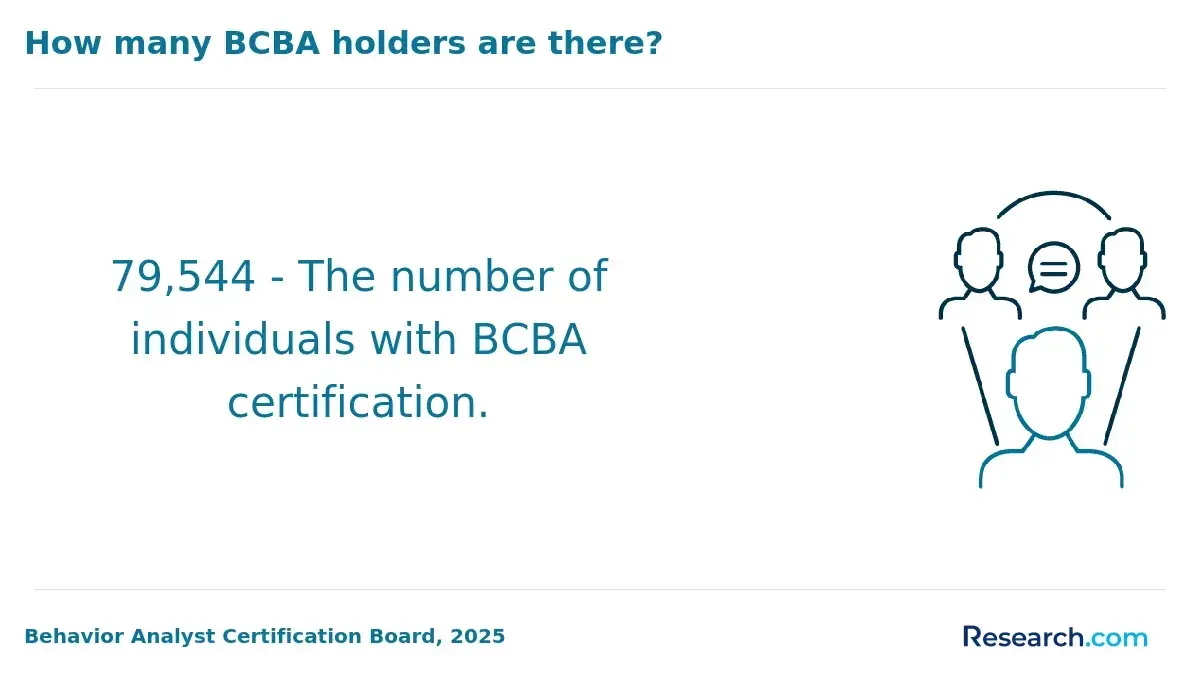
BCBA certification requires more than completing an online program. Candidates must satisfy education, coursework, supervised fieldwork, and examination requirements set by the Behavior Analyst Certification Board. Because requirements can change and may interact with state licensure rules, students should verify current standards directly before enrolling.
In general, candidates must earn a graduate degree in behavior analysis, education, psychology, or a related field from an accredited institution. They must also complete graduate coursework aligned with BACB expectations, often through a Verified Course Sequence (VCS) or another approved pathway that covers behavior analytic concepts, measurement, assessment, intervention, ethics, and professional practice.
Candidates must also complete at least 1,500 hours of supervised practical experience. These hours must be overseen by a qualified BCBA and documented according to BACB rules. Some students complete fieldwork while enrolled in graduate coursework, while others arrange intensive field placements or employer-supported supervision.
After meeting the education and fieldwork requirements, candidates must pass the BCBA Certification Examination. The exam evaluates knowledge of behavior analytic principles, assessment, intervention design, data-based decision-making, ethics, and professional conduct.
Certification checklist for working adults
- Confirm that your degree pathway is acceptable for BCBA eligibility.
- Verify that the program’s coursework meets BACB standards.
- Ask how fieldwork supervision is arranged, tracked, and documented.
- Check whether your state has separate licensure requirements for behavior analysts.
- Plan for exam preparation before the final term, not after graduation.
Many students explore online BCBA master's programs when they want a structured route that combines graduate study with certification-focused coursework.
According to the BLS Occupational Outlook Handbook, behavior analyst jobs are projected to grow by 22% over the decade, creating about 8,500 new openings annually. That projected demand makes online BCBA certification prerequisites for adults a practical pathway for professionals who want to move into applied behavior analysis without stopping work.
Online and campus BCBA programs can lead toward the same certification goal, but the student experience is different. Online programs emphasize flexibility and access, while campus programs may offer more structured schedules, face-to-face interaction, and in-person networking. The better option depends on your work schedule, learning style, location, and need for supervision support.
| Factor | Online BCBA Programs | Campus BCBA Programs |
| Schedule | Often uses asynchronous coursework, recorded lectures, and evening or weekend flexibility. | Usually requires attendance at set class times and on-campus sessions. |
| Access | Useful for students who live far from a university or cannot relocate. | Best for students who can commute or move near the institution. |
| Supervision | May require students to arrange local or employer-based supervised fieldwork. | May provide more direct access to campus-affiliated practicum sites. |
| Interaction | Relies on virtual meetings, discussion boards, group projects, and remote faculty contact. | Offers in-person faculty access, peer connection, and campus events. |
| Indirect costs | Can reduce commuting, housing, and relocation expenses, though tuition varies. | May involve transportation, parking, housing, or relocation costs. |
Online BCBA program benefits for working professionals are strongest when the student is self-directed and already has access to a suitable professional environment for fieldwork. Campus programs may be better for students who want more structure, prefer in-person discussion, or need help finding supervised practicum opportunities.
Both formats should be evaluated for accreditation and BACB alignment. A convenient format is not enough if the coursework or supervision pathway does not support certification eligibility.
The demand for qualified BCBA professionals remains high, with median salaries around $92,500 and top earners exceeding $145,000. That income potential is one reason many students prefer a format that allows them to keep working while completing requirements.
Applicants comparing distance-based programs can review Research.com’s guide to online applied behavior analysis degree programs.
A typical online BCBA curriculum is built around the competencies needed for applied behavior analysis practice and certification exam readiness. The goal is not only to teach theory but also to prepare students to assess behavior, design interventions, measure progress, and make ethical decisions in real service settings.
Core subjects commonly include behavior assessment, intervention techniques, data analysis, experimental design, and ethics. Students learn how to define behavior objectively, collect reliable data, identify environmental variables, evaluate intervention outcomes, and adjust plans based on evidence.
Common curriculum areas
- Foundations of behavior analysis: Principles of learning, reinforcement, punishment, stimulus control, and behavior change.
- Assessment: Functional behavior assessment, skill assessment, and interpretation of behavioral data.
- Intervention planning: Selecting evidence-based strategies and adapting them to individual needs.
- Measurement and research design: Data collection, visual analysis, single-case design, and treatment evaluation.
- Ethics and professionalism: Consent, scope of competence, client dignity, supervision, documentation, and professional responsibility.
- Specialized practice areas: Verbal behavior, pediatric interventions, developmental disabilities, organizational behavior management, and mental health applications.
Programs often use case studies to help students connect coursework to practice. For example, students may analyze a behavior support plan, review intervention data, or evaluate ethical issues in a school, clinic, or home-based service model.
Flexible pacing is a major advantage for working professionals. The average tuition for online BCBA programs is approximately $15,200, about 35% less than traditional in-person equivalents, according to the ABAI Program Accreditation Report 2025. Cost should still be evaluated carefully because tuition may not include textbooks, supervision, exam fees, or technology expenses.
Strong online programs also include exam preparation, instructor feedback, peer collaboration, and guidance on fieldwork documentation. Students should look for a curriculum that teaches applied judgment, not only terminology.
Admission requirements for online BCBA programs vary by institution and program type. Some programs are full master’s degrees in applied behavior analysis or a related field, while others are graduate certificate or coursework-only options intended for students who already hold an eligible graduate degree. Applicants should distinguish between admission to a school and eligibility for BCBA certification; those are related but not identical.
Programs commonly expect applicants to have academic preparation in behavior analysis, psychology, education, counseling, human services, or a related field. Applicants pursuing certification must make sure their degree and coursework meet Behavior Analyst Certification Board standards.
Typical application materials
- Official transcripts: Schools use transcripts to verify prior degree completion, prerequisite coursework, and GPA.
- Resume or CV: Professional experience in education, therapy, healthcare, social services, or disability support can strengthen an application.
- Statement of purpose: Applicants usually explain why they want to study applied behavior analysis and how the credential fits their goals.
- Letters of recommendation: Faculty, supervisors, or professional mentors may be asked to comment on readiness for graduate work.
- GRE scores: Standardized tests like the GRE are less commonly required but may still be requested by selective programs.
- Background check or disclosure: Because BCBAs often serve children, people with disabilities, and other vulnerable populations, programs may require criminal history disclosure or clearance.
Professional experience can also matter. Many programs expect applicants to understand the service environments where applied behavior analysis is used. Some programs require or support 1,000 to 1,500 supervised fieldwork hours, while others help students build those hours during enrollment.
Before applying, ask whether the program is designed for students with a bachelor’s degree, students who already hold a master’s degree, or both. Also ask whether fieldwork is embedded, optional, or entirely student-arranged. This prevents surprises after admission.
Online BCBA programs generally take 9 to 18 months to complete, depending on whether the student enrolls full time, part time, or in an accelerated format. Full-time students may finish within a year, while working professionals often choose part-time pacing closer to 18 months to manage employment, fieldwork, and family commitments.
Accelerated programs can shorten the timeline, but they are not always the best choice for working adults. A faster schedule may require heavier weekly reading, more assignments, more frequent live sessions, and less flexibility during fieldwork documentation or exam preparation.
Tuition and fees for online programs typically range from $6,000 to $15,000. The final cost depends on the institution, credit load, accreditation status, included student services, practicum support, and program length. Additional expenses may include textbooks, technology fees, supervision fees, application fees, background checks, and the BCBA certification exam, currently priced at $1,045.
Cost questions to ask before enrolling
- Is supervised fieldwork included in tuition, or is it billed separately?
- Does the school help students find qualified supervisors?
- Are exam preparation resources included?
- Are there additional fees for online learning platforms, graduation, or practicum placement?
- Can students pay per term, per credit, or through employer tuition assistance?
Selecting a program that bundles practicum supervision within tuition can reduce unexpected expenses and make the certification pathway easier to plan. However, students should confirm exactly what “supervision included” means, including who provides it, how often meetings occur, and how hours are documented.
The APBA Workforce Analysis 2025 reports an average 45% salary increase within one year for graduates entering the field from allied disciplines. While individual outcomes vary by employer, location, experience, and certification status, that reported increase helps explain why many professionals view BCBA preparation as a career investment rather than only an education expense.
BCBA certification can open roles in education, healthcare, autism services, behavioral health, disability support, research, and organizational consulting. The credential signals that a professional has met standards in behavior analytic coursework, supervised practice, and examination, which can qualify them for more advanced clinical and supervisory responsibilities.
Common career paths include:
- School behavior specialist: Supports students with behavioral needs, helps develop intervention plans, and collaborates with teachers, families, and special education teams.
- Clinical behavior analyst: Designs and monitors treatment plans for children or adults in clinics, homes, community programs, or telehealth-supported service models.
- Autism services supervisor: Oversees behavior technicians, reviews data, trains staff, and supports treatment fidelity.
- Healthcare consultant: Helps teams apply behavioral strategies to improve patient adherence, safety, or functioning.
- Research or program evaluation professional: Studies behavioral interventions, treatment outcomes, and service delivery models.
- Organizational behavior management consultant: Applies behavior analytic principles to employee performance, safety, training, and operational improvement.
The rise of hybrid BCBA programs, which combine online learning with in-person or site-based training, has increased accessibility for working professionals. This format can be especially useful for students who need online coursework but still want structured fieldwork experiences.
Enrollment growth reported by the Operations Army BCBA Program Survey 2025 reflects interest in formats that allow students to gain supervision hours while maintaining work commitments. Hybrid and online options may be particularly useful for professionals already employed in schools, clinics, or human services settings.
Career outcomes vary by work setting. Healthcare and private practice often offer higher earnings than education, while school-based roles may offer more predictable schedules or alignment with academic calendars. Continuing education is essential after certification because BCBAs must maintain competence, follow ethical standards, and stay current with evidence-based practice.
Board Certified Behavior Analysts have strong salary potential, but earnings vary by setting, experience, location, specialization, and responsibility level. National averages range from $60,000 to $85,000 annually. Entry-level BCBA professionals typically start at about $60,000, while those with over five years of experience or specialized certifications can earn $90,000 or more.
Clinical and private practice settings often pay more than educational or nonprofit settings, especially when the role includes supervision, program development, caseload management, or business responsibilities. School-based roles may offer different benefits, such as district schedules, public-sector benefits, or predictable academic calendars.
According to the 2025 BACB Demographic Profile, 47% of individuals certified via online programs were over 35 years old, compared to just 29% from traditional routes. This suggests that online applied behavior analysis education is especially useful for career changers and experienced professionals who need to keep working while preparing for certification.
Factors that influence BCBA pay
- Geographic Region: Urban and high-cost areas like California and New York offer earnings 10-20% above the national average.
- Employer Type: Private healthcare and specialized clinics generally pay more than schools or community programs.
- Advanced Credentials: Supervisory certificates or expertise in fields such as autism spectrum disorder treatment can increase earning potential.
- Experience level: BCBAs who manage teams, train staff, or oversee programs may earn more than entry-level practitioners.
- Practice area: Autism services, behavioral health, organizational behavior management, and private consulting can produce different salary ranges.
Online BCBA programs can support salary growth by allowing students to continue building job experience while completing academic requirements. However, salary gains are not automatic. Candidates should evaluate local demand, employer requirements, supervision quality, and licensure rules before estimating return on investment.
What Is the Job Outlook for BCBAs?
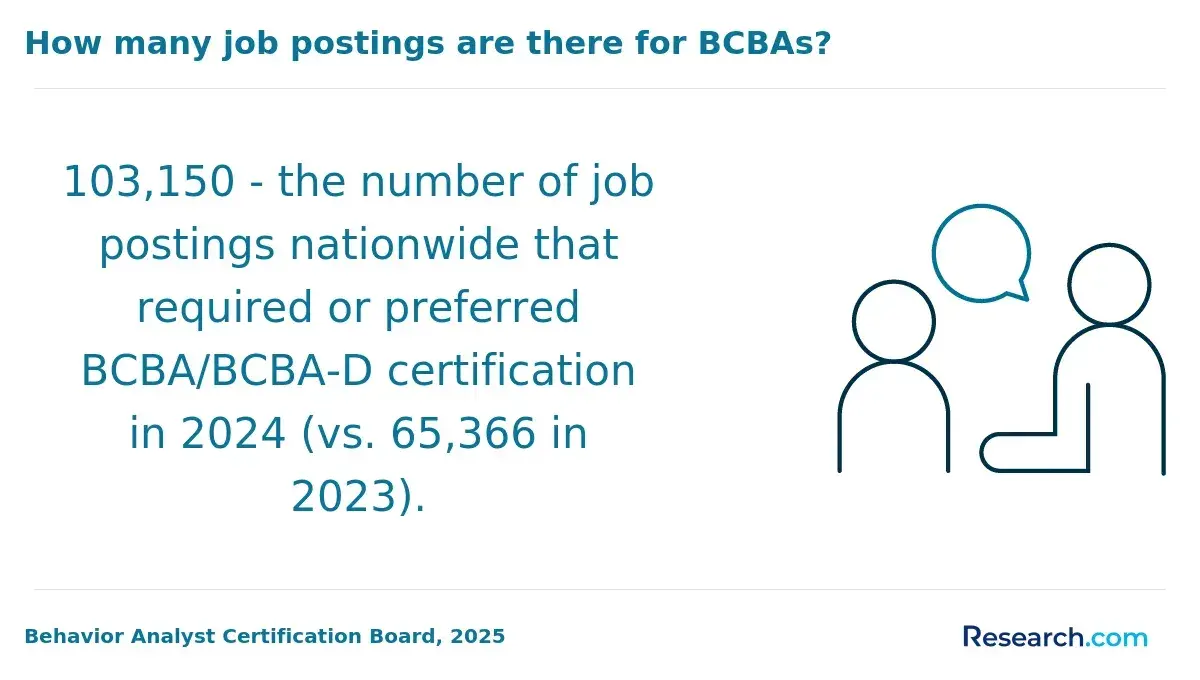
The job outlook for Board Certified Behavior Analysts is strong because applied behavior analysis is used across education, healthcare, autism services, social services, and organizational settings. Demand is especially visible in schools, clinics, community programs, and service providers that need professionals who can design interventions, supervise implementation, and evaluate behavioral data.
According to the Indeed ABA Job Market Report 2025, 92% of BCBA job postings prioritize candidates with verified online coursework from ABAI-accredited programs. That finding highlights the importance of choosing a reputable online pathway rather than assuming all distance programs carry the same weight with employers.
Employers often look for more than certification eligibility. They may prefer candidates with strong supervised fieldwork, experience with specific populations, documentation skills, team collaboration, and knowledge of evidence-based practices. Candidates who can explain how they used data to make treatment decisions may stand out in interviews.
Job market factors to evaluate
- Regional demand: Hiring conditions can vary significantly by state, metro area, and service system.
- Employer requirements: Some organizations require state licensure, specific experience, or experience with certain populations.
- Program reputation: Employers may value ABAI-accredited programs and verified coursework.
- Fieldwork quality: Supervision that includes feedback, case discussion, ethics, and data review can improve job readiness.
- Specialization: Pediatric intervention, organizational behavior management, and gerontology can influence job options and salary ranges.
For working professionals, online BCBA preparation can be a practical way to enter a growing field without pausing employment. The strongest candidates choose accredited, certification-aligned programs, secure high-quality supervision, and build applied experience before entering the job market.
Other Things You Should Know About Applied Behavior Analysis
Working professionals are drawn to online BCBA programs in 2027 due to their flexibility, the ability to balance work and study, cost-effectiveness, and access to updated resources and diverse networks. Online formats accommodate varied schedules and provide opportunities for career advancement without sacrificing current job responsibilities.
Yes, applied behavior analysis extends beyond clinical and educational environments. It is effectively applied in organizational behavior management, animal training, and even sports performance enhancement. These diverse applications utilize ABA principles to improve behaviors and outcomes in various professional and everyday settings.
Continuing education is vital for BCBAs to maintain certification and stay current with evolving research and best practices. It helps practitioners refine their skills, adopt new intervention methods, and comply with ethical standards. Many certification boards require periodic continuing education units to ensure ongoing professional competence.
Yes. To qualify for the BCBA exam, candidates must complete supervised fieldwork through the Behavior Analyst Certification Board (BACB), including at least 2,000 hours of supervised fieldwork or 1,500 hours of concentrated supervised fieldwork, plus defined supervision and documentation requirements.
- Is Pursuing BCBA Certification a Smart Investment? https://blossomabatherapy.com/blog/is-bcba-certification-worth-it
- How Long Does It Take to Become a BCBA® and Keep Learning? https://dobettercollective.com/how-long-does-it-take-to-become-a-bcba-and-keep-learning/
- Exploring the Roadmap to a Rewarding BCBA Career - apricott ABA https://www.apricott.com/resources/bcba-career-path-to-take
- What is the Average Salary of a BCBA? https://bluegemsaba.com/average-salary-bcba/
- The RBTs Dilemma: Can I Become a BCBA? - Big Dreamers ABA https://www.bigdreamersaba.com/blog/can-an-rbt-become-a-bcba
- Choosing Excellence: Discover the Best BCBA Programs Online | Brighter Strides ABA https://www.brighterstridesaba.com/blog/bcba-programs-online/
- What Is A Board Certified Behavioral Analyst (BCBA)? https://www.psychology.org/resources/bcba-meaning-career-overview/
- BCBA and ABA Salaries by State https://www.appliedbehavioranalysisedu.org/salaries/
- Best BCBA Programs Online for Success | Connect n Care ABA https://www.connectncareaba.com/blog/bcba-programs-online
- How to Become a Behavior Analyst https://onlinecounselingprograms.com/mental-health-careers/how-to-become-behavior-analyst-bcba/