2027 How to Find BCBA Programs That Match Your Career Goals

Co-Founder and Chief Data Scientist
The right BCBA program is not simply the one that is fastest, cheapest, or easiest to attend. It is the program that helps you meet Behavior Analyst Certification Board requirements, build supervised clinical competence, prepare for the certification exam, and move toward the setting where you actually want to work—schools, autism services, healthcare, private practice, research, or organizational behavior management.
This decision is especially important for career changers and working professionals. Online, hybrid, and campus-based programs can all be legitimate paths, but they differ sharply in accreditation status, fieldwork support, faculty access, exam preparation, cost, and specialization. A flexible program may still leave you responsible for finding your own qualified supervisor. A well-known university may not be the best fit if its curriculum or practicum model does not match your career goals.
This guide explains how to compare BCBA programs in a practical way: what certification means, which education requirements matter, how to verify accreditation, how online programs compare with campus options, what coursework to expect, how long programs take, what they cost, what admissions committees look for, and how BCBA training connects to jobs and salary potential.
Key Things You Should Know
- Programs accredited by the Behavior Analyst Certification Board (BACB) ensure curriculum rigor and meet the professional standards required for BCBA certification, a crucial step for career advancement.
- In 2025, approximately 70% of BCBA candidates selected programs aligning closely with their desired specialization areas, underscoring the importance of matching program focus with career goals.
- Choosing programs offering strong fieldwork opportunities and mentorship increases the likelihood of passing the BCBA exam, impacting job placement rates positively within six months post-certification.
What is a BCBA certification and why do employers require it?
A Board Certified Behavior Analyst certification is a professional credential awarded by the Behavior Analyst Certification Board. It shows that a practitioner has completed graduate-level training in behavior analysis, met supervised fieldwork expectations, and passed the BCBA examination. For employers, the credential is a way to confirm that a candidate has been trained to design, implement, monitor, and revise behavior-analytic interventions using ethical and data-based methods.
Employers often require the BCBA credential for clinical and supervisory roles because behavior analysts may be responsible for assessment, treatment planning, staff training, family consultation, progress monitoring, and compliance with professional standards. Schools, healthcare organizations, autism service providers, developmental disability agencies, and private practices use the credential to reduce risk and protect client outcomes.
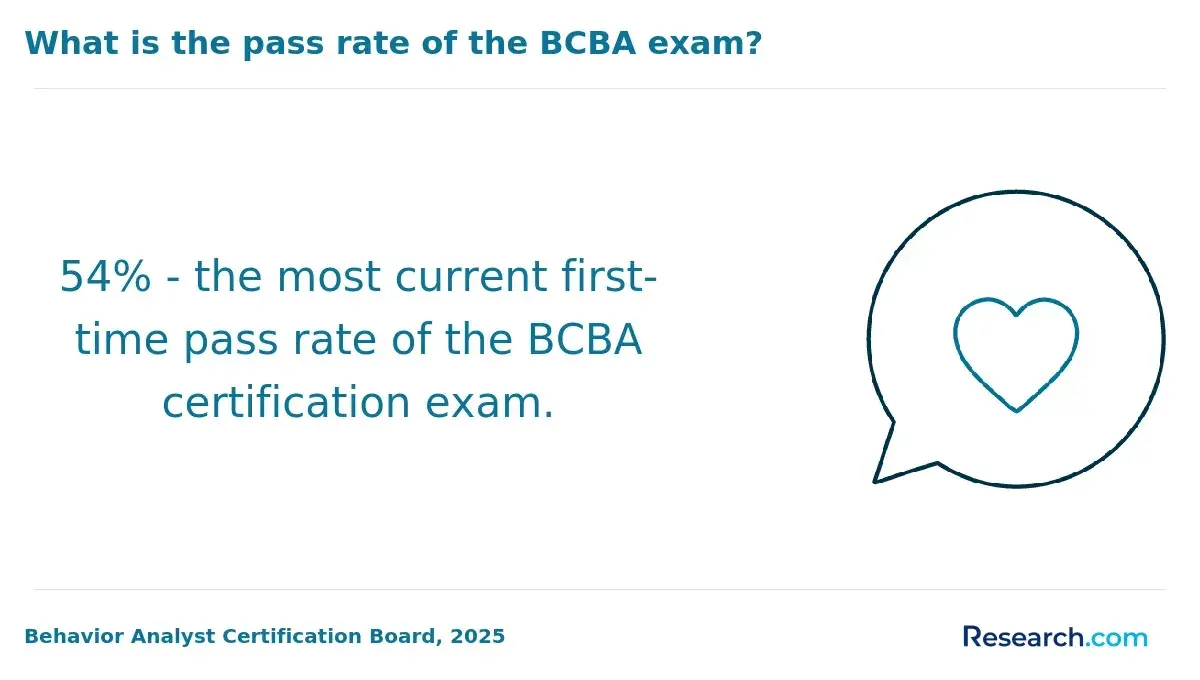
The certification process is demanding. Candidates must complete approved coursework, accumulate supervised practical experience, and pass a rigorous exam. The first-time pass rate declined to 54%, which reinforces why program quality, exam preparation, and supervision structure should be central parts of your decision.
BCBA roles can differ significantly by setting. A school-based BCBA may focus on behavior support plans, classroom consultation, and staff coaching. A clinical BCBA may work primarily with children with autism or individuals with developmental disabilities. A consultant may support families, agencies, or organizations. Because these paths require different strengths, candidates should evaluate bcba certification requirements for career advancement in BC or in any region where they plan to practice, and confirm that the program they choose supports their intended employment setting.
Students who need a flexible route can compare online BCBA college programs, but flexibility should never be the only factor. Confirm that the coursework aligns with certification requirements, that fieldwork expectations are clear, and that the program provides enough advising to keep you on track.
What are the education requirements to become a Board Certified Behavior Analyst?
To become a Board Certified Behavior Analyst in 2026, candidates must complete graduate-level education in behavior analysis, education, psychology, or a related field. A master's degree is the minimum credential accepted by the Behavior Analyst Certification Board. The coursework must align with BACB expectations, commonly through a Verified Course Sequence, and should cover ethics, behavioral assessment, intervention design, measurement, data analysis, research methods, and supervision-related competencies.
Education alone is not enough. After completing approved Board Certified Behavior Analyst programs in BC or elsewhere, candidates must also complete supervised practical experience. The BACB generally requires between 1,500 to 2,000 hours of supervised work under a qualified BCBA. These hours are where students learn to turn coursework into practice: conducting assessments, writing intervention plans, collecting and interpreting data, training caregivers or staff, and making ethical treatment decisions.
When reviewing programs, pay close attention to how fieldwork is handled. Some programs integrate supervision or help students locate practicum sites. Others provide only the academic coursework and require students to arrange supervision independently. That distinction can affect your timeline, total cost, and readiness for the certification exam.
Program outcomes can also signal academic strength. Recent data shows five ABA programs achieved 100% first-time BCBA pass rates, including California State University Northridge and Florida Institute of Technology (ABA Resource Center, BACB 2024 report). A high pass rate does not guarantee individual success, but it can indicate strong curriculum alignment, faculty support, admissions standards, and exam preparation.
Doctoral degree holders may have different experience requirements, but they still must complete BACB-approved coursework and pass the exam. Students comparing graduate options can review BCBA programs to understand how institutions differ by format, accreditation, cost, and outcomes.
Which BCBA programs are accredited by the BACB and how do you verify accreditation?
The most important step is to verify that a program's coursework meets current BACB requirements before enrolling. Do not rely only on marketing language such as “BCBA track,” “ABA concentration,” or “certification-focused.” A program may teach behavior analysis without fully satisfying eligibility requirements for the BCBA exam.
The BACB approves Verified Course Sequences that meet required coursework standards. To verify a program, use the BACB's Verified Course Sequence Directory and confirm the institution name, degree level, delivery format, and course sequence details. If anything is unclear, contact both the program and the BACB before committing tuition money.
ABAI accreditation is another valuable quality marker. Accreditation by the Association for Behavior Analysis International signals that a program has undergone an external review for academic rigor and professional alignment. Programs with both a BACB-approved Verified Course Sequence and ABAI accreditation may offer stronger assurance that the curriculum is built around recognized behavior-analytic standards.
Verification should include fieldwork as well as coursework. Ask whether supervision is embedded, optional, arranged through partner sites, or entirely the student's responsibility. A program can have appropriate coursework while still leaving you to find your own supervised hours, which may delay certification if qualified supervisors are limited in your area.
For example, the University of South Florida's online MA in ABA achieved a 94/100 score in a 2026 ranking due to its ABAI accreditation, flexible format, and embedded supervision (FlashGenius.net 2026 BCBA programs comparison). This example illustrates why accreditation, format, and supervision should be considered together rather than separately.
Students exploring affordable online ABA master's programs should verify every credential claim directly. A fast or affordable option is only useful if it keeps you eligible for certification and gives you access to the supervised experience you need.
Online BCBA programs can be comparable to campus-based programs when they use qualified faculty, BACB-aligned coursework, strong advising, and meaningful supervision support. Delivery mode alone does not determine quality. The better question is whether the program provides the academic structure, feedback, fieldwork access, and exam preparation you need to become competent and eligible for certification.
Online programs are often best for working adults, career changers, parents, military-connected students, and learners who do not live near a campus-based ABA program. They reduce commuting barriers and may offer asynchronous coursework. Ball State University's fully online, asynchronous BCBA-eligible master's program scored 84/100 in rankings, making it a top choice for employed students. Its strong cost-to-value is a benefit, though it lacks integrated supervision, which is a critical consideration for students who do not already have a fieldwork site.
Campus-based programs may offer easier access to faculty, in-person labs, local practicum partnerships, peer cohorts, and direct supervision. These advantages can matter for students who learn best through live discussion and immediate feedback. However, campus programs may require relocation, fixed class schedules, commuting, and less flexibility for full-time employees.
Key comparison points
- Supervision: Determine whether supervision is built in, supported through placements, or left to the student.
- Flexibility: Online programs may offer asynchronous learning, while campus programs often require fixed attendance.
- Faculty access: Campus programs may provide more face-to-face mentoring, but strong online programs can still offer regular virtual advising.
- Cost: Compare tuition, fees, travel, technology expenses, and any separate supervision costs.
- Professional network: Campus programs may have regional employer ties, while online programs may serve students across a wider geography.
- Exam preparation: Review pass rates, review seminars, practice exams, and faculty support rather than assuming one format is better.
BCBA exam outcomes are more closely tied to accreditation, curriculum quality, faculty expertise, student support, and supervised practice than to whether classes are online or in person. Students comparing online master's in applied behavior analysis programs should ask detailed questions about supervision, fieldwork documentation, and exam support before choosing a program.
A BCBA master's degree program combines graduate coursework in applied behavior analysis with supervised practical training. Programs typically emphasize assessment, intervention, ethics, research, measurement, and data-based decision-making. Students should expect coursework that prepares them not only to pass the certification exam but also to make defensible clinical decisions in real service settings.
Common courses include functional behavior assessment, functional analysis, behavior change procedures, single-subject research design, data collection, experimental analysis of behavior, ethics, verbal behavior, consultation, supervision, and behavior support planning. Many programs also include research methods so students can evaluate intervention evidence and interpret client progress accurately.
The curriculum usually applies behavioral principles across multiple populations and environments. Students may study interventions for children with autism, individuals with developmental disabilities, adults receiving behavioral health services, school-based behavior support, social skills training, caregiver coaching, and organizational behavior management. Some programs offer electives in areas such as geriatric populations or trauma-informed care.
Supervised practicum is a major part of preparation. A BCBA master's degree program involves about 1,500 hours of supervised practicum combined with coursework that meets Behavior Analyst Certification Board requirements. Practicum settings may include schools, clinics, homes, hospitals, residential facilities, community programs, or private agencies. The quality of these experiences matters because students must learn to assess behavior, design interventions, monitor progress, train others, and adjust plans based on data.
Ethics should be threaded throughout the curriculum, not isolated in one course. BCBAs regularly face decisions involving consent, scope of competence, cultural responsiveness, data integrity, treatment intensity, caregiver expectations, and client dignity. Strong programs give students repeated practice applying ethical standards to realistic cases.
Cost and comprehensiveness also matter. Central Washington University is recognized for one of the most affordable BCBA-eligible graduate ABA programs in the US that combines affordability with comprehensive training. According to Cross River Therapy 2025 best BCBA programs list, affordability and thorough preparation are important factors when selecting a program.
Most BCBA graduate programs take between 1.5 to 3 years to complete, depending on enrollment pace, course sequencing, fieldwork availability, and whether supervision is built into the program. Full-time students may finish coursework faster, while part-time students often need more time but can continue working while enrolled.
The timeline is not determined by classes alone. Candidates must also complete at least 1,500 hours of supervised fieldwork, and arranging those hours can become the biggest bottleneck. A student who finishes coursework quickly but lacks an approved supervision site may still be delayed. Conversely, a program with structured supervision support can help students move more efficiently through certification requirements.
Simmons University, for example, offers an ABAI-accredited program with integrated supervision support, helping students efficiently meet fieldwork requirements. Its strong 88/100 rating in the 2026 FlashGenius.net BCBA programs comparison reflects the advantage of structured supervision in expediting certification.
Tuition varies widely. Many programs cost from $10,000 to $30,000 for full study, depending on institution type, delivery format, residency status, university reputation, and included services. Students should also ask about fees that may not appear in the headline tuition figure, including technology fees, clinical placement fees, supervision costs, textbooks, background checks, liability insurance, and exam-related expenses.
Cost and timeline questions to ask before enrolling
- Is supervision included in tuition, offered for an extra fee, or arranged independently?
- Can fieldwork begin during coursework, or only after certain classes are completed?
- Are courses offered every term, or can limited scheduling delay graduation?
- Does the program allow part-time enrollment without losing access to required courses?
- Are there additional fees for practicum placement, advising, or exam preparation?
- What happens if a student changes jobs or loses access to a fieldwork site?
Online formats can provide flexibility, but they may extend completion beyond two years if students take fewer courses per term or need more time to complete fieldwork. Accelerated programs can shorten the academic timeline, but they usually require heavier course loads and more upfront planning. The best choice is the one that fits your schedule while keeping you on track for BACB requirements.
Admission requirements for BCBA graduate programs usually start with a bachelor's degree. Many applicants come from psychology, education, special education, human services, social work, or related fields, but some programs consider career changers from other backgrounds if they can show academic readiness and a clear professional goal.
A minimum GPA of around 3.0 on a 4.0 scale is common. Programs may also ask for transcripts, recommendation letters, a resume, a statement of purpose, and sometimes an interview. While some programs still request GRE scores, a growing number are waiving this requirement as of 2026.
Prerequisite expectations vary. Some programs want prior coursework in behavior analysis, research methods, statistics, psychology, or education. Others admit students without extensive ABA coursework but require leveling classes. Applicants switching fields should ask whether their previous coursework satisfies prerequisites or whether additional classes will be required before they can begin the core sequence.
Experience in applied behavior analysis can strengthen an application, especially if the applicant has worked as a behavior technician, teacher, paraprofessional, case manager, therapist, or caregiver support professional. Some programs value documented supervised experience hours in ABA settings because it shows that the applicant understands the demands of the field. International applicants may need to demonstrate English proficiency through exams such as TOEFL or IELTS.
A strong personal statement should do more than say the applicant wants to help people. It should explain why behavior analysis is the right discipline, which populations or settings the applicant hopes to serve, how the program's structure fits those goals, and how the applicant plans to manage graduate study and fieldwork. Recommendation letters are strongest when they speak to analytical thinking, professionalism, ethical judgment, communication, and readiness for clinical training.
Graduates from programs with first-time BCBA exam pass rates exceeding national averages by 20-40 percentage points, according to ABAMastersPrograms.org 2026 update, tend to gain access to more competitive clinical roles. Admission standards are only one factor, but programs that select prepared students and provide rigorous training may produce stronger certification and employment outcomes.
Board Certified Behavior Analysts work in clinical, educational, administrative, research, and organizational roles. The most common path is applied clinical practice, especially with individuals with autism or developmental disabilities, but the credential can support several career directions depending on training, supervision, and specialization.
In schools, BCBAs may conduct functional behavior assessments, develop behavior intervention plans, train teachers and paraprofessionals, support individualized education plans, and consult on classroom systems. In clinical agencies, they may supervise behavior technicians, oversee treatment plans, analyze progress data, meet with families, and coordinate care with other professionals. In early intervention settings, BCBAs help build communication, adaptive, social, and daily living skills during important developmental periods.
BCBAs can also move into leadership roles. Clinical directors, program managers, and supervisors are responsible for staff training, quality assurance, documentation, ethical compliance, caseload management, and service model design. Some behavior analysts pursue research or academic roles, where they contribute to evidence-based practice, teach future practitioners, or evaluate intervention outcomes. Others apply behavior analysis in corporate or organizational settings to improve performance, safety, training, and workplace systems.
Program choice can shape career readiness. A student who wants a school-based role should look for coursework and fieldwork involving consultation, classroom systems, and collaboration with educators. A student focused on autism services should prioritize intensive clinical supervision and experience with assessment, treatment planning, and caregiver training. A student interested in organizational behavior management should look for faculty expertise and electives in that area.
For instance, the University of Texas at Austin reports a 75% BCBA exam pass rate for its ABA master's graduates with in-state tuition around $12,028, highlighting a strong value proposition for students focusing on autism and developmental disabilities.
Before enrolling, ask programs where graduates work, which employers recruit from the program, what practicum sites are available, and whether alumni can speak to career outcomes. The best BCBA program for you is the one that prepares you for the role you plan to pursue, not just the one that satisfies minimum coursework requirements.
The job outlook for Board Certified Behavior Analyst professionals in the United States is strong, supported by demand for applied behavior analysis services in healthcare, education, autism services, developmental disability programs, and private practice. Although the U.S. Bureau of Labor Statistics does not track BCBA roles specifically, industry estimates predict a growth rate exceeding 20% through the late 2020s, driven largely by increased awareness of behavioral interventions for autism spectrum disorder and other developmental conditions.
Salary potential depends on experience, location, employer type, caseload responsibility, supervisory duties, and specialization. Entry-level BCBAs generally earn between $50,000 and $65,000 annually. Mid-career salaries range from $70,000 to $90,000. Senior professionals, clinical leaders, or consultants often surpass $100,000. Urban centers and specialized clinical environments tend to offer higher pay, although cost of living and workload expectations should also be considered.
Higher salary potential often comes with greater responsibility. Senior BCBAs may supervise multiple technicians, manage complex cases, train staff, oversee compliance, develop clinical systems, or consult across programs. Private practice and consulting can offer more autonomy, but they may also require business development, billing knowledge, insurance familiarity, and strong risk management practices.
Choosing an accredited applied behavior analysis program with strong practicum and research components can improve employability. For example, the University of South Florida's online ABA MA program boasts an 89% BCBA exam pass rate, exceeding the national average. This program's emphasis on practicum seminars and research opportunities prepares candidates effectively for diverse roles, increasing career stability and earning potential.
Students should use salary data carefully. A high advertised salary does not always reflect entry-level pay, regional variation, billable-hour expectations, or the difference between employee and contractor roles. When evaluating career return on investment, compare total program cost, supervision access, exam outcomes, local demand, and the types of roles graduates actually obtain.
How should you evaluate and choose between different BCBA programs?
Choose a BCBA program by starting with certification eligibility, then narrowing your options by supervision support, outcomes, cost, format, faculty expertise, and career fit. A program that is convenient but weak in supervision may slow your progress. A program with strong academics but poor flexibility may be unrealistic if you work full time. The best choice balances requirements, quality, affordability, and your intended practice setting.
First, confirm that the curriculum aligns with BACB requirements and covers behavior assessment, intervention design, ethics, measurement, research methods, and data analysis. Then review outcomes. Programs with exam pass rates between 70-90% often emphasize evidence-based practice and strong data analysis training. Leading programs near 90% pass rates often prioritize intensive mentorship during clinical placements, which can help students build confidence and competence before taking the exam.
Next, evaluate supervision. Ask who provides supervision, how frequently students receive feedback, whether placements are guaranteed or competitive, and whether supervisors have experience in your target area. Effective mentorship should include observation, performance feedback, ethical discussion, case conceptualization, and review of data-based decisions—not just signature collection for hours.
Cost should be evaluated in full, not only by tuition. Include fees, textbooks, supervision costs, travel, lost work time, and the possibility of needing extra time if courses or fieldwork are delayed. A cheaper program may become more expensive if it does not help you secure fieldwork. A more expensive program may be worth considering if it includes structured supervision, strong advising, and better exam support.
Practical BCBA program selection checklist
- Verify BACB coursework alignment before applying.
- Check whether the program has ABAI accreditation or other recognized quality indicators.
- Review first-time BCBA exam pass rates and ask how the program supports exam preparation.
- Confirm whether supervision is embedded, supported, or fully independent.
- Ask where students complete fieldwork and whether placements match your career goals.
- Compare total cost, including supervision and fees.
- Evaluate faculty expertise in your preferred setting, such as schools, autism services, research, or organizational behavior management.
- Look for advising support, cohort structure, alumni access, and employer connections.
- Choose a format—online, hybrid, or campus-based—that you can realistically complete.
Avoid choosing based only on speed, tuition, or convenience. The strongest BCBA program is the one that keeps you eligible for certification, helps you complete quality supervised fieldwork, prepares you for the exam, and gives you the practical skills needed for ethical, effective behavior-analytic practice.
Other Things You Should Know About Applied Behavior Analysis
Experience in fields such as education, psychology, or social work can enhance your understanding of behavior analysis principles. These backgrounds offer insights into human behavior and can provide valuable context for applying BCBA methodologies, ultimately strengthening your career in behavior analysis.
BCBA programs require monthly fieldwork logs, supervisor verification forms, and a final Fieldwork Verification Form aligned with the BACB’s supervised fieldwork standards. Candidates must document at least 2,000 supervised hours, with supervision provided by an approved BCBA supervisor under current BACB rules.
Supervision during BCBA fieldwork involves regular, direct observation and guidance by a qualified BCBA supervisor. The BACB requires a minimum number of supervised hours to ensure that trainees gain hands-on experience applying behavior analysis techniques under professional oversight. This supervision is critical for developing competency and meeting certification standards.
- Top Online Bachelor's in Behavior Analysis https://www.appliedbehavioranalysisedu.org/bachelors-in-behavior-analysis-online/
- Unlocking the Earning Potential of Behavior Analysts in the U.S. - apricott ABA https://www.apricott.com/resources/average-bcba-salaries
- BCBA Job Outlook 2025 Shows Strong Growth and Demand https://blossomabatherapy.com/blog/bcba-job-outlook
- How Long Does It Take to Become a BCBA® and Keep Learning? https://dobettercollective.com/how-long-does-it-take-to-become-a-bcba-and-keep-learning/
- Best BCBA Career Path To Take: Ultimate Guide https://www.crossrivertherapy.com/behavioral-analysts/best-bcba-career-path
- Master of Science in Applied Behavior Analysis (ABA) https://tsengcollege.csun.edu/programs/ABA/admission-requirements
- The Best ABA Programs for BCBA Certification https://www.abaresourcecenter.com/post/best-aba-programs-for-bcba-certification
- Abamastersprograms https://ABAMastersPrograms.org
- What to Look for When Searching for Your Next BCBA Job https://brightpathwaysaba.com/what-to-look-for-when-searching-for-your-next-bcba-job/
- Average BCBA Salaries | Grateful Care ABA https://www.gratefulcareaba.com/blog/average-bcba-salaries