2027 Online Cybersecurity Degrees That Prepare Students for Security Roles in Business and Government

Co-Founder and Chief Data Scientist
Choosing an online cybersecurity degree is really a career-planning decision: you are weighing cost, time, technical depth, and employer credibility. Demand makes the choice timely. The U. S. Bureau of Labor Statistics projects information security analyst employment to grow 29% from 2024 to 2034, much faster than average. This guide is for career changers, working IT professionals, military-affiliated students, and first-time college students who want security roles in business or government. You will learn how degrees differ, what they cost, which credentials matter, and how to choose a program that fits your target role.
Key Things You Should Know
- For most business and government cybersecurity roles, a regionally accredited bachelor's degree plus hands-on labs and aligned certifications is the most flexible starting point; master's degrees usually make more sense for leadership, architecture, risk, policy, or specialized technical roles.
- Online format is not the main credibility issue; accreditation, curriculum depth, faculty expertise, lab access, internship support, transfer credit rules, and employer recognition matter more than whether classes are remote or campus-based.
- Cybersecurity pay can be strong but is not automatic: the BLS reported a $124,910 median annual wage for information security analysts in May 2024, while actual offers vary by clearance eligibility, location, experience, sector, and technical specialization.
What is an online cybersecurity degree and how does it prepare students for security roles?
An online cybersecurity degree is a college program delivered fully or mostly through distance learning that teaches students how to protect networks, software, cloud systems, data, and organizations from digital threats. The curriculum usually combines computer science, information technology, risk management, law, ethics, and security operations. A strong program does not only teach tools; it trains students to think like defenders, analysts, auditors, and incident responders.
For business roles, cybersecurity programs often emphasize risk reduction, compliance, data protection, cloud security, identity management, and communication with nontechnical leaders. For government roles, programs may also emphasize secure systems, digital forensics, intelligence support, critical infrastructure, policy, privacy, and the documentation standards needed in regulated environments.
The degree prepares students by building three layers of capability. First, it develops technical foundations such as operating systems, networking, scripting, databases, and system administration. Second, it adds specialized security skills such as threat detection, vulnerability assessment, cryptography, incident response, and secure architecture. Third, it teaches professional judgment: how to prioritize risks, document findings, follow laws and policies, and explain technical problems to managers, auditors, legal teams, or public-sector stakeholders.
Online cybersecurity degrees are especially useful for working adults because many programs offer asynchronous courses, evening deadlines, accelerated terms, or part-time plans. However, the format requires discipline. Students should expect weekly labs, reading, discussion boards, projects, exams, and group work. The best fit is usually someone who can study independently but still wants a structured academic path, faculty feedback, and a credential recognized beyond a short bootcamp or vendor course.
Before choosing this path, be clear about the role you want. A student targeting security operations may need more networking, Linux, SIEM, and incident response practice. A student targeting governance, risk, and compliance may need more auditing, privacy, policy, and business communication. A student targeting government work may need to think early about citizenship requirements, background checks, and whether the program supports internships, public-sector hiring pathways, or security clearance preparation.
How do online cybersecurity programs compare to campus-based options for training and credentials?
Online and campus-based cybersecurity programs can lead to similar credentials when they are offered by accredited institutions and use the same academic standards. The real comparison is not "online versus real school." It is whether the program gives you enough structure, hands-on practice, support, and employer-relevant evidence of skill.
The table below summarizes the most important differences to compare. Use it to decide which format fits your schedule, learning style, and career goals rather than assuming one format is automatically better.
| Comparison point | Online cybersecurity degree | Campus-based cybersecurity degree | Best fit |
| Schedule | Often asynchronous or hybrid, with more flexibility for work and family obligations | Usually fixed class times with in-person labs or meetings | Online works better for working adults; campus works better for students who need daily structure |
| Hands-on labs | Delivered through virtual machines, cloud labs, cyber ranges, or remote lab environments | May include physical labs, networking equipment, and face-to-face troubleshooting | Either can work if labs are frequent, assessed, and aligned with real tools |
| Networking | Depends heavily on virtual events, faculty access, alumni groups, and career services | May provide easier access to campus clubs, career fairs, and local employers | Campus may help traditional students; online can still be strong if career services are proactive |
| Credential recognition | Strong when the institution is accredited and the transcript does not signal a lower academic standard | Strong when the school has recognized programs, industry ties, and solid outcomes | Accreditation and outcomes matter more than delivery mode |
| Cost control | May reduce relocation, commuting, and housing costs, though technology and online fees can apply | May include higher living costs, parking, commuting, or campus fees | Online is often more practical for students who cannot relocate |
Online learning can be a smart choice when you already have some IT exposure, need to keep earning income, or want a school outside your local area. It may be a weaker fit if you need close in-person mentoring, struggle with self-paced work, or want access to local campus labs and clubs every week.
Do not judge a program by format alone. Ask admissions staff and faculty specific questions before enrolling. The answers will tell you whether the program is designed for cybersecurity practice or simply built around general IT coursework.
- How many courses include hands-on labs, and what tools or lab platforms are used?
- Does the program map courses to certifications such as Security+, Network+, CySA+, CISSP domains, or cloud security credentials?
- Are students required to complete a capstone, internship, practicum, portfolio, or applied project?
- What career services are available to online students, including resume reviews, mock interviews, employer events, and federal hiring guidance?
- Can online students join cybersecurity clubs, capture-the-flag teams, cyber defense competitions, or faculty research projects?
What types of online cybersecurity degrees are available and which level do I need?
Online cybersecurity degrees are available at several academic levels. The right level depends on your current education, work experience, target role, and how quickly you need to enter the field. A shorter credential may be enough for a current IT professional, while a bachelor's or master's degree may be more useful for advancement, government eligibility, or long-term mobility.
The table below compares common degree options. It is designed to help you match the credential to your career stage instead of choosing the highest or cheapest option by default.
| Degree level | Typical student | Common focus | Roles it may support | Decision guidance |
| Undergraduate certificate | Student exploring cybersecurity or an IT worker adding focused skills | Security fundamentals, networking, risk, basic defense tools | IT support with security duties, junior security support, help desk to SOC transition | Useful as a low-commitment start, but may not satisfy degree preferences for many analyst roles |
| Associate degree | First-time college student or career changer seeking an affordable entry point | Networking, systems, introductory programming, security basics | Technical support, network support, junior security technician | Good if credits transfer into a bachelor's program; weaker if transfer pathways are unclear |
| Bachelor's degree | Student seeking broad eligibility for business, contractor, or government roles | Security operations, systems, networks, forensics, policy, cloud, risk | Security analyst, SOC analyst, vulnerability analyst, cyber risk analyst, systems security specialist | Often the most versatile option for long-term cybersecurity careers |
| Graduate certificate | Professional with a bachelor's degree who needs targeted upskilling | Governance, cloud security, digital forensics, incident response, security management | Specialized analyst, security lead, compliance analyst, technical manager | Best when you already have a degree and need a narrower credential |
| Master's degree | IT professional, analyst, officer, manager, or career changer with a bachelor's degree | Advanced security architecture, leadership, policy, analytics, secure engineering | Security engineer, security architect, cyber manager, risk manager, federal contractor roles | Best for advancement or specialization; not always necessary for entry-level work |
| Doctoral degree | Researcher, senior leader, academic, or policy specialist | Research methods, advanced computing, cyber policy, systems assurance | Research scientist, professor, senior strategist, high-level consulting roles | Usually unnecessary unless the goal requires research expertise or academic credentials |
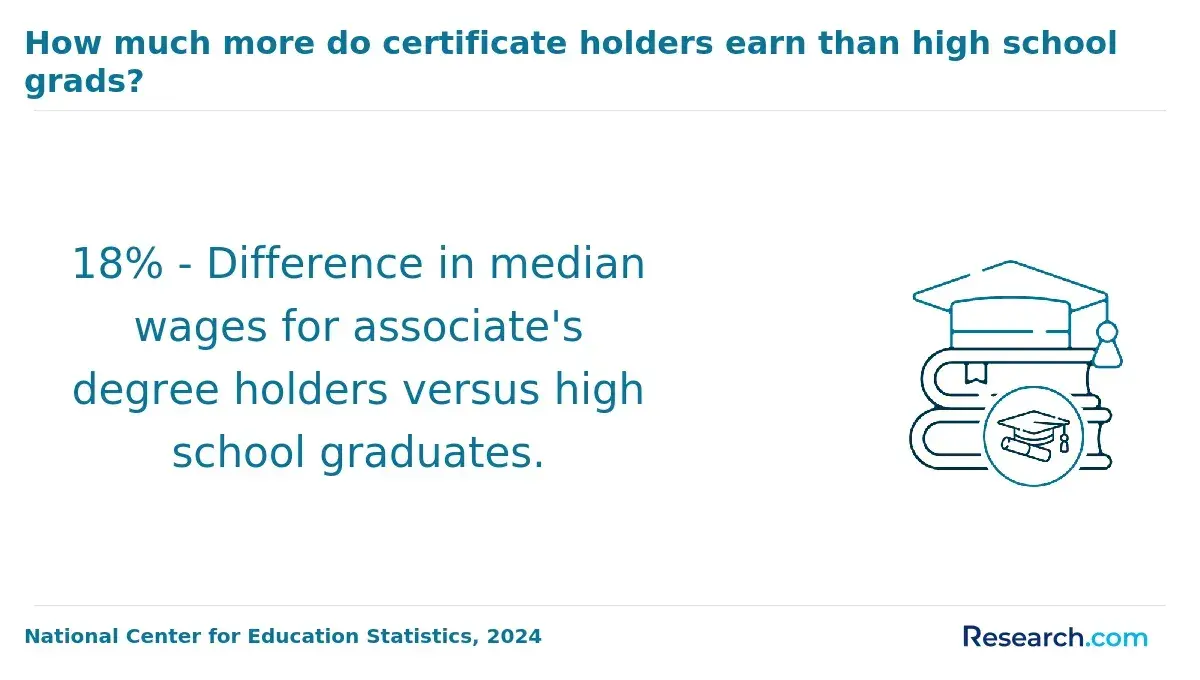
A bachelor's degree is usually the safest all-purpose choice for students who do not yet have a degree. An associate degree can be a cost-effective first step if it transfers cleanly. A master's degree is better for students who already have professional experience or want to move into leadership, architecture, security engineering, policy, or risk management.
Students interested in emerging areas should also compare adjacent technical programs. For example, a blockchain degree online may be relevant for learners targeting fintech security, smart-contract auditing, digital asset compliance, or cryptographic systems, but it should not replace foundational cybersecurity training for broader security roles.
Common mistake: choosing a degree level based only on speed. A short program may help you start learning, but if target employers commonly ask for a bachelor's degree, you may face avoidable barriers. The better approach is to review job postings for your target role and note which requirements appear repeatedly.
How can I verify that an online cybersecurity program is properly accredited and respected?
Accreditation is one of the most important checks for an online cybersecurity degree. It affects credit transfer, graduate school eligibility, employer confidence, federal financial aid access, and sometimes government contractor screening. A program can be online and respected, but only if the institution and curriculum meet recognized standards.
There are two main layers to understand. Institutional accreditation evaluates the college or university as a whole. Programmatic accreditation or recognition evaluates a specific program or academic unit. In cybersecurity, the most relevant signals may include regional institutional accreditation, ABET accreditation for certain computing programs, and recognition as a National Center of Academic Excellence in Cybersecurity by the National Security Agency, often called the NSA CAE designation. The CAE designation is not the same as accreditation, but it can signal that a program maps to cybersecurity knowledge units valued in government and defense-related contexts.
Use the following steps before you apply or pay a deposit. This process helps you avoid diploma mills, weak online programs, and credits that may not transfer later.
- Search the school in the U.S. Department of Education's Database of Accredited Postsecondary Institutions and Programs to confirm institutional accreditation.
- Check the accreditor's name on the school website and verify it directly with the accreditor, not only with marketing pages.
- Look for program-level signals such as ABET accreditation where applicable, NSA CAE designation, dedicated cybersecurity faculty, and clearly listed security courses.
- Ask whether online students earn the same diploma and transcript wording as campus students in the same program.
- Review transfer credit policies, prior learning assessment rules, and whether credits can apply to a future bachelor's or master's degree.
- Request career outcome information, but treat employment and salary claims carefully unless the school explains the methodology and sample size.
Several red flags deserve attention. Be cautious if a school avoids naming its accreditor, pressures you to enroll immediately, advertises guaranteed jobs or guaranteed salaries, hides total costs, offers unusually large credit awards without evaluation, or has cybersecurity courses that are mostly theory with little technical practice. A respected program should be able to explain its curriculum, assessment methods, faculty qualifications, and student support without vague promises.
For government-oriented students, respectability also includes alignment with public-sector hiring realities. Some federal, defense, or contractor roles may prefer U.S. citizenship, clearance eligibility, specific certifications, or experience in addition to a degree. The degree can help, but it does not bypass background checks, agency-specific requirements, or competitive hiring processes.
What core courses and technical skills are typically taught in online cybersecurity programs?
Online cybersecurity programs usually begin with computing foundations and then move into specialized security topics. This matters because students who skip the fundamentals often struggle later. You cannot secure networks, cloud platforms, applications, or databases effectively if you do not understand how they work.
The table below shows common course areas and the practical skills they are meant to build. Course names vary by school, but the underlying competencies are often similar.
| Course area | What students usually learn | Why it matters for security roles |
| Networking and systems | TCP/IP, routing, operating systems, virtualization, endpoint configuration | Security analysts need to recognize normal and abnormal activity across systems |
| Programming and scripting | Python, PowerShell, Bash, secure coding basics, automation | Scripting helps analysts automate tasks, parse logs, and understand software risk |
| Security operations | Monitoring, alerts, SIEM tools, incident triage, escalation, documentation | These skills support SOC analyst and incident response roles |
| Digital forensics | Evidence handling, disk and memory analysis, log review, investigation methods | Forensics supports breach investigations, legal defensibility, and government work |
| Risk and compliance | Frameworks, controls, audits, privacy, policy, business risk communication | Many business and government roles require translating security issues into organizational risk |
| Cloud and application security | Identity, access management, secure deployment, vulnerability testing, DevSecOps basics | Modern organizations rely heavily on cloud and software systems that must be secured continuously |
| Cryptography and secure architecture | Encryption concepts, key management, secure design, trust models | These topics support advanced engineering, architecture, and data protection roles |
Current technology trends are also changing what students should look for. AI-assisted attacks, automated phishing, cloud misconfiguration, ransomware, identity-based compromise, and software supply chain risk all increase the need for practical defense skills. Programs do not need to chase every new tool, but they should teach durable concepts and show how automation, analytics, and AI affect security work.
Students who want to combine security with machine learning, automation, or AI governance may compare cybersecurity master's options with adjacent programs such as the cheapest online masters in artificial intelligence. That comparison can be useful when the target role involves security analytics, AI risk, model protection, or automated threat detection.
A strong online program should include applied work, not only exams. Look for assignments that require students to configure systems, analyze logs, write reports, assess vulnerabilities, build security plans, or complete capstone projects. These deliverables can become portfolio evidence for interviews, especially for students without years of security experience.
To get the most from the curriculum, students should build a simple portfolio as they progress. The portfolio does not need to reveal sensitive lab details, but it should show how you think and communicate.
- Save sanitized incident reports, risk assessments, network diagrams, and security policy samples from coursework.
- Document lab environments, tools used, problem statements, and lessons learned without publishing passwords, exploit details, or private data.
- Practice explaining technical findings in plain language for managers, auditors, or agency stakeholders.
- Map completed courses and projects to job posting requirements so you can identify gaps before graduation.
What are the typical admissions requirements and prerequisites for online cybersecurity degrees?
Admissions requirements vary by school and degree level, but most online cybersecurity programs look for evidence that students can handle technical coursework. Some programs are beginner-friendly, while others assume prior college math, programming, networking, or professional IT experience.
The table below outlines common admissions expectations by degree level. Use it to estimate your readiness and identify prerequisites before applying.
| Program level | Common admissions requirements | Typical prerequisites | Best preparation move |
| Certificate | Application, transcripts, sometimes a minimum GPA or work background | Basic computer literacy; some programs prefer IT experience | Take an introductory networking or computer systems course if you are new to IT |
| Associate degree | High school diploma or equivalent, placement tests or college readiness review | Basic math, reading, and technology skills | Confirm whether courses transfer to a bachelor's program |
| Bachelor's degree | High school or transfer transcripts, GPA review, sometimes essays or test-optional policies | College algebra, introductory computing, sometimes programming | Use transfer credits strategically and complete math prerequisites early |
| Master's degree | Bachelor's degree, transcripts, resume, statement of purpose, recommendations in some programs | Often requires computing, IT, engineering, math, or related experience; bridge courses may be available | Ask whether non-technical applicants must complete foundation courses before graduate security courses |
| Doctoral degree | Graduate degree or strong technical background, research goals, faculty fit, writing samples in some programs | Advanced computing, research methods, statistics, or specialized security experience | Contact faculty and evaluate whether the program supports your research area |
Career changers should pay close attention to bridge requirements. A master's program that accepts non-technical applicants may still require foundation courses in networking, programming, databases, or operating systems. That is not necessarily a bad thing. It can prevent students from entering advanced security courses without the technical base needed to succeed.
Before applying, gather the information schools use to evaluate your file. This keeps you from missing deadlines or choosing a program that is not aligned with your background.
- Official transcripts from all colleges attended, including community colleges and military training records if applicable
- A current resume showing IT, military, business, compliance, audit, or technical experience
- A statement of purpose that names your target role and explains why cybersecurity is the right path
- Documentation for transfer credits, professional certifications, prior learning, or employer training
- Questions for admissions about prerequisite waivers, conditional admission, and foundation courses
Common mistake: assuming that "no GRE" or "no programming required" means the program will be easy. Cybersecurity is technical, even when a role is focused on policy or compliance. Students without an IT background should plan extra time for networking, Linux, scripting, and troubleshooting practice.
How long do online cybersecurity degrees take to complete and what do they cost?
Completion time depends on degree level, transfer credits, course load, term length, and whether the program is self-paced, cohort-based, or semester-based. Cost depends on tuition, fees, books, lab platforms, certification exam vouchers, technology requirements, and the number of credits you need after transfer evaluation.
As a benchmark, College Board's 2024-25 data listed average published tuition and fees of $4,050 for public two-year in-district colleges, $11,610 for public four-year in-state institutions, and $43,350 for private nonprofit four-year institutions. These are not cybersecurity-specific prices and do not include every online fee or living cost, but they help students evaluate whether a quoted program price is unusually low, typical, or high.
Here are common time and cost patterns students should expect. Always confirm the total program cost with the school because per-credit tuition can be misleading if fees are high or transfer credits are limited.
- Undergraduate certificate: often several months to one year, with total cost heavily dependent on credit count and whether courses apply to a later degree
- Associate degree: commonly about two years full time, with community colleges often offering the lower tuition benchmark for local or in-district students
- Bachelor's degree: commonly about four years full time, or less for transfer students with accepted credits
- Graduate certificate: often one year or less, especially for students taking one or two courses per term
- Master's degree: commonly one to three years depending on part-time or full-time enrollment
- Doctoral degree: usually several years and best evaluated by research fit, funding, and career need rather than speed alone
Students comparing online programs should calculate total cost of attendance, not just tuition. Online study may reduce commuting and relocation costs, but students may still pay technology fees, proctoring fees, lab fees, graduation fees, textbooks, equipment costs, and certification exam fees. Some programs include certification vouchers; others require students to pay separately.
Use a simple cost-control process before enrolling. This is especially important for working adults and transfer students, because small policy differences can change the final bill significantly.
- Request a written transfer credit evaluation before committing, not just an informal estimate.
- Ask for the total number of credits still required after transfer, including prerequisites and electives.
- Calculate tuition plus mandatory fees, books, labs, software, equipment, and certification exams.
- Compare part-time and full-time pacing, because taking fewer courses may preserve income but extend fee exposure.
- Ask whether employer tuition assistance, military benefits, scholarships, or federal aid can be applied to online enrollment.
- Check whether certification exams are optional, required, included in tuition, or billed separately.
The cheapest program is not always the best value, and the most expensive program is not automatically more respected. The best value is the lowest total cost for a credible credential that teaches the skills required for your target role and supports your completion timeline.
What cybersecurity career paths in business and government can these degrees support?
Online cybersecurity degrees can support roles across private companies, nonprofit organizations, healthcare systems, financial institutions, consulting firms, defense contractors, and government agencies. The role you can realistically target depends on degree level, experience, certifications, technical portfolio, clearance eligibility, and local or remote hiring conditions.
The table below connects common career paths to responsibilities and degree alignment. It is meant to help you choose courses, projects, and certifications that match the job you actually want.
| Career path | Typical responsibilities | Degree alignment | Business and government relevance |
| Security operations center analyst | Monitor alerts, investigate suspicious activity, escalate incidents, document findings | Associate or bachelor's degree with networking, Linux, SIEM, and incident response labs | Common in enterprises, managed security providers, agencies, and contractors |
| Information security analyst | Assess risks, protect systems, review controls, support security improvements | Bachelor's degree is commonly useful; master's may help with advancement | Relevant across finance, healthcare, technology, education, and public-sector environments |
| Digital forensics or incident response analyst | Investigate breaches, preserve evidence, analyze logs and systems, write reports | Bachelor's or master's degree with forensics, law, evidence handling, and incident response | Useful in law enforcement support, agencies, consulting, insurance, and corporate investigations |
| Governance, risk, and compliance analyst | Map controls, prepare audits, review policies, assess vendors, communicate risk | Bachelor's or master's degree with risk, privacy, auditing, and security frameworks | Important in regulated industries and government programs |
| Cloud security specialist | Secure cloud configurations, identity, access, workloads, and deployment pipelines | Bachelor's or master's degree plus cloud labs and vendor credentials | High relevance as agencies and businesses migrate systems to cloud platforms |
| Security engineer or architect | Design secure systems, implement controls, evaluate tools, guide technical strategy | Bachelor's plus experience; master's can help for advanced design roles | Common in larger enterprises, defense, critical infrastructure, and technology firms |
| Cybersecurity manager | Lead teams, manage budgets, oversee risk programs, report to executives | Master's degree, leadership experience, and advanced certifications may be useful | Relevant in both corporate security offices and public-sector security programs |
Business roles often reward communication, risk thinking, and the ability to protect revenue-generating systems. Government roles may place more emphasis on documentation, policy, mission impact, procurement rules, and eligibility for sensitive work. Contractors supporting government agencies may combine both worlds: private-sector employment with public-sector security expectations.
Healthcare is a useful example of how cybersecurity overlaps with regulated data. Students considering security work in hospitals, insurers, or health technology companies may want to understand how privacy, records management, and security responsibilities intersect with career outcomes such as health information management bachelor degree salary trends.
Students should also understand when a cybersecurity degree may not be the most direct path. If you want a pure software engineering role, a computer science degree with security electives may be stronger. If you want audit or compliance leadership, an information systems, accounting, or risk management background plus security coursework may be more strategic. If you want intelligence analysis, criminal justice, foreign language, or public policy coursework may complement technical training.
A practical career-building sequence can reduce wasted effort. Start broad, then specialize as you learn which security work you enjoy.
- Choose a target role family, such as SOC, risk, forensics, cloud, application security, or government security support.
- Pick electives and projects that map to that role family instead of taking unrelated courses because they sound interesting.
- Earn one foundational certification if it is valued in your target postings.
- Build a portfolio with reports, diagrams, scripts, lab summaries, or capstone artifacts.
- Apply early for internships, apprenticeships, student government programs, defense contractor internships, or part-time IT roles.
- Reassess after the first year and adjust toward the work you are strongest at, not only the job title with the highest salary headline.
What salary ranges and job outlook can graduates of online cybersecurity programs expect?
Cybersecurity salary potential is one reason students consider the field, but it should be interpreted carefully. Pay varies by role, region, employer, industry, clearance requirements, on-call responsibilities, and depth of technical expertise. A degree can improve eligibility and knowledge, but it does not replace experience or guarantee a specific wage.
The clearest national benchmark is the BLS information security analyst category. In May 2024, the BLS reported a $124,910 median annual wage for information security analysts. For students, that number is best viewed as a midpoint for an established occupational category, not an expected first job offer immediately after graduation.
The table below provides a practical way to interpret salary positioning without treating one national median as a promise. It shows how roles often differ in market value and experience expectations.
| Role stage | Examples | Salary context | What usually affects pay |
| Entry or transition | Help desk with security duties, junior SOC analyst, IT support technician | Often below specialized analyst medians because the role builds foundational experience | Prior IT experience, shift work, certifications, location, and ability to troubleshoot systems |
| Core analyst | Information security analyst, vulnerability analyst, cyber risk analyst | Most comparable to the BLS information security analyst median | Technical depth, reporting skills, regulated-industry experience, and tool familiarity |
| Specialized technical | Cloud security specialist, incident responder, application security analyst | Can command stronger offers when the candidate has scarce hands-on skills | Cloud platforms, scripting, secure development, incident response experience, and certifications |
| Advanced or leadership | Security architect, cybersecurity manager, program security lead | Often depends more on years of experience, leadership scope, and business impact than degree title alone | Architecture experience, management responsibility, compliance exposure, budgets, and executive communication |
Job outlook is also favorable but competitive. The BLS projection of 29% growth for information security analysts from 2024 to 2034 reflects strong demand for security skills as organizations respond to cyberattacks, cloud adoption, and digital risk. However, entry-level applicants may still face competition because many people are trying to enter the field at once. Students improve their odds by combining a degree with labs, internships, certifications, and demonstrable technical work.
Advanced analytics can also influence long-term opportunities. Professionals who want to move into cyber research, security data science, threat intelligence modeling, or academic work may eventually compare options such as an online PhD in data science, especially if their goal is to work on large-scale detection, AI security, or research leadership.
To evaluate return on investment, compare likely debt against realistic early-career roles, not only senior salary headlines. A financially sound plan usually includes a credible school, manageable borrowing, transfer credits where possible, paid work experience during the program, and a clear target role. Avoid programs that market elite salaries without explaining graduate experience levels, locations, job titles, or sample sizes.
Which industry certifications align with online cybersecurity degrees and how do programs help students prepare?
Industry certifications and cybersecurity degrees serve different purposes. A degree provides broad academic preparation, critical thinking, writing, systems knowledge, and long-term credential value. Certifications validate specific bodies of knowledge, tools, or professional experience. Many employers value the combination because it shows both structured education and job-aligned skills.
The table below summarizes widely recognized certifications that often align with online cybersecurity coursework. Requirements change, so students should always verify current exam objectives and experience rules before registering.
| Certification | Common alignment | Best for | Important note |
| CompTIA Network+ | Networking fundamentals | Students who need stronger network knowledge before security specialization | Often useful before Security+ for beginners |
| CompTIA Security+ | Security fundamentals, risk, threats, controls, operations | Entry-level security roles and government contractor pathways | Frequently appears in job postings and maps well to introductory security courses |
| CompTIA CySA+ | Security analytics, detection, response, vulnerability management | SOC analysts and threat detection roles | Works best after students understand networks, logs, and incident response |
| Certified Ethical Hacker | Offensive security concepts and testing methods | Students exploring penetration testing or vulnerability assessment | Should be paired with strong ethics, authorization rules, and defensive understanding |
| GIAC certifications | Specialized technical areas such as forensics, incident response, cloud, or penetration testing | Professionals seeking advanced technical validation | Can be valuable but may be expensive compared with entry-level credentials |
| CISSP | Security management, architecture, governance, risk, operations | Experienced professionals moving into senior or leadership roles | Requires professional experience for full certification status |
| CISM | Security governance, risk management, program management | Security managers and governance professionals | Best aligned with leadership and risk roles rather than entry-level technical jobs |
| Cloud security certifications | Cloud architecture, identity, secure configuration, monitoring | Students targeting cloud security or DevSecOps roles | Choose the cloud platform most relevant to target employers |
Good online degree programs help students prepare for certifications without turning the entire degree into test prep. That balance matters. Certification objectives change, but foundational knowledge in networks, systems, risk, programming, and security architecture remains useful across tools and employers.
Ask schools exactly how certifications fit into the curriculum. Some programs include vouchers, some embed certification-aligned courses, and others leave exams entirely optional. None of these models is automatically better, but students should understand the cost and workload.
- Confirm which courses align with specific certification exam objectives.
- Ask whether certification exam fees or vouchers are included in tuition or billed separately.
- Check whether passing an external certification is required for graduation.
- Ask faculty which certifications make sense for your target role and current experience level.
- Avoid collecting unrelated certifications without hands-on practice or a clear career purpose.
The smartest certification plan usually starts with fundamentals, then specializes. A beginner might focus on Network+ or Security+, while a working analyst may move toward CySA+, cloud security, forensics, or vendor-specific tools. A manager may prioritize CISSP or CISM once experience requirements are realistic.
Other Things You Should Know About Cybersecurity
Most programs require some college math, and more technical programs may include discrete math, statistics, or cryptography-related concepts. You usually do not need to be a mathematician, but you should be comfortable with logic, problem-solving, and technical analysis.
A degree may help you qualify for roles that sponsor clearance investigations, but it does not grant a clearance by itself. Clearance decisions depend on citizenship, background, role requirements, employer sponsorship, and government adjudication standards.
Yes, you can get a cybersecurity job with no IT experience if you earn an online degree in 2027. Many programs offer foundational courses and hands-on learning opportunities, allowing students to gain necessary skills and practical experience to qualify for entry-level positions in cybersecurity.
References
- Cyber Security Salary by State | All Criminal Justice Schools https://www.allcriminaljusticeschools.com/cybersecurity/salary/
- Compare Types of Cybersecurity Degrees | CyberDegrees.org https://www.cyberdegrees.org/listings/
- Cyber Security Salary: 7 Highest-Paid Cyber Security Jobs | NEIT https://www.neit.edu/blog/cyber-security-salary
- Cyber Security Career Paths: Degree vs On-the-Job Training https://qa.solent.ac.uk/centres/article/cyber-security-career-paths/
- Accreditation and Authorization | SANS Technology Institute https://www.sans.edu/about/authorization
- How Fast Can I Earn a Cyber Security Degree Online? https://www.degreesforgood.org/online-degrees/cyber-security-programs/accelerated/
- 25 Best Online Cybersecurity Bachelor’s Degree Programs https://programs.com/programs/online-bs-cybersecurity/
- How to Choose Cybersecurity Courses Aligned with Your Career Goals | Cybrary https://www.cybrary.it/blog/choose-cybersecurity-courses-aligned-career-goals
- What to Expect During an Online BS in Cybersecurity Program https://www.umassglobal.edu/blog-news/expect-during-online-bs-cybersecurity-program
- Cyber security career guide - Canadian Centre for Cyber Security https://www.cyber.gc.ca/en/guidance/cyber-security-career-guide