2027 What Can You Do With a Cybersecurity Degree

Co-Founder and Chief Data Scientist
Choosing a cybersecurity degree is really a career investment decision: Will the time, cost, and training lead to the security role you want? The need is real. The FBI's Internet Crime Complaint Center reported more than $16.6 billion in cybercrime losses in 2024, showing why employers need skilled defenders.
This guide is for students, career changers, veterans, and IT workers comparing education paths. You'll learn which degrees fit which jobs, what skills matter, how online programs compare, and how to judge whether a program is worth it.
Key Things You Should Know
- A cybersecurity degree can lead to roles in security analysis, incident response, cloud security, governance, digital forensics, penetration testing, and security management, but the best path depends on your technical background and target role.
- The U.S. Bureau of Labor Statistics reported a May 2024 median annual wage of $124,910 for information security analysts, with much faster-than-average projected employment growth for the occupation.
- Before enrolling, verify institutional accreditation, cybersecurity-specific recognition such as ABET or NSA CAE designation when relevant, total cost after aid, hands-on lab access, internship support, and how well the curriculum maps to current certifications.
What can you do with a cybersecurity degree in today's job market?
A cybersecurity degree prepares students to protect networks, systems, data, cloud services, and users from unauthorized access, disruption, fraud, and misuse. In today's job market, that can mean technical defense work, policy and compliance work, risk management, investigations, or security leadership. The degree is most useful when it combines computing fundamentals with hands-on practice in labs, tools, threat analysis, and real-world scenarios.
Cybersecurity is not a single job. Graduates may monitor alerts in a security operations center, configure identity and access controls, test applications for weaknesses, help organizations meet regulatory requirements, investigate breaches, or design secure infrastructure.
AI has also changed the field: attackers use automation to scale phishing and reconnaissance, while defenders use AI-enabled monitoring, detection, and response tools. Students interested in AI-adjacent careers may also compare security work with roles such as what does an AI trainer do, especially if they are drawn to model evaluation, data quality, and responsible technology.
The smartest use of a cybersecurity degree is to connect it to a specific outcome. If you want hands-on technical roles, look for programs with networking, scripting, Linux, cloud, forensics, and lab-heavy coursework. If you want risk, audit, or compliance work, prioritize governance, privacy, law, business continuity, and communication. If you want leadership, a bachelor's plus experience may be enough to start, while a master's degree can help when moving into architecture, strategy, or management.
The following table shows how common career directions differ so you can match a degree plan to the work you actually want to do.
| Career direction | Typical focus | Best-fit student profile | Degree value |
| Security operations | Monitoring alerts, triaging incidents, using SIEM and endpoint tools | Students who like fast-paced problem solving and shift-based environments | Strong fit for associate or bachelor's graduates with labs and certifications |
| Governance, risk, and compliance | Policies, audits, risk assessments, controls, and regulatory alignment | Students with business, legal, healthcare, finance, or management interests | Strong fit for bachelor's or master's programs with policy coursework |
| Penetration testing | Authorized testing of systems, networks, and applications | Students who enjoy scripting, ethical hacking labs, and technical documentation | Useful when paired with strong portfolios and advanced certifications |
| Cloud security | Securing cloud platforms, identities, containers, workloads, and configurations | Students with networking, systems, or DevOps interests | Strong fit when the curriculum includes AWS, Azure, Google Cloud, and automation |
| Digital forensics | Collecting, preserving, and analyzing digital evidence | Students who are detail-oriented and interested in investigations | Best when programs include evidence handling, legal procedures, and forensic tools |
What types of cybersecurity degrees are available and which level do you need?
Cybersecurity degrees are available at the associate, bachelor's, master's, and doctoral levels. The right level depends on whether you are entering IT for the first time, upgrading from another technical role, changing careers, or preparing for leadership, research, or teaching.
Use the table below as a practical comparison of degree levels. It is not a rulebook, because employers vary, but it can help you avoid overpaying for more education than your first target role requires.
| Degree level | Typical length | Best for | Common outcomes | When it may not be enough or may be too much |
| Certificate or undergraduate certificate | A few months to 1 year | IT workers adding security skills or students testing interest | Help desk security duties, junior SOC preparation, certification preparation | May not satisfy employers that require a degree for analyst roles |
| Associate degree | About 2 years full time | Entry-level students seeking lower cost and transfer options | Technical support, junior security operations, network support | Some analyst and federal roles may prefer a bachelor's degree |
| Bachelor's degree | About 4 years full time | Most students pursuing long-term cybersecurity careers | Security analyst, systems security, compliance analyst, incident response trainee | Can be more than needed for a narrow upskilling goal if you already have IT experience |
| Master's degree | About 1 to 2 years full time | Career changers with a bachelor's degree, experienced IT workers, future leaders | Security architect preparation, cyber risk leadership, advanced technical or policy roles | Usually not a substitute for hands-on experience in highly technical jobs |
| Doctorate | Often 3 to 6 years | Researchers, faculty, senior policy specialists, and advanced technical experts | Research, academia, senior consulting, specialized government or industry roles | Not necessary for most practitioner jobs |
A bachelor's degree is the most versatile option for students who want access to a wide range of entry-level and mid-career cybersecurity roles. An associate degree can be a smart lower-cost first step if credits transfer cleanly. A master's degree makes the most sense when you already know the career direction you want or need graduate-level depth for leadership, architecture, or policy work.
Students should also distinguish between a cybersecurity major and related majors. Computer science, information technology, information systems, computer engineering, data analytics, and criminal justice programs may all offer security pathways, but they emphasize different skills.
Cybersecurity majors usually focus more directly on defense, risk, systems, and security operations, while computer science may be stronger for secure software engineering and research.
What cybersecurity jobs, salaries, and advancement opportunities can graduates expect?
Cybersecurity graduates can pursue both technical and nontechnical roles, but job titles are not standardized. One employer's "cybersecurity analyst" may be another employer's "SOC analyst," "information security specialist," or "security engineer." Salary also varies by region, employer, clearance requirements, industry, experience, and whether the role is hands-on technical or management-focused.
The U.S. Bureau of Labor Statistics reported a May 2024 median annual wage of $124,910 for information security analysts. That figure is a useful benchmark, but it should not be treated as a starting salary expectation. Entry-level roles, internships, and support positions may pay less, while specialized cloud, engineering, or management roles may pay more.
The table below connects common cybersecurity jobs with responsibilities and the closest federal wage category where helpful. This helps you interpret salary data without assuming every job title maps perfectly to one occupation.
| Role | Typical responsibilities | Common degree fit | Salary context | Advancement path |
| Security operations center analyst | Monitor alerts, investigate suspicious activity, escalate incidents | Associate or bachelor's degree with labs and entry-level certifications | Often an entry point into the broader information security analyst field | Incident responder, detection engineer, SOC lead |
| Information security analyst | Assess threats, implement safeguards, review logs, support security programs | Bachelor's degree is common; experience and certifications matter | BLS May 2024 median wage for information security analysts: $124,910 | Security engineer, security architect, security manager |
| Incident responder | Contain attacks, analyze evidence, coordinate recovery, document findings | Bachelor's degree or equivalent experience with forensics and networking | Compensation often rises with on-call responsibility and specialized expertise | Forensics lead, threat hunter, cyber crisis manager |
| Governance, risk, and compliance analyst | Map controls, support audits, assess vendor and organizational risk | Bachelor's or master's degree with policy, business, and security coursework | Pay depends heavily on industry, especially finance, healthcare, and government contracting | Risk manager, compliance lead, security program manager |
| Security architect | Design secure systems, select controls, guide engineering teams | Bachelor's plus experience; master's can help for senior strategy roles | Usually a mid- to senior-level path rather than a first job | Principal architect, director of security engineering, CISO track |
Advancement usually depends on a combination of education, experience, proof of skill, and communication ability. Employers often promote people who can explain risk clearly, work with business teams, write useful reports, and make security practical instead of only identifying problems.
A realistic early-career pathway often looks like this:
- Build computing fundamentals through coursework in networking, operating systems, programming, databases, and systems administration.
- Complete security labs, capture-the-flag exercises, internships, co-ops, or part-time IT work to show applied skill.
- Earn one or two role-aligned certifications instead of collecting credentials randomly.
- Apply for junior analyst, technical support, SOC, compliance, or systems roles that create security exposure.
- Specialize after you understand whether you prefer operations, engineering, cloud, forensics, management, or risk.
Employer Confidence in Online vs. In-Person Degree Skills, Global 2024

What courses and skills are typically taught in a cybersecurity degree program?
Cybersecurity degree programs typically combine computing foundations, security concepts, legal and ethical issues, and applied labs. The strongest programs do not treat cybersecurity as only "ethical hacking." They teach how systems work, how attacks happen, how defenses are built, and how organizations make risk decisions.
Common courses often include the following areas because they prepare students for both technical and policy-focused work:
- Networking and network security, including routing, firewalls, intrusion detection, virtual private networks, and secure network design.
- Operating systems, especially Windows, Linux, permissions, processes, logging, and hardening.
- Programming or scripting with languages such as Python, PowerShell, Bash, Java, or C, depending on the program's focus.
- Cyber defense, threat intelligence, vulnerability management, incident response, malware concepts, and digital forensics.
- Cryptography, secure software development, cloud security, identity and access management, and security architecture.
- Cyber law, privacy, ethics, governance, risk management, compliance frameworks, and business continuity.
The skills that matter most are practical and transferable. A graduate who can read logs, explain a network diagram, write a basic script, document an incident, and communicate risk to a nontechnical manager is often better prepared than someone who only memorized terminology.
Cybersecurity also overlaps with analytics. Security teams use data to detect anomalies, prioritize vulnerabilities, measure risk, and evaluate user behavior. If you enjoy that side of the work more than systems administration or incident response, comparing cybersecurity coursework with data analysis programs can help you choose between a defense-focused path and a broader analytics career.
When reviewing curricula, look for applied evidence of skill development rather than course titles alone. Strong indicators include virtual labs, cloud sandboxes, capstone projects, incident simulations, secure coding exercises, digital forensics practice, and opportunities to work with real or realistic datasets. A program that lists "cybersecurity fundamentals" but lacks labs may be less useful for technical employment.
How do online cybersecurity degrees compare to campus-based programs?
Online and campus-based cybersecurity programs can both be reputable, but they create different learning experiences. The better choice depends on your schedule, learning style, access to equipment, need for flexibility, and whether you want in-person recruiting, labs, or campus life.
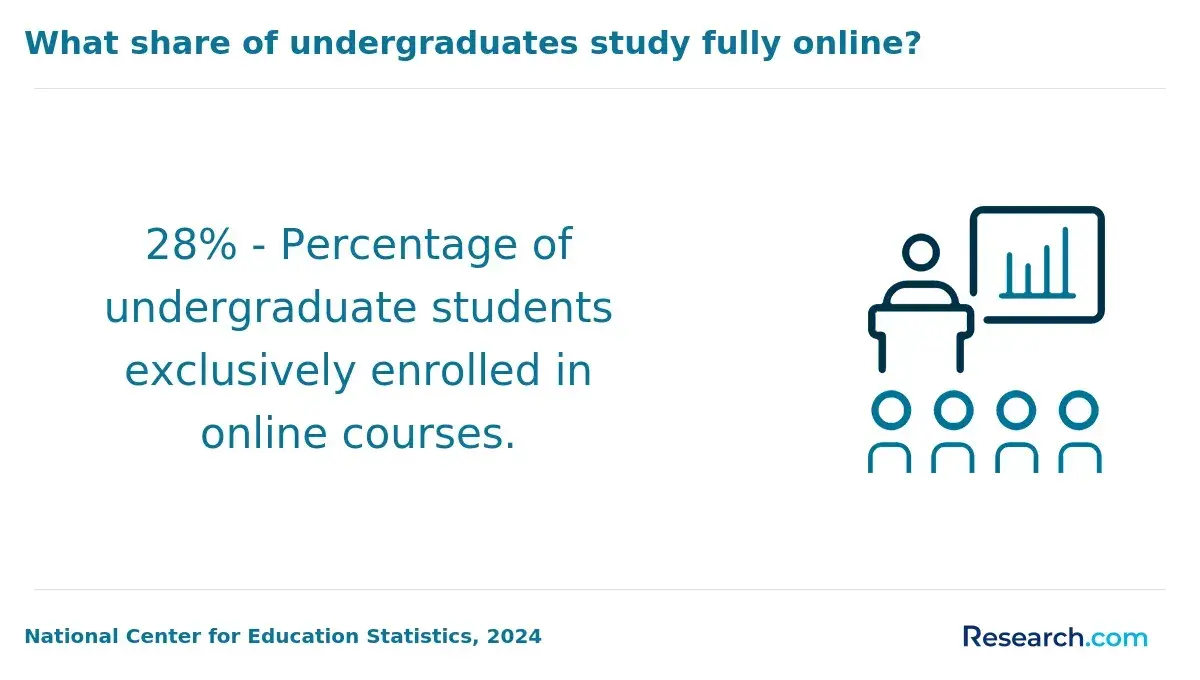
Online learning is especially common in cybersecurity because many labs can be delivered through virtual machines, cloud environments, remote desktops, and simulated networks. Students comparing an online cybersecurity degree should still check whether the program includes live support, instructor feedback, career services, and hands-on assessments rather than relying only on recorded lectures.
The table below summarizes the trade-offs that matter most when deciding between online and campus formats.
| Factor | Online cybersecurity degree | Campus-based cybersecurity degree | Best choice when |
| Flexibility | Often better for working adults, parents, military students, and career changers | Usually follows fixed class times and campus schedules | Choose online if schedule control is essential |
| Hands-on labs | Can be strong if the school provides virtual labs, cloud access, and guided practice | May offer physical labs, in-person equipment, and direct supervision | Choose based on lab quality, not delivery format alone |
| Networking | Depends on virtual events, discussion boards, cohort design, and career support | Often easier for in-person clubs, competitions, and recruiting events | Choose campus if local employer networking is a top priority |
| Cost | May reduce commuting or housing costs, but tuition varies widely | May include additional campus fees, housing, or transportation costs | Compare total cost of attendance, not tuition alone |
| Student discipline | Requires strong time management and comfort learning independently | Provides more structure and face-to-face accountability | Choose campus if you need frequent in-person support |
Online does not automatically mean easier, cheaper, or lower quality. Campus does not automatically mean better career outcomes. The strongest signal is whether the program is accredited, technically current, taught by qualified faculty, supported by career services, and designed around hands-on work.
Before choosing an online program, take these practical steps:
- Ask for a demo of the lab environment or learning platform before enrolling.
- Confirm whether exams, labs, and projects are asynchronous, synchronous, or proctored.
- Check state authorization if you live outside the school's home state.
- Ask whether online students receive the same career services, internship access, and faculty support as campus students.
- Review technology requirements, including computer specifications, virtualization needs, and software fees.
What admission requirements and prerequisites do cybersecurity degree programs have?
Admission requirements vary by school and degree level, but cybersecurity programs usually look for academic readiness, basic computing ability, and evidence that the student can handle technical coursework. Some programs welcome beginners, while others expect prior IT, programming, or math experience.
Typical requirements differ by level. This table gives a practical overview so you can identify gaps before applying.
| Program level | Common admission requirements | Helpful prerequisites | What to do if you are missing them |
| Associate degree | High school diploma or GED, placement tests, basic application materials | Computer literacy, algebra, introductory IT | Start with college readiness or introductory technology courses |
| Bachelor's degree | High school transcript, transfer transcripts, GPA requirements, sometimes test scores | Algebra, basic programming, networking exposure | Use community college courses or bridge courses to build foundations |
| Master's degree | Bachelor's degree, transcripts, resume, statement of purpose, recommendations | IT, computer science, statistics, networking, or professional experience | Look for bridge tracks for nontechnical applicants |
| Graduate certificate | Bachelor's degree or professional background, depending on the school | Role-specific IT or security experience | Choose an introductory certificate if you are new to the field |
Career changers should not assume they need to master everything before applying. Many bachelor's and some master's programs are built for beginners, but you should read course descriptions carefully. A program that starts with "advanced network defense" may be frustrating if you have never taken networking, operating systems, or scripting.
Applicants can strengthen their preparation with a focused plan:
- Learn basic networking concepts such as IP addresses, ports, DNS, routing, and firewalls.
- Practice one beginner-friendly scripting language, commonly Python or PowerShell.
- Use Linux enough to navigate files, permissions, processes, and logs.
- Complete a basic cybersecurity lab or introductory certification course before committing to a full degree.
- Prepare a short career statement explaining which cybersecurity path interests you and why the program fits that goal.
Common admission mistakes include applying to a program without checking prerequisites, choosing a graduate program because it sounds faster, or ignoring transfer-credit rules. If you already have college credits, ask for an official transfer evaluation before you commit financially.
How long does a cybersecurity degree take and what does it cost?
The time and cost of a cybersecurity degree depend on degree level, transfer credits, enrollment intensity, institution type, residency status, and whether the program is online or campus-based. The most important cost question is not just "What is tuition?" but "What is the total cost to finish the credential I need for my target role?"
College Board's 2024 pricing data shows why the type of institution matters: average published tuition and fees for 2024-25 were much lower at public two-year and in-state public four-year institutions than at private nonprofit four-year institutions. These figures are sticker prices, so grants, scholarships, employer tuition assistance, military benefits, and transfer credits can change the actual amount a student pays.
The table below summarizes typical timelines and major cost considerations for cybersecurity degree levels.
| Credential | Typical full-time length | Cost considerations | Best cost-control strategy |
| Certificate | A few months to 1 year | Tuition may be per course or per credit; certification exam fees may be separate | Use certificates for targeted skill gaps, not as a substitute for a required degree |
| Associate degree | About 2 years | Public two-year colleges often have lower tuition, especially for in-district students | Confirm transfer agreements before enrolling if a bachelor's degree is your goal |
| Bachelor's degree | About 4 years | Tuition varies widely by public in-state, public out-of-state, private nonprofit, and private for-profit options | Compare net price, transfer credits, completion time, and internship access |
| Master's degree | About 1 to 2 years | Programs may charge per credit; some require foundation courses for nontechnical students | Ask whether bridge courses add time and cost |
| Doctorate | Often 3 to 6 years | Costs and funding vary greatly by research assistantships, employer support, and program format | Only pursue if your goal requires research depth or academic preparation |
To estimate return on investment, calculate the cost of completing the degree, not just the first term. Include tuition, fees, books, software, lab fees, certification exams, commuting, housing if applicable, childcare, and the income you may forgo if you reduce work hours.
Use this checklist before accepting an offer:
- Ask for the total estimated cost to graduation based on your transfer credits and planned enrollment pace.
- Review the school's net price calculator and financial aid offer, including grants, loans, work-study, and scholarships.
- Check whether employer tuition reimbursement, GI Bill benefits, state grants, or workforce training funds apply.
- Confirm whether certification vouchers, lab access, cloud credits, and proctoring fees are included or separate.
- Compare accelerated programs carefully because shorter timelines can reduce living costs but may be difficult for students working full time.
A lower-cost program is not automatically the best investment if it lacks accreditation, labs, support, or employer relevance. A higher-cost program is not automatically better if its outcomes, faculty access, and career services are weak. The goal is to pay for a credible path to the role you want.
Which industry certifications align with a cybersecurity degree and boost employability?
Certifications can strengthen a cybersecurity degree by proving specific, current skills. They are especially useful because cybersecurity hiring often combines formal education with hands-on evidence. However, certifications should support your target role; collecting unrelated credentials can waste money and distract from experience-building.
The table below shows common certifications and how they align with degree and career stages. Requirements and exam details can change, so verify current rules with the certifying organization before paying for training or exam vouchers.
| Certification | Best aligned with | Career stage | How it complements a degree |
| CompTIA Security+ | Security fundamentals, junior analyst preparation, government contractor environments | Entry level | Validates baseline security concepts that many degree programs teach |
| CompTIA Network+ | Networking foundations for students without IT background | Beginner to entry level | Helps students who need stronger network knowledge before security specialization |
| Cisco CCNA | Network administration and network security foundations | Entry to early career | Supports roles where understanding infrastructure is essential |
| Certified Ethical Hacker | Ethical hacking concepts and penetration testing exposure | Early to mid-career | Can supplement lab-heavy coursework but should not replace practical testing skills |
| GIAC certifications | Incident response, forensics, intrusion detection, cloud, and specialized technical domains | Early to advanced, depending on exam | Useful for specialization when paired with work experience |
| CISSP | Security management, architecture, risk, and broad professional knowledge | Experienced professionals | Often aligns better after several years of work rather than during an entry-level degree |
| CISA or CISM | Audit, governance, risk, compliance, and security management | Mid-career | Useful for students targeting GRC, audit, or leadership paths |
| Cloud security certifications | AWS, Azure, Google Cloud, and cloud security responsibilities | Early to advanced, depending on credential | Helps students show platform-specific skills when pursuing cloud security roles |
A good certification strategy is simple: choose one foundation credential, one role-specific credential, and one project or portfolio that proves you can apply the knowledge. For example, a student targeting SOC work might pair Security+ with home-lab detection projects, while a student targeting cloud security might combine networking foundations with a cloud platform certification and secure deployment portfolio.
Avoid these certification mistakes:
- Paying for expensive bootcamps before confirming whether the credential matches your target job postings.
- Pursuing advanced certifications that require experience before you have built basic IT and security skills.
- Assuming a certification alone will overcome a lack of labs, internships, projects, or communication skills.
- Letting certifications delay job applications when you already meet many requirements for entry-level roles.
How is a cybersecurity program accredited and why does accreditation matter?
Accreditation is one of the most important quality checks for a cybersecurity degree. Institutional accreditation means an external accrediting agency has reviewed the college or university for academic and operational standards. Programmatic recognition can provide additional evidence that the cybersecurity curriculum meets discipline-specific expectations.
For students, accreditation matters because it can affect federal financial aid eligibility, transfer credit, graduate school admission, employer recognition, and reimbursement from some employers. It is also a protection against programs that use cybersecurity demand as a marketing hook without offering rigorous education.
Cybersecurity students should understand three different quality signals:
- Institutional accreditation: Confirms that the college or university has been reviewed by a recognized accreditor. This is the first item to verify.
- Programmatic accreditation: Some computing and cybersecurity programs may hold ABET accreditation, which can indicate that the curriculum meets field-specific standards.
- NSA Centers of Academic Excellence designation: The National Security Agency designates certain institutions for cyber defense, research, or operations education. This is not the same as accreditation, but it can be a useful signal of cybersecurity focus.
To verify accreditation, use the school's official accreditation page and confirm the information through recognized federal or accreditor databases. Do not rely only on advertising language such as "recognized," "approved," "career-ready," or "industry-aligned." Those phrases may be true, but they are not substitutes for accreditation.
Online students should also check state authorization. A school may be accredited but still limited in where it can enroll online students or provide certain activities. This is especially important if the program includes internships, field placements, proctored exams, or state-specific requirements.
How can you choose a reputable cybersecurity school that fits your career goals?
Choosing a reputable cybersecurity school starts with your career goal, not the school's marketing. A program that is excellent for policy and compliance may not be the best fit for penetration testing. A program with strong research faculty may not provide the internship support an entry-level student needs. The right school is the one that matches your target role, budget, schedule, and learning needs.
Use a structured evaluation process instead of relying only on rankings or tuition. Rankings can be a starting point, but they rarely tell you whether the labs are current, whether credits transfer, or whether employers recruit from the program.
Ask each school these questions before enrolling:
- Is the institution accredited, and does the cybersecurity program have ABET accreditation or NSA CAE designation?
- What hands-on labs, cloud environments, simulations, or capstone projects are required?
- Which certifications does the curriculum prepare students for, and are exam fees included?
- What cybersecurity internships, co-ops, employer partnerships, or career fairs are available to online and campus students?
- How many credits will transfer, and can the school provide a written degree completion plan?
- Who teaches the courses, and do instructors have current security, IT, research, or policy experience?
- What career outcomes does the school report, and how are those outcomes measured?
Watch for red flags that can lead to poor fit or unnecessary debt:
- The program claims high salaries without explaining that outcomes vary by experience, location, clearance, industry, and role.
- Admissions staff pressure you to enroll before you receive cost, transfer, and accreditation information in writing.
- The curriculum is heavy on buzzwords but light on networking, systems, scripting, labs, risk, and incident response.
- The school cannot clearly explain career services for cybersecurity students.
- Credits are unlikely to transfer, but the school does not explain that limitation clearly.
Also consider whether cybersecurity is truly the best match. If you want healthcare administration technology rather than security operations, for example, researching online medical coding programs may be more aligned with your goal. If you want software engineering, data analytics, IT support, or AI work, a different degree or certificate could deliver a better return.
The best next step is to choose a target role, compare three to five accredited programs, request total cost and transfer evaluations, and review current job postings in your preferred region. If the coursework, labs, support, and price all align with that role, a cybersecurity degree can be a practical path into a resilient and evolving field.
Other Things You Should Know About Cybersecurity Degrees
Yes, many cybersecurity roles do not require a security clearance, especially in private sector companies. Positions such as cybersecurity analyst, consultant, and engineer often focus more on skills and certifications rather than security clearance, though certain government positions may still require it.
It can be, especially in incident response, security operations, and roles with on-call duties. Stress is lower when teams have clear processes, reasonable staffing, good tools, and supportive leadership. Students should ask employers about schedules and incident expectations during interviews.
Helpful traits include curiosity, patience, ethical judgment, attention to detail, calmness under pressure, and willingness to keep learning. Strong communication matters because security professionals often need to explain technical risk to nontechnical teams.
References
- How Much Does a Cybersecurity Degree Cost? (New 2025 Data) - Programs.com https://programs.com/resources/cybersecurity-degree-cost/
- Compare Types of Cybersecurity Degrees | CyberDegrees.org https://www.cyberdegrees.org/listings/
- 20 Jobs You Can Pursue With a Cybersecurity Degree - Champlain College https://www.champlain.edu/blog/stories/cybersecurity-degree-careers/
- What to Expect During an Online BS in Cybersecurity Program https://www.umassglobal.edu/blog-news/expect-during-online-bs-cybersecurity-program
- Online Cybersecurity Programs: Compare Top Schools https://www.degreesforgood.org/online-degrees/cyber-security-programs/
- 25 Best Online Cybersecurity Degree Programs https://cybersecurityguide.org/online/cybersecurity-bachelors-degree/
- Should I Get My Bachelor’s Degree in Cybersecurity Online? | CSU Global https://csuglobal.edu/blog/should-i-get-my-bachelors-degree-cybersecurity-online
- The Value of an Accredited Cybersecurity Program - ABET https://www.abet.org/the-value-of-an-accredited-cybersecurity-program/