2027 Best Online Cybersecurity Degrees for Working Adults

Co-Founder and Chief Data Scientist
Choosing an online cybersecurity degree while working full time means balancing cost, schedule, credibility, and career payoff. The field is timely: the U. S. Bureau of Labor Statistics reported a 2024 median pay of $124,910 for information security analysts, far above the national median for all occupations. This guide is for adults comparing bachelor's, master's, and certificate-to-degree pathways. You will learn how online programs work, what they cost, which credentials matter, and how to avoid programs that look convenient but may not support your goals.
Key Things You Should Know
- For most working adults, the best online cybersecurity degree is regionally accredited, offers asynchronous or evening coursework, accepts transfer credit, and includes hands-on labs in networking, cloud security, threat detection, and incident response.
- Cybersecurity can offer strong wage potential, but outcomes vary by role and experience; the BLS reported a 2024 median pay of $124,910 for information security analysts and projects 29% growth for the occupation from 2024 to 2034.
- Cost and time depend heavily on transfer credits and enrollment pace; adults should compare total program cost, fees, certification exam support, internship or lab access, and whether the curriculum maps to roles they actually want.
What is an online cybersecurity degree and how does it work for working adults?
An online cybersecurity degree is a college program delivered primarily through a learning platform rather than a physical classroom. Students complete lectures, readings, labs, projects, quizzes, and exams online, while some programs add live sessions, virtual office hours, proctored exams, or optional campus residencies. For working adults, the key question is not simply whether the program is online; it is whether the schedule, workload, and support model fit around a job, family responsibilities, and prior college credit.
Cybersecurity degree programs teach students how to protect networks, systems, cloud environments, software, and data from unauthorized access, disruption, and misuse. A bachelor's degree is often used for entry-level or mid-level technical roles, while a master's degree is usually better suited for professionals moving toward security architecture, management, governance, risk, or specialized technical leadership.
The online format works best when the program is intentionally designed for remote learners. Strong programs usually provide structured weekly modules, virtual labs, recorded lectures, discussion boards, faculty feedback, tutoring, library access, career services, and clear technical support. Weak programs may simply move campus materials online without enough lab depth or faculty interaction.
Working adults should think about fit before prestige. A highly ranked program that requires live daytime attendance may be less practical than a less famous accredited program with evening sessions, part-time sequencing, and generous transfer policies. The right choice is the one that helps you complete the credential without sacrificing job performance or financial stability.
Online cybersecurity degrees are especially useful for adults who want to enter information security from IT support, networking, systems administration, military technology roles, software development, data analytics, or compliance. They may be less efficient for someone who only needs a quick technical skill update or already has a strong security background and would benefit more from a targeted certification.
How do online cybersecurity programs compare to campus-based degrees for flexibility and quality?
Online and campus-based cybersecurity degrees can be comparable in academic quality when they share the same accreditation, faculty standards, curriculum review process, and learning outcomes. The difference is usually in delivery. Campus programs offer in-person networking and facilities, while online programs give working adults more control over when and where they study.
The table below compares the practical differences that matter most to adults who are choosing between online and campus-based cybersecurity programs. Use it to identify which format supports your schedule, learning style, and career goals.
| Factor | Online cybersecurity degree | Campus-based cybersecurity degree |
| Schedule | Often asynchronous or evening-based, making it easier to keep a full-time job | Usually tied to fixed class times and commuting requirements |
| Hands-on learning | Delivered through virtual labs, cloud sandboxes, simulations, and remote security tools | May include physical labs, in-person exercises, and local research facilities |
| Networking | Requires intentional use of discussion boards, career events, alumni groups, and professional associations | May provide easier access to classmates, faculty, clubs, and campus recruiting |
| Quality indicators | Best judged by accreditation, curriculum depth, faculty qualifications, lab access, and outcomes | Best judged by the same standards; campus delivery alone does not prove quality |
| Best fit | Working adults, military students, career changers, parents, and students outside commuting range | Students who want in-person structure, campus life, or local employer pipelines |
Flexibility does not mean easier. A rigorous online cybersecurity program still requires steady weekly work, technical troubleshooting, collaboration, and independent study. Adults should ask schools how many hours per week each course typically requires, whether live attendance is mandatory, and whether labs can be completed outside business hours.
Quality is also not determined by whether a school is public, private nonprofit, or private for-profit. Institution type can affect price, governance, and student services, but the better test is accreditation, transparent outcomes, faculty expertise, credit transfer rules, and whether the curriculum aligns with current security roles.
If you are comparing multiple online career paths, accreditation and student support should remain central. For example, adults exploring healthcare technology programs may use similar quality checks when reviewing the best online medical billing and coding schools, even though cybersecurity and medical billing lead to very different careers.

Which types of cybersecurity degrees can you earn fully online in the United States?
U.S. students can earn several types of cybersecurity credentials fully online, from associate degrees to doctorates. The best option depends on your current education, technical experience, career target, budget, and how quickly you need a credential.
The table below summarizes common online cybersecurity degree types and who they usually fit best. It can help you avoid over-enrolling in a degree that is more advanced than you need or choosing a short credential that will not support your long-term goal.
| Online credential | Typical level | Common best fit | Decision note |
| Associate degree in cybersecurity or information technology | Undergraduate | Students starting college, IT support workers, and adults seeking an affordable transfer pathway | Often best when credits transfer cleanly into a bachelor's program |
| Bachelor's in cybersecurity | Undergraduate | Career changers, military students, IT workers seeking advancement, and adults without a completed bachelor's degree | Usually the broadest degree option for entry-level and mid-level roles |
| Bachelor's in computer science with cybersecurity concentration | Undergraduate | Students who want deeper programming, algorithms, and software foundations | Can be stronger for secure software engineering or technical graduate study |
| Master's in cybersecurity | Graduate | Professionals with a bachelor's degree who want advanced technical, leadership, risk, or policy roles | Best when the curriculum matches your specialization and experience level |
| Graduate certificate in cybersecurity | Graduate or post-baccalaureate | Professionals testing the field, updating skills, or preparing for a master's later | Useful if credits can later stack into a degree |
| Doctorate in cybersecurity, information assurance, or related fields | Doctoral | Researchers, senior executives, consultants, and college faculty candidates | Usually unnecessary for most operational security roles |
A bachelor's degree is often the most practical starting point if you do not already have a four-year degree. It combines general education, computing foundations, and security coursework, which can help with employers that use bachelor's degrees as a screening requirement.
A master's degree makes more sense if you already have a bachelor's degree and want to move into senior analysis, cloud security architecture, security engineering, digital forensics leadership, governance, risk, compliance, or management. Adults comparing cybersecurity graduate programs should look closely at specialization tracks, lab intensity, and whether the program assumes prior IT experience.
A certificate can be a smart first step if you are unsure about the field or need a narrower skill set. However, a certificate is not always a substitute for a degree, especially for employers that require a bachelor's degree for analyst, engineer, or management roles.
How can you tell if an online cybersecurity program is properly accredited and reputable?
Accreditation is one of the most important checks before enrolling in an online cybersecurity degree. In the United States, institutional accreditation means a recognized accrediting agency has reviewed the school's academic quality, governance, student services, and financial practices. It also affects eligibility for federal financial aid and can influence transfer credit, graduate admission, and employer acceptance.
Programmatic signals can also matter. Some cybersecurity programs are designated by the National Security Agency as Centers of Academic Excellence in Cybersecurity, commonly called CAE-C. This is not the same as institutional accreditation, but it can indicate that the curriculum has been reviewed against cybersecurity education standards.
Use the following steps before submitting an application or paying an enrollment deposit. These checks help you separate legitimate online programs from schools that market aggressively but provide limited value.
- Confirm the school's institutional accreditation through the U.S. Department of Education's recognized accreditation resources or the school's accreditor, not just the school's marketing page.
- Check whether the cybersecurity program has CAE-C designation, ABET accreditation for computing-related programs, or other discipline-specific recognition where relevant to your goal.
- Review the curriculum for hands-on labs, secure networking, cloud security, scripting, incident response, governance, and a capstone or applied project.
- Ask how transfer credits are evaluated and whether certifications, military training, or prior learning can reduce your time to completion.
- Request transparent information on total tuition, technology fees, textbooks, exam proctoring, graduation fees, and certification exam costs.
- Look for red flags such as guaranteed job claims, unclear accreditation language, unusually high-pressure admissions calls, vague faculty credentials, or no published curriculum details.
Accreditation does not guarantee a job, salary, or perfect student experience. It does, however, reduce several major risks. If a program is not properly accredited, you may have trouble using federal aid, transferring credits, entering graduate school, or satisfying employer education requirements.
Reputation should be evaluated in context. A school can be reputable for adult online education even if it is not nationally famous. Look for evidence such as experienced faculty, employer partnerships, strong student support, clear outcome data, and a curriculum that is updated for cloud computing, identity security, AI-related risks, and modern threat detection.
What are the typical admission requirements for online cybersecurity bachelor's and master's programs?
Admission requirements vary by school, but online cybersecurity programs typically evaluate whether applicants are academically prepared and technically ready for the level of study. Working adults should pay special attention to prerequisite courses and documentation requirements because these can affect both admission and time to completion.
For online bachelor's programs, schools commonly ask for a high school diploma or GED, transcripts from all prior colleges, a minimum GPA, and sometimes placement results for math or writing. Transfer students may need syllabi for prior technical courses if they want cybersecurity, networking, or programming credits accepted toward the major.
For online master's programs, schools usually require a bachelor's degree from an accredited institution, transcripts, a resume, a statement of purpose, and sometimes recommendation letters. Some programs prefer applicants with computing, engineering, mathematics, military cyber, or IT experience. Others admit career changers but require bridge courses in programming, networking, or operating systems.
The table below shows typical admission expectations by degree level. Requirements vary, so use this as a planning guide rather than a substitute for a school's official admissions policy.
| Requirement | Online bachelor's program | Online master's program |
| Prior education | High school diploma, GED, or transfer credits | Accredited bachelor's degree |
| Technical background | Helpful but not always required | Often preferred; bridge courses may be required for career changers |
| Math readiness | May require college algebra, statistics, discrete math, or placement testing | Varies by technical depth; some programs expect prior quantitative coursework |
| Professional experience | Usually optional | Often useful and sometimes important for leadership-oriented programs |
| Standardized tests | Usually not central for adult online applicants | Many programs waive or do not require GRE scores, but policies vary |
| Application materials | Transcripts, application form, possibly essay or transfer review | Transcripts, resume, statement, recommendations, and possibly prerequisite review |
Adults should not assume they are unqualified just because they lack a traditional computing degree. Many programs are built for students coming from help desk work, military service, compliance, business analysis, or unrelated bachelor's degrees. The key is to choose a program with the right support level, not one that assumes expertise you do not yet have.
Before applying, ask admissions advisors specific questions about prerequisites, transfer credit, prior learning credit, certification credit, and course sequencing. A program that admits you quickly but does not explain how your credits apply may create expensive surprises later.
How long do online cybersecurity degrees take and what do they typically cost?
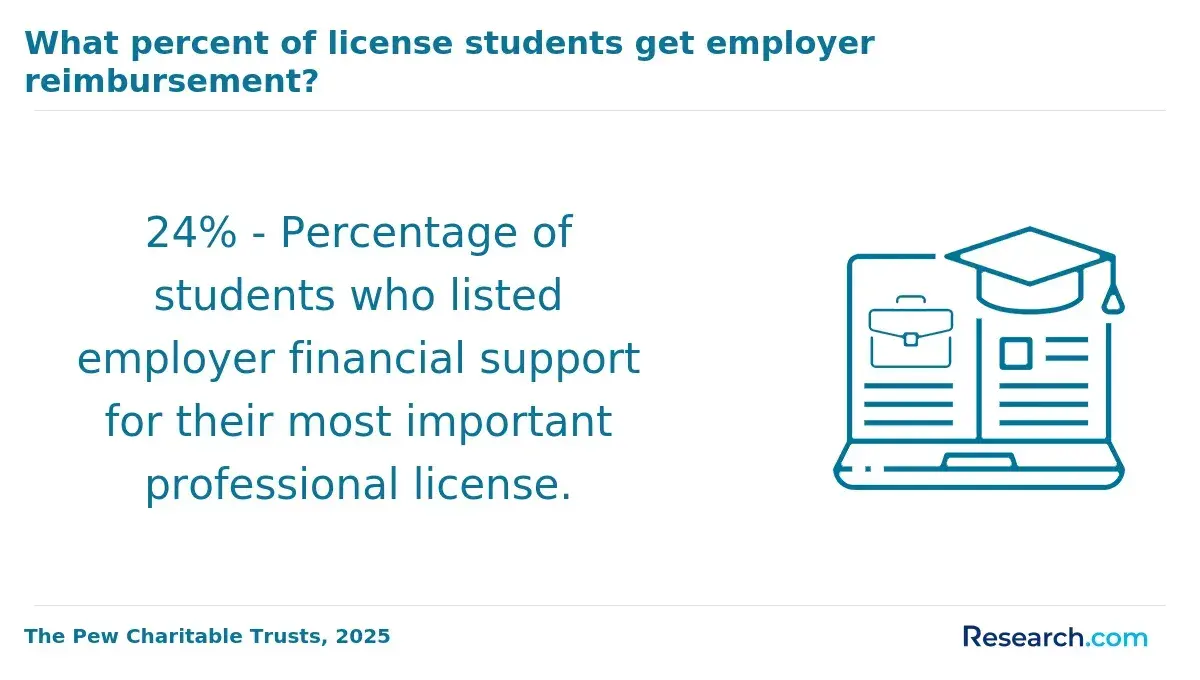
Time to completion depends on degree level, transfer credits, enrollment intensity, and whether the program uses traditional semesters, accelerated terms, or competency-based pacing. Cost depends on tuition per credit, required credits, fees, books, labs, software, certification exams, and whether you qualify for employer tuition assistance, military benefits, grants, scholarships, or in-state online rates.
As a national benchmark, the College Board reported average published tuition and fees of $11,610 for in-state students at public four-year institutions for the 2024-2025 academic year. Online students should treat that as a reference point, not a final price, because many online programs charge different rates and add technology or course fees.
The table below provides realistic planning ranges by credential type without assuming that every student follows the same path. Your actual timeline may be shorter if you transfer credits or longer if you study part time.
| Credential | Common credit load | Typical time for working adults | Main cost drivers |
| Associate degree | About 60 credits | 2 to 3 years part time; faster with prior credits | Community college tuition, transferability, fees, books, and lab access |
| Bachelor's degree | About 120 credits | 2 to 6 years depending on transfer credits and course load | Per-credit tuition, accepted transfer credits, residency requirements, and upper-division lab fees |
| Graduate certificate | Often 9 to 18 credits | 6 months to 1.5 years | Graduate tuition rate, stackability, certification exam costs, and employer reimbursement |
| Master's degree | Often 30 to 36 credits | 1.5 to 3 years part time | Graduate tuition, prerequisites, technology fees, and capstone or practicum requirements |
The cheapest program is not always the best value, and the most expensive program is not automatically stronger. A low tuition rate can lose value if credits do not transfer, courses are rarely offered, or the program lacks hands-on labs. A higher-cost program may be worthwhile if it reduces completion time, includes certification preparation, or provides strong career support, but those benefits should be verified before enrollment.
Adults should compare total cost using a consistent method. This process makes it easier to see the real price of each program rather than relying on marketing claims about affordability.
- Multiply tuition per credit by the number of credits you actually need after transfer evaluation.
- Add required fees, books, software, lab platforms, proctoring, graduation fees, and certification exam costs.
- Subtract grants, scholarships, employer tuition assistance, military benefits, and confirmed transfer or prior learning credits.
- Estimate income impact if the program requires reduced work hours, unpaid internships, or daytime attendance.
- Compare the final net cost with likely roles you are targeting, not with the highest-paying cybersecurity jobs overall.
Cybersecurity is not the only online tech pathway adults compare. If your interest is more in analytics, machine learning, or data infrastructure than security operations, reviewing the cheapest online data science masters can help you understand how costs differ across adjacent technology fields.
What courses and skills are usually covered in an online cybersecurity curriculum?
A strong online cybersecurity curriculum combines computing fundamentals, security theory, applied labs, and professional decision-making. The goal is not only to teach security tools, but also to help students understand how systems fail, how attackers operate, how organizations manage risk, and how security teams respond under pressure.
Most programs cover a mix of technical, analytical, and governance topics. The list below shows course areas that working adults should expect to see in a well-rounded degree plan.
- Networking and protocols, including TCP/IP, routing, switching, firewalls, VPNs, and secure network design.
- Operating systems and systems administration, including Windows, Linux, identity management, permissions, logging, and endpoint hardening.
- Programming or scripting, often using Python, PowerShell, Bash, Java, or C-based concepts for automation and security analysis.
- Cybersecurity fundamentals, including confidentiality, integrity, availability, access control, cryptography, authentication, and security architecture.
- Threat detection and incident response, including log analysis, SIEM tools, alert triage, containment, eradication, recovery, and reporting.
- Cloud security, including shared responsibility models, identity and access management, secure configuration, monitoring, and workload protection.
- Digital forensics, including evidence handling, file systems, memory analysis, chain of custody, and investigative reporting.
- Governance, risk, and compliance, including security policies, audits, frameworks, privacy, business continuity, and regulatory obligations.
- Ethical hacking or penetration testing, including reconnaissance, vulnerability assessment, exploitation concepts, documentation, and remediation guidance.
- Capstone or applied project work that requires students to solve a realistic security problem and communicate findings professionally.
AI is changing the curriculum conversation. Security teams are using automation for detection, alert enrichment, phishing analysis, and vulnerability prioritization, while attackers are also using AI-assisted methods to scale social engineering and code generation. A current program should help students understand both the defensive and risk-management sides of AI, not just mention it as a buzzword.
Students interested in the human feedback and model-evaluation side of AI may also explore career paths for AI trainers, especially if they want to combine technical judgment, security awareness, and responsible AI practices.
Skills matter as much as course titles. Employers commonly value troubleshooting, clear writing, ethical judgment, teamwork, curiosity, scripting, documentation, and the ability to explain risk to nontechnical stakeholders. A program that requires reports, presentations, and team-based labs can be especially useful for adults moving into roles where communication is part of the job.
What cybersecurity careers can you pursue with an online degree, and what do they pay?
An online cybersecurity degree can support several career paths, but the degree alone does not determine your job title. Employers also consider experience, certifications, clearance eligibility for some government or defense roles, technical portfolio, internships, prior IT work, and interview performance.
The table below uses U.S. Bureau of Labor Statistics 2024 median wage data for closely related occupational categories where available. Use these figures as labor-market context, not as a promise of what any individual graduate will earn.
| Career path | Typical responsibilities | Relevant BLS occupation or proxy | 2024 median pay |
| Information security analyst | Monitor threats, investigate alerts, recommend controls, support incident response, and improve security posture | Information security analysts | $124,910 |
| Security operations center analyst | Triage alerts, review logs, escalate incidents, document findings, and use SIEM or endpoint detection tools | Information security analysts | $124,910 |
| Network security specialist | Secure firewalls, VPNs, network segments, access controls, and monitoring systems | Network and computer systems administrators | $96,800 |
| Cybersecurity consultant | Assess risk, test controls, advise clients, write reports, and support remediation planning | Information security analysts | $124,910 |
| Security architect | Design secure systems, cloud environments, identity models, and enterprise security standards | Computer network architects | $130,390 |
| IT security manager | Lead teams, manage budgets, set security strategy, oversee compliance, and coordinate incident response | Computer and information systems managers | $171,200 |
Entry-level cybersecurity jobs are competitive because many employers prefer candidates with some IT foundation. Adults without technical experience may improve their odds by starting in help desk, technical support, network support, junior systems administration, or compliance support while completing the degree.
Career changers should build evidence of ability before graduation. Useful proof can include home labs, cloud security projects, packet analysis exercises, scripting samples, vulnerability assessment reports, capture-the-flag participation, internship projects, or documented volunteer security work for nonprofits or small organizations.
A common mistake is aiming immediately for advanced roles such as penetration tester, security engineer, or architect without enough systems and networking experience. A better strategy is to choose a first role that builds relevant exposure, then move toward specialization after you understand enterprise environments, logging, access control, and incident workflows.
What is the job outlook for cybersecurity professionals and where is demand strongest?
The job outlook for cybersecurity professionals is strong, but demand is not evenly distributed across every role, city, or experience level. The BLS projects 29% growth for information security analysts from 2024 to 2034, which is much faster than the average for all occupations. For readers, the practical takeaway is that cybersecurity is expanding, but the best opportunities often go to candidates who can pair education with hands-on technical experience.
Demand is strongest in industries that manage sensitive data, critical infrastructure, digital transactions, regulated systems, or large cloud environments. These include finance, insurance, healthcare, defense, federal contractors, state and local government, energy, telecommunications, technology services, consulting, and large retailers.
Geography still matters even for remote-friendly jobs. Major technology, defense, finance, and government markets often have more openings, more specialized roles, and stronger professional networks. However, remote and hybrid work have widened access for adults outside major metro areas, especially for roles involving monitoring, compliance, cloud operations, security awareness, and consulting support.
Current trends are shaping what employers expect from cybersecurity degree holders. The most important trends are not passing fads; they are changing the skills that make candidates more competitive.
- Cloud migration is increasing demand for identity security, secure configuration, logging, workload protection, and cloud incident response.
- AI-assisted attacks and defenses are making security automation, threat analysis, and responsible use of AI more important.
- Regulatory pressure is expanding demand for governance, risk, compliance, audit readiness, privacy, and incident reporting skills.
- Zero-trust security models are pushing organizations to focus more on identity, least privilege, continuous monitoring, and segmentation.
- Skill-based hiring is making portfolios, labs, certifications, internships, and prior IT experience important complements to a degree.
Adults should use outlook data carefully. Strong projected growth does not mean every graduate will step directly into a high-paying cyber role. The smartest approach is to choose a degree that builds a broad technical base, then add practical experience and certifications that match the roles hiring in your region or target industry.
Which industry certifications pair best with an online cybersecurity degree for advancement?
Industry certifications can make an online cybersecurity degree more practical because they validate specific skills employers recognize. A degree shows broader academic preparation, while certifications can signal readiness for particular tools, frameworks, or job levels. The best combination depends on whether you are entering the field, specializing technically, or moving into leadership.
The table below summarizes widely recognized certifications that often pair well with cybersecurity degree programs. Requirements and exam policies can change, so verify the current rules before budgeting or registering.
| Certification | Best fit | How it pairs with a degree |
| CompTIA Security+ | Entry-level security, help desk-to-cyber transitions, and early analyst roles | Reinforces core security concepts often covered in undergraduate programs |
| CompTIA Network+ | Students who need stronger networking fundamentals | Useful before or during a cybersecurity bachelor's if networking experience is limited |
| Certified Ethical Hacker | Students interested in penetration testing concepts and offensive security foundations | Pairs best with hands-on labs and strong ethics training |
| GIAC certifications | Technical specialists in incident response, forensics, security operations, or penetration testing | Can deepen skills after a degree or alongside advanced coursework |
| Cisco CyberOps Associate | Security operations center and monitoring roles | Complements coursework in detection, logs, network security, and incident workflows |
| Certified Information Systems Security Professional | Experienced professionals moving toward senior, architecture, or management roles | Best after gaining substantial security experience; aligns well with graduate study |
| Certified Information Security Manager | Security managers, governance professionals, and risk leaders | Pairs well with master's programs focused on leadership, risk, and compliance |
| Cloud security certifications | Students targeting AWS, Azure, Google Cloud, or multicloud security roles | Supports programs with cloud security, identity, and secure architecture coursework |
Do not collect certifications randomly. Certification costs, study time, renewal requirements, and continuing education obligations can add up. Start with one credential that matches your next realistic role, then add specialized credentials once your career direction is clearer.
A practical sequence for many working adults is to strengthen networking fundamentals first, earn a broad security certification, complete degree labs and projects, then choose a specialization such as cloud security, incident response, forensics, governance, or penetration testing. Students who already work in IT may be able to move faster, while career changers may need more time to build foundations.
Ask schools whether certification preparation is embedded in courses, whether exam vouchers are included, and whether faculty help students choose credentials. If a program advertises certification alignment but provides no lab practice or exam support, treat that as a reason to ask more questions.
Other Things You Should Know About Cybersecurity
It is possible, but it is not the easiest route. Many employers prefer candidates with some IT, networking, help desk, systems, military technology, or internship experience. If you are new to tech, build labs, earn an entry-level certification, and consider a first IT role while finishing the degree.
They are challenging in different ways. Computer science usually goes deeper into programming, algorithms, and software theory. Cybersecurity requires broad systems knowledge, networking, risk analysis, security tools, and constant learning because threats and technologies change quickly.
Most require at least some scripting or programming, but not every cybersecurity role is software-heavy. Python, PowerShell, Bash, SQL, and basic programming logic are especially useful for automation, log analysis, security testing, and cloud work.
In 2027, working adults should consider career goals, industry demand, and skill set relevance when choosing between cybersecurity and IT degrees. Cybersecurity is crucial due to increasing threats, offering specialized roles, while IT offers broader opportunities. Evaluate program flexibility, accreditation, and alignment with personal interests.
References
- Cyber Security Job Outlook - Is It a Good Career https://www.neit.edu/blog/cyber-security-job-outlook
- Cybersecurity Certifications | Best Options for Cybersecurity Experts https://www.cyberdegrees.org/resources/certifications/
- What to Expect During an Online BS in Cybersecurity Program https://www.umassglobal.edu/blog-news/expect-during-online-bs-cybersecurity-program
- Cybersecurity Job Demand: Current Trends and Future Outlook https://destcert.com/resources/cybersecurity-job-demand/
- How to Choose an Online Cybersecurity Degree | SANS.edu https://www.sans.edu/insights/online-cybersecurity-degree-cost-vs-quality
- Cybersecurity Degree Requirements: What’s New for 2025 - Programs.com https://programs.com/resources/cybersecurity-degree-requirements/
- Taking an online Cybersecurity Course https://lumifylearn.com/blog/what-should-i-ask-myself-before-taking-an-online-cybersecurity-course/
- 25 Best Online Cybersecurity Degree Programs https://cybersecurityguide.org/online/cybersecurity-bachelors-degree/
- Cybersecurity Career Outlook: Roles, Skills, and Growth Ahead https://www.dice.com/career-advice/cybersecurity-career-outlook-roles-skills-and-growth-ahead
- Online Bachelor's Degree: Cybersecurity Technology https://www.umgc.edu/online-degrees/bachelors/cybersecurity-technology