2027 Red Flags to Watch for in Online Cybersecurity Degrees

Co-Founder and Chief Data Scientist
Choosing an online cybersecurity degree is harder when programs look similar but vary widely in quality. The stakes are high: the U. S. Bureau of Labor Statistics reported a May 2024 median pay of $124,910 for information security analysts, but employers still expect credible training, hands-on skills, and verifiable credentials. This guide is for prospective bachelor's and master's students comparing online cybersecurity programs. You'll learn which red flags matter, how to verify legitimacy, and how to choose a program that fits your career goals and budget.
Key Things You Should Know
- Regional or national institutional accreditation is the first legitimacy check; programmatic recognition such as ABET or NSA Center of Academic Excellence designation can add value but does not replace institutional accreditation.
- The U.S. Bureau of Labor Statistics reported $124,910 as the May 2024 median pay for information security analysts, so weak labs, outdated coursework, or poor career support can directly affect your return on investment.
- Published tuition is not the full cost: compare technology fees, exam vouchers, lab access, transfer-credit limits, subscription tools, and refund policies before enrolling.
What key red flags indicate an online cybersecurity degree may be low quality?
A low-quality online cybersecurity degree usually looks polished on the surface but fails when you ask for evidence. The biggest red flags are not one minor weakness, but a pattern: unclear accreditation, vague curriculum, limited practical work, thin faculty profiles, and evasive admissions answers.
Use the table below to separate normal program differences from warning signs that should make you pause before applying.
| Area to check | Red flag | Why it matters |
| Accreditation | The school avoids naming its accreditor or uses unfamiliar approval language | Employers, graduate schools, and federal aid eligibility often depend on recognized institutional accreditation |
| Curriculum | Course descriptions rely on broad phrases such as "cyber concepts" without naming tools, labs, frameworks, or technical outcomes | Cybersecurity hiring is skill-based, so students need evidence of applied training |
| Faculty | Instructor biographies are missing, outdated, or unrelated to cybersecurity | Faculty experience affects how well courses reflect current threats and industry practice |
| Hands-on learning | No mention of virtual labs, capture-the-flag activities, cloud environments, or incident-response exercises | Students may graduate with theory but little job-ready experience |
| Student support | The program advertises flexibility but does not explain tutoring, advising, technical support, or career services | Online learners often need structured support to persist and complete the degree |
A strong program should be able to answer basic questions in writing. If an admissions representative pressures you to enroll before providing catalog links, transfer policies, cost details, or learning outcomes, treat that as a serious warning sign.
How can you verify accreditation and institutional legitimacy for online cybersecurity programs?
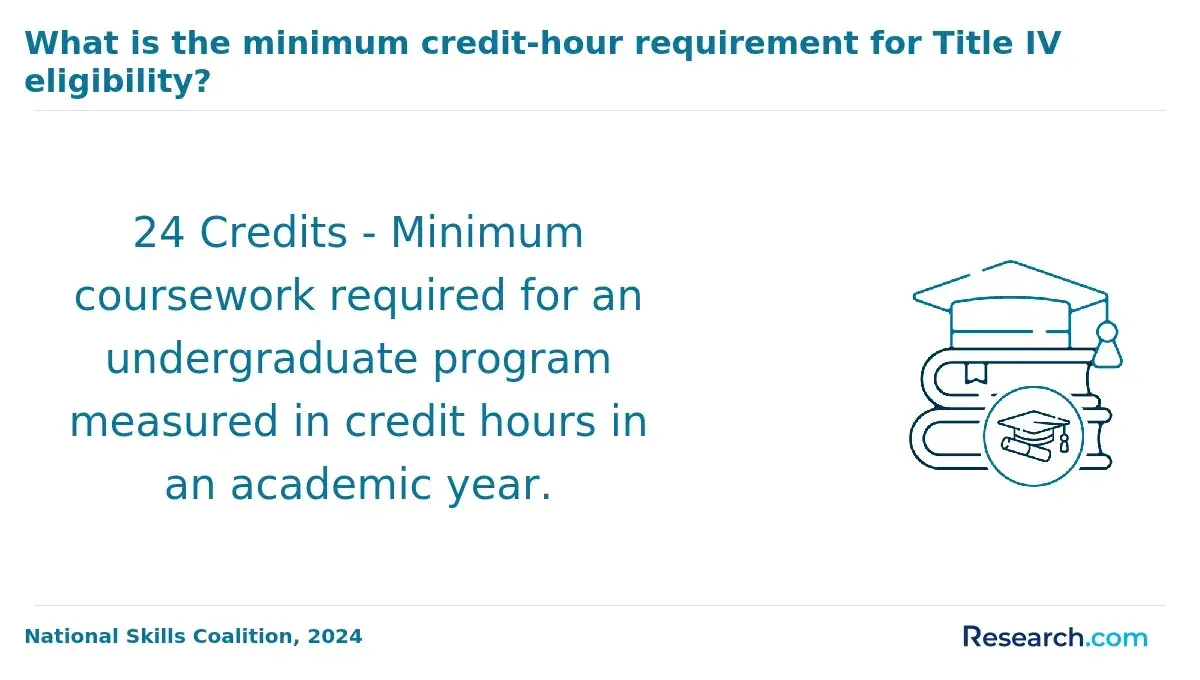
Accreditation is the formal quality-review process that evaluates whether a college or university meets recognized academic and administrative standards. For online cybersecurity degrees, institutional accreditation is the baseline because it affects financial aid eligibility, credit transfer, graduate school admission, and employer recognition.
Follow this verification sequence before you submit an application or pay a deposit. Each step should produce a clear answer you can save for your records.
- Search the school's official website for its institutional accreditor and confirm the exact institution name, not only a campus, subsidiary, or partner brand.
- Verify the accreditor through the U.S. Department of Education's recognized accreditation database or the Council for Higher Education Accreditation directory.
- Check whether the cybersecurity program has optional program-level signals, such as ABET accreditation for some computing programs or NSA Center of Academic Excellence designation.
- Review the academic catalog for degree title, required credits, residency requirements, transfer-credit rules, and graduation requirements.
- Ask whether the online degree transcript is identical to the campus version if the institution offers both formats.
Be careful with language such as "licensed," "approved," "authorized," or "internationally accredited." Those phrases may be legitimate in some contexts, but they do not necessarily mean the school has recognized U.S. institutional accreditation.
What warning signs suggest a cybersecurity degree is a diploma mill or scam?
A diploma mill sells credentials with little meaningful academic work. A scam may also misuse school names, fake employer partnerships, or push students into high-cost financing. In cybersecurity, these schemes can be especially persuasive because they use urgent language about talent shortages and high salaries.
The following warning signs should trigger deeper research or a decision to walk away. One red flag may be explainable, but several together suggest significant risk.
- The school promises a degree in an unrealistically short time with little review of prior credits, work history, or academic readiness.
- Admissions decisions appear automatic, with no transcript review or meaningful eligibility requirements.
- The institution claims accreditation from an agency that is not recognized by U.S. higher education authorities.
- Tuition discounts expire immediately unless you sign an enrollment agreement during the same call.
- The program guarantees employment, salary levels, security clearances, or government jobs after graduation.
- The school has no transparent faculty directory, academic catalog, physical administrative address, or student complaint process.
- Coursework is described as self-paced "life experience" credit without credible assessment, proctored evaluation, or portfolio review.
Cybersecurity employers can verify credentials quickly, and many roles involve trust, compliance, and sensitive systems. A questionable degree can damage your credibility rather than improve it.
How do you evaluate online cybersecurity curricula for real-world, up-to-date industry relevance?
A relevant cybersecurity curriculum should prepare students for real work: protecting networks, analyzing threats, managing risk, securing cloud systems, responding to incidents, and communicating findings. It should also adapt as attackers use automation, generative AI, identity-based attacks, and cloud misconfigurations more aggressively.
Look for a curriculum that balances theory, tools, and applied practice. Strong programs usually include several of the following components.
- Core computing foundations such as networking, operating systems, scripting, databases, and secure software concepts.
- Security-specific coursework in threat intelligence, digital forensics, cryptography, penetration testing, incident response, governance, risk, and compliance.
- Cloud and identity security topics, including access management, logging, container basics, and secure configuration.
- Use of recognized frameworks such as the NIST Cybersecurity Framework, NICE Workforce Framework, MITRE ATT&CK, or CIS Controls.
- Ethics, privacy, legal issues, and professional communication, because cybersecurity roles often require reporting to nontechnical leaders.
- A capstone, practicum, internship, or portfolio project that demonstrates applied work rather than only exam performance.
Course titles alone are not enough. Ask for sample syllabi, lab descriptions, and recent textbook or platform information. If the program has not updated its content to reflect cloud security, AI-enabled threats, and modern identity risks, it may leave graduates behind current employer expectations.
Students choosing between cybersecurity and analytics-heavy security roles may also compare a data science degree online, especially if their long-term goal is threat analytics, fraud detection, or security data engineering rather than hands-on defense operations.
What should you look for in faculty credentials and teaching expertise in cybersecurity?
Cybersecurity faculty should bring a mix of academic depth and current field experience. A professor does not need every certification or every job title, but the department should collectively cover technical security, risk management, systems administration, forensics, secure coding, and emerging technologies.
When reviewing faculty profiles, look for evidence that instructors can teach both concepts and practice. These indicators are especially useful for online students who may have fewer informal interactions than campus learners.
- Graduate education or substantial professional experience in cybersecurity, computer science, information systems, digital forensics, or a closely related field.
- Current or recent industry experience in security operations, incident response, cloud security, risk management, compliance, software security, or government cyber work.
- Relevant certifications such as CISSP, Security+, CySA+, CEH, GIAC credentials, CISM, CISA, OSCP, or cloud security certifications, when aligned with the courses taught.
- Published research, conference presentations, open-source contributions, lab development, or documented work with security organizations.
- Clear online teaching experience, including feedback practices, virtual office hours, discussion facilitation, and timely grading.
A faculty roster made mostly of anonymous adjuncts is not automatically a problem, but the school should still disclose who teaches courses and how instructors are qualified. This matters more as AI tools enter classrooms and workplaces; for example, students interested in human oversight of AI systems can explore the role of an AI trainer to understand how technical judgment, data quality, and security awareness are increasingly connected.
How can you assess hands-on labs, simulations, and practical experience in online programs?
Hands-on experience is one of the clearest differences between a credible online cybersecurity degree and a weak one. A quality program should not expect students to learn security only through readings, quizzes, and discussion boards.
Ask the school exactly what students do in labs and how performance is assessed. Strong answers should include specific environments, tools, deliverables, and instructor feedback.
- Virtual lab platforms where students configure networks, analyze logs, identify vulnerabilities, and practice defensive controls.
- Capture-the-flag exercises or scenario-based challenges that test problem-solving rather than memorization.
- Secure coding or application security assignments using realistic vulnerabilities and remediation steps.
- Digital forensics activities involving evidence handling, disk images, timelines, malware indicators, or incident reports.
- Cloud security labs using identity policies, storage permissions, monitoring, and misconfiguration scenarios.
- Team-based incident-response simulations that require communication, documentation, escalation, and post-incident review.
A good program should also explain how online lab access works. Check whether lab software is included in tuition, whether you need a high-performance personal computer, whether labs are available outside class hours, and whether technical support is available when a virtual environment fails.
What financial and pricing red flags should you watch for with online cybersecurity degrees?
Cost red flags are common because online programs often advertise convenience before total price. Published tuition may exclude fees, textbooks, software, certification exams, proctoring, travel for optional residencies, and extra credits if transfer courses are rejected.
For context, the College Board's 2024 pricing data reported average published tuition and fees of $11,610 for in-state students at public four-year institutions and $43,350 at private nonprofit four-year institutions. These are broad benchmarks, not cybersecurity-specific prices, but they help you recognize when a program's cost is far above market without clear added value.
Review the full cost structure before enrolling. Important price items to compare include the following.
- Per-credit tuition and the exact number of credits required to graduate.
- Technology fees, online course fees, cybersecurity lab fees, and proctoring fees.
- Required hardware, software subscriptions, cloud credits, virtual lab access, and exam vouchers.
- Transfer-credit limits that may force you to retake courses.
- Refund deadlines, withdrawal penalties, payment-plan fees, and loan disbursement timing.
- Residency, internship, or in-person event costs if the program is not fully online.
Be cautious with programs that market speed without explaining academic trade-offs. If your priority is completion time, compare the fastest way to get a cybersecurity degree online against accreditation, transfer policy, workload, and employer recognition rather than choosing the shortest advertised timeline alone.
How do you compare online and campus cybersecurity programs for outcomes and student support?
Online and campus cybersecurity degrees can both be strong, but they serve different students. The right format depends on your schedule, learning style, access to local internships, need for structure, and comfort with independent technical troubleshooting.
The table below summarizes practical differences that matter when comparing outcomes and support, not just delivery format.
| Comparison point | Online cybersecurity degree | Campus cybersecurity degree |
| Best fit | Working adults, military students, career changers, and students who need geographic flexibility | Students who want in-person structure, campus labs, local networking, and face-to-face mentoring |
| Support risk | Can be weaker if advising, tutoring, and tech support are not clearly scheduled | Can be stronger for students who actively use campus resources, but quality still varies by school |
| Hands-on learning | Depends on virtual labs, remote environments, simulations, and online project design | May include physical labs, local competitions, and easier access to faculty-led projects |
| Networking | Requires intentional use of online events, Slack or Discord communities, employer webinars, and alumni outreach | Often easier through clubs, in-person career fairs, faculty relationships, and student organizations |
| Cost trade-off | May reduce relocation and commuting costs but can include online and lab fees | May include housing, transportation, and campus fees, especially for full-time residential students |
Do not assume online means easier or campus means better. A rigorous online program with strong labs and advising may outperform a poorly supported campus program, while a campus program with active employer ties may be worth the extra cost for students who learn best in person.
Students interested in security for mapping, infrastructure, emergency management, or location-based systems may also compare cybersecurity options with a geographic information systems degree, since some cyber-risk roles overlap with critical infrastructure and spatial data protection.
What signals show weak career services, employer partnerships, or certification preparation?
Career services should do more than host a generic job board. Cybersecurity hiring often involves portfolios, technical interviews, certifications, internships, clearance considerations, and entry-level role targeting, so students need specific support.
Watch for weak career-service signals before enrolling. These problems can make a legitimate degree less useful in the job market.
- The program cannot name employers that have recently recruited students, hosted events, reviewed projects, or supported internships.
- Career coaching is centralized for the whole university with no cybersecurity-specific resume, portfolio, or interview support.
- The school advertises certification alignment but does not map courses to specific exam objectives or provide practice resources.
- There is no guidance on entry-level job titles such as security analyst, SOC analyst, IT support specialist, network technician, GRC analyst, or junior penetration testing associate.
- The program does not help students build a GitHub portfolio, lab reports, incident-response writeups, or evidence of applied technical work.
- Employer partnerships are described vaguely as "industry connected" with no public examples, advisory board members, or recent events.
Certification preparation is not a substitute for a degree, but it can strengthen early-career credibility. A good program should explain whether it prepares students for certifications such as Security+, Network+, CySA+, CISSP, CISA, CISM, cloud security credentials, or vendor-specific exams, while being clear that certification eligibility and exam success depend on the individual student.
How can you research graduate outcomes, job placement, and alumni reviews in cybersecurity?
Graduate outcomes are one of the best reality checks, but they are also easy to misread. Job placement rates may exclude nonrespondents, combine unrelated majors, count part-time work, or reflect regional labor markets more than program quality.
Use a layered research approach instead of relying on one ranking, testimonial, or salary claim. The goal is to build a realistic picture of what happens after students complete the program.
- Ask the program for cybersecurity-specific outcomes, including job titles, employers, internship participation, graduate school enrollment, and the time period covered.
- Check whether outcomes are independently reported, institution-reported, or based on voluntary graduate surveys.
- Search alumni profiles on professional networking platforms to see whether graduates work in security, IT, compliance, cloud, forensics, or unrelated fields.
- Read student reviews for patterns, not isolated complaints; recurring issues with advising, billing, course access, or faculty responsiveness matter more than one negative story.
- Compare advertised salaries with external labor-market data, remembering that the BLS median for information security analysts reflects workers across experience levels, industries, and locations.
- Ask current students or alumni how often they completed labs, received feedback, interacted with faculty, and used career services.
Be skeptical of programs that publish only broad success stories. The strongest schools can explain outcomes with context, including who the program serves, what roles graduates pursue, and what support is available for students entering cybersecurity from another field.
Other Things You Should Know About Cybersecurity
In 2027, red flags include unaccredited programs, lack of industry-recognized curriculum, and absence of partnerships with tech companies. Degrees from institutions without strong alumni networks or career support services may also be less respected by employers. It's crucial to research these aspects before enrolling.
It is possible, but many students start in IT support, networking, systems administration, help desk, or compliance before moving into dedicated security roles. A degree helps most when it builds foundations in operating systems, networking, scripting, and security tools.
A bachelor's degree is usually the better starting point for students without a related degree or technical background. A master's degree may make sense for experienced IT professionals, career changers with strong technical preparation, or students pursuing leadership, policy, or specialized security roles.
Choose cybersecurity if you want a security-focused path from the start. Choose computer science if you want deeper programming and systems theory. Choose information technology if you want broader infrastructure, support, networking, and administration skills that can later lead into security.
References
- How to choose between simulations and virtual labs: Key questions to find the right training tools https://www.skillable.com/resources/hands-on-learning/virtual-training-labs-vs-simulations/
- What Are Common Red Flags in Cybersecurity Hiring Interviews? - Iceberg https://thisisiceberg.com/what-are-common-red-flags-in-cybersecurity-hiring-interviews
- Learn More About Graduate Outcomes in USA | Fortray USA https://www.fortray.com/us/career-path/graduate-outcomes-job-guarantee-courses-online-learning-certification/
- 4Geeks Outcomes Report | Career Success Data https://4geeks.com/en/outcomes
- 7 signs your school may be a diploma mill https://www.ecampusnews.com/campus-leadership/2017/09/21/7-signs-school-may-diploma-mill/
- Cyber Security Graduate Reviews | Higherin https://higherin.com/search-reviews/graduates/cyber-security
- 7 Red Flags That You're Not Cyber Secure - SPERA PARTNERS https://sperapartners.com/7-red-flags-that-youre-not-cyber-secure/
- Enhance, not replace: The role of virtual labs post-COVID https://www.learnsci.com/post/do-we-still-need-virtual-labs-teaching-practical-science-in-a-post-covid-world
- 10 Cybersecurity Red Flags to Look During M&A Due Diligence https://www.zscaler.com/blogs/company-news/dont-buy-breach-ten-cybersecurity-red-flags-look-during-ma-due-diligence
- 5 Ways Career Services Can Partner with Employers to Get Students Career-Ready - uConnect https://www.gouconnect.com/career-everywhere/5-ways-career-services-can-partner-with-employers-to-get-students-career-ready/