2027 Best Careers After a Cybersecurity Degree

Co-Founder and Chief Data Scientist
Choosing a cybersecurity career path is harder than simply asking whether the field is "in demand." The better question is which role fits your skills, risk tolerance, and long-term goals. The U. S. Bureau of Labor Statistics reports a May 2024 median pay of $124,910 for information security analysts, showing why the field attracts both students and career changers. This guide explains the strongest career options after a cybersecurity degree, where new graduates usually start, what salaries look like, and how to build a smarter plan before investing more time or money.
Key Things You Should Know
- The strongest post-degree paths include security operations, cloud security, application security, digital forensics, governance risk and compliance, identity and access management, and security engineering.
- According to BLS May 2024 wage data, information security analysts had a median annual wage of $124,910, while computer and information systems managers had a median annual wage of $171,200.
- A degree is most valuable when paired with experience, labs, internships, certifications, and a portfolio; employers rarely hire cybersecurity graduates on coursework alone.
What are the best career paths you can pursue with a cybersecurity degree?
The best career path after a cybersecurity degree depends on whether you prefer hands-on investigation, systems defense, policy work, software security, cloud infrastructure, or leadership. A cybersecurity degree usually builds a foundation in networking, operating systems, risk management, security tools, scripting, cryptography, incident response, and legal or ethical issues.
For most graduates, the strongest paths fall into several broad categories. The table below compares what each path involves and who it tends to fit best.
| Career path | Common job titles | What the work involves | Best fit |
| Security operations | SOC analyst, security analyst, detection analyst | Monitoring alerts, investigating suspicious activity, escalating incidents, tuning detection rules | Graduates who like fast-paced troubleshooting and structured entry-level pathways |
| Cloud security | Cloud security analyst, cloud security engineer, DevSecOps associate | Securing cloud identities, storage, workloads, networks, and deployment pipelines | Students with networking, Linux, scripting, and cloud platform experience |
| Application security | Application security analyst, secure code reviewer, product security analyst | Finding software vulnerabilities, reviewing code, supporting secure development practices | Graduates who enjoy programming, software design, and vulnerability testing |
| Digital forensics and incident response | Forensics analyst, incident responder, malware analyst | Collecting evidence, analyzing attacks, reconstructing timelines, supporting recovery | Detail-oriented students who like investigation and documentation |
| Governance, risk, and compliance | GRC analyst, risk analyst, compliance analyst, security auditor | Mapping controls, assessing risk, preparing audits, supporting frameworks and regulations | Graduates who communicate well and prefer policy, business risk, and documentation |
| Security engineering | Security engineer, infrastructure security engineer, detection engineer | Building and improving security controls, automating defenses, integrating tools | Professionals with stronger technical depth and experience beyond entry level |
The "best" option is not always the highest-paying one at the start. Security operations can be a practical first step because it exposes new graduates to alerts, networks, endpoints, identity systems, and incident workflows. Cloud security, application security, and security engineering may offer stronger advancement later, but they usually require deeper technical proof than a degree alone provides.
A good decision rule is to match your first role to your strongest evidence. If your resume shows help desk work, networking labs, and Security+ preparation, SOC or junior analyst roles may be realistic. If it shows Python projects, GitHub work, and secure coding labs, application security may be a better target. If it shows AWS, Azure, Linux, and infrastructure-as-code labs, cloud security may be the more compelling path.
Which cybersecurity job roles most commonly hire recent cybersecurity graduates?
Recent graduates are most commonly hired into roles that combine teachable technical work with clear procedures. Employers are often cautious about putting new graduates directly into high-risk roles such as penetration tester, security architect, or senior incident responder without proven experience.
The following roles are realistic targets for graduates who have a cybersecurity degree plus labs, projects, internships, part-time IT work, or certifications. The table shows what each role usually expects and how it can lead to advancement.
| Entry-level role | Typical responsibilities | Helpful preparation | Possible next step |
| SOC analyst | Monitor SIEM alerts, triage events, document investigations, escalate incidents | Networking, Windows and Linux basics, Security+, home SOC lab | Incident responder, detection engineer, threat hunter |
| Junior security analyst | Review vulnerabilities, support audits, assist with access reviews, prepare reports | Risk management coursework, vulnerability scanning labs, strong writing skills | Security analyst, GRC analyst, security engineer |
| IT support or help desk with security duties | Troubleshoot users, reset access, patch endpoints, follow security procedures | CompTIA A+, Network+, customer service, endpoint administration | SOC analyst, systems administrator, IAM analyst |
| Vulnerability management analyst | Run scans, prioritize findings, track remediation, coordinate with system owners | Nessus or OpenVAS labs, CVSS basics, operating system knowledge | Security engineer, cloud security analyst, risk analyst |
| IAM analyst | Manage permissions, review access, support single sign-on and multifactor authentication | Active Directory, Azure AD or Entra ID, least privilege concepts | IAM engineer, cloud security engineer, security architect |
| GRC analyst | Collect evidence, map controls, support audits, maintain policy documentation | Framework knowledge, Excel or spreadsheet skills, professional communication | Risk manager, compliance lead, security auditor |
One common mistake is aiming only for "cybersecurity analyst" titles and ignoring adjacent roles. Help desk, system administration, network support, cloud support, and technical support roles can be strong stepping stones if they give you exposure to identity, endpoints, logs, patching, or infrastructure. In cybersecurity hiring, relevant work history often matters more than the exact wording of your first job title.
What salary ranges can cybersecurity degree holders expect across common career paths?
Cybersecurity salaries vary by role, region, employer, clearance requirements, industry, and experience. A degree can help qualify you for interviews, but it does not place every graduate at the same pay level. The most reliable way to interpret salary is to compare cybersecurity roles with closely related BLS occupational categories and then adjust expectations based on entry-level versus advanced responsibility.
BLS May 2024 wage data provides useful U.S. benchmarks for common cybersecurity-related occupations. These figures are medians, not guarantees, so a new graduate's first offer may be lower while senior specialists and managers may earn more.
| Career direction | Closest BLS occupation | May 2024 median annual wage | How to interpret it |
| SOC analyst, security analyst, incident response | Information security analysts | $124,910 | A useful benchmark for established analyst roles; entry-level offers may sit below the median |
| Security manager, cybersecurity program lead | Computer and information systems managers | $171,200 | More relevant after several years of experience and leadership responsibility |
| Network security, infrastructure security | Computer network architects | $130,390 | Often reflects roles requiring strong networking and architecture depth |
| Systems security, server administration, IAM support | Network and computer systems administrators | $96,800 | A realistic benchmark for infrastructure roles that can lead into security engineering |
| Help desk to security pathway | Computer support specialists | $61,550 | Often a starting point for graduates who need hands-on IT experience before moving into dedicated security roles |
The salary lesson is simple: cybersecurity can pay well, but the fastest route to higher pay is usually specialization plus proof. Cloud security, application security, incident response, detection engineering, and security architecture often reward professionals who can show they have solved real technical problems, not just completed courses.
Students should also account for geography. Federal contractors, financial institutions, technology companies, and large healthcare systems may pay differently from local governments, school districts, or small businesses. Remote work can expand options, but it can also increase competition because employers can compare candidates from many regions.
How does a cybersecurity degree compare to certificates or bootcamps for career advancement?
A cybersecurity degree, professional certification, and bootcamp serve different purposes. The best choice depends on whether you need broad academic credibility, targeted skill validation, faster reskilling, or employer-recognized proof for a specific role.
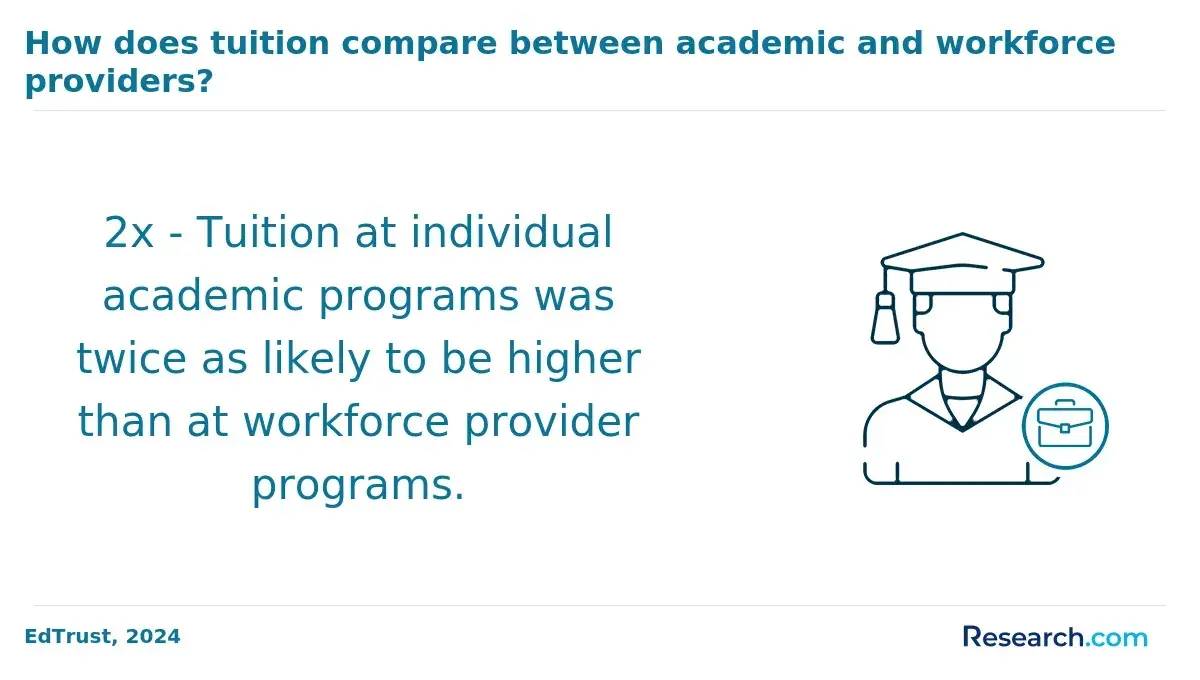
Cost and time are major trade-offs. College Board's 2024 Trends in College Pricing reported average published tuition and fees of $11,610 for in-state students at public four-year institutions and $43,350 at private nonprofit four-year institutions for the 2024-25 academic year. That does not mean every cybersecurity degree costs that much, but it shows why students should compare total program cost, transfer credits, financial aid, and expected career outcomes before enrolling.
The table below compares the main credential options by purpose rather than ranking one as universally better.
| Path | Best use | Strengths | Limitations |
| Cybersecurity degree | Building a long-term foundation for analyst, engineering, GRC, or leadership paths | Broad education, employer recognition, access to internships, stronger fit for roles requiring a degree | Higher cost and longer timeline than short-format training |
| Professional certification | Validating specific skills or meeting employer screening requirements | Focused, recognizable, faster to complete, useful alongside work experience | Rarely substitutes for hands-on experience by itself |
| Cybersecurity bootcamp | Accelerated career change or skill refresh for learners with discipline and technical readiness | Shorter timeline, project-based format, career coaching in some programs | Quality varies widely, and some employers still prefer degrees or prior IT experience |
| Self-study and labs | Building practical proof and exploring specialties before paying for more education | Low-cost, flexible, portfolio-friendly | Requires structure, motivation, and careful documentation to be credible |
A degree makes the most sense if you are early in your career, want access to internships, may pursue leadership later, or are targeting employers that screen for bachelor's degrees. Certifications make sense when you already have a degree or IT experience and need role-specific validation. Bootcamps may work for career changers who can evaluate outcomes carefully, but they are riskier if you have no technical background and expect immediate access to advanced security roles.
Students comparing cybersecurity with adjacent technical careers should also consider how their strengths align. For example, someone more interested in statistics, machine learning, and large-scale analysis may want to compare cybersecurity with a data scientist degree before committing to a security-focused program.
What cybersecurity specializations lead to the strongest long-term career growth?
Long-term growth is strongest in specializations tied to cloud adoption, software development, identity, automation, regulatory pressure, and advanced threat detection. These areas matter because organizations are moving more systems online while attackers increasingly target cloud accounts, supply chains, applications, and third-party platforms.
The best specialization is the one that aligns with your technical strengths and the kinds of employers you want to work for. The table below summarizes high-value focus areas and the skills that typically support them.
| Specialization | Why it is growing | Skills to build | Good career target |
| Cloud security | Organizations rely on AWS, Azure, and Google Cloud for infrastructure and applications | Cloud IAM, networking, logging, containers, infrastructure as code | Cloud security analyst or engineer |
| Application security | Software vulnerabilities remain a major attack path | Secure coding, code review, OWASP Top 10, APIs, threat modeling | Application security analyst or product security engineer |
| Identity and access management | Compromised accounts are central to many breaches | Single sign-on, multifactor authentication, privileged access, directory services | IAM analyst or IAM engineer |
| Governance, risk, and compliance | Regulation, audits, cyber insurance, and vendor risk programs continue to expand | Risk assessment, control frameworks, policy writing, audit evidence | GRC analyst, risk analyst, security auditor |
| Detection engineering and threat hunting | Security teams need better alerts and faster investigation | SIEM queries, logs, scripting, attacker behavior, endpoint telemetry | Detection engineer or threat hunter |
| AI security | Organizations are adopting AI tools that create new data, model, and access risks | Data security, model risk, prompt injection concepts, secure AI governance | AI security analyst or security governance specialist |
AI is changing cybersecurity in two ways: defenders use it to triage alerts and automate repetitive tasks, while attackers use automation to scale phishing, reconnaissance, and social engineering. Students interested in this crossover can compare cybersecurity programs with online AI degrees if they want deeper preparation in machine learning, data systems, and AI governance.
A practical way to choose a specialization is to test it before committing. Build one cloud lab, one secure coding project, one incident response write-up, and one GRC control-mapping sample. The project you can complete well and explain clearly is often a better career signal than the specialization that simply sounds most impressive.
Which industries and employers offer the most demand for cybersecurity graduates?
Cybersecurity demand is broad because almost every organization uses networks, cloud services, user accounts, payment systems, sensitive records, or customer data. However, the strongest opportunities are often concentrated in industries with high regulatory exposure, valuable data, complex infrastructure, or mission-critical operations.
The following industries commonly hire cybersecurity graduates, though the exact requirements vary by employer, location, and role level.
| Industry or employer type | Why cybersecurity matters | Common roles | What applicants should emphasize |
| Financial services | High-value transactions, fraud risk, regulatory scrutiny | SOC analyst, fraud security analyst, GRC analyst, IAM analyst | Risk, compliance, monitoring, identity controls |
| Healthcare | Patient data, connected devices, privacy obligations, ransomware exposure | Security analyst, compliance analyst, vulnerability analyst | Privacy awareness, documentation, endpoint security |
| Federal government and contractors | National security, regulated systems, controlled information | Cyber analyst, incident responder, security assessor | Clearance eligibility, frameworks, formal documentation |
| Technology and cloud providers | Large-scale infrastructure, software platforms, customer data | Cloud security analyst, application security analyst, security engineer | Linux, scripting, cloud labs, secure development |
| Energy, utilities, and manufacturing | Operational technology, industrial systems, uptime and safety concerns | OT security analyst, network security analyst, risk analyst | Networking, segmentation, asset inventory, risk communication |
| Education and local government | Budget constraints, distributed users, sensitive records | IT security analyst, systems security administrator | Broad IT skills, user support, practical problem solving |
Healthcare deserves special attention because it offers both technical and administrative security pathways. If you are drawn to healthcare data and compliance but do not want a technical security role, exploring online medical coding programs may help you compare a more records-focused path with cybersecurity work.
Graduates should not overlook small and midsize employers. Large companies may have formal cyber teams, but smaller organizations often need adaptable professionals who can support endpoint security, identity, user training, vendor reviews, and incident response planning. The trade-off is that smaller teams may offer broader experience but less formal mentoring.
How do online and campus-based cybersecurity programs affect career opportunities?
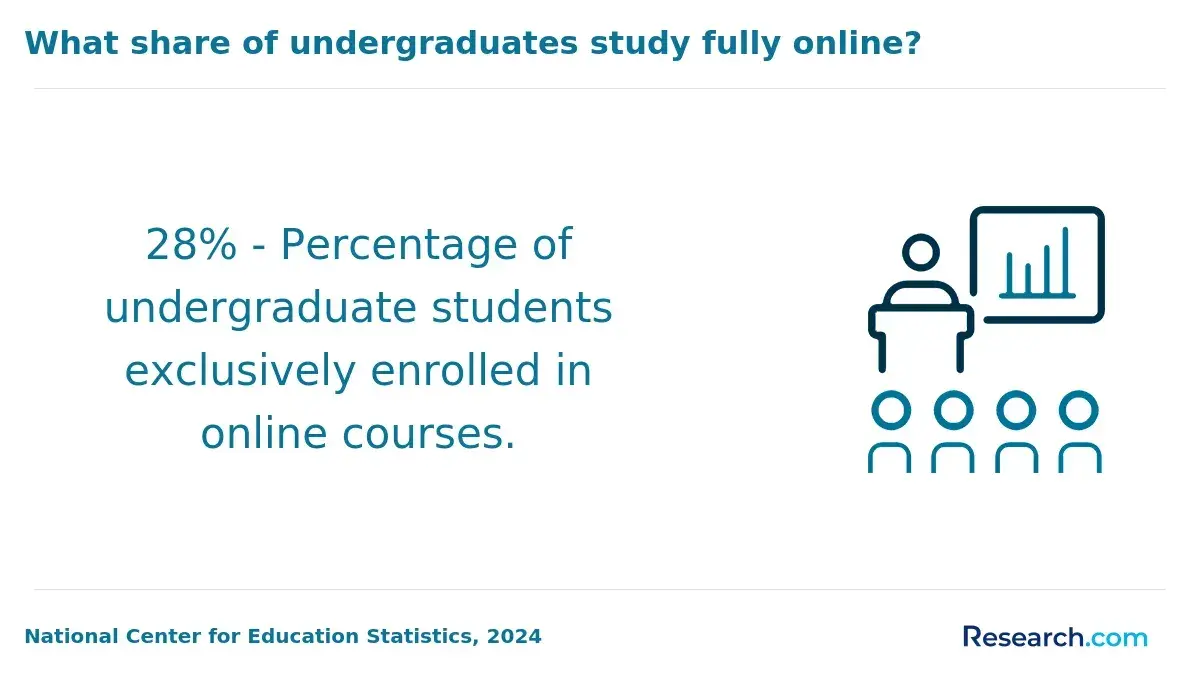
Employers usually care more about accreditation, curriculum quality, hands-on work, internships, projects, and skills than whether a cybersecurity degree was earned online or on campus. The format matters most because it affects your access to labs, faculty, peers, internships, career services, and your ability to complete the program consistently.
The comparison below can help you decide which format is more likely to support your career goals.
| Program format | Career advantages | Possible drawbacks | Best for |
| Online cybersecurity degree | Flexible schedule, easier for working adults, broader school choice, often compatible with internships or full-time work | Requires self-discipline, networking may take more effort, lab quality varies | Working students, military learners, parents, career changers |
| Campus-based cybersecurity degree | In-person labs, easier peer networking, campus recruiting, clubs and competitions | Less flexible, commuting or housing costs, limited local school options | Traditional students who benefit from structure and in-person support |
| Hybrid cybersecurity degree | Combines flexibility with some face-to-face labs or networking | May still require travel, schedules can be less predictable | Students who want flexibility but value occasional in-person interaction |
Online programs can be especially practical for veterans and active-duty learners who need flexibility, transfer-credit support, and career services aligned with military experience. Students in that situation may want to compare the best military friendly online cybersecurity degrees while checking accreditation, tuition assistance policies, and credit for prior learning.
Before choosing either format, ask how the program teaches technical skills. A strong cybersecurity program should include virtual labs, networking practice, Linux and Windows administration, scripting, cloud exposure, vulnerability assessment, incident response exercises, and a capstone or portfolio project. A weak program may rely too heavily on theory without giving you work samples to show employers.
What professional certifications best complement a cybersecurity degree for key roles?
Certifications work best when they support a specific job target. They can help pass resume screens, prove current knowledge, and show commitment, but they should not replace hands-on practice. A student with a degree, one focused certification, and a portfolio is usually easier for employers to evaluate than a student with many unrelated credentials.
The table below maps common certifications to the roles where they are most useful.
| Certification | Best career fit | Why it helps | When to pursue it |
| CompTIA Security+ | SOC analyst, junior security analyst, help desk to security pathway | Validates baseline security knowledge and is widely recognized for entry-level roles | During the final year of a degree or shortly after graduation |
| CompTIA Network+ | SOC analyst, network security, infrastructure security | Builds networking fundamentals that security analysts use every day | Before Security+ if your networking foundation is weak |
| Certified Ethical Hacker | Vulnerability analyst, junior penetration testing pathway | Introduces offensive security concepts and testing terminology | After networking and systems fundamentals are solid |
| GIAC certifications | Incident response, forensics, detection, cloud security | Highly specialized and technical, often valued in advanced security teams | When an employer supports the cost or when targeting a specific specialty |
| CISSP | Security management, architecture, senior analyst roles | Signals broad professional security knowledge and experience | After gaining the required professional experience |
| CISA | GRC, audit, compliance, risk roles | Supports security audit and control assessment work | When pursuing governance, risk, compliance, or audit-focused roles |
A common mistake is collecting certifications without a job strategy. Instead, pick one primary role, review postings in your region, identify repeated requirements, and choose the certification that appears most often for that role. If postings ask for Security+, SIEM experience, and Linux, earning three unrelated certifications will not compensate for missing the practical skills.
How can cybersecurity students gain experience and build a competitive resume during school?
Experience is the biggest gap for many cybersecurity students. Employers know that classroom knowledge matters, but they also want evidence that you can investigate problems, document findings, work with systems, and communicate clearly.
The most effective resume-building activities produce proof: a project, report, lab write-up, competition result, internship, or supervisor reference. Use the following steps to turn school into career evidence.
- Build a home lab using virtual machines, a firewall, Windows, Linux, and a basic SIEM or log analysis tool.
- Create short project write-ups that explain the problem, tools used, steps taken, findings, and lessons learned.
- Join cybersecurity clubs, capture-the-flag events, cyber ranges, or student competitions to practice under realistic constraints.
- Apply early for internships, co-ops, student worker roles, and IT support jobs, even if the title is not purely cybersecurity.
- Ask faculty about research assistant roles, lab monitor positions, or community security projects for nonprofits or small organizations.
- Document technical work in a professional portfolio, but remove sensitive data, attack instructions against real systems, and anything that could violate rules or laws.
Students should also avoid resume red flags that make employers cautious. These include exaggerating tool expertise, listing every technology you have briefly touched, claiming "penetration tester" experience based only on beginner labs, or publishing offensive security content without context. A concise, honest resume with three strong projects is usually better than a long resume full of unsupported claims.
Good portfolio projects for students include a phishing awareness plan, a vulnerability scan and remediation report for a lab network, a cloud IAM hardening checklist, a Windows event log investigation, or a secure coding review of a small application. Each project should show how you think, not just which tools you clicked.
What steps should cybersecurity graduates take to launch and advance their careers?
The smartest path after graduation is structured, not random. Cybersecurity hiring rewards candidates who can connect their education, projects, certifications, and job targets into a coherent story.
Use this sequence to move from degree completion to a stronger first role and then into advancement.
- Choose one primary target role, such as SOC analyst, GRC analyst, IAM analyst, vulnerability analyst, or cloud security associate.
- Collect 20 to 30 job postings for that role in your preferred location or remote market and identify the repeated skills.
- Build or revise projects that prove those repeated skills, such as SIEM analysis, access review, cloud logging, or vulnerability prioritization.
- Earn one relevant certification only after confirming it appears in postings for your target role.
- Customize your resume so the top third clearly shows your degree, target skills, certification, internship or IT experience, and best project.
- Practice explaining your projects in plain language, including what went wrong and how you solved it.
- Apply broadly to entry-level cybersecurity and adjacent IT roles, then track which resumes generate interviews and adjust accordingly.
- After landing your first role, build depth for 12 to 24 months before jumping too quickly into advanced titles.
Career advancement usually comes from moving from monitoring to building, from following procedures to improving them, and from executing tasks to communicating risk. For example, a SOC analyst can advance by learning detection engineering, scripting, endpoint forensics, cloud logs, or incident response. A GRC analyst can advance by learning vendor risk, audit leadership, regulatory mapping, and executive reporting.
The biggest mistake is treating graduation as the finish line. Cybersecurity changes quickly, and employers expect continuous learning. A sustainable plan includes one technical improvement goal, one communication improvement goal, and one career visibility goal each year, such as presenting a project, mentoring a student, contributing to documentation, or leading a small security initiative at work.
Other Things You Should Know About Cybersecurity
You do not need advanced programming for every cybersecurity role, but basic scripting is increasingly useful. Python, PowerShell, Bash, SQL basics, and an understanding of how applications work can help in analysis, automation, cloud security, and application security.
Some cybersecurity roles are remote or hybrid, especially in monitoring, GRC, cloud security, and consulting. However, entry-level remote roles can be competitive, and some employers prefer on-site staff for sensitive systems, hardware, classified environments, or incident response.
While not all cybersecurity jobs require a security clearance, positions in government or defense sectors often do. These clearances can enhance employability and open up higher-paying roles as they involve handling sensitive or classified information. It's beneficial to explore roles where clearances are necessary early in your career planning.
References
- Cybersecurity Job Demand: Current Trends and Future Outlook https://destcert.com/resources/cybersecurity-job-demand/
- 20 Coolest Cybersecurity Careers and Jobs | SANS Institute https://www.sans.org/cybersecurity-focus-areas/cybersecurity-careers/20-coolest-cyber-security-careers
- 20 Jobs You Can Pursue With a Cybersecurity Degree - Champlain College https://www.champlain.edu/blog/stories/cybersecurity-degree-careers/
- Cybersecurity Career Outlook: Roles, Skills, and Growth Ahead https://www.dice.com/career-advice/cybersecurity-career-outlook-roles-skills-and-growth-ahead
- Cybersecurity Bootcamp vs Degree: Complete Comparison 2026 https://unihackers.com/compare/bootcamp-vs-degree
- Cybersecurity Internship: Path & Certifications Guide https://www.quickstart.com/blog/cyber-security/how-to-secure-a-cybersecurity-internship/
- What skills and certifications do you need for a career in cyber security? https://www.themissinglink.com.au/news/top-cyber-security-certifications
- Cybersecurity Supply And Demand Heat Map https://www.cyberseek.org/heatmap.html
- Careers in Cybersecurity | University of Phoenix https://www.phoenix.edu/articles/cybersecurity/careers-in-cybersecurity.html
- How to Launch a cybersecurity Career - Circadence https://circadence.com/blog/how-to-launch-a-cyber-security-career/