2027 Best Hybrid ABSN Programs

Co-Founder and Chief Data Scientist
Time-constrained career changers entering accelerated nursing paths face a tense dilemma: programs that stretch over a year demand rapid mastery without sacrificing clinical depth, yet limited flexibility can clash with work or family obligations. The challenge multiplies as the Bureau of Labor Statistics projects 45% growth in registered nursing jobs by 2034, intensifying pressure to enter the workforce quickly while meeting rigorous licensure standards.
Meanwhile, data from the National Student Clearinghouse reveals a 28% rise in enrollments for hybrid healthcare degrees since 2024, reflecting growing demand for accessible, blended formats. This article examines the best hybrid ABSN programs, evaluating how they balance speed, flexibility, and clinical rigor to guide optimal enrollment decisions.
Key Things You Should Know
- Hybrid ABSN programs reduce clinical seat competition by blending online didactic instruction, yet require 30-50% more total hours than traditional ABSN, extending completion time by an average 3-6 weeks per the National League for Nursing 2024 report.
- Employers in high-demand states like California and Texas increasingly favor hybrid graduates with verified simulation experience, reflecting 28% higher initial competency ratings in hospital onboarding studies by HRSA 2024.
- Cost savings from reduced on-campus time average 15%, but hidden expenses like home simulation equipment and unstable clinical site availability can delay licensure timelines, complicating workforce entry timing.
What is a hybrid ABSN program and how does it differ from traditional and fully online options?
Hybrid ABSN program benefits lie primarily in their balance of flexible remote learning and required hands-on clinical experiences, which better align with workforce demands than fully traditional or online routes.
Unlike traditional ABSN programs that mandate daily campus presence, hybrid models enable students to complete approximately 60-70% of theoretical coursework remotely, freeing time for employment or family care. The essential clinical and lab practice remains onsite, preserving practical proficiency and employer expectations.
For working professionals or career changers, a hybrid ABSN offers concrete operational advantages: pharmacology and nursing theory can be studied online during off-hours, while clinical rotations happen locally on scheduled days. This arrangement reduces commute burden and geographic constraints.
However, the success of these benefits depends heavily on the availability of quality clinical sites and the program's coordination. Insufficient practical access or scheduling conflicts can impair skill mastery and licensure preparedness.
When weighing the differences between hybrid and traditional ABSN programs, consider that traditional programs often increase financial costs and time commitments through full-time, campus-centric schedules. Purely online ABSN options, which remain uncommon due to accreditation and clinical training challenges, risk delayed or inadequate clinical exposure, potentially compromising competence in diverse healthcare environments.
Projected job growth of 6% for registered nurses between 2023 and 2033 underscores the imperative for expedited, competency-based pathways. Hybrid programs expedite workforce entry by combining flexibility with rigorous clinical training. Prospective students should carefully evaluate if hybrid program frameworks fit their local clinical context and personal constraints to optimize licensure readiness and long-term employability.
Those exploring the easiest ABSN program to get into will find hybrid formats worthwhile for their real-world adaptability and structured in-person training requirements.
Are hybrid ABSN programs accredited, and how does accreditation impact nursing licensure and employment?
Accreditation is a decisive factor for hybrid accelerated bsn programs, directly affecting graduates' eligibility for nursing licensure and workplace acceptance. Without recognized accreditation from bodies like the Commission on Collegiate Nursing Education (CCNE) or the Accreditation Commission for Education in Nursing (ACEN), graduates cannot take the NCLEX-RN, barring entry into registered nursing roles.
This creates a major barrier for licensure and employment, particularly in environments with strict regulatory compliance such as hospitals and specialty clinics.
The impact of program accreditation on nursing employment extends beyond initial licensure. Healthcare employers often link salary progression and credential portability to the legitimacy of the educational program. States participating in the Nurse Licensure Compact (NLC) may restrict reciprocity for nurses from non-accredited hybrid accelerated bsn programs, limiting geographic flexibility.
For example, graduates of an accredited hybrid accelerated bsn program like the University of Miami, boasting a 97.42% NCLEX-RN pass rate according to allnurses, benefit from broader employment options and stronger contract negotiation leverage.
Prospective candidates must confirm the accreditation status of programs and verify compatibility with their state nursing board requirements. Hybrid formats also demand careful self-reporting of clinical hours to meet accreditation thresholds; failure to comply can delay graduation and licensure. Students interested in streamlined clinical requirements might investigate RN to BSN programs with no clinicals as alternatives suited to their constraints.
What are the admission requirements and prerequisites for competitive hybrid ABSN programs?
Admission requirements for hybrid ABSN programs in the United States rigorously filter candidates to ensure readiness for an accelerated, clinically demanding curriculum. Applicants typically present a non-nursing bachelor's degree with a minimum 3.0 GPA, emphasizing recent science coursework such as anatomy, physiology, microbiology, chemistry, and statistics completed within five to seven years. This timeframe is a pragmatic safeguard against knowledge gaps that could hinder clinical performance and licensure success.
Competitive hybrid accelerated bachelor of science in nursing programs also require high standardized test scores-often a minimum 70th percentile on exams like TEAS or HESI-and documented healthcare experience totaling 500 to 1,000 hours in patient-facing roles such as EMT or CNA.
This hands-on exposure addresses employer expectations for candidates already acclimated to complex care environments, reducing onboarding time and risk in clinical placements.
Applicants undergo background checks and must provide professional references attesting to reliability and teamwork, reflecting the accountability demanded by clinical partners. The limited clinical placement capacity restricts enrollment-many programs admit fewer than 30%-creating a bottleneck for those pursuing this career pivot.
Given the extensive pool of over 700,000 active RN licenses, strategically meeting these prerequisites is essential to avoid delays in entering the workforce. Prospective students evaluating pathways can also consider resources such as easiest nursing programs to get into as part of their research.
How long do hybrid ABSN programs take to complete, and how intensive is the schedule?
Hybrid ABSN program duration and schedule intensity significantly shape student experiences, with programs generally spanning 12 to 18 months of full-time study. The compressed timeline demands 30 to 40 weekly hours, combining online coursework with intensive clinical rotations often arranged in multi-day blocks. This structure leaves limited opportunity for outside employment, pressuring working professionals to undertake careful financial and time-management planning.
Time commitment for hybrid ABSN courses extends beyond class hours to include mandatory immunizations, background checks, and study time, while clinical placements require daytime availability in hospital or community settings. These logistics can create challenges for students balancing caregiving or secondary jobs. Some hybrid models front-load didactic work or alternate between online and in-person phases, influencing personal schedules and program pacing.
Employers value candidates who complete hybrid ABSN programs without breaks, viewing uninterrupted progress as an indicator of resilience crucial for demanding healthcare roles. The median registered nurse salary of $86,070 confirms economic motivation, yet accelerated programs elevate burnout risk if workload intensity is underestimated. Evaluating program structure, clinical accessibility, and cohort support critically influences successful outcomes.
Prospective students weighing accelerated nursing paths should consider practical tradeoffs, including commute times and clinical site flexibility, to avoid delay. For those exploring alternative nursing credentials, resources like the shortest post master's FNP program offer additional pathways that may better align with specific career goals.
What does the typical hybrid ABSN curriculum include, and how are online and in-person courses structured?
Hybrid ABSN programs present a distinct tradeoff between convenience and clinical rigor that directly impacts readiness and employability. While they offer flexibility by delivering 60-70% of coursework online, the requirement of 500 to 700 in-person clinical hours remains non-negotiable, ensuring graduates meet employer expectations for hands-on competence.
This structure suits working professionals who must balance study with employment but introduces logistical challenges such as commuting and tightly scheduled onsite intensives.
Online instruction typically covers foundational subjects like nursing theory, pharmacology, and ethics via multimedia lectures and virtual simulations, allowing for asynchronous study punctuated by synchronous sessions that reinforce cohort cohesion and real-time evaluation. However, remote learning cannot substitute for the nuanced clinical judgment and interpersonal skills developed during face-to-face patient care experiences in hospitals or simulation labs.
Cost variation further affects student decisions. For example, public hybrid ABSN programs in Illinois range from approximately $21,648 at Southern Illinois University Edwardsville to $33,735 at Illinois State University. Lower tuition often reduces financial barriers but may require students to navigate more complex scheduling and travel demands for clinical components.
Prospective students should weigh these factors carefully: hybrid structures can diminish geographic limitations but demand disciplined self-management and proactive planning to meet rigorous practical requirements aligned with workforce standards.
How are clinical rotations, labs, and hands-on training arranged in hybrid ABSN programs?
Hybrid ABSN programs demand substantial in-person commitments despite delivering much of their didactic content online, creating distinct logistical and financial tradeoffs. Clinical rotations, labs, and practical skills training require scheduled attendance at approved healthcare settings or campus simulation centers.
These are often organized in intensive blocks, evenings, or weekends to accommodate working adults but require significant coordination for childcare, transportation, or employer support.
Laboratory sessions focus on core nursing skills like IV insertion and emergency procedures that cannot be replicated virtually. This hands-on experience aligns with workforce expectations that prioritize verified clinical competence over purely theoretical knowledge, a key decision driver for employers in hiring new nursing graduates.
Programs such as Saint Joseph's College of Maine exemplify the cost implications, with tuition around $54,000 plus $4,000 in fees, reflecting the high resource investment of hybrid modalities. Students must navigate clinical placement within accessible locations and maintain strict attendance to satisfy licensure requirements, often managing these demands alongside employment.
Given these factors, hybrid ABSN candidates should weigh practical constraints against program flexibility and employer value placed on real-world clinical rigor when planning their educational and career trajectories.
What are the tuition, fees, and total costs of hybrid ABSN programs, and what financial aid is available?
Cost remains a pivotal factor when evaluating hybrid ABSN programs, with tuition typically falling between $50,000 and $80,000 for accelerated tracks lasting 12 to 24 months.
For instance, Roseman University's hybrid-online ABSN charges $65,600 for an 18-month program, excluding ancillary expenses such as clinical supplies, immunizations, and licensing fees that can add $3,000 to $5,000 upfront. This total financial layout demands prospective students weigh upfront investment against potential returns carefully.
Financial aid can mitigate these expenses through federal Pell Grants, Direct Subsidized and Unsubsidized Loans, and scholarships targeted at accelerated nursing cohorts. Military-affiliated candidates often gain access to GI Bill benefits and dedicated scholarships, an advantage not always available to civilians.
Payment plans are also commonly offered, enabling tuition costs to be distributed over the program's duration. However, full-time workers must consider opportunity costs such as reduced work hours or increased debt burdens.
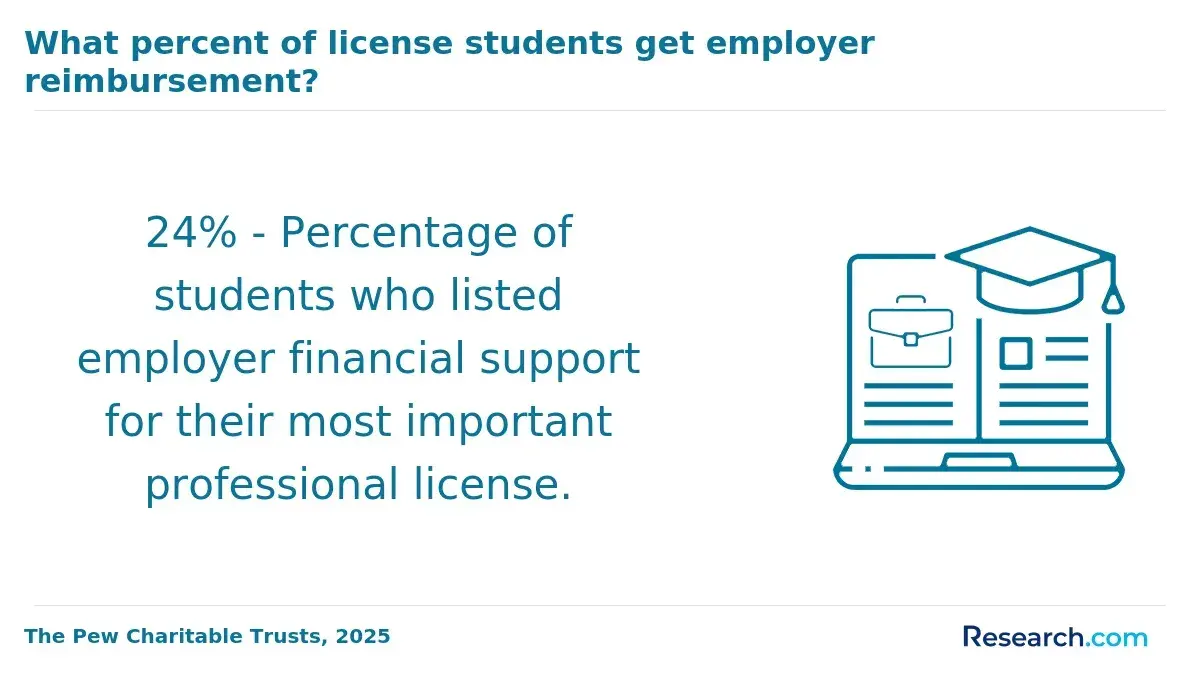
Employer tuition reimbursement presents a practical offset but usually comes with multi-year service commitments that restrict post-graduation flexibility in job location or role. Students balancing work and study must analyze these tradeoffs in light of their household income stability and career trajectory.
What NCLEX-RN pass rates, graduation outcomes, and job placement results do top hybrid ABSN programs report?
Programs with hybrid accelerated BSN formats achieving NCLEX-RN pass rates consistently above 90% influence employer hiring probability by signaling immediate clinical competence. For instance, the University of Miami's accelerated BSN demonstrates a 97.42% pass rate, substantially exceeding the National Council of State Boards of Nursing's average.
Such outcomes typically translate into reduced orientation periods and faster integration into clinical teams-key in healthcare systems addressing nurse shortages and high turnover expenses.
Graduation rates aligning above 85-90% reflect effective academic frameworks balancing online instruction and essential hands-on clinical experience. Managing these dual demands requires students to carefully plan to maintain academic standing while meeting rigorous clinical skill expectations, often under significant time constraints and performance pressure.
Job placement exceeding 80% within six months post-graduation signals strong program-industry bridges but varies by geography and care setting:
- Urban hospital roles often leverage institutional partnerships, expediting employment.
- Positions in rural or specialty care typically involve extended job searches and specialized credentialing.
These dynamics emphasize early and strategic career support engagement, aligning clinical practicums to regional workforce needs and differentiating applicants in competitive markets. Attentive navigation of retention pressures, licensing hurdles, and facility demands remains central to converting an ABSN credential into sustained nursing employment.
What nursing roles, practice settings, and career pathways are available after earning a hybrid ABSN?
The hybrid accelerated bachelor of science in nursing (ABSN) serves as a pragmatic route to registered nurse roles, balancing academic intensity with workforce participation. Unlike traditional programs, it compresses coursework and clinical hours into 12-18 months, which demands rigorous time management and resilience from students managing work and study simultaneously.
This model suits learners in competitive urban or resource-limited rural settings, where securing clinical placements and exam preparation windows requires strategic planning.
Graduates commonly fill critical roles in hospitals' medical-surgical units, emergency departments, and long-term care, where adaptability across fast-evolving care environments is essential. The hybrid format's combination of online learning and in-person clinicals yields candidates comfortable navigating digital platforms and direct patient care, a dual competency employers value.
For example, a working adult completing the program without pausing income can transition quickly into high-demand areas while meeting staffing shortages.
Career trajectories extend beyond entry-level nursing to specialized fields such as perioperative nursing, psychiatric care, and informatics, though these paths often require additional certifications and experience.
Financially, while entry-level wages vary, the top 10% of registered nurses earned over $132,680 annually according to U.S. Bureau of Labor Statistics data from May 2024, indicating strong upside for those targeting advanced clinical or managerial roles.
How do salaries and long-term job outlook compare for nurses graduating from hybrid ABSN programs?
Graduates of hybrid ABSN programs face distinct financial trajectories depending on their employment setting. While hospital inpatient roles offer starting salaries near the national RN median-around $80,000-wage growth is often limited by rigid union pay scales and budget constraints.
In contrast, outpatient care centers and home healthcare jobs typically begin with slightly lower pay, near $75,000, but provide faster wage increases driven by higher demand and flexible compensation structures.
This divergence reflects broader labor market shifts as healthcare delivery expands more rapidly outside hospitals, with outpatient and home healthcare employment projected to grow over 10% through 2032 versus 6% for overall RN jobs.
Hybrid ABSN graduates targeting these evolving sectors must weigh a tradeoff: accept variable schedules and travel requirements for greater autonomy and wage growth, or prioritize stability and slower income ascent in hospital settings.
Practical decision-making also involves certification acquisition and networking with outpatient providers to enhance placement opportunities and earning potential. Employers in these areas value clinical adaptability and patient education skills more heavily in hybrid-trained nurses.
For example, a hybrid ABSN graduate planning to transition from hospital nursing to home healthcare within five years could realize significantly higher cumulative earnings, but should prepare for logistical challenges such as client travel.
Ultimately, hybrid ABSN students must balance immediate salary against long-term workforce trends and personal work-life preferences when choosing their employment path.
Other Things You Should Know About ABSN
Hybrid ABSN programs often offer flexibility, allowing students to juggle work along with their studies. However, the intensity and fast pace demands may require reducing work hours, especially during clinical rotations. Part-time work is more feasible, while full-time employment may be challenging.
2027 hybrid ABSN programs typically require students to complete a minimum of 700 clinical hours. Clinical placements are often arranged in hospitals or community settings, providing hands-on experience. Some programs also mandate specific rotations in areas like pediatrics or geriatrics to ensure comprehensive training.
A hybrid ABSN program should hold accreditation from the Commission on Collegiate Nursing Education (CCNE) or the Accreditation Commission for Education in Nursing (ACEN). These accreditors are recognized by employers and state boards of nursing, and graduation from an accredited program supports eligibility for the NCLEX-RN exam.
Prerequisites for 2027 hybrid ABSN programs often include a bachelor's degree in any field, completion of courses in biology, chemistry, and anatomy with a minimum grade, and sometimes a minimum GPA requirement. Some programs may also require healthcare experience or specific exams like the TEAS.
References
- Top 10 ABSN Programs With the Highest NCLEX Pass Rates in 2026 https://mylifeassugar.com/blogs/blog/top-10-absn-programs-with-the-highest-nclex-pass-rates-in-2026
- Accelerated BSN Programs: Who Qualifies | Betternurse.org https://betternurse.org/accelerated-bsn-program-guide/
- CCNE Accreditation https://www.aacnnursing.org/ccne-accreditation
- Accelerated Nursing Programs https://www.allnursingschools.com/articles/accelerated-nursing-programs/
- How Long Is an Accelerated BSN? ABSN Timeline and 12-Month Option https://stmary.edu/nursing-accelerated/how-long-is-an-accelerated-bsn.html
- All About ABSN https://onlinedegrees.rockhurst.edu/blog/all-about-absn-infographic
- How to Get Into an Accelerated Nursing Program | University of Bridgeport https://www.bridgeport.edu/news/how-to-get-into-an-accelerated-nursing-program/
- Your Guide to Accelerated Nursing Programs | Nurse Agent https://nurseagent.org/your-guide-to-accelerated-nursing-programs
- Lipscomb Accelerated BSN’s inaugural cohort earns 100% first-time NCLEX pass rate https://lipscomb.edu/news/lipscomb-accelerated-bsns-inaugural-cohort-earns-100-first-time-nclex-pass-rate
- Accelerated Bachelor of Science in Nursing (ABSN) Costs https://www.creighton.edu/cost-aid/find-costs/nursing-absn-costs