2027 How To Become a Biologist? Salary & Career Paths

Co-Founder and Chief Data Scientist
Choosing biology as a career path can feel exciting and confusing at the same time. The major covers everything from cells and genetics to wildlife, public health, biotechnology, agriculture, and climate science, but the jobs available after graduation are not all the same. Some roles are lab-based, some are field-based, some require graduate school, and others are better reached through healthcare, data, environmental, or industry experience.
This guide explains what biologists do, how to become one for 2027, where biology graduates work, what they can earn, and how to decide whether this path fits your goals. It also covers internships, certifications, degree selection, professional organizations, ethical responsibilities, and the trends shaping biology careers in biotechnology, computational biology, healthcare, and environmental science.
Quick Answer: Is Biology a Good Career Path?
Biology can be a strong career path for people who enjoy scientific problem-solving, lab or field research, data analysis, and work connected to health, ecosystems, agriculture, or technology. Biologists can earn between $37,000 and $138,000 annually, with most salaries falling between $59,500 and $121,000. Career outcomes depend heavily on education level, specialization, practical experience, location, and whether the role is in academia, government, healthcare, biotechnology, pharmaceuticals, environmental consulting, or another industry.
The best prospects usually go to candidates who combine a biology degree with hands-on research, internships, technical tools, data skills, or advanced training. Students who want a direct, predictable job path should compare biology with more occupation-specific routes, such as nursing, clinical laboratory science, pharmacy, physician assistant studies, or environmental engineering.
Key Things You Should Know About Becoming a Biologist
- Biologists study life at many levels. Their work may involve cells, genes, organisms, ecosystems, diseases, crops, wildlife, or environmental systems.
- A bachelor’s degree is the usual starting point. Many entry-level roles require a biology-related degree, while research leadership, university teaching, and specialized scientific positions often require a master’s degree or Ph.D.
- Experience matters as much as coursework. Lab work, field projects, internships, research assistantships, and data skills can make a biology graduate far more competitive.
- Career paths vary widely. Biologists work in academia, government, healthcare, biotechnology, pharmaceuticals, conservation, agriculture, policy, consulting, and science communication.
- Salary potential depends on the setting. Industry roles, especially in biotechnology and pharmaceuticals, often offer stronger compensation than many academic or entry-level research jobs.
- The field is changing quickly. Biotechnology, genetic engineering, computational biology, AI-assisted research, and climate science are creating new opportunities, but funding limits and job competition remain real challenges.
- What does a biologist do?
- How do you become a biologist for 2027?
- What are the different career paths for biologists?
- How much do biologists earn?
- What are the job prospects for biologists?
- What are the pros and cons of being a biologist?
- What are the best universities for studying biology?
- What internships and research opportunities are available for biology students?
- How do additional certifications impact the financial outlook in biology careers?
- How does biology contribute to solving global challenges?
- How can interdisciplinary education and networking enhance your biology career?
- What are the ethical challenges and responsibilities in a biology career?
- How can you choose the right biology degree program for your career objectives?
- How can joining professional organizations accelerate your biology career?
- How does continuous education influence career advancement in biology?
- What are the future trends in biology careers?
- How can professional certifications complement a biology career?
- What soft skills are essential for success in a biology career?
What does a biologist do?
A biologist investigates living systems and uses scientific methods to understand how organisms function, adapt, reproduce, interact, and respond to their environments. Depending on the role, a biologist may study bacteria, plants, animals, human biology, genes, ecosystems, diseases, or the effects of pollution and climate change.
The work can look very different from one job to another. A molecular biologist may spend most of the day in a laboratory analyzing samples. A wildlife biologist may track animals in the field. A biotech researcher may test drug compounds or genetic tools. A conservation biologist may analyze habitat data and advise agencies on land-use decisions.
Common responsibilities of biologists
- Designing studies and experiments. Biologists create research questions, test hypotheses, collect samples, and follow scientific protocols.
- Working in laboratories or field sites. They may use microscopes, DNA tools, cell cultures, water-quality instruments, animal tracking devices, or environmental sensors.
- Analyzing biological data. Many roles require statistics, scientific software, spreadsheets, databases, geographic tools, or coding.
- Writing and reporting findings. Biologists prepare technical reports, research papers, grant materials, regulatory documents, or public-facing summaries.
- Supporting applied decisions. Their findings may influence drug development, public health planning, conservation policy, agriculture, environmental regulation, or product development.
Major employers of biologists
| Employer type | What biologists often do there | Employment detail stated in the source article |
| Scientific research and development | Run experiments, analyze data, support product or discovery research, and develop new methods. | The largest employer, with over 19,000 biologists. |
| Government agencies | Support conservation, public health, environmental monitoring, regulation, and policy development. | Nearly 19,000 biologists work in this area. |
| Colleges and universities | Teach, conduct research, mentor students, and manage academic labs. | Around 5,000 biologists work in higher education settings. |
| Consulting services | Advise on environmental reviews, technical studies, compliance, and applied science projects. | Over 3,000 biologists work in consulting services. |
| Pharmaceutical manufacturing | Support drug discovery, testing, quality processes, and biomedical research. | Nearly 3,000 biologists work in pharmaceutical manufacturing. |
Biology can also be a foundation for health-related careers. For example, students asking what do I need to become a neurologist should know that biology is often a useful undergraduate starting point before medical school, although becoming a neurologist requires a separate medical education and residency pathway.
How do you become a biologist for 2027?
To become a biologist, you typically need at least a bachelor’s degree in biology, biological sciences, or a closely related field. However, the exact path depends on the type of work you want. Entry-level laboratory, technician, conservation, or industry support roles may be available with a bachelor’s degree, while independent research, university faculty roles, and advanced scientific leadership often require graduate education.
Step 1: Choose the right biology-related degree
A bachelor’s degree in biological sciences is the most common entry point. In 2021–22, about 131,500 students earned a biology-related degree, representing 7% of all bachelor's degrees. Students should compare programs by coursework, lab access, research opportunities, faculty expertise, internship support, and career placement—not just by school reputation.
Step 2: Build laboratory, field, and data experience early
Employers and graduate programs often look for practical evidence that a student can work safely, accurately, and independently. Useful experience may include undergraduate research, field sampling, lab assistant roles, summer internships, clinical research support, environmental monitoring, or work with scientific datasets.
Step 3: Decide whether graduate school is necessary
A master’s degree or Ph.D. can be important for roles in genetics, microbiology, ecology, biomedical research, university teaching, and senior research design. Graduate school can improve access to specialized positions, but it also takes time and money, so students should compare the expected career benefit with the cost and opportunity cost.
Step 4: Develop technical skills that match your target role
Modern biology increasingly rewards people who can combine scientific knowledge with technical tools. Depending on the specialization, useful skills may include molecular methods, microscopy, cell culture, sample preparation, statistical analysis, bioinformatics, geographic information systems, scientific writing, regulatory documentation, or quality control.
Step 5: Use specialization to narrow your job search
“Biologist” is a broad title. A stronger plan is to choose a practical direction: biotechnology, conservation, public health, clinical research, environmental consulting, wildlife management, genetics, agriculture, science policy, or science communication. Students interested in criminal investigation may explore the blood spatter analyst career path, which connects biological knowledge with forensic work.
| Career goal | Typical preparation | Best next step |
| Entry-level lab or research support | Bachelor’s degree, lab courses, research assistant experience, careful documentation skills. | Apply for lab assistant, biological technician, or research technician roles. |
| Biotechnology or pharmaceutical research | Biology degree plus molecular, cell, genetics, data, or quality-related experience. | Target internships and roles in biotech firms, pharmaceutical companies, or contract research organizations. |
| Wildlife, ecology, or conservation | Biology, ecology, environmental science, field methods, GIS, and seasonal fieldwork. | Build field hours and look for agency, nonprofit, consulting, or research station opportunities. |
| Academic research or university teaching | Graduate degree, publications, grant experience, and teaching or mentoring experience. | Evaluate master’s or Ph.D. programs with active research labs in your specialization. |
| Healthcare-adjacent biology work | Biology background plus clinical, lab, healthcare operations, or certification-based training. | Compare clinical laboratory, medical research, public health, or healthcare certificate routes. |
What are the different career paths for biologists?
Biologists do not follow one single career ladder. The field branches into academic research, private industry, healthcare, environmental work, government, education, policy, and communication. The right route depends on whether you prefer discovery research, applied problem-solving, patient-adjacent work, outdoor fieldwork, data analysis, teaching, or product development.
- Academia. About 65% of scientists work in universities and research institutions, where they may teach, publish research, mentor students, and compete for grants.
- Private industry. Around 15% of biologists work in private companies, including biotechnology, pharmaceuticals, agriculture, diagnostics, and life-science tools. These roles may offer higher salaries and greater access to equipment and resources.
- Healthcare and medicine. Biologists support drug development, genetics, disease research, clinical studies, laboratory testing, and health-related innovation. Readers considering patient-centered pathways may also compare biology with options such as learning how to become a certified nurse midwife.
- Environmental science and conservation. These biologists study habitats, species, water, soil, climate impacts, land use, and biodiversity, often for agencies, nonprofits, universities, or consulting firms.
- Science policy, education, and communication. Biologists with strong writing and public speaking skills may translate scientific evidence for policymakers, students, journalists, agencies, companies, or the public.
In high-income countries, industry employs about half of all researchers. That does not mean industry is automatically the better choice, but it does show that biology careers extend far beyond the university lab. Academia may offer intellectual independence and deep specialization, while industry may offer clearer product goals, stronger compensation, and more team-based applied science.
| Path | Best fit for | Potential trade-off |
| Academic research | People who enjoy deep inquiry, teaching, publishing, and long-term research questions. | Funding pressure, long training timelines, and intense competition for permanent roles. |
| Biotech or pharmaceuticals | People interested in applied research, product development, genetics, therapeutics, or diagnostics. | Projects may shift based on business priorities, timelines, and regulatory demands. |
| Government biology | People motivated by public health, conservation, regulation, environmental monitoring, or policy. | Hiring can be formal, competitive, and tied to budgets or agency priorities. |
| Environmental consulting | People who want applied fieldwork, compliance work, technical reports, and client-facing projects. | Work may involve travel, deadlines, seasonal workloads, and regulatory documentation. |
| Science communication | People who can explain complex science clearly to non-specialists. | May require writing, media, education, or policy experience beyond biology coursework. |
How much do biologists earn?
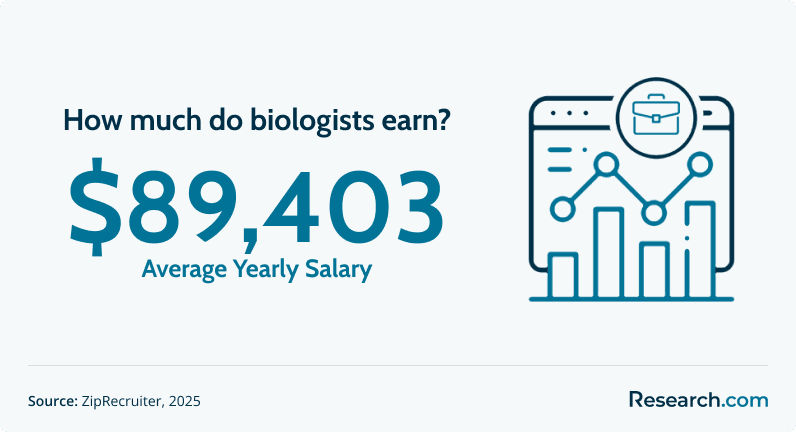
Biologist pay varies widely by role, employer, geography, education, and specialization. The stated salary range is $37,000 to $138,000 per year, with most salaries falling between $59,500 and $121,000. The top 10% make around $137,000 annually.
Private-sector jobs in biotechnology, pharmaceuticals, diagnostics, and life-science research often pay more than many academic or government roles. However, pay should not be evaluated alone. Benefits, job security, research freedom, graduate funding, publication opportunities, work-life balance, and advancement pathways can differ significantly across sectors.
Advanced degrees can increase access to senior scientific or research leadership jobs, but graduate education is not the only way to improve earning potential. Some biology graduates move into regulated healthcare support, clinical operations, informatics, quality assurance, or administrative roles. Depending on career goals, targeted medical certificate programs may help some professionals qualify for healthcare-related positions, though outcomes depend on the credential, employer, and local labor market.
| Factor | How it can affect earnings | What to check before deciding |
| Education level | Graduate degrees may qualify candidates for specialized research, leadership, or teaching roles. | Ask whether the jobs you want actually require a master’s degree or Ph.D. |
| Industry | Biotechnology and pharmaceutical roles may offer stronger compensation than some academic or public-sector jobs. | Compare pay, stability, advancement, and the type of work you will do daily. |
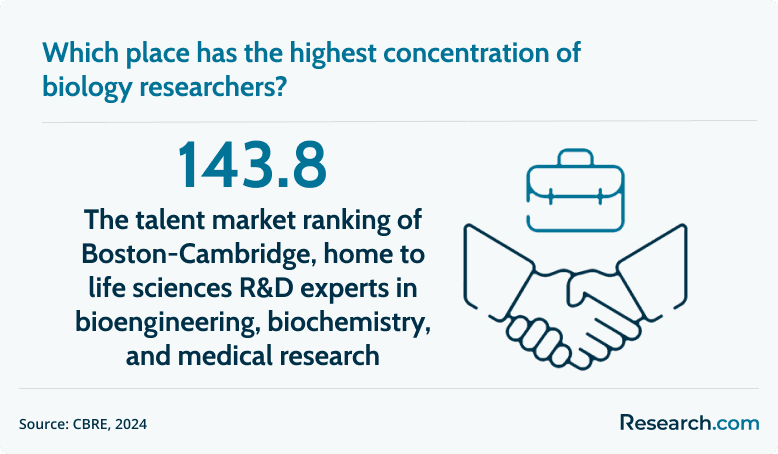
| Location | Major biotech hubs and metropolitan regions may offer more opportunities and higher pay. | Consider cost of living, commute, relocation costs, and competition. |
| Technical specialization | Skills in genetics, bioinformatics, quality systems, clinical research, or data analysis can improve marketability. | Review job postings before choosing electives, certificates, or graduate programs. |
| Experience | Internships, publications, lab methods, and field experience can strengthen applications. | Build a portfolio of projects, protocols, reports, datasets, or research outputs. |
What are the job prospects for biologists?
Job prospects are strongest for biology graduates who pair their degree with practical experience, technical specialization, and a clear career target. Broad interest in biology is not enough; employers usually want evidence that candidates can handle lab procedures, field methods, data analysis, documentation, regulatory expectations, or project work.
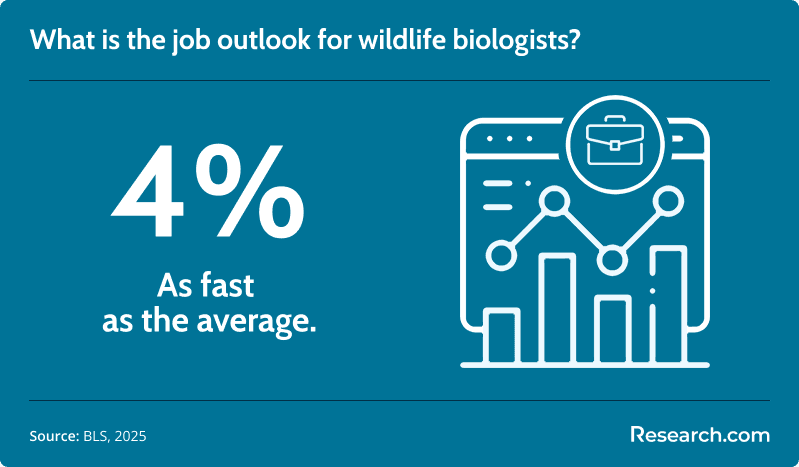
Demand for biological technicians is expected to grow 7% from 2023 to 2033, faster than the average for all jobs. About 10,300 job openings are expected each year, with many openings resulting from workers retiring or moving into different occupations.
Biotechnology, pharmaceuticals, clinical research, environmental science, public health, conservation, and data-driven biological research are important areas to watch. Students who want an applied healthcare laboratory role may also consider learning how to become a clinical technologist, since that pathway connects biological science with diagnostic testing and medical laboratory work.
Government agencies and universities can provide stable and meaningful roles, but some positions are highly competitive, especially when funding is limited or when research jobs require graduate credentials. Candidates with advanced degrees, specialized techniques, quantitative skills, and relevant internships are generally better positioned for higher-level opportunities.
How to improve your biology job prospects
- Choose a target field before senior year. Decide whether you are aiming for biotech, conservation, healthcare, research, education, policy, or another area.
- Use job postings as a curriculum guide. Identify repeated skills, software, lab methods, and credentials in roles you want.
- Get supervised experience. Prioritize research labs, internships, field schools, summer programs, or employer-based projects.
- Document your work. Keep records of techniques used, instruments handled, datasets analyzed, reports written, posters presented, and safety training completed.
- Build references early. Faculty, lab supervisors, internship managers, and field coordinators can be crucial for graduate school and job applications.
What are the pros and cons of being a biologist?
A biology career can be intellectually rewarding, socially meaningful, and technically challenging. It can also require years of preparation, uncertain funding, and a willingness to compete for specialized roles. Before committing, students should weigh both the appeal of the science and the realities of the labor market.
| Pros | Why it matters |
| Wide range of career options | Biology can lead to work in research, healthcare, conservation, agriculture, biotechnology, education, policy, and consulting. |
| Meaningful scientific impact | Biologists may contribute to medicine, conservation, food systems, public health, and environmental protection. |
| Strong salary potential in some sectors | Experienced professionals in industry, specialized research, or technical roles can reach higher compensation levels. |
| Opportunities for fieldwork or discovery | Some roles involve travel, outdoor research, wildlife studies, ocean work, forests, laboratories, or research stations. |
| Demand linked to science and technology | Healthcare innovation, biotechnology, genetics, and environmental challenges continue to create work for trained biology professionals. |
| Cons | Why it matters |
| Advanced education may be needed | Many desirable research, academic, or specialized roles require a master’s degree or Ph.D. |
| Competition can be significant | Academic and research positions may attract many qualified applicants, especially in popular specialties. |
| Entry-level salaries can vary | Pay depends on employer type, region, specialization, and experience, and some early roles may be modestly paid. |
| Field and lab conditions can be demanding | Some jobs involve hazardous materials, repetitive procedures, difficult weather, remote sites, or strict safety protocols. |
| Research funding may be uncertain | Academic and government work can depend on grants, contracts, agency budgets, or project renewals. |
Who should choose a biology career?
- Students who are curious about living systems and willing to build technical skills.
- People who enjoy evidence-based problem-solving and careful observation.
- Students who are open to internships, research, fieldwork, or graduate school if needed.
- People who can tolerate uncertainty while building toward a specialized career.
Who may want a different path?
- Students who want a guaranteed job title immediately after a bachelor’s degree.
- People who dislike lab work, data analysis, scientific writing, or detailed documentation.
- Students who are not willing to pursue additional training for competitive specialties.
- People who want direct patient care but have not compared biology with nursing, clinical laboratory science, or other healthcare degrees.
What are the best universities for studying biology?
The best biology program is not always the most famous one. A strong program should match your intended specialization, provide substantial laboratory or field experience, connect students with research mentors, and offer pathways to internships, graduate study, or employment. Reputation helps, but access to faculty, equipment, advising, and career support often matters more for an individual student’s outcome.
Well-known universities for biology
- Harvard University. Harvard University is recognized for research strengths in areas such as genetics, microbiology, biomedical science, and biotechnology.
- Stanford University. Stanford University offers strong study options connected to ecology, molecular biology, biomedical sciences, and interdisciplinary research.
- Massachusetts Institute of Technology. MIT is associated with bioengineering, computational biology, neuroscience, and research-intensive science training.
- University of California, Berkeley. University of California, Berkeley has notable strengths in environmental biology, genetics, plant sciences, and related fields.
- Johns Hopkins University. Johns Hopkins University is known for biology connected to medicine, public health, and health-related research.
How to compare biology programs
| Selection factor | Why it matters | Question to ask |
| Accreditation and institutional quality | Accreditation affects credit transfer, graduate school eligibility, and financial aid access. | Is the institution properly accredited, and is the program recognized by employers or graduate schools? |
| Research access | Undergraduate research can strengthen job and graduate school applications. | Can undergraduates join labs, publish, present posters, or assist with funded projects? |
| Laboratory and field facilities | Hands-on training is central to biology career readiness. | What instruments, field stations, collections, or research centers are available? |
| Specializations | Biology is broad, and the right concentration can shape career options. | Does the program offer tracks in genetics, ecology, microbiology, biotechnology, neuroscience, or another target area? |
| Internship and career support | Experience often determines competitiveness after graduation. | Which employers, agencies, hospitals, labs, or nonprofits regularly take students? |
| Cost and flexibility | Tuition, fees, commuting, housing, and lost work time affect ROI. | What is the total cost after aid, and are online, hybrid, part-time, or transfer options available? |
Some biology graduates later move into healthcare leadership or administration rather than bench science. In that case, master in healthcare administration online programs may help combine scientific background with management, operations, or policy preparation.
What internships and research opportunities are available for biology students?
Internships and research experiences are among the most important career-building steps for biology students. They help students test career interests, learn professional protocols, build references, and show employers or graduate admissions committees that they can apply classroom knowledge in real settings.
Common internship and research options
- University research labs. Students may work as paid or volunteer assistants on faculty research projects.
- Government agencies. Opportunities through organizations such as the CDC, NIH, and EPA can provide exposure to public health, disease research, environmental monitoring, or regulatory science.
- Biotechnology and pharmaceutical companies. Interns may support lab procedures, clinical research, quality work, documentation, sample handling, or data analysis.
- Nonprofit organizations. Conservation, healthcare, and public-interest organizations may offer fieldwork, outreach, research, or program support.
- Hospitals and medical centers. Students interested in biomedical research can seek roles in clinical research, laboratory support, or health-focused studies.
Why internships matter
About 41% of college students complete an internship during their degree. Students who gain work experience related to their major are twice as likely to land a good job after graduation. For biology majors, that difference is especially important because the degree is broad and employers often want proof of practical skill.
Students planning graduate study should treat research experience as essential. For example, applicants interested in genetics may compare masters in genetics programs and look closely at whether they expect prior lab-based research experience.
How to get a biology internship
- Start before you feel fully ready. First- and second-year students can ask faculty about volunteer lab roles, field support, or summer programs.
- Prepare a skills-based resume. Include lab techniques, software, safety training, statistics, field methods, writing samples, and relevant coursework.
- Use faculty office hours strategically. Ask professors what projects need help and whether they know labs accepting undergraduates.
- Apply beyond campus. Consider agencies, hospitals, nonprofits, local environmental firms, biotech companies, and research institutes.
- Track outcomes. Record what you learned, what instruments you used, what reports you wrote, and what results you helped produce.
How do additional certifications impact the financial outlook in biology careers?
Additional certifications can improve career flexibility when they provide skills that employers actually request. The financial value of a certification depends on its relevance, cost, credibility, and connection to a specific role. A certificate that teaches a needed laboratory method, data tool, regulatory process, healthcare workflow, or quality standard may be more useful than a general credential with no clear employer demand.
Before paying for any program, compare tuition, time commitment, exam fees, renewal requirements, employer recognition, and the salary range of roles that ask for the credential. Some candidates use targeted healthcare training, such as programs related to medical assistant certification online cost, to broaden their options in clinical or healthcare-adjacent settings. This can make sense for students who want patient-facing or administrative healthcare experience, but it is not a substitute for advanced biological research training.
| Certification decision | When it may help | When to be cautious |
| Healthcare support certificate | You want clinical exposure, patient-facing experience, or a bridge into healthcare operations. | Your goal is advanced research, where lab methods or graduate study may matter more. |
| Data or bioinformatics training | You want roles involving genetic data, computational biology, public health data, or research analytics. | The program does not include practical projects or employer-recognized tools. |
| Laboratory methods training | You need hands-on preparation for a specific technique or regulated lab environment. | The credential is theoretical and does not teach usable procedures. |
| Regulatory or quality credential | You are targeting pharmaceuticals, diagnostics, manufacturing, or clinical research operations. | You have not confirmed that local employers value the credential. |
How does biology contribute to solving global challenges?
Biology is central to many global problems because those problems involve living systems: disease transmission, food security, biodiversity loss, ecosystem disruption, antibiotic resistance, pollution, and climate change. Biologists provide the evidence needed to understand these problems and design responses.
In conservation, biological research helps identify which species are at risk, which habitats need protection, and which interventions are working. Studies show that actions such as protected areas, invasive species control, and habitat restoration help slow biodiversity loss in 66% of cases compared with taking no action.
In medicine, biology supports vaccine development, disease surveillance, genetic research, drug discovery, and better understanding of the human body. Researchers study viruses, immune responses, cellular processes, and inherited conditions to improve prevention and treatment.
In agriculture, biological research contributes to crop improvement, pest management, soil health, disease resistance, and sustainable production. These applications matter because food systems must balance productivity, affordability, environmental protection, and resilience.
In climate and environmental work, biologists monitor ecosystem change, study carbon storage, assess species migration, and help design nature-based responses to pollution and habitat loss. Students interested in environmental data and mapping may also compare biology with the geospatial analyst career path, which blends spatial technology, environmental information, and applied problem-solving.
How can interdisciplinary education and networking enhance your biology career?
Biology increasingly overlaps with fields such as computer science, statistics, engineering, public health, chemistry, environmental policy, kinesiology, business, and communication. Students who combine biology with another discipline can often qualify for more specialized roles and explain their value more clearly to employers.
For example, pairing biology with human movement science can support careers related to physiology, rehabilitation research, wellness, sports science, or health education. Students considering that direction may explore an online bachelor's in kinesiology as a complementary pathway.
Networking is also practical, not just social. Conferences, research poster sessions, professional associations, alumni groups, faculty labs, LinkedIn outreach, and interdisciplinary projects can lead to internship leads, graduate school advice, references, and job openings that may not be widely advertised.
High-value combinations for biology students
| Biology plus... | Possible career advantage |
| Data science or statistics | Supports bioinformatics, computational biology, public health analytics, and research data roles. |
| Environmental policy or GIS | Helps with conservation planning, environmental consulting, land-use analysis, and climate adaptation work. |
| Business or management | Can support roles in biotech operations, product management, healthcare administration, or laboratory leadership. |
| Writing or communication | Strengthens pathways into science journalism, education, policy briefs, grant writing, and public outreach. |
| Healthcare or clinical training | Can connect biology knowledge to patient care, diagnostics, clinical research, or health services. |
What are the ethical challenges and responsibilities in a biology career?
Biologists work with living systems, sensitive data, public health information, animals, ecosystems, human subjects, and technologies that can affect society. Ethical practice is therefore not optional. It is part of professional competence.
Common ethical responsibilities include protecting research participants, reporting results honestly, avoiding data manipulation, disclosing conflicts of interest, following safety protocols, treating animals humanely, respecting Indigenous and local communities in fieldwork, and considering the environmental consequences of biological interventions.
Emerging technologies make these responsibilities more complex. Genetic engineering, synthetic biology, AI-assisted research, biodiversity monitoring, and large biological datasets can create benefits, but they also raise questions about privacy, equity, consent, ecological risk, and responsible communication.
Ethics also matters in health-related fields where public trust and safety are central. Professionals interested in nutrition-related roles can review guidance on how to become a licensed nutritionist to understand how training, scope of practice, and professional standards affect career responsibilities.
How can you choose the right biology degree program for your career objectives?
The right biology program is the one that prepares you for your specific next step: employment, graduate school, healthcare prerequisites, environmental work, biotechnology, education, or research. A program with impressive course titles is not enough if it does not provide lab access, advising, internships, research opportunities, and transferable skills.
Students seeking lower-cost options may compare a cheap biology degree online with campus-based programs, but affordability should be evaluated alongside accreditation, lab requirements, transfer policies, faculty support, and career outcomes. Some online biology programs are better suited for degree completion or non-lab career goals, while others may require in-person labs or hybrid components.
Questions to ask before enrolling
- Is the institution accredited? Accreditation can affect financial aid, credit transfer, graduate admissions, and employer acceptance.
- How are lab courses delivered? Ask whether labs are in person, virtual, hybrid, intensive, or arranged locally.
- Does the curriculum match your goal? A student targeting biotech needs different preparation than one targeting wildlife biology or medical school.
- Can undergraduates do research? Ask how many students join labs and whether they present or publish work.
- What internships are available? Strong programs usually have relationships with labs, agencies, hospitals, companies, or nonprofits.
- How much will the degree really cost? Compare tuition, fees, books, lab supplies, commuting, housing, technology, and lost work hours.
- What happens after graduation? Ask about job placement support, graduate school acceptance, alumni outcomes, and employer partnerships.
Common mistakes when choosing a biology program
| Mistake | Better approach |
| Choosing only by school name | Compare research access, lab training, internships, advising, and specialization fit. |
| Looking only at tuition | Calculate total cost, financial aid, transfer credits, living expenses, and time to completion. |
| Assuming all online biology degrees are equivalent | Check lab delivery, accreditation, graduate school acceptance, and employer expectations. |
| Waiting until senior year for experience | Start seeking research, fieldwork, or internships early in the degree. |
| Ignoring career direction | Use electives, minors, certificates, and internships to build toward a specific job family. |
How can joining professional organizations accelerate your biology career?
Professional organizations can help biology students and working professionals move beyond classroom learning. These groups often provide conferences, webinars, journals, job boards, mentoring, student chapters, grants, awards, and opportunities to present research.
The career value comes from active participation. Joining an association is less useful if you never attend events, contact mentors, volunteer, submit posters, or use its job resources. Students should look for organizations aligned with their specialization, such as ecology, microbiology, genetics, wildlife biology, cell biology, neuroscience, public health, or biotechnology.
Professional networks can also help candidates identify which credentials are worth pursuing. In healthcare-adjacent roles, for example, targeted medical certificate programs may complement biology training when they align with real job requirements.
How to get value from a professional organization
- Join the student chapter or local section. Smaller groups often provide better access to mentors.
- Attend at least one event each term. Webinars, panels, and poster sessions can reveal career paths you did not know existed.
- Ask specific questions. Instead of asking for a job, ask how someone entered the field and what skills mattered most.
- Volunteer. Helping with events can make networking more natural and visible.
- Use job boards and newsletters. Specialized organizations may post roles not found through broad job sites.
How does continuous education influence career advancement in biology?
Biology changes quickly. New laboratory methods, data platforms, regulatory expectations, genetic tools, imaging techniques, and computational approaches can reshape what employers need. Continuous education helps biologists stay current and move into more specialized or higher-responsibility roles.
Continuing education does not always mean another full degree. It may include graduate certificates, workshops, employer training, short courses, conferences, software training, safety credentials, technical bootcamps, or advanced degrees. The best choice depends on the gap between your current skills and the roles you want next.
Some professionals combine biology with adjacent healthcare or pharmaceutical training. For example, exploring cheap online doctorate in pharmacy programs may be relevant for individuals considering pharmacy-related career directions, but it should be evaluated carefully because doctoral-level professional education has different requirements and career outcomes than biology research.
When further education is worth considering
- You repeatedly see the same missing skill in job postings you want.
- Your target role requires a graduate degree or specific credential.
- You want to move from support work into research design, management, regulatory work, or technical leadership.
- Your current specialization is becoming more data-driven or technology-dependent.
- Your employer offers tuition support or paid professional development.
What are the future trends in biology careers?
Biology careers are being reshaped by technology, healthcare innovation, environmental pressures, and the growth of data-intensive science. Students entering the field should expect biology to become more interdisciplinary, more quantitative, and more connected to public and commercial decision-making.
Biotechnology and genetic engineering
Biotechnology continues to expand through work in gene editing, personalized medicine, bioengineering, diagnostics, agriculture, and therapeutic development. Students aiming for this area may consider advanced training such as an online masters in biotechnology, especially if they want to move beyond entry-level lab roles.
Environmental and climate science
Climate change, habitat loss, biodiversity decline, pollution, and resource management are increasing the need for biologists who can study ecosystems and translate findings into practical recommendations. Skills in field methods, GIS, data analysis, policy, and environmental regulation can be especially useful.
Biomedical research and healthcare innovation
Research connected to cancer, infectious disease, immunology, genetics, aging, and drug development continues to create demand for biological expertise. Biologists may work in laboratories, hospitals, universities, biotech firms, pharmaceutical companies, or public health organizations.
Data science and computational biology
Biological research increasingly produces large datasets, from genomic sequences to ecological sensor data. Bioinformatics, computational biology, statistics, and artificial intelligence tools are becoming important for analyzing genetic information, tracking disease patterns, modeling biological systems, and supporting precision medicine.
Employer expectations are becoming more skills-based
Many biology employers want more than a degree title. They look for evidence of specific techniques, software experience, documentation habits, safety awareness, teamwork, and the ability to communicate results. Students who graduate with a clear portfolio of practical skills may have an advantage over those who rely only on coursework.
How can professional certifications complement a biology career?
Professional certifications can help biology graduates show targeted competence in areas that are not always covered deeply in a traditional degree. Useful certifications may relate to laboratory operations, data analytics, clinical research, quality systems, regulatory compliance, safety, healthcare administration, or specialized technical methods.
Certification is most valuable when it supports a specific career objective. For example, training connected to medical billing certification cost may be useful for someone moving toward healthcare administration or clinical operations, but it would not directly replace research experience for a molecular biology role.
How to evaluate a certification
- Check employer demand. Search job postings to see whether the credential is requested or preferred.
- Verify credibility. Look at the issuing organization, exam standards, renewal rules, and industry recognition.
- Compare cost with benefit. Include tuition, materials, exam fees, renewal fees, and time away from work.
- Look for hands-on outputs. Projects, labs, case studies, or supervised practice can be more persuasive than passive coursework.
- Match it to your direction. A certificate should move you closer to a target role, not simply add another line to your resume.
What do biology professionals say about their careers?
-
: "
Biotechnology has pushed me to think carefully, work precisely, and solve problems that matter. Contributing to treatments that may improve lives makes the difficult days worthwhile. – Felix
"
-
: "
Wildlife biology lets me connect fieldwork with conservation decisions. The conditions can be physically demanding, but seeing research support species protection gives the work real purpose. – Lena
"
-
: "
Lab research surprised me. I enjoy the mix of precision, teamwork, genetic data, and constant discovery. Every project teaches me something new. – Naomi
"
What soft skills are essential for success in a biology career?
Technical ability matters in biology, but soft skills often determine whether a person can succeed in collaborative research, field teams, healthcare environments, consulting projects, or industry settings. Biologists must explain complex ideas clearly, listen to colleagues, manage time, document work accurately, and adapt when experiments or field plans do not go as expected.
Strong communication is especially important because scientific findings often need to be translated for supervisors, funders, regulators, patients, policymakers, clients, students, or the public. Critical thinking helps biologists interpret messy data without overstating results. Time management matters because experiments, field seasons, grant deadlines, and reporting requirements often overlap.
Students seeking practical interpersonal and organizational training in a healthcare setting may consider options such as a medical assistant course, although the usefulness of that path depends on whether the student wants healthcare-facing experience rather than a traditional biology research role.
| Soft skill | Why biologists need it | How to build it |
| Scientific communication | Biologists must explain methods, results, limitations, and implications clearly. | Present posters, write lab reports, join journal clubs, and practice public summaries. |
| Collaboration | Research and applied biology often involve teams across disciplines. | Join group projects, research teams, field crews, or student organizations. |
| Adaptability | Experiments fail, field conditions change, and projects shift direction. | Reflect on setbacks and learn alternative methods or troubleshooting techniques. |
| Ethical judgment | Biologists may handle sensitive data, organisms, public health issues, or environmental impacts. | Study research ethics, follow protocols, and ask supervisors about responsible practice. |
| Time management | Lab schedules, field seasons, reports, and coursework often compete for attention. | Use project calendars, plan around deadlines, and document procedures consistently. |
References
- Biological scientists, all other. (2023, April 25). Bureau of Labor Statistics. https://www.bls.gov/oes/2023/may/oes191029.htm
- Biological technicians. (2024, December 4). Bureau of Labor Statistics. https://www.bls.gov/ooh/life-physical-and-social-science/biological-technicians.htm
- Biologist Salary. (2025, March). ZipRecruiter. Retrieved March 17, 2025, from https://www.ziprecruiter.com/Salaries/Biologist-Salary
- Curtis, B. S. M. a. D. (2023, August 9). Four in 10 college students have had internship experience. Gallup.com. https://www.gallup.com/education/509468/four-college-students-internship-experience.aspx
- Industry scores higher than academia for job satisfaction. (2021). Nature, 600(7887), 8. https://doi.org/10.1038/d41586-021-03567-3
- Landmark study definitively shows that conservation actions are. (2024, April 26). https://www.ox.ac.uk/news/2024-04-26-landmark-study-definitively-shows-conservation-actions-are-effective-halting-and
- National Center for Education Statistics. (n.d.). Fast Facts: Most common undergraduate fields of study (37). https://nces.ed.gov/fastfacts/display.asp?id=37
Key Insights
- Biology is not one career but a platform for many paths, including research, biotechnology, healthcare, conservation, agriculture, consulting, education, policy, and data-driven science.
- Biologists can earn between $37,000 and $138,000 annually, with most salaries falling between $59,500 and $121,000; compensation depends strongly on specialization, employer type, education, experience, and location.
- Demand for biological technicians is expected to grow 7% from 2023 to 2033, with about 10,300 openings each year, but stronger opportunities usually go to candidates with hands-on experience and specific technical skills.
- Internships and research experience are critical. About 41% of college students complete internships, and students with major-related work experience are twice as likely to secure a good job after graduation.
- Academia and industry offer different trade-offs. About 65% of scientists work in universities and research institutions, while around 15% of biologists work in private companies; industry may offer higher pay, while academia may offer deeper research independence.
- Program choice should be practical. Before enrolling, check accreditation, lab access, research opportunities, internship pipelines, total cost, transfer policies, and whether the curriculum fits your target career.
- Future biology careers will reward interdisciplinary skills, especially in biotechnology, genetic engineering, computational biology, bioinformatics, climate science, healthcare research, and environmental data analysis.
- The best next step is to choose a target biology pathway, review real job postings, identify missing skills, and build experience through labs, internships, fieldwork, certifications, or graduate education only when it clearly supports your goal.
Other Things You Should Know about a Career in Biology
The job prospects for biologists in 2027 are expected to grow by 5%, according to the Bureau of Labor Statistics. Opportunities are expanding in biotechnology, environmental science, and healthcare sectors, spurred by increased emphasis on sustainable development and medical research innovations.
Most biologist jobs do not require a state license in 2027. However, roles in clinical laboratories may require certification under the CLIA rules, and employers often expect a bachelor’s degree in biology or a related field plus laboratory training or research experience.
Beneficial high school courses include biology, chemistry, and mathematics, which provide foundational knowledge for a biology degree. Advanced Placement (AP) courses in these subjects are advantageous, as they may satisfy prerequisites and enhance college applications for aspiring biologists in 2027.