2027 Educational Leadership Degree vs. Certificate: Which Should You Choose?

Co-Founder and Chief Data Scientist
Today's students and professionals face important decisions when choosing between earning a degree or a certificate in educational leadership. Both options can significantly advance a career in education management, yet they differ in time commitment, depth of study, and professional recognition. Understanding these differences helps learners select the path best suited to their specific goals.
An educational leadership degree often requires more extensive coursework and can open doors to higher-level positions, while certificates offer focused training and quicker completion. Studies show nearly 60% of school administrators hold advanced degrees, highlighting the value of deeper academic preparation. This article compares key aspects of both options to guide your decision effectively.
Key Points About Educational Leadership Degree vs. Certificate Programs
- Degrees offer comprehensive training and often lead to higher salary potential, with master's holders earning up to 25% more than certificate holders in educational leadership roles.
- Certificates focus on specific skills and faster completion, ideal for professionals seeking targeted knowledge without the time commitment of a full degree.
- Degrees provide broader career advancement opportunities, while certificates enhance practical skills suitable for immediate application in educational settings.
What Are the Differences Between Educational Leadership Degree and Certificate Programs?
Both an educational leadership degree and a certificate can open doors to meaningful careers, but they vary across several important factors. Recognizing these distinctions allows prospective students to select the option that best fits their professional goals and available time commitment.
Below are key differences that highlight what each pathway offers.
- Depth of Learning: Degree programs provide comprehensive study of leadership theory, policy, and practice, making them ideal for those seeking in-depth knowledge and long-term skill development. Certificates offer targeted training on specific leadership skills, suited for professionals looking for quick, practical enhancement.
- Time Commitment: Degrees typically require a multi-year commitment with a wider range of coursework. Certificates are shorter and more flexible, appealing to busy individuals needing accelerated completion.
- Career Advancement: Degrees are often preferred for higher-level leadership roles and may better position candidates for promotions. Certificates can support immediate job performance improvements but might have limited impact on long-term career trajectory.
- Cost Considerations: While degrees generally entail greater financial investment, certificates tend to be more affordable, which might influence choices for those balancing cost with professional benefit.
- Professional Focus: Degrees emphasize broader organizational and educational systems leadership, suited for those who want to lead at institutional levels. Certificates concentrate on specific leadership competencies applicable to current roles or niche areas within education.
How Long Does It Take to Complete a Educational Leadership Degree vs. a Certificate Program?
Completion time is one of the most important factors for students deciding between an educational leadership degree vs. certificate. Understanding how long each option typically takes can help prospective students plan their education and career path effectively.
- Typical Duration: A master's degree in educational leadership usually requires about two years of full-time study, involving 30-36 credits including core and elective courses. In contrast, an educational leadership certificate program is shorter, often taking between 6 to 18 months part-time with 12 to 25 credits focused mainly on essential leadership skills and licensure requirements.
- Flexibility: Certificate programs often offer greater pacing flexibility, making them attractive to working professionals seeking quick advancement or licensure. Many certificate options are available online or in hybrid formats, allowing self-paced study. Degree programs may also have part-time tracks but generally require a longer and more substantial time commitment due to the broader curriculum including leadership theory, policy, and research.
- Factors Affecting Timeline: Completion times depend on program structure, study mode (full-time vs. part-time), prior experience, and transfer credits. For example, those who already hold a master's degree may find certificate programs provide a rapid path to specialized licensure or career shifts without repeating foundational coursework.
A key consideration for those comparing the average time to complete an educational leadership degree versus a certificate is balancing program length with career goals. Interested students might also explore related options such as accelerated bachelor programs online for additional flexible pathways into education leadership roles.
Can You Complete a Educational Leadership Degree or Certificate Entirely Online?
Many educational leadership degrees and certificates can now be completed fully online, reflecting the rapid growth of online education in the United States. For example, Stony Brook University's advanced certificate in educational leadership is delivered 100% online with no on-campus attendance requirements. Institutions such as Liberty University and the University of Tennessee also offer fully online certificate programs that support flexible scheduling.
Manhattanville University provides online pathways for both master's degrees and certificates, catering specifically to working professionals. These developments have expanded access, including options for students seeking online educational leadership degree programs in Texas. Such growth supports a variety of learner needs and schedules.
However, many programs include hands-on training, internships, or fieldwork components to satisfy licensure or certification standards. For instance, the University of Tennessee's online graduate certificate requires a 350-hour internship at an approved educational site, while Georgia State University mandates 300 hours of leadership experiences for its Tier I certificate.
If pursuing online principal certification for educators in the United States, it is vital to verify any required practical experiences. When selecting an online program, consider your career goals, learning preferences, and licensure requirements carefully. For further insights into advanced education pathways, see the easiest doctorate degree programs available.
Admission requirements are a vital factor when deciding between pursuing an educational leadership degree or a certificate program, as they indicate the academic rigor and professional expectations of each path. Understanding these requirements helps prospective students evaluate their preparedness and choose the most suitable option.
Below is a side-by-side comparison highlighting key admission criteria for both types of programs.
Admission Requirements for Educational Leadership Degree Programs
- Educational Background: Most degree programs require a bachelor's degree from an accredited institution, with doctoral programs often requiring a master's degree as well.
- Professional Experience: Applicants generally need two to five years of professional experience in education; for example, UCLA's Ed.D. program requires at least five years of teaching or leadership experience.
- GPA Standards: Minimum GPA requirements typically range from 3.0 for graduate work to 2.5-3.0 in recent undergraduate units.
- Letters of Recommendation: Three letters endorsing leadership potential and academic ability are commonly requested.
- Personal Statement: A detailed essay describing professional goals, leadership experience, and motivation for the degree is standard.
- Resume or CV: A comprehensive resume outlining educational and professional accomplishments is often required.
- Interview: Many programs conduct interviews with qualified applicants to assess suitability and leadership potential.
- Additional Documentation: Some programs require a valid teaching license, recent performance evaluations, or proof of English proficiency for non-native speakers.
Admission Requirements for Educational Leadership Certificate Programs
- Educational Background: A bachelor's degree is generally required, but a master's degree is not necessary for certificate programs.
- Professional Experience: Requirements are more flexible; some programs accept candidates with around two years of teaching experience.
- GPA Standards: Minimum GPA thresholds tend to be lower and more lenient than those for degree programs.
- Letters of Recommendation: Fewer letters may be requested, sometimes only one instead of three.
- Personal Statement: A brief statement about professional interests and goals may be required but is usually less comprehensive.
- Resume: A resume is often requested but with fewer expectations regarding detail.
- Interview: Interviews are less common but may be part of the process at some institutions.
Applicants exploring educational leadership certificate program entry criteria will find that these pathways provide a more accessible option for developing leadership skills without the extensive commitment required for degree programs. For those considering related options, exploring a fast track associates degree online may also offer valuable opportunities.
Knowing the number of credits required for educational leadership programs helps students better manage their academic workload and timeline. Understanding credit demands also clarifies the commitment involved when choosing between a degree or certificate path.
Here's a straightforward comparison of credit expectations for these two options:
- Degree programs: Typically require between 30 and 36 credit hours, which often include core coursework, internships, or practicum experiences to provide comprehensive training.
- Certificate programs: Usually demand far fewer credits, generally 12 to 18 credit hours, focusing solely on essential coursework without internships, ideal for professionals aiming to enhance skills without a long-term commitment.
When I spoke with a student pursuing an educational leadership certificate, he shared how the lighter credit load allowed him to balance work and study more effectively. "I appreciated that the certificate program was targeted and efficient," he said, reflecting on his choice.
While the shorter program required intense focus during coursework, it offered flexibility that suited his schedule. He noted the challenge of condensing leadership concepts into a smaller credit framework but found the experience rewarding and practical for advancing his career without the extended time commitment of a full degree.
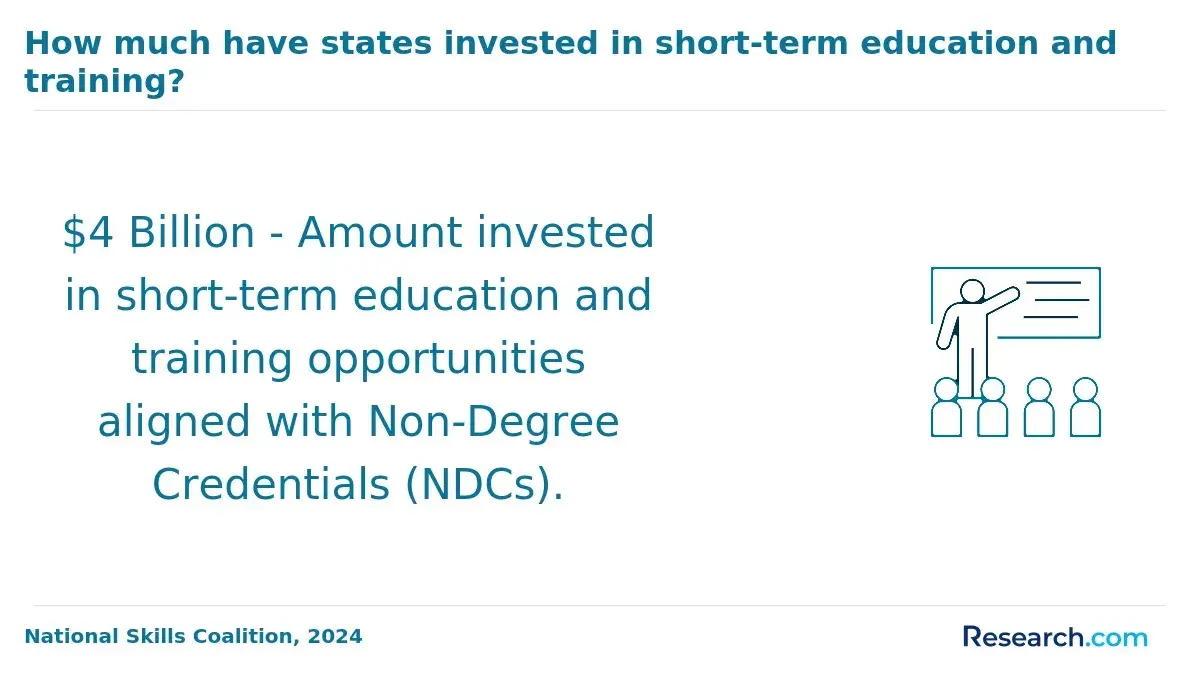
Tuition costs are a major consideration when choosing between an educational leadership degree and a certificate, as they influence both your financial commitment and potential career advancement. Comparing average tuition ranges for each option can help determine which fits your budget and professional goals best.
Below is an overview that highlights the key differences in cost and structure between educational leadership degree programs and certificate options.
Average Tuition for Educational Leadership Degree Programs
- Tuition Range: Master's degrees in educational leadership usually range from $17,000 to $62,550 total, depending on whether the institution is public, private, or for-profit.
- Public vs. Private: Public universities often charge between $17,000 and $51,740, while private and for-profit schools may cost up to $62,550 for the full program.
- Online vs. On-campus: Online master's programs can be more affordable, with some reputable options starting around $4,785 per year and median tuition near $20,387, saving approximately $9,000 compared to in-person formats.
- Doctoral Programs: EdD programs in educational leadership typically range from $24,560 to $31,854, varying with residency status and credit load.
- Program Length: Master's degrees require 30-36 credits completed in 18-24 months, whereas EdD programs take 3-4 years and require 54-66 credits.
Average Tuition for Educational Leadership Certificate Programs
- Tuition Range: Graduate certificate costs in educational leadership range from $5,000 to $12,000 total, making them considerably less expensive than degree programs.
- Credits Required: Certificates usually require 12-18 credits, which leads to lower overall tuition and quicker completion times.
- Delivery Format: Online certificate options often feature reduced tuition and fewer fees compared to on-campus versions.
- Institution Type: Public universities often provide the most affordable certificate programs, while private institutions may charge higher rates for similar coursework.
- Financial Aid: Certificate programs typically have limited scholarship or financial aid opportunities relative to full degree programs.
Understanding the average tuition for educational leadership degree programs versus an educational leadership certificate cost comparison is crucial for making an informed choice. For anyone seeking the fastest degree with highest salary, weighing these tuition differences alongside your career objectives will significantly aid your decision.
Yes, transferring certificate credits toward an educational leadership degree is often possible, but it depends on several important factors. Universities typically require that credits come from accredited institutions and that the coursework is relevant to the degree program.
Institutional policies vary, setting different limits on how many credits can be transferred and which types of courses are eligible. Generally, only graduate-level courses closely aligned with the degree curriculum will count toward the master's or doctoral program. Without meeting these criteria, credits may not be accepted.
Transfer limits usually range from 6 to 12 credits, with many schools also demanding a minimum grade-commonly a B or better-for credit acceptance. It's crucial to verify transfer policies with the admissions or program offices before enrolling to avoid surprises.
Deadlines for submitting transfer requests can be strict, so being proactive pays off. Confirming these details early helps maximize both time and financial investment in your education.
When I spoke with a student who pursued an educational leadership degree after completing a certificate program, she shared that the process wasn't straightforward at first. "I thought all my certificate credits would automatically count, but I had to provide detailed course descriptions and transcripts," she explained.
Navigating each school's unique transfer policies took patience and follow-up, yet she felt reassured when about two-thirds of her credits were accepted. She reflected, "Knowing upfront which credits could transfer made the journey smoother and motivated me to continue advancing my education."
Her experience underscores the value of thorough preparation and communication with academic advisors before making educational commitments.
Certificate programs in educational leadership are not accredited in exactly the same manner as degree programs, but both types must uphold strict quality standards to qualify for state licensure. Degree programs, such as master's or doctoral degrees, are typically offered by regionally accredited universities and must satisfy both institutional and specialized accreditation criteria tied to state educator preparation rules.
Certificate programs often follow distinct or more focused accreditation paths, especially when designed for licensure or endorsement purposes. Many states demand that certificate programs be part of an approved Educator Preparation Program (EPP), ensuring that coursework and practical experiences meet state-specific requirements for school administrator credentials.
Some certificates require a prior master's degree, while others serve post-bachelor's candidates, depending on state policies.
Accreditation is important because it guarantees academic quality, affects eligibility for financial aid, and influences whether credits can be transferred between institutions. It also impacts whether graduates are recognized for leadership roles by employers and licensing boards.
When assessing programs, students should look for regional or national institutional accreditation, state approval or EPP status, alignment with licensure standards-including required internships-and whether the credential is recognized for official certification or meant only for professional development.
Always verify both institutional and programmatic accreditation through official accrediting agencies or your state's licensure authority before enrolling.
Both educational leadership degrees and certificates offer pathways to careers in education, but they often prepare graduates for different roles and levels of responsibility. Understanding these distinctions helps in choosing the right credential based on your career goals.
Below is a comparison of typical job opportunities associated with each.
Jobs You Can Get with a educational leadership degree
- School principal: Oversees daily operations of a single school, managing staff, budgets, and student services.
- Assistant principal: Supports the principal by handling disciplinary issues, scheduling, and teacher evaluations.
- District administrator: Coordinates programs and policies across multiple schools within a district.
- Director of curriculum or instruction: Develops and implements educational standards and teaching strategies district-wide.
- Superintendent: Leads an entire school district, responsible for overall strategy, finance, and community relations.
- Academic dean: Manages academic programs and faculty affairs, often within higher education institutions.
Jobs You Can Get with a educational leadership certificate
- Instructional coordinator: Focuses on curriculum development and teacher training within schools or districts.
- Department chair: Leads a specific academic department, supporting teachers and overseeing course content.
- Lead teacher: Provides mentorship to peers while maintaining classroom teaching responsibilities.
- Program coordinator: Organizes and manages educational programs or extracurricular activities.
- Education consultant: Advises schools or organizations on instructional strategies and program improvements.
Salary potential often varies significantly between educational leadership certificate holders and those with a degree. Understanding these differences can help prospective students choose the right path based on their career and financial goals.
Below is a side-by-side comparison highlighting the average starting salaries and key factors affecting earnings for each group.
- Typical Salary Range for Degree Holders: Graduates with an educational leadership degree usually start between $51,000 and $86,500, with a national average around $74,000 per year. Entry-level roles often include administrative positions in K-12 schools and higher education.
- Typical Salary Range for Certificate Holders: Those holding only an educational leadership certificate generally begin at a lower salary, ranging from $45,000 to $60,000 annually, as they typically qualify for entry-level or support roles.
- Influencing Factors: Salary depends on education level, years of prior teaching or administrative experience, industry sector (such as public versus private schools), and geographic location, with metropolitan and coastal areas offering higher compensation.
- Career Outlook: Degree holders have broader advancement opportunities and higher earning potential over time, while certificates provide a faster, more affordable path to entry but with more limited long-term growth.
This educational leadership certificate vs degree salary comparison clearly shows the financial trade-offs between these credentials. For those seeking quality programs, researching nationally accredited online schools can offer flexible options for advancing in the field, especially for working professionals.
Here's What Graduates of Educational Leadership Programs Say About Their Degree or Certificate
- Allan: "Choosing the educational leadership certificate program was a smart decision for me because it offered a faster pace and a more focused learning experience compared to a full degree. The cost was considerably lower, which allowed me to gain essential leadership skills without a huge financial commitment. This certificate has already opened doors for me in my current job, and I feel confident in building on it later if needed. "
- Gunnar: "Pursuing an educational leadership degree was a more comprehensive journey that deepened my understanding of leadership theories and practical applications. While it required a greater financial investment and more time, the structured curriculum and in-depth coursework provided me with a solid foundation for long-term career growth in education administration. Choosing the degree was essential for the professional goals I had in mind."
- Jaxon: "Having completed both the educational leadership certificate and degree programs, I appreciate how each met different needs at different times. The certificate was a cost-effective way to quickly enhance my leadership skills, while the degree offered a more thorough education, better preparing me for senior roles. Reflecting on costs and career impact, investing in both programs was a balanced approach that suited my learning style and professional ambitions. "
Other Things You Should Know About Educational Leadership Degrees
Work experience is often required for a 2027 educational leadership degree, typically as part of admission prerequisites. However, certificates might not always demand past leadership roles. Check specific program requirements for details on work experience stipulations.
Many educational leadership certificate programs are designed to support licensure requirements for school administrators. They often include coursework that meets state standards for leadership licensing. However, not all certificates guarantee licensure; it's important to verify if the program aligns with your state's education board criteria.
The application prerequisites for a 2027 educational leadership degree often include a bachelor's degree along with prior teaching experience. In contrast, a certificate might only require a bachelor's degree, with variations depending on the issuing institution. Verify specifics with your chosen program.
- Educational Leadership Program FAQs | Teaching, Learning, and Educational Leadership | Binghamton University https://www.binghamton.edu/tlel/academics/educational-leadership/faq.html
- Educational Leadership, AC - ONLINE Sample Degree Map https://www.fredonia.edu/degreemap/educational-leadership
- How Much Does a Master’s in Educational Leadership Cost? https://www.educationalleadershipdegree.com/frequently-asked-questions/how-much-does-a-masters-in-educational-leadership-cost/
- Educational Leadership https://www.utc.edu/health-education-and-professional-studies/school-of-education/educational-leadership
- Master’s or Certificate in Leadership: Key Differences https://endzoneleadership.com/programs-and-degree/masters-vs-certificate-in-leadership/
- EdS vs. EdD: Choosing the Right Path in Educational Leadership https://www.alliant.edu/blog/eds-vs-edd
- Educational Leadership Certification https://coe.famu.edu/certificates-and-endorsements/educational-leadership-certification.php
- Versatile, Vital and Valuable: Why an Educational Leadership Degree Might Be Right for You | ACE Blog https://ace.edu/blog/versatile-vital-and-valuable-why-an-educational-leadership-degree-might-be-right-for-you/
- Educational Leadership Post-Masters Certificate https://catalog.utc.edu/preview_program.php
- Educational Leadership, Certificate of Advanced Study https://catalog.usm.maine.edu/preview_program.php