2027 Home Dialysis Training Nurse Orientation: Training, Competency Reviews, and Support to Compare
Audited and Verified:
Our Editorial and Data Verification Process
Research.com uses government datasets, official education statistics and primary institutional information to support its career and degree guides. Our review process checks factual accuracy, occupational definitions, source dates and the requirements associated with the credentials discussed.
How This Article Was Fact-Checked
Our editorial team verifies salary estimates, employment projections, education requirements and program information against original data providers and official organizations. Salary figures are checked against the relevant occupational definitions and reporting periods. Information about licensure, accreditation and required in-person training is reviewed separately.
Fact-checked and verified on:

Co-Founder and Chief Data Scientist
Home dialysis nurses do more than learn a treatment workflow: they must teach patients and caregivers to perform care safely outside the clinic, then recognize when more training or support is needed. If you are an RN considering this specialty - or comparing two orientation offers - the important differences are supervised practice, demonstrated teaching competence, and help after you begin managing patients.
This guide explains the qualifications, curriculum, competency reviews, time commitments, and workplace questions that can help you judge whether an orientation prepares you for the role.
Key Things You Should Know
- Federal home-dialysis training requirements specify an RN with at least 12 months of nursing-care experience plus 3 months of experience in the modality being taught; verify how a prospective employer applies those requirements to the position.
- Compare orientations by observed patient teaching, modality-specific competency checks, preceptor access, and support after sign-off - not by classroom hours alone.
- There is no single nationwide orientation length or tuition price for a home dialysis nurse job; ask for a written schedule, paid-training terms, and criteria for independent assignments.
What is home dialysis training nurse orientation?
Home dialysis training nurse orientation is an employer-supervised transition into teaching and supporting patients who use peritoneal dialysis (PD) or home hemodialysis (HHD). It usually combines clinical onboarding, supervised encounters, equipment and treatment instruction, patient-education practice, and documented evaluation. It is not a nursing degree or a substitute for an RN license.
The job extends beyond an initial training course. A nurse may assess learning needs, teach a patient and caregiver, coordinate with the dialysis team, review treatment information, reinforce infection prevention, and respond to reported problems under facility protocols. The Centers for Medicare & Medicaid Services (CMS) home dialysis conditions address patient and caregiver training and support; a facility's policies determine how staff carry out and document that work.
For an RN whose goal is to teach home treatments, specialty onboarding is more directly relevant than an online DNP leadership pathway for graduate nurses. Leadership education may serve a later administrative goal, but it does not replace observed modality-specific performance.
What qualifications are required to become a home dialysis training nurse?
An active RN license and relevant clinical experience are the starting points. Federal dialysis-facility requirements specify that the RN responsible for home dialysis training have at least 12 months of nursing-care experience and an additional 3 months of experience in the specific modality taught. Confirm the applicable regulation, state requirements, job description, and how the facility documents your experience before accepting responsibility for patient training.
Employers may also seek dialysis experience, strong assessment and teaching skills, and the ability to coordinate care when a patient reports a concern from home. Prior inpatient or community-based teaching experience can help, but it does not automatically establish PD or HHD competence. Likewise, an MSN earned through an MSN pathway that accepts ADN-prepared nurses does not waive RN licensure or modality-experience requirements.
Ask whether the advertised role trains in PD, HHD, or both. Three months in one modality should not be treated as evidence of experience in the other without review by the facility and its responsible clinical leaders.
How do nurses complete home dialysis training and competency reviews?
A sound orientation progresses from observation to supervised teaching and then to a documented decision about assignments. The evaluation should assess what the nurse can do and teach, not merely whether the nurse attended a class or watched a demonstration.
When comparing employers, request the orientation plan and ask who signs off each competency. A practical progression is:
- Review facility policies, equipment, modality principles, emergency procedures, and patient-education materials with a designated preceptor.
- Observe patient and caregiver training, then teach selected content under direct observation with feedback.
- Demonstrate clinical skills and teaching methods using the facility's checklists, including how to assess understanding and respond to errors or concerns.
- Complete a documented review of remaining gaps, remediation if needed, and the scope of assignments permitted after sign-off.
Ask how competencies are reassessed after equipment changes, extended time away, or a move from PD to HHD. An accelerated Doctor of Nursing Practice program may develop other professional skills, but academic completion cannot stand in for this employer's observed clinical review.
The direct route is to complete an RN-qualifying nursing program, meet the relevant state board's requirements, obtain an RN license, gain nursing and modality experience, and complete employer orientation. An ADN or BSN may provide the initial RN education; neither degree alone confers a license or independent home dialysis competence.
For a career changer with a prior bachelor's degree, an accelerated BSN may be one RN-entry option. Comparing ABSN prerequisite policies can help with that earlier decision, but the program's clinical preparation and subsequent dialysis experience still matter. An already licensed RN generally does not need another degree solely to enter home dialysis nursing; targeted dialysis experience and a well-supported orientation may be the better next step.
Before choosing further education, check whether a job posting actually requires a BSN or prefers one, and distinguish that employer preference from state licensure and federal facility requirements.
The curriculum should match the modality and the patients the nurse will teach. The comparison below identifies areas to look for in a written plan; it is not a procedural guide or a substitute for facility protocols.
| Curriculum area | What orientation should assess |
| Modality and equipment | Understanding of the assigned PD or HHD workflow, equipment, supplies, and troubleshooting within facility policy |
| Safety and escalation | Recognition, communication, documentation, and escalation of treatment concerns and emergencies |
| Patient and caregiver teaching | Adaptation to health literacy, language and learning needs; observation of practice; and assessment of understanding |
| Ongoing support | Follow-up, coordination with the interdisciplinary team, and clear routes for patients to obtain help |
Ask whether the curriculum includes observed teaching with actual patients, when appropriate, rather than simulation alone. A nurse interested in a different advanced practice role might explore 12-month FNP program options, but FNP preparation is not the curriculum for teaching PD or HHD.
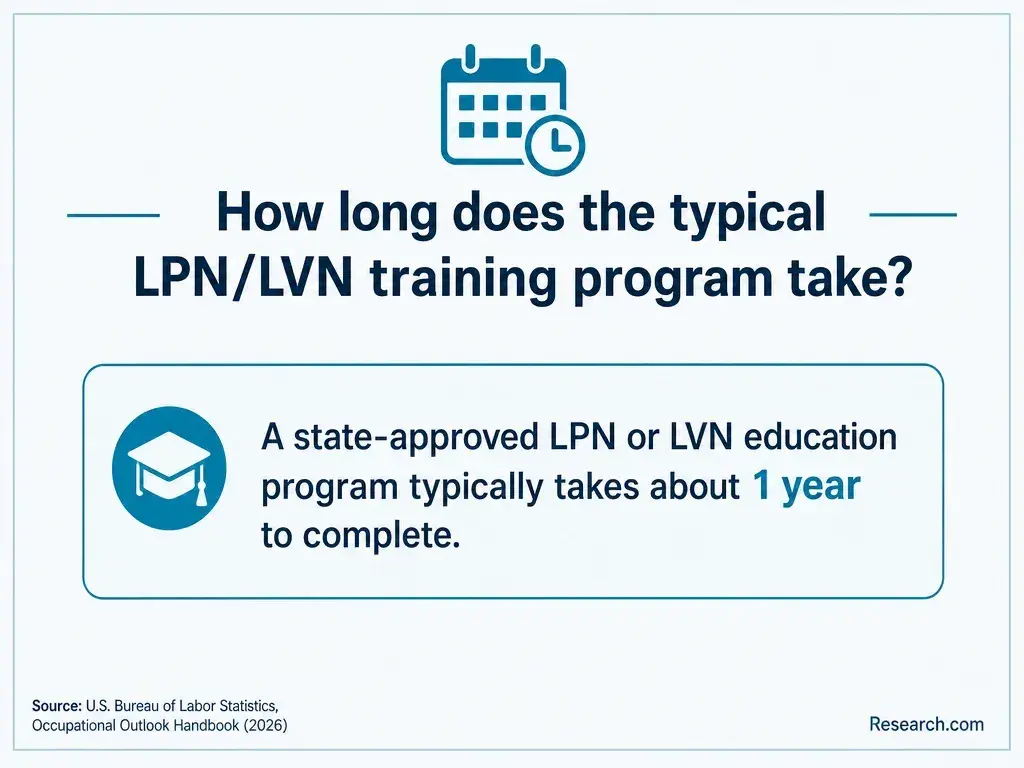
There is no universal orientation duration. The necessary time depends on prior dialysis experience, whether the role covers PD, HHD, or both, preceptor availability, patient-training opportunities, and the employer's sign-off criteria. The federal experience minimum for the RN responsible for training is separate from the length of a new employer's orientation.
For a job-based orientation, ask whether all required training is paid, whether travel between sites is reimbursed, and whether paid time covers competency reviews and later equipment updates. If you are considering optional coursework, compare its tuition, fees, schedule, and reimbursement terms against the employer training you would receive. A BSN-to-MSN program affordability guide is useful only if an MSN also serves a distinct career goal; it should not be mistaken for the price of home dialysis orientation.
Request a written estimate of the weekly schedule and likely time before a full caseload. An orientation described only as "several weeks" gives you too little information about supervised teaching or income and caregiving commitments.
Online coursework can build knowledge, but it cannot by itself validate hands-on dialysis skills or patient teaching. Prelicensure nursing programs still require approved clinical preparation, while online postlicensure courses generally assume the student already holds an RN license. Neither format replaces modality experience and employer competency review.
Ask an education provider which activities require attendance, who arranges clinical experiences, and whether any learning directly relates to PD or HHD. If you are weighing online study against a job offer, confirm whether scheduled classes would conflict with daytime patient-training sessions. Even psychiatric MSN study with condensed timelines serves a different specialty and should not be selected as home dialysis preparation.
"Home dialysis nursing program" can mean two different things: an RN degree program that precedes specialty work, or an employer's training program for licensed nurses. A prelicensure school sets its own academic admissions and clinical-placement requirements; a dialysis employer checks licensure, experience, hiring qualifications, and readiness for orientation. Admission to one does not establish eligibility for the other.
If you are not yet an RN, compare RN programs by state-board eligibility, prerequisites, required on-site clinical learning, and total cost. Resources on nursing programs with broader admission pathways may help identify schools to investigate, but confirm each school's current nursing-major requirements and whether completion supports licensure application in your state.
If you are already an RN, ask the employer what documentation it needs for license verification, nursing-care experience, and PD or HHD experience. Request clarification before assuming a general nephrology course satisfies a modality-specific hiring condition.
Nephrology nursing certification can demonstrate broader specialty knowledge once a nurse meets the issuing organization's eligibility rules. Check the credential's current experience requirements, exam information, fees, and renewal terms directly with its certifying body. Certification is distinct from RN licensure, federal home-training staff qualifications, and an employer's PD or HHD competency sign-off.
Ask prospective employers whether they require a particular credential, offer preparation support, or reimburse exam and renewal costs. Do not buy an unrelated credential to strengthen a home dialysis application: planning an accelerated PMHNP certificate addresses a different advanced practice pathway, not dialysis nurse orientation.
What jobs, salaries, and outlook can home dialysis nurses expect?
Job titles include home therapies RN, PD nurse, HHD nurse, and home dialysis training nurse. Some positions emphasize initial patient training; others combine training with follow-up, care coordination, and troubleshooting. Compare the actual duties, caseload expectations, travel, call coverage, and access to a preceptor or clinical leader rather than relying on the title.
The U.S. Bureau of Labor Statistics reports pay and employment projections for registered nurses, not a separate home dialysis training nurse occupation. Its RN figures can provide broad labor-market context, but they cannot predict an offer for this specialty. Compare local postings and written offers using base pay, paid orientation, mileage, call pay, benefits, and expected hours.
A nurse aiming for later management may separately consider comparing DNP admission criteria. For an immediate home therapies decision, the stronger comparison is between employers' supervised training, staffing support, and terms of work - not the availability of another degree.
Other Things You Should Know About Nursing
Yes. Home dialysis training can involve a caregiver when appropriate. The facility must assess and document the training and support needed for the people who will participate in care.
Do not assume so from the job title. Ask whether the position includes home visits, who conducts them, how travel is scheduled, and what safety procedures apply.
Tell your preceptor or clinical leader which skills or situations remain uncertain, request supervised practice and a documented review, and follow the facility's escalation process. A sign-off should reflect demonstrated readiness.
Potentially, but the modalities require different experience and competencies. Ask the employer how it will provide HHD experience, supervised teaching, and a separate readiness assessment before changing assignments.
- Competency in nursing practice: a concept analysis - PMC - NIH https://pmc.ncbi.nlm.nih.gov/articles/PMC10255110/
- eCFR:: 42 CFR Part 494 -- Conditions for Coverage for End-Stage Renal Disease Facilities https://www.ecfr.gov/current/title-42/chapter-IV/subchapter-G/part-494
- 25 Tex. Admin. Code § 117.46 - Qualifications of Staff - LII | LII / Legal Information Institute https://www.law.cornell.edu/regulations/texas/25-Tex-Admin-Code-SS-117-46
- Your Dialysis Care Team | kidney.org https://www.kidney.org/kidney-topics/your-dialysis-care-team
- Home Hemodialysis Training - What to Expect https://aakp.org/home-hemodialysis-training-what-to-expect/
- Nurses: Taking Care of Patients at the Dialysis Center - DaVita https://espanol.davita.com/servicios-de-tratamiento/articles/nurses-taking-care-of-patients-at-the-dialysis-center/
- Preparing for Home Dialysis Training | freseniuskidneycare.com https://www.freseniuskidneycare.com/thrive-central/prepare-for-home-dialysis-training