2027 Last-Minute Admission AI Master's Programs Still Accepting Students

Co-Founder and Chief Data Scientist
Many prospective students face tight deadlines and missed application windows when seeking to enter AI master's programs in 2027. This challenge is especially acute for those transitioning careers without prior experience in the field. Limited spots and competitive entry criteria often leave applicants scrambling for viable options.
The pressure to find reputable, flexible programs that accept last-minute applications can delay career pivots and professional growth. This article identifies accredited AI master's programs still accepting students in 2027 and offers practical guidance on how to secure admission quickly, enabling readers to navigate these tight timelines with confidence.
Key Things You Should Know
- Several accredited U.S. universities still accept last-minute applications for AI master's programs in 2026, with some deadlines extending into early spring semester.
- Demand for AI graduates rose by 34% in 2025, driven by growth in healthcare, finance, and autonomous systems sectors.
- Part-time and online master's programs offer flexible pathways, allowing professionals to enter AI fields without delaying their careers.
Which AI master's programs are still accepting applications for the current academic year?
Several U.S.-based masters programs accepting last-minute applications in artificial intelligence remain open for the 2026 academic year. Institutions like Northeastern University, Georgia Institute of Technology, and the University of Texas at Austin offer rolling admissions that accommodate qualified applicants beyond standard deadlines. These programs emphasize real-world experience and technical skills, often accepting applications until all seats are filled.
Specialized tracks in machine learning, data science, and robotics within these programs provide flexible entry points. Northeastern's Master of Science in Artificial Intelligence, available both online and on-campus, continues to accept applications through summer 2026. Georgia Tech's Online Master of Science in Computer Science with an AI specialization also remains open until August 2026, reflecting growing demand. In fact, U.S. enrollment in artificial intelligence graduate studies increased by 74% year-over-year, driven by expanded capacity and extended application periods.
Students should confirm deadlines directly with programs, as availability varies, especially for interdisciplinary AI fields such as human-centered AI or AI in healthcare. Candidates with strong professional AI experience but lacking recent academic credentials may explore provisional acceptance and prerequisite completion options.
Working professionals seeking part-time or online AI master's degrees still open for enrollment will find competitive late application options designed to fit busy schedules. Act promptly, as seats in programs with rolling admissions fill quickly amid nationwide demand for artificial intelligence education and applied AI degree jobs.
What are the admission requirements and deadlines for last-minute AI master's degree programs?
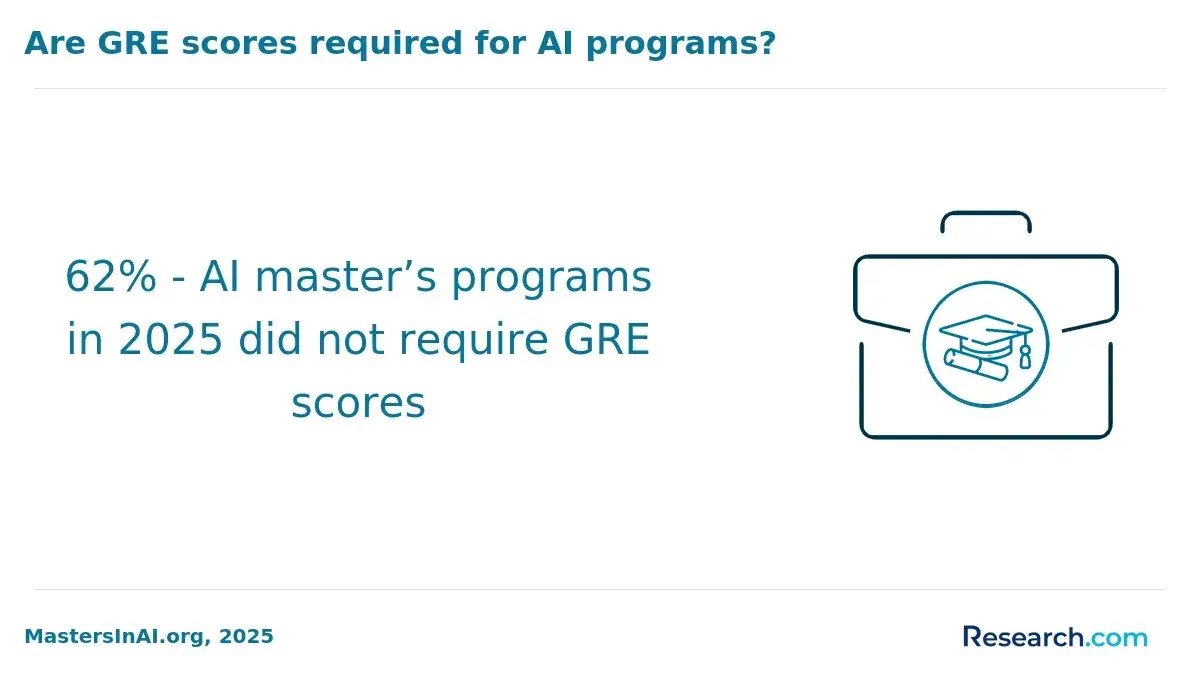
Last-minute admission requirements for artificial intelligence master's programs in the US focus on academic preparedness, relevant experience, and timely submission of materials. Applicants generally need a bachelor's degree in computer science, engineering, mathematics, or another STEM field. Those from non-technical backgrounds may qualify if they demonstrate prerequisite knowledge through coursework or certifications. Although GRE scores are increasingly optional, some institutions still require them. Most programs ask for letters of recommendation emphasizing quantitative skills and research potential. Official transcripts and a statement of purpose outlining the applicant's interest and goals in AI are universally necessary.
Application deadlines for expedited AI master's degree programs in North America vary but often benefit from rolling admissions policies. A recent Graduate Management Admission Council survey shows that 45% of master's programs offer flexible rolling admissions well into the semester, up from 28% a few years prior. This allows candidates to apply one to two months after classes begin. For example, some state universities accept applications until September or October for fall semesters starting in August. Online and hybrid programs typically have more lenient deadlines due to multiple cohort start dates.
Applicants with tight timelines should prioritize programs with rolling admissions and verify cutoffs on official school websites. Promptly submitting all documents, utilizing expedited transcript processing, and securing digital recommendation letters are key. Proactively requesting standardized test accommodations or waivers can prevent delays. Navigating these admissions variations opens vital opportunities for last-minute artificial intelligence master's candidates in 2026. Prospective students can learn more about affordable options in related fields by checking the data science ranking.
How do online AI master's programs compare to campus-based options in terms of curriculum and flexibility?
Online AI master's programs often match or exceed campus-based curricula in rigor and content, covering advanced topics such as machine learning, neural networks, natural language processing, and robotics. Many of these programs are taught by the same faculty as their on-campus counterparts and include synchronous sessions, project-based learning, and access to research databases. This academic quality is reflected in offerings from accredited universities that include capstone projects and virtual lab collaborations, closely replicating the hands-on experience of campus programs while addressing online AI master's programs curriculum comparison.
Flexibility is a major advantage of online degrees. Students can manage careers, family, and different time zones by accessing lectures asynchronously or through scheduled live sessions. This approach suits working professionals who cannot relocate or adhere to rigid schedules, contrasting with campus-based programs that require physical presence. Enrollment trends show a 13% growth in online learning, while campus-based enrollment declined 2%, according to the Babson Survey Research Group, emphasizing the flexibility of campus-based versus online AI degrees.
Campus programs, however, provide direct networking, mentorship through face-to-face engagement, and access to campus resources and research facilities some students prioritize. Hybrid models blend online coursework with on-site residencies, offering balanced benefits. Students should evaluate their individual preferences, commitments, and goals before deciding. Those interested in exploring affordable options can consider programs focused on engineering degrees online.
Ultimately, the decision depends on one's priorities. Those needing maximum scheduling flexibility and remote access benefit from online degrees, while students seeking immersive environments and hands-on research may favor campus options.
What is the typical cost and financial aid availability for accelerated or late-entry AI master's programs?
The cost of accelerated or late-entry artificial intelligence master's programs typically ranges from $40,000 to $120,000 for full-time study. This variation depends on factors such as institution type, program length, and residency status. Public universities usually offer more affordable tuition than private schools, though some intensive accelerated programs may incur higher costs due to specialized faculty and resources.
Financial aid options for late-entry artificial intelligence graduate degrees are significant, with about 68% of programs offering support through graduate assistantships or tuition waivers. These assistantships often include stipends in exchange for research or teaching duties. Early inquiry is crucial, as these positions are competitive and often require strong academic performance or relevant experience.
Loan programs remain a common funding route, but students should carefully review interest rates and repayment conditions. Employer tuition reimbursement can also ease costs, especially for part-time or accelerated students. Various scholarships target late-entry students or career changers moving into AI, helping address unique financial challenges.
Because accelerated programs are compressed, students should factor in living expenses during intense study periods. Hybrid or online formats for late-entry programs may reduce costs related to relocation and commuting. Prospective students should consider overall program expenses, including fees, materials, and technology access, while exploring financial aid options thoroughly.
For those researching options, examining a range of data science degrees can provide useful insights alongside artificial intelligence studies.
What coursework and specializations are covered in AI master's degree curricula?
AI master's degree programs emphasize foundational subjects like machine learning, deep learning, natural language processing, computer vision, and data mining. Specialized courses cover algorithm optimization, neural networks, reinforcement learning, probabilistic graphical models, and AI ethics. Practical experience is a key component, with hands-on projects using programming languages such as Python and frameworks like TensorFlow or PyTorch.
Machine learning and deep learning dominate AI master's specializations, accounting for 82% of offerings according to the Association of Computer Machinery. This focus reflects industry demand for expertise in supervised and unsupervised learning, convolutional and recurrent neural networks, and transformer models.
Electives may include robotics, autonomous systems, AI for healthcare, or explainable AI, tailored to career goals. Coursework often explores sensor integration, computer vision techniques for image recognition, natural language understanding for chatbots, and AI-driven decision support systems.
Programs also address challenges such as model interpretability, bias mitigation, and data privacy. Capstone projects or theses require students to solve real-world problems, integrating multiple AI subfields. Students should expect a blend of math-intensive courses-covering statistics, linear algebra, and optimization-and software engineering skills aimed at deploying and scaling AI applications in industry environments.
How long does it take to complete an AI master's degree, and what are the enrollment options?
An AI master's degree usually requires one to two years of full-time study, though many programs offer part-time options that extend completion to three or four years. These flexible formats help students balance education with work or personal responsibilities. Enrollment modes differ, with full-time students handling heavier course loads and finishing more quickly, often within 12 to 18 months. Part-time enrollees spread their courses over a longer period, enhancing manageability. Some universities provide accelerated tracks or evening and weekend classes designed for professionals in tech-related fields.
Increasingly popular online and hybrid programs allow learners to progress at their own pace, which benefits those unable to attend campus regularly. Many programs offer asynchronous core courses, adapting timelines to individual needs. According to the National Student Clearinghouse Research Center's 2024 report, 41% of master's students now study part-time, up from 29% in 2019. This trend highlights the rising demand for flexible education that fits around existing careers and commitments.
Prospective students should evaluate programs based on time commitments, mode of delivery, and enrollment options. Opting for part-time or online pathways can open doors to gaining advanced AI knowledge without interrupting career momentum or income streams.
What accreditation standards should you verify when choosing an AI master's program?
Verifying accreditation is crucial when selecting an AI master's program to ensure quality education and improved career outcomes. The key accreditation to seek is ABET, which evaluates computer science and engineering programs on curriculum relevance, faculty expertise, and resources. ABET-accredited graduates have a 23% higher employment rate within six months than those from non-accredited schools, highlighting its importance for job readiness.
Regional accreditation by recognized bodies like the Middle States Commission on Higher Education or the Western Association of Schools and Colleges also guarantees academic rigor and credit transferability. It is important to ensure that the AI curriculum aligns with guidelines from trusted organizations such as the Computing Research Association and the Association for the Advancement of Artificial Intelligence, reflecting current industry trends.
Students should confirm that online or hybrid AI degrees hold the same accreditation as on-campus programs. While some institutions have overall accreditation, lacking program-specific ABET accreditation may affect employer recognition. Prospective students must inquire about curriculum updates, faculty engagement in AI research or industry partnerships, and program recognition by professional AI societies.
What career outcomes and job titles do AI master's graduates typically pursue?
Graduates of AI master's programs often move into roles such as machine learning engineer, AI researcher, data scientist, and AI product manager. Machine learning engineer roles account for 34% of placements according to the IEEE Intelligent Systems Career Survey. These positions focus on designing and improving algorithms that enable computers to learn from data, a core skill developed during studies.
AI researchers primarily advance the theoretical and practical aspects of AI, frequently working in academic, government, or industry research settings. Their expertise fuels innovations in natural language processing, computer vision, and autonomous systems, involving extensive modeling and experiment design.
Data scientists leverage AI skills to extract valuable insights from extensive datasets, deploying models that enhance decision-making in fields like finance and healthcare. These professionals collaborate closely with AI engineers to integrate machine learning into real-world products, requiring strong statistical and programming knowledge alongside domain expertise.
AI product managers oversee the development and launch of AI-driven products, bridging technical teams and business stakeholders. Their understanding of AI's strengths and limitations helps shape effective product strategies and navigate regulatory requirements.
Prospective students should assess which roles align best with their skills and career objectives. Technical careers demand robust programming and mathematical skills, while product management benefits from communication and leadership abilities.
What is the salary range and job outlook for AI master's degree holders in the current market?
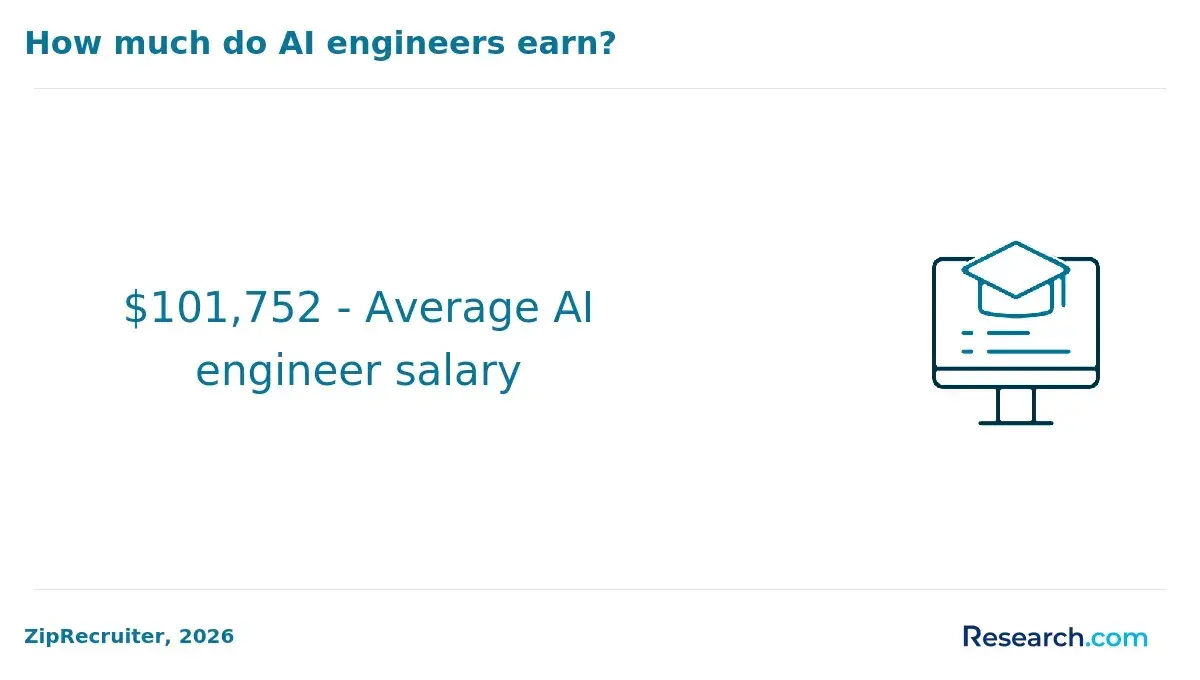
AI master's degree holders enjoy a strong financial advantage, with a median salary of $128,000 per year according to the U.S. Bureau of Labor Statistics 2024 Occupational Outlook Handbook. This reflects robust demand for advanced AI skills across industries such as technology, healthcare, finance, and manufacturing. Job growth in this sector is projected at 36% through 2032, vastly outpacing the average growth rate for all occupations.
Career options for AI graduates include machine learning engineers, data scientists, AI research scientists, and robotics specialists. Salaries vary by role, location, and experience-entry-level data scientists may start near $90,000 annually, while veteran machine learning engineers in tech hubs like Silicon Valley can earn over $160,000. Employers prioritize expertise in programming, proficiency with frameworks such as TensorFlow or PyTorch, and cloud platform experience.
Graduates often explore related fields like natural language processing, computer vision, and AI ethics, which also offer competitive pay and job growth. To stay competitive amid evolving tools and techniques, gaining hands-on experience and relevant certifications is crucial. This outlook emphasizes both lucrative salaries and a favorable job market for those with an AI master's degree.
What professional certifications or credentials complement an AI master's degree?
Professional certifications greatly enhance the value of an AI master's degree by proving specialized skills and hands-on experience. The 2024 Stack Overflow Developer Survey shows that 63% of AI professionals hold at least one industry certification in addition to their master's degree. Among the most recognized are the Google Cloud Professional Machine Learning Engineer and AWS Certified Machine Learning certifications, both demonstrating expertise in cloud-based AI solutions highly sought after in tech, finance, and beyond.
The Google Cloud Professional Machine Learning Engineer certification emphasizes designing, building, and deploying machine learning models on Google Cloud Platform, providing crucial practical skills to complement academic theory. The AWS Certified Machine Learning certification covers essential areas like data engineering, exploratory data analysis, modeling, and implementing machine learning using AWS services.
In addition to cloud-specific credentials, certifications like Certified Artificial Intelligence Practitioner (CAIP) and Certified Data Scientist from organizations such as the Global Association for Quality Management or the Data Science Council of America validate in-depth AI knowledge, algorithms, and application across diverse settings.
Certifications focusing on AI governance, ethics, and policy-for example, the IEEE AI Ethics Certification-offer valuable differentiation for professionals targeting roles in compliance and risk management. Choosing certifications aligned with career goals and industry demand helps graduates meet employer expectations and bridge the gap between theory and real-world AI challenges.
Other Things You Should Know About Artificial Intelligence
Strong math skills, particularly in linear algebra, calculus, probability, and statistics, are crucial for success in AI master's programs. These areas form the foundation for understanding machine learning algorithms and model optimization. Many courses require students to apply mathematical concepts to solve complex AI problems efficiently.
Several programs, such as those at Carnegie Mellon University and UC Berkeley, accept last-minute applications for 2027 admission. Deadlines vary, typically ranging from November to December, and may require a completed bachelor's degree and GRE scores for eligibility.
Yes. Many 2027 AI master’s programs still accepting students require TOEFL iBT scores of about 80–100 or IELTS scores of 6.5–7.0 for non-native speakers. Some waive this only if the applicant earned a prior degree in English or studied in an approved English-medium institution.
Required documents for last-minute AI Master's applications in 2027 typically include transcripts, letters of recommendation, a statement of purpose, and possibly GRE scores. Some programs may waive certain requirements, so check individual university guidelines for specific conditions and deadlines.
References
- Application and admission - Master Artificial Intelligence https://www.uva.nl/shared-content/programmas/en/masters/artificial-intelligence/application-and-admission/international-prior-education/international-prior-education-foldout-menu.html
- Most Affordable Online Master's in AI for 2026 https://aidegreeprograms.org/rankings/affordable-online-ai-masters/
- 11 Best AI Certifications in 2025 to Deepen Your Technical Knowledge | DigitalOcean https://www.digitalocean.com/resources/articles/ai-certifications
- What Jobs Can I Get With a Master's in Artificial Intelligence? | CSU Global https://csuglobal.edu/blog/what-jobs-can-you-get-masters-artificial-intelligence
- Affordable AI Master’s Degree for Working Adults https://amberton.edu/2025/09/22/ai-masters-working-professionals/
- What You'll Learn in an AI MS Program | University of Bridgeport https://www.bridgeport.edu/news/masters-in-artificial-intelligence-program-curriculum/
- AGTU | Global Degree Online https://agtu.us/en/programs/graduate-programs/computer-science/master-artificial-inteligence/free/
- MSE-AI Admissions https://online.seas.upenn.edu/degrees/mse-ai-online/admissions/
- Most Affordable Online Master's in AI for 2025 https://www.mastersinai.org/degrees/affordable-online-masters-in-ai/
- Top 10 Careers You Can Pursue With an Online Master’s in AI https://www.ucumberlands.edu/blog/careers-you-can-pursue-with-an-online-masters-in-ai