2027 Best States for Affordable AI Education and Strong Job Outlook

Co-Founder and Chief Data Scientist
Many prospective graduate students and career changers face challenges finding affordable education that leads to meaningful employment in the artificial intelligence field. Rising tuition costs and uncertain job markets complicate decisions, especially for those coming from unrelated undergraduate backgrounds. Identifying states that combine accessible, accredited programs with strong job growth can ease the transition into AI careers.
This article examines the best states offering affordable AI education alongside robust employment opportunities, aiming to guide readers in making strategic choices for their academic and professional futures.
Key Things You Should Know
- States like Texas, Florida, and North Carolina offer affordable AI education with average in-state tuition between $7,000 and $10,000, significantly lower than national private institution averages.
- These states also exhibit strong AI job market growth, with projected employment increases averaging 25% by 2030, exceeding national growth rates.
- Robust industry partnerships and research initiatives in these states enhance practical AI skill development, improving graduate employability and career advancement opportunities.
Which states offer the most affordable accredited AI degrees with strong job demand?
Texas, Georgia, and California rank among states with affordable accredited AI degree programs in top states, combining reasonable tuition with strong job prospects. Texas features low in-state tuition rates near $11,000 at institutions like the University of Texas at Austin, which offers specialized artificial intelligence and machine learning tracks. Georgia's public universities, such as Georgia Institute of Technology, provide cost-effective options around $10,000 annually and emphasize cutting-edge AI research alongside industry partnerships.
California, while having higher in-state tuition around $15,000, leads in employer demand with approximately 102,700 software developers employed, making it a prime location for job seekers. This creates vibrant opportunities for graduates, especially in the San Francisco Bay Area, where growth outpaces the national average. Students should consider states with high demand for AI jobs and affordable education, balancing cost against potential salaried roles and career growth.
Accreditation by ABET or regional organizations ensures recognized credentials in the competitive employment market. Financial aid, scholarships, and partnerships with tech companies further enhance affordability and accessibility.
For prospective students researching salaries and prospects, consulting resources like artificial intelligence degree salary insights can aid decision-making and career planning.
How do in-state tuition, financial aid, and cost of living change AI program affordability?
In-state tuition offers a significant advantage for affordable AI education in top states with in-state tuition benefits. The average published in-state tuition and fees at public four-year institutions hover around $11,610, but costs vary widely among states and schools. For instance, California's in-state tuition averages about $9,600, while out-of-state students may pay over $45,000 at elite institutions. Opting for a public university in your state can reduce tuition by 50% to 70% compared to out-of-state or private options.
Financial aid further enhances affordability by lowering net education costs. Many states provide robust grants and scholarships aimed at STEM or AI students. Programs like Georgia's HOPE Scholarship or New York's Excelsior Scholarship can cover substantial portions of tuition for eligible residents, usually requiring a minimum GPA and enrollment status. Such support plays a vital role in the financial feasibility of AI programs.
Cost of living also impacts overall expenses beyond tuition. States with lower living costs-such as Texas and Ohio-offer affordable housing, food, and transportation, reducing total AI program costs. Conversely, attending school in high-cost metro areas like New York City or San Francisco may double living expenses, negating tuition savings. Balancing tuition, aid opportunities, and living expenses is key to smart budgeting for an Artificial Intelligence education.
Prospective students can explore options by checking rankings of the most affordable data science master's programs, which often align with affordable AI pathways across the USA.
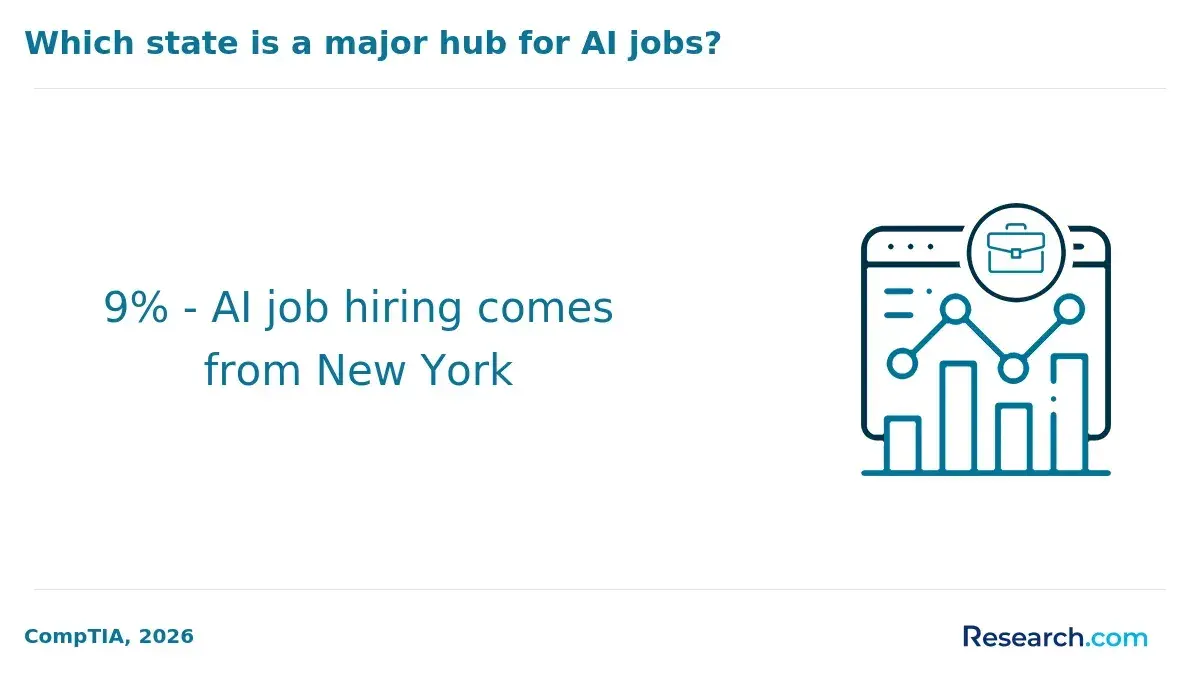
Which states have the strongest AI job markets and hiring industries for graduates?
California and Texas rank highest among the strongest AI job markets by state, attracting graduates with robust opportunities in technology and diverse industries. The Brookings Metro "AI Economy" analysis shows AI-related job postings concentrated mainly in these regions, driven by their expansive tech sectors and broad application of AI across multiple fields.
California's Silicon Valley is a prime example of a dynamic environment where AI innovation thrives, offering jobs in startups and established companies specializing in machine learning, robotics, and data science. Graduates find demand growing in sectors such as autonomous vehicles and healthcare AI. Texas-especially around Austin-has seen rapid expansion in AI hiring demand due to tech company relocations and strong research investments. Traditional industries like oil and energy also increasingly incorporate AI, diversifying career paths beyond conventional tech roles.
Other states with significant AI job opportunities include Washington, known for integrating AI in cloud computing and consumer electronics, and Massachusetts, combining reputable academic institutions with biotech and AI-driven software industries. Prospective students should align their education choices with these states' industrial strengths and research partnerships.
For those exploring educational pathways, affordable degrees in AI can provide a solid foundation to enter these competitive markets.
What AI degree and certificate pathways are available in these states?
States with the best affordability and job outlook for artificial intelligence education offer diverse degree and certificate pathways aligned with employer demand. Students often pursue traditional bachelor's and master's degrees in computer science, data science, or AI-specific programs at public universities benefiting from lower in-state tuition. For example, Texas and North Carolina have heavily invested in expanding affordable online and hybrid AI-related degrees, providing flexible options for working professionals and those seeking affordable artificial intelligence degree programs in top states.
Short-term, skills-focused certificates are essential for entering the AI job market. Lightcast's 2024 analysis highlights increasing employer demand for credentials in machine learning, data engineering, and AI programming. Community colleges and technical schools in states like Florida and Arizona offer certificates ranging from a few months to one year, targeting core competencies for entry-level AI roles.
These states also promote stackable credentials, enabling learners to build from certificates to associate and bachelor's degrees without losing credits. Programs frequently feature skills such as Python for AI, deep learning frameworks, and cloud-based AI tools. This supports immediate job market needs while aiding long-term educational advancement.
Hands-on projects, internships, and industry partnerships improve employability. Prospective students should consider offerings that include practical labs and collaboration with local tech firms. To gain a competitive edge, learners can explore pathways combining formal education with targeted credentials like those found in the data science masters online programs.
How can you verify AI program accreditation and school legitimacy in each state?
To confirm accreditation and legitimacy of AI programs and schools, start with the U.S. Department of Education's Database of Accredited Postsecondary Institutions and Programs (DAPIP). This authoritative resource helps prospective students verify if a school or program is accredited by a recognized agency.
Focus on both institutional accreditation, which covers the entire school, and programmatic accreditation for specific AI or computer science programs. Some states require additional approval or licensing for postsecondary institutions, which can be checked through state higher education councils or licensing boards.
Regional accreditation generally holds more prestige than national accreditation in academic and employment contexts. For example, AI programs accredited by the Middle States Commission on Higher Education or the Western Association of Schools and Colleges carry more weight with employers.
Beware of diploma mills or unaccredited online programs. Legitimate AI education providers disclose their accreditation status clearly, and DAPIP confirmation ensures that credits and degrees are recognized nationwide.
What are the typical AI curriculum courses and specialization options at affordable schools?
Affordable ai programs typically emphasize foundational and applied knowledge designed to meet workforce needs. Core courses often cover machine learning, data mining, and ai ethics and governance, which the IEEE's 2024-2025 AI education guidance identifies as essential across ai curricula (IEEE). These classes equip students with skills in algorithm design, data processing, and responsible ai deployment.
Students can specialize in fields including:
- Natural language processing (NLP), for interpreting and generating human language
- Computer vision, focusing on image recognition and analysis
- Robotics and automation, integrating ai with mechanical systems
- Data science, emphasizing statistics and big data analytics in ai contexts
Many institutions supplement coursework with project-based learning and internships to build practical skills. Capstone projects often involve developing predictive models using real-world data.
Admission requirements generally include basic programming proficiency in languages such as Python or R and foundational mathematics like linear algebra and probability. Advanced classes often introduce deep learning frameworks like TensorFlow or PyTorch.
Evaluating programs should involve curriculum rigor, instructor expertise, and career support services. Choosing schools where ai faculty actively publish research or collaborate with local startups can improve job prospects and practical competencies for students pursuing careers in ai.
What admission requirements and prerequisites do AI programs commonly require?
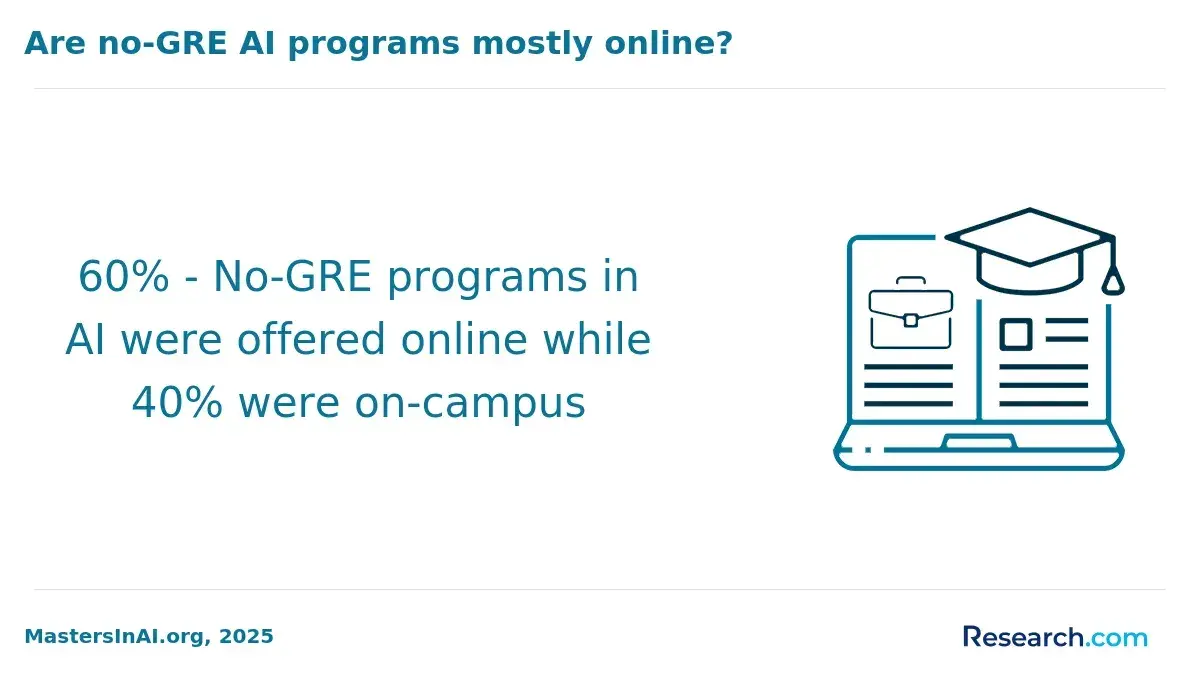
Admission into AI graduate programs typically requires strong quantitative skills and prior technical knowledge. Many programs recommend or require proficiency in calculus, linear algebra, and programming languages such as Python or Java, supporting a solid understanding of complex algorithms and data structures essential for AI coursework. Applicants usually hold a bachelor's degree in computer science, engineering, mathematics, or related STEM fields and may need to submit GRE scores, often emphasizing the quantitative section. Some institutions waive GRE requirements but rely on rigorous transcript evaluations and relevant experience.
Personal statements and letters of recommendation also influence admissions by highlighting applicants' commitment and aptitude. Work or research experience related to AI strengthens applications, and international students often must demonstrate English proficiency via TOEFL or IELTS. Some schools offer bridge or preparatory courses to build necessary math and programming skills for candidates lacking prerequisites. Early development of these competencies is crucial, as deficiencies may limit admission chances.
How do online and on-campus AI programs compare for cost, flexibility, and outcomes?
Online artificial intelligence programs typically cost 20-40% less per year than on-campus options due to lower facility expenses, making them an affordable choice for many students. They also offer greater flexibility, with many online students enrolling part-time to balance work and study. This flexibility, however, often means longer completion times of 3 to 4 years, compared to 1.5 to 2 years for full-time on-campus students.
On-campus programs tend to provide better access to hands-on labs, research opportunities, and in-person networking, enhancing outcomes in technical fields. They are often preferred by students aiming for faster degree completion. Conversely, online programs allow continuous income and practical experience through part-time enrollment.
Job placement and salary outcomes vary: degrees from research-focused universities on campus generally lead to higher starting salaries, but reputable online programs from accredited institutions increasingly offer competitive results. Evaluating factors like accreditation, faculty expertise, and industry connections is critical regardless of program format.
Prospective students should request detailed tuition breakdowns and graduation rates and consider the trade-offs between cost savings and potential resource limitations. Employers are progressively recognizing online artificial intelligence credentials, especially when combined with strong portfolios or internships.
Which entry-level AI roles can graduates qualify for, and what skills are required?
Graduates qualify for various entry-level roles in artificial intelligence, including AI engineer, machine learning engineer, data analyst, and AI developer. These positions heavily emphasize skills in programming languages such as Python and SQL, essential for data manipulation, algorithm development, and model implementation. According to LinkedIn's "Jobs on the Rise" workforce insights, AI engineer and machine learning engineer positions are among the fastest-growing, with Python and SQL consistently highlighted as top skills.
Entry-level candidates benefit from demonstrating hands-on projects or internships involving predictive model development or contributions to open-source AI tools. Employers prioritize efficient coding and effective dataset management. Additional skills vary by focus; AI developers may need software engineering knowledge, data analysts emphasize visualization and business intelligence, and machine learning engineers focus on optimization and model evaluation.
Mastery of Python and SQL combined with practical experience in AI tools provides a strong foundation for successful entry into the field, as supported by workforce data from LinkedIn and related sources.
What salaries can AI graduates expect by state, and what factors affect pay?
Salaries for AI graduates vary widely across states, influenced by local economies, industry presence, and living costs. The U.S. Bureau of Labor Statistics reports that software developers-closely related to AI roles-earn an annual mean wage exceeding $170,000 in the highest-paying state, highlighting significant regional pay differences.
States like California, Washington, and Massachusetts consistently offer entry-level AI positions with salaries above $140,000. In contrast, Midwestern and Southern states generally range between $90,000 and $110,000. Such disparities stem from the concentration of tech industries and cost of living variations.
Key factors affecting AI graduate salaries include:
- Industry concentration: Tech hubs such as Silicon Valley and Seattle demand highly skilled professionals, driving wages upward.
- Cost of living: Elevated salaries in places like New York compensate for higher housing and transportation expenses.
- Experience and specialization: Those proficient in machine learning engineering typically command higher pay than general software developers.
- Education and certifications: Advanced degrees and specialized training lead to better offers.
When evaluating offers, prospective AI professionals should weigh salary against living expenses. For instance, $130,000 in Texas may provide more disposable income than $170,000 in California. Additionally, emerging AI startup activity in certain regions can influence local wage growth over time.
Other Things You Should Know About Artificial Intelligence
The most sought-after skills in artificial intelligence include proficiency in machine learning algorithms, programming languages such as Python and R, data analysis, and familiarity with neural networks. Additionally, expertise in natural language processing, computer vision, and experience with AI frameworks like TensorFlow and PyTorch are highly valued by employers. Strong problem-solving abilities and a good understanding of statistics also enhance job prospects in the AI field.
Artificial intelligence is transforming numerous industries by automating routine tasks, improving decision-making, and enabling advanced data analytics. In healthcare, AI helps with diagnostics and personalized treatment plans. Finance benefits from AI in fraud detection and algorithmic trading, while manufacturing sees increased efficiency through predictive maintenance and robotics. The technology is also revolutionizing customer service, transportation, and marketing sectors.
Ethical concerns in artificial intelligence include ensuring data privacy, preventing algorithmic bias, and maintaining transparency in AI decision-making processes. It is important to address the potential for job displacement and to create frameworks that promote responsible AI use. Developers and policymakers emphasize fairness, accountability, and inclusiveness to mitigate the social impact of AI technologies.
Continuing education is crucial in the rapidly evolving field of artificial intelligence to keep up with new tools, programming languages, and research developments. Professionals often pursue specialized certifications, advanced degrees, or targeted workshops to deepen their expertise. Lifelong learning helps maintain competitiveness and adaptability in AI roles as technologies and industry demands change.
For students pursuing affordable AI education in 2027, crucial skills include machine learning, data analysis, and programming abilities in languages like Python and R. Collaboration and communication skills are also essential, as well as an understanding of ethical AI considerations.
References
- AI in Action: Practical Strategies to Optimize Financial Aid | Liaison https://www.liaisonedu.com/resources/blog/ai-in-action-practical-strategies-to-optimize-financial-aid/
- Study Reveals Which US States Can Offer AI Specialists the Biggest Salary Boost - New World Report https://newworldreport.digital/study-reveals-which-us-states-can-offer-ai-specialists-the-biggest-salary-boost/
- Top 14 paid AI courses in 2025 | Uxcel https://uxcel.com/blog/top-paid-ai-courses
- How AI is challenging the credibility of some online courses https://theconversation.com/how-ai-is-challenging-the-credibility-of-some-online-courses-264851
- WA ranked among the most prepared states for AI revolution https://www.tricitiesbusinessnews.com/articles/wa-ranked-among-the-most-prepared-states-for-ai-revolution
- Top College Degrees for Securing the Highest-Paying AI Jobs in 2026 https://www.investopedia.com/top-college-degrees-for-securing-the-highest-paying-ai-jobs-in-2026-11946777
- Entry-Level Jobs in AI: Key Skills You Need to Stand Out - EU Data Jobs https://eudatajobs.com/blog/entry-level-jobs-in-ai-2024/
- Ets - Gre https://ets.org/gre
- America's 10 Best states for getting a job in the AI boom rather than being replaced by it https://www.cnbc.com/2024/07/12/americas-10-best-states-for-finding-job-ai-boom.html
- Increasing Financial Aid Isn’t the Solution to High College Costs | American Enterprise Institute - AEI https://www.aei.org/op-eds/increasing-financial-aid-isnt-the-solution-to-high-college-costs/