2027 Average Tuition for AI Degree Programs

Co-Founder and Chief Data Scientist
Choosing to pursue a degree in artificial intelligence poses a significant financial challenge for many prospective students. With tuition costs varying widely across institutions, the inability to gauge average expenses complicates budget planning and scholarship applications. This uncertainty may delay or discourage career pivots, especially for those transitioning from unrelated fields. Understanding typical tuition rates helps prospective students make informed decisions about program affordability and return on investment. This article outlines current average tuition costs for artificial intelligence degree programs, aiming to provide clear, reliable data to support strategic educational and career planning.
Key Things You Should Know
- Average tuition for AI degree programs in the U.S. reached approximately $35,000 per year in 2026, reflecting rising demand and investment in specialized technology education.
- Public universities typically charge about 40% less than private institutions, with in-state tuition averaging close to $22,000 annually for AI degrees.
- Financial aid and scholarships substantially offset costs, but prospective students should budget for additional expenses like technology resources and software licenses unique to AI curricula.
What is the average tuition cost for artificial intelligence degree programs in the United States?
Tuition costs for artificial intelligence degree programs in the United States vary notably depending on residency status and program level. Typical expenses for AI bachelor's programs average about $12,356 annually for in-state students and $31,846 for out-of-state students at public universities. These figures highlight the financial benefit of attending an in-state school, although fewer AI specializations may be available.
Graduate programs usually carry higher tuition, ranging between $20,000 and $50,000 per year, influenced by the school's reputation and prestige. Many offer scholarships, assistantships, and in-state tuition waivers to offset costs. Private institutions often charge similar or higher tuition irrespective of residency.
Financial planning should also consider additional fees, textbooks, and computing resources required for AI studies. Prospective students assessing average tuition costs for artificial intelligence degree programs in the United States should weigh these against potential career benefits.
The availability of various financial aid options makes researching each program's total cost crucial. Evaluating tuition alongside career opportunities can guide smart decisions about AI education pathways, especially when exploring artificial intelligence career paths.
Understanding typical expenses for AI bachelor's and master's programs in the US involves considering both direct tuition and indirect costs. Balancing these factors helps students prepare for the full investment required for an AI degree.
How do tuition prices for AI degrees compare between public and private universities?
Tuition fee comparison for artificial intelligence degree programs in public and private institutions reveals a significant cost gap. Public universities generally charge lower rates for in-state students, averaging about $14,137 annually, while out-of-state students and private university attendees face much higher figures, averaging $32,704 per year. This discrepancy highlights the financial advantage of attending a public university in one's state of residence.
For example, a California resident enrolling in a state university might pay roughly $14,000 per year, whereas a private university or out-of-state public institution could charge over $30,000 for the same AI degree program. Private universities maintain fairly consistent tuition regardless of residency, often aligning with out-of-state public tuition rates. However, they may provide more merit-based financial aid or scholarships that can help offset costs, unlike public universities where such aid for out-of-state students is less common.
When considering average tuition costs for public vs private universities for artificial intelligence degrees, students must evaluate their residency status and potential for financial aid. Picking an in-state public university typically reduces expenses significantly. If residency isn't an option, private university tuition is comparable to out-of-state public rates but may offer better assistance opportunities.
Prospective students seeking affordable options might explore the best online master's in artificial intelligence programs, which often provide competitive tuition and flexibility.
What are the typical tuition differences between online and campus-based AI programs?
Typical tuition for online artificial intelligence programs is usually lower than campus-based options, though the difference varies. Campus programs often have higher tuition due to facilities, on-site resources, and prestige. For example, among the best colleges in artificial intelligence, average undergraduate tuition reaches $51,833 per year for out-of-state students, which is over 3× the in-state average of $15,000, illustrating a notable campus-based artificial intelligence degree tuition comparison (CollegeEvaluator).[8]
Online AI programs tend to offer more affordable tuition, often closer to in-state levels or flat rates regardless of residency. A public university might charge $15,000 annually for in-state campus students but $30,000 or more for out-of-state campus attendees, while online tuition remains between $15,000 and $20,000 for all students.
Key factors for campus tuition premiums include lab access, networking, and direct faculty interaction. Students should also consider additional costs like relocation and commuting, which online programs generally avoid.
Working professionals benefit from the flexibility and lower price of online programs, but those seeking a traditional college experience or research opportunities may prefer campus-based options. Prospective students can explore detailed tuition costs in online AI PhD programs and other degrees to understand average tuition cost for online artificial intelligence programs better.
What types of AI degrees are available, and how does tuition vary by program level?
AI degree programs are offered at various levels: associate, bachelor's, master's, and doctoral, each differing in expertise and tuition costs. Associate degrees focus on foundational skills like programming basics and data analysis, ideal for entry-level positions. Bachelor's degrees cover core AI topics such as machine learning, natural language processing, and robotics, generally requiring four years and offering lower tuition per credit than graduate programs.
Master's degrees provide specialized training and research opportunities for professionals aiming for advanced roles in AI development or study. The average tuition for artificial intelligence degree programs by level shows that U.S. master's AI programs cost around $51,223 in total, with per-credit prices ranging from $418 to $2,229. This wide range reflects differences in institution type, prestige, and delivery format.
Doctoral degrees demand significant research commitment and vary considerably in cost, especially when factoring in fellowships or assistantships. These programs prepare individuals for academic, expert, or research-centric careers in AI. Tuition variations emphasize practical decisions prospective students must weigh.
- Undergraduate programs have lower and more consistent tuition than graduate options.
- Master's degrees incur higher costs but lead to faster advancement in AI leadership roles.
- PhD programs may offer tuition waivers but require extensive time and effort.
For more detailed insights on costs related to computing degrees that often intersect with AI studies, refer to computer science degree cost.
How can students estimate the total cost of attendance for an AI degree, beyond tuition?
Students estimating the total cost of attendance for an Artificial Intelligence degree should consider more than just tuition to avoid budget gaps. Additional expenses include mandatory fees, textbooks, technology, and living costs, which can add 10-20% to tuition. For instance, Georgia Tech's OMSCS program's total estimated cost of $8,950 includes such fees, highlighting their impact.
Textbook and software costs vary widely. Some programs grant access to digital materials, reducing expenses, while others require purchasing specialized textbooks or AI software. It's wise to consult course syllabi or program staff for accurate estimates.
Technology needs typically require a capable computer with strong processing power for coding and data analysis. Those without suitable devices may need to budget $800 to $1,500. Additionally, reliable high-speed internet is essential for online learning, potentially raising monthly bills.
Living expenses-such as housing, food, transportation, and personal costs-differ by location and learning format. Remote learners should assess needs like workspace or childcare that influence overall costs.
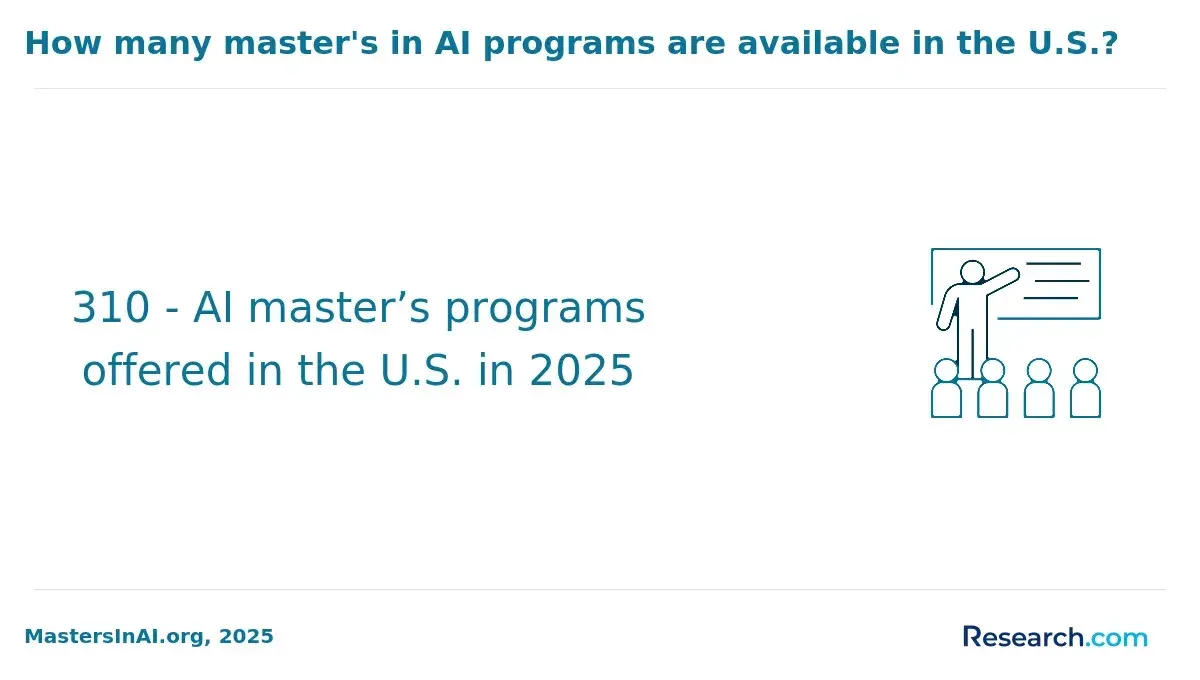
Financial aid, scholarships, and employer tuition assistance can offset expenses but require early research. According to MastersInAI.org, the 30 cheapest online master's programs in AI in the U.S. cost under $20,000 total, proving affordable options exist if all costs are accounted for.
What financial aid, scholarships, and employer tuition benefits are common for AI students?
Financial aid plays a vital role for many students pursuing artificial intelligence degree programs. Federal and state grants, such as Pell Grants, often cover significant tuition costs and do not require repayment. Additionally, scholarships based on need or merit are available from universities, private foundations, and technology companies, especially for students with strong academic records or a focus on AI research and applications.
Employer tuition benefits are increasingly offered to working professionals enhancing their AI skills. Major tech firms and corporations may reimburse 50% to 100% of tuition for courses tied to employees' roles, generally requiring proof of course completion with a satisfactory grade.
Vocational and associate-level artificial intelligence programs in the U.S. average $17,995 in total tuition, making them a more affordable path compared to four-year degrees (CollegeTuitionCompare). Additional financial aid options often exist for these programs, reducing out-of-pocket expenses.
Students from underrepresented groups in AI and STEM-including women, minorities, and veterans-can find targeted scholarships and awards from professional organizations that promote diversity. Many AI bootcamps and certificate programs also partner with companies to provide partial scholarships or deferred tuition based on income.
How do accreditation and institutional quality affect tuition and value for AI programs?
Tuition rates for artificial intelligence degree programs vary significantly based on accreditation and institutional quality. Accredited programs, particularly those recognized by ABET or regional bodies, often have higher tuition due to rigorous academic standards and valued credentials. In contrast, non-accredited or lesser-known schools may offer lower costs but carry risks related to program quality and employer acceptance.
Institutional prestige also shapes tuition expenses. Elite private universities can charge up to $260,000 for a bachelor's degree in AI, reflecting strong research, industry ties, and advanced facilities that improve learning and career opportunities. Public in-state universities provide a more affordable option, averaging around $49,424 total, balancing cost with reputable program quality.
Career outcomes support the investment in AI education. According to a 2026 Hakia review, median starting salaries for AI graduates reach $145,080, often resulting in a return on investment within 3-5 years even for expensive private programs. Public institutions' lower costs combined with solid reputation also offer positive ROI but may require more effort in networking and securing internships.
Prospective students should consider these factors carefully:
- Accreditation and institutional reputation
- Faculty expertise and research opportunities
- Alumni placement and employer networks
Balancing tuition costs with program quality is essential for maximizing post-graduate earnings and limiting student debt. Reliable information can be found at research.com.
What is the expected salary range and ROI for graduates of AI degree programs?
Graduates of artificial intelligence degree programs typically earn starting salaries between $85,000 and $130,000 annually, influenced by factors such as the institution, location, and AI specialization. Roles in machine learning engineering and data science, especially in major tech hubs, often command salaries at or above this range. Mid-career professionals with advanced degrees or certifications may see compensation exceed $150,000.
Tuition costs vary widely: public universities in Texas charge about $17,983 per year in-state, while private institutions average $39,563 annually. Community colleges offering AI-related associate degrees cost roughly $4,496 per year, creating significant cost differences between public, private, and two-year programs.
Typically, public university graduates entering mid-level AI roles can recoup their educational investment in 3 to 5 years, balancing moderate tuition with salary gains. Graduates from private schools might face longer ROI timelines but often benefit from stronger career services and networking opportunities. For working professionals, part-time programs' ROI depends on flexibility and employer tuition support.
Certificate or associate degree programs provide more affordable, faster paths to reenter the workforce, though initial salaries tend to be lower than those holding bachelor's or master's degrees. Prospective students should carefully weigh tuition against potential earnings, program reputation, and regional job markets to maximize their investment in artificial intelligence education.
How does the job outlook and industry demand for AI roles influence program pricing?
The strong job outlook and rapid industry demand for artificial intelligence roles significantly drive program pricing at top U.S. universities. Many institutions price AI degree programs higher due to the field's explosive growth and the high salaries graduates typically earn. For Indian students pursuing an MS in AI in the USA in 2026, total costs generally range from ₹30 lakh to ₹70 lakh. Despite this steep tuition, average starting salaries between ₹86 lakh and ₹1.7 crore allow graduates to recover their investment within 12-18 months, according to Yocket.
Education providers justify premium tuition through investments in expert faculty, advanced research, and cutting-edge labs. Programs with strong industry collaborations or high-profile internships often command higher prices, reflecting increased earning potential post-graduation.
Pricing varies based on several factors:
- Reputation of the program and university
- Geographic location
- Mode of delivery (online, hybrid, or on-campus)
While online or hybrid programs may offer reduced tuition, they often correlate with lower initial salaries compared to top-tier research universities that charge more but provide expansive alumni networks and employer connections. Regular curriculum updates aligned with market needs help maintain demand elasticity, supporting sustained high pricing structures.
What factors should students consider when choosing a cost-effective, reputable AI degree program?
Choosing an ai degree program involves assessing accreditation, curriculum currency, and career outcomes. Accredited programs-especially those regionally accredited or recognized by bodies like ABET-ensure rigorous standards and strong employer recognition.
Updated coursework should cover essential topics such as machine learning, natural language processing, and ethical considerations. Prospective students benefit from programs that integrate practical experience through internships, co-ops, or applied labs, often found in institutions with strong industry partnerships or located near tech hubs.
Cost evaluation extends beyond tuition to include fees, materials, and opportunity costs like lost income. Public universities may offer lower in-state tuition, while private schools might provide better resources or networking advantages. Comparing tuition alongside graduation and job placement rates offers clearer insight into overall value.
- Research opportunities and collaboration with ai companies enhance skills and employability
- Hands-on projects and internships provide real-world experience preferred by employers
- Graduates in ai roles earn significantly higher wages-averaging $142,650 per year in fields such as computer and information research scientists
Aligning program choice with professional goals helps maximize return on investment and career growth.
Other Things You Should Know About Artificial Intelligence
In 2027, the average tuition fees for AI degree programs range from $15,000 to $50,000 annually, depending on the institution and level of study. Compared to previous years, there has been an increase in tuition fees by approximately 5% to 10%, reflecting growing demand for AI education.
The duration for completing an artificial intelligence degree varies depending on the level and mode of study. Bachelor's programs generally take about four years of full-time study, while master's degrees usually require one to two years. Some accelerated online or part-time options may allow students to finish sooner or extend the timeline based on their schedules.
Yes, artificial intelligence degree programs often combine expertise from computer science, statistics, cognitive science, and electrical engineering. This interdisciplinary approach equips students with diverse skills needed to develop intelligent systems and understand AI applications across different fields. Coursework typically includes both technical and theoretical components to cover this broad spectrum.
Absolutely. Graduates with artificial intelligence degrees are in demand across many industries such as healthcare, finance, automotive, and government sectors. AI skills are applicable in roles involving automation, data analysis, robotics, and decision support systems beyond traditional tech firms, expanding career opportunities in various fields.
References
- MS in AI in USA Eligibility Costs and Top Universities https://futurense.com/blog/ms-in-ai-in-usa
- Online College Tuition Comparison: Online vs. In-Person https://www.uagrantham.edu/blog/online-college-tuition-comparison-online-vs-in-person/
- 15 Top Masters Degree in AI Programs: Entry Requirements & Costs - AI Degree Center https://aidegreecenter.org/masters/
- Master’s in Artificial Intelligence Salary | University of Bridgeport https://www.bridgeport.edu/news/masters-in-artificial-intelligence-salary-expectations/
- Most Affordable Online Master's in AI for 2025 https://www.mastersinai.org/degrees/affordable-online-masters-in-ai/
- Best Artificial Intelligence Bachelor's Degree Programs 2026 https://hakia.com/degrees/artificial-intelligence/best-bachelors-programs/
- Ultimate Guide: How to Choose the Right AI Training Course to Boost Your Career - ONLC https://www.onlc.com/blog/how-to-choose-ai-training-courses/
- How Will AI Affect the US Labor Market? https://www.goldmansachs.com/insights/articles/how-will-ai-affect-the-us-labor-market
- Companies That Pay for Your Degree | ComputerScience.org https://www.computerscience.org/resources/companies-that-pay-for-college/
- Scholarships for AI and Machine Learning | 2026 UPDATED List https://abroadin.com/blog/scholarships-for-ai/