
2027 How to Get a U.S. Teacher’s License Online

Co-Founder and Chief Data Scientist
Many aspiring educators around the world are looking for ways to earn a U.S. teaching credential without relocating. With more than two million certified teachers currently employed in the U.S., according to Statista, the demand for qualified educators remains strong. For international students, an online teacher’s license offers a pathway to gain a globally recognized credential.
This article explains how to pursue this license online, the opportunities it opens, and the earning potential it provides.
What are the benefits of getting a U.S. teacher’s license online?
- An online teacher’s license allows you to qualify for teaching roles in U.S. schools, international schools abroad, and online education platforms.
- Licensed teachers in the U.S. earn a median annual salary of about $64,000, making this credential valuable for career stability and growth.
- A U.S. teaching license is respected internationally, giving educators more flexibility to work across countries and education systems.
What can you do with an online teacher’s license?
An online teacher’s license opens the door to a wide range of career paths in education. With this credential, individuals may qualify to teach in U.S. public schools, international schools, and private institutions worldwide. Many online platforms also require licensed teachers to provide virtual instruction, making this credential valuable in the expanding field of remote education.
Beyond classroom teaching, a U.S. license can also support roles in curriculum development, educational consulting, and training programs, giving international educators a globally recognized credential that expands their career possibilities.
Where can you work with a U.S. teacher’s license?
Holders of an online teacher’s license are commonly employed in public and private schools across the U.S., where the license is a requirement for classroom teaching. Outside the United States, this credential is highly valued in international schools, especially those that follow U.S. or international curricula such as IB (International Baccalaureate) or AP (Advanced Placement).
Beyond traditional school systems, educators with an online teacher’s license can also find opportunities in online teaching companies, nonprofit organizations, and education-focused businesses. Many licensed teachers also pursue roles in professional training, test preparation centers, or curriculum development for global education providers.
How much can you earn with a U.S. teacher’s license?
Teachers in the U.S. typically earn competitive salaries that vary by state, subject area, and level of experience. According to the U.S. Bureau of Labor Statistics (BLS), the median salary for teachers is around $64,000 per year, with some experienced educators earning over $80,000 annually.
For international candidates, an online teacher’s license can also lead to opportunities abroad, where salaries at international schools may range from $30,000 to $70,000 per year, often with added benefits such as housing or travel allowances. Those who pursue online teaching roles may also supplement their income by teaching remotely, giving licensed teachers more flexibility to reach global markets while maintaining stable earnings.
- Can you get a teaching license entirely online in 2027? Online License
- Can international students qualify for a U.S. teaching license? International Students
- What are the steps to getting a U.S. teacher’s license online? Steps
- How do online teacher prep programs compare to on-campus ones? Online vs. Traditional
- What skills do you need to have when applying for a U.S. teaching license online? Skills
- How much does it cost to get a teaching license online in 2027? Cost
- Can you get financial aid for teacher certification programs? Financial Aid
- Can you take teacher certification exams online? Can you take teacher certification exams online?
- Can you teach abroad with a U.S. teacher’s license? Teaching Abroad
- Can online advanced degree programs boost my career opportunities? Can online advanced degree programs boost my career opportunities?
- Is my online teacher certification program accredited and reliable? online
- Do online teacher certification programs lead to higher salaries? Salary
Can you earn a U.S. teaching license online in 2027?
You can complete much of the path to a U.S. teaching license online, but “entirely online” usually needs a careful explanation. Most online teacher preparation programs deliver coursework, advising, test preparation, and application support remotely. The part that is not fully virtual is the supervised field experience, such as classroom observation, practicum work, or student teaching. For international educators, the key question is whether the program can approve a placement in a local school outside the United States.
This guide explains how online teacher certification works, what international applicants should check before enrolling, how exams and field placements are handled, what costs to expect, and how to judge whether a program is credible. It is designed for aspiring teachers, working educators outside the U.S., and career changers comparing online licensure programs with campus-based options.
Educators who already hold a bachelor’s degree may also consider advanced online pathways, including an accelerated online master’s in gifted education, when they want graduate-level preparation in a specialized teaching area. The right option depends on your state licensure target, current qualifications, and whether you need initial certification or career advancement.
Quick answer: can international students qualify for a U.S. teaching license?
International students and teachers may qualify for a U.S. teaching license if they meet the requirements of the state issuing the credential and complete an approved teacher preparation pathway. State rules differ, so applicants should not assume one online program leads to licensure everywhere. A program must match the subject, grade level, testing rules, background-check process, and field-experience requirements of the licensing state.
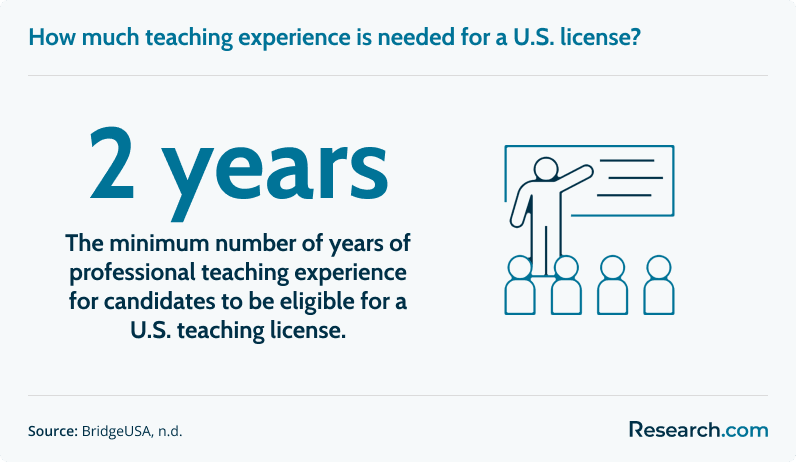
For educators using the BridgeUSA teacher route, foreign teachers must show qualifications comparable to U.S. standards. BridgeUSA guidelines reference requirements such as a degree equivalent to a U.S. bachelor’s degree in education or a subject field, at least two years of professional teaching experience, English language proficiency, and good standing in the teaching profession. These BridgeUSA requirements are not the same as every state’s licensure rules, but they are important for foreign teachers seeking U.S.-based teaching opportunities through that program.
If you already have classroom experience and want to document advanced preparation, a fast-track online education specialist degree in leadership may support leadership readiness. However, advanced study does not automatically replace state licensure requirements, exams, or supervised teaching obligations.
How to get a U.S. teacher’s license online: step-by-step
The online licensure process is not the same in every state, but most candidates move through a similar sequence. Your first task is to identify the state and teaching area you want, because a license for elementary education, high school mathematics, special education, or ESL may require different coursework and exams.
- Choose your target state and license area. Decide where you want the credential issued and which grade level or subject you plan to teach. Then review that state education department’s rules before choosing a program.
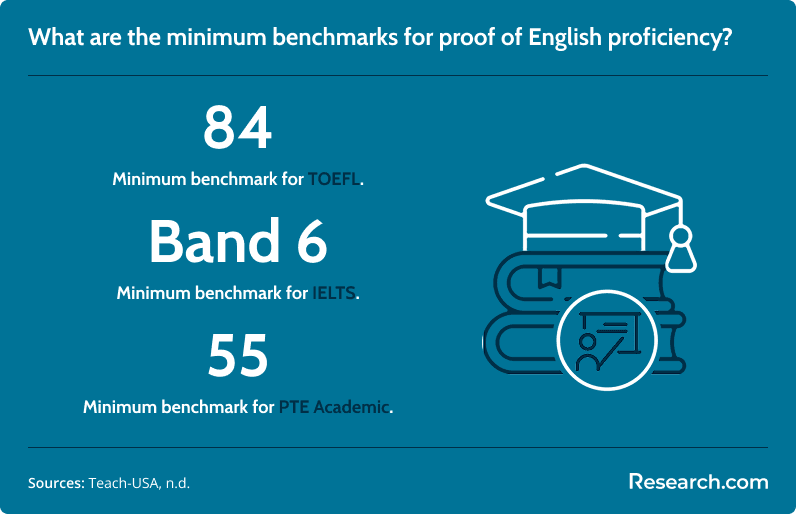
- Confirm your academic eligibility. Most candidates need a bachelor’s degree in education or a relevant subject area. International applicants may need credential evaluations and proof of English proficiency. For J1 visa eligibility, commonly cited benchmarks include TOEFL (84), IELTS (Band 6), or PTE (55).
- Enroll in an approved teacher preparation program. Online programs may offer coursework remotely while arranging supervised practice in an approved school setting. Candidates seeking elementary licensure may compare options such as a fast track online elementary education degree.
- Complete fieldwork or student teaching. This is the requirement that often determines whether an international applicant can finish the program without traveling. Ask whether the provider allows placements in your country and what documentation the host school must provide.
- Pass required certification exams. Many states use Praxis exams or state-specific subject and pedagogy tests. Requirements vary by state, grade level, and endorsement.
- Submit the licensure application. Candidates typically provide transcripts, exam scores, proof of program completion, identity documents, and background-check information to the state education agency.
- Keep the license active. After licensure, teachers usually need continuing professional development or renewal coursework to maintain the credential.
Online vs. on-campus teacher preparation: which option fits you?
Online and campus-based teacher preparation can both lead to a recognized credential when the program is approved for licensure. The better choice depends on your location, schedule, learning style, budget, and field-placement access.
| Factor | Online teacher preparation | On-campus teacher preparation |
| Best for | Working adults, international educators, and students who cannot relocate | Students who want in-person classes, campus services, and local school networks |
| Course delivery | Classes, assignments, advising, and test preparation are usually delivered remotely | Instruction happens primarily in classrooms, labs, and campus-based seminars |
| Field experience | May be completed locally if the program approves the placement site | Often arranged through schools near the university |
| Schedule flexibility | Often stronger for teachers balancing work, family, or international time zones | Usually follows a fixed academic and campus schedule |
| Potential cost advantages | May reduce relocation, housing, commuting, and visa-related costs | May provide easier access to campus scholarships, local placements, and in-person support |
| Learning style fit | Requires self-direction, reliable internet access, and comfort with digital platforms | Better for students who prefer face-to-face discussion and structured campus routines |
Some online credentials are designed for shorter completion timelines, including a fast track online graduate certificate in early childhood education. Speed should not be the only factor, though. A faster program is useful only if it is properly approved, accepts your field placement, and aligns with the license you need.
What skills matter most for online teacher licensure applicants?
Licensure programs look for more than subject knowledge. They also evaluate whether candidates can plan lessons, manage a classroom, assess student learning, and communicate professionally with families and colleagues. Zippia research on certified teachers in 2027 highlights common resume skills that align with classroom effectiveness.
- Mathematical and analytical ability: More than 30% of resumes listed math or mathematics-related expertise, showing the importance of quantitative and problem-solving skills.
- Child and youth development: Teachers need to understand how students learn at different ages and how to build trust with children, adolescents, and K-12 learners.
- Classroom management: Strong candidates can create routines, address behavior, support inclusion, and maintain a learning-focused environment.
- Instructional design and curriculum planning: Teachers must design lessons, use appropriate instructional materials, and adapt content across fields such as language arts, social studies, and chemistry.
- Professional learning and mentoring: Licensure is not the end of training. Teachers are expected to keep learning, collaborate with peers, and improve practice over time.
- Safety and emergency readiness: Skills such as CPR training can be valuable, especially in school settings that require student supervision beyond classroom instruction.
Teachers planning to work with multilingual learners may benefit from targeted credentials such as accelerated online ESL graduate certificate programs. ESL preparation can be especially useful for international educators and teachers applying to schools with linguistically diverse student populations.
How much does an online teaching license pathway cost in 2027?
Costs depend on the provider, degree level, state requirements, exams, transcript evaluation, background checks, and whether the program includes graduate credit. Tuition is only one part of the total price, so applicants should estimate the full cost before enrolling.
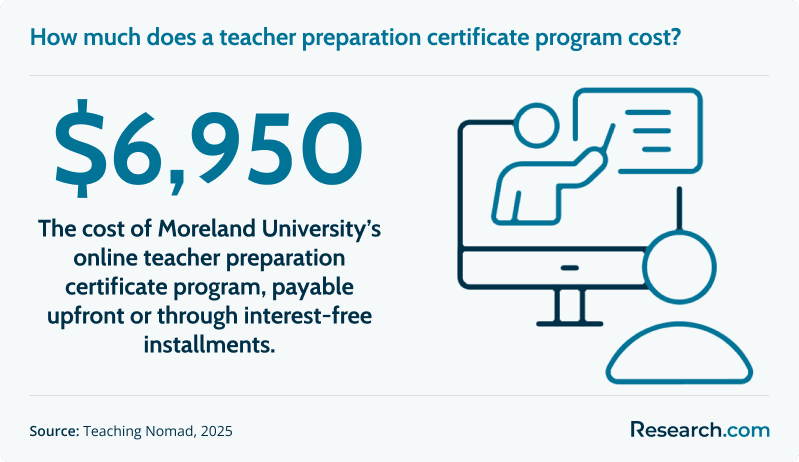
Moreland University is one example of an online teacher preparation provider with published tuition for international candidates. Its Teacher Preparation Certificate Program costs about $6,950, with payment available upfront or through interest-free installments. Graduate options cost more: a Master’s in Education with Teacher Preparation is around $14,000, while a Master’s with Globalization and Education Research Emphasis is about $14,500.
| Cost item | Why it matters |
| Program tuition | This is usually the largest direct cost and varies by certificate, master’s, or advanced degree route. |
| Certification exams | Praxis or state-specific exams may require separate registration fees and retake costs. |
| Transcript or credential evaluation | International applicants may need an evaluation to show U.S. degree equivalency. |
| Background checks | Most licensing agencies require identity verification and criminal background screening. |
| Field placement expenses | Costs may include transportation, documentation, school placement fees, or unpaid student-teaching time. |
| Renewal and professional development | Teachers should budget for continuing education after the first license is issued. |
Some candidates pursue specialized graduate study, such as accelerated online science education master’s programs, to deepen subject expertise. Before making that investment, compare the degree’s value against your target school system’s pay scale, promotion criteria, and licensure rules.
Can you get financial aid for online teacher certification?
Financial aid resources for international students may include scholarships, institutional tuition assistance, installment plans, employer sponsorship, nonprofit funding, and government education grants. Availability varies widely, and not every certificate program qualifies for the same aid options as a full degree.
Before applying, ask the provider whether international students are eligible for its scholarships or payment plans, whether tuition must be paid before field placement begins, and what happens financially if you need to pause or repeat a course. These details matter because teacher preparation often includes sequential requirements that can delay graduation if one step is missed.
If you are still comparing education-related or health-related programs with flexible formats, reviewing options such as the easiest nutrition degree programs can also help you think through scheduling, cost, and credential value across different fields.
Can teacher certification exams be taken online?
Some teacher certification exams can be taken through secure remote proctoring, but online testing is not guaranteed for every exam, subject, location, or state. For example, some Praxis exams are available for at-home testing, depending on the test and eligibility rules.
Do not enroll in a licensure program assuming every required test can be completed from your country. Confirm the exam list with the state education department, then verify remote testing availability with the testing provider. International candidates should also check identification rules, equipment requirements, time-zone scheduling, and whether local testing centers are available if remote testing is not permitted.
If you are weighing long-term career outcomes, it may also help to review high-paying early childhood education jobs to understand how credentials, specialization, and experience can shape opportunities.
Can a U.S. teaching license help you teach abroad?
A U.S. teaching license can strengthen applications for international schools, especially schools that follow American, bilingual, or international curricula. Many employers view state licensure as evidence that a teacher has completed formal preparation, passed required assessments, and met professional standards.
Recognition still depends on the employer and country. Some schools may require a license from a specific U.S. state, a certain endorsement, a minimum number of teaching years, or an in-person practicum. Others may accept an online licensure pathway if the credential is state-issued and verifiable.
If you do not yet have the bachelor’s degree needed for licensure, learning about the fastest way to get a bachelor’s degree can help you plan the academic step before teacher preparation.
Can an online advanced degree improve teaching career options?
An advanced online degree can support career growth when it matches your professional goal. Teachers may use graduate study to move into curriculum leadership, instructional coaching, school administration, education policy, research, or specialized classroom roles. The degree is most valuable when employers recognize it for promotion, salary placement, or leadership eligibility.
For educators who already hold or are pursuing licensure, programs such as the shortest online EdD programs may offer a faster route to doctoral-level preparation. Before enrolling, confirm whether the degree is intended for practice, research, administration, or academic advancement, because those outcomes are not interchangeable.
How to check whether an online teacher certification program is accredited and reliable
Accreditation and state approval are the most important credibility checks for any online teacher certification program. Institutional accreditation shows that the school meets recognized higher education standards. State approval shows that the teacher preparation program is accepted for a specific licensing pathway.
Use this checklist before you apply:
- Verify institutional accreditation. Check the school through recognized accreditation sources rather than relying only on marketing pages.
- Confirm state licensure approval. Ask which state license the program prepares students for and whether it is approved by that state’s education agency.
- Ask about international field placements. If you live outside the U.S., get written confirmation that your local classroom placement can satisfy program requirements.
- Review exam requirements. Make sure the program lists the required Praxis or state-specific tests for your subject and grade level.
- Check licensure exam pass rates when available. Pass-rate data can help you evaluate how well the program prepares candidates.
- Clarify transfer and refund policies. If your state rules change or your placement is not approved, you need to know your options.
- Look for transparent faculty and curriculum information. Reliable programs should explain who teaches courses, what students study, and how supervised practice is assessed.
Educators considering adjacent academic pathways may also compare options such as the most affordable online MLIS programs, especially if they are interested in school libraries, information services, or education-related roles outside the traditional classroom.
Do online teacher certification programs lead to higher salaries?
A teaching license can improve access to roles that are not open to unlicensed instructors, but it does not guarantee a specific salary. Pay depends on the school, location, subject area, years of experience, collective bargaining rules, and whether the role is in a public, private, online, or international setting.
According to BLS data for May 2024, median pay varies by teaching level: kindergarten teachers earn about $61,430, elementary teachers earn $62,340, middle school teachers earn $62,970, high school teachers earn $64,580, and postsecondary teachers earn $83,980. These figures show why licensure and level of teaching matter, but individual salaries may be higher or lower.
For international educators, a U.S. license may support stronger applications at schools that use U.S.-style pay scales or require formal certification. Some international roles may also include benefits such as housing or travel allowances, but those benefits vary by employer and contract.
If you are still planning your undergraduate path, it can help to understand how many colleges you should apply to so you can balance admission chances, cost, academic fit, and long-term credential goals.
What graduates say about earning a U.S. teacher’s license online
- Maria: "Completing my teaching license online helped me move from tutoring into a full-time role at an international school. I was able to continue working while studying, and the Praxis preparation gave me a clear structure for exam readiness. Within six months of finishing the program, I accepted a stable teaching position. The credential expanded the kinds of schools that would seriously consider my application."
- Ravi: "I worked toward my online teaching license while continuing to teach in my home country. The coursework reflected U.S. expectations, and that helped me feel prepared to apply for positions abroad. The most important feature was the ability to complete classroom practice through a local school partnership instead of moving to the United States. My current position pays much more than my previous teaching role, and the license has strengthened my resume."
- Elena: "At first, I was not sure whether employers would value an online pathway to U.S. licensure. After graduation, I found that schools focused on the validity of the license and my teaching experience rather than the delivery format. My salary increased by nearly 30%, and I now teach at a bilingual school with strong benefits. Being able to study online while working full-time made the path possible."
Common mistakes to avoid when choosing an online teacher licensure program
- Choosing a program before choosing a state. Licensure is state-specific. Start with the credential you want, then find programs that match it.
- Assuming online means no classroom requirement. Coursework may be online, but supervised teaching experience is still commonly required.
- Ignoring field-placement rules. International students should confirm in writing that a local placement can be approved.
- Looking only at tuition. Exams, evaluations, background checks, technology, travel, and unpaid student-teaching time can change the real cost.
- Confusing accreditation with licensure approval. A school can be accredited while a specific program may not meet the licensure rules you need.
- Assuming salary outcomes are guaranteed. A license can improve eligibility, but pay depends on employer policies, experience, subject area, and location.
- Relying only on testimonials or rankings. Use student reviews as context, but base your decision on accreditation, state approval, placement support, exam preparation, and total cost.
Questions to ask before enrolling
| Question | Why it matters |
| Which U.S. state license does this program prepare me for? | Licensure requirements differ by state, and not every program works for every credential. |
| Is the program approved by the state education department? | State approval is essential for initial teacher licensure. |
| Can I complete student teaching in my current country? | This determines whether the program is practical for international candidates. |
| Which exams will I need to pass? | Exam requirements affect timeline, cost, and preparation needs. |
| Are exams available online or near me? | Remote testing is not always available, especially for every subject or location. |
| What happens if my placement school is rejected? | You need a backup plan before paying tuition or starting coursework. |
| What support is available for international applicants? | Credential evaluation, English proficiency, time zones, and documentation can complicate the process. |
| What are the program completion, exam pass, and placement outcomes? | Outcome data can help you judge reliability and student support. |
Key insights
- A U.S. teaching license pathway can be completed mostly online, but supervised classroom practice is usually still required.
- International educators should verify state licensure rules, field-placement approval, English proficiency expectations, and exam availability before enrolling.
- BridgeUSA teacher requirements include qualifications comparable to U.S. standards, at least two years of professional teaching experience, English language proficiency, and good professional standing.
- Costs can include more than tuition. Budget for exams, transcript evaluation, background checks, placement-related expenses, and renewal requirements.
- Online and on-campus programs can both be valid, but online programs are most useful when they are accredited, state-approved, and able to support your location.
- A U.S. license may improve access to international school roles and licensed teaching positions, but it does not guarantee a specific salary or job offer.
- The safest enrollment decision is based on written confirmation of accreditation, state approval, licensure alignment, field-placement rules, and total program cost.
References:
- BLS. (2025, August 28). High school teachers. bls.gov.
- BLS. (2025, August 28). Kindergarten and elementary school teachers. bls.gov.
- BLS. (2025, August 28). Middle school teachers. bls.gov.
- BLS. (2025, August 28). Postsecondary teachers. bls.gov.
- BridgeUSA. (n.d.). Teacher program. j1visa.state.gov.
- Teach-USA. (n.d.). Initial Requirements. teach-usa.net.
- Teaching Nomad. (2025, February 26). Teaching License/M. Ed. teachingnomad.com.
- Zippia. (2025, January 8). Certified Teacher Demographics and Statistics [2025]: Number of certified teachers in the US. zippia.com.
Other Things You Should Know About Getting a U.S. Teacher’s License Online
In 2027, individuals with a non-education degree can pursue alternative certification programs online, often offered by universities and colleges. These programs usually include pedagogy courses, practical teaching experiences, and the fulfillment of state-specific licensing requirements.
No. Most U.S. states require student teaching or a supervised clinical practicum in a real classroom, usually for one semester or about 12 to 16 weeks. The placement is approved by the state education agency or the preparation program, and an in-person mentor teacher must observe and evaluate performance.


