2027 Doctor of Artificial Intelligence vs Graduate Certificate

Co-Founder and Chief Data Scientist
Many professionals with degrees in unrelated fields face challenges when shifting careers into artificial intelligence. Deciding between an extensive doctoral program and a shorter graduate certificate can impact time, cost, and job prospects. The doctoral path offers deep specialization but demands significant commitment, while certificates provide quicker, targeted skill development. Choosing the right program requires understanding these differences clearly. This article will examine the key distinctions between a Doctor of artificial intelligence and a Graduate Certificate, helping prospective students determine which option aligns best with their career goals and personal circumstances.
Key Things You Should Know
- The Doctor of Artificial Intelligence is a comprehensive research degree focusing on advanced theory and innovation, typically requiring 3-6 years of study, while a Graduate Certificate offers targeted skill-building in 6-12 months.
- Graduates with a Doctor of Artificial Intelligence can expect higher-average salaries, often exceeding $120,000 annually, compared to $70,000 for those holding a Graduate Certificate in related fields.
- As of 2025, the demand for doctoral-level AI experts is rising 30% faster than for certificate holders, reflecting industry preference for deep specialization in emerging AI technologies.
What is the difference between a Doctor of Artificial Intelligence and a graduate certificate?
A Doctor of Artificial Intelligence is a terminal, research-intensive degree requiring three to six years of full-time study. It involves advanced coursework, comprehensive exams, and an original dissertation. This program is ideal for those pursuing academic careers, advanced research roles, or leadership positions in AI development. According to OECD Education at a Glance 2024, individuals with doctoral degrees earn about 50% more than those with only upper secondary education, demonstrating the significant long-term earning potential of this path.
In comparison, a graduate certificate in artificial intelligence is a shorter credential, completed in months rather than years. It emphasizes practical skills such as machine learning, data analytics, and AI programming without requiring original research. This option suits working professionals seeking rapid upskilling or a career change, offering foundational expertise without the commitment of a full degree program. Students interested in accelerated learning may also consider a 2-year computer science degree online for broader tech knowledge.
Key differences between an AI doctorate and graduate certificate include:
- Duration and depth: Doctorates demand years of study and extensive research; certificates can be earned in months with a focus on applied skills.
- Purpose: Doctorates prepare candidates for research, academia, and innovation; certificates focus on immediate career advancement.
- Outcomes: Doctorates offer greater job mobility and higher earning potential; certificates enable quicker entry into AI-related roles.
Prospective students should assess their career goals, time, and finances carefully. Those aiming for executive or research careers will benefit most from pursuing a doctorate, while professionals seeking swift, industry-relevant skills may prefer certificates.
Which option is better for AI leadership, research, or industry advancement?
For AI leadership roles, pursuing a Doctor of artificial intelligence generally provides stronger preparation than a graduate certificate program benefits for AI leadership roles. The doctorate pathway offers in-depth technical expertise, original research experience, and advanced problem-solving abilities, making it suitable for innovation-driven positions requiring strategic decision-making. Graduate certificates, by contrast, deliver focused but limited exposure to AI concepts, ideal for professionals aiming to upskill quickly or pivot within existing roles.
Key considerations include:
- Leadership roles: Doctoral degrees prepare candidates to lead AI teams through complex challenges and influence policy or strategy thanks to rigorous training in theory and applied research.
- Research careers: PhD holders benefit from extensive original research, peer-reviewed publications, and experimentation, which are essential in academic and industrial AI research settings.
- Industry advancement: While certificates enhance practical skills for immediate use, employers increasingly prefer advanced specialization for strategic AI roles tied to growth and innovation.
The 2025 World Economic Forum Future of Jobs Report highlights AI and Big Data Specialists as among the fastest-growing roles globally, emphasizing demand for qualifications blending leadership, research, and technical mastery-traits emphasized more in doctoral programs than certificates.
Professionals should weigh career goals carefully: a doctorate is best for long-term leadership or research influence, whereas a certificate suits targeted skill enhancement within shorter timeframes or current job contexts. For those exploring educational options, this comparison of a online mechanical engineer degree programs can provide additional insights into degree accessibility and affordability.
Deciding between a graduate certificate compared to doctorate in artificial intelligence for industry advancement involves evaluating these factors and aligning them with personal and professional objectives.
What careers can you pursue with an AI doctorate versus a graduate certificate?
Careers accessible with a Doctor of artificial intelligence differ greatly from graduate certificate jobs in artificial intelligence due to the level of education and specific industry needs. According to Lightcast US job postings analytics, AI roles mainly split into two categories: research/scientist positions that generally require a PhD and applied engineer or analyst roles which often accept skills-focused credentials like graduate certificates.
Individuals holding a Doctor of artificial intelligence typically qualify for advanced research roles in academia, government, or corporate R&D, including AI research scientist, machine learning algorithm developer, and AI ethics researcher. These positions involve creating innovative AI models, publishing original research, and leading cutting-edge projects. Major tech firms, defense agencies, and research universities favor candidates with doctoral expertise for these complex, novel challenges.
In contrast, graduate certificate jobs in artificial intelligence are more geared toward practical roles such as AI engineer, data analyst, or product manager. These careers focus on implementing established AI technologies, optimizing business processes, and enhancing system performance. For example, AI engineers develop machine learning pipelines while analysts use AI-driven insights to inform decision-making. Employers in finance, healthcare, and manufacturing highly value these credentials for operational applications.
The distinction allows candidates to align their educational choices with career goals-doctoral programs for innovative research jobs or certificates for faster entry into applied AI roles. Those exploring related fields may also consider specialized video game programs for focused technical skills in AI-driven environments.
What are the admission requirements for AI doctoral programs and AI certificates?
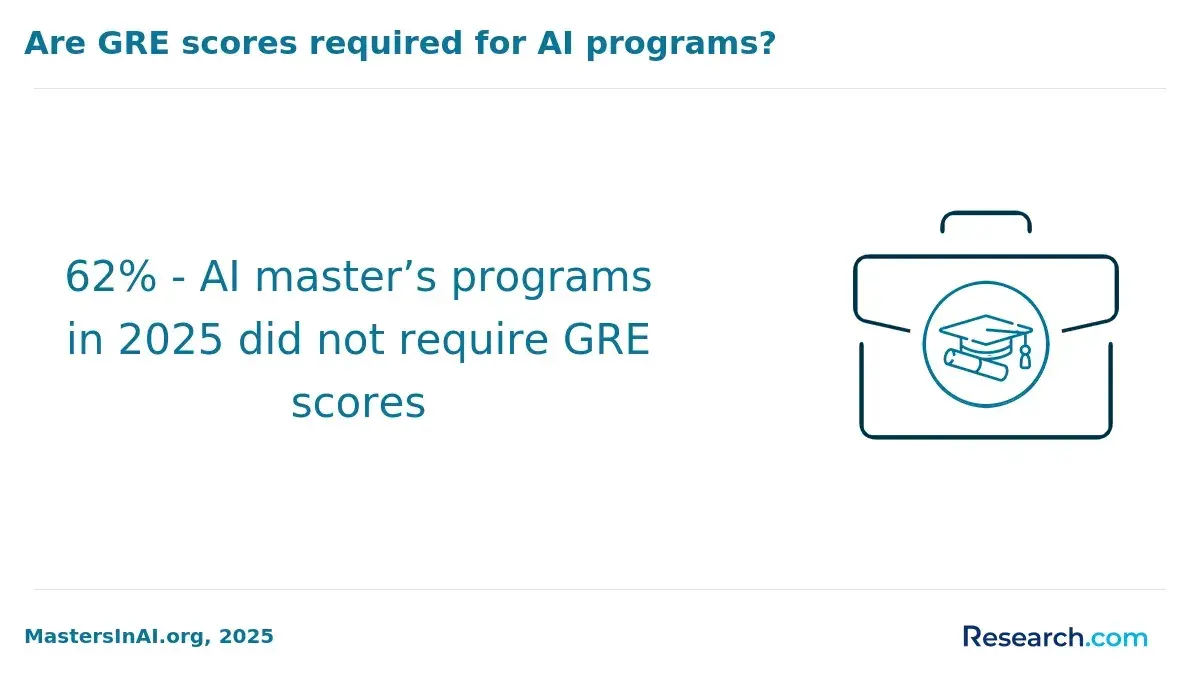
Admission requirements for Doctor of artificial intelligence admission criteria emphasize research readiness and academic excellence. Applicants typically need a relevant master's degree or, occasionally, a bachelor's with an outstanding academic record. Strong backgrounds in computer science, engineering, mathematics, or related fields are essential. While GRE scores have traditionally been required, some programs now waive them due to shifting policies. Demonstrated independent research capability, through publications, prior experience, or detailed proposals, is crucial. Faculty recommendations and a clear statement of purpose play significant roles. Practical AI development experience is beneficial but secondary to research potential. The Council of Graduate Schools notes elevated international graduate applications in the U.S., intensifying competition and heightening the importance of research credentials.
Graduate certificate requirements in artificial intelligence programs tend to be less stringent. These usually require only a bachelor's degree, often without strict field restrictions, making them accessible to professionals from various disciplines. They focus on coursework rather than research, rarely requiring GRE scores or previous research experience. Some may ask for professional experience or prerequisites in programming or math, aiming to provide foundational to intermediate AI skills for career advancement rather than research.
Choosing between these paths depends on career objectives: doctoral programs suit those committed to AI research and academia, demanding strong research profiles, while certificate programs cater to those seeking practical skills with fewer entry barriers. For professionals exploring cybersecurity fields, programs like the best online cyber security degrees offer additional specialized options.
How long do AI doctorates and AI graduate certificates typically take to complete?
Doctorates in artificial intelligence require a substantial time commitment, generally ranging from 5 to 7 years. This duration encompasses coursework, comprehensive exams, original research, and dissertation completion. According to data from the National Center for Education Statistics (NCES) / IPEDS 2024, US research doctorates typically take mid-to-high single digits in years depending on the discipline. AI, intersecting with computer science and engineering, aligns with these timelines.
In contrast, AI graduate certificates offer a faster path to specialized skills, usually completed within 6 to 12 months. These programs focus on practical knowledge rather than research, making them suitable for working professionals who want to upskill without the lengthy commitment required for a doctorate. Unlike doctoral programs, certificates do not mandate dissertations or extensive independent study.
Prospective students should weigh their goals and time availability carefully:
- Doctorates provide deep expertise, research experience, and open doors to academic or advanced industry roles but require several years of focused dedication.
- Graduate certificates enable quicker acquisition of AI skills, ideal for career pivoting or resume enhancement without multi-year studies.
Choosing between these paths depends on balancing long-term career objectives with the practical limits of time and work commitments. For detailed education planning, resources from the NCES / IPEDS are invaluable for understanding typical program durations.
What do AI doctorate and graduate certificate curricula typically cover?
Doctoral programs in artificial intelligence emphasize in-depth study of machine learning, deep learning architectures, and foundational AI theories. These programs develop expertise in advanced model evaluation, ethics, and the creation of novel AI systems through rigorous mathematical, statistical, and research methodologies. Coursework frequently includes designing and testing foundation models, reflecting trends highlighted by the Stanford HAI AI Index Report 2025, which shows a sharp increase in foundation model development, underscoring the importance of cutting-edge skills in this area.
Graduate certificates focus on practical skills for professionals aiming to enhance their understanding of AI basics and applications. They cover introductory machine learning algorithms, natural language processing, and ethical AI deployment with less emphasis on theory and research. These programs provide hands-on training in popular frameworks, enabling immediate applicability in technology roles.
Both pathways address AI ethics and societal impacts; however, doctoral studies delve into policy analysis and bias mitigation strategies, while certificates introduce ethical considerations to promote responsible AI use. Students should consider their career objectives: research-driven roles require doctoral-level knowledge, whereas technical and applied AI roles are well-supported by certificate training.
Key topics across both programs include:
- Machine learning algorithms and model building
- Deep learning and neural networks
- AI ethics, bias, and societal impact
- Data science and statistical methods
- Model evaluation and validation techniques
How do online AI doctorates and certificates compare to on-campus programs?
Online doctorates and graduate certificates in artificial intelligence are now closely aligned with on-campus programs in both content quality and learning outcomes. Advances in AI-driven online learning tools offer remote students interactive simulations, real-time collaboration, and adaptive feedback comparable to traditional settings. As noted in the EDUCAUSE Horizon Report 2025 (Higher Education Edition), many institutions emphasize generative AI to enhance teaching and learning, effectively bridging online and campus experiences.
Doctoral programs available online maintain rigorous research components, including dissertations supported by virtual advisor meetings and access to digital libraries. In contrast, on-campus programs often provide easier access to networking opportunities, specialized AI labs, and face-to-face mentorship. Graduate certificates, typically shorter and focused, appeal to professionals seeking specific AI skill upgrades with the flexibility of online access.
Key considerations for prospective students include:
- Faculty involvement in current AI research, which varies by institution regardless of delivery mode.
- Availability of hands-on AI projects, with some programs offering cloud-based remote labs.
- Collaboration opportunities, where on-campus fosters spontaneous interactions, while online requires structured virtual engagement.
- Program length and career impact; certificates may take months, doctorates several years.
Verification of accreditation, technology support, and synchronous interaction levels is crucial. Students aiming for applied AI skills might favor online certificates, while those pursuing research careers could benefit from on-campus infrastructure.
How much do AI doctorates and AI graduate certificates cost, and how is aid used?
Doctorates in artificial intelligence typically cost between $30,000 and over $60,000 annually, varying by institution and program length. Graduate certificates usually range from $5,000 to $15,000 for the entire program. These costs can be significantly reduced depending on available funding.
Doctoral students often benefit from assistantships, fellowships, or scholarships that cover tuition and provide stipends. These funding sources can offset 50% or more of total expenses. In contrast, certificate students frequently rely on employer tuition assistance and federal or private loans. According to the College Board Trends in Graduate Student Aid 2024 report, graduate students use loans and employer support more than undergraduates, resulting in less immediate debt but a longer financial commitment for doctorate candidates.
Examples include PhD students who might receive teaching assistantships waiving tuition and providing stipends of around $20,000 annually. Working professionals pursuing certificates often pay full tuition upfront but may use employer reimbursement plans, which can have annual caps and grade requirements.
Students should evaluate available aid carefully. Doctorates typically offer deeper financial support linked to research roles, while certificates often depend on personal or employer financing and loans. Identifying assistantship opportunities, employer tuition benefits, and loan options helps minimize debt.
How should you evaluate accreditation and program quality for AI credentials?
Verifying accreditation and program quality is crucial when pursuing AI credentials. Thousands of institutions claim accreditation, but it is essential to confirm legitimacy through recognized bodies like the Council for Higher Education Accreditation (CHEA) or the US Department of Education's official listings.
Regional or national accreditation is often preferred by employers and professional organizations. For instance, a Doctor of Artificial Intelligence from a regionally accredited university generally reflects rigorous academic standards. However, some graduate certificates may come from less recognized providers, making accreditor verification vital.
Reviewing the curriculum and instructor qualifications can indicate program quality. Focus on programs that align with industry trends such as machine learning, natural language processing, and AI ethics. Hands-on projects and research opportunities usually offer stronger preparation for careers or doctoral work.
Graduate employment rates and research contributions serve as measurable indicators of a program's success. Additionally, professional recognition through affiliations with AI research organizations or industry partnerships enhances credibility.
Be cautious of credentials resembling "AI" from unaccredited institutions or diploma mills, as these often lack real educational or career value. Always cross-check claims against official government and accreditor websites to avoid misleading programs.
What salaries and job outlook are typical for AI doctorate versus certificate holders?
Doctorate holders in artificial intelligence generally command much higher salaries than those with only a graduate certificate. According to the US Bureau of Labor Statistics (BLS), computer and information research scientists-a role usually requiring a PhD-earn a median annual wage of about $131,490. In comparison, professionals holding a graduate certificate in AI or related fields typically work as AI specialists, data analysts, or machine learning engineers, with salaries ranging from $70,000 to $110,000 depending on experience and industry.
Employment growth for PhD-level AI roles is projected to be robust, with the BLS forecasting a 22% increase in computer and information research scientist jobs through 2034. This reflects strong demand for advanced research skills amid rapid technological advances. Conversely, job prospects for certificate holders vary more widely and are often linked to technical roles where market saturation occurs in some areas.
Certificate holders benefit from faster workforce entry and essential AI knowledge but may face limits in salary and promotion without further education. Doctorate holders endure longer training but gain advantages like access to research funding, patent opportunities, and leadership positions in academia and tech companies. Prospective students should carefully weigh short-term earnings against long-term career ambitions when choosing between these educational paths.
Other Things You Should Know About Artificial Intelligence
Yes, many students begin with a graduate certificate and later apply to doctoral programs in artificial intelligence. Credits earned in a certificate program may be transferable, depending on the policies of the doctoral institution. It is important to check with the specific university about transferability and prerequisites before starting a certificate.
In 2027, a Doctor of Artificial Intelligence tends to lead to advanced research roles, academic positions, and leadership opportunities in high-tech industries. Conversely, a graduate certificate provides foundational knowledge and skillsets useful for immediate entry into the workforce or for career advancement in specialized tech roles.
AI graduate certificates are generally seen as valuable especially for professionals seeking specialized knowledge or career advancement without pursuing a full degree. These certificates demonstrate practical skills in AI and related technologies, which many employers find relevant. However, for roles requiring advanced research or leadership, doctoral credentials are often preferred.
A strong foundation in mathematics, programming, and computer science is recommended before starting any advanced AI program. Doctoral candidates often have prior experience or degrees in these subjects, while certificate programs may accept students with more diverse backgrounds but usually expect some technical proficiency. Preparing in areas like calculus, linear algebra, and coding improves the learning experience.
References
- Amazon launches $68 million AI PhD Fellowship program https://www.amazon.science/news/amazon-launches-68-million-ai-phd-fellowship-program
- University Degree vs AI Bootcamp: Which is Best Career Path? https://agilefever.com/university-degree-vs-ai-bootcamp-which-is-best/
- Why AI and Machine Learning Certifications Aren’t Enough: The Academic Edge of a Masters Degree https://snatika.com/single-blog/why-ai-and-machine-learning-certifications-aren%E2%80%99t-enough%3A-the-academic-edge-of-a-masters-degree
- AI Certification Vs Degree: Which Is Better in 2026? - DSTI | Data Science Course in Delhi | Data Science Training in Delhi https://www.datasciencetraining.co.in/ai-certification-vs-degree-which-is-better/
- Future of AI Research in Industry vs Academia https://blog.litmaps.com/p/future-of-ai-research-in-industry
- Artificial Intelligence and Accreditation: Does It Really Help Us? https://nac-us.org/2025/11/25/artificial-intelligence-and-accreditation-does-it-really-help-us/
- How to Get Into a Top AI PhD Program: Admission Requirements https://www.explica.co/how-to-get-into-a-top-ai-phd-program-admission-requirements/
- What Are the Requirements for an AI Certificate - IABAC https://iabac.org/blog/what-are-the-requirements-for-an-ai-certificate
- PhD In Artificial Intelligence - Eligibility, Admission 2026 https://collegevidya.com/blog/phd-in-artificial-intelligence-eligibility-admission-process/
- How AI and Data Science Certificates Impact Salary Growth https://skillup.online/blog/how-ai-and-data-science-certificates-impact-salary-growth/