2027 Artificial Intelligence Degree Programs Best for Remote Work Careers

Co-Founder and Chief Data Scientist
Transitioning into the artificial intelligence field can be daunting for professionals with unrelated undergraduate degrees, especially when seeking remote work options. Many face challenges finding accredited programs that offer flexibility without sacrificing quality. Balancing career shifts, personal commitments, and advancing technology requirements adds complexity to this pursuit. The demand for qualified AI specialists continues to grow, making it crucial to identify suitable educational pathways that align with remote work trends.
This article evaluates top artificial intelligence degree programs designed to support remote career goals, helping readers make informed decisions for a successful industry pivot.
Key Things You Should Know
- Remote-compatible artificial intelligence degree programs increasingly emphasize cloud computing and data science skills, aligning with a 35% annual job growth predicted through 2030 by the U.S. Bureau of Labor Statistics.
- Top programs in 2027 integrate practical machine learning projects with virtual labs, enabling full remote learning without compromising hands-on experience essential for AI careers.
- Graduates from accredited online AI degrees report 20% higher hiring rates in remote roles, reflecting strong employer demand for flexible yet rigorous artificial intelligence education pathways.
What are the best AI degree programs for remote work careers?
The best artificial intelligence degree programs for remote careers prioritize flexibility and skills relevant to market needs, especially in generative AI, machine learning, and data science. These areas are critical for remote roles like AI engineer, data analyst, and research scientist. Coursera's 2025 Global Skills Report ranks "Generative AI" as the fastest-growing skill worldwide, highlighting the value of programs focused on this specialization.
Top online artificial intelligence degrees for remote work are offered by universities such as Stanford, MIT, and Carnegie Mellon, which provide fully online or hybrid options emphasizing applied skills and programming languages such as Python and TensorFlow. Affordable and accredited programs from institutions like the University of Texas at Austin and Georgia Tech also offer strong curricula covering project-based learning, ethics, and cloud computing-key components for remote professionals.
Candidates should seek programs teaching collaboration and communication tools tailored for distributed teams. Certifications, including Google's TensorFlow Developer Certificate and AWS Machine Learning Professional, boost credentials for remote AI positions.
Evaluating a program's curriculum relevance, faculty expertise, and alumni outcomes in remote AI roles is vital. Programs with internships or partnerships at remote AI firms offer valuable practical experience. Focus areas should include natural language processing, computer vision, and ethical AI deployment to succeed in autonomous remote roles. For insight into earning potential, consider artificial intelligence degree salary.
What remote jobs can you get with an artificial intelligence degree?
An artificial intelligence degree opens pathways to various remote jobs across multiple industries, creating diverse avenues for professionals. Top remote jobs with an artificial intelligence degree include roles such as AI engineer, machine learning specialist, data scientist, and AI research scientist. These positions focus on building models, designing algorithms, and analyzing large datasets, which are fully compatible with remote collaboration platforms. For example, AI engineers develop generative AI systems or natural language processing tools applied in customer service and automated content creation.
Data scientists leverage AI techniques to uncover trends and optimize business decisions without needing physical office presence. Machine learning specialists build and maintain predictive models in sectors like healthcare, finance, and e-commerce, enabling completely remote workflows. Remote AI consultants advise companies on AI strategy and implementation, requiring strong domain expertise and communication skills alongside technical knowledge.
LinkedIn's 2025 Jobs on the Rise report identifies multiple AI and GenAI-related roles as some of the fastest-growing remote career opportunities, emphasizing the technology's expanding adoption and versatility. These include AI product managers who oversee AI project lifecycles and algorithm auditors focusing on ethical AI compliance. Given the digital nature of AI tasks, more employers are offering remote or hybrid positions to access global talent and reduce operational costs, increasing artificial intelligence remote career opportunities.
Graduates seeking to enhance these opportunities should build strong programming skills in Python and R, gain familiarity with cloud AI platforms, and develop portfolio projects demonstrating practical applications. Networking within AI communities and obtaining certifications in specialized AI tools further improve job prospects. Employers prioritize candidates able to independently manage AI pipelines, communicate findings clearly, and adapt continuously to emerging technologies.
For those evaluating education options, pursuing an affordable data science degree can be a strategic step toward these remote careers.
Are online AI degree programs accredited and respected by employers?
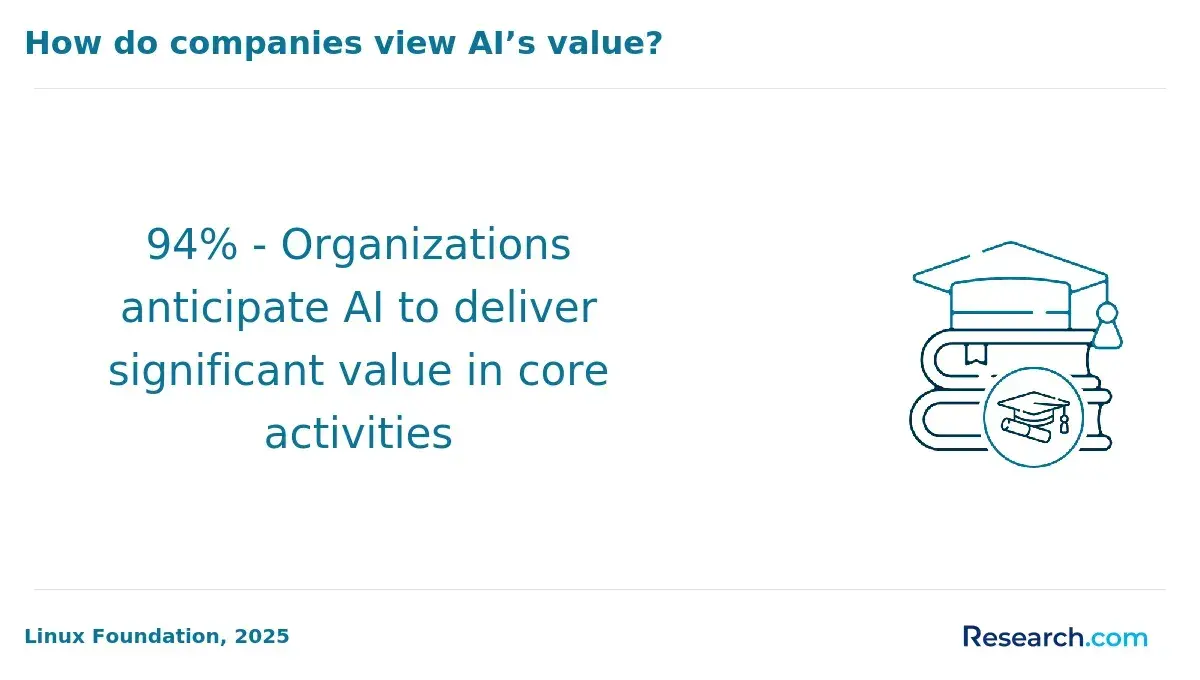
Online artificial intelligence degree accreditation by recognized bodies such as the Higher Learning Commission or ABET plays a key role in employer recognition of online AI degrees. These accreditations ensure the curriculum meets rigorous academic and industry standards, preparing graduates with relevant, current skills crucial for careers in AI. Employers increasingly prioritize skills demonstrated through hands-on labs, industry projects, and capstone assignments over formal credentials alone.
SHRM's 2024 Talent Trends research highlights that many employers now adopt skills-based hiring, often relaxing strict degree requirements. This shift benefits those with accredited online AI degrees who can prove competencies such as machine learning, data analysis, or neural networks through practical experience or certifications. Remote work environments especially value this flexible, skill-focused approach.
Prospective students should confirm the online AI program's institutional accreditation and review transparent outcomes like graduate employment rates. Supplementing degrees with recognized certifications, for example from Google AI or Microsoft Azure, further strengthens an applicant's portfolio. Students exploring related educational options may also find value in programs like an online game design degree, which shares similarities in project-driven learning and technology application.
Graduates from accredited programs enjoy better employer recognition and viable pathways into AI careers, especially in remote or technology-driven roles where proven technical skills outweigh mere credential possession.
What degree level in AI leads to the strongest remote career outcomes?
The strongest remote career outcomes in artificial intelligence typically come from obtaining a bachelor's degree or higher. The U.S. Bureau of Labor Statistics projects employment growth for data scientists-roles closely tied to AI expertise-at 35% between 2022 and 2032, much faster than average. This growth supports robust opportunities for those holding bachelor's degrees or advanced qualifications in AI-related fields.
Bachelor's degrees in computer science with AI concentrations, data science, or specialized AI programs build essential theoretical knowledge and practical skills. They often cover topics such as machine learning, neural networks, and programming languages like Python, preparing graduates for remote roles across healthcare, finance, and technology sectors. For working professionals, many programs offer part-time or online options to accommodate remote learning and career flexibility, representing the best degree level for artificial intelligence remote work careers.
Graduate degrees, especially a master's in artificial intelligence or machine learning, deepen technical expertise and enable access to higher-level remote roles like AI research scientist or lead data engineer. These programs focus on algorithm design, advanced statistics, and applied AI projects, helping graduates compete for specialized remote work with premium salaries and leadership positions. Consider exploring master data science online options for flexible advancement.
PhD programs, though less common, are critical for remote research careers in academia or industry R&D. Doctorate holders often secure fully remote roles focused on novel AI model development and academic publication.
In summary, selecting top artificial intelligence degree programs for remote job success usually means starting with a bachelor's degree as a foundation, then advancing through graduate education to enhance specialization and leadership opportunities in remote settings.
What courses and skills do AI programs teach for remote-ready roles?
AI degree programs tailored for remote work careers combine technical training with applied skills vital for virtual productivity and collaboration. Core curriculum covers machine learning, natural language processing, data science, and software engineering, building essential knowledge in algorithms, statistical modeling, and programming languages like Python and R.
With 75% of knowledge workers utilizing AI tools daily (Microsoft & LinkedIn, Work Trend Index), programs focus on practical expertise such as prompt engineering for large language models, automating workflows with AI-driven APIs, and deploying models on cloud platforms like AWS and Azure. These capabilities enhance remote decision-making and efficiency.
Specialized skills often emphasized include:
- Data analysis using AI-powered visualization tools.
- Integration of AI assistants in collaboration software.
- Developing ethical AI frameworks.
- Designing scalable AI models for distributed computing environments.
Soft skills for remote success also play a critical role. Students learn asynchronous communication, virtual teamwork, and project management via AI-enhanced productivity tools. Real-world projects simulate remote settings, preparing graduates to manage AI systems entirely online. Knowledge of containerization technologies such as Docker and Kubernetes, along with version control via Git, enables effective collaboration across time zones. Graduates emerge well-equipped with both technical AI expertise and remote work skills in high demand by employers.
What are the admission requirements for AI degree programs?
Admission to AI degree programs largely depends on strong quantitative and analytical skills. Most schools require applicants to hold a bachelor's degree in computer science, mathematics, engineering, or a related field, along with official transcripts showing high achievement in advanced math courses like calculus, linear algebra, probability, and statistics. GRE scores are commonly requested, especially emphasizing the quantitative reasoning section. According to ETS's data on GRE test takers, variability in quantitative percentile scores highlights why this skill is a competitive factor for admission committees.
Applicants generally need to submit:
- Official transcripts demonstrating math and programming proficiency
- GRE scores focusing on quantitative reasoning
- Letters of recommendation from academic or professional sources
- A statement of purpose outlining interest in AI and career objectives
- Relevant experience in AI or data science through work or research (preferred by some programs)
Some programs waive GRE requirements for candidates with strong professional experience or certifications. Remote or online AI programs may also value proof of self-discipline and remote collaboration skills. International applicants might need TOEFL or IELTS scores unless waived. Coding proficiency in languages such as Python or Java, demonstrated through portfolios or coding challenges, is often recommended.
Since requirements vary, applicants should verify specific program expectations. Programs might prioritize machine learning experience or broader computer science knowledge. Meeting minimum criteria doesn't guarantee admission, making strong quantitative GRE scores a notable advantage, as indicated by ETS research.
How long do AI degrees take, and what do they cost?
Degrees in artificial intelligence often span two to four years for undergraduates and one to two years for master's programs. A bachelor's degree, typically in AI or computer science with an AI focus, usually takes four years of full-time study, though some accelerated tracks shorten this to around three years. Master's degrees dive deeper into AI and may take 12 to 24 months, depending on whether students attend part-time or full-time.
Tuition costs vary widely by institution and program format. The College Board's 2024 Trends in College Pricing reports an average in-state tuition of about $11,260 at public four-year schools. This baseline helps estimate AI degree expenses:
- Bachelor's degrees in AI at public universities can total roughly $45,000, including fees and living expenses, with some tuition increases over time.
- Private universities often exceed $50,000 per year, potentially surpassing $200,000 for full completion.
- Online master's programs in AI range from $15,000 to $50,000 depending on the school and curriculum depth.
Financial aid, scholarships, and employer tuition reimbursement substantially reduce costs for many students. Transfer credits and accelerated programs can also lower both time and expenses. Flexible online or part-time formats support working professionals but may extend master's study to up to three years.
Which AI certifications help you qualify for remote roles after graduation?
Certifications that advance qualification for remote roles after graduation are crucial for artificial intelligence professionals seeking competitive advantages. The Certified Artificial Intelligence Practitioner (CAIP), from the Artificial Intelligence Board of America (ARTIBA), validates practical AI skills essential for remote work settings. Google's Professional Machine Learning Engineer certificate is another key credential, widely respected for its focus on designing and deploying scalable AI models in cloud-based workflows suited to remote environments.
CompTIA's Data+ and AI+ certifications also remain important, emphasizing data analytics and AI fundamentals valued by employers. As highlighted by CompTIA's Workforce and Learning Trends report, many organizations invest in certification training, recognizing these credentials as efficient, remote-friendly proof of expertise during hiring.
Other notable certifications supporting remote AI careers include Microsoft's Azure AI Engineer Associate, which focuses on AI implementation within Azure cloud platforms, and the AWS Certified Machine Learning - Specialty, highlighting skills for managing machine learning systems in cloud environments that facilitate remote collaboration.
Candidates should focus on certifications that:
- Demonstrate mastery in cloud-based AI tools and platforms.
- Highlight proficiency in machine learning and data science techniques.
- Show capability to develop and maintain AI systems remotely.
Pairing foundational AI certifications with cloud-specific credentials maximizes prospects in virtual AI job markets. This strategy aligns with hiring trends and contributes to sustained skill relevance for graduates targeting remote work opportunities.
What salary can you expect in remote AI jobs by role and experience?
Remote AI jobs offer competitive salaries that vary by role and experience. Entry-level AI/ML engineers typically earn between $90,000 and $130,000 annually. Mid-level professionals with three to five years of experience can expect salaries ranging from $130,000 to $180,000. Senior positions, requiring five or more years of expertise and leadership, often exceed $250,000 in total compensation, especially at top U.S. tech firms, as reported by Levels.fyi.
Salary ranges differ across AI career paths:
- Data scientists at early stages earn around $95,000 to $140,000, reaching up to $200,000 with advanced experience in sectors like finance and healthcare.
- Machine learning researchers, usually with advanced degrees, start near $120,000 and can grow to $220,000-$300,000 at senior levels, particularly when developing proprietary AI models.
- AI software developers' salaries align similarly with engineering roles, influenced by specialization and experience.
To maximize remote AI salary potential, building specialized skills in natural language processing, computer vision, or reinforcement learning is key. Certifications and hands-on projects enhance earning power. Demonstrating quantifiable achievements and effective collaboration on resumes is critical since many remote roles prioritize proven impact.
How do you choose a reputable AI program for remote work goals?
Selecting a reputable artificial intelligence program for remote work hinges on accreditation by trusted organizations like AACSB. Accredited programs maintain strict curriculum standards that adapt regularly to industry demands, ensuring students acquire skills vital for roles such as machine learning engineer, data scientist, or AI product manager focused on remote environments.
Assess how institutions track graduate success by examining published data on job placement rates, average salaries, and remote employment outcomes. Transparency in these metrics signals strong alignment with employer needs and market readiness.
Curriculum depth and flexibility are crucial. Look for programs including courses in cloud computing, distributed AI systems, and remote collaboration tools. Access to virtual labs and practical projects simulating remote teamwork builds valuable experience.
Faculty expertise also matters. Instructors involved in current AI research or partnerships with companies emphasizing remote work bring cutting-edge insights and valuable networks.
- Is the program accredited by recognized agencies such as AACSB or ABET?
- What support exists for remote internships or job placements?
- Are alumni outcomes transparently shared, especially regarding remote roles?
- Does the curriculum integrate skills suited for virtual AI work environments?
Reviewing these criteria helps ensure a solid education foundation tailored for remote AI careers. For deeper data on business education accreditation, refer to AACSB's 2024-2025 business education data available at aacsb.edu.
Other Things You Should Know About Artificial Intelligence
In 2027, AI degree programs can be tailored for remote work by focusing on flexibility through online courses, emphasizing collaboration tools, and incorporating virtual internships. This approach ensures students are adept at using resources that are central to remote work environments.
Admission requirements typically include a bachelor's degree in computer science or a related field, programming proficiency in languages like Python, and a statement of purpose highlighting interest in remote work. Some programs may also require GRE scores in 2027.
Specializations like machine learning, natural language processing, and robotics offer the best remote work opportunities in 2027 due to their high demand in tech fields that value flexible work setups. These areas are pivotal for companies transitioning to digital-first strategies.
Yes. Many accredited programs require at least one 3-credit course in AI ethics, fairness, privacy, or responsible deployment. Schools also use capstone reviews or portfolio checks to verify that students can document model decisions, data sources, and compliance practices for remote roles.
References
- How Long Does It Take to Complete an AI Course https://www.epw.com/blog/courses/how-long-is-ai-course
- Best AI tools for remote jobs in 2025 https://alrite.io/ai/best-ai-tools-for-remote-jobs/
- 16 Artificial Intelligence Career Paths https://www.calmu.edu/news/artificial-intelligence-career-paths
- Top Artificial Intelligence Courses: Fees and Duration https://collegevidya.com/blog/artificial-intelligence-course-fees-structure-duration/
- Remote AI/ML Jobs | Remotive.com https://remotive.com/remote-ai-jobs
- B.Sc. in Artificial Intelligence https://www.studyinpoland.pl/en/programme
- What Are the Career Paths After a Bachelor of Science in AI https://tetr.com/blog/what-are-the-career-paths-after-a-bachelor-of-science-in-ai
- Launch Your AI Career: 5 Thriving Remote Jobs for Aspiring Professionals | Gifty International https://giftyinternational.com/launch-your-ai-career-5-thriving-remote-jobs-for-aspiring-professionals/
- Master’s in AI Online: Today’s Best Programs https://www.onlinemastersdegrees.org/best-programs/computer-science/artificial-intelligence-ai/
- Artificial Intelligence Course Eligibility: Requirements & Prerequisites https://www.mygreatlearning.com/artificial-intelligence/courses/eligibility