2027 Best AI Degrees at Hispanic-Serving Institutions

Co-Founder and Chief Data Scientist
Transitioning into the artificial intelligence field poses challenges for professionals from unrelated backgrounds, especially when seeking programs that accommodate diverse cultural perspectives and foster inclusive learning. Many prospective students face limited options and unclear paths to gain relevant skills without starting over.
Hispanic-serving institutions (HSIs) offer unique opportunities by combining accredited curricula with cultural support that enhances academic success. This article explores top AI degree programs at HSIs, focusing on flexible, accredited options designed for graduate students and working professionals aiming to pivot their careers effectively into artificial intelligence.
Key Things You Should Know
- Hispanic-serving institutions (HSIs) are rapidly expanding AI degree offerings, with a 40% increase in accredited programs from 2024 to 2025 to meet growing workforce demand.
- HSIs graduate over 50% of Latinx STEM professionals annually, making their AI programs crucial for diversifying the technology sector and reducing employment gaps.
- Top HSI AI degrees emphasize hands-on learning with 70% of curricula integrating real-world projects, preparing students for competitive roles in AI development and data science.
What is an AI degree at a Hispanic-Serving Institution?
AI degree programs at Hispanic-Serving Institutions (HSIs) provide formal education in machine learning, data analytics, natural language processing, robotics, and AI ethics. These programs often integrate programming languages like Python along with frameworks such as TensorFlow and PyTorch. HSIs typically offer bachelor's, master's, and certificate options tailored to various entry levels and career goals, emphasizing community-driven applications like bilingual language processing and healthcare analytics tailored to Hispanic populations.
Hispanic-Serving Institutions offering artificial intelligence degrees focus on blending theoretical knowledge with practical experience through internships, research, and industry collaboration. This approach enhances cultural competence alongside technical skills and addresses important topics like program accreditation, faculty expertise, AI lab resources, and career support services. Specialized tracks in subfields such as computer vision or ethical AI governance are also available.
Designed to accommodate diverse learners - including professionals seeking part-time or online study - these degrees prepare graduates for roles in tech development, data science, AI policy, and healthcare technology integration. Prospective students should explore programs that offer hands-on learning and industry connections to improve job prospects. For insight into professional opportunities, see artificial intelligence degree jobs.
Which Hispanic-Serving Institutions offer the best AI degree programs?
Hispanic-Serving Institutions (HSIs) like the University of Texas at El Paso, California State University, Fullerton, and Florida International University rank among the top Hispanic-Serving Institutions for AI degrees. These schools provide comprehensive curricula in artificial intelligence within computer science or data science programs, focusing on machine learning, robotics, and natural language processing.
The University of Texas at El Paso's AI program stands out with strong research partnerships and specialized courses in neural networks and AI ethics. California State University, Fullerton offers a Bachelor of Science in Computer Science with an AI focus, emphasizing hands-on projects and internships with technology companies. Florida International University integrates AI in its computer engineering and data analytics degrees, featuring advanced labs and faculty-led research on AI applications in healthcare.
Although Hispanic/Latino students earn about 12% of U.S. computer science bachelor's degrees, they represent a smaller share of AI-relevant advanced degrees. This highlights the important role HSIs play in addressing representation gaps in AI careers by expanding access to quality education. Prospective students should prioritize programs offering AI-focused coursework, research opportunities, and strong industry connections to improve employment prospects.
Supportive learning environments at HSIs with targeted scholarships and mentoring enhance retention and success in these demanding fields. Choosing the best AI degree programs at Hispanic-Serving Institutions combines academic quality with cultural inclusivity to meet diverse student needs. For students exploring related options, consider researching a mechanical engineering program online as an alternative STEM pathway.
How can you verify accreditation for AI programs at Hispanic-Serving Institutions?
To verify accreditation for AI programs at Hispanic-Serving Institutions, consult the U.S. Department of Education's Database of Accredited Postsecondary Institutions and Programs (DAPIP). This registry confirms if an institution or program meets federally recognized accreditation standards. Every school listed in DAPIP adheres to specific quality criteria essential for federal recognition.
Students pursuing accreditation verification for AI degrees in Hispanic-Serving Institutions should search DAPIP by the exact institution name or location. Confirm that the accreditation applies to the AI program itself or the department offering it. Regional accreditors, such as the Middle States Commission on Higher Education or the Southern Association of Colleges and Schools, commonly accredit these institutions. Programmatic accreditors like ABET may oversee technology-related AI fields.
Exercise caution with programs claiming accreditation not found in DAPIP. Accreditation from unrecognized agencies can impact credit transfers, federal financial aid, and employment opportunities. For instance, students in non-accredited AI programs may become ineligible for federal loans or face hurdles while applying for jobs.
When uncertain, contact the institution's admissions or registrar office directly to request proof of accreditation and verify whether the AI program meets industry and educational standards. Cross-check this information with DAPIP data for full reliability. Additionally, if you are interested in the broader tech education field, consider exploring a video game development degree as a valuable related option.
What AI degree levels and specializations are available at Hispanic-Serving Institutions?
Hispanic-Serving Institutions (HSIs) offer a variety of AI degree levels available at Hispanic-Serving Institutions, designed to prepare students for rapidly evolving industry needs. Programs typically include associate's degrees focusing on AI fundamentals or data analytics for entry-level positions. Bachelor's degrees often emphasize machine learning, data science, and computer vision, integrating core programming and algorithm development. Master's programs bring advanced specializations such as generative AI, natural language processing, robotics, and ethical AI development.
Certificate programs hone emerging skills in generative AI tools, automation, and AI-driven cybersecurity. Many HSIs align these AI specializations offered in Hispanic-Serving Institutions with current labor market trends. According to Lightcast's job posting analytics, machine learning, data science, and generative AI remain the most sought-after skill clusters by employers.
Hands-on, project-based learning using tools like GPT models is common, equipping students with applied skills to meet employer demands. Interdisciplinary tracks combining AI with business analytics or healthcare informatics add further value. Flexible delivery options, including online and hybrid formats, support working professionals pursuing career advancement.
Prospective students should assess programs for specialization depth, faculty expertise, and industry partnerships offering internships in machine learning and generative AI fields. Those seeking advanced studies may explore options for masters in data science online to enhance career prospects.
Are AI degrees at Hispanic-Serving Institutions available online or hybrid?
AI degrees offered at Hispanic-Serving Institutions (HSIs) provide flexible learning options through fully online and hybrid formats, catering to working professionals and students with family responsibilities. These programs often include bachelor's or master's degrees in fields like computer science with an AI focus, data science, and machine learning, allowing students to advance without relocating or pausing their careers.
Hybrid programs blend online coursework with on-campus labs or seminars, giving students essential hands-on experience. For example, California State University campuses, recognized HSIs, frequently offer hybrid tracks that balance remote learning with in-person activities.
Program structures typically combine asynchronous lectures with synchronous sessions to accommodate different schedules and time zones. According to the National Postsecondary Student Aid Study (2024), most U.S. undergraduates take at least one online course, highlighting a strong demand for flexible education options like those at HSIs.
- Inclusive support services including tutoring and career advising tailored to Hispanic and underserved communities
- Technology requirements and campus visit frequency vary by program
- Focus on culturally responsive education aligned with workforce needs
Examining specific program requirements and support services helps prospective students find AI degrees from HSIs that offer flexibility, affordability, and practical skills essential for today's job market.
What courses and skills do AI programs at Hispanic-Serving Institutions emphasize?
AI programs at Hispanic-Serving Institutions (HSIs) focus on developing strong technical and analytical skills essential for the AI workforce. Central to the curriculum is programming, with Python being a critical language due to its dominance in U.S. data and AI job requirements, as identified by Lightcast data analyzing national job postings.
Students typically study a broad range of topics including:
- Machine learning algorithms and real-world applications
- Data structures and software engineering principles for scalable AI
- Statistics and probability for effective data modeling
- Data ethics, covering fairness and bias in AI systems
- Data visualization and exploratory data analysis to communicate results
Hands-on projects using real datasets help students build practical skills such as data cleaning, feature engineering, and model validation. Coursework often incorporates platforms like TensorFlow and PyTorch to deepen understanding of neural networks and deep learning. Soft skills, including problem-solving, critical thinking, and teamwork, are cultivated through collaborative labs and capstone projects.
Elective courses may explore emerging fields such as natural language processing, computer vision, and robotics, aligning education with evolving industry demands. Instructors ensure that graduates gain both theoretical knowledge and applicable skills that meet labor market needs, preparing them for successful careers in AI.
What are typical admissions requirements for AI programs at Hispanic-Serving Institutions?
Admissions to AI programs at Hispanic-Serving Institutions (HSIs) focus heavily on academic preparation and potential rather than strict standardized testing. Over 80% of four-year U.S. colleges prioritize high school GPA, demonstrating a holistic review approach (NCES-Undergraduate Admissions and Policies, 2024). At HSIs, this means strong academic records in math, science, and computer science are crucial.
Applicants often need to meet minimum GPA requirements, typically between 2.5 and 3.0, though more competitive AI programs may demand higher. Standardized tests like the SAT or ACT have become optional at many HSIs, reflecting a broader trend, but submitting good scores can strengthen applications where GPA or coursework rigor is lower.
Additional common requirements include:
- Letters of recommendation highlighting quantitative and technical abilities
- Personal statements expressing passion for AI and career goals
- Completion of programming or statistics prerequisites
- Portfolios or interviews for certain selective programs
Work experience in technology or AI internships is valued but not mandatory. Prospective students should review specific HSI program details and prepare academic records early. Clear articulation of AI interest greatly benefits admissions prospects.
How much do AI degrees at Hispanic-Serving Institutions cost, and how long take?
The cost of an Artificial Intelligence degree at Hispanic-Serving Institutions (HSIs) generally matches the average in-state tuition and fees for U.S. public four-year universities, which is about $11,000 annually according to College Board-Trends in College Pricing, 2024. Since most HSIs are public, they aim to keep tuition affordable for Hispanic and other underrepresented students. Completing a bachelor's degree in Artificial Intelligence typically costs between $44,000 and $55,000 over four years, excluding additional expenses such as housing and fees.
Degree durations vary, usually spanning four to five years for bachelor's programs. Some HSIs provide accelerated or combined bachelor's and master's tracks that shorten total study time to five years or less. Master's programs in Artificial Intelligence usually take around two years, with tuition depending on the institution and residency.
Additional costs may include textbooks, technology fees, and summer courses that speed up graduation but increase expenses. Many HSIs also offer in-state tuition waivers, scholarships, or grants, which can significantly offset costs. Prospective students should research financial aid options and program lengths with specific schools to plan effectively.
Overall, pursuing an Artificial Intelligence degree at an HSI aligns closely with national public university tuition averages and offers flexible paths through undergraduate and graduate studies.
What AI jobs can graduates from Hispanic-Serving Institutions qualify for?
Graduates from Hispanic-Serving Institutions (HSIs) with degrees related to artificial intelligence are well-positioned for a variety of technical and analytical careers. Leading roles include data scientist and machine learning engineer, both rapidly growing fields highlighted in Lightcast's 2024 U.S. occupation and posting growth data. These positions require applied AI skills, combining programming, statistics, and domain expertise-competencies increasingly emphasized in HSI programs.
Data scientists extract insights from complex datasets using AI algorithms and tools like Python or R. Machine learning engineers design and optimize models that automate processes and improve software functionality. Other career options for HSI AI graduates include AI research analyst, business intelligence developer, natural language processing engineer, and robotics software developer.
- AI research analyst, improving algorithms and exploring new AI models
- Business intelligence developer, integrating AI into enterprise data for strategic insights
- Natural language processing engineer, developing AI applications like chatbots and voice assistants
- Robotics software developer, creating autonomous AI-driven machines
Many roles also value interdisciplinary skills linking AI with cybersecurity, healthcare informatics, or financial analytics. Opportunities in AI product management and ethics compliance emphasize governance and responsible AI use.
Internships, research projects, and familiarity with evolving AI regulations strengthen candidates' profiles. As the AI field expands, these experiences and ethical awareness enhance job readiness for HSI graduates entering this competitive market.
What salaries and job outlook can AI graduates expect in the U.S.?
Employment for data scientists in the U.S., a central role in the field of artificial intelligence, is projected to grow much faster than average according to the U.S. Bureau of Labor Statistics (BLS). This growth is fueled by the broadening use of artificial intelligence across sectors such as healthcare, finance, and technology.
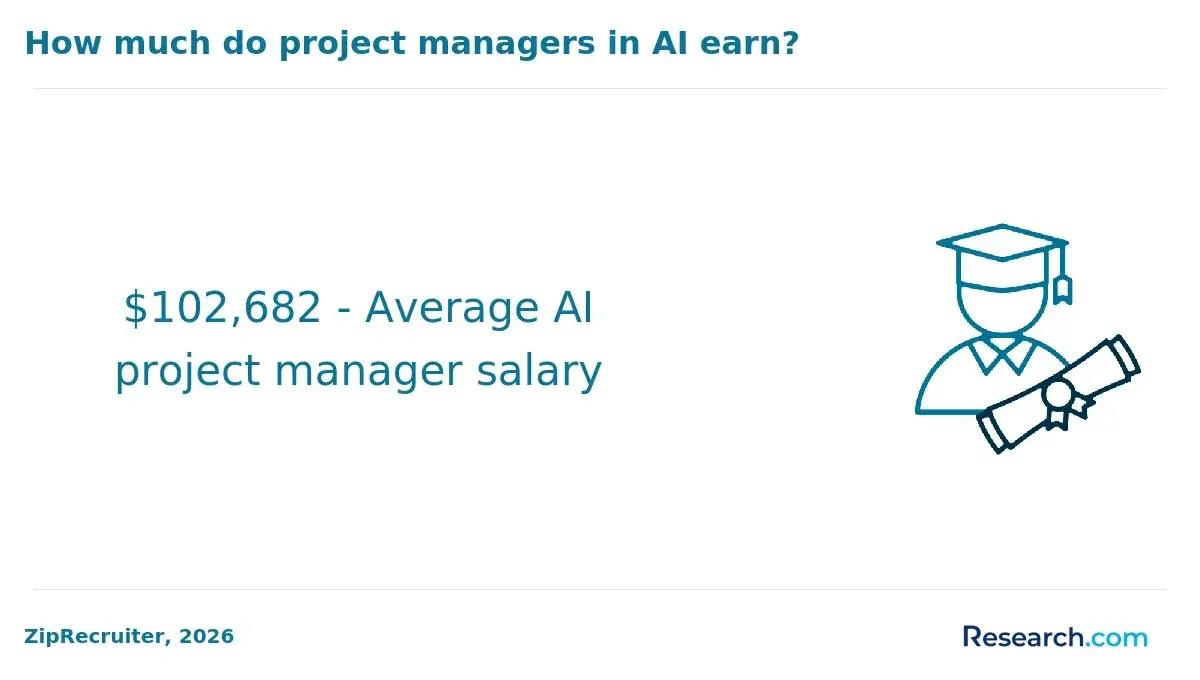
Median salaries for data scientists typically range from $100,000 to $110,000 annually, with higher wages available in specialized roles or major metropolitan areas. Specific job titles within artificial intelligence offer varied pay scales:
- Machine learning engineers earn between $95,000 and $135,000 per year.
- AI research scientists with advanced degrees and experience can earn upwards of $140,000 annually.
- Entry-level AI analysts start around $70,000 and can advance quickly.
Beyond traditional data science roles, emerging careers in AI ethics, AI policy, and implementation specialists are gaining traction. Proficiency in programming languages like Python and R, along with cloud computing expertise, further enhances employment opportunities and salary potential.
Continuous learning in evolving AI technologies and staying informed about industry trends are essential to maximize career growth and earnings in this dynamic field.
Other Things You Should Know About Artificial Intelligence
For students pursuing artificial intelligence, proficiency in programming languages such as Python, Java, and R is essential. Python is especially popular due to its extensive libraries and frameworks designed for AI development. Understanding these languages helps learners implement algorithms, process data, and build AI models efficiently.
AI ethics is increasingly integrated into curricula at Hispanic-Serving Institutions to address concerns about bias, transparency, and accountability. Students learn to evaluate the social and moral implications of AI systems, ensuring they develop technology that respects privacy and promotes fairness. This ethical foundation prepares graduates to build responsible AI solutions.
Many Hispanic-Serving Institutions offer research projects in areas such as machine learning, natural language processing, and computer vision. Students may collaborate with faculty on applied AI challenges, often focusing on community-relevant problems or innovative technologies. These opportunities provide hands-on experience critical for academic and professional growth.
A degree from a Hispanic-Serving Institution in 2027 can equip AI students with skills applicable in healthcare, such as data analysis and machine learning. These institutions often collaborate with healthcare organizations, providing specific insights into medical challenges and opening career pathways like clinical data analysis and personalized medicine.
References
- Hispanic Serving Institution | Alverno College https://www.alverno.edu/about/hsi
- Inspiring Examples of Digital Learning at Minority-Serving Institutions - Every Learner Everywhere® https://www.everylearnereverywhere.org/blog/inspiring-examples-of-digital-learning-at-minority-serving-institutions/
- AWS launches new AI program for community colleges, MSIs, and HBCUs https://www.aboutamazon.com/news/aws/aws-launches-new-ai-program-for-community-colleges-msis-hbcus
- AI Literacy for Hispanic-Serving Institution (HSI) Students https://ojs.aaai.org/index.php/AAAI-SS/article/view/31267
- Top Hispanic-Serving Institutions for Online Master's Degrees https://www.onlinemastersdegrees.org/student-resources/hispanic-serving-institutions/
- ABET Accreditation and Artificial Intelligence - ABET https://www.abet.org/accreditation/ai-policy/
- HACU and Logixs partner to offer generative AI technology to member institutions - HACU https://hacu.net/hacu-and-logixs-partner-to-offer-generative-ai-technology-to-member-institutions/
- Universities in Mexico now offer 43 AI-focused courses of study https://mexiconewsdaily.com/news/mexican-universities-now-offer-43-ai-degree-programs-as-demand-for-talent-grows/
- Becoming a Hispanic-Serving Institution | Culture & Institutional Excellence https://diversity.calpoly.edu/hsi
- LatinX in AI Careers | Apply for careers from LatinX in AI partners https://careers.latinxinai.org/