2027 AI Associate Degrees for Students Interested in Government Technology

Co-Founder and Chief Data Scientist
Government agencies face increasing pressure to adopt advanced technologies while managing tight budgets and ensuring workforce readiness. Students with non-technical backgrounds often find limited pathways into roles supporting government technology initiatives. The rapid growth of artificial intelligence demands a workforce skilled in both AI concepts and public sector needs. This gap creates challenges for individuals seeking flexible, accredited programs that can pivot their careers toward government-focused AI roles.
This article explores associate degrees tailored for students aiming to enter government technology fields, highlighting options designed to provide practical skills and accredited credentials for a successful transition into the AI industry.
Key Things You Should Know
- In 2026, AI associate degrees specialized for government technology prepare students in cybersecurity, data analysis, and automation, addressing a 25% projected federal job growth in tech roles through 2030.
- Programs emphasize ethical AI, compliance with federal regulations, and practical skills for agencies adopting advanced technologies for public safety and infrastructure management.
- Tuition for these degrees averages $8,000 annually at community colleges, with growing availability of federal grants supporting underrepresented students in tech fields.
What is an AI associate degree for government technology careers?
An ai associate degree for government technology careers provides targeted two-year training to prepare students for roles supporting artificial intelligence initiatives in public sector environments. This associate degree programs in government technology and ai focus on foundational skills such as data analysis, machine learning, programming languages like Python and R, along with ethical and policy considerations unique to government use of artificial intelligence. The curriculum integrates technical knowledge with an understanding of government operations, cybersecurity, and regulatory compliance.
Typical coursework includes:
- Introduction to AI and machine learning concepts
- Government data systems and cybersecurity principles
- Programming for AI in Python and R
- Ethics and policy in AI deployment within government
- Basic statistics and data visualization
Graduates from these programs are equipped to assist with AI model development, data management, and ensuring that implementations comply with government standards. Many government agencies show growing demand for personnel skilled in AI system maintenance and data analysis as part of the federal AI talent surge encouraging the hiring of 1,000 AI professionals (The White House).
Holding an associate degree in this field offers direct pathways to entry-level government technology roles such as AI technician, data analyst, or machine learning assistant. It also opens doors to advanced study, enabling credit transfers toward bachelor's degrees in relevant fields. Prospective students interested in pursuing applied artificial intelligence jobs can learn more about career options and pathways.
Which accredited schools offer AI associate degrees aligned with public sector needs?
Several accredited U.S. public colleges offer AI associate degrees designed to meet public sector technology demands. These programs provide practical skills in data analytics, machine learning, and cybersecurity aligned with government needs such as smart infrastructure, defense, and public safety. Hundreds of institutions focus on associate-degree delivery, especially public colleges emphasizing applications in government technology roles, making them among the best accredited schools for AI associate degrees in government technology.
Notable examples include community colleges with strong government connections, such as Northern Virginia Community College, which provides an AI and data analytics associate degree emphasizing federal and state government contexts. Austin Community College incorporates AI algorithm development and ethical AI use within public sector regulations.
Key components of these programs often include:
- Coursework focused on government data privacy laws and infrastructure automation.
- Internships or cooperative education partnerships with local or federal government bodies.
- Foundational cybersecurity training aimed at protecting government AI systems.
Students should verify regional accreditation and assess curricula for direct relevance to government technology projects. Institutions aligned with public agencies typically offer improved skills for government procurement and operations. Those pursuing AI associate degrees at accredited public sector-focused colleges will benefit from hands-on experience and compliance training, enhancing employability in government IT, defense contractors, and public safety organizations.
For additional insights on affordable advanced study options in related fields, prospective students can consult the data science master rank.
What jobs can you get with an AI associate degree in government technology?
An AI associate degree focused on government technology prepares graduates for specialized roles within public sector agencies. Careers in government technology with AI associate degree training typically include positions such as data analyst, cybersecurity technician, and AI support specialist. Professionals in these roles manage data systems, safeguard government infrastructure, and deploy AI-driven solutions to improve public services.
Government agencies rely heavily on data scientists and analysts to analyze large datasets, inform policy decisions, and allocate resources efficiently. Demand remains high, with over 150,000 U.S. job postings for data scientists reflecting the growing need for AI-adjacent expertise in public sector analytics teams (Lightcast).
Entry-level jobs often call for practical programming, database management, and basic machine learning skills-all integral to AI associate degree curricula. Graduates commonly serve as:
- Data technicians supporting federal and state statistical analysis units
- AI operations assistants maintaining machine learning models in government organizations
- Cybersecurity analysts monitoring AI systems for vulnerabilities and compliance
These roles provide pathways to advancement such as AI project coordinator or government technology specialist, especially when combined with additional certifications. An AI associate degree government technology jobs track also requires understanding of regulations and ethical standards related to AI deployment.
Students interested in practical experience should explore internships and cooperative programs offered by many government entities, which enhance job readiness by aligning academic learning with applied challenges. Prospective students considering this field can benefit from exploring an engineering online degree that incorporates AI coursework to build foundational skills across STEM disciplines.
How do online AI associate programs compare to on-campus options for public service?
Online AI associate degrees for public service careers offer unmatched flexibility, ideal for students balancing work and family while pursuing government technology roles. Many online programs utilize asynchronous content, enabling learners to study at their own pace without sacrificing employment or internships. In contrast, on-campus AI programs for government technology tend to provide hands-on access to labs, faculty, and peer collaboration, essential for mastering specialized government software and security protocols.
Data from the National Center for Education Statistics highlights that over half of U.S. undergraduates take at least one online course, reflecting the growing acceptance of online education for entry-level degrees such as associate programs. This trend confirms improvements in online program quality and support, narrowing the gap with traditional on-campus education outcomes.
Students comparing online vs on-campus AI programs for government technology should evaluate whether the program includes cybersecurity and data privacy courses tailored to public sector needs, virtual labs simulating government AI environments, partnerships for internships, and strong accreditation with faculty expertise.
- Government-focused cybersecurity and data privacy coursework.
- Virtual labs replicating real-world AI deployment.
- Internship opportunities through government partnerships.
- Accreditation and specialized faculty qualifications.
For those exploring options, reviewing the best online cybersecurity degree programs of 2025 can offer valuable insights into accessible and affordable pathways aligned with public service careers.
What courses and skills are taught in AI associate programs for government tech?
AI associate degree programs tailored to government technology focus on practical, technical, and analytical skills needed in the public sector. A core emphasis is placed on Python programming, the top language requested in U.S. data and AI job postings. Students gain expertise in Python for data analysis, automation, and building machine learning models crucial for government applications.
The curriculum commonly includes:
- Foundations of AI and machine learning, covering supervised and unsupervised learning techniques.
- Data management and database systems designed for secure handling of large government datasets.
- Basic cybersecurity principles aimed at protecting sensitive information within AI frameworks.
- Ethics and public policy in AI to ensure compliance with government regulations.
- Additional programming languages such as SQL, Java, or R to support varied government IT systems.
- Applied statistics and probability to enhance data-driven decisions.
- Practical projects on natural language processing and predictive analytics relevant to public administration.
Faculty frequently incorporate case studies addressing issues like fraud detection in public programs or optimizing emergency response. Training also builds skills in AI system deployment and troubleshooting within complex government IT infrastructures. Graduates are prepared for roles assisting AI development, data analysis, and system maintenance in federal, state, or local agencies, with a clear focus on Python proficiency and government-relevant applications.
What admissions requirements do AI associate programs in artificial intelligence typically have?
Associate degree programs in artificial intelligence offered by many U.S. community colleges have accessible admissions, typically requiring a high school diploma or GED equivalency. Some programs may also ask for official transcripts to confirm proficiency in foundational subjects like math and science, which are essential for success in AI studies.
Standardized tests such as the SAT or ACT are usually not required but might be considered in select cases. Instead, many institutions focus on placement tests or remedial assessments in math and English to ensure students are prepared for college-level coursework, providing preparatory classes if needed.
While prior experience in computer science or programming can strengthen an application, it is not often mandatory. Programs might recommend some familiarity with basic coding or mathematics due to the technical nature of core classes. Bridge courses or tutoring are frequently available for students new to these areas. Application essays or personal statements are uncommon but may be requested when programs seek insight into a student's motivation or career goals.
The majority of AI associate degrees are offered by community colleges maintaining open-access policies, supporting diverse learners including working adults and career changers. These low-barrier admissions effectively serve millions of students nationwide annually.
How long does an AI associate degree take, and what does it cost?
An AI associate degree usually takes about two years of full-time study, totaling 60 to 65 credit hours. This curriculum combines foundational courses in computer science and mathematics with specialized topics like machine learning and data analytics. Part-time students, or those balancing work, may require three to four years to finish. Some colleges offer accelerated tracks or online programs to shorten the timeline.
Tuition and fees at public two-year colleges average around $4,000 per year, making the total tuition approximately $8,000 for two years. This estimate excludes additional costs such as textbooks, materials, and living expenses. Financial aid, scholarships, and employer tuition reimbursement can help reduce out-of-pocket costs. It's advisable to confirm if the chosen school participates in state or federal aid programs. Certain technical colleges serving government technology sectors may also provide discounted rates or collaborate with government agencies.
Program costs vary depending on location and delivery format. Urban, in-person programs might be more expensive, while rural or online programs are often more affordable. Prospective students should request detailed tuition breakdowns and explore credit transfer options to shorten study time and save money.
What certifications complement an AI associate degree for government and civic tech roles?
Certifications that complement an AI associate degree enhance job prospects in government and civic tech by focusing on cybersecurity, data management, and cloud technologies. The CompTIA Security+ credential is widely recognized, demonstrating essential skills in network security, threat management, and risk mitigation. This certification is a baseline requirement in many U.S. cybersecurity job postings, especially for roles protecting sensitive government data and AI systems.
Additional valuable certifications include Certified Information Systems Security Professional (CISSP) for governance and compliance roles, Certified Data Professional (CDP) to support data governance and ethical analytics in public sector projects, and cloud-related credentials like Microsoft Certified: Azure AI Fundamentals and Google Associate Cloud Engineer that align with the growing shift to cloud infrastructure.
- Project Management Professional (PMP) - improves management of AI projects within government frameworks.
- Security+ and CISSP - validate skills aligned with cybersecurity frameworks such as NIST SP 800-53.
- Combination of AI education and cybersecurity certifications - enhances chances for security clearance and integration into sensitive projects.
Vendor-neutral and vendor-specific certifications give candidates a competitive edge by proving knowledge of AI algorithms alongside the robust security needed to protect AI applications in government environments.
How do security clearance and background checks affect government tech career options?
Security clearances and background checks play a critical role in shaping eligibility for government technology careers, especially in artificial intelligence (AI) fields. Approximately 4.0 million individuals currently hold U.S. security clearances, which restrict access to sensitive projects and influence the talent pool available for classified AI work (U.S. Office of the Director of National Intelligence, ODNI).
Government employers conduct thorough background investigations reviewing criminal records, financial history, foreign contacts, and personal conduct. These checks can delay hiring and disqualify applicants with recent legal or foreign influence concerns. For students and graduates aiming for roles in government AI technology, early awareness of these requirements is vital.
There are several clearance levels-Confidential, Secret, and Top Secret-that determine the type and complexity of accessible AI projects. Entry-level candidates with associate degrees might qualify for lower clearance positions but must prove trustworthiness to progress. Without security clearance, many government AI roles remain off-limits regardless of technical skills.
Key strategies include:
- Maintaining a clean personal record and full transparency during clearance investigations
- Avoiding financial errors or unexplained foreign interactions
- Pursuing internships or employment with government contractors who sponsor clearance
- Preparing for comprehensive interviews and polygraph examinations
Adhering to these guidelines enhances one's chances of obtaining the necessary clearance, thereby expanding opportunities in the competitive field of government artificial intelligence.
What salary ranges and job outlook can AI associate graduates expect in government tech?
AI associate degree graduates entering government technology roles can expect starting salaries ranging from $55,000 to $75,000 annually, depending on the agency and location. Entry-level positions such as data analyst or AI technician typically begin near $55,000, while roles involving specialized skills like machine learning support can approach $70,000 to $75,000. As professionals gain certifications or move into supervisory roles, salaries often exceed this range.
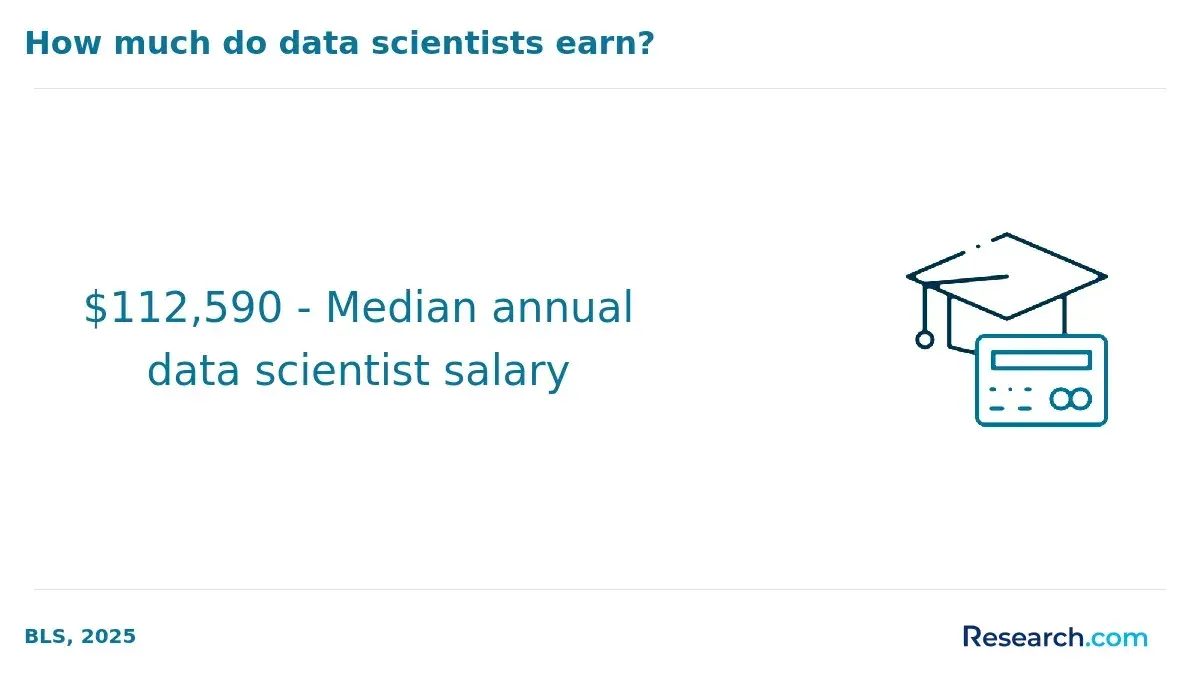
The employment outlook for AI-related government roles is strong. Between 2023 and 2033, data scientist positions-key roles closely related to AI-are projected to grow by 35%, reflecting increased government investment in data-driven decision making, cybersecurity, and automation.
Major government agencies including the Department of Defense, NASA, and intelligence communities actively recruit candidates with AI associates degrees for analytics, automation, and operational technology roles. Such positions offer clear career pathways with incremental salary increases aligned to federal pay scales and educational advancement.
- Higher salaries and more job openings tend to concentrate in metropolitan areas like Washington, D.C. and Northern Virginia.
- Federally recognized certifications can significantly boost salary potential and job security within government tech.
Other Things You Should Know About Artificial Intelligence
In 2027, students with an AI associate degree can pursue career opportunities in government technology such as AI policy analyst, data technician, or support roles in developing AI applications for public services. Opportunities also exist in cybersecurity and digital transformation initiatives within government agencies.
Yes, students with an AI associate degree can contribute to ethical and policy discussions related to AI in government roles. While advanced policy work may require further education, the associate degree provides fundamental knowledge of AI capabilities and limitations, enabling graduates to support ethical AI implementation and compliance efforts within public agencies.
Internships and hands-on projects are highly valuable for AI associate students, especially those focusing on government technology. Practical experience allows students to apply theoretical knowledge to real-world problems, develop technical skills, and build professional networks within the public sector or affiliated organizations.
Common programming languages in AI associate programs include Python, R, and Java, all widely used in government technology projects. Python is particularly prominent due to its versatility and extensive AI libraries, making it essential for developing machine learning models and data processing applications used in public agencies.
References
- AGTU | Global Degree Online https://agtu.us/en/programs/undergraduate-programs/computer-science/associate-artificial-inteligence/
- How Much is an AI Course? https://www.nobledesktop.com/learn/ai/how-much-is-a-ai-course
- Artificial intelligence for the public sector https://academy.itu.int/training-courses/full-catalogue/artificial-intelligence-public-sector-1
- AI Certification Programs: Which Ones Matter for Your Career https://www.businessplusai.com/blog/ai-certification-programs-which-ones-matter-for-your-career
- BITS Specialisation in Artificial Intelligence & Analytics | VIT Australia https://vit.edu.au/bits/bits-artificial-intelligence-analytics
- Artificial Intelligence BEng (Hons) at Ulster University 2026/27 entry - Full-time Undergraduate Study https://www.ulster.ac.uk/courses/202627/artificial-intelligence-41372
- Security clearances | Emerging Technology Policy Careers https://emergingtechpolicy.org/tips/security-clearance/
- How Long Does It Take to Complete an AI Course https://www.epw.com/blog/courses/how-long-is-ai-course
- What are background checks and security clearances? https://help.usajobs.gov/faq/job-announcement/security-clearances
- Gaining Security Clearance Can Open Doors to a Lucrative Career https://opportunities.ledfaststart.com/global/en/blogarticle/gaining-security-clearance-can-open-doors-to-a-lucrative-career