2027 Regional Differences in AI Degree Costs and Outcomes

Co-Founder and Chief Data Scientist
Choosing a region to pursue an artificial intelligence degree can significantly impact costs and career outcomes, yet many prospective students struggle to compare options effectively. Variations in tuition, living expenses, and access to local industries often create confusion for individuals seeking a flexible, accredited path to enter the AI field. These differences can influence both financial investment and long-term professional opportunities. This article examines regional disparities in degree costs and employment results, providing clarity for those aiming to make informed decisions about their education and career transition into artificial intelligence.
Key Things You Should Know
- Tuition for Artificial Intelligence degrees varies widely by region, with the Northeast averaging $55,000 annually, significantly higher than the $35,000 average in the Midwest as of 2025.
- Graduates from West Coast institutions report a 15% higher starting salary in AI-related jobs, reflecting local tech industry concentration and demand.
- Completion rates are highest in Southern universities at 82%, correlating with increased state funding and support programs tailored for AI studies.
How do AI degree costs compare across major U.S. regions and metropolitan areas?
AI degree cost differences by U.S. region are significant, influenced by institution type, location, and local economic conditions. The total four-year cost for a bachelor's degree in AI ranges from $80,000 at public institutions to $280,000 at elite private universities. Coastal states and tech hubs such as San Francisco, New York City, and Boston have the highest average costs due to prestigious schools and strong local economies.
Public universities in the Midwest and Southern regions usually provide more affordable options, with costs near $80,000. States like Texas and Ohio offer quality AI programs at lower tuition and living expenses compared to California or Massachusetts. Metropolitan area comparison of AI degree expenses highlights these regional cost advantages.
Students considering metro areas with thriving tech industries should balance higher tuition against career benefits. Graduates from coastal private universities often enjoy better employer networks and higher starting salaries, which can help offset initial expenses. More affordable programs may come with longer timelines to recover educational investments, but result in lower debt.
When choosing programs, factors like program reputation, local job markets, and availability of financial aid are essential. Using public universities and establishing state residency can reduce tuition considerably. For a faster route to career opportunities, students might explore an accelerated CS degree as an alternative pathway.
How do AI graduate salaries and employment outcomes differ by U.S. region?
Graduate salaries and employment outcomes for artificial intelligence degrees show notable variation across U.S. regions. The highest starting salaries are found in tech hubs like California's Bay Area and the Northeast corridor, where average AI graduate salaries can exceed $120,000 annually. In comparison, the Midwest and Southern states often report starting salaries between $80,000 and $100,000. These disparities reflect both cost-of-living and industry-concentration differences, illustrating important regional differences in AI graduate salaries and employment outcomes.
Employment rates also vary, with tech-dense regions, research institutions, and startup clusters demonstrating stronger placement for AI graduates. Cities such as Seattle and Boston report over 90% employment within six months post-graduation, while more rural or less tech-focused areas may see rates around 70%. Prospective students should consider the AI degree employment and salary variations by US region when selecting schools to maximize job prospects.
Return on investment (ROI) highlights tuition and residency effects. In-state students see a 30-year ROI of 8,361%, versus 3,272% for out-of-state students, emphasizing the impact of regional tuition policies on long-term financial outcomes. Students can also explore less traditional paths like an online mechanical engineer degree, which may offer cost savings and flexibility in related STEM fields.
Choosing schools near thriving AI job markets, securing residency status to reduce tuition, and leveraging local internships and networking can enhance salary growth and employment outcomes in this evolving field.
Which U.S. regions offer the best return on investment for AI degrees?
The best return on investment for AI degrees in U.S. regions is found mainly in high-tech metropolitan areas where salaries outweigh tuition and living expenses. According to Hakia AI Degree Salary & ROI Analysis 2026, the median starting salary for AI engineers is $95,000 nationally, with the top quartile earning over $115,000 in their first year. Silicon Valley, Seattle, and New York stand out as the top U.S. regions for AI degree cost efficiency due to their strong job markets and competitive pay.
In Silicon Valley, despite higher education and living costs, rapid salary growth and venture-backed company access justify the investment. Seattle's tech hub, driven by giants like Microsoft and Amazon, offers competitive salaries and career advancement. New York's expanding AI ecosystem across finance, healthcare, and tech delivers high-paying roles that offset the region's high living costs.
Conversely, Midwestern and smaller metro areas have lower tuition and living costs but correspondingly lower starting salaries, often between $70,000 and $85,000. This reduces immediate ROI and extends the time needed to recover educational expenses.
Prospective students should weigh salary premiums against living costs, program quality, and local industry presence. Targeting AI programs with strong industry ties in high-paying regions maximizes earnings and long-term ROI. For those exploring options, considering the best online cyber security degrees may also offer cost-effective pathways into tech fields with solid growth potential.
How do tuition, fees, and living expenses for AI programs vary by location?
Tuition, fees, and living expenses for ai programs vary widely across U.S. regions, impacting affordability and student budgeting. Public universities in the Midwest and South typically offer lower tuition rates, ranging from $10,000 to $20,000 annually for in-state students. In contrast, private institutions on the East and West Coasts may exceed $50,000 per year. Out-of-state and international students often incur premiums that are 1.5 to 2 times higher than resident rates, reflecting significant regional variation in ai program tuition and living expenses.
Fee structures also differ among institutions. Some schools charge flat technology or lab fees under $1,000, while others assess multiple specialized fees totaling up to $3,000 per academic year. These additional costs should be accounted for alongside tuition when estimating total expenses.
Living costs present another key factor, especially in urban tech hubs like San Francisco and Seattle. These areas, known as major ai clusters where mid-career professionals earn median salaries around $140,000 and senior roles reach $165,000 to $220,000 (Hakia AI Degree Salary & ROI Analysis 2026), have average annual living expenses exceeding $25,000 due to housing, transportation, and daily essentials. Smaller college towns in the Midwest usually have living costs below $15,000 annually.
When considering cost differences for ai degrees across regions, prospective students should balance program prestige and regional tech ecosystems with budget constraints. Lower-cost programs outside major ai hubs reduce upfront expenses but may limit networking and internship opportunities. Investing in higher tuition and living costs near strong ai clusters can enhance career returns, supported by higher local salary potential. For guidance on financial planning, see computer science degree cost.
How do accredited AI programs differ regionally in curriculum and specialization options?
Accredited AI programs across the U.S. differ notably by region, reflecting each area's industry demands and academic strengths. West Coast schools, especially in California, emphasize machine learning, computer vision, and natural language processing due to nearby tech giants and startups in Silicon Valley. These programs often integrate applied AI with software engineering and data science, preparing students for product-focused roles.
Northeast universities offer more research-driven curricula with specialties in robotics, AI ethics, and explainable AI, supported by partnerships with well-known research labs. Interdisciplinary studies combining AI with cognitive science and healthcare are also common in this region.
The Midwest is known for its focus on foundational AI theory along with robust training in AI hardware and embedded systems, aligning with the manufacturing and automotive sectors. Programs often include tracks in autonomous systems and AI safety.
In the South, expanding tech hubs in Texas and Georgia have spurred programs centered on AI applications for cybersecurity, natural language processing, and business intelligence.
Most students find employment quickly-85% of AI graduates secure jobs within six months, with the highest placement rates in states hosting major AI employers and research facilities.
When choosing a program, consider curriculum depth, specialized AI subfields, and the strength of local industry ties, as these factors greatly influence hands-on experience and job prospects.
How do online and campus-based AI degrees compare in cost and outcomes by region?
Online Artificial Intelligence degrees often require less upfront investment than campus-based programs, but costs and outcomes are heavily influenced by regional funding differences. States like California and Massachusetts have boosted AI education budgets more rapidly than general STEM, making public campus programs more affordable there due to better subsidization.
Campus programs in high-investment regions typically offer enhanced lab access, industry partnerships, and internship opportunities, leading to stronger local employment for graduates. Online degrees provide greater flexibility and accessibility but may lack direct networking benefits, especially outside major tech hubs.
Consider these factors when choosing your path:
- Cost differences relative to state AI funding levels.
- Availability of financial aid and residency requirements.
- Local tech market strength and career opportunities.
Students balancing work or residing where AI education funding grows slowly might favor online degrees. Conversely, those in states with growing AI budgets can benefit from campus programs' experiential learning and employer networks, which often translate into higher starting salaries and career advancement.
What regional accreditation and quality benchmarks should AI students look for?
Students pursuing an artificial intelligence degree should prioritize enrolling in programs with regional accreditation recognized by the Council for Higher Education Accreditation (CHEA) or the U.S. Department of Education. Regional accreditors like the Higher Learning Commission (HLC) or the Middle States Commission on Higher Education (MSCHE) ensure the program meets strict academic standards, which national or programmatic accreditation may not guarantee. This recognition is crucial for employers and graduate schools in validating your qualifications.
Strong AI programs feature faculty with doctoral-level expertise, active research labs, and curricula focused on areas such as machine learning, data ethics, and AI systems deployment. These elements contribute to better job placement rates and competitive starting salaries for graduates.
Cost is another vital consideration. European AI degree programs, for example, often charge around €10,000 per year with scholarships covering up to 100% of tuition, providing a cost-effective alternative to typical U.S. programs, according to AIdegree.org. Such affordability, combined with recognized accreditation, makes them appealing to students willing to study abroad or online.
Key factors for students to evaluate include program accreditation, curriculum quality, faculty expertise, and measurable graduate outcomes like employment rates. Consulting independent rankings and alumni testimonials can help clarify the return on investment before enrolling.
How do AI admission requirements and program length vary across U.S. regions?
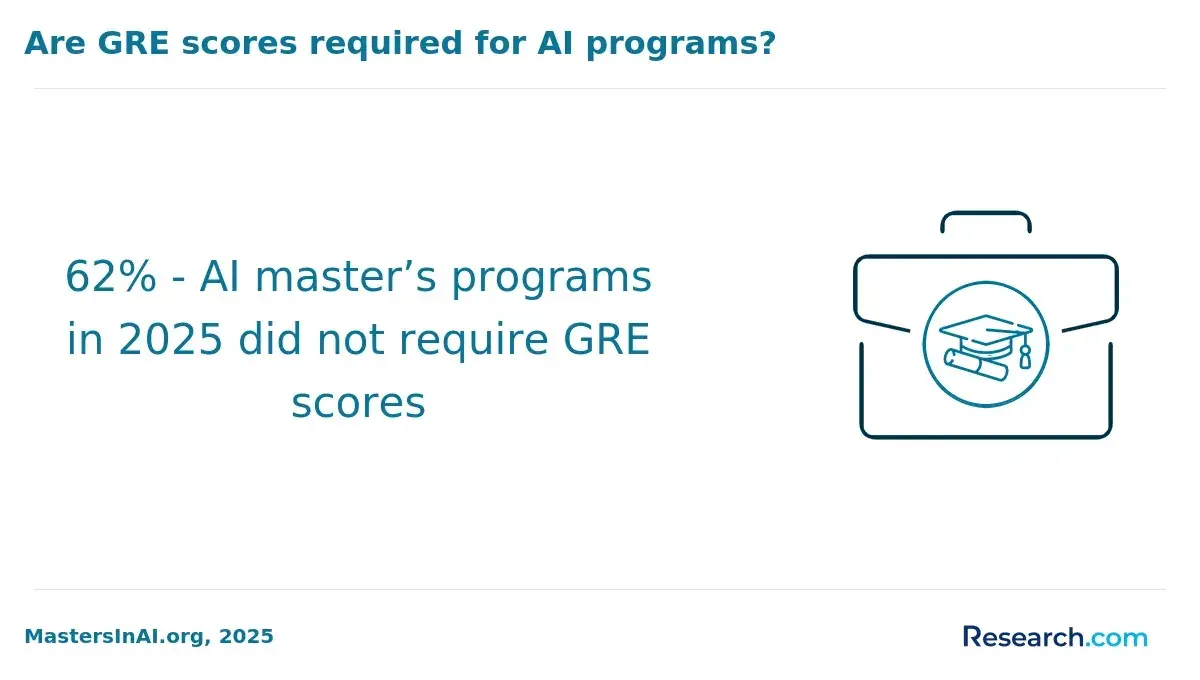
Admission requirements for artificial intelligence degree programs differ widely across U.S. regions, shaped by local industry demands and educational priorities. In the Northeast and West Coast, where competition for tech roles is intense, applicants usually need strong backgrounds in mathematics, computer science, and sometimes relevant internships or research experience. Standardized tests like the SAT or GRE may still play a role, particularly in master's programs.
Meanwhile, many institutions in the Midwest and South favor holistic reviews that value work experience and personal statements alongside academics. Some Southern universities emphasize practical skills assessments or coding challenges aligned with regional industry needs.
Program lengths vary as well. Bachelor's degrees generally take three to four years nationwide, but some West Coast schools offer accelerated three-year tracks to meet fast-growing tech markets. Master's programs typically last one to two years, often with flexible part-time or online options for working professionals. For example, Northeast programs frequently incorporate extensive research opportunities, while Southern programs may offer shorter, industry-aligned master's degrees designed for quick workforce entry.
Globally, tuition reflects local economic factors and demand. In India, AI-focused bachelor's programs range from ₹8,20,000 to over ₹20,50,000 annually, highlighting rapid cost increases in major tech centers according to Scaler's AI & Machine Learning Course Fees in 2026.
How does AI job demand and hiring concentration differ between tech hubs and other regions?
Tech hubs like Silicon Valley, Seattle, and Boston continue to dominate AI job demand in 2026, driven by dense clusters of tech companies, startups, and research institutions. These regions provide a significant number of AI roles, higher average salaries, and faster career growth. Non-tech hubs show a more dispersed demand focused on industries such as manufacturing, healthcare, and finance, where AI adoption is growing more gradually.
Recent data from the AI Bootcamp vs Degree Outcomes 2026 Report reveals that bootcamp alumni and degree holders earn comparable salaries in global tech hubs. After five years, bootcamp graduates have a median total compensation of $285,000 versus $292,000 for degree holders, highlighting employers' growing emphasis on skills over formal credentials.
For students and professionals outside tech hubs, focusing on skill acquisition and portfolio building is key to overcoming geographic limitations. Remote work or relocation can open access to more concentrated AI job markets. Smaller or emerging markets often seek AI specialists with versatile, proven skills adaptable across industries.
- Tech hubs offer higher AI job density and salaries but require competitive, demonstrable skills.
- Non-tech hubs provide growing AI opportunities in sector-specific roles with generally lower salary ceilings.
- Bootcamp credentials bridge salary gaps and enhance employability in top AI markets.
How should students choose a region and school for AI studies based on career goals?
Students aiming for careers in artificial intelligence should consider regions and universities with strong industry connections that align with their goals. Notable AI hubs like Silicon Valley, Boston, and the Seattle metro area provide rich ecosystems for internships, networking, and job placements. Attending schools affiliated with leading tech companies often benefits those pursuing AI research or development roles.
Financial factors are important, but must be weighed against long-term returns. The Hakia AI Degree Salary & ROI Analysis 2026 highlights how AI degree holders earn about $1.8 million more over 20 years than high school graduates and $750,000 more than average college graduates. Earnings premiums are highest in regions dense with AI activity, emphasizing the value of program location.
The choice of school should also consider the program focus. Those interested in applied AI careers benefit from universities with corporate partnerships enabling project-based learning and recruitment. Conversely, students focusing on academic research should seek schools with renowned faculty and robust grant funding.
- Evaluate curriculum breadth and availability of specialized AI tracks like natural language processing or computer vision.
- Review alumni employment rates, starting salaries, and career progression.
- Consider flexibility and remote learning options, especially for working professionals.
Regional recognition of credentials can impact long-term career growth. Selecting a program that balances career ambitions, financial investment, and access to AI networks helps maximize the earnings premium associated with education quality and location.
Other Things You Should Know About Artificial Intelligence
Students pursuing artificial intelligence degrees should have strong foundations in mathematics, particularly linear algebra, calculus, and probability. Programming skills, especially in languages like Python and familiarity with machine learning frameworks, are also critical. Analytical thinking and problem-solving abilities help students understand complex algorithms and data structures integral to AI.
Work experience and internships play a significant role in artificial intelligence education by providing practical applications of theoretical knowledge. Many AI programs encourage or require internships to help students build hands-on skills and industry connections. Real-world experience often improves job prospects and enhances understanding of AI in various sectors.
Yes, certifications such as those offered by professional organizations and technology companies can supplement an AI degree. Examples include machine learning certificates, data science credentials, and cloud AI certifications. These credentials can validate specific skills and increase employability in competitive job markets.
In 2027, AI degree costs at private institutions are generally higher than those at public universities, owing to funding differences and institutional pricing strategies. For those considering a specialized trajectory, an online master’s in AI in healthcare may offer distinct financial advantages.
References
- Mapping the AI economy: Which regions are ready for the next technology leap | Brookings https://www.brookings.edu/articles/mapping-the-ai-economy-which-regions-are-ready-for-the-next-technology-leap/
- The Significance of Accreditation for Universities - ELQN https://elqn.org/the-significance-of-accreditation-for-universities/
- Digital Education Council | Certificate in AI for Higher Education https://www.digitaleducationcouncil.com/digital-education-council-certificate-in-ai-for-higher-education
- Cost of studying Artificial Intelligence in Germany | YES Germany https://www.yesgermany.com/cost-of-studying-artificial-intelligence-in-germany/
- Which Degrees Have the Best Return on Investment Internationally? https://uninewsletter.com/blogs/which-degrees-have-the-best-return-on-investment-internationally/en
- 5 Benefits of an Online AI MS Degree | University of Bridgeport https://www.bridgeport.edu/news/benefits-of-online-ms-ai-degree/
- Top 25 AI Degrees: The Best Bachelor’s Programs in the US (2026) - Programs.com https://programs.com/programs/ai-bachelor-degree-programs/
- AI is driving divergent growth trends across US metros https://www.oxfordeconomics.com/resource/ai-is-driving-divergent-growth-trends-across-us-metros/
- Are they worth it? An analysis of Chilean accreditation quality reports https://www.eua.eu/publications/conference-papers/are-they-worth-it-an-analysis-of-chilean-accreditation-quality-reports.html
- 6 AI Tools To Prepare Students for College and Career https://www.onegoal.org/about/blog/6-ai-tools-that-can-help-students-prepare-for-college-and-career/