2027 Step-by-Step Guide to Applying to AI Master's Degree Programs

Co-Founder and Chief Data Scientist
Many prospective students with unrelated undergraduate degrees face uncertainty when applying to AI master's degree programs. Navigating prerequisites, selecting schools, and meeting application requirements can be overwhelming. The growing demand for AI skills makes this transition critical yet challenging for working professionals seeking flexibility and accreditation.
Understanding how to approach applications effectively saves time and improves chances of acceptance. This article outlines a clear, step-by-step process for applying to AI master's programs in 2027, offering practical guidance tailored to non-STEM backgrounds and flexible learning formats to help applicants advance their careers smoothly.
Key Things You Should Know
- Applications to AI master's programs in 2026 increasingly require strong programming experience, especially in Python, plus foundational knowledge in machine learning and data structures. Approximately 60% of the top U.S.
- AI programs prioritize research experience or relevant internships, emphasizing project portfolios and publications in admissions decisions.
- Standardized tests like the GRE are optional in many programs, shifting focus to undergraduate GPA, recommendation letters, and personal statements aligned with AI career goals.
What are the core differences between AI master's degrees and other computer science graduate programs?
AI master's programs differ from traditional computer science degrees mainly in curriculum focus and career trajectory. While computer science programs cover a broad range of topics such as networking, databases, and software engineering, AI master's degrees emphasize core AI techniques like machine learning, natural language processing, computer vision, and robotics. This specialized curriculum equips students with skills directly relevant to roles like machine learning engineer or AI researcher.
Enrollment trends highlight this shift: in 2024, AI-focused programs saw a 74% increase in enrollment, far surpassing the 12% rise in traditional computer science master's programs. This growth reflects the rising demand for expertise in AI-related careers. Applicants should note that AI programs often require strong foundations in linear algebra, statistics, and programming languages like Python, alongside AI frameworks such as TensorFlow.
In contrast, traditional CS degrees may offer less depth in AI-specific tools but cover a wider range of foundational computing topics. Another distinction involves interdisciplinary coursework in AI programs, which integrates ethics, human-computer interaction, and domain-specific applications like healthcare or finance.
Choosing the right program also involves considering factors like industry partnerships, project-based learning, and research opportunities in AI labs, which are more prevalent in AI master's degrees. Prospective students can explore 'What can you do with an applied artificial intelligence degree?' to better align educational choices with targeted AI career outcomes.
What are the admission requirements and prerequisites for entering an AI master's program?
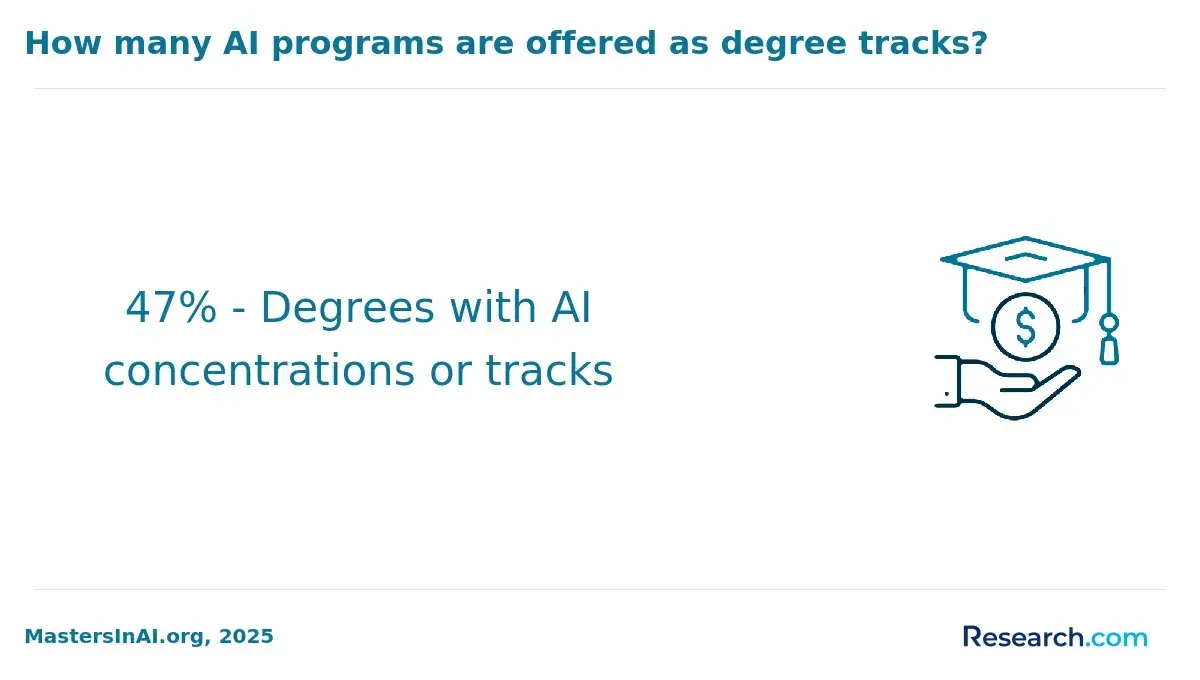
Admission requirements for AI master's programs in the US commonly emphasize a solid foundation in mathematics and computer science. Many programs require applicants to have completed coursework in linear algebra and calculus, essential for mastering AI concepts like optimization and model training.
Applicants usually hold a bachelor's degree in computer science, engineering, mathematics, or a closely related field. Some master's programs in artificial intelligence accept candidates with non-technical backgrounds but require them to complete prerequisite courses before or early in the curriculum. Proficiency in programming languages such as Python, Java, or C++ is frequently mandated since these are fundamental tools in AI development.
Graduate Record Examination (GRE) scores are increasingly optional, though some institutions may still request them. Letters of recommendation, a statement of purpose focused on research interests, and occasionally a portfolio of projects or publications are standard components of the application. International students must demonstrate English proficiency through tests like TOEFL or IELTS.
Practical experience, including internships or work in AI, data science, or software engineering, can strengthen applications. Candidates without direct experience may enhance their profiles by completing online courses or certifications in machine learning or AI frameworks. For students exploring advanced education options, consulting the data science master degree ranking can provide valuable insights into affordable programs.
Should you choose an online, hybrid, or campus-based AI master's program, and what are the tradeoffs?
Choosing the best online vs campus-based AI master's programs depends largely on your learning style and career objectives. Online programs provide unmatched convenience and accessibility, ideal for working professionals or those balancing other commitments.
Enrollment in online AI master's programs grew 156% in 2024, now representing 41% of all U.S. AI master's enrollments, showing the increasing trust in remote education. However, these programs may offer fewer opportunities for hands-on lab experience and direct faculty interaction.
A hybrid ai master's degree program advantages and disadvantages include balancing flexibility with face-to-face engagement. By combining online coursework with occasional campus visits, hybrid models support networking and access to research facilities while accommodating busy schedules. This structure appeals to students managing part-time jobs or internships.
Campus-based programs excel at immersive learning, providing extensive mentorship, collaborative opportunities, and access to advanced labs, which are beneficial for those targeting research-oriented careers. The tradeoffs are less schedule flexibility and the added costs and time of commuting.
For students prioritizing affordability without sacrificing quality, exploring the cheapest online master's in artificial intelligence can be a strategic option, combining cost-effectiveness with remote learning benefits.
How long does an AI master's degree take to complete, and what is the typical cost?
Completing a master's degree in artificial intelligence in the US typically takes between 1.5 and 2 years for full-time students. This duration includes core coursework, electives, and a capstone project or thesis on specialized AI topics like machine learning, natural language processing, or computer vision.
Part-time options extend the timeline to 3 or more years to accommodate working professionals. Accelerated programs around 12 months are available but often require an intensive course load and prior experience in computer science or engineering. These timeframes reflect the general duration of an AI master's degree program in the US.
The average total cost for attending a full-time AI master's program at top U.S. universities is about $78,400, incorporating tuition, fees, and living expenses. Costs vary widely: public universities may charge $30,000 to $50,000, while private institutions often exceed $90,000. Online degrees cost less, typically between $20,000 and $60,000, though they sometimes lack hands-on research opportunities.
Prospective students looking for affordable alternatives may also explore options like a cybersecurity degree. These figures illustrate common cost estimates for AI master's degrees in the United States. Graduates report a median return on investment of 156% within five years, highlighting strong career and salary benefits.
Additional expenses such as textbooks, software, and conferences should be factored into budgets. Financial aid options-including scholarships, assistantships, and employer tuition reimbursement-can help offset costs. Careful planning for both duration and expenses is essential to choose a program aligned with career goals and finances.
What accreditation standards and quality indicators should you verify when evaluating AI master's programs?
Accreditation is a crucial factor when assessing AI master's programs in the U.S. Regional accreditors recognized by the U.S. Department of Education and specialized bodies like ABET are key indicators of program quality. According to ABET's 2024 accreditation database, just 23% of AI master's programs hold ABET accreditation, highlighting its importance as a benchmark for rigor and industry alignment.
ABET accreditation guarantees that programs meet strict standards for curriculum, faculty expertise, and student outcomes. Without it, programs may lack up-to-date technical training or sufficient depth in AI subfields such as machine learning, natural language processing, or robotics. Beyond accreditation, measurable factors like faculty research output, industry partnerships, and graduate employment rates provide insight into program quality and future career prospects.
Strong AI programs often feature professors publishing in top journals and conferences, partnerships with tech companies offering internships, and transparent job placement data. Access to resources such as dedicated AI labs and advanced computing infrastructure, like GPUs, further supports a robust education.
Programs integrating ethics and policy alongside technical skills are gaining recognition for comprehensive AI training. Prioritize accredited programs, especially those with ABET recognition, combined with verifiable academic and professional quality indicators to ensure a well-rounded education and successful career path.
What core courses and specialization tracks are typically included in AI master's curricula?
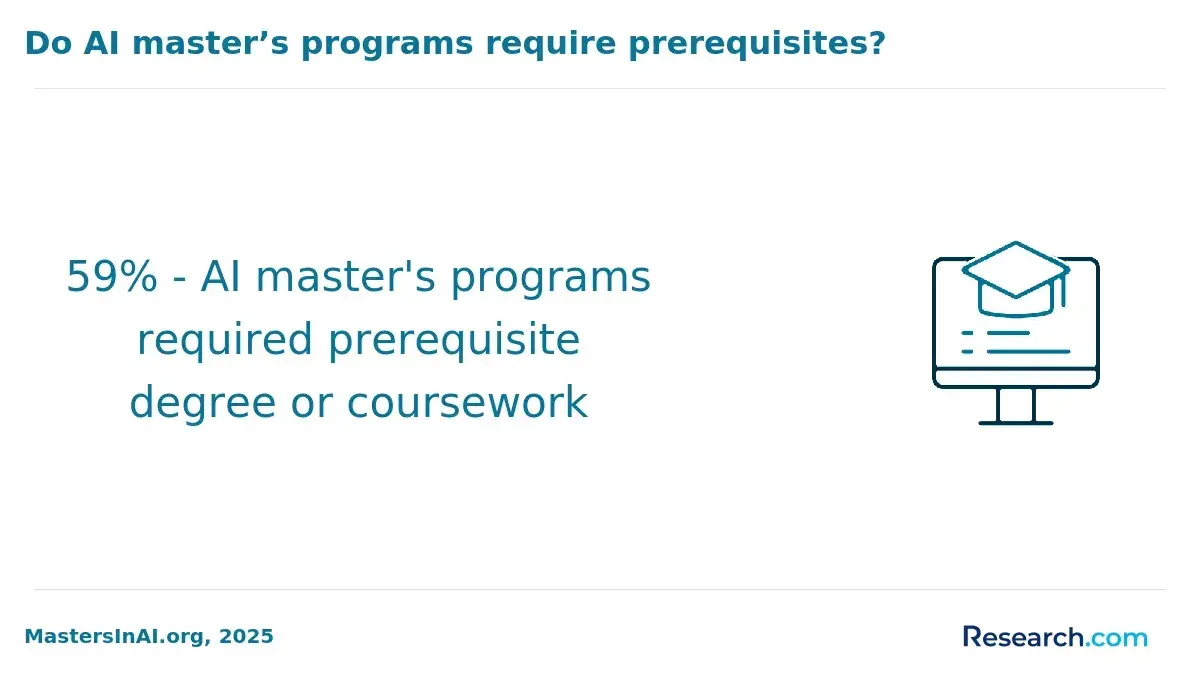
Core courses in AI master's programs build essential skills in machine learning, data structures, algorithms, probability, statistics, and advanced programming. These foundations support advanced study and research. Students also explore neural networks, computer vision, robotics, and AI ethics, highlighting the field's interdisciplinary nature.
Specialization tracks enable students to target specific skills. Natural language processing (NLP) and large language models dominate, with 87% of new AI master's programs including this track, up from 34% recently, based on Stanford's Human-Centered Artificial Intelligence Institute analysis. Coursework covers language generation, sentiment analysis, dialogue systems, and transformer architectures.
Other prominent specializations include computer vision, focused on image and video analysis; reinforcement learning, which develops decision-making models; and AI ethics, emphasizing responsible AI development. Some programs also offer cross-disciplinary pathways, blending AI with healthcare, finance, or autonomous systems.
Prospective students should carefully review program curricula to ensure alignment with career goals. Those pursuing NLP roles, for example, should confirm extensive coursework on large language models and their applications. A solid grasp of both core and specialization coursework is key for students seeking both theoretical knowledge and practical experience in AI.
What are the most in-demand career roles and job titles for AI master's graduates?
Machine learning engineer roles dominate the job market for graduates with a master's degree in artificial intelligence, making up 34% of relevant postings according to LinkedIn's 2024 Jobs Report on AI talent demand. These positions focus on designing and implementing machine learning models in industries like healthcare, finance, and autonomous systems.
Key technical skills include programming in Python and using frameworks such as TensorFlow or PyTorch. Following closely, AI research scientists account for 18% of listings. These professionals advance AI through foundational research, developing novel neural network architectures, improving natural language processing, and enhancing computer vision.
They often work in academic, corporate, or government settings. AI product manager roles represent 15% of the market and require a blend of project management expertise and a strong grasp of AI technologies to guide products from concept to launch.
Other career options include data scientist, AI ethics specialist, and robotics engineer, though with smaller demand. To stand out, graduates should align their application materials with each role's unique requirements and highlight relevant practical experience, such as internships, research projects, or certifications.
What is the job outlook and salary potential for AI master's degree holders in the United States?
AI master's degree holders in the United States experience strong job prospects and attractive salary potential. According to the 2024 AI Master's Graduate Employment Survey by the National Association of Graduate-Professional Students, graduates earn a median starting salary of $127,000, with 89% receiving job offers within three months of completing their degrees. This demand spans industries like technology, healthcare, finance, and automotive sectors.
Career roles, including machine learning engineer, data scientist, AI research scientist, and AI product manager, provide competitive salaries and opportunities for growth. Salary levels differ by region, company size, and specialization. Emerging fields, such as natural language processing and autonomous systems, also offer promising chances for employability.
Evaluating program curricula to match industry trends and gaining hands-on experience through internships and networking greatly enhances job placement success. Graduates aiming for government or academic careers might encounter lower starting salaries but gain valuable research opportunities and long-term job stability.
Further education, like PhDs or advanced certifications, can lead to senior roles with increased earning power. This overview draws on verified data from a trusted survey to highlight the competitive and rewarding landscape for U.S.-based AI master's graduates.
Are there professional certifications or industry credentials that complement an AI master's degree?
Professional certifications and industry credentials play a vital role alongside an AI master's degree by validating specialized skills and boosting employability. According to Coursera's 2024 skills credentialing report, 64% of AI master's graduates pursue certifications within two years of graduation, showing strong industry recognition of credentials as key for career growth in AI.
Popular certifications include AWS Certified Machine Learning and Google Cloud Professional Machine Learning Engineer, which emphasize practical cloud-based machine learning applications often missing in academic programs. These certifications help bridge the gap between theoretical knowledge and real-world skills desired by employers.
Additional credentials like Certified Artificial Intelligence Practitioner (CAIP) and Microsoft Certified: Azure AI Engineer Associate are increasingly sought after. They demonstrate proficiency across various AI platforms and tools. Many graduates also pursue data science certifications to enhance their expertise in data manipulation and analytics, essential for AI roles.
Career objectives should guide certification choices. For those aiming at natural language processing or computer vision roles, specialized credentials in these areas can add value. Industry certifications combined with an AI master's degree provide measurable proof of applied skills and readiness for complex AI projects, which employers highly value.
How do you compare and select the best AI master's program for your career goals and circumstances?
Selecting the best Artificial Intelligence master's program involves evaluating several critical factors beyond tuition and location. Employer reputation and a strong alumni network are decisive, with 71% of applicants prioritizing these over cost or geography. Such connections often lead to valuable internships and job placements in competitive AI fields.
Review the curriculum and faculty expertise carefully. If your goal is research and development, focus on programs with comprehensive machine learning and deep learning courses led by faculty active in top AI journals. For roles in AI product management or business applications, look for programs that emphasize applied AI and interdisciplinary collaboration.
Program flexibility is important for working professionals. Options like part-time, online, or hybrid formats can maintain educational quality while accommodating busy schedules. Additionally, career services, mentorship, and networking events significantly enhance your job prospects after graduation.
Financial considerations should weigh potential scholarships, employer tuition reimbursement, and future salary growth more heavily than just initial cost. Though location affects living expenses and access to tech hubs, it generally ranks below reputation and network strength. Alumni reviews on LinkedIn and other platforms also provide insight into program culture and outcomes, helping you make an informed decision.
Other Things You Should Know About Artificial Intelligence
Python is the most widely used programming language in artificial intelligence due to its extensive libraries such as TensorFlow, PyTorch, and scikit-learn. Other useful languages include R for data analysis, Java for building scalable applications, and C++ for performance-critical AI systems. Mastery of these languages supports both algorithm development and implementation in AI research and industry projects.
Strong mathematics skills, especially in linear algebra, calculus, probability, and statistics, are essential in artificial intelligence master's programs. These areas form the foundation for understanding machine learning algorithms, neural networks, and data processing techniques. Students with solid mathematical backgrounds are better equipped to grasp complex AI concepts and contribute to innovative solutions.
Yes, graduates with an artificial intelligence master's degree often find opportunities beyond traditional tech firms. Industries such as healthcare, finance, automotive, and manufacturing increasingly leverage AI for automation, predictive analytics, and decision support. This broad applicability expands career options across sectors seeking AI-powered innovation.
Most artificial intelligence master's programs emphasize practical experience through hands-on projects, labs, and research work. These components allow students to apply theoretical knowledge in real-world scenarios, often involving large datasets and complex AI models. Engaging in research or capstone projects helps build critical skills and strengthens a graduate's portfolio for the job market.
Applicants should research program curricula, faculty expertise, and industry connections. Evaluating the balance between theory and practical application through hands-on projects and internships is also crucial. Consider program accreditation and career support services offered to students as part of your selection process.
References
- 25 Best Master's in AI Programs - MastersInAI.org https://www.mastersinai.org/degrees/best-masters-in-artificial-intelligence/
- Best AI Certifications in 2025 https://cpoclub.com/career/best-ai-certifications/
- University Master's degree in Artificial Intelligence https://web.ua.es/en/masteres/inteligencia-artificial/quality-standards.html
- AI Certification Programs: Which Ones Matter for Your Career https://www.businessplusai.com/blog/ai-certification-programs-which-ones-matter-for-your-career
- Master of Applied AI | UC Online | UC Online https://uconline.ac.nz/courses/master-of-applied-artificial-intelligence
- What AI certification options are best for professionals transitioning into AI roles? https://dev.to/georgiaweston/what-ai-certification-options-are-best-for-professionals-transitioning-into-ai-roles-20gp
- 16 Artificial Intelligence Career Paths https://www.calmu.edu/news/artificial-intelligence-career-paths
- Application and admission - Master Artificial Intelligence https://www.uva.nl/shared-content/programmas/en/masters/artificial-intelligence/application-and-admission/international-prior-education/international-prior-education-foldout-menu.html
- 5 Benefits of an Online AI MS Degree | University of Bridgeport https://www.bridgeport.edu/news/benefits-of-online-ms-ai-degree/