2027 AI Degree Programs With the Strongest Student Support

Co-Founder and Chief Data Scientist
Many students seeking a graduate degree in Artificial Intelligence face challenges finding programs that offer robust support. They often juggle full-time jobs, unrelated academic backgrounds, and the need for flexible schedules. Without strong guidance and resources, students risk falling behind or struggling to connect coursework to real-world applications. Identifying programs with dedicated mentorship, career services, and tailored advising is essential for success.
This article examines degree programs with the strongest student support, helping prospective students choose pathways that enhance learning, professional growth, and a smooth transition into the AI industry.
Key Things You Should Know
- Top AI degree programs in 2026 emphasize personalized mentoring, with over 75% of students reporting significant academic support and career advising resources.
- Institutions increasingly partner with tech companies to offer internships, boosting post-graduate employment rates to an average of 88% within six months.
- Enhanced mental health services and inclusive community networks in AI programs improve student retention by approximately 12% compared to standard engineering degrees.
Which AI degree programs offer the strongest academic and career support services?
AI degree programs with comprehensive academic support services offer crucial resources that enhance student success and career placement. These programs emphasize personalized advising, dedicated AI research labs, and partnerships with technology firms, providing students hands-on experience and access to competitive internships. Career centers focused on AI roles conduct tailored workshops on resume writing, interview skills, and job market trends specific to AI fields.
Mentorship networks connecting students to professionals and alumni at companies like Google, Microsoft, and IBM further strengthen these programs by enabling career guidance beyond traditional university services. Such career support and mentorship in AI degree programs are especially important as the number of U.S. master's degrees in AI rose dramatically, from 116 to 310 programs (167%) since 2022, according to the Computing Research Association.
Prospective students should assess programs based on key factors including:
- Access to AI-focused career counselors familiar with employer needs.
- Strong relationships with AI industry partners offering internships and job opportunities.
- Faculty-led AI research groups that enhance applied learning.
- Opportunities to network with alumni working across diverse AI sectors.
These elements directly impact employability and skill relevance in the fast-changing AI job market. Applicants benefit from direct inquiries about support services to make well-informed decisions. For those exploring their options, an accelerated computer science degree with AI specialization can offer streamlined paths combining strong academic and career support.
How can students identify accredited and reputable artificial intelligence degree programs?
Students seeking accredited artificial intelligence degree programs in the United States should first verify institutional accreditation through agencies like the Higher Learning Commission or regional bodies recognized by the U.S. Department of Education. Accreditation guarantees academic quality and credit transferability. It is also important to consider whether the AI program is part of a reputable university with strong departments in computer science, data science, or engineering.
Transparency of the program enhances its reputation. Official sites typically offer detailed curriculum outlines, faculty credentials, research opportunities, and industry partnerships. Programs with hands-on projects, internships, or collaborations with AI research labs indicate robust student support and real-world preparation. Prospective students should look for reputable AI degree programs with strong student support to improve their chances of success.
Outcomes like graduation rates, employment statistics, and alumni achievements in AI careers can help differentiate high-quality programs. Asking admissions or career services for this data provides insight into a program's focus on student development rather than just capitalizing on AI's rapid growth.
Industry recognition from organizations such as the Association for Computing Machinery (ACM) and the IEEE Computational Intelligence Society adds credibility. Between 2024 and 2025, the number of U.S. bachelor's degrees in artificial intelligence surged by 114.4%, highlighting the importance of careful program evaluation.
To complement research, students should attend webinars, read reviews, and consult current enrollees about faculty access and support services like tutoring and career counseling. For those interested in other STEM fields, exploring mechanical engineering programs online can be worthwhile as well.
What are the key differences between online and campus-based AI degree programs?
The key differences between online and campus-based artificial intelligence degree programs center on the learning environment, access to resources, and networking opportunities. Campus programs provide direct, in-person engagement with professors and peers, which supports real-time collaboration and immediate feedback-essential for complex projects and hands-on labs involving AI hardware and software. Online programs offer greater flexibility, allowing students to manage studies alongside work or personal commitments without geographic limits.
Student support services in online vs campus artificial intelligence programs vary significantly. Campus students often benefit from structured schedules, on-site career services, research labs, and student organizations that enhance learning and professional growth. Online learners rely on digital platforms for lectures, discussions, and assessments, which may challenge those who thrive with face-to-face interaction. However, virtual office hours, discussion forums, and mentoring can strengthen support for remote students.
Campus environments foster networking through events and internships often less accessible to online students, who require strong self-discipline and time-management skills. Enrollment in AI programs has surged, with UK data showing a 19% rise in student numbers, reflecting increased interest in flexible and accessible options.
Prospective students should weigh the benefits of in-person engagement against the flexibility of online study when choosing their program. For those interested in related fields, exploring cybersecurity programs can also be valuable.
What courses and technical skills are typically included in an AI bachelor's or master's curriculum?
Bachelor's and master's AI programs focus on foundational courses in mathematics, computer science, and domain-specific knowledge. A typical AI bachelor's degree curriculum core courses include probability, statistics, linear algebra, calculus, and programming languages like Python, R, Java, and C++. These technical skills are vital for developing machine learning algorithms and understanding data structures.
Technical skills development in AI master's programs often expand into supervised, unsupervised, and reinforcement learning methods, alongside deep learning frameworks such as neural networks, CNNs, and RNNs. Hands-on experience with tools like TensorFlow, PyTorch, and cloud platforms is essential for AI deployment and data engineering tasks involving databases and big data technologies.
Advanced master's degrees provide specializations in areas such as natural language processing (NLP), computer vision, robotics, or healthcare AI. Ethics and policy courses addressing AI fairness, transparency, and bias mitigation help prepare graduates for responsible AI development. Capstone projects and internships align theory with practical industry experience.
As of 2026, 304 U.S. institutions announced AI degrees, including 310 master's and 193 bachelor's programs. Selection varies widely, so prospective students should carefully compare courses to meet specific career objectives. For those interested in the most affordable options, a cheapest online computer science degree might provide a valuable starting point.
What admission requirements and prerequisites do competitive AI degree programs usually have?
Competitive AI degree programs typically require strong foundations in mathematics and programming. Key coursework includes linear algebra, calculus, probability, statistics, and discrete mathematics. Proficiency in programming languages like Python, Java, or C++ is often mandatory. Admissions committees value demonstrated coding skills gained through academic projects, internships, or work experience.
Applicants usually hold a bachelor's degree in computer science, engineering, mathematics, or related fields. Candidates from other disciplines may need to complete prerequisite courses in core topics such as data structures, algorithms, and database management. Some programs offer bridging courses or online certifications to prepare these students for admission.
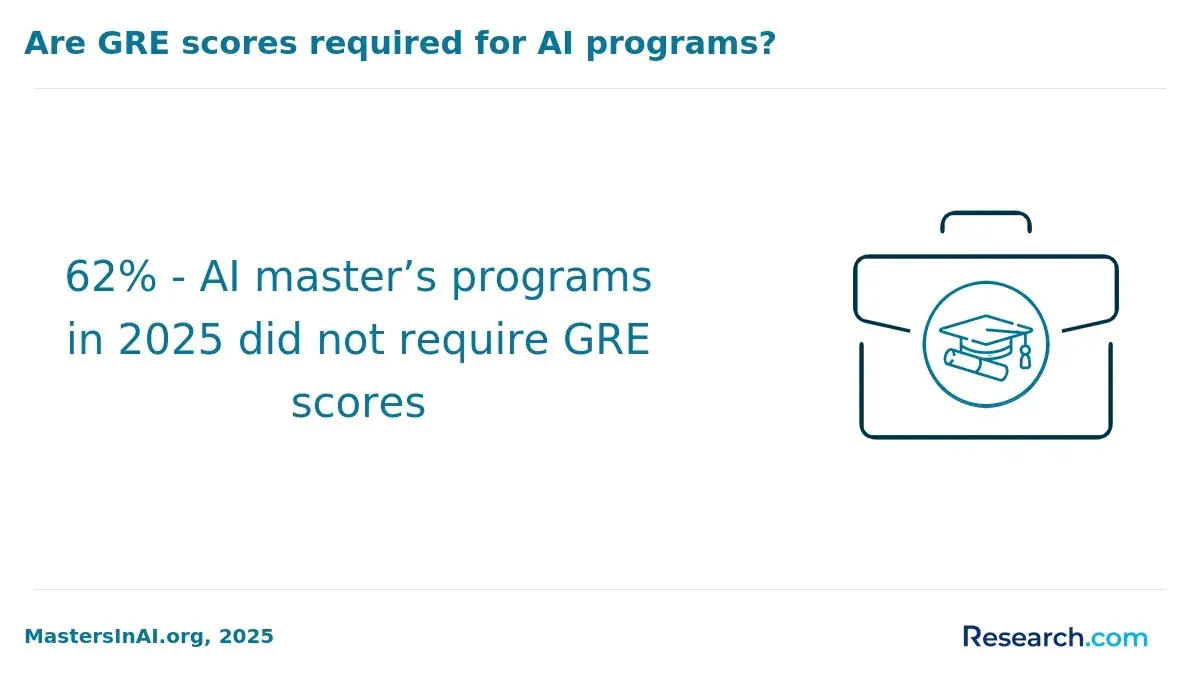
Standardized tests like the GRE remain common for many U.S. programs, though some schools have removed this requirement following the pandemic. Strong letters of recommendation and a persuasive personal statement outlining relevant experience and AI career goals are critical parts of the application.
For mid-career professionals, numerous universities now deliver AI and data science conversion courses to bridge digital skills gaps. For example, recent analysis for England shows over 7,600 students enrolled since 2020, illustrating their importance in career transitions. These courses often focus on aptitude and motivation rather than strict academic prerequisites.
Successful applicants demonstrate clear proficiency in math and coding, relevant academic background or remedial coursework, and a strong professional intent aligned with AI development.
How long do AI degree programs take to complete, and what do they cost?
AI degree programs vary in length depending on the credential and delivery format. Associate degrees or certificate programs typically take about two years, focusing on foundational AI skills and entry-level concepts. Bachelor's degrees generally require four years of full-time study, covering AI, machine learning, data science, and programming comprehensively. Master's degrees are usually one to two years, providing advanced specialization and research opportunities. Accelerated and part-time options accommodate working professionals and can shorten or extend these timeframes.
Costs differ widely based on the institution type and program duration. Public universities usually charge between $10,000 and $25,000 per year for in-state students, whereas private colleges can exceed $40,000 annually. Online AI programs may have more flexible pricing, ranging from $15,000 to $35,000 total. Financial aid, scholarships, and employer tuition reimbursement can often reduce these costs significantly.
A 2025 UK survey reports that 92% of university students use generative AI tools, up from 66% in 2024, and 88% have applied AI in assessments, highlighting the growing importance of formal AI education. Prospective students should weigh program length, format, and expenses, as shorter programs provide quicker entry into the workforce but might require further certifications. Longer degrees often offer more comprehensive expertise and broader career prospects in AI-driven fields.
What entry-level and advanced career paths are available to graduates of AI degree programs?
Graduates of AI degree programs can pursue a variety of entry-level and advanced careers across multiple industries. Typical entry-level positions include AI data analyst, machine learning engineer, and AI-focused software developer. These roles require strong skills in programming, data management, and creating machine learning models. For example, AI data analysts process large datasets to extract insights, while machine learning engineers design scalable algorithms that drive AI-powered products.
As professionals gain experience, advanced roles become available such as AI research scientist, AI ethics specialist, and AI product manager. Research scientists innovate in deep learning and natural language processing, ethics specialists assess AI's societal impact and fairness, and product managers integrate technical development with business strategy.
Specialized careers also exist in sectors like healthcare, automotive, finance, and cybersecurity, including clinical AI specialists, autonomous vehicle AI engineers, quantitative analysts using AI for trading, and cybersecurity experts building AI-driven defenses.
Recent findings from Gallup's 2026 State of Higher Education study show that 57% of U.S. college students use AI weekly in coursework, with about 20% using it daily. This growing familiarity with AI tools strengthens graduates' practical skills for competitive job markets.
What salary ranges and earning potential can AI degree graduates expect over time?
Graduates holding AI degrees in the U.S. often begin their careers with salaries ranging from $85,000 to $110,000, depending on location and employer. With two to five years of experience, salaries typically rise to between $120,000 and $160,000. Professionals advancing into senior roles such as AI research, machine learning engineering, or AI product management can command salaries of $180,000 or more.
In tech centers like Silicon Valley, New York, and Seattle, experienced AI experts with five to ten years on the job may earn over $200,000 annually, often supplemented by bonuses and stock options. Specialized skills such as deep learning, natural language processing, and computer vision further enhance earning potential.
A Stanford AI Index analysis indicates a 21% increase in U.S. bachelor's graduates listing AI-related skills between 2018 and 2022, signaling growing workforce competition along with more job opportunities. Career changers can close salary gaps by earning certifications or master's degrees featuring hands-on AI projects.
Industries beyond traditional tech-including finance, healthcare, and manufacturing-seek AI-skilled talent and sometimes offer salaries comparable to tech firms. Key factors influencing salary growth include location, role, experience, and ongoing education. Building a strong portfolio and staying updated with emerging AI technologies remain essential for maximizing earnings.
What professional certifications or industry credentials complement an AI degree for career growth?
Professional certifications and industry credentials significantly enhance career growth for graduates of AI degree programs by validating skills and boosting employability. Key certifications include the Certified Artificial Intelligence Practitioner (CAIP), which covers core AI concepts, machine learning models, and best practices in data handling, providing practical advantages for technical roles. For those focused on data science, the Certified Data Scientist (CDS) credential is highly respected and deepens expertise in analytics and predictive modeling.
Cloud platforms play a vital role in AI implementation, making certifications such as the Google Professional Machine Learning Engineer and AWS Certified Machine Learning - Specialty increasingly relevant. These demonstrate proficiency in deploying AI solutions on scalable infrastructures, a skill frequently sought by employers.
Professionals interested in responsible AI use benefit from credentials like the Certified Ethical Emerging Technologist (CEET), which emphasizes AI ethics and governance amid rising organizational scrutiny. Additionally, programming and automation certifications such as Microsoft Certified: Azure AI Fundamentals and the TensorFlow Developer Certificate provide practical validation of essential coding abilities in AI development pipelines.
Recent research shows that 72% of graduates with AI-related training believe AI will produce more job opportunities than it disrupts. This illustrates the importance of pairing formal AI education with widely recognized credentials to remain competitive and adaptive in a rapidly evolving field.
How should prospective students compare student support services across different AI programs?
When selecting AI programs, evaluate the quality of student support services to ensure academic success and career readiness. Key factors include academic advising and mentorship-strong programs often assign dedicated advisors knowledgeable in AI who help with course planning, research, and career guidance. Confirm how accessible faculty mentors are and the frequency of meetings.
Consider tutoring and supplemental instruction tailored specifically to AI subjects like machine learning and data science. Programs offering specialized tutoring, study groups, or flexible formats-online, in-person, or hybrid-tend to improve learning outcomes.
Career services tailored to AI graduates are essential. Look for programs hosting AI-focused job fairs, maintaining industry partnerships, and providing resume workshops and interview coaching for AI roles. Investigate graduate employment rates in AI fields and average time to secure a position.
Also assess access to cutting-edge labs, cloud computing credits, and software licenses, which are critical for hands-on experience valued by employers.
Finally, prioritize programs offering mental health support and financial aid options like counseling and flexible payment plans or scholarships. The National Center for Education Statistics reports that from 2022 to 2025, U.S. universities launched 194 new AI master's programs, averaging 64.7 per year, underscoring the importance of evaluating student support comprehensively, not just availability.
Other Things You Should Know About Artificial Intelligence
In 2027, AI degree programs offer increased accessibility for remote and international students. Many universities now provide online learning platforms, virtual labs, and digital resources, ensuring students from anywhere can engage in coursework. Additionally, schools have support systems in place to assist with international admissions and remote accommodations.
Internships are highly important for AI students because they provide practical experience and industry connections. They help students apply theoretical knowledge to real-world problems and improve their job prospects after graduation. Many programs actively support internship placements through career services and partnerships with technology companies.
Yes, ethical considerations are increasingly integrated into AI degree programs. Topics often include the responsible use of AI, bias in algorithms, privacy concerns, and the societal impact of automation. These subjects prepare students to design and deploy AI systems that adhere to ethical standards and promote fairness.
Students in AI degree programs typically learn programming languages such as Python, R, and Java, which are essential for developing AI applications. They also use tools and frameworks like TensorFlow, PyTorch, and Keras for machine learning and deep learning projects. Mastery of these technologies equips students to build and optimize intelligent systems effectively.
References
- Definition of WHAT https://www.merriam-webster.com/dictionary/what
- How Long Does It Take to Learn AI Completely? https://blog.nobledesktop.com/learn/ai/how-long-do-ai-courses-take
- Future of AI in College Education | University of Phoenix https://www.phoenix.edu/articles/online-college/ai-in-online-college-education.html
- What Are the Career Paths After a Bachelor of Science in AI https://tetr.com/blog/what-are-the-career-paths-after-a-bachelor-of-science-in-ai
- AI Certification Programs: Which Ones Matter for Your Career https://www.businessplusai.com/blog/ai-certification-programs-which-ones-matter-for-your-career
- ABET Accreditation and Artificial Intelligence - ABET https://www.abet.org/accreditation/ai-policy/
- What Does AI Mean for the Future of the Student Experience? — HE Professional https://heprofessional.co.uk/edition/what-does-ai-mean-for-the-future-of-the-student-experience
- Online Bachelor’s Degree: Artificial Intelligence https://www.umgc.edu/online-degrees/bachelors/artificial-intelligence-ai
- Application for the Master's program https://www.informatik.uni-bonn.de/en/studies/master-programs/master-program-application
- AI Program Rankings on AIDegreePrograms.org https://aidegreeprograms.org/rankings/