2027 AI Bachelor's Degree Careers in Healthcare

Co-Founder and Chief Data Scientist
Healthcare organizations increasingly rely on intelligent systems to improve patient outcomes and operational efficiency. However, the current shortage of professionals skilled in artificial intelligence within healthcare creates bottlenecks in adopting these innovations. Professionals from unrelated undergraduate fields face challenges finding accredited, flexible pathways to enter this rapidly evolving sector. This gap limits their ability to contribute to diagnostic tools, personalized medicine, and workflow automation.
This article explores 2026 AI bachelor's degree careers in healthcare, highlighting practical options for career changers seeking a strong foundation and industry relevance.
Key Things You Should Know
- In 2026, AI bachelor's graduates in healthcare can expect a 26% job growth rate, outpacing average healthcare roles, driven by expanding AI integration in diagnostics and patient care systems.
- Programs increasingly combine data science, healthcare ethics, and machine learning, equipping students to develop AI tools for personalized treatment and medical imaging analysis.
- Healthcare employers prioritize skills in AI model validation, regulatory compliance, and interdisciplinary collaboration, with average starting salaries near $75,000 reflecting demand for such expertise.
What careers can you pursue with an AI bachelor's degree in healthcare?
An AI bachelor's degree in healthcare opens diverse career opportunities where technology and medicine intersect. Graduates often become clinical data analysts, interpreting large healthcare datasets to improve patient outcomes and operational efficiency. Common roles include diagnostic imaging specialists who create algorithms to enhance MRI, CT scans, and X-ray accuracy, helping radiologists detect diseases earlier. These health sector jobs with an AI bachelor's degree also extend to drug discovery, where professionals collaborate with biomedical researchers to develop machine learning models that predict molecule interactions and speed new medication development.
Clinical decision support specialists leverage AI-driven tools to guide evidence-based treatment, improving patient safety and streamlining care workflows. Health informatics experts manage electronic health records (EHRs), using AI to identify patterns related to chronic illness and hospital readmission risks. There is also rising demand for AI ethics and policy advisors who ensure responsible technology use and regulatory compliance.
With the healthcare AI market expected to reach $67.4 billion by 2027 and grow at a 38.1% CAGR through 2027, job availability is expanding rapidly. Graduates should develop skills in machine learning, natural language processing, and bioinformatics while understanding clinical settings and coding to increase employability. Those seeking accelerated educational paths may consider an accelerated bachelor's degree computer science to build foundational AI competencies efficiently.
What is the job outlook and demand for AI professionals in healthcare settings?
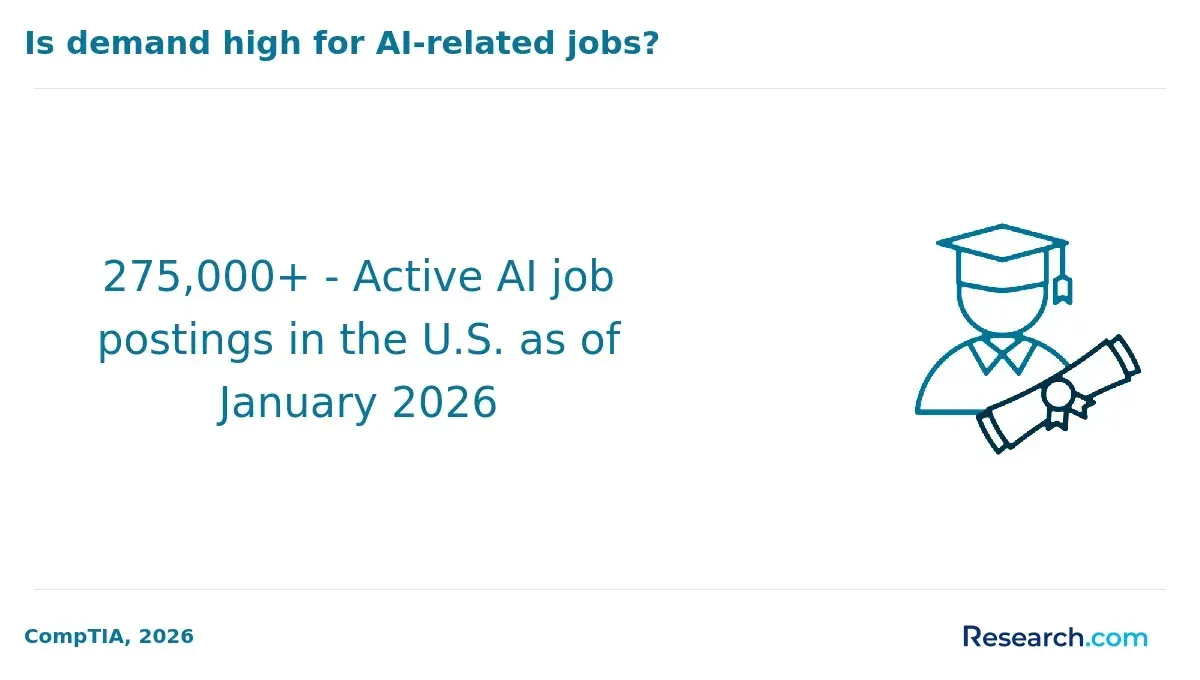
The job outlook for AI professionals in healthcare is exceptionally strong, with demand growing significantly faster than the overall job market. According to the U.S. Bureau of Labor Statistics (2024), AI specialist positions in healthcare are projected to grow 35% faster than the average for all occupations through 2032. This rate vastly outpaces the 3.5% growth rate expected for all jobs, highlighting the critical need for skilled AI graduates in medical environments.
The demand for ai specialists in medical fields is driven by healthcare institutions increasingly relying on AI to improve diagnostics, personalized treatment plans, and operational efficiency. Roles such as AI healthcare analysts, clinical data scientists, and medical imaging specialists are expanding rapidly. Professionals who develop algorithms for analyzing medical images or predicting patient outcomes have a direct impact on patient care quality, making their skills highly sought after.
Large volumes of health data generated by electronic health records and genomics research require AI professionals to apply expertise in data integration and machine learning. Hospitals and biotechnology companies also depend on these specialists to ensure compliance with regulations and uphold ethical standards in automated decision-making processes. Graduates interested in an ai career growth in healthcare sector should pursue strong interdisciplinary skills combining technical AI proficiency with healthcare knowledge and regulations. Certifications or advanced training in healthcare informatics can provide a competitive edge.
To support education goals, prospective students may explore options such as the most affordable data science master's programs, which often include AI specialization relevant to healthcare. Overall, the healthcare sector offers some of the fastest job growth for AI specialists, reflecting an urgent and sustained market demand for these capabilities.
How much do AI healthcare professionals earn, and what factors affect salary?
AI healthcare professionals earn a median salary of $136,620 annually, according to the LinkedIn Salary Report, 2025. Clinical AI engineers and specialists with deep expertise can command salaries exceeding $180,000, representing roughly a 22% premium over general software engineers. Salary differences reflect factors influencing AI healthcare professional earnings such as role specialization, geographic region, and years of experience.
Location plays a major role in ai healthcare salary ranges by region. Professionals in high-demand areas like Silicon Valley or Boston often earn 15-25% more than the national median due to elevated living costs and advanced healthcare technology needs. Experience matters too: entry-level AI healthcare workers may start near $95,000 annually, while those with 5 to 10 years of focused experience frequently earn between $150,000 and $175,000. Advanced degrees and certifications can further increase earning potential.
Industry sector also impacts compensation. Private healthcare systems and tech companies typically offer higher pay than nonprofit or academic roles, especially for positions handling clinical AI implementation, regulatory compliance, and collaboration with medical teams. For students and professionals planning their education, exploring affordable pathways is key; those seeking cost-effective options might consider the cheapest online computer engineering degree programs to build relevant skills without excessive expense.
What are the core technical and clinical skills taught in AI healthcare bachelor's programs?
AI healthcare bachelor's programs provide a mix of core technical skills in AI healthcare bachelor's programs, focusing on machine learning algorithms, data analytics, and programming languages such as Python and R. Healthcare data management systems are also emphasized, reflecting the priorities of 78% of healthcare AI hiring managers who value machine learning expertise and 68% who highlight healthcare data management as essential.
Clinically, students gain knowledge of medical terminology, human anatomy, and physiology to ensure AI tools align with healthcare workflows. The clinical applications of artificial intelligence in healthcare education prepare students to analyze electronic health records (EHRs), train predictive models, and contribute to diagnostic imaging projects. Employers seek candidates with strong domain understanding to integrate AI effectively within clinical systems.
Programs also cover data ethics, privacy regulations like HIPAA, and skills in data cleaning, annotation, and validation for real-world datasets. Practical experience with cloud platforms and health informatics software bridges technical work with clinical needs. Students develop problem-solving abilities aimed at challenges such as early disease detection and personalized treatment plans.
Effective communication is stressed to support collaboration between clinicians and IT teams in multidisciplinary settings. For those considering further specialization, exploring options like online masters data science can deepen such expertise and open additional career pathways.
What accreditation standards and certifications matter for AI healthcare degree programs?
ABET accreditation is a crucial benchmark for AI healthcare degree programs in the U.S., ensuring curriculum quality, faculty expertise, and institutional support. According to the ABET Impact Study (2024), graduates from ABET-accredited programs experience a 12% higher employment rate and 8-10% higher starting salaries in healthcare technology roles compared to peers from non-accredited schools. This demonstrates clear career benefits tied to recognized accreditation.
Some programs also pursue healthcare-specific accreditations like those from the Commission on Accreditation of Healthcare Management Education (CAHME). Such certifications confirm that coursework covers vital healthcare data standards, regulatory compliance, and ethical use of AI in clinical settings.
Practical certifications alongside a degree, including Certified Health Data Analyst (CHDA) and Certified Professional in Healthcare Information and Management Systems (CPHIMS), greatly enhance job readiness. These credentials indicate specialized expertise, which employers highly value for medical AI projects.
Prospective students should verify the ABET accreditation status of AI healthcare programs and assess if the curriculum aligns with healthcare data and ethics standards. Programs lacking these accreditations and certifications often see diminished graduate outcomes and reduced industry acceptance. Prioritizing institutions with transparent accreditation documentation and faculty experienced in both AI and healthcare domains is essential for a strong career foundation.
Should you choose an online or campus-based AI healthcare bachelor's degree?
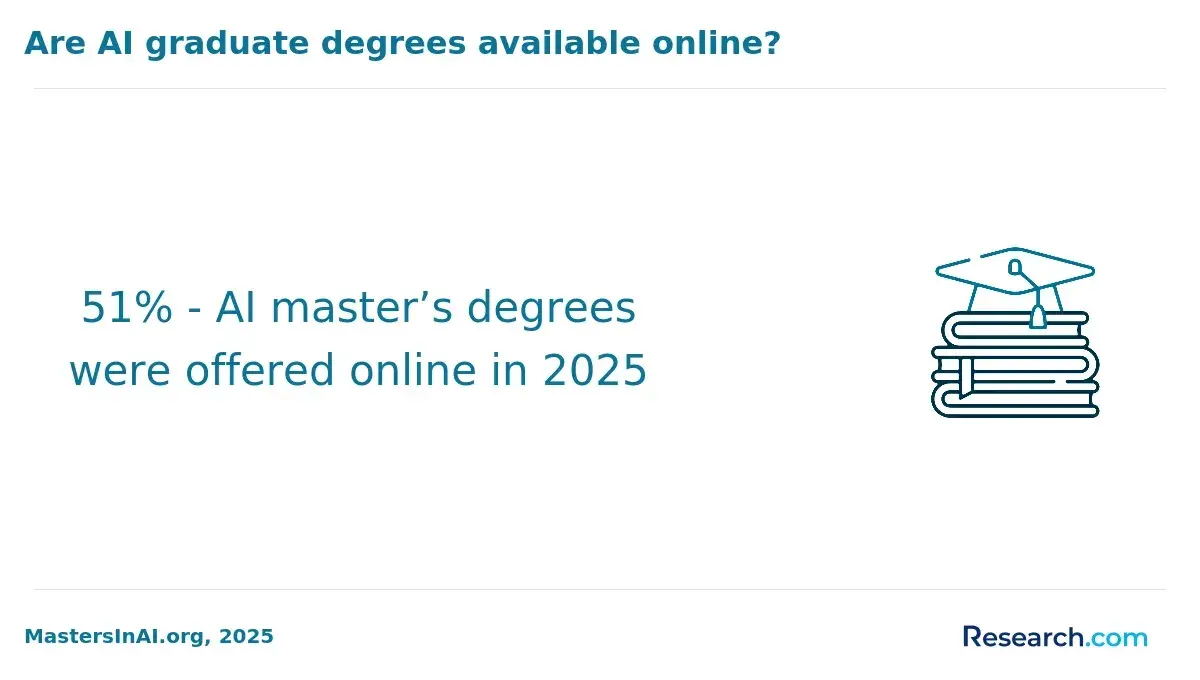
Choosing between an online or campus-based AI healthcare bachelor's degree involves weighing flexibility against networking opportunities. Online programs provide accessibility and a flexible schedule, which suits working professionals and students in remote areas. Graduates from these programs report a 91% job placement rate within six months, matching the success of campus programs according to the National Center for Education Statistics.
Campus-based degrees generally lead to starting salaries that are about 6% higher. This is often due to the in-person interactions they offer-direct access to faculty, peers, and industry events-which help build professional networks. Campus students also benefit from internships and hands-on projects, enhancing their early career prospects.
Reflect on your priorities: if flexibility and remote learning are essential, online education can deliver quality in AI healthcare without needing to relocate. If you value mentorship and local industry connections, a campus program could better support your goals.
Both pathways offer competitive education in AI applied to healthcare. Your decision should align with your circumstances and career goals, considering the trade-offs between network-building and scheduling flexibility backed by strong job placement data.
What are the admission requirements and prerequisites for AI healthcare bachelor's programs?
Admission requirements for AI healthcare bachelor's programs usually include a high school diploma with strong foundations in math and science. Applicants should have completed courses in biology, chemistry, mathematics-often calculus or statistics-and basic computer science. Many programs require a minimum GPA around 3.0 to demonstrate readiness for the interdisciplinary nature of the curriculum.
Students with healthcare or clinical experience tend to have higher completion rates; data shows they are over twice as likely to succeed compared to those without domain backgrounds. Certifications such as Certified Nursing Assistant (CNA) or medical technician licenses, along with hospital or clinical experience, can strengthen an application.
Familiarity with programming languages like Python or R and an introductory understanding of machine learning concepts are often prerequisites. Some schools offer conditional admission or bridge programs to help students build these essential technical skills. While submission of standardized tests like the SAT or ACT is becoming less common, applicants should prepare a statement of purpose and letters of recommendation-ideally from healthcare professionals or academic instructors-to validate motivation and ability.
For students without prior healthcare exposure, many programs integrate foundational coursework early on to develop clinical domain knowledge required for AI applications. Prospective students are encouraged to consult admissions advisors to clarify specific program expectations and prepare accordingly.
How long does an AI healthcare bachelor's degree take, and what does it cost?
An AI healthcare bachelor's degree generally takes four years of full-time study, covering computer science, healthcare systems, and specialized AI applications in medicine. Some schools offer accelerated tracks that can be completed in three years, though these require a heavier course load and are less common.
Tuition costs differ widely between private and public institutions. Private universities average around $156,000 for the entire four-year program, while public universities charge approximately $68,000 for in-state students. These amounts reflect tuition only and exclude additional expenses like fees, books, and living costs.
Students should explore scholarships, grants, and work-study options to help offset these costs. Online and hybrid formats can often provide more affordable and flexible pathways, especially for those balancing work and study.
Despite high upfront costs, graduates tend to recover their investment within roughly 4.2 years. This fast return on investment is due to strong salaries in both the healthcare and AI technology sectors, as demand for AI-driven healthcare solutions continues to rise.
Careful financial planning and alignment with career goals are essential to selecting the best educational path in the AI healthcare field.
Which accredited universities offer AI bachelor's degrees with healthcare specializations?
Several accredited universities in the U.S. now offer AI bachelor's degrees with healthcare specializations, reflecting rapid growth in this sector. Northeastern University offers a Bachelor of Science in Artificial Intelligence with a health informatics focus. The University of Southern California features a Bachelor's degree in Computer Science - Artificial Intelligence Track, including healthcare data analytics coursework. Arizona State University recently launched a Bachelor of Science in AI and Healthcare that integrates machine learning applications in medical diagnostics.
The number of accredited AI healthcare bachelor's programs increased from 12 in 2022 to 47 in 2024, according to the ASEE Engineering Education Database (2025). Additionally, 34 more programs are in development, creating more opportunities for students interested in this specialized field.
These programs combine core AI subjects like machine learning, natural language processing, and robotics with healthcare topics such as medical imaging, biostatistics, and healthcare data management. Prospective students should verify regional accreditation and review curricula to ensure thorough coverage of AI methods and healthcare applications.
Internships or partnerships with medical centers or biotech firms are important for gaining practical experience. Institutions like Johns Hopkins University and Carnegie Mellon University also invest heavily in interdisciplinary AI-healthcare education, although their bachelor's programs often emphasize biomedical informatics or computer science with AI electives.
What professional licenses or regulatory certifications do AI healthcare graduates need?
Graduates aiming for clinical roles in AI healthcare must secure key professional licenses and certifications to meet compliance standards and boost career prospects. Among these, HIPAA (Health Insurance Portability and Accountability Act) compliance stands out, required by 94% of healthcare employers to ensure proper patient data privacy and security (HIMSS Analytics, 2024). Without this certification, employment in clinical environments is highly restricted.
Another critical credential is clinical informatics board certification, which validates skills in applying AI to clinical practice and patient workflows. Offered by bodies like the American Board of Preventive Medicine, this certification requires specific education and passing a board exam. Holders see an 18-25% salary increase compared to uncertified peers (HIMSS Analytics, 2024).
For non-clinical AI healthcare positions, certifications such as Certified Health Data Analyst (CHDA) or qualifications in information management security may be relevant, though they are less commonly mandated than HIPAA or clinical informatics credentials for clinical-track professionals.
State licensure may also be necessary when AI professionals engage in clinical decision-making or diagnostics. Checking state health board guidelines and employer policies is essential to understand licensing demands.
Completing approved coursework, gaining practical experience, and passing examinations are integral steps in obtaining these certifications. Early integration of certification requirements into academic and internship plans significantly enhances employability and career growth in AI-powered healthcare.
Other Things You Should Know About Artificial Intelligence
Ethical considerations in artificial intelligence healthcare applications include ensuring patient privacy, preventing bias in algorithms, and maintaining transparency in AI decision-making. Developers and practitioners must also address accountability when AI systems impact diagnosis or treatment. Responsible use involves ongoing evaluation to avoid harm and promote equitable care.
Artificial intelligence enhances patient data management by improving accuracy in record-keeping and enabling advanced data analytics for personalized care. AI can automate routine tasks such as data entry while facilitating secure data sharing among healthcare providers. However, it requires stringent cybersecurity measures to protect sensitive information from breaches.
Common artificial intelligence technologies in healthcare include machine learning for predictive analytics, natural language processing to analyze clinical notes, and computer vision in medical imaging. These tools support diagnostic accuracy, treatment planning, and operational efficiency. Integration of these technologies continues to expand across various healthcare specialties.
Graduates can explore entry-level roles like data analyst, medical imaging specialist, and AI solutions associate. These positions often involve bioinformatics tasks, improving diagnostic tools, or enhancing operational efficiency. Considering an AI in healthcare master’s degree can further specialize your career prospects.
References
- These 14 colleges offer bachelor's degrees in AI—including one Ivy League school https://www.cnbc.com/2025/01/22/colleges-that-offer-bachelors-degrees-in-ai.html
- Artificial Intelligence in Health Care - URAC https://www.urac.org/accreditation-cert/healthcareai/
- Health Information Management - CAHIIM https://www.cahiim.org/accreditation/health-information-management/
- AI Applications for Healthcare - 7 Skills to Know https://verticalinstitute.com/blog/ai-applications-for-healthcare/
- AI Jobs in Healthcare - Healthcare IT Leaders https://www.healthcareitleaders.com/blog/ai-jobs-in-healthcare/
- Course syllabus for Applied Artificial Intelligence (AI) in Healthcare https://education.ki.se/course-and-programme-syllabi/course-syllabus-2QA338
- Top Medical & AI-Based Healthcare Jobs in 2025–2035 | AIHMS Blog https://aihms.in/blog/top-medical-ai-based-healthcare-jobs-in-2025-2035/
- AI Certifications: Accredited Programs, Vendor Credentials, and Emerging Standards - Total Seminars https://totalsem.com/ai-certifications-accredited-programs-vendor-credentials-and-emerging-standards/
- Best AI in Healthcare Courses and Certifications for 2025 https://learnprompting.org/blog/ai-in-healthcare-courses-and-certifications
- AI Jobs in 2025: Salaries That Outpace UK Doctors’ Pay https://pearllemonai.com/ai-jobs-salaries-vs-doctors-uk-2025/