
2027 Easiest Online Teaching Master's Degree Programs That Pay Well: High-Salary Degrees with Simple Admissions

Co-Founder and Chief Data Scientist
The main question for many future educators is not whether an online master’s in teaching is convenient; it is whether the program is accessible, credible, affordable, and likely to support a better-paying role. A low-friction admissions process can help working adults, career changers, and current teachers start sooner, but “easy” should never mean unaccredited, poorly supported, or disconnected from licensure and career goals.
Recent data shows 15% annual growth in online teaching master’s enrollments, yet students still need to compare programs carefully. Some have simple admissions but weak career outcomes. Others may lead toward specialized teaching, curriculum, administration, advising, or training roles where the Bureau of Labor Statistics reports that education administrators and specialized teachers can earn over $80,000 annually.
This guide explains how to evaluate the easiest online teaching master’s degree programs without sacrificing quality. You will learn how to read admissions requirements, assess salary potential, compare timelines and tuition, confirm accreditation, use transfer credits, and choose a program that fits your schedule, budget, and long-term education career plans.
Key Benefits of Online Teaching Master's Degree Programs That Have Simple Admissions and Pay Well
- Many online teaching master's programs have simplified admissions, often requiring only a bachelor's degree and minimal standardized testing, increasing accessibility amid rising demand for educators.
- Flexible online formats attract working professionals, with the online education sector growing over 20% annually, enabling students to balance study with employment and family commitments.
- Graduates from these programs frequently earn salaries above the national average for teachers, benefiting from shortages in specialized education roles and competitive pay in high-need districts.
How Can You Tell If Online Teaching Master's Degree Programs Have Easy Admission Requirements?
An online teaching master’s program usually has easy admission requirements when it reduces unnecessary application barriers while still checking whether applicants are prepared for graduate-level work. The strongest options are not “open enrollment” programs with little oversight; they are accredited programs that make admissions practical for adults with relevant experience, recent coursework, or a clear career plan.
Look for programs that publish requirements clearly. If you have to contact multiple offices just to understand GPA minimums, prerequisite coursework, licensure rules, or test requirements, the process may be less streamlined than advertised.
Signs of a simpler admissions process
- No entrance exams required: Many programs waive the GRE or other standardized tests. This can save applicants time, fees, and test preparation effort, especially if they have professional experience or a strong recent academic record.
- Holistic admissions review: Instead of relying only on test scores or GPA, admissions teams may review work history, teaching experience, personal statements, recommendations, and evidence of professional growth.
- Provisional acceptance options: Some schools allow conditional enrollment while a student completes missing documents, prerequisite coursework, or other requirements. This can help applicants start sooner, but students should confirm the conditions in writing.
- Minimal prerequisite coursework: Programs designed for career changers or working educators may require little to no prior education coursework. This can be useful for applicants with varied undergraduate majors.
- Clear licensure guidance: If the degree is intended to support teacher certification, the school should explain whether the program meets requirements in the student’s state. Easy admission does not automatically mean easy licensure.
What to verify before applying
| Admissions feature | Why it matters | Question to ask |
| GRE waiver | Reduces time and cost before enrollment | Is the waiver automatic, or do I need to request it? |
| GPA flexibility | Helps applicants with older or uneven transcripts | Can work experience, recent coursework, or recommendations offset a lower GPA? |
| Prerequisite policy | Affects how soon you can begin graduate classes | Will I need extra courses before I can start the program sequence? |
| Licensure alignment | Determines whether the degree supports certification goals | Does this program meet educator preparation requirements in my state? |
Data from the National Center for Education Statistics reflect that up to 40% of education master's degree programs now waive GRE requirements, signaling a broader shift toward more accessible admissions. Applicants who want an accelerated path should also compare the best 1 year masters degree online options, especially if speed is as important as admissions simplicity.
What High-Paying Jobs Can You Get With an Easy Online Teaching Master's Degree Program?
An easy online teaching master’s degree can support higher-paying education roles, but the outcome depends on specialization, prior experience, location, licensure, and whether the program aligns with leadership, curriculum, special education, or training responsibilities. A master’s degree alone does not guarantee a salary increase, so students should choose a concentration that connects directly to the jobs they want.
Jobs in postsecondary education administration and specialized instructional roles are projected to grow 8% from 2021 to 2031, outpacing the average for all occupations and often offering competitive salaries. The roles below are common pathways for graduates of online teaching master’s programs.
| Career path | Typical work | Salary information stated | Best fit for |
| Instructional Coordinator | Develops curriculum, reviews teaching standards, supports instructional improvement, and trains educators | Median salary of about $67,000 per year | Teachers interested in curriculum design, assessment, and district-level improvement |
| Education Administrator | Manages academic programs, faculty operations, student services, or school-level functions | Median salary typically ranges from $80,000 to $100,000 annually | Educators seeking leadership, administration, or program management roles |
| Special Education Specialist | Supports students with disabilities, designs individualized learning plans, and collaborates with teachers and families | Salaries often exceed $60,000, depending on experience and location | Educators focused on intervention, compliance, and inclusive instruction |
| Corporate Trainer | Creates and delivers employee learning, onboarding, compliance, and professional development programs | Usually earning between $60,000 and $85,000 yearly | Teachers who want to apply instructional skills outside K-12 schools |
| Academic Advisor | Guides students through course planning, academic decisions, and education-to-career pathways | Median salaries generally range from $50,000 to $70,000 | Professionals who enjoy student support, planning, and higher education services |
How to choose a degree concentration for salary growth
- For school leadership: Look for programs tied to administration, supervision, or educational leadership, and confirm whether additional state credentials are required.
- For curriculum roles: Prioritize curriculum and instruction, instructional design, assessment, or educational technology coursework.
- For special education: Verify whether the program meets state requirements for special education licensure, endorsement, or specialist roles.
- For corporate training: Consider programs with learning design, adult education, technology, assessment, and workforce development components.
Students who want to strengthen a specific skill set may also compare online certification courses. Shorter credentials can complement a teaching master’s degree, particularly in instructional design, educational technology, leadership, or specialized student support.
Can You Get Into an Online Teaching Master's Degree Program With a Low GPA?
Yes, some online teaching master’s programs admit applicants with a low GPA, especially when they use holistic admissions or offer provisional acceptance. GPA still matters because it signals academic readiness, but it is not always the only factor. Nearly 40% of graduate programs use holistic admissions processes that consider various aspects beyond GPA.
The key is to show that your undergraduate GPA does not reflect your current ability to succeed. Admissions committees are more likely to consider your application seriously if you provide evidence of recent growth, classroom experience, strong recommendations, or successful completion of relevant coursework.
How to strengthen an application with a lower GPA
- Highlight relevant work experience: Include tutoring, substitute teaching, paraprofessional work, training roles, youth programs, classroom support, or education-related employment. Show what you did, who you served, and what outcomes you helped support.
- Request strong letters of recommendation: Choose supervisors, principals, faculty members, or education professionals who can describe your reliability, communication skills, academic potential, and readiness for graduate study.
- Complete prerequisite coursework or certifications: Recent success in relevant courses can demonstrate that you are prepared now, even if your earlier academic record was weaker.
- Explain academic improvement: Use the personal statement to address the low GPA briefly and professionally. Focus on what changed, what you learned, and why you are prepared for graduate work.
- Ask about conditional admission: Some programs allow students to begin with a probationary term and continue after meeting a required academic standard.
What not to do
- Do not ignore the GPA issue: If your transcript shows a clear concern, address it directly rather than hoping admissions staff will overlook it.
- Do not over-explain personal hardship: Provide enough context, then shift to evidence of readiness and current performance.
- Do not apply only to programs with strict cutoffs: Prioritize schools that clearly mention holistic review, conditional admission, or experience-based consideration.
When I spoke with a graduate of an easy online teaching master's degree program, they said their low GPA initially made the process feel intimidating. The difference was that the school reviewed more than grades. Years of classroom experience, positive recommendations, and a detailed personal statement helped show readiness for graduate work. “The chance to prove myself through other strengths made all the difference,” they recalled.
Can Easy Online Teaching Master's Degree Programs Be Completed in Under a Year?
Some easy online teaching master’s degree programs can be completed in under a year, but that timeline is usually realistic only for highly organized students in accelerated programs with limited prerequisites, frequent start dates, and a full-time course load. For many working adults, a faster program can be appealing, but speed should be balanced against workload, field experience requirements, licensure steps, and personal capacity.
A one-year or under-one-year pathway is most practical when the program is designed for acceleration from the start. Simply taking extra courses in a standard program may create scheduling conflicts or make it harder to maintain strong academic performance.
Factors that can shorten completion time
- Accelerated courses: Shorter terms compress course content into fewer weeks. This format can work well for motivated students, but it requires consistent weekly study time.
- Full-time enrollment: Taking a full course load each term helps students finish credits faster. It may be difficult for students working full-time or managing family responsibilities.
- Flexible scheduling: Asynchronous online courses allow students to complete lectures, discussions, and assignments outside fixed class meeting times.
- Transfer of prior credits: Some programs accept prior graduate-level credits or relevant coursework, reducing the number of courses still required.
- Simplified admissions: Programs with fewer prerequisites and streamlined application steps help students avoid delays before the first term begins.
Before choosing the fastest option, ask these questions
- Are courses offered every term, or only once per year?
- Does the program require student teaching, fieldwork, a practicum, or an internship?
- Can all required courses be completed online?
- Will an accelerated schedule affect eligibility for financial aid?
- Does the program support licensure in your state, if licensure is your goal?
Fast track online teaching master's degree programs can be useful for working adults and career changers who already know their target role. Students still exploring education pathways may also compare related accelerated bachelor's degree programs, including options described in this guide to an accelerated bachelor's degree.
Are Online Teaching Master's Degree Programs Easier Than On-Campus Ones?
Online teaching master’s degree programs are not automatically easier than on-campus programs. The academic expectations can be just as rigorous, especially in accredited programs tied to licensure or school leadership. What online programs often make easier is access: fewer commutes, more scheduling flexibility, and the ability to study around work and family responsibilities.
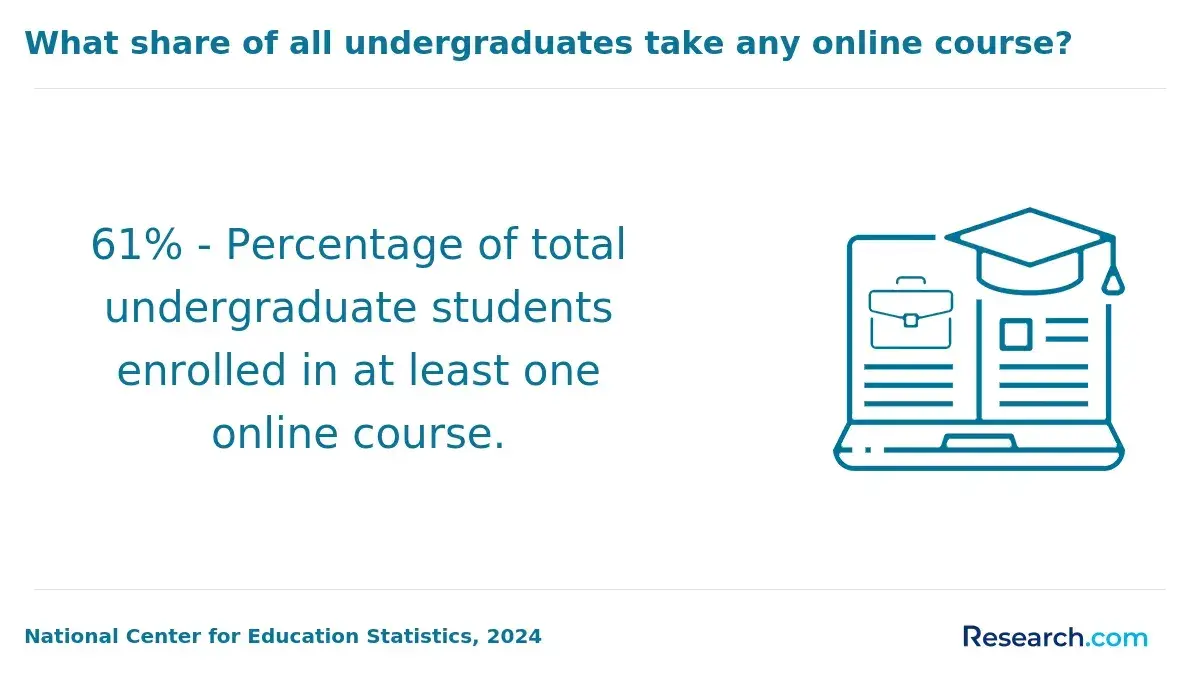
A 2022 National Center for Education Statistics report found that around 65% of graduate students in education fields appreciated the flexibility of online courses, which sometimes results in similar or higher completion rates than traditional programs. That flexibility can make the degree feel more manageable, but it also requires self-discipline.
| Factor | Online program advantage | Possible challenge |
| Schedule | Asynchronous coursework can be completed around work and family obligations | Students must manage deadlines without regular in-person reminders |
| Commute | No travel time, parking costs, or relocation requirement | Students need a reliable computer, internet access, and a quiet study routine |
| Learning materials | Recorded lectures and digital resources are often available for review | Students may need to be proactive when asking questions |
| Networking | Online discussion boards and virtual groups can connect students across locations | Relationships may require more intentional effort than in face-to-face classes |
| Admissions | Many online programs offer flexible admissions for working adults | Students still need to verify accreditation, licensure alignment, and program quality |
Who may find online programs easier?
- Working teachers who cannot attend evening campus classes consistently
- Parents or caregivers who need control over study hours
- Students who live far from a university campus
- Independent learners who are comfortable using learning platforms, email, video meetings, and digital libraries
When I spoke to a graduate who completed an easy online teaching master's program, he said the format fit his life as a working parent. “Balancing work, kids, and coursework in person would have been overwhelming,” he explained. He also noted that recorded lectures helped him recover from occasional schedule disruptions, while avoiding a daily commute saved hours each week.
Are Easy Online Teaching Master's Degree Programs Accredited?
Many easy online teaching master’s degree programs are accredited, but students should verify accreditation before applying. A program can have flexible admissions, online delivery, and accelerated scheduling while still meeting recognized quality standards. More than 90% of respected online teaching master's programs have regional accreditation, signaling broader acceptance by employers and licensing authorities.
Accreditation matters because it can affect credit transfer, employer recognition, financial aid eligibility, doctoral admission, and teacher licensure. This is especially important in education, where state rules often determine whether a degree supports certification, endorsement, or advancement on a salary schedule.
Types of accreditation to check
- Regional Accreditation: This applies to the institution as a whole and is awarded by organizations such as the Higher Learning Commission or the Middle States Commission. It helps confirm that the school meets broad academic and operational standards.
- Programmatic Accreditation: This applies to the education program itself. Specialized agencies like the Council for the Accreditation of Educator Preparation (CAEP) review whether educator preparation programs meet professional standards and, in many cases, state expectations.
How to verify accreditation
- Check the school’s official accreditation page and confirm the accreditor name.
- Search the U.S. Department of Education's database to verify institutional recognition.
- If the degree is tied to teacher certification, review the state education agency’s approved program list.
- Ask the program whether it meets licensure requirements in your state, especially if the school is located elsewhere.
- Request written clarification before enrolling if admissions staff make verbal claims about certification or endorsements.
Accreditation should be treated as a minimum requirement, not a bonus. A low-barrier program that lacks proper recognition may create problems later, even if it appears affordable or convenient at the point of admission.
What Is the Average Tuition for Easy Online Teaching Master's Degree Programs?
Reports indicate that median tuition for online graduate teaching degrees typically centers around $15,000. Many easy online teaching master’s degree programs fall between $10,000 and $25,000 for the entire course of study, though the total amount a student pays can vary based on fees, credits, transfer policies, residency rules, and required materials.
Tuition should be compared by total program cost, not only by cost per credit. A school with a lower per-credit rate may still cost more if it requires additional credits, extra fees, or prerequisites.
Cost factors to compare
| Cost factor | What to look for | Why it matters |
| Typical cost range | $10,000 to $25,000 for the entire course of study | Helps you compare affordability across institutions |
| Median tuition | Typically centers around $15,000 | Provides a reference point for identifying unusually high or unusually low pricing |
| Delivery format | Fully online versus hybrid requirements | Hybrid programs may add travel, parking, lodging, or campus-related costs |
| Program length and credits | 12 to 24 months and often between 30 and 36 hours | More credits or longer timelines can increase total cost |
| Additional fees | Technology, textbooks, and licensing exam preparation materials | These expenses can change the real price of the degree |
How to judge whether tuition is worth it
- Compare cost to your target role: A leadership-focused program may be worth more if it supports advancement into administration, but only if it aligns with credential requirements.
- Ask about employer tuition support: Current educators may qualify for district reimbursement, union benefits, or professional development funding.
- Review financial aid eligibility: Confirm that the institution and program qualify for federal aid if you plan to use it.
- Estimate total borrowing: Include fees, materials, and living expenses if reducing work hours will be necessary.
Students seeking affordable online teaching master’s degrees should look beyond tuition alone. Academic support, licensure alignment, field placement assistance, and career services can affect whether the program leads to the outcome you want. Those considering adjacent student-support or education-related pathways may also compare options to study psychology online.
Can Transfer Credits Make an Online Teaching Master's Degree Program Easier to Complete?
Yes. Transfer credits can make an online teaching master’s degree easier to complete by reducing the number of courses, shortening the timeline, and lowering total tuition. According to data from the National Student Clearinghouse Research Center, about 30% of graduate students transfer credits between institutions, a trend that continues to rise in online education settings.
Transfer policies vary widely, so students should not assume all prior graduate credits will apply. Schools may limit the number of credits accepted, require a minimum grade, reject older coursework, or accept only courses that match the new program’s curriculum.
How transfer credits help
- Reduced coursework requirements: Accepted credits can lower the total number of classes still needed for graduation.
- Lower tuition exposure: Fewer required courses may reduce the amount paid to the new institution.
- Faster completion: Students can move through the degree more quickly and pursue career advancement sooner.
- Better work-life balance: A lighter course load can make the program more manageable for full-time workers, parents, and career changers.
- More focus on advanced content: Students may be able to spend more of the program on specialization courses rather than repeating foundational material.
Questions to ask about transfer credit
- What is the maximum number of graduate credits I can transfer?
- Do credits expire after a certain number of years?
- What grade is required for a course to be accepted?
- Will transfer credits apply to core requirements, electives, or both?
- Can professional development, certifications, or prior learning reduce degree requirements?
- Will transferred credits affect financial aid, pacing, or graduation eligibility?
Using transfer credits strategically can make an online teaching master’s degree more efficient, but students should obtain an official transfer evaluation before enrolling. Those comparing education with other high-demand online pathways may also review a cyber security bachelor degree online as an alternative route.
What Kind of Academic Support Do Online Teaching Master's Degree Students Receive?
Online teaching master’s students commonly receive academic, technical, career, and peer support designed for distance learners. The best programs make these services easy to access remotely, not just available on paper. Support quality matters because online students often balance coursework with teaching jobs, family responsibilities, and certification requirements.
Common support services
- Academic advising: Advisors help students choose courses, understand degree requirements, plan pacing, and avoid delays caused by missed prerequisites or scheduling conflicts.
- Tutoring and writing centers: Graduate students may receive support with research writing, APA formatting, data interpretation, lesson planning, and academic communication.
- Career services: Services may include resume reviews, interview preparation, job search planning, portfolio feedback, and guidance for education leadership or instructional roles.
- Technical support: Reliable help with learning management systems, video tools, library access, and account issues reduces disruption during online coursework.
- Peer networking and mentorship: Cohort groups, discussion boards, virtual study sessions, faculty mentoring, and alumni connections can reduce isolation and build professional relationships.
- Field placement or practicum support: If the program includes licensure, student teaching, or a practicum, students should receive clear guidance on placement requirements and documentation.
How to evaluate support before enrolling
- Ask whether advising is proactive or only available by appointment.
- Confirm support hours if you work during the day and study at night.
- Review whether online students receive the same career services as campus students.
- Check whether faculty respond within a stated timeframe.
- Ask current students or alumni whether support is useful in practice.
Strong support can make a demanding program easier to complete. It also helps students stay on track, avoid administrative mistakes, and connect coursework to specific roles in teaching, curriculum, advising, training, or education administration.
How Do You Choose the Easiest Online Teaching Master's Degree Program That Pays Well?
To choose the easiest online teaching master’s degree program that pays well, focus on the overlap between accessibility, accreditation, affordability, completion speed, and career alignment. A program with simple admissions is not the best choice if it does not support the role, license, endorsement, or salary pathway you want.
Decision checklist
- Accreditation: Confirm institutional accreditation and, when relevant, programmatic accreditation. This protects transferability, employer recognition, and licensure pathways.
- Cost: Compare total program cost, not just tuition per credit. Include fees, books, technology, exam preparation, and any required travel.
- Duration: Choose a timeline you can realistically complete. Faster is helpful only if the workload is sustainable.
- Career support: Look for resume help, interview coaching, licensure guidance, alumni access, and job search resources related to your target role.
- Alignment with high-demand roles: Select a concentration that connects to curriculum, administration, special education, advising, instructional design, or another clear career direction.
- Flexible admissions: Look for GRE waivers, holistic review, provisional admission, and limited prerequisites if you need a lower-barrier entry point.
- State requirements: If you are pursuing teacher licensure or advancement on a salary schedule, confirm that the program meets your state and employer requirements before enrolling.
Red flags to avoid
- Unclear accreditation information
- Admissions claims that sound too broad or unrealistic
- No written answer about state licensure alignment
- High fees that are not included in advertised tuition
- Little or no academic advising for online students
- Career outcomes described only in vague promotional language
The best choice is usually not the easiest program in isolation. It is the easiest credible program that fits your background, budget, schedule, and specific career goal.
What Graduates Say About Their Easy Online Teaching Master's Degree Programs That Pay Well
- : "Enrolling in an easy online teaching master's program was a breeze for me, especially since the average cost hovered around $15,000, which was manageable. The flexibility allowed me to study while working full-time, and now I've earned a promotion with a significant salary increase. I'm genuinely grateful for how this practical and affordable degree opened doors in my education career. — Desiree"
- : "After researching various options, I chose an easy online teaching master's degree program because it balanced cost-effectiveness-with tuition under $20,000-and quality learning. Reflecting on my journey, the program's straightforward curriculum gave me the confidence and skills to transition smoothly into a higher-paying role. This degree truly transformed my professional outlook and earnings. — Jade"
- : "I approached my online teaching master's degree with a professional mindset, drawn by programs averaging $12,000 that promised efficiency without compromising depth. The result was a career boost that justified every investment dollar, as I secured a competitive position in education administration. This degree's impact on my career trajectory has been both measurable and rewarding. — Arthur"
Other Things You Should Know About Teaching Degrees
Yes, enrolling in the easiest online Teaching master's degree programs for 2027 typically requires a bachelor's degree in education or a related field. Some programs may also need teaching experience or specific undergraduate coursework in education subjects.
In 2027, the easiest online teaching master's degree programs feature flexible scheduling, minimal admission requirements, and accelerated courses. Financially rewarding programs often offer specializations in high-demand teaching areas, such as STEM education, leading to higher-paying positions post-graduation.
In 2027, financial aid options for online Teaching master's degrees include federal student loans, scholarships specifically for online education, grants, and work-study programs. Institutions may also offer payment plans catering to their online students, easing the financial burden.
References
- Online master's degree guide: Programs, costs, and how to apply. https://www.edx.org/resources/guide-to-online-masters-degrees
- Benefits of Earning a Master of Education Degree. https://www.mountunion.edu/academics/graduate-degrees/med-program/benefits-of-earning-an-med
- U.S. Teachers: Grow Your Salary with a Master’s Degree - Moreland University. https://moreland.edu/resources/blog-insights/us-teachers-grow-your-salary-with-a-masters-degree
- Master of Science in Elementary & Secondary Education - Niagara University. https://www.niagara.edu/programs/graduate-teacher-education/
- Online Master's Degree in Teaching and Learning | CSU Global | Accredited. https://csuglobal.edu/academic-programs/graduate-degrees/online-masters-teaching-learning
- The Pros and Cons of Online Education Graduate Programs - Graduate Programs for Educators. https://www.graduateprogram.org/blog/the-pros-and-cons-of-online-education-graduate-programs/


