2027 Can a BS in Business Administration Prepare You for a Construction Business Manager Role? Skills and Entry Requirements
Audited and Verified:
Our Editorial and Data Verification Process
Research.com uses government datasets, official education statistics and primary institutional information to support its career and degree guides. Our review process checks factual accuracy, occupational definitions, source dates and the requirements associated with the credentials discussed.
How This Article Was Fact-Checked
Our editorial team verifies salary estimates, employment projections, education requirements and program information against original data providers and official organizations. Salary figures are checked against the relevant occupational definitions and reporting periods. Information about licensure, accreditation and required in-person training is reviewed separately.
Fact-checked and verified on:

Co-Founder and Chief Data Scientist
If you work in construction and want to manage budgets, contracts, people, or operations, a BS in Business Administration may help you move toward greater responsibility. It does not, by itself, teach every construction-specific skill or qualify you to run a jobsite.
This guide explains what the degree can contribute, where industry experience matters more, and how to evaluate courses, costs, credentials, and entry routes before enrolling. The goal is to help you choose a practical path to the business role you actually want.
Key Things You Should Know
- A BS in Business Administration can prepare you for construction finance, procurement, operations, and personnel decisions, but employers typically also expect relevant industry experience.
- Construction business management is not one standardized job: managing a contractor's office differs from directing jobsite construction, and each calls for different evidence of readiness.
- The U.S. Bureau of Labor Statistics reports a May 2025 median annual wage of $102,320 for project management specialists and projects 7% employment growth from 2025 to 2035; those occupation-wide figures are not expected pay or growth for construction business managers specifically.
Can a business administration degree prepare you for construction business management?
Yes—particularly for the business side of a contractor, specialty-trade firm, or construction company. A BS in Business Administration can develop accounting, finance, operations, management, and negotiation skills that apply to bids, cash flow, purchasing, and staffing. It is less direct preparation for interpreting plans, supervising field work, or making technical construction decisions.
"Construction business manager" is an employer-defined title, not a single standardized occupation. One position may oversee office operations and receivables; another may manage contracts and subcontractors. A construction manager, by contrast, generally has substantial responsibility for coordinating construction activity. Read job descriptions for the decisions you would own, not just the title.
If your goal is primarily scheduling and delivering projects, compare a business degree with specialized project or construction management study. Include total completion cost, not just tuition, when considering project management schools with competitive tuition. For someone already established in the trades, business study may fill a more important gap than another technical program; for someone new to construction, field exposure may be the first priority.
What skills do construction business managers need to succeed?
The strongest candidates can connect financial decisions to what happens on a project. They understand how a change order, delayed payment, material price change, or staffing shortage affects both the schedule and the company's cash position.
For business-facing roles, employers may look for estimating and budget literacy; contract administration; purchasing and vendor evaluation; payroll or workforce coordination; spreadsheet analysis; and clear communication with owners, crews, subcontractors, and accountants. The needed depth varies. Reviewing an estimate is different from producing a defensible trade-specific estimate, and tracking contract paperwork is different from giving legal advice.
Procurement is a useful example of the degree's limits: a supply chain course can teach sourcing and inventory principles, but construction buyers must also understand specifications, lead times, and substitution approvals. If purchasing is your target function, compare that course mix with shorter online supply chain bachelor's pathways and assess which option leaves room for construction-specific practice.
What education and experience are required for construction business management?
There is no universal degree requirement for a job titled construction business manager. Employers set qualifications according to the role, company size, and responsibility involved. Some seek a bachelor's degree in business, construction management, or a related field; others place greater weight on proven construction operations experience. The degree should be viewed as preparation, not an automatic promotion to management.
A realistic route for a newcomer is to enter through project coordination, estimating support, purchasing, accounting support, or an internship and then take on larger budgets or decisions under supervision. An experienced foreperson, office administrator, or trades professional may already know the industry but need stronger financial analysis, contract, or personnel-management skills. A career changer from another industry faces an additional gap: learning construction workflows and terminology.
Compare a broad business degree with construction or project management study by examining actual required courses and opportunities for supervised work. Published accredited project management degree cost breakdowns can help frame the financial comparison but confirm each program's accreditation scope, curriculum, and remaining requirements for your own enrollment term.
Prioritize courses that help you make or explain decisions a construction employer actually faces. Managerial accounting and finance support job-cost interpretation and cash planning; operations and project management address workflow and resource constraints; business law introduces contract concepts without replacing legal counsel. Human resources and organizational behavior can help with supervision and communication, while statistics and spreadsheets support forecasts and performance reviews.
Check how much depth each course provides. An introductory finance class may cover financial statements without teaching construction accounting, retainage, or work-in-progress reporting. Ask whether electives, an officially designated concentration, or an approved capstone can address those gaps. With employer permission, a student might analyze a purchasing process using authorized, appropriately protected data; a classroom proposal is not evidence of implemented savings.
Course sequencing matters if you need accounting prerequisites before finance or want a construction-relevant capstone near graduation. Business degree programs designed for faster progress may be attractive, but check whether their schedules allow the electives and applied work most valuable for your target role.
They can be, especially if you work unpredictable site or office hours and can apply coursework to real business problems. Online delivery does not supply field experience, however. Look for a program that lets you pair academic work with relevant employment, a suitable internship, or an approved project.
Before choosing among US online business education program comparisons, verify whether required classes have live sessions, fixed group meetings, proctored exams, campus visits, or internship hours. Check course availability and the institution's accreditation rather than assuming that "online" means self-paced or that business school accreditation covers every listed degree. A flexible schedule is useful only if you can complete the actual assignments around construction work.
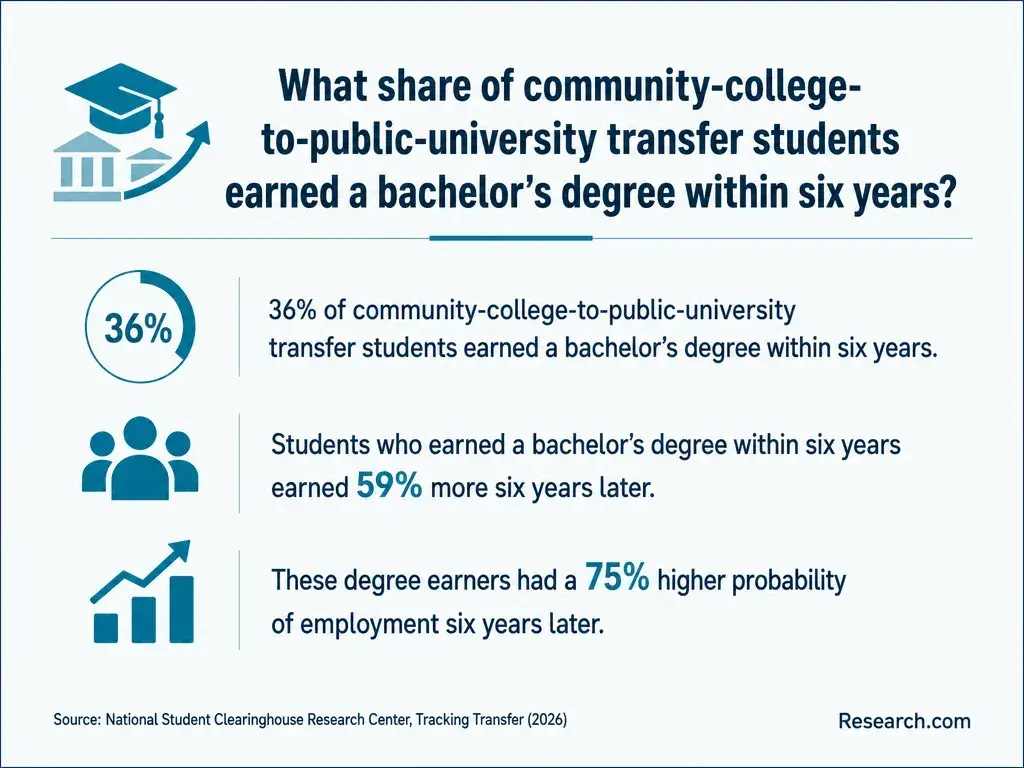
Requirements depend on the institution and whether you apply as a first-year or transfer student. Schools commonly request prior academic transcripts and evidence of secondary-school completion or previous college study. A business major may have separate GPA or prerequisite rules, including mathematics or introductory business courses; testing and application materials also vary.
If you have prior college work, request an official evaluation showing not only which credits are accepted but also which satisfy general education, business core, elective, and residency requirements. Credits accepted by the institution do not necessarily replace accounting or finance requirements. Transfer policies in other business fields can illustrate why this distinction matters—for example, when you compare credit acceptance at online HR schools—but only your intended business administration program can determine your degree audit.
Before applying, gather transcripts and any available course descriptions, then ask admissions about entry requirements and an academic adviser or transfer office about how previous work would apply to the degree.
A bachelor's degree commonly represents about four years of full-time undergraduate study, but your remaining time depends on accepted credits, required courses, course availability, and enrollment pace. A working construction employee may choose part-time study to preserve income and gain experience, even if that extends the calendar timeline.
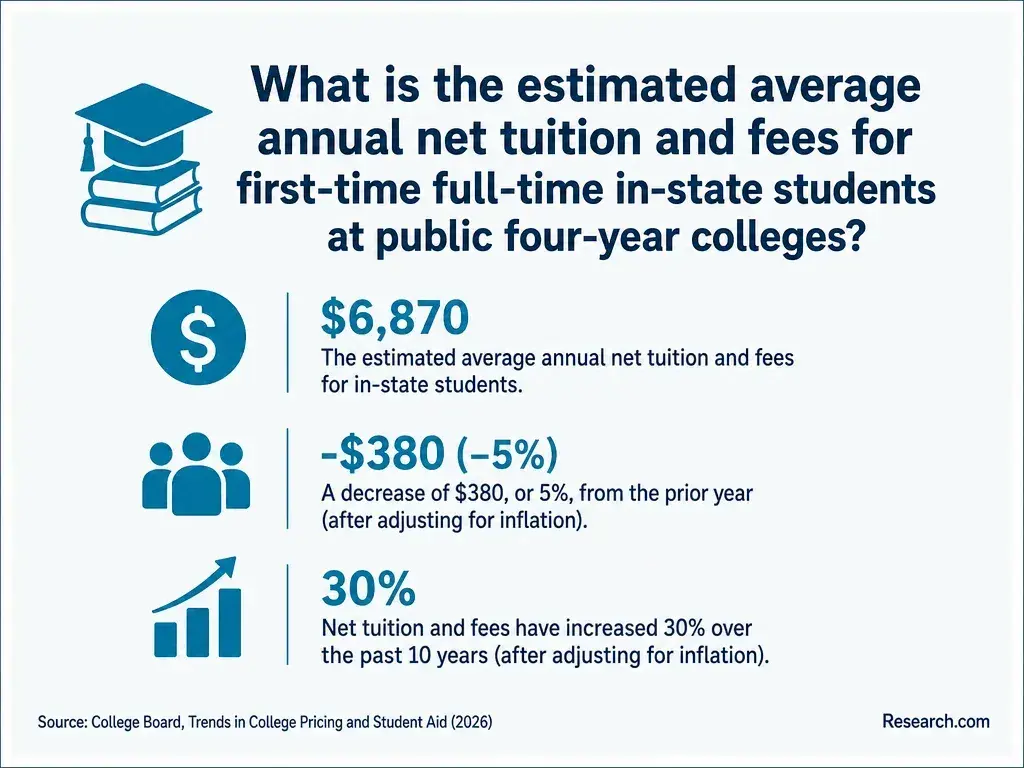
To estimate cost, ask each school for the tuition basis, required fees, books or software, and an official estimate of courses remaining after transfer evaluation. Add potential travel, reduced work hours, and borrowing costs. When you find inexpensive online business administration colleges, compare the cost to finish your requirements, not an advertised per-credit rate alone. Confirm grants, loans, and employer tuition assistance with the financial aid office and your employer; none should be assumed in your budget.
A BS in Business Administration does not itself confer a construction license, and there is no universal license attached to the title "construction business manager." Requirements depend on the state, the activity, and who is legally responsible for contracting or regulated work. Check the relevant state and local licensing authorities before assuming that an office-based role, a contractor's business, and technical trade work follow the same rules.
Voluntary construction or project management certifications may help demonstrate knowledge, but each credential sets its own eligibility, experience, and examination rules. If you are considering additional project management education partly to meet a career goal, compare the curriculum and financing separately; guidance on paying for project management bachelor's study with grants is not evidence that the degree qualifies you for a certification or license.
Your best entry point depends on what you have already done. A business graduate new to construction might pursue project coordinator, purchasing assistant, estimating support, or construction office roles. Someone who has handled invoices, vendors, or scheduling for a contractor may be competitive for broader operations or contract administration responsibilities. Managing a company budget, staff, or multiple projects usually calls for demonstrated judgment and results beyond coursework.
Keep adjacent career choices separate. If recruiting, payroll administration, and employee support appeal more than bids or procurement, explore construction-company HR roles and the costs of an HR degree before choosing a specialization. If you prefer field delivery, seek supervised construction-project experience rather than treating a general business degree as a substitute.
For applications, describe the scope of work you actually performed: the budgets you tracked, documents you coordinated, stakeholders you supported, and decisions you were authorized to make. Use only work samples your employer permits you to share, with confidential details removed.
What are construction business manager salaries and job prospects?
Because "construction business manager" does not describe one standardized occupation, there is no single reliable national salary or growth figure for everyone with that title. Pay depends on whether the job centers on office operations, project coordination, senior management, or another function, as well as location, employer, and experience.
For context, the U.S. Bureau of Labor Statistics reports that project management specialists had a median annual wage of $102,320 in May 2025, with 7% projected U.S. employment growth from 2025 to 2035. That occupation spans industries and experience levels: its median is not a starting salary for business graduates or a salary estimate for every construction business manager. Compare local postings with the specific duties and qualifications you could meet.
If you are weighing faster completion against continued employment, undergraduate programs with faster pacing are worth examining only alongside total cost and the construction experience you might forgo. The stronger career investment is the path that helps you finish a credible degree and demonstrate readiness for the responsibility you seek.
Other Things You Should Know About Business Administration
No. Both can teach core business subjects, but their required courses and degree structures vary by school. Compare the published curriculum rather than relying on the letters in the degree title.
Not necessarily. You can study while gaining experience. If you are new to the industry, plan how you will obtain relevant work exposure alongside the degree.
Possibly, but employment alone does not award academic credit. Ask the program whether your duties, supervision, learning objectives, and documentation meet its internship rules before relying on that option.
If you already hold a bachelor's degree, compare MBA admission requirements and cost with targeted construction training. An MBA may deepen management study, but it will not replace construction experience or any required license.
- Occupations Licensed and Certified by NYS | ny.gov https://dol.ny.gov/occupations-licensed-and-certified-nys
- Part 36 - Construction and Architect-Engineer Contracts | Acquisition. GOV https://www.acquisition.gov/far/part-36
- Business Administration vs. Business Management | Warner Pacific University https://www.warnerpacific.edu/blog/business-administration-vs-business-management/
- How to Become a Construction Manager | Western Governors University https://www.wgu.edu/career-guide/business/construction-manager-career.html
- Key Construction Management Skills for Career Advancement - Texas A&M University College of Architecture https://www.arch.tamu.edu/news/2025/06/17/key-construction-management-skills-for-career-advancement/
- What Skills Do You Need for Construction Management? | Sacred Heart University https://www.sacredheart.edu/news-room/news-listing/what-skills-do-you-need-for-construction-management/
- Construction Management Guide | Education & Skills https://www.sjvc.edu/guides/working-in-construction-management-guide/
- Business Administration vs. Management Degrees | CMU https://www.calmu.edu/news/business-administration-vs-management
- Key Differences Between Construction Managers and Project Managers | Procore https://www.procore.com/library/construction-manager-vs-project-manager
- Construction Manager Career Profile | Truity https://www.truity.com/career-profile/construction-manager