
2027 One-Year MBA Explained Guide

Co-Founder and Chief Data Scientist
A one-year MBA is for professionals who want graduate-level business training without spending two academic years away from work. The appeal is clear: the format is faster, often more focused, and designed for people who already have professional experience they can build on. It can also be demanding. Students move through finance, marketing, strategy, analytics, operations, and leadership content at a compressed pace, leaving little room for trial and error.
This guide explains how one-year MBA programs work, who benefits most from them, what admissions committees typically expect, and how to compare programs before committing. It also covers career outcomes, salary considerations, financing strategies, online options, employer perceptions, accreditation, and common mistakes to avoid. For readers still evaluating whether graduate business study is realistic, it may also help to review how challenging a business management degree can be before choosing an accelerated MBA path.
The decision matters because MBA hiring remains active in many sectors. More than a quarter of employers plan to expand their hiring of MBA graduates in 2024 (GMAC, 2024). Still, a one-year MBA is not automatically the best choice for every student. It usually works best when the applicant has clear career goals, relevant experience, and the ability to handle an intensive academic schedule.
Quick Answer: Is a One-Year MBA a Good Choice?
A one-year MBA can be a strong option for experienced professionals who want to move into management, change functions, improve business knowledge, or accelerate promotion without committing to a longer program. It is usually less suitable for students who need extensive career exploration, internship access, foundational business preparation, or a slower academic pace.
The best candidates typically enter with professional experience, defined goals, strong time-management habits, and a realistic plan for financing the degree. Before enrolling, compare accreditation, total cost, career support, curriculum fit, employer recognition, and whether the format gives you enough time to build the network you need.
One-Year MBA Table of Contents
- What is a one-year MBA?
- One-year MBA salary and career outlook
- One-year MBA degree requirements
- Courses to expect in a one-year MBA program
- Best industries for one-year MBA graduates
- Is a one-year MBA worth it?
- How employers evaluate a one-year MBA
- How to choose the right one-year MBA program
- Accreditations and rankings to consider
- Whether a dual degree can expand career options
- Career support and networking in one-year MBA programs
- Complementary online degrees and MBA credentials
- Ways to finance a one-year MBA
- Benefits of online accelerated MBA programs
- Whether you need a business degree before a one-year MBA
- One-year MBA vs. executive MBA programs
What is a one-year MBA?
A one-year MBA is an accelerated Master of Business Administration program that compresses the main components of a traditional MBA into roughly one year of study. Instead of spreading core business courses, electives, projects, and career development over two academic years, the program moves quickly through a concentrated curriculum.
Most one-year MBA programs are designed for professionals who already understand workplace dynamics and want to strengthen their ability to analyze business problems, manage teams, interpret financial data, lead strategy, and make higher-level decisions. Because the schedule is condensed, students often have fewer breaks between terms and less time for extended internships or career experimentation.
The format can be efficient, but it is not easy. Students should expect a heavy reading load, frequent case discussions, team projects, quantitative assignments, networking events, and career planning activities happening at the same time. The best one-year MBA programs tend to reward students who arrive prepared and know what they want from the degree.
How does a one-year MBA compare with other MBA formats?
The main difference between a one-year MBA and other MBA options is not only the length. The format affects workload, networking, internships, admissions expectations, cost, and career strategy. The comparison below shows when each path may make sense.
| MBA Format | Best For | Main Trade-Off |
| One-year MBA | Professionals with clear goals who want to return to the workforce quickly | Less time for internships, career exploration, and academic pacing |
| Traditional two-year MBA | Students making larger career changes or seeking internship-based recruiting | Longer time away from full-time work and a larger total commitment |
| Part-time MBA | Working professionals who want to keep their job while studying | Completion can take longer, and the pace may reduce immersion |
| Online MBA | Students who need location flexibility or want to continue working | Networking and recruiting experiences vary widely by program |
| Executive MBA | Experienced managers and executives who want senior leadership development | Often geared toward advanced professionals rather than early or mid-career changers |
- Program length. A traditional MBA commonly takes two years, while a one-year MBA condenses the curriculum into a shorter period. This can reduce time away from employment and help students apply new skills sooner.
- Academic pace. The shorter calendar makes the workload more concentrated. Students may take several demanding courses at once while also managing recruiting, networking, and team assignments.
- Applicant profile. Many accelerated MBA programs are built for candidates who already have meaningful work experience. These programs often assume students can connect business theory to real professional situations quickly.
- Career use case. A one-year MBA can help professionals advance faster within a current field or pivot to a related function. A two-year MBA may be better for students who need an internship to enter a new industry.
One-Year MBA Salary and Career Outlook
Career outcomes are one of the main reasons people consider an MBA. According to the 2024 GMAC Prospective Students Survey, the one-year MBA remains the most popular program format globally, as candidates increasingly prioritize efficiency and immediate career impact. In the United States, the average starting salary for MBA graduates reached approximately $125,000 in 2024 (GMAC, 2024). Actual pay depends on the school, location, prior experience, specialization, industry, job function, and economic conditions at graduation.
Graduate business degree holders may pursue roles in management, finance, consulting, operations, accounting, human resources, and executive leadership. For example, available jobs for financial managers are expected to grow by 74,600 openings per year on average between 2024 and 2034 (U.S. Bureau of Labor Statistics, 2024), representing a 15 percent employment growth rate that is much faster than the average for all occupations.
| Job Roles | Average Annual Salary | Projected Job Outlook |
| Chief Executives | $246,440 | 6% |
| Financial Managers | $139,790 | 17% |
| Management Analysts | $104,660 | 11% |
| Accountants and Auditors | $86,740 | 6% |
| Human Resources Specialists | $73,080 | 8% |
These figures should be treated as planning information, not a guarantee. MBA compensation varies widely. A student who enters a one-year MBA with strong pre-MBA experience, a competitive specialization, and access to a strong employer network may see a different result than a student who uses the program for an uncertain career pivot.
One-Year MBA Degree Requirements
Applications for one year MBA programs in USA and worldwide declined by 5% (GMAC, 2024). At the same time, MBA program applications from international students increased to 66% in 2024. STEM-certified programs remain an important factor in the market, with 56% of applications from MBA students overseas.
Admissions standards vary by school, but accelerated MBA programs often expect applicants to prove they can handle graduate-level work with limited adjustment time. Strong candidates typically show academic readiness, professional maturity, leadership potential, and a clear reason for choosing the one-year format.
Common Admission Requirements
- Bachelor’s degree. Most programs require an undergraduate degree from an accredited institution. A business major can help, but many schools admit students from engineering, liberal arts, healthcare, technology, public service, and other fields.
- Professional experience. One-year MBA programs commonly prefer applicants with meaningful work experience. Many programs look for at least two to five years of post-graduate work experience, although expectations differ by institution.
- GMAT or GRE scores. Some schools require standardized test results, while others offer waivers for applicants with strong academic records, advanced degrees, or substantial professional experience.
- Academic transcripts. Applicants usually submit official transcripts from every college or university attended. Admissions committees review grades, course rigor, and evidence of quantitative readiness.
- Recommendations. Letters should come from people who can describe the applicant’s work quality, leadership ability, teamwork, judgment, and readiness for a demanding MBA curriculum.
- Essays or statement of purpose. Essays help schools understand the applicant’s motivation, career plan, fit with the program, and reasons for selecting an accelerated MBA instead of another format.
If you want to understand selectivity before applying, review MBA admission statistics and compare them with your academic profile, test strategy, and work history.
Skills That Help Students Succeed
A one-year MBA moves quickly, so students benefit from entering with strong workplace habits and core business readiness. These skills are especially useful for students pursuing business administration careers or management roles after graduation.
- Analytical judgment. Students need to interpret business problems, evaluate trade-offs, use evidence, and make recommendations under time pressure.
- Clear communication. MBA coursework requires concise writing, persuasive presentations, active listening, and the ability to explain complex ideas to different audiences.
- Leadership and collaboration. Group projects are central to many MBA classes. Students must manage conflict, divide work fairly, lead without authority, and contribute reliably.
- Problem-solving discipline. Strong students can define the real issue, assess alternatives, and choose a practical course of action rather than jumping to the easiest answer.
- Quantitative and financial comfort. Students should be ready to work with financial statements, data, spreadsheets, forecasts, and basic models. Those comparing flexible options may also want to explore the best online MBA program choices.
- Global and cultural awareness. Modern business decisions often involve international markets, cross-border teams, and diverse stakeholders. Cultural fluency can improve both classroom participation and workplace leadership.
Courses to Expect in a One-Year MBA Program
One-year MBA curricula are built to cover essential business functions quickly. Schools vary in structure, but most combine core courses, electives, leadership development, experiential projects, and career preparation.
| Course Area | What Students Learn | Why It Matters |
| Accounting and finance | Financial statements, budgeting, valuation concepts, capital decisions, and financial analysis | Managers need to understand how decisions affect profitability, cash flow, and risk |
| Marketing and strategy | Customer behavior, positioning, competitive analysis, growth strategy, and market entry decisions | These courses help students connect business goals with market realities |
| Operations and supply chain | Process improvement, logistics, capacity planning, quality control, and operational trade-offs | Efficient operations can affect cost, customer experience, and competitive advantage |
| Leadership and organizational behavior | Team dynamics, motivation, negotiation, conflict, culture, and change management | Technical decisions often fail without effective people management |
| Business analytics | Data interpretation, statistical tools, dashboards, forecasting, and evidence-based decisions | Employers increasingly expect managers to use data responsibly and strategically |
| Entrepreneurship and innovation | Venture creation, business models, product-market fit, financing, and innovation inside organizations | These skills support startup founders and corporate leaders driving new initiatives |
Many programs also offer electives or concentrations so students can align coursework with their goals. For example, students interested in finance careers may choose electives in corporate finance, investments, financial modeling, or risk management. A capstone, consulting project, or applied business challenge is also common because it lets students use classroom concepts on real or simulated business problems.
What industries are ideal for one-year MBA graduates?
One-year MBA graduates often fit best in industries where employers value prior experience, fast learning, analytical thinking, and the ability to contribute quickly. The strongest match depends on the student’s pre-MBA background and specialization.
- Consulting: Consulting firms look for structured problem solvers who can analyze ambiguous situations, communicate recommendations, and work with clients. A one-year MBA can help sharpen those skills, especially for candidates with relevant pre-MBA experience.
- Technology: Technology companies often need managers who understand products, customers, operations, data, and strategy. MBA graduates may pursue roles in product management, business operations, strategy, partnerships, or innovation leadership.
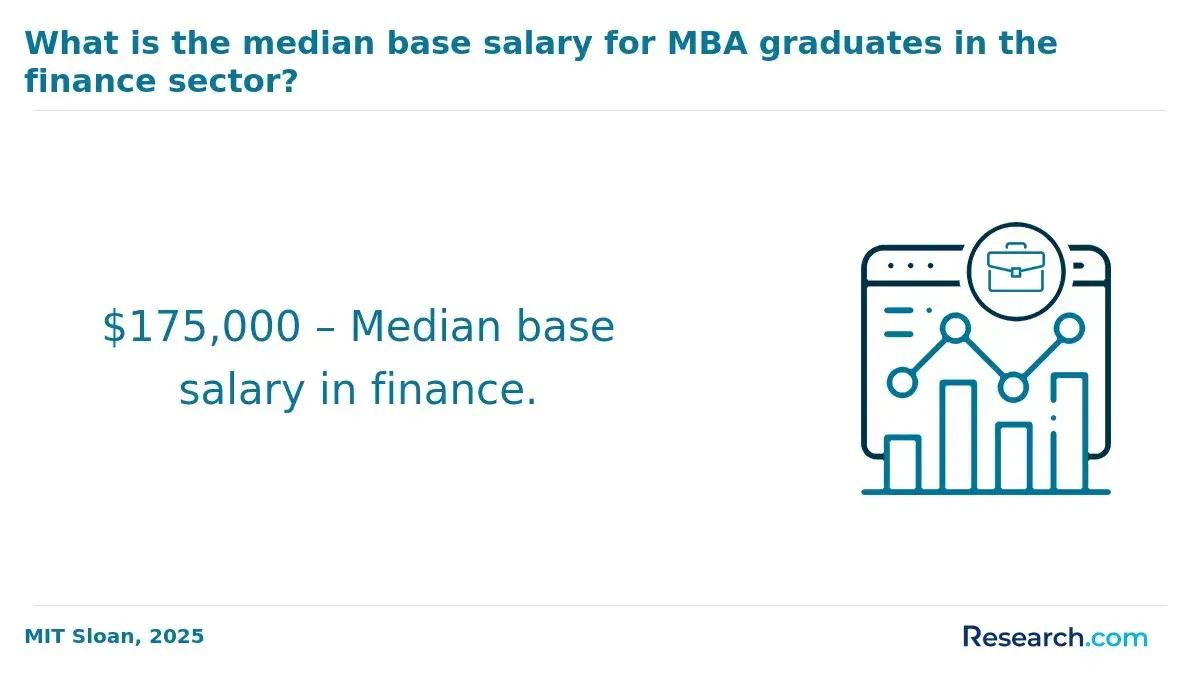
- Finance: Corporate finance, investment banking, private equity, and related fields can reward strong quantitative skills and business judgment. Students targeting finance should pay close attention to recruiting timelines and alumni placement.
- Entrepreneurship: Founders and startup leaders may use a one-year MBA to strengthen financial planning, market analysis, hiring, fundraising, and scaling decisions without stepping away from the market for too long.
- Healthcare and Pharmaceuticals: Healthcare organizations need leaders who can manage cost pressures, regulations, operations, technology, and patient-centered strategy. A one-year MBA can be useful for clinicians, administrators, and health-tech professionals moving into leadership.
Is a one-year MBA worth it?
The value of a one-year MBA depends on the gap between what you invest and what the degree helps you achieve. For some professionals, the return comes from a faster promotion, a higher-paying role, a stronger network, or the ability to move into management. For others, the cost may outweigh the benefit, especially if the program does not match their target industry or if they need more time for career switching.
If you are still asking whether graduate business school is the right move, compare your goals with the broader question of whether an MBA is worth it, especially if you do not have a business background.
A major appeal of the one-year format is that it can reduce time out of the workforce compared with a longer program. However, the total cost is still substantial. The cost of an MBA increased to approximately $250,000 for a one-year program and $430,000–$487,000 for two-year programs as of 2026. This includes tuition, living costs, opportunity costs, and loan interest.
| A One-Year MBA May Be Worth It If... | Consider Another Option If... |
| You already know your target role or industry | You need time to explore several career paths |
| You have work experience that supports your post-MBA goals | You are relying on the degree alone to create a major career pivot |
| You can manage an intense academic and recruiting schedule | You need a slower pace because of work, family, or financial constraints |
| The school has strong outcomes in your field | The program has limited employer connections in your target market |
| You have a clear financing plan | You would need to borrow heavily without a realistic repayment strategy |
Scholarships and grants can change the value calculation. Some universities offer full-ride scholarships, while others provide merit-based awards or support for students pursuing specific industries. Examples include:
- International Council of Shopping Centers Foundation scholarships: For MBA students with shopping center industry experience.
- Ritchie-Jennings Memorial Scholarship: For MBA students who majored in accounting and enrolled full-time in an accredited academic institute.
- AICPA John L. Carey Scholarship: For MBA students with liberal art or other non-business bachelor’s degree from a regionally accredited school.
Graduate students may also receive grant aid from federal and state governments, employers, schools, and private organizations. The average grant aid for graduate students in 2024-25 amounted to $15,110. Before committing, ask each school for a full cost breakdown and compare it with likely post-MBA earnings in your target role.
The shorter timeline can support a faster return to work, but only if the program fits your goals. If you are comparing formats, costs, and outcomes, this guide on how to choose an online MBA program can help you evaluate quality more carefully.
How Do Employers Evaluate a One-Year MBA?
Employers generally assess the whole candidate, not just the length of the MBA. They look at the school’s reputation, accreditation, curriculum rigor, prior work experience, leadership record, internship or project experience, communication skills, and fit with the role.
A one-year MBA can signal that a graduate can handle pressure, learn quickly, and make decisions in a demanding environment. However, the credential is strongest when paired with credible work history and a clear career story. Students considering accelerated MBA programs should review employer relationships, placement reports, and alumni outcomes before assuming the faster format will carry the same recruiting advantages in every field.
How to choose the right one-year MBA program?
The right one-year MBA is the one that matches your career target, learning needs, budget, and recruiting strategy. Do not choose based only on speed or brand recognition. Use the following factors to compare programs carefully.
- Accreditation: Look for recognized business school accreditation, including AACSB, AMBA, or EQUIS. Accreditation helps confirm that the program meets established academic and professional standards.
- Career fit: Review whether graduates enter the industries, companies, and functions you want. A program with weak placement in your target field may not be the best value, even if it is highly ranked overall.
- Specializations: Check whether the curriculum supports your interests in finance, marketing, analytics, healthcare management, entrepreneurship, operations, or another field.
- Format: Decide whether campus, hybrid, or online learning fits your life. Students who need flexibility may compare one year MBA programs online with residential programs.
- Faculty and learning resources: Look for experienced faculty, applied projects, mentorship, alumni access, career coaching, and industry partnerships.
- Total cost: Compare tuition, fees, housing, travel, technology, lost income, interest, and required residencies. Financial aid can change affordability significantly.
- Reputation and rankings: Rankings can be useful, but they should not replace direct evidence of outcomes in your intended career path.
Questions to Ask Before Enrolling
| Question | Why It Matters |
| What percentage of graduates enter my target industry or function? | Overall employment numbers may not reflect outcomes for your specific goal |
| How does the one-year calendar affect internships and recruiting? | Some career changes depend heavily on internship access |
| What is included in the published cost? | Fees, travel, living expenses, and interest can change the real price |
| Is the program accredited by AACSB, AMBA, or EQUIS? | Accreditation can affect employer confidence and academic credibility |
| How active is the alumni network in my region or industry? | A strong network can matter as much as classroom content |
| What support exists for international students? | Visa, recruiting, STEM designation, and employer sponsorship issues may affect outcomes |
Which Accreditations and Rankings Should I Consider?
Accreditation should be one of the first checks when comparing one-year MBA programs. AACSB, AMBA, and EQUIS are widely recognized business education accreditors. Their presence does not guarantee a specific job outcome, but it does indicate that the school has met external standards for curriculum, faculty, governance, and continuous improvement.
Rankings can help you identify programs with strong visibility, but they should be interpreted carefully. Some rankings emphasize reputation, selectivity, salary, faculty research, or alumni outcomes more than fit for your goals. Compare ranking data with placement reports, employer lists, student services, and the full MBA program cost before deciding.
Could a Dual Degree Option Expand My Career Opportunities?
A dual degree can make sense when your career requires both management knowledge and specialized expertise. For example, healthcare professionals who want to move into administration, operations, or executive leadership may benefit from combining business training with advanced clinical or nursing preparation.
Programs such as an MSN MBA dual degree online may be useful for students who want to blend healthcare leadership with finance, strategy, and organizational management. The trade-off is that dual degrees usually require more time, planning, and cost than a standalone one-year MBA, so the added credential should connect directly to your career goals.
What Career Support and Networking Opportunities Do One-Year MBA Programs Offer?
Because the timeline is short, career support must begin early. Strong one-year MBA programs usually provide resume coaching, interview preparation, employer events, alumni introductions, career advising, leadership development, and access to job postings. The best programs integrate career planning into the academic calendar rather than treating it as an optional service.
Networking is also compressed. Students should be ready to build relationships quickly with classmates, faculty, alumni, recruiters, and guest speakers. If you are considering a cross-disciplinary career move, resources such as easy nursing programs to get into may help you compare how other professional pathways handle admissions, training, and career mobility.
Can complementary online degrees enhance my one-year MBA credentials?
Additional online education can strengthen an MBA profile when it fills a specific skill gap. Useful add-ons may include credentials in analytics, healthcare, technology management, accounting, cybersecurity, supply chain, or another field connected to the student’s target role.
The key is selectivity. Do not stack credentials simply to appear more qualified. Choose programs that solve a clear career problem. For example, professionals who want to combine clinical experience with management preparation may compare healthcare-related pathways such as the easiest online RN-to-BSN programs to get into before deciding whether an MBA, dual degree, or another credential fits best.
Tips for Financing Your One-Year MBA Program
A one-year MBA can reduce time away from work, but it still requires careful financial planning. Students should calculate the full cost before applying and compare funding options early, because scholarship and employer deadlines may arrive before admission decisions are finalized.
- Search for scholarships and grants early: Review school-based awards, professional association scholarships, industry-specific grants, and government aid. Ask whether awards are automatic, application-based, renewable, or tied to enrollment status.
- Ask your employer about sponsorship: Some companies offer tuition reimbursement or partial funding. Clarify whether you must remain employed for a certain period after graduation.
- Compare loan terms carefully: Federal and private loans can differ in interest rates, repayment flexibility, deferment options, and borrower protections. Estimate payments against realistic post-MBA earnings, not best-case salaries.
- Account for hidden costs: Include fees, books, software, travel, residencies, relocation, health insurance, and lost income if you reduce work hours or leave your job.
- Consider lower-cost accredited options: Online programs may reduce relocation and commuting expenses. Students seeking value can compare an AACSB accredited online MBA with campus-based alternatives.
Advantages of Online Accelerated MBA Programs
Online accelerated MBA programs can be practical for students who cannot relocate, pause work, or attend campus full time. The quality varies, so flexibility should be weighed alongside accreditation, faculty access, career services, technology support, and alumni engagement.
- Flexible scheduling. Many online programs allow students to complete coursework around work and family obligations, especially when courses include asynchronous components.
- Lower relocation burden. Online study can reduce commuting, housing, and moving expenses, although students should still budget for fees, technology, and possible residencies.
- Broader school access. Students are not limited to nearby campuses, which can make it easier to find a program aligned with their specialization or budget.
- Career continuity. Working students can apply new concepts immediately in their current roles, which may strengthen workplace performance and employer support.
If speed and flexibility are priorities, comparing the quickest online MBA options can help you identify programs that fit your schedule while still meeting quality expectations.
Do I Need a Business Degree to Succeed in a One-Year MBA?
You do not always need an undergraduate business degree to succeed in a one-year MBA. Many programs admit students from science, engineering, healthcare, education, liberal arts, public administration, and technology backgrounds. What matters is whether you can handle the pace and build any missing foundations quickly.
Non-business students should look for programs that offer pre-MBA modules, quantitative refreshers, accounting preparation, academic advising, and early support in finance or analytics. For a deeper look at prerequisites, see whether you can get an MBA without a business degree.
How Do One-Year MBA Programs Compare with Executive MBA Programs?
One-year MBA and executive MBA programs can both support career advancement, but they serve different students. A one-year MBA is typically an intensive full-time or accelerated pathway for professionals who want a faster business credential. An executive MBA is usually designed for experienced managers who continue working while developing senior leadership, strategy, and executive decision-making skills.
| Factor | One-Year MBA | Executive MBA |
| Typical student | Early to mid-career professional with clear advancement goals | Experienced manager or executive seeking advanced leadership development |
| Schedule | Compressed and often immersive | Designed around working professionals |
| Career purpose | Fast skill-building, promotion, or targeted career move | Senior leadership growth and strategic influence |
| Work interruption | May require stepping away from full-time work, depending on format | Often allows students to remain employed |
| Selection priority | Career fit, accreditation, curriculum intensity, and recruiting access | Peer network, executive coaching, leadership curriculum, and employer support |
If you are already in a senior role and need a work-compatible format, review affordable executive MBA online options before choosing a one-year MBA.
Common Mistakes to Avoid When Choosing a One-Year MBA
- Choosing only because the program is fast. Speed is useful only if the curriculum, network, and recruiting support match your goals.
- Ignoring accreditation. A low-cost or short program may not be a good investment if employers or future schools question its quality.
- Looking only at tuition. Total cost includes fees, living expenses, travel, lost income, and loan interest.
- Assuming salary outcomes are guaranteed. Published averages do not account for every student’s background, industry, location, or job search strategy.
- Underestimating the workload. A one-year MBA compresses academic, career, and networking demands into a short window.
- Overlooking recruiting timelines. Some industries recruit early, and accelerated students may have less time to prepare.
- Relying only on rankings. A highly ranked school may still be the wrong fit if it lacks strength in your target field.
Key Insights
- A one-year MBA is best for professionals who already have work experience, clear goals, and the discipline to manage a fast academic pace.
- The format can reduce time away from work, but it also limits time for internships, exploration, and gradual skill-building.
- Career value depends on fit: accreditation, employer connections, specialization, alumni network, and placement in your target industry matter more than speed alone.
- Costs remain significant. As of 2026, the cost of an MBA increased to approximately $250,000 for a one-year program and $430,000–$487,000 for two-year programs when tuition, living costs, opportunity costs, and loan interest are included.
- Salary outcomes vary. The average starting salary for MBA graduates reached approximately $125,000 in 2024 (GMAC, 2024), but individual results depend on background, school, industry, role, and market conditions.
- Online accelerated MBA programs can offer flexibility and lower relocation costs, but students should verify accreditation, career services, faculty access, and networking quality.
- Before enrolling, ask whether the program helps you reach a specific next step. If the answer is unclear, a part-time MBA, executive MBA, dual degree, certificate, or traditional two-year MBA may be a better fit.
References:
- Bureau of Labor Statistics (2025). Occupational Outlook Handbook: Financial Managers. Retrieved from https://www.bls.gov/OOH/management/financial-managers.htm
- Duke Fuqua School of Business. (2025). Daytime MBA Employment Report 2025. https://www.fuqua.duke.edu/sites/default/files/media/programs/daytime/duke-mba-employment-2025.pdf
- Ethier, M. (2025, August 27). The MBA Price Tag: 21 Of The Top 25 U.S. B-Schools Now Charge $100K A Year Or More. Poets&Quants. https://poetsandquants.com/2025/08/27/the-mba-price-tag-21-of-the-top-25-u-s-b-schools-now-charge-100k-a-year-or-more/
- Master of Business Administration (MBA) salary | PayScale. (2025). https://www.payscale.com/research/US/Degree=Master_of_Business_Administration_(MBA)/Salary
- National Association of Colleges and Employers. (2025, January). NACE 2025 Winter Salary Survey. NACEWeb. https://www.wcupa.edu/_services/careerDevelopment/facultyStaff/documents/NACE%202025%20Winter%20Salary%20Survey.pdf
Other Things You Should Know About One-Year MBA Degrees
In 2027, the admission process for a one-year MBA program typically involves submitting a detailed application with transcripts, work experience, and a statement of purpose. Many programs may also require GMAT or GRE scores and possibly an interview. Admission remains competitive, often seeking candidates with professional experience and strong leadership potential.
Applicants must demonstrate proficiency in English through standardized tests like the TOEFL or IELTS. Minimum scores are typically 100 on the TOEFL or 7.0 on the IELTS, but specific requirements can vary by institution for 2027 admissions.
Many one-year MBA programs require either a GMAT or GRE score, but they set their own cutoffs. Competitive full-time programs often expect GMAT scores above 650 or GRE results in a similar percentile range, along with a strong academic record and work experience.


